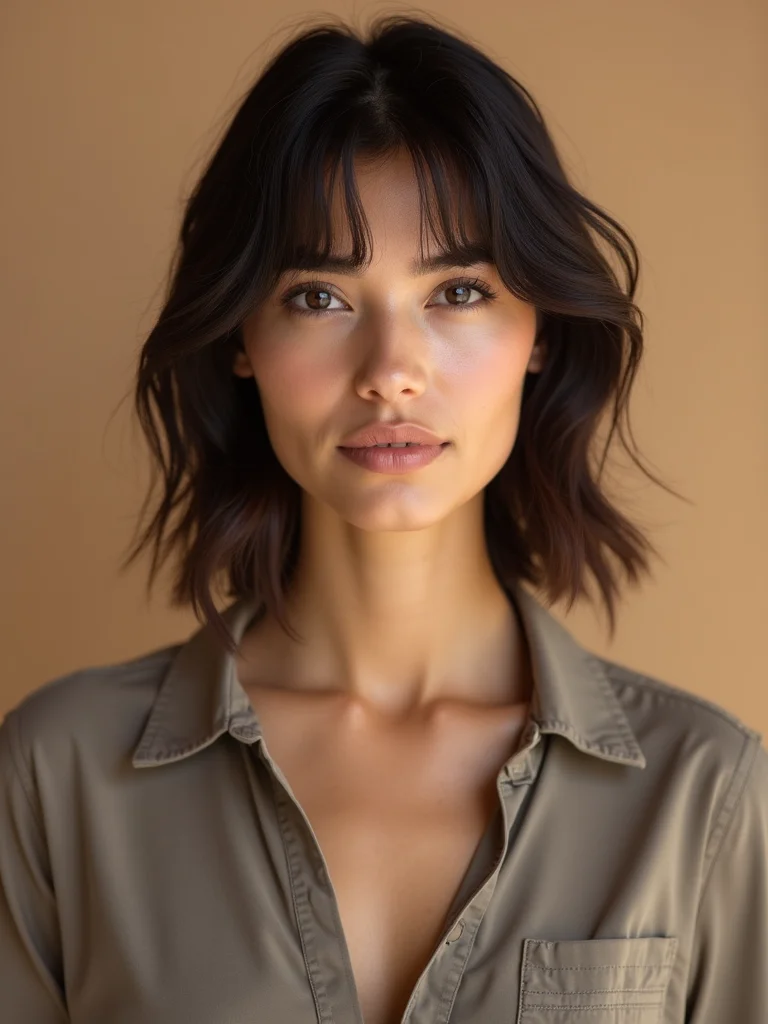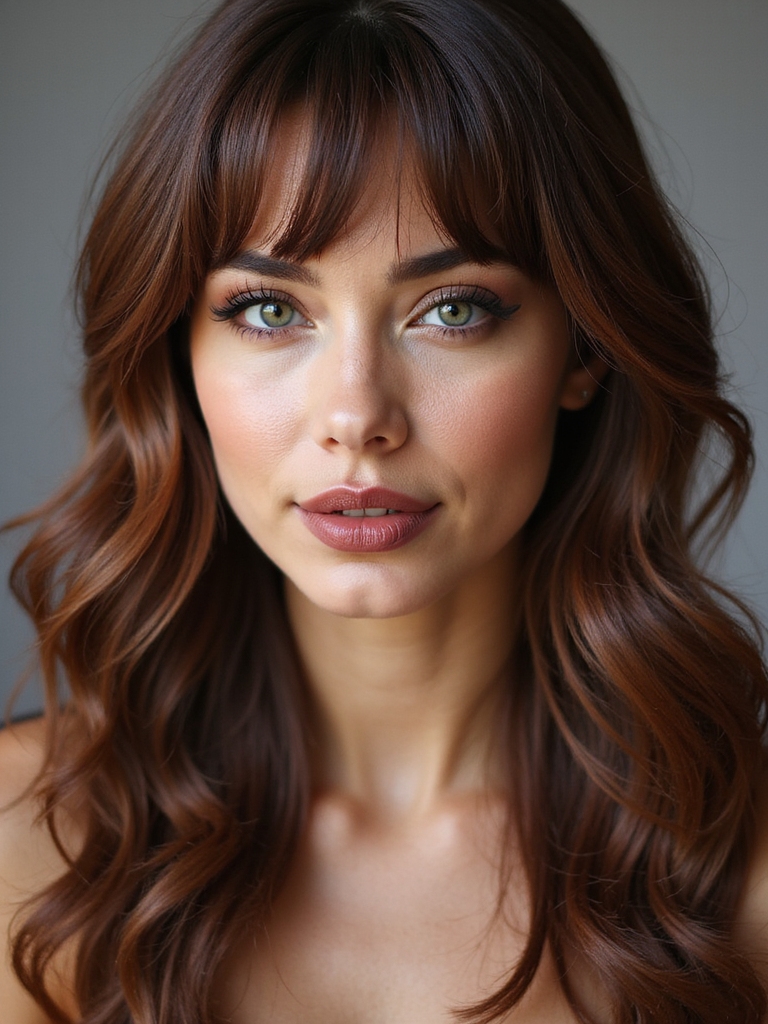
People worry that adding bangs to layers is too much, that the two together will read busy or tip into mullet territory. They have it backward. Face-framing layers and bangs are not two competing ideas; they are one connected cut, and when a stylist links them properly, the fringe simply becomes the shortest layer in a frame that flows all the way down.
That connection is the whole secret. These fifteen face-framing layers with bangs looks show how the pairing works across every base cut and length, from a blunt lob to a shaggy wolf cut, with notes on how the two pieces should join, who each combination flatters, and how to style the result without a fight.
How the Two Work Together
Bangs and face-framing layers are one cut, not two. The fringe is just the shortest piece in a frame that should flow without a hard line between bang and layer, which is what keeps the whole thing from looking choppy or mismatched.
The base cut and your texture decide the pairing. A blunt lob wants a precise fringe, a shag wants a wispy one, and curly hair wants both shaped dry. Get the connection right and the cut grows out gracefully and styles in minutes.
Curtain Bangs Into Long Swoopy Layers
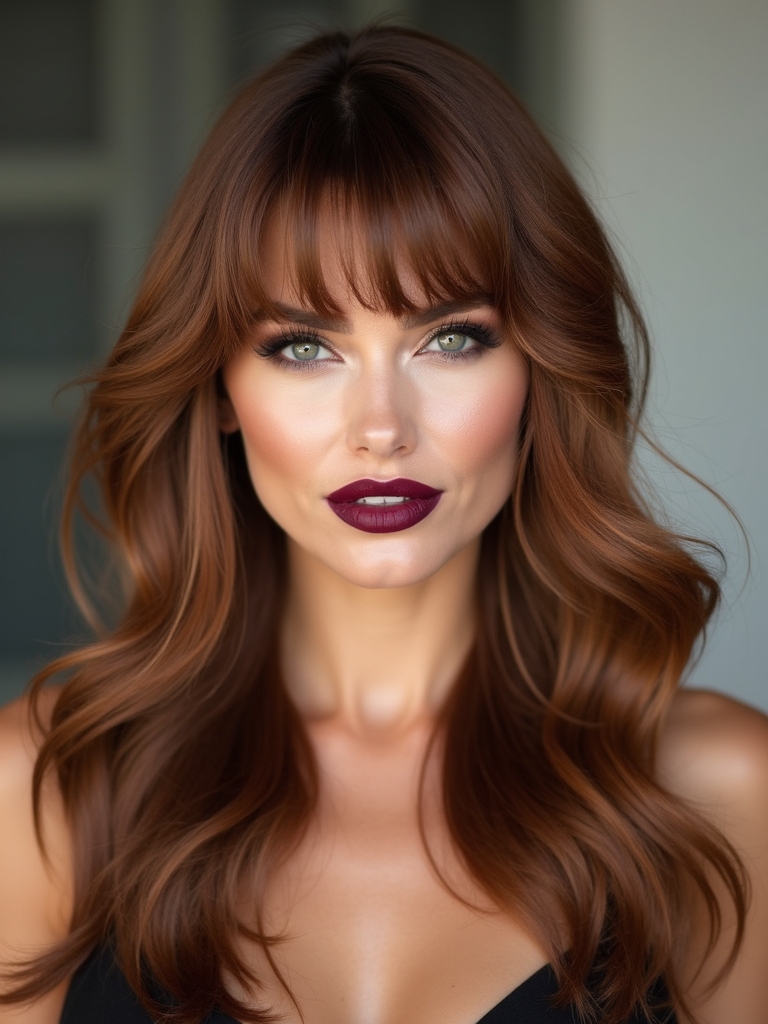
This is the pairing I cut most, and the one to start with. A soft curtain fringe melts straight into long, swoopy face-framing layers, so there is no visible jump between bang and length. The eye reads one continuous frame from forehead to collarbone.
It flatters more faces than almost any other pairing, and it grows out without a single awkward week, since every piece blends into the next. The fringe is truly just the top of the frame here.
Ask your stylist to connect the curtain bang to the layers with no disconnection. That single instruction is what separates a frame that flows from one that looks like a fringe stuck onto a haircut.
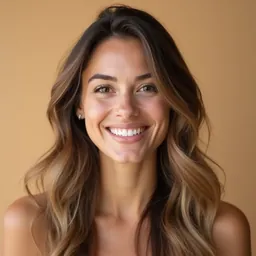
Wispy Fringe on a Shoulder Shag
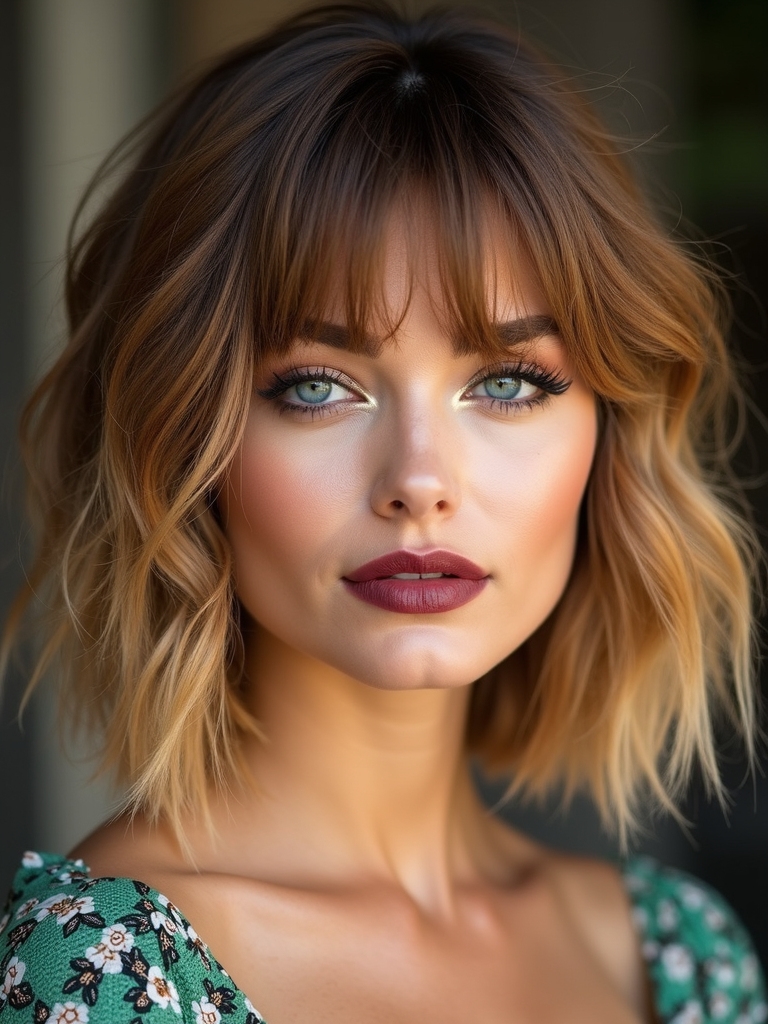
The shag was built for this pairing. Its choppy, stacked layers practically ask for a wispy fringe to finish the frame, and at shoulder length the combination reads cool, undone, and very of-the-moment. The two pieces share the same airy, piece-y texture. To get it:
- Ask for a wispy, point-cut fringe that matches the shag’s choppy texture.
- Keep the face-framing layers short enough to start at the cheekbone.
- Style with texture spray, never a smooth blowout, so both pieces stay piece-y.
“The single instruction that makes or breaks this cut is asking your stylist to connect the bang to the face-framing layers with no disconnection. A fringe cut as its own separate block, floating above unrelated layers, is exactly what makes layers-plus-bangs look busy. Connected, it flows.”
A Fringe on a Blunt Lob
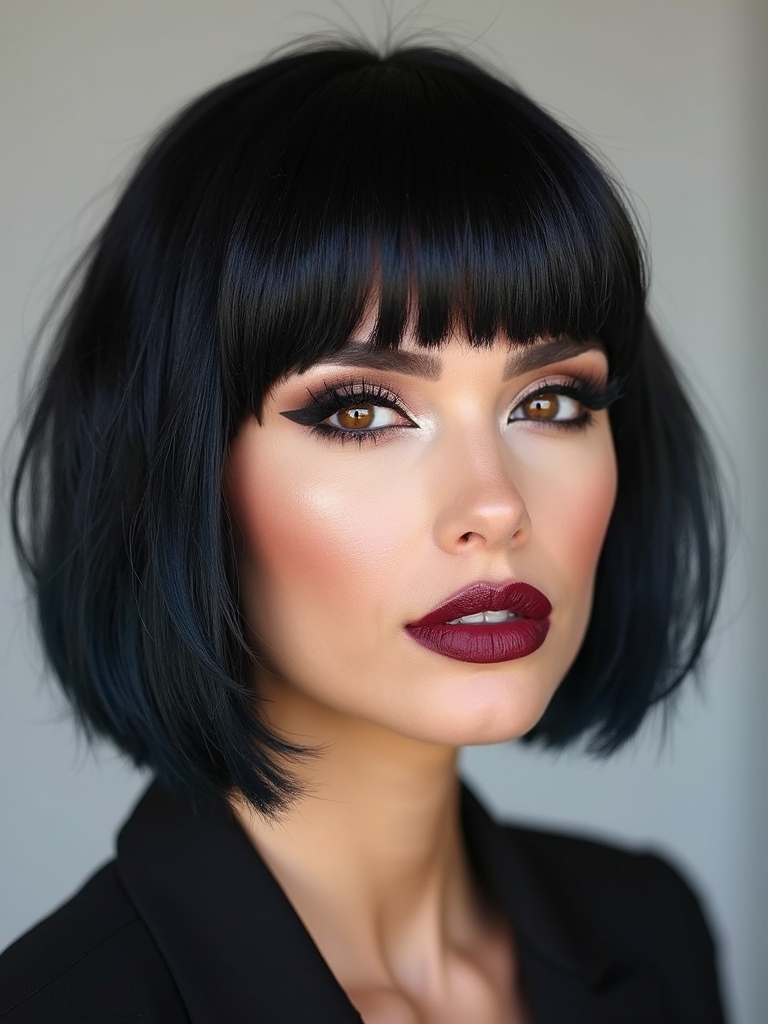
A blunt lob is sharp and structured, and adding bangs plus soft face-framing layers keeps it from feeling stiff. The fringe and the chin-grazing frames bring movement to a cut that can otherwise read severe, softening the strong horizontal line of the blunt edge. Here is the balance:
- Pair the blunt lob with a precise fringe, since a sharp cut wants a sharp bang.
- Add subtle face-framing layers at the chin to break the blunt line.
- For the full pairing, see layered bobs with bangs.
Curly Bangs With Cascading Layers
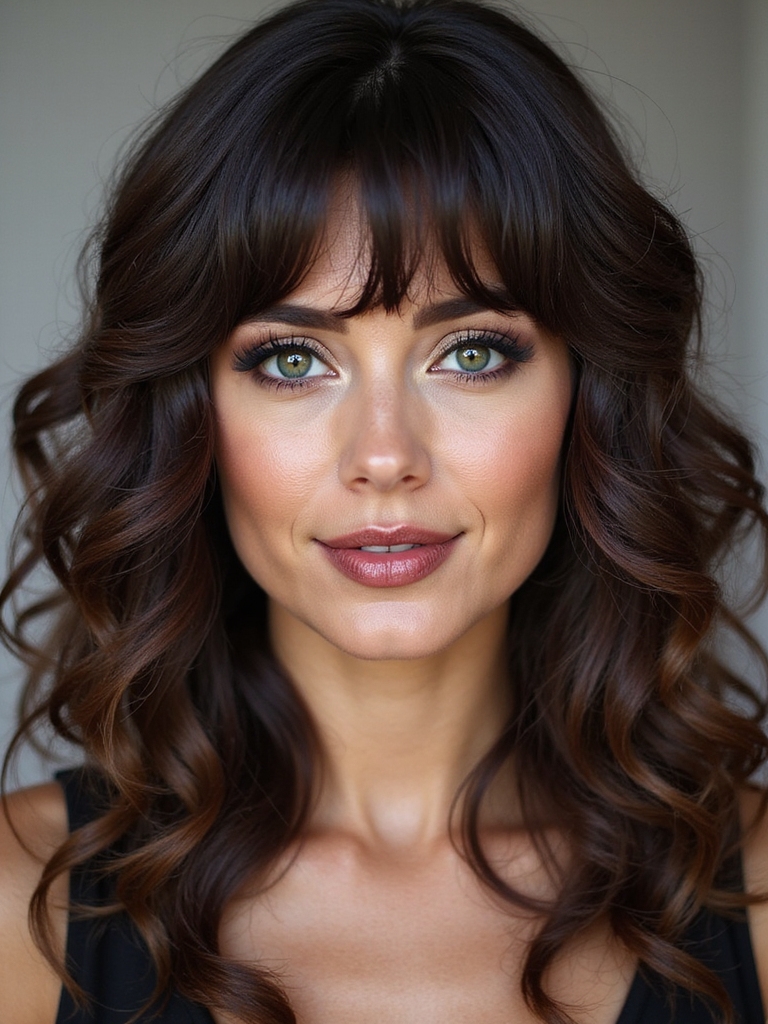
On curly hair, layers and bangs together create the most beautiful cascading volume, as long as both are cut dry. The face-framing layers give the curls somewhere to spring, and the bang becomes a soft cluster of curl over the forehead rather than a flat line. Cut wet, none of it falls where you expect.
It is a frame full of bounce and life. A few specifics:
- Insist both the bang and layers are cut dry on your natural curl pattern.
- Keep the layers long enough to avoid triangle-shaped volume.
- Define with curl cream on damp hair and scrunch; skip the brush.
Which pairing fits you? Match your priority:
🎯I want the easiest grow-out
Choose curtain or split bangs into long layers; both blend away as they grow with no awkward stage.
🎯I want maximum impact
Go for micro bangs with textured layers, or a fringe on a wolf cut, for a bold, high-texture frame.
See-Through Bangs With Feathered Layers

When you want the lightest possible frame, see-through bangs and feathered layers are the answer. The sheer, gapped fringe and the wispy, feathered face frames share the same delicate quality, so the whole look stays airy and young. Nothing about it feels heavy. To keep it light:
- Ask for a sheer, see-through fringe with deliberate gaps.
- Feather the face-framing layers so they taper to fine ends.
- Use the lightest cream only; heavy product collapses the airiness.
Side-Swept Bangs on a Layered Bob
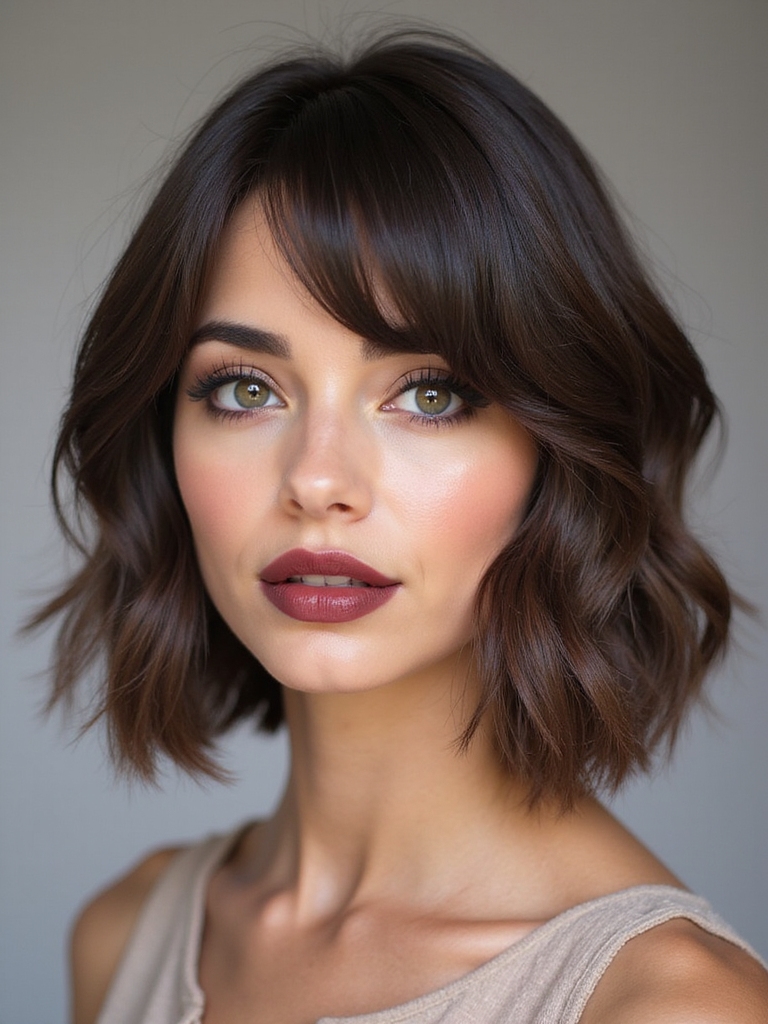
Side-swept bangs are the gentlest way to add a fringe to a layered bob, and the diagonal line plays beautifully against the bob’s shape. The sweep connects into the face-framing layers on one side, creating an asymmetric frame that flatters round and square faces. It is low-commitment and grows out cleanly. To wear it:
- Cut the side-swept fringe long enough to join the face-framing layers.
- Part deep on the heavier side for the strongest diagonal.
- Blow-dry the sweep across with a round brush to set the direction.
📋What to Ask Your Stylist
- ✓Connect the bang to the face-framing layers, with no hard disconnection.
- ✓Match the fringe style to the base cut: precise for blunt, wispy for shaggy.
- ✓Cut curly and coily hair dry, on its natural pattern, by a texture specialist.
Bangs on a Voluminous Wolf Cut
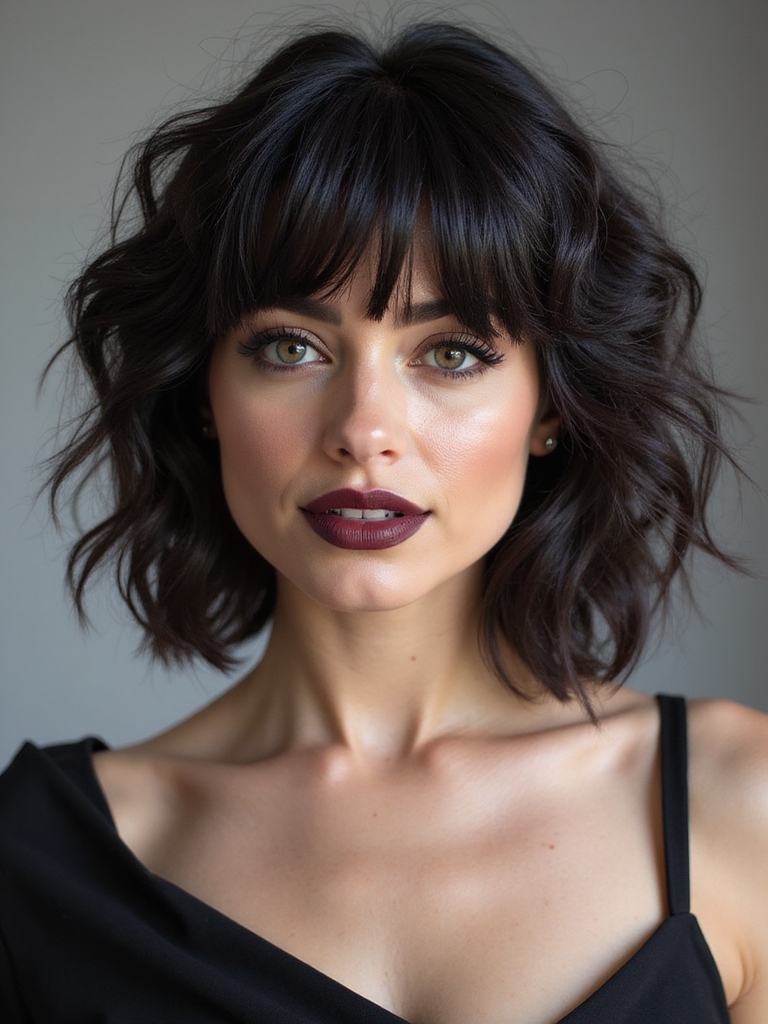
The wolf cut takes the shag’s layering even further, with a spiky, voluminous crown and heavy face-framing pieces, and a fringe completes the frame. It is the boldest, most dramatic pairing here, all volume and movement. The bang and the heavy layers feed the same wild, untamed energy.
It suits anyone who wants maximum texture and is happy to style for it, since volume this big needs daily encouragement. Pair the wolf cut with a long curtain or wispy fringe to keep it wearable rather than costumey.
Micro Bangs With Textured Layers
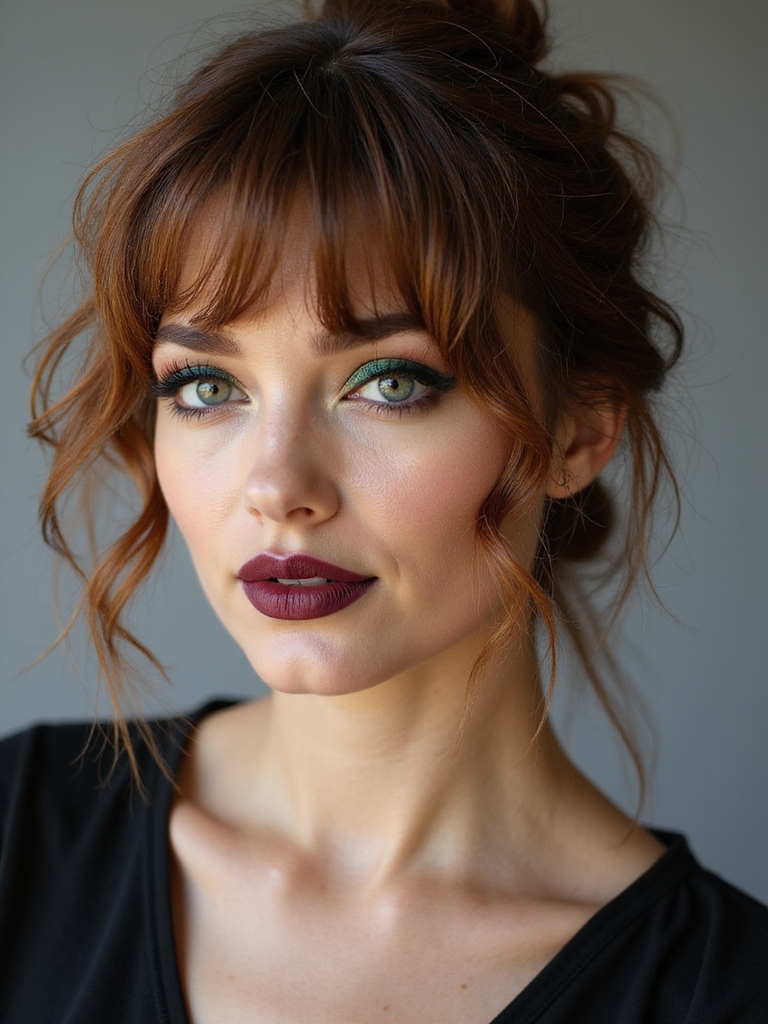
For a fashion-forward frame, a short, piecey micro bang sits above soft, textured face-framing layers, and the contrast is the whole point. The bold blunt fringe up top plays against the soft movement below it, creating a frame that is equal parts edgy and pretty. It is a statement combination.
The micro bang is the highest-maintenance piece, since a short blunt fringe drifts down fast and wants a touch-up every couple of weeks, so it suits women who do not mind the upkeep. Style the layers soft and let the micro fringe be the sharp focal point.
A few terms that help you describe what you want:
📖Disconnection
A deliberate gap in length between two sections; for this cut, you usually want the opposite, a smooth connection.
📖Face-framing layers
Pieces cut shorter around the face, starting at the cheekbone or jaw, to frame the features and add movement.
📖Bottleneck bang
A fringe shorter and rounded in the center, tapering longer at the sides, that blends easily into layers.
Brow-Grazing Bangs on Long Layers
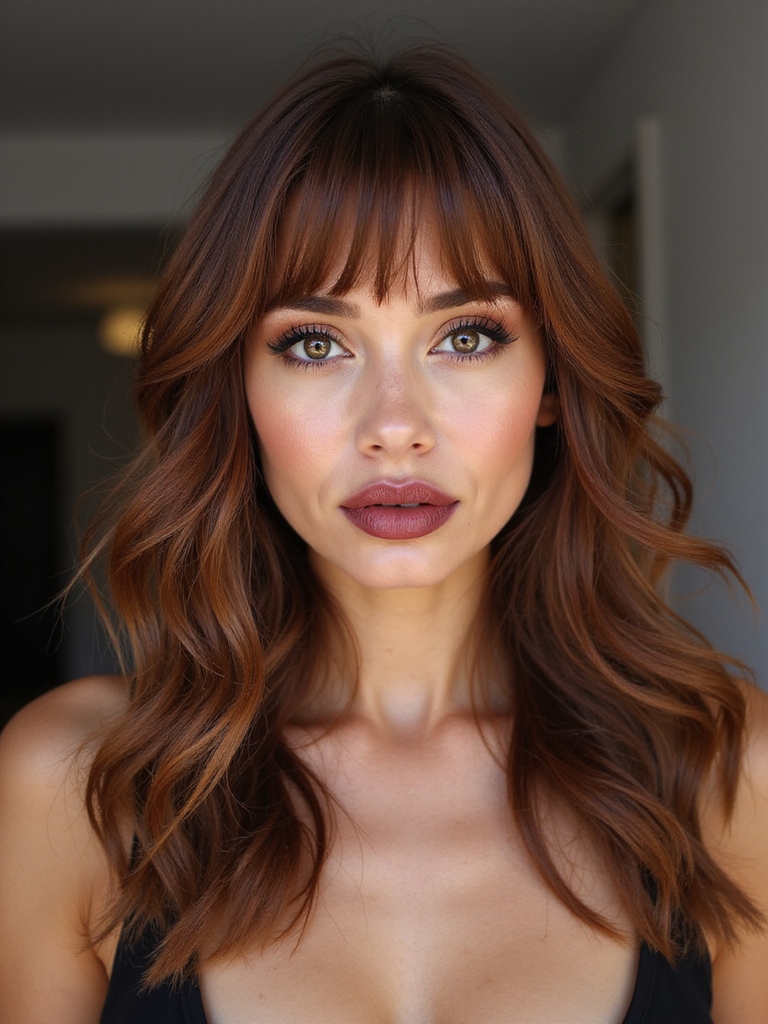
On long hair, brow-grazing bangs with long face-framing layers give you a classic, glamorous frame. The fringe sits right at the brow to open up the eyes, while the long layers sweep down from the cheekbone to add movement to all that length. It is the seventies-inspired frame that flatters nearly everyone.
The length is the appeal: you keep all your hair and still get a transformative frame. The layers stop the long length from hanging flat and lifeless.
Ask for the bang at brow length and the first face-framing layer at the cheekbone, then blended down. For more, see long layered hair with bangs.
Shaped Bangs on Coily Layers
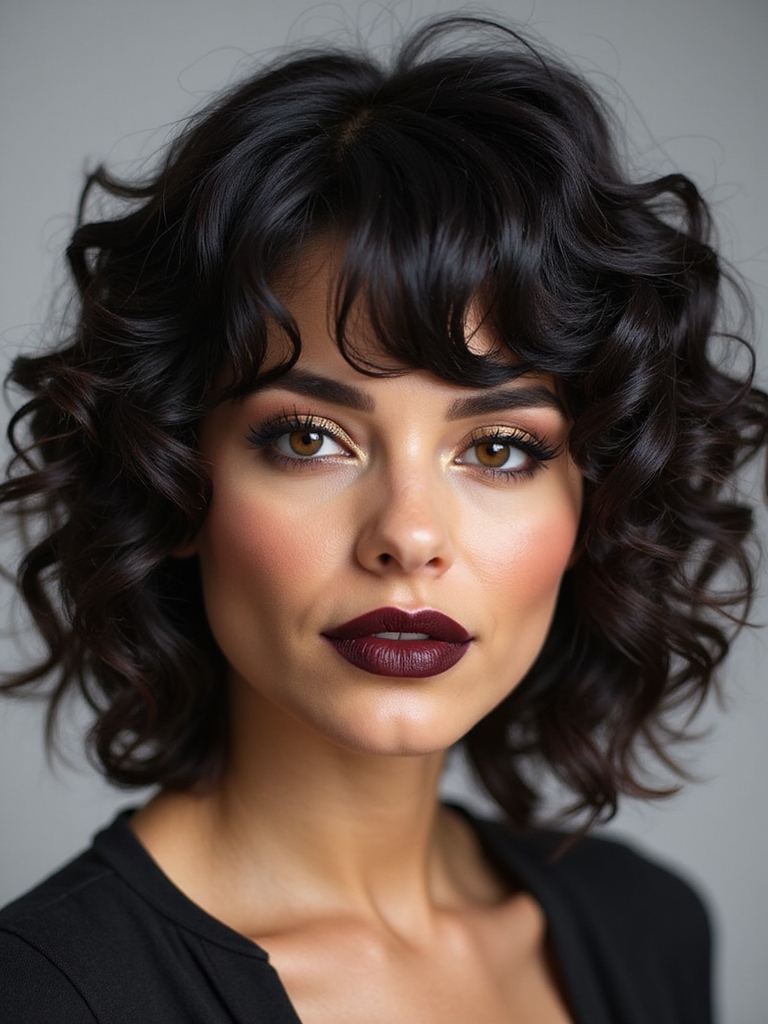
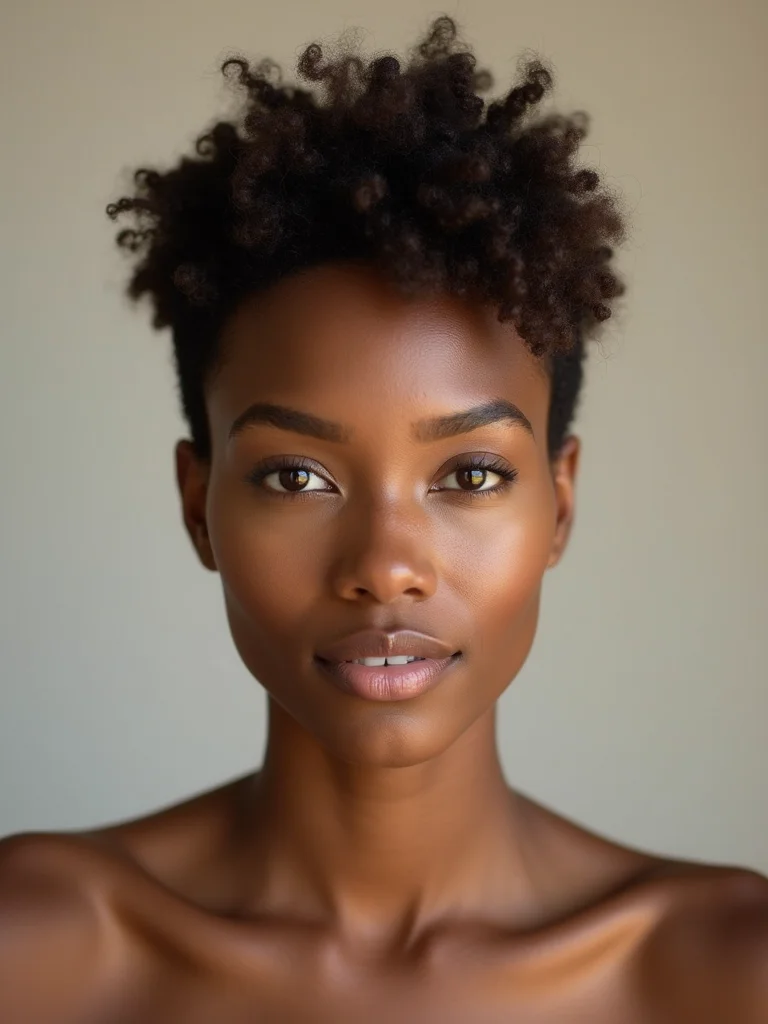
Tightly coiled and kinky hair wears layers and bangs beautifully, and the cut celebrates the natural texture instead of fighting it. Shaped dry, the coils form a soft, rounded frame, and the bang becomes a springy cluster over the forehead, full of life.
This is a frame that honors the curl pattern, and on the right head it is some of the most joyful work I do. A few specifics:
- Have everything cut dry, on your natural coil pattern, by a texture specialist.
- Shape the layers to build a rounded frame, not a flat triangle.
- Moisturize and define with a leave-in and cream; never cut coily hair wet.
Bottleneck Bangs on Beachy Waves
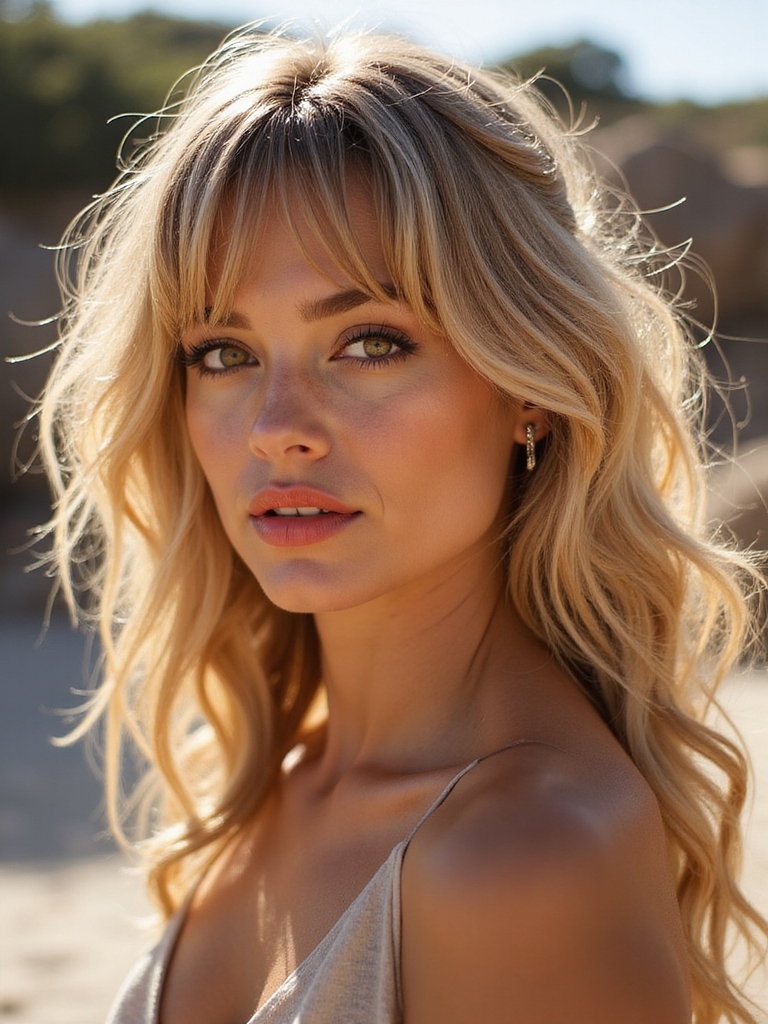
Bottleneck bangs, shorter and rounded in the center then tapering longer at the sides, blend perfectly into face-framing layers on wavy hair. The taper of the bang flows straight into the layers, and the natural wave ties the whole frame together with soft, beachy movement. It is the easy, undone version of the look.
Why Waves Make It Easy
The wave does most of the styling for you, falling into place with little more than a texture spray. It is a relaxed, low-effort frame for women whose hair already waves.
Set it with a sea-salt spray on damp hair and a rough dry, letting the wave carry both the bang and the layers into one soft frame.
A Precision Fringe With Sleek Layers
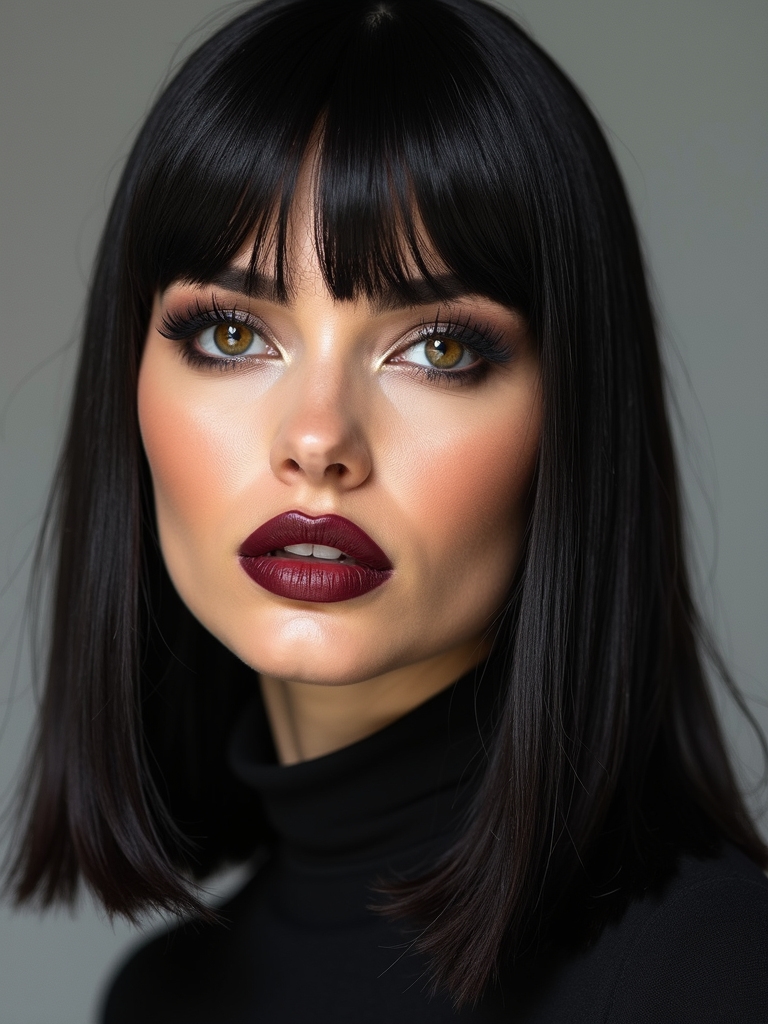
On straight hair, a precise blunt fringe with sleek face-framing layers makes the sharpest, most polished frame of all. Everything is clean lines and high shine, the kind of editorial frame that needs straight hair and a confident hand. Precision is the whole point. To pull it off:
- Ask for a precise, blunt fringe with cleanly cut face-framing layers.
- Blow-dry smooth and finish with serum for a glassy surface.
- Keep up with trims, since a precision cut shows grow-out fast.
Center-Part Curtain Bangs With Wavy Layers

A center-part curtain fringe with wavy face-framing layers is the easygoing, everyday frame so many women want. The middle part keeps it soft and symmetrical, and the waves move the bang and layers together into one relaxed frame. It looks like no effort because it nearly is. A salon cut with both runs around $50 to $90, and most bang trims are free in between.
It is the lowest-styling version of a curtain pairing, falling into place on air-dry days. A little texture spray and a finger-split center is all it needs to look pulled-together.
Flicked-Out Bangs With Shattered Layers
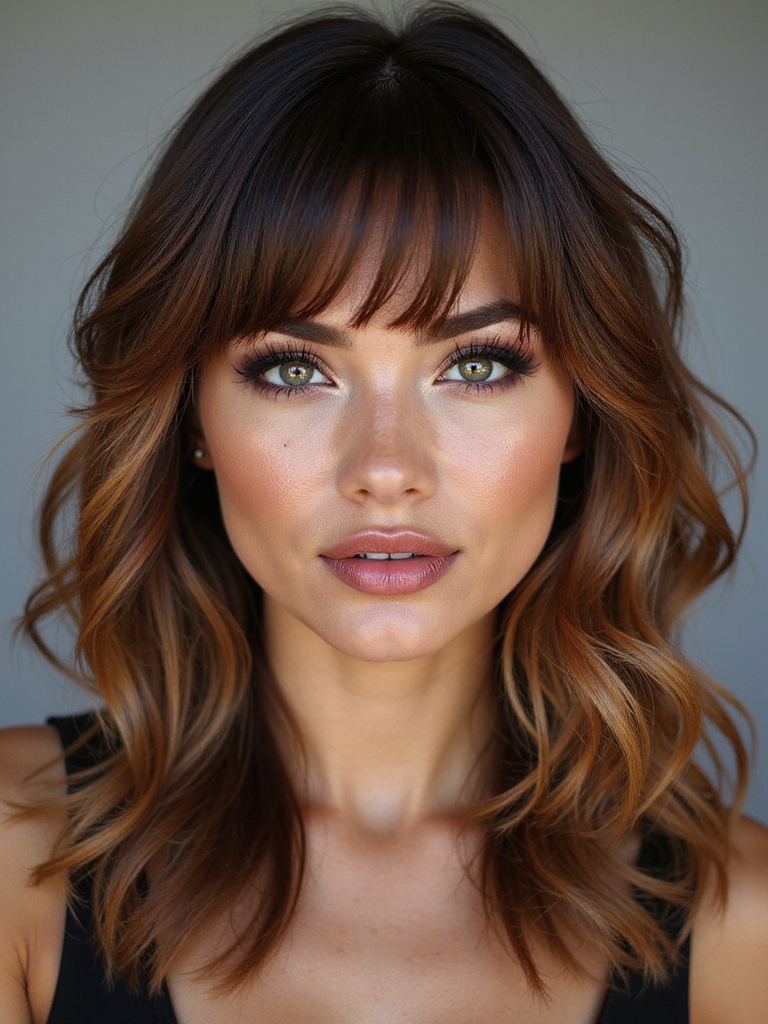
For a playful, retro-leaning frame, flicked-out bangs and shattered layers bring back a flippy seventies energy. The bang flicks up and out at the sides, the heavily textured layers do the same, and the whole frame has bounce and attitude. It is fun, flippy, and a little nostalgic. To style it:
- Ask for heavily textured, shattered layers and a fringe cut to flick.
- Use a round brush to flick the ends up and out, away from the face.
- Finish with a light hairspray to hold the flick through the day.
Grow-Out-Friendly Split Bangs
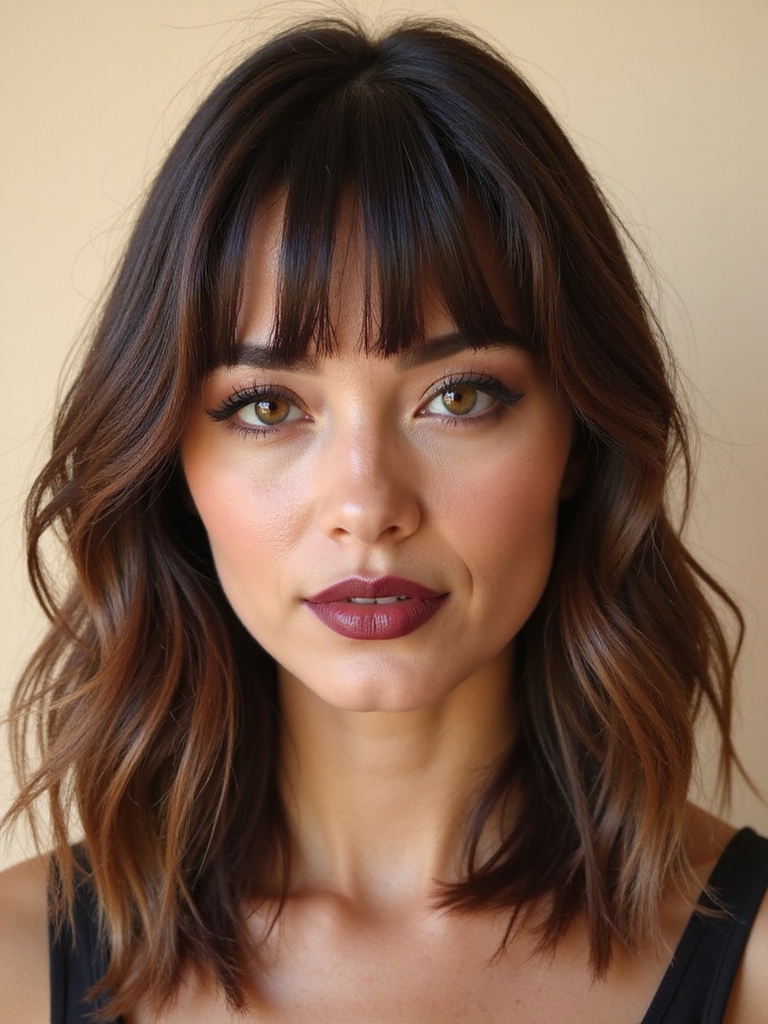
If you love the look but fear the commitment, split bangs with long face-framing layers are the smartest entry point. The center-split fringe and the long layers are designed to blend as they grow, so there is no awkward stage to suffer through. You get the frame now and an easy exit later.
The Painless Way In
This is the version I cut for clients who are bang-curious but burned before. It gives them the transformation with a built-in escape route.
Keep the split center as it lengthens and get a blending trim every few visits, and the bang quietly becomes another long face-framing layer over a couple of months.
Styling Tips for the Whole Frame
The trick to styling layers and bangs together is to treat them as one frame, not two separate jobs. Section the fringe out and dry it before anything else, since it’s the piece that dictates the whole front of the look, then blend the face-framing layers into the same direction it landed in. Whatever the bang does, echo it in the layers, so the two pieces move as one connected frame instead of competing elements.
Match your product to your texture: a smoothing cream and round brush for straight and sleek frames, a texture or sea-salt spray for shags and waves, and curl cream on soaking-wet hair for coils and curls. Keep it light at the fringe, where heavy product shows fastest. For the wider world of fringes, see the face-framing bangs guide and curtain bangs.
Layers and Bangs, Answered
?Do layers and bangs look like too much together?
Not when they are connected. The mistake is cutting the bang as a separate block over unrelated layers. Asked to flow into each other, the fringe simply becomes the shortest layer in one continuous frame.
?Which length is best for layers with bangs?
Every length works, from a lob to long hair, but the fringe style should match the base. Blunt lobs want a precise fringe, shags want a wispy one, and long layers love a soft curtain or brow-grazing bang.
?Can I get this cut on curly or coily hair?
Absolutely, and it looks wonderful, but both the bang and layers must be cut dry on your natural pattern by a stylist who works with texture. Cutting curls wet is the top reason the frame turns out wrong.
?How do I grow out the bangs without an awkward stage?
Choose a center-split or curtain fringe into long layers from the start, keep the center part as it grows, and get a blending trim every few visits. The bang quietly becomes another face-framing layer.
One Frame, Cut to Flow
Layers and bangs were never too much together; they are one cut when a stylist connects them right. From a soft curtain on long swoopy layers to a micro fringe over textured pieces, the looks that work all share the same secret: the fringe is the shortest layer in a frame that flows, not a separate thing stuck on top.
Pick the base cut and length you already love, then choose the fringe that matches its texture, precise for blunt, wispy for shaggy, dry-cut for curls. Bring a photo, ask for the connection, and you will walk out with a frame that flatters your face and grows out without a fight.
More to Explore