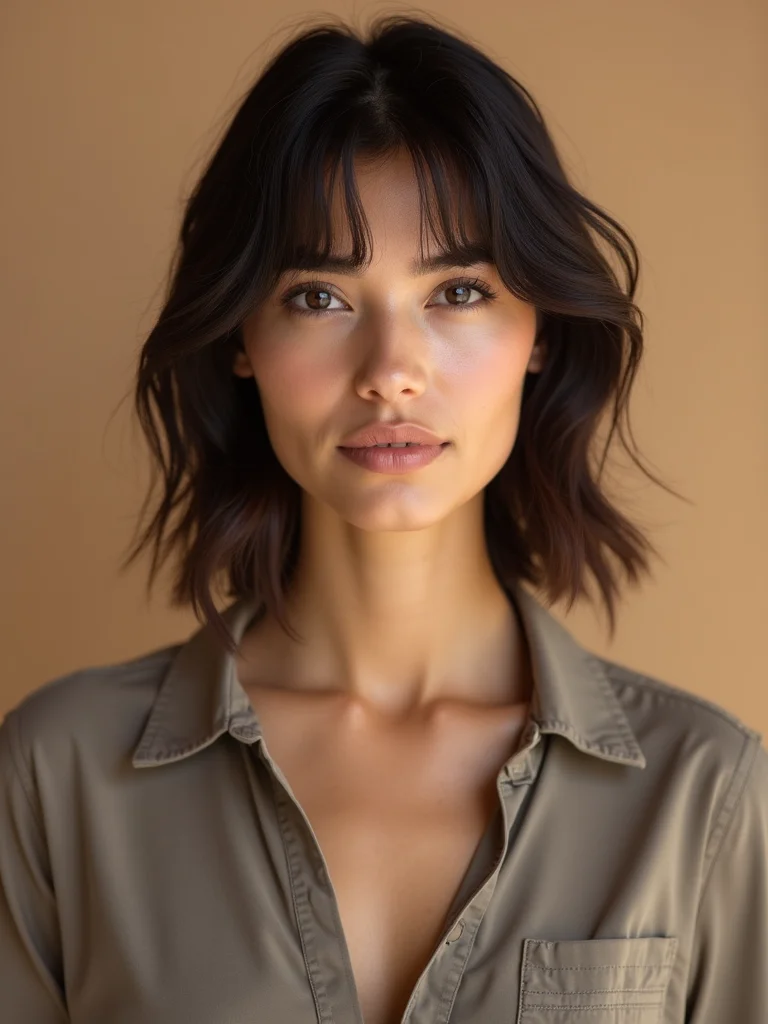
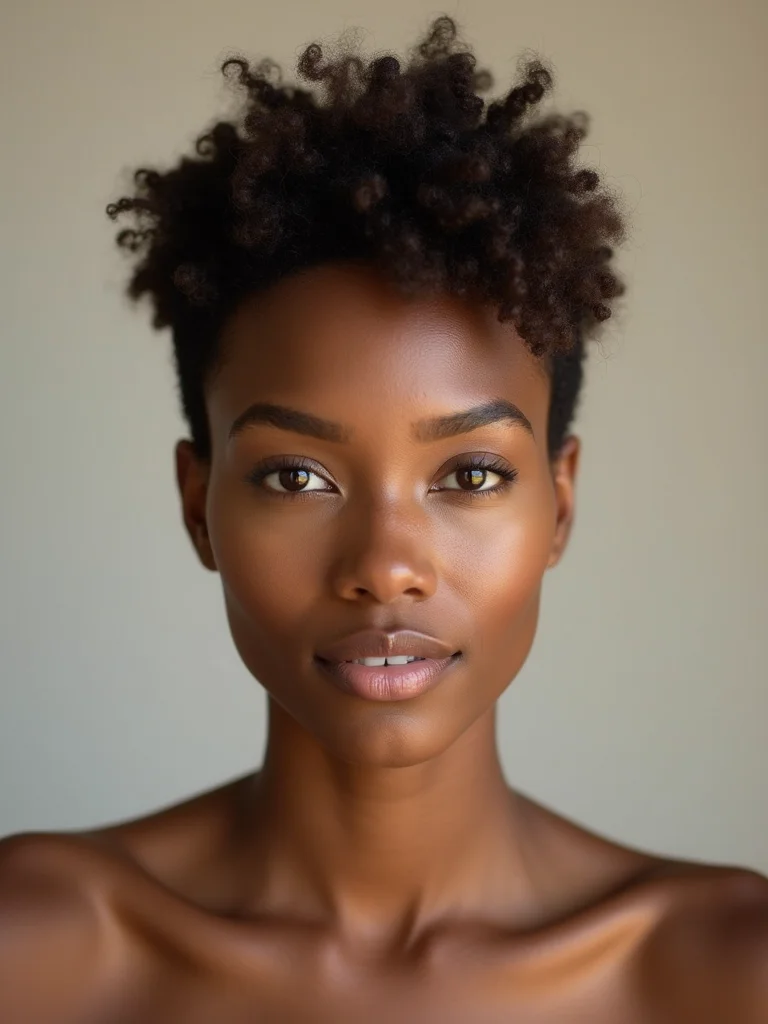
Which fringe actually works with the cut already sitting on your head? That’s the real question, more than which bangs look best in a photo taken on somebody else.
Fifteen pairings below match a specific bang style to a specific cut or texture, plus what the daily styling actually asks for. None of them require starting over on length.
Matching a Fringe to What You Already Have
Curtain and side-swept bangs suit the widest range of faces and grow out with the least drama; blunt and micro bangs make a sharper statement and ask for tighter upkeep in return.
Curly and coily fringes need a dry cut specifically, since a stylist has to see exactly where the curl lands before cutting. Whatever the texture, plan on a trim on a fairly tight rotation and a minute or two of daily reset.
Blunt Bangs With a Sleek Bob
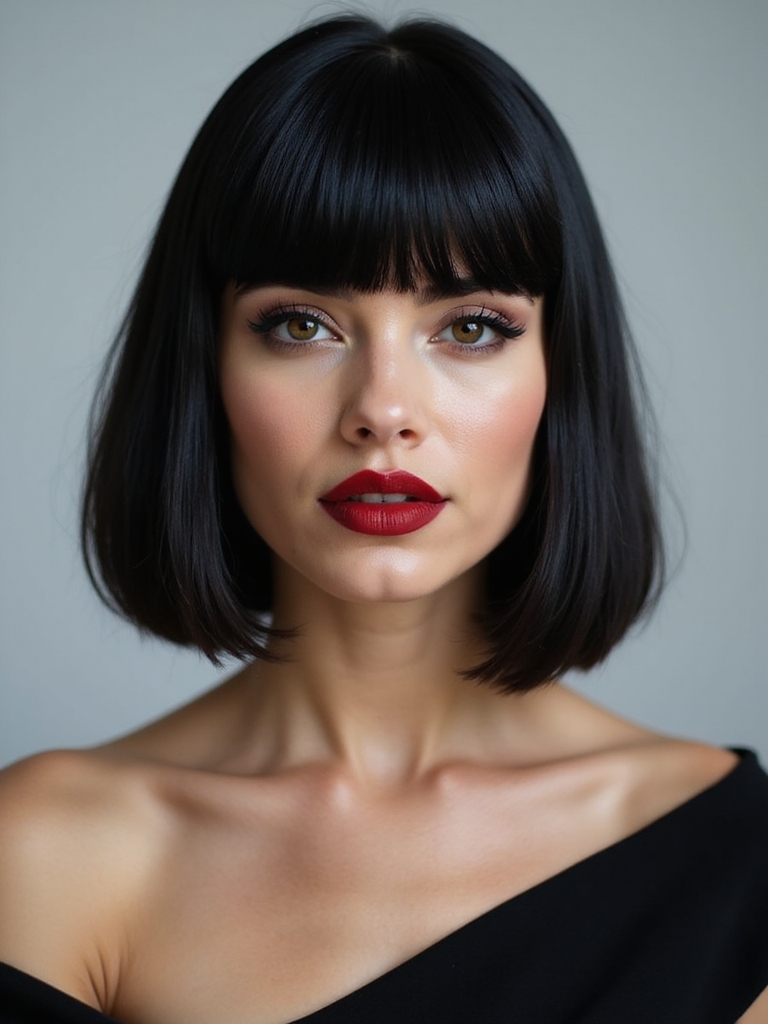
A dense, straight-across fringe paired with a clean-lined bob produces one of the more graphic, fashion-forward combinations on this list. It works best on thick, straight hair, where enough density gives the fringe a solid, deliberate line. Daily upkeep:
- Blow the fringe flat each morning with a round brush; blunt bangs show every bend.
- Smooth the bob with a flat iron and a light shine product for a crisp line.
- Blotting sheets help, since a heavy fringe sitting on the forehead picks up oil fast.
Wispy Bangs on Long Layers

A thin, feathery fringe melts into long, layered hair with almost no visual seam, which makes this one of the gentler ways to try bangs for the first time.
Because the pieces are so light, the styling asks for very little: a quick blast of warm air while brushing to one side and a touch of cream covers most mornings, and the fringe grows into the surrounding layers with no awkward in-between stage.
Two bang myths worth retiring:
❌ Myth: Myth: fine hair can’t carry wispy bangs.
✅ Reality: Fine hair is often the best candidate; there’s little bulk to weigh the movement down.
❌ Myth: Myth: bangs mean daily flat-ironing.
✅ Reality: Wispy and curtain styles in particular need only a round brush and a few minutes, not a full styling session.
Curtain Bangs With Everything

If one fringe actually pairs with almost any hairstyle, it’s the curtain bangs: parted down the middle and swept to either side, soft enough to work on long hair, a lob, or a shag without fighting the rest of the cut.
It flatters a wide spread of face shapes, since the center part and outward sweep balance width without adding a hard line anywhere.
Styling stays under three minutes: sweeping each side away from center with a brush and warm air gives the soft lift, and the fringe grows out gracefully into face-framing pieces with barely a transition stage.
Side-Swept Bangs for Soft Days
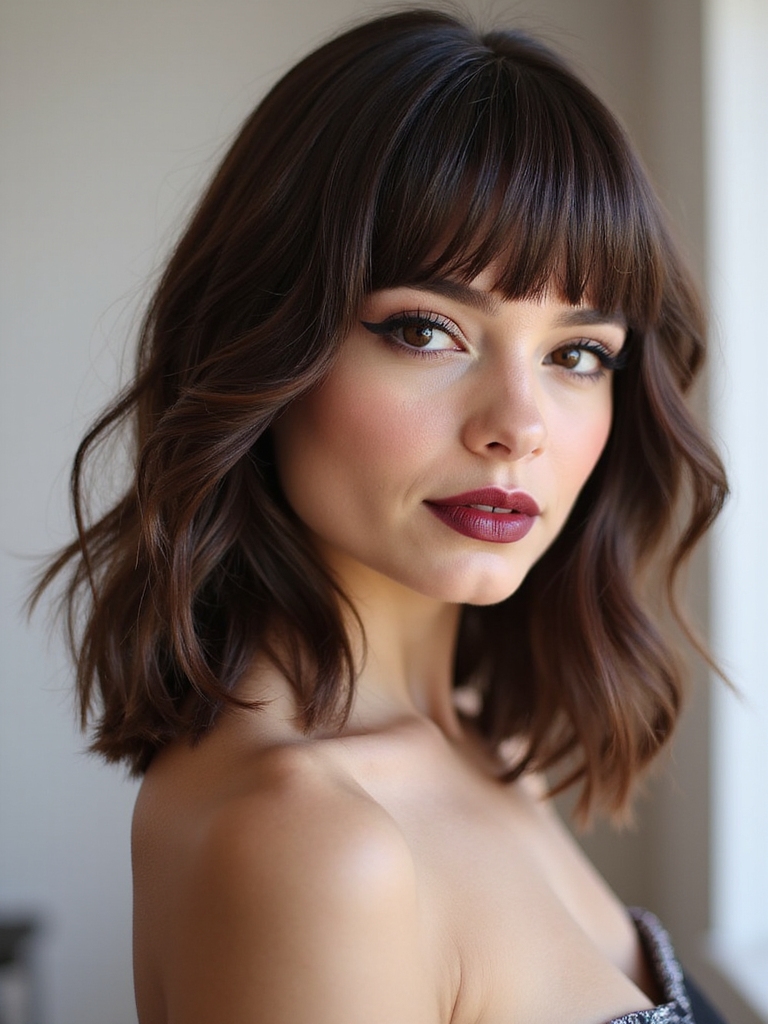
Cut longer and swept diagonally across the forehead, side-swept bangs land as the lower-drama entry point into having a fringe at all.
The diagonal line helps break up width, which tends to suit rounder and squarer face shapes especially well.
Direct the blow-dryer across the bangs to one side, following the fall with a brush, then smooth with a touch of cream. They pair naturally with soft waves and layered cuts.
👍The appeal
- +Grows out with almost no awkward stage
- +Suits a wider range of face shapes than most fringe styles
- +Blends into layered cuts with minimal extra styling
👎Worth knowing
- –Reads as the least dramatic change of any bang style here
- –Can drift into the eyes if cut too short on the diagonal
- –Still needs regular trims to keep the sweep in place
Micro Bangs With a Sharp Cut

Cut high above the brows, a micro fringe is the boldest bang style on this list, and it pairs best with a clean, structured cut, a sharp bob or a pixie, that matches its edge.
There’s nowhere for a hairline or forehead shape to hide at that length, so it’s worth studying both honestly before committing.
The daily styling is minimal, just a little smoothing, but the trims come more often. Expect a shaping trim roughly every couple of weeks to keep the proportions from growing out of balance.
A Shag and Its Piecey Fringe
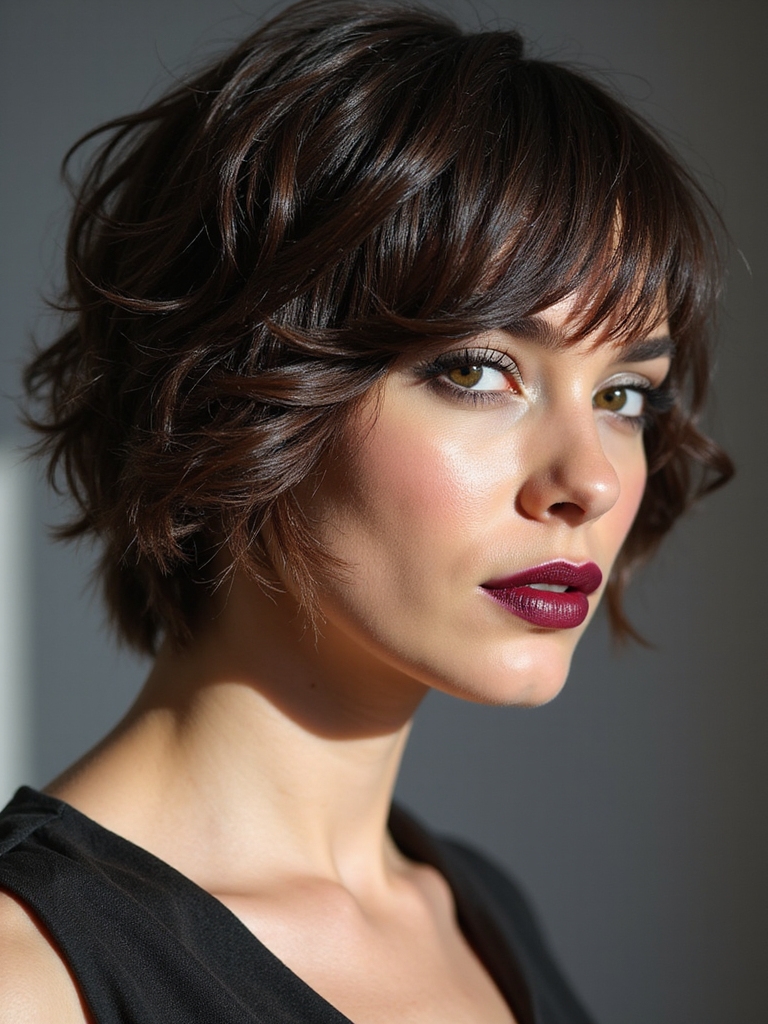
Few pairings feel as current as a textured shag with a choppy, separated fringe, the broken-up bangs acting almost like an extension of the shag’s own layering.
Why Undone Is the Whole Point
The whole look is built to be tousled, which makes it a natural fit for anyone who’d rather not fuss over hair every morning.
A little texture paste worked through the fringe and lengths with just fingers covers the entire routine; the messier it settles, the more it works.
The Lob-and-Bangs Combo
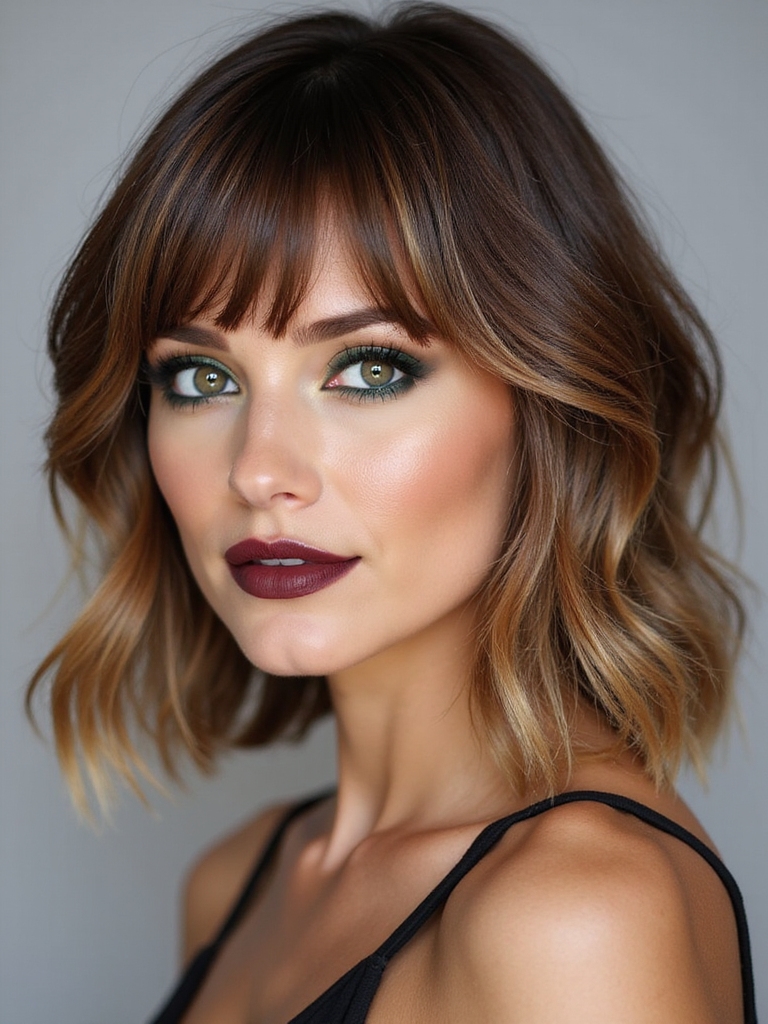
A layered lob with bangs, curtain or full, might be the single most wearable combination on this list, suiting a broad range of face shapes and lifestyles at once.
One Blowout, Two Jobs Done
The collarbone length is short enough to manage easily and long enough to still pull back when needed, and the fringe pulls the whole face-framing effect together.
A quick round-brush blowout gives the lob its movement and shapes the bangs at the same time, keeping the routine to one step rather than two separate ones.
Curly Bangs on Natural Curls

Curly bangs paired with natural curls read as a texture-celebrating look, provided the cut respects how curls actually behave. The fringe needs to be shaped section by section on completely dry hair, letting each spiral settle into its resting position before any cutting happens.
- Insist on a dry cut in the natural curl pattern, never wet.
- Refresh with a water-and-leave-in spritz, scrunching the curl back to life on a second- or third-day basis.
- Keep the fringe consistently moisturized, since dryness is what pulls curl definition apart into frizz.
A Wavy Fringe With Beach Waves

A soft fringe paired with natural waves needs no flat iron at all, the bangs bending along with the same texture running through the rest of the hair.
Letting Texture Do the Styling
A curtain or slightly longer fringe tends to handle wave the most gracefully, since it has enough length to fall into the bend instead of poking straight out.
In my chair, this one gets built the same way twice: mist the bangs and lengths with sea-salt spray while still damp, cup the fringe gently upward toward the scalp a few times to encourage the bend, then leave it completely alone until dry.
Long Hair, Feathered Bangs

Feathered bangs bring a soft, flicked-away shape to long hair, cut in light, airy layers that blend into the surrounding length.
It suits long, healthy hair especially well, and works best on fine to medium density, where the feathering shows up clearly as visible movement.
Curving the ends away from the face with a brush and warm air gives them lift. Working a pea-sized amount of texture cream between the palms before touching the fringe keeps the pieces distinct without weighing them flat.
A quick check before committing to feathered bangs:
1Is the hair on the finer side, not very thick?
The feathering will show clearly on that lighter density.
2Comfortable using a round brush most mornings?
This style leans on that step for its shape; a flat iron won’t recreate the same effect.
Choppy Bangs for Edge
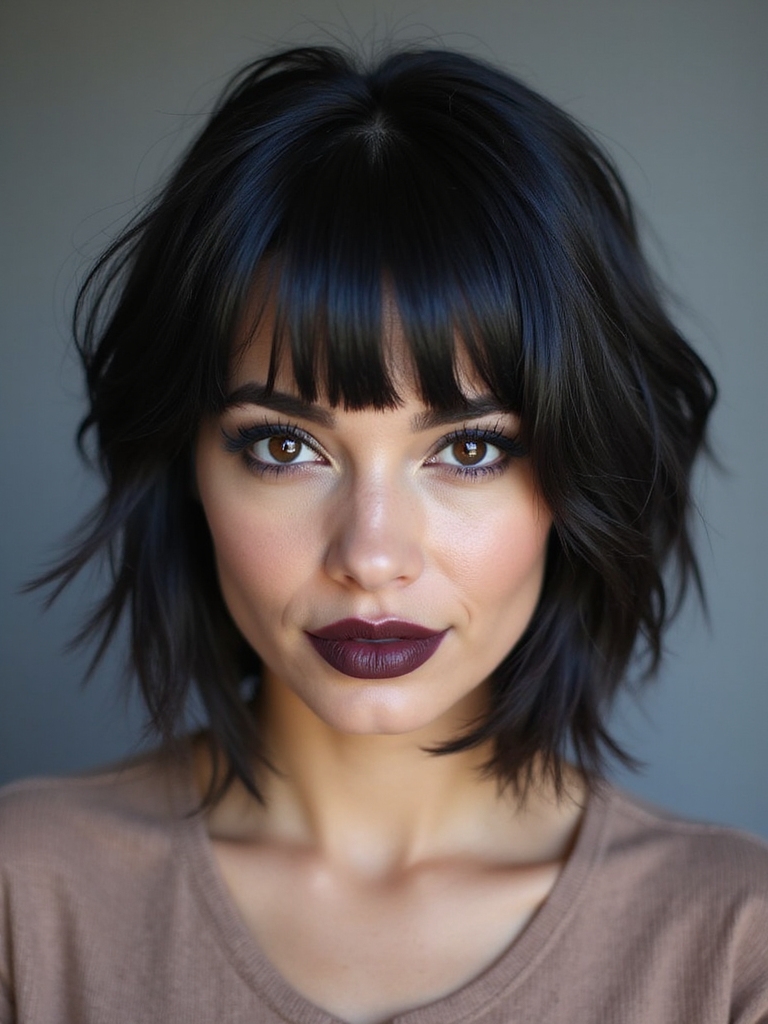
Cut with deep, uneven point-cutting, choppy bangs fall in separated, brow-skimming pieces that add instant edge to bobs, lobs, and shags alike.
The uneven ends mean a precise blow-dry is never really required, which makes this one of the more forgiving fringe styles for a rushed morning.
A fingertip of texture paste worked through and tousled by hand is the entire routine. Because the fringe is meant to look broken up, it hides a cowlick or a rough morning better than a cleaner-edged bang would.
A Coily Fringe With Shape
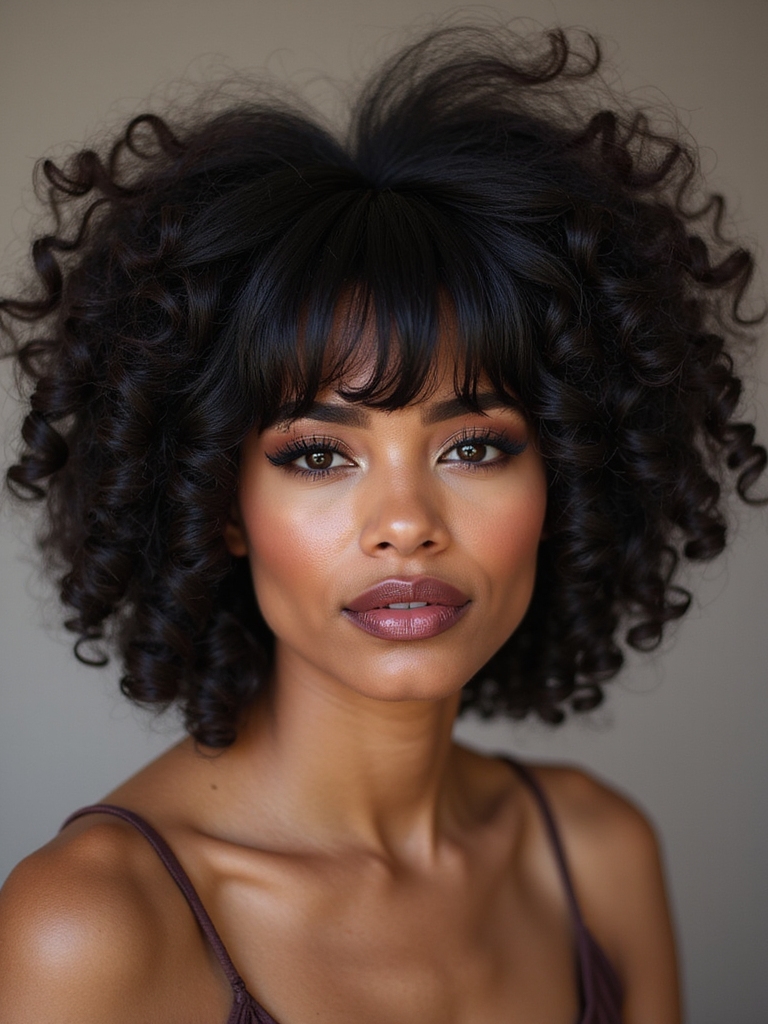
A coily fringe brings a sculptural, rounded frame to the face that no other texture quite replicates, and it pairs well with a coily crop, a tapered cut, or longer natural hair.
Shrinkage matters more here than almost anywhere else; cutting a coily fringe well means working with hair that’s already dried and settled, not guessing at a stretched or wet length, which is a skill set worth confirming a stylist actually has before booking.
- Keep the fringe consistently hydrated with a leave-in or curl cream.
- Refresh with water and product rather than a full re-wet whenever possible.
- Use soft pins or clips near the hairline, where the delicate edges need the most care.
A Sixties-Inspired Fringe
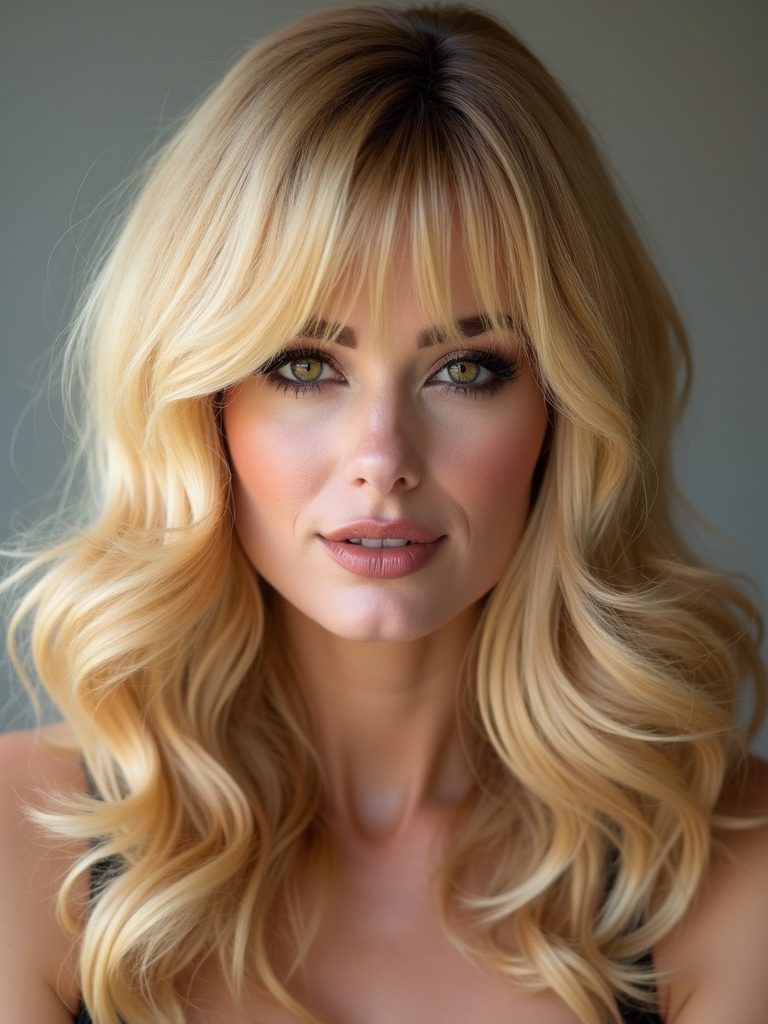
A full, rounded, brow-grazing fringe with the ends curving slightly under brings genuine retro flair, and it pairs especially well with a sleek flip or a voluminous half-up.
It suits hair with enough natural density to hold that fuller shape, straight-to-wavy textures especially.
The styling leans into volume: curving the fringe gently under while blow-drying, plus a little lift at the crown, produces that mod, doll-like line.
A rounded, brow-grazing fringe is one of the few bang styles that photographs as well thirty years from now as it does today.
Ponytails and Updos With Bangs
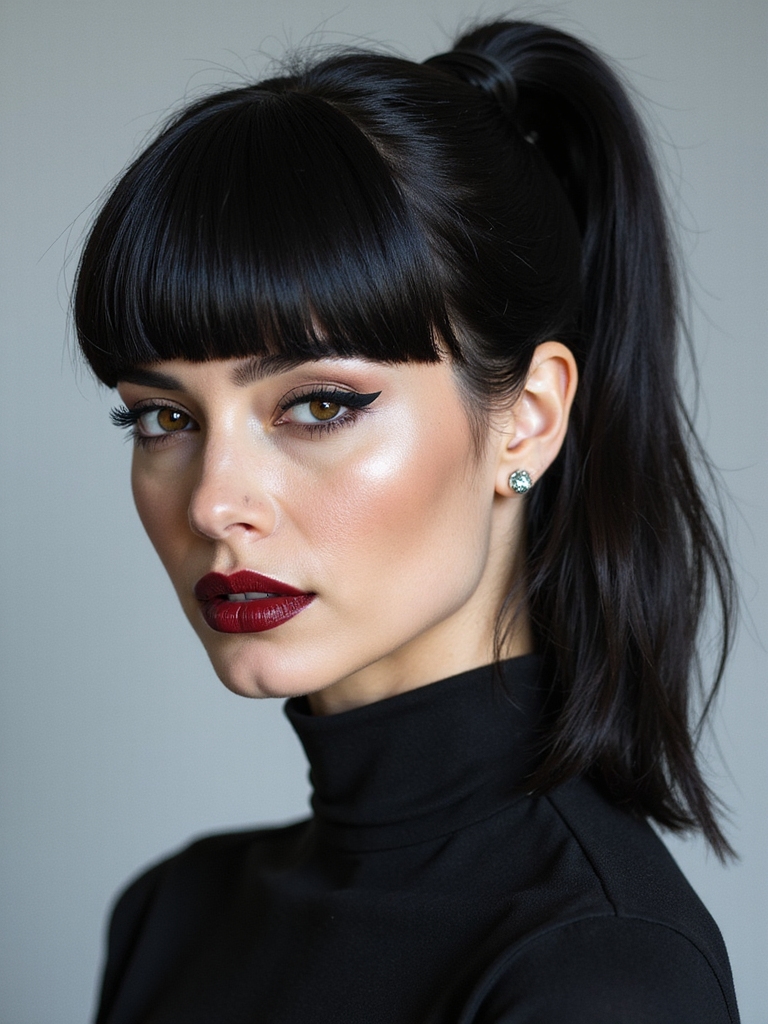
A sleek ponytail or a plain updo can read as severe on its own; a fringe softens the hairline and gives the whole look somewhere for the eye to land.
The move is simple: pull the length up into the ponytail or bun while leaving the fringe, along with a couple of face-framing pieces, out.
- A curtain or wispy fringe tends to look softest against an updo.
- A quick wave through the loose pieces finishes the frame around the face.
- Works with almost any updo, from a rushed bun to a formal style.
Daily Bangs Styling and Refresh

Bangs sit directly against the forehead, which means they pick up oil and lose their shape faster than the rest of the hair does.
The One-Minute Fringe Reset
A midday reset keeps any fringe looking deliberately styled, and it only takes about a minute once the routine is familiar.
Keep a travel-size dry shampoo and a small round brush within reach. A spritz at the roots absorbs oil and restores lift, and a quick pass with the brush resets the shape in seconds.
What to Expect
Bangs are the highest-upkeep part of most haircuts, and knowing that going in saves real frustration later. Most fringes need a trim on a two-to-four-week rotation, and micro bangs even tighter than that, to hold their shape.
Many salons will tidy a fringe they cut for free between full appointments, so it’s always worth asking before booking a separate visit. A standalone bang trim, when it isn’t free, typically runs somewhere around $10 to $20.
Hairstyles With Bangs Questions
?What kind of bangs pair with almost any hairstyle?
Curtain bangs, followed closely by side-swept. Both share a diagonal or center-parted line that a stylist can angle wider or narrower to match a part that’s already there, without asking for any real change in hair type or length first.
?Do bangs work with a ponytail or an updo?
Yes, and for some face shapes it’s actually the more flattering pairing, not the compromise. Higher, tighter updos tend to pull attention upward, and a fringe balances that by giving the eye somewhere to land lower on the face first.
?Can I get bangs without changing the length I already have?
In most cases, yes. A fringe is its own separate cut, worked into the front section only, so whatever length and shape already exists everywhere else stays exactly as it was.
?Why do curly and coily bangs need to be cut dry?
It comes down to shrinkage, and the difference can be dramatic: a section that measures four inches wet might settle at two and a half once fully dry. A dry cut is the only way to see the true, final length before committing to it.
A Fringe Is the Fastest Refresh
Whatever cut is already in place, there’s a version of bangs that pairs with it without touching length at all.
The single biggest factor in getting it right is matching the fringe to the texture actually growing out of the scalp, since technique has to follow texture, not the other way around.
Next Up