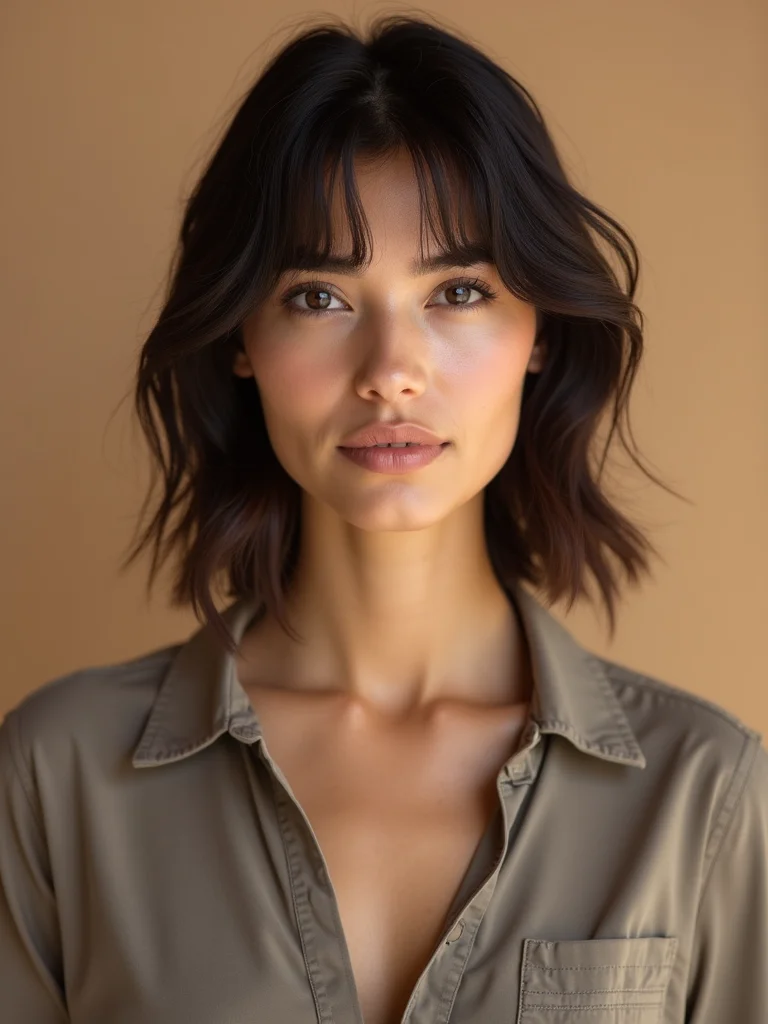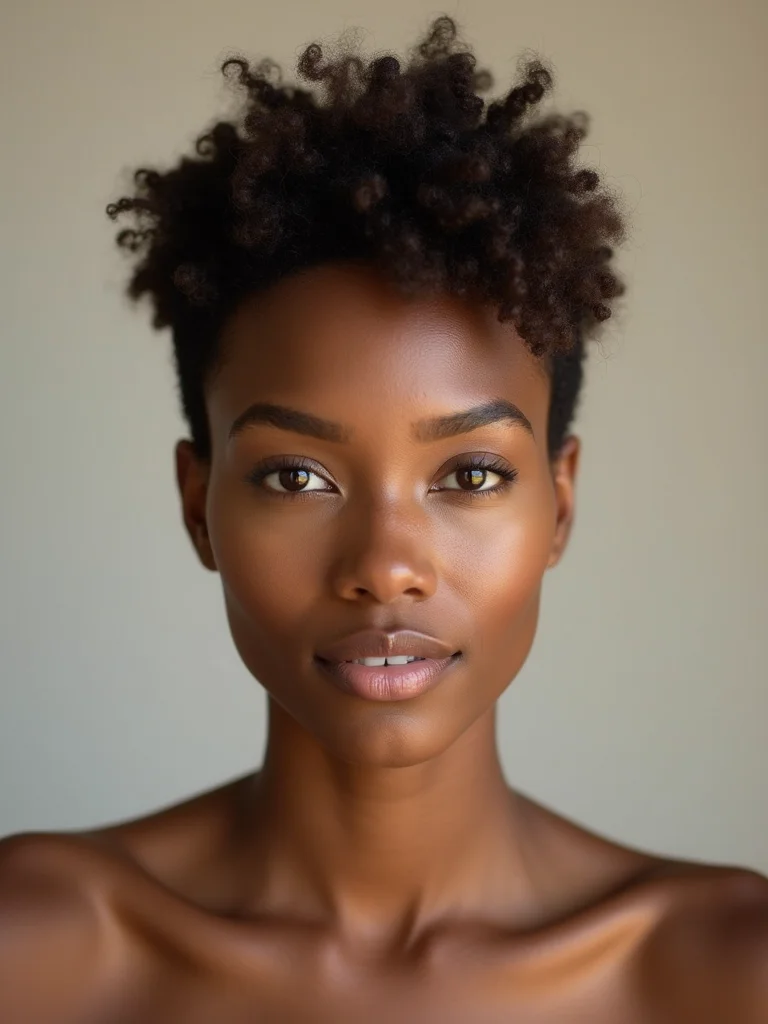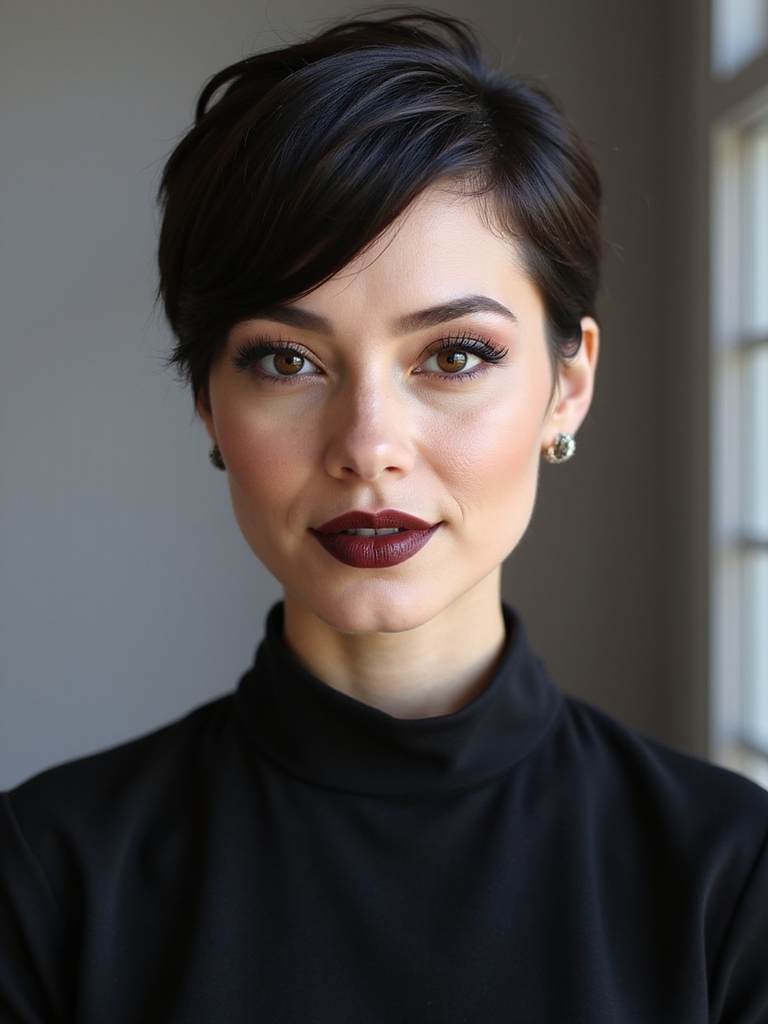
Let me put an old myth to rest: short hair does not widen a round face. I have heard that fear from a hundred clients, and it is simply not true. A pixie can be among the most flattering cuts a round face can wear, as long as it is built the right way.
The whole thing comes down to shape: height on top, angles at the front, and width kept off the sides. Get those three right and a pixie adds the length and definition that balance soft, full cheeks. Below is exactly what flatters a round face, with versions for every hair type.
What Works for a Round Face
| Goal | How | What to avoid |
|---|---|---|
| Add length | Height at the crown and a longer top | A flat, rounded crown |
| Add angles | Asymmetry, a side part, side-swept bangs | A blunt fringe straight across |
| Slim the cheeks | Face-framing length at the front | Width built up at the sides |
What Flatters a Round Face
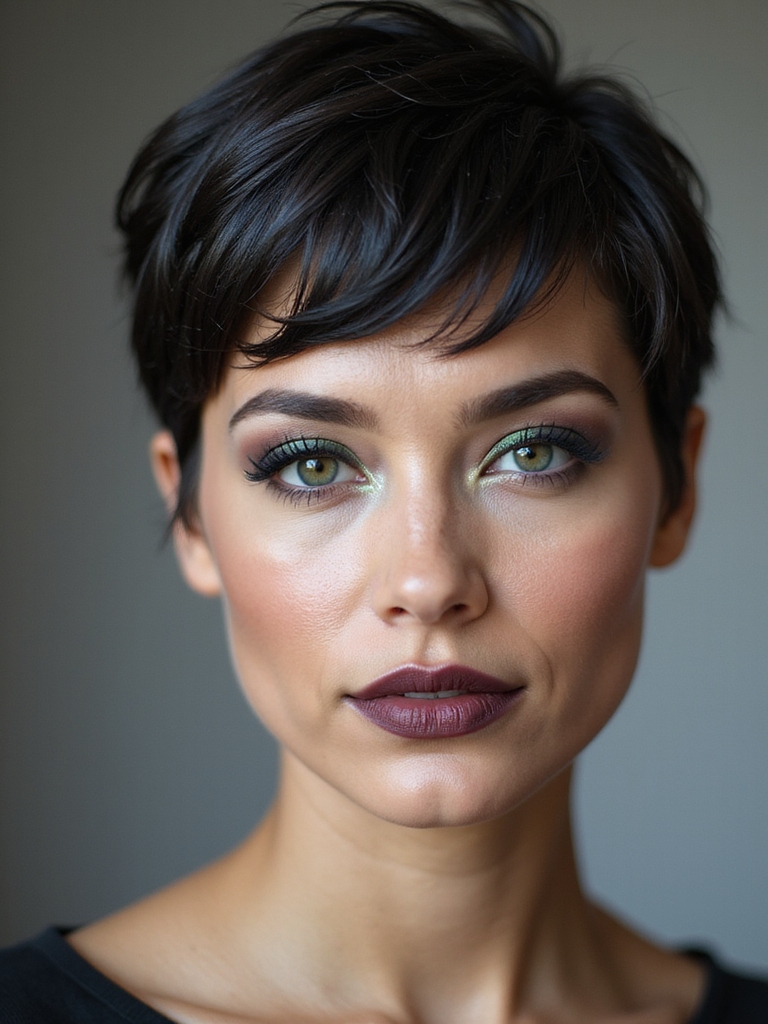
A round face is roughly as wide as it is long, with soft, full cheeks and a gently rounded jaw. The aim with a pixie is to add the length and angles that balance those soft curves.
Balance, not disguise
That does not mean hiding your face. It means choosing height, asymmetry, and framing that gently elongate it, so the cut plays up your features. The clients I see happiest in a pixie almost all have round faces, which still surprises people.
Get those elements right and a pixie flatters a round face as well as it flatters any shape. See our broader pixie cut guide for the full range.
The Elements That Slim and Elongate
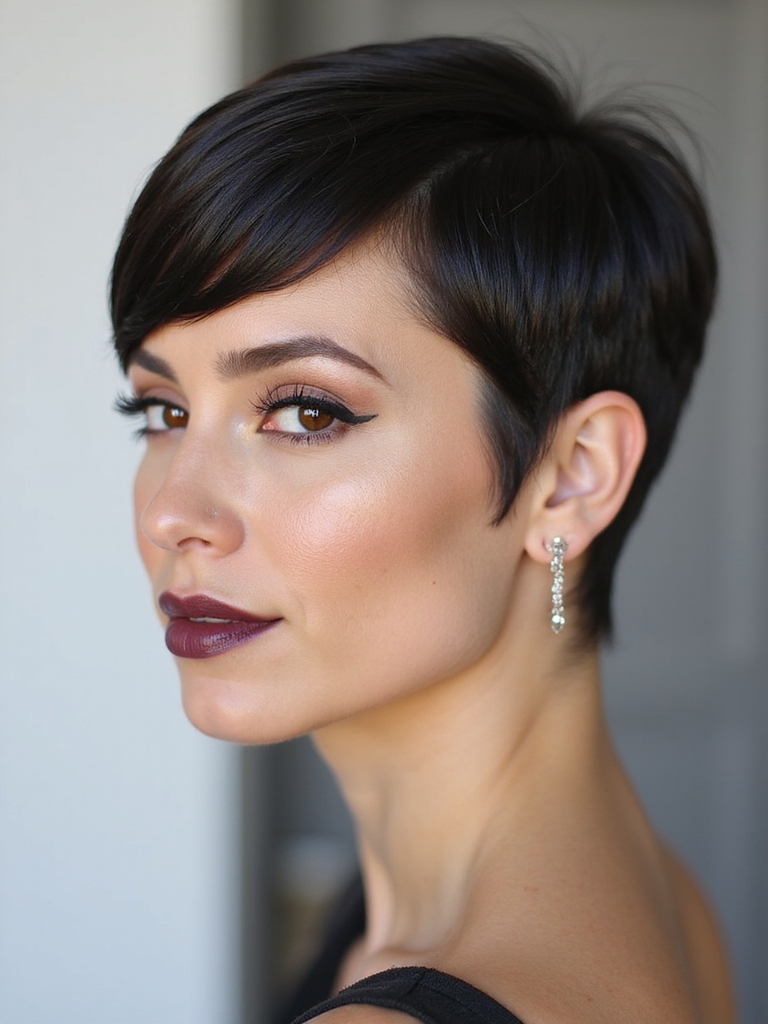
A few features do most of the flattering work, whatever version you choose. Height at the crown draws the eye upward and adds length, while angles and asymmetry break up the soft curves.
Face-framing length at the front slims the cheeks, and keeping volume off the sides stops the face from reading wider. Hold those four ideas in mind and almost any pixie can be tuned to flatter you.
Building a round-face pixie? Prioritize these two things.
1Where do you need length?
Add it up top, with crown height and a longer front, never at the sides.
2Where do you need angles?
At the front, with a side-swept fringe, a side part, or an asymmetrical line.
Long Pixie With Side-Swept Bangs
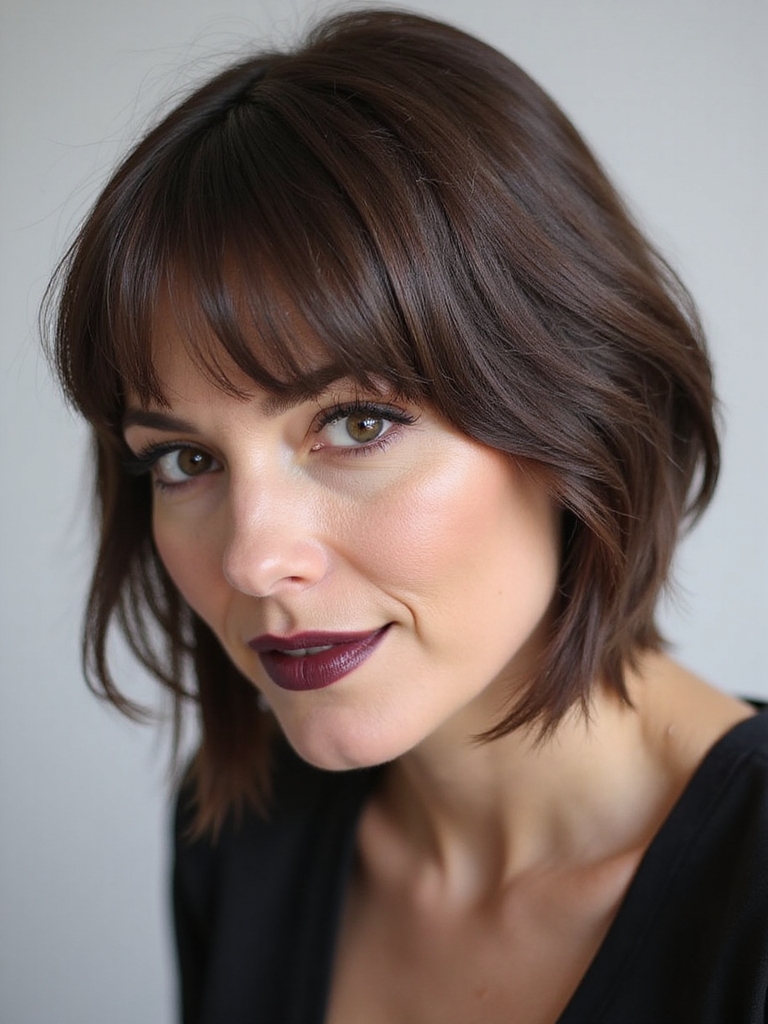
A long pixie with side-swept bangs is the single most flattering choice for a round face, and the one I suggest first in most consultations.
The diagonal fringe creates an angle that slims and lengthens, while the longer top adds height and the side sweep frames the cheeks. Every element a round face wants, in one cut.
It is also the easiest to grow out and the gentlest to wear. See our long pixie guide for more length.
Feathered Layers for Soft Movement
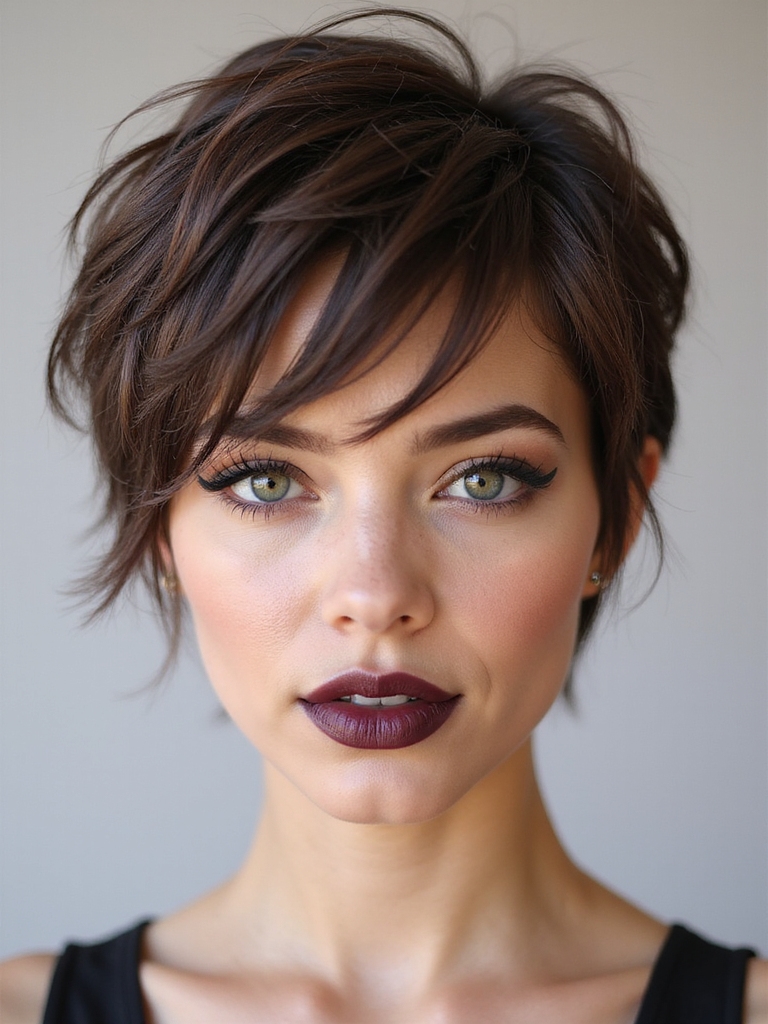
Feathered layers add lift and airy texture that keep a pixie from reading round. The feathering builds gentle height at the crown and breaks up the curve along the jawline without going sharp anywhere, so the transition from hair to cheek feels soft rather than blunt.
This works well for someone drawn to the slimming angles a round face benefits from but not ready for anything severe. The tapered pieces around the face still create real definition, just with a much gentler hand than an asymmetrical or micro cut would use, so it suits a first-timer especially well.
🅰️Long-Top Pixie
The safest round-face choice. Height up top, length at the front to frame the cheeks, easy to grow out. Start here.
🅱️Micro Pixie
Bolder and trickier on a round face, since it removes the length that slims. Works with strong crown height and a sharp side part.
Asymmetrical Pixie for Built-In Angles
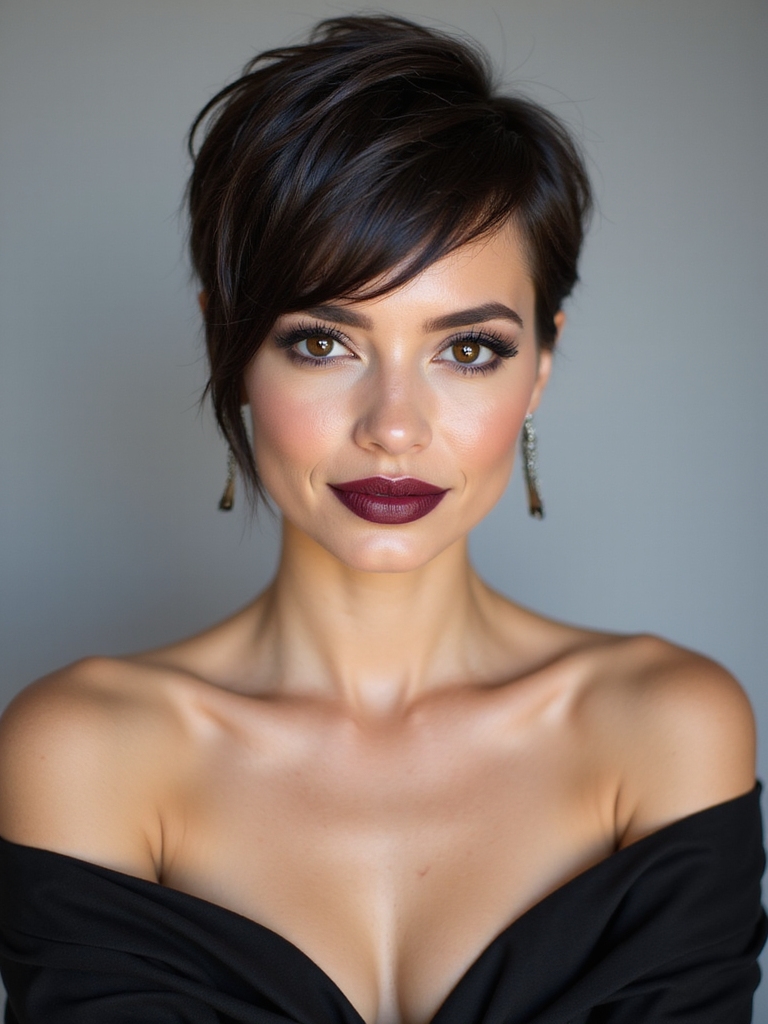
An asymmetrical pixie cuts one side longer than the other, and that diagonal line is slimming by design, cutting straight across the soft curves of a round face.
It draws the eye on a diagonal, which lengthens the face and adds a modern edge at the same time. An asymmetrical line is among the most reliable ways to build angles into a round shape, and the effect holds up whether the longer side sweeps forward across the cheek or tucks back behind the ear.
Voluminous-Crown Pixie for Height
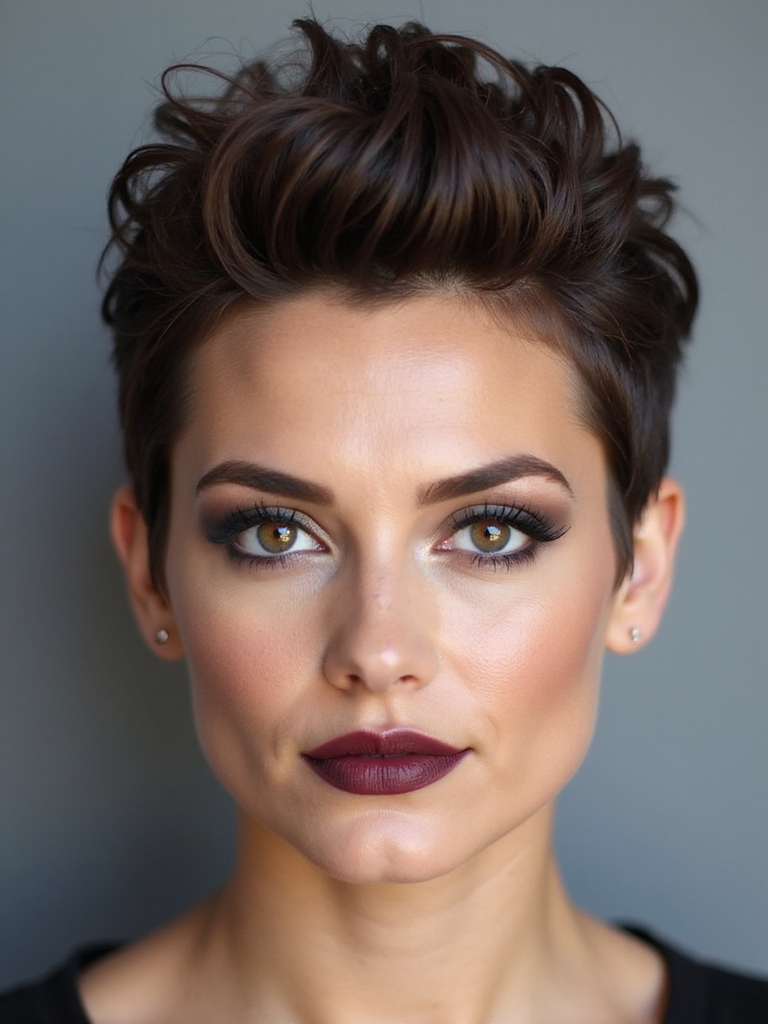
A voluminous-crown pixie piles height at the top of the head, the most direct way to add length to a round face. The lift pulls the eye up and visually stretches the whole silhouette.
Tease the crown lightly or ask for stacked layers that build it in, and keep the sides close so the width stays off your cheeks. Height up, width off, is the round-face formula. See our short pixie haircuts for shapes.
👍Why a pixie flatters a round face
- +Height and angles add the length a round face wants
- +Face-framing slims the cheeks
- +Endlessly adjustable to your features
👎What to watch
- –Width built at the sides widens the face; keep it off
- –A flat crown and a blunt fringe work against you
- –It needs a trim every 4 to 6 weeks to hold the shape
Choosing the Right Fringe
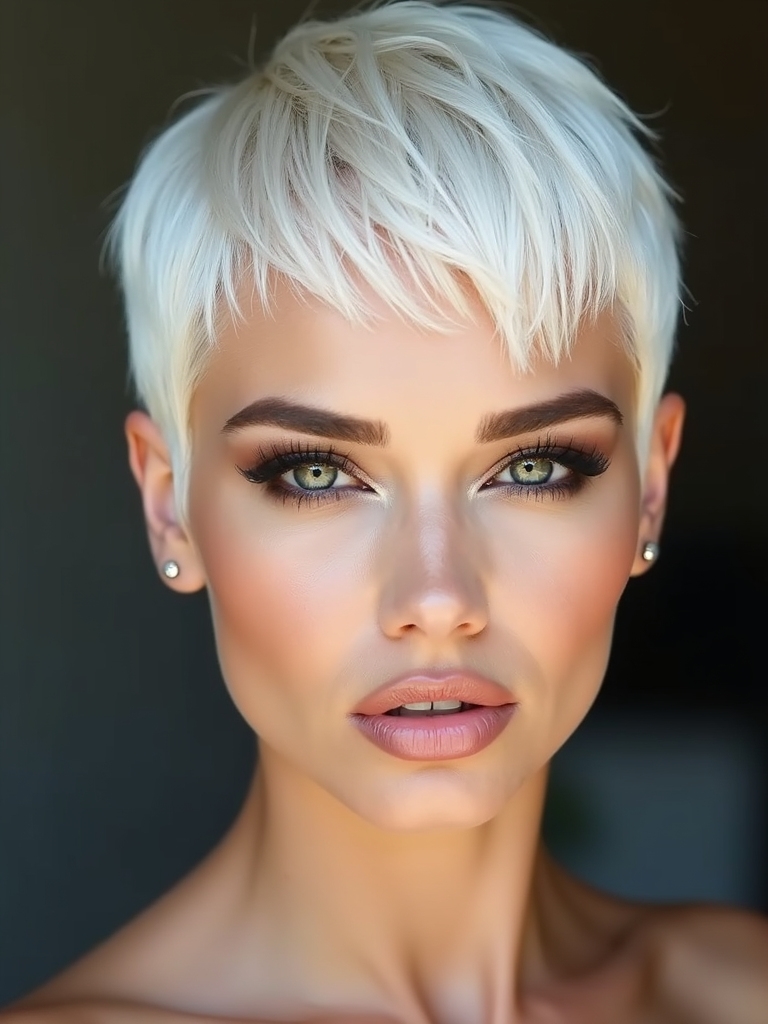
Fringe makes or breaks a round-face pixie. A side-swept or angled fringe adds the diagonal that slims, and a soft, wispy fringe frames the eyes gently. I tell every round-faced client the fringe is where the magic happens.
What to skip is a heavy, blunt fringe straight across the forehead, which echoes the round shape and shortens the face. When in doubt, go diagonal.
Tapered Nape for a Sculpted Silhouette
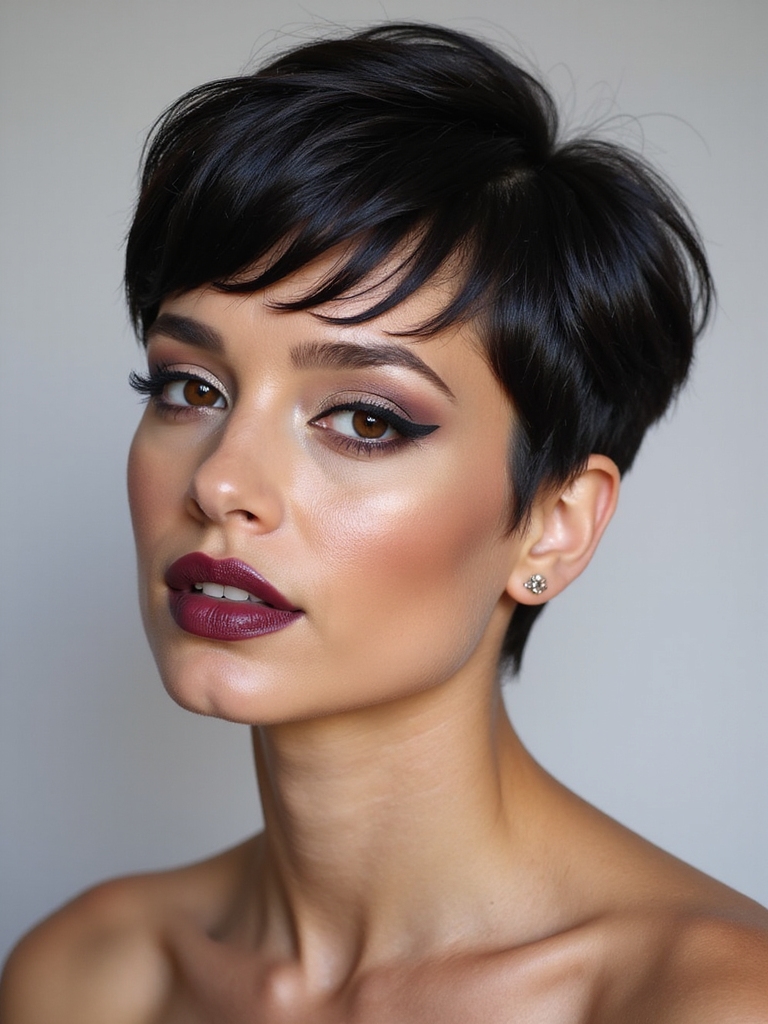
A tapered nape keeps the back and sides close and clean, sculpting a silhouette that stays narrow exactly where a round face needs it. The taper draws the line down and in.
It pairs with almost any top, adding the structure that balances soft cheeks. It is a quiet detail that does a lot of flattering work.
Keep it tidy with a quick cleanup between full cuts, and the whole shape stays sharp and slimming.
A round face does not need a pixie to hide it. It needs one to lengthen it, and that is a completely different cut.
Curly Pixie on a Round Face
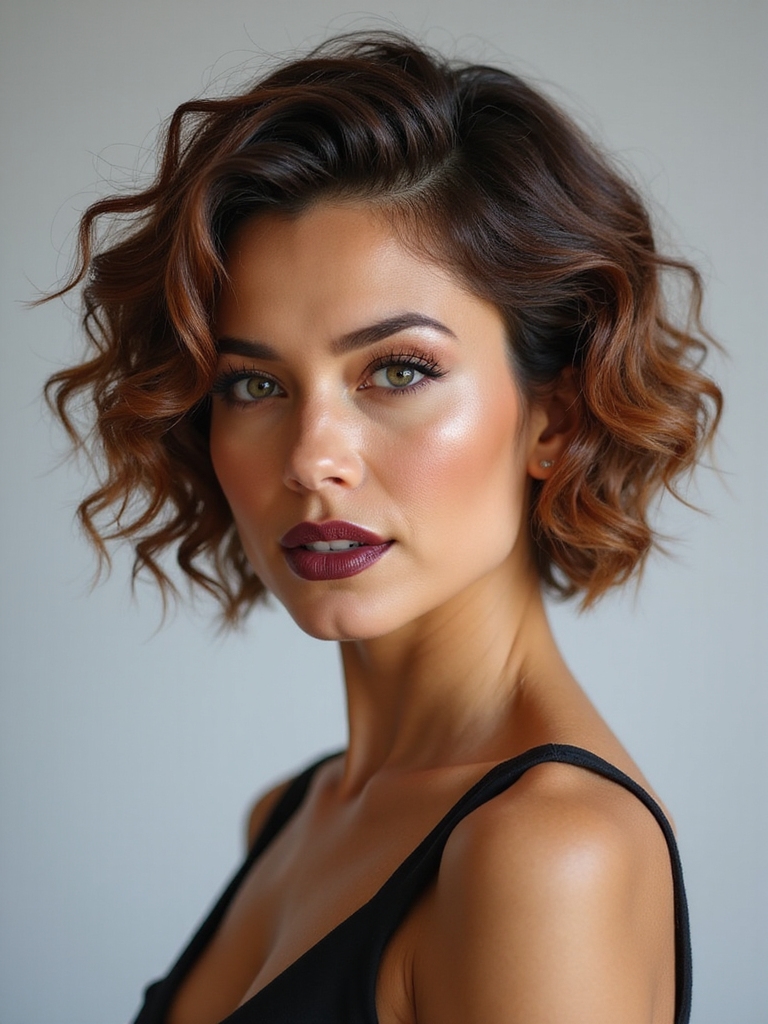
Curly hair and a round face work together beautifully; the key is directing the volume up and back toward the crown. A curly pixie with height at the crown adds length, while close sides keep the width in check.
It has to be shaped on dry hair so the cut accounts for how your coils spring and the stylist can place the volume where it flatters. Cut wet, curls can pouf out at the sides, the one thing a round face does not want.
- Build the volume up at the crown, not out at the sides
- Insist on a dry cut so the coils are shaped where they land
- See our curly pixie styles for more
A Pixie for Fine Hair on a Round Face
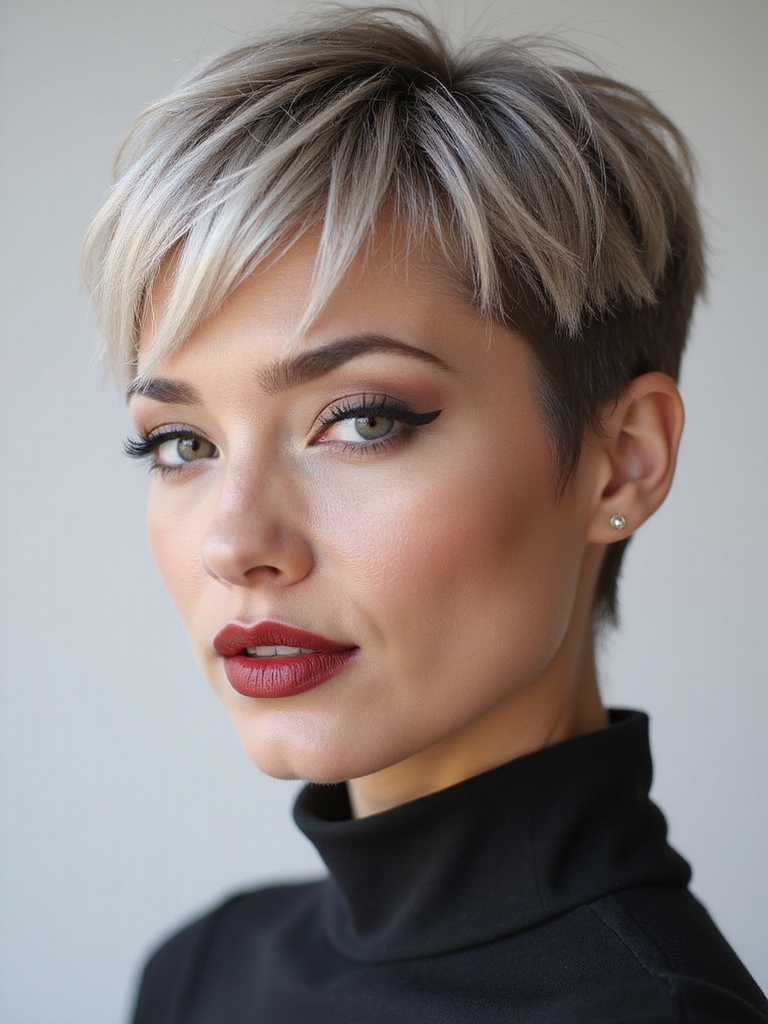
Fine hair on a round face needs built-in height, since it tends to fall flat and lose the lift that does the slimming. Layering and a stacked or teased crown create the volume the cut depends on, and lightweight product keeps that lift holding through the day.
- Layer and stack the crown to build height
- Use lightweight product so the lift holds
- Keep the sides close to stay narrow
A Pixie for Thick Hair on a Round Face
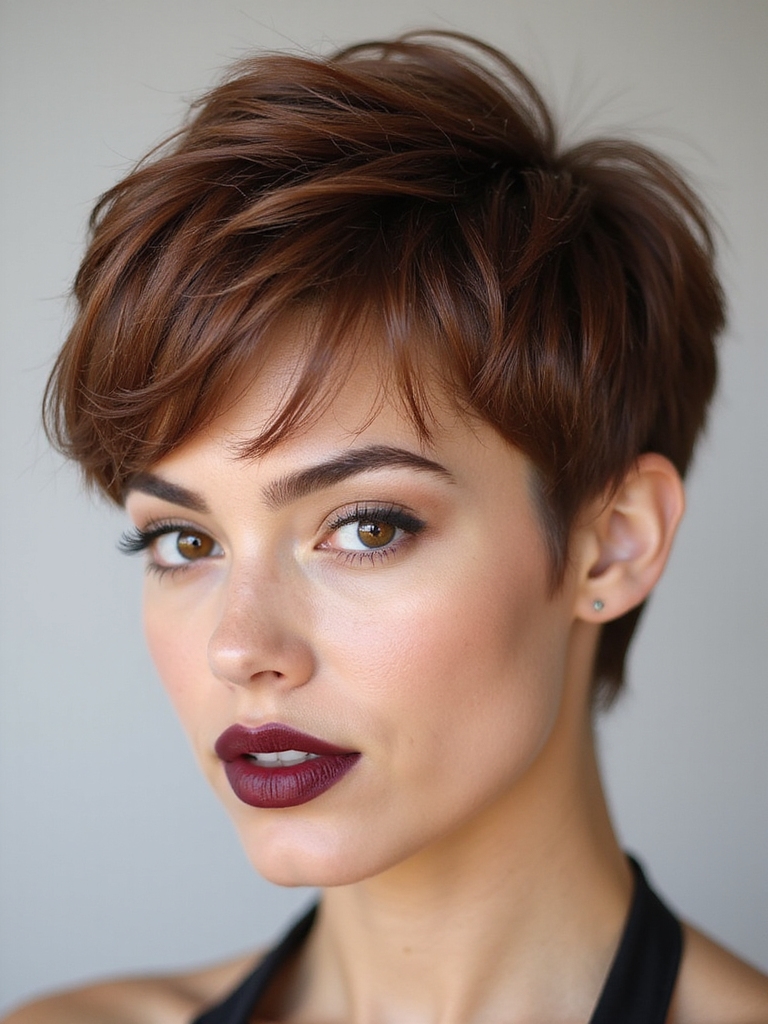
Thick hair has the opposite problem: plenty of volume, but it can build at the sides and widen a round face if it is not controlled. The fix is internal layering and a tapered or undercut side that removes bulk exactly where width hurts. Keep the weight up top for height and take it out at the sides, and thick hair makes one of the strongest round-face pixies there is.
- Debulk the sides with internal layers or an undercut
- Keep the volume up top, off the cheeks
- Thick hair holds crown height especially well
Color Contouring for Definition
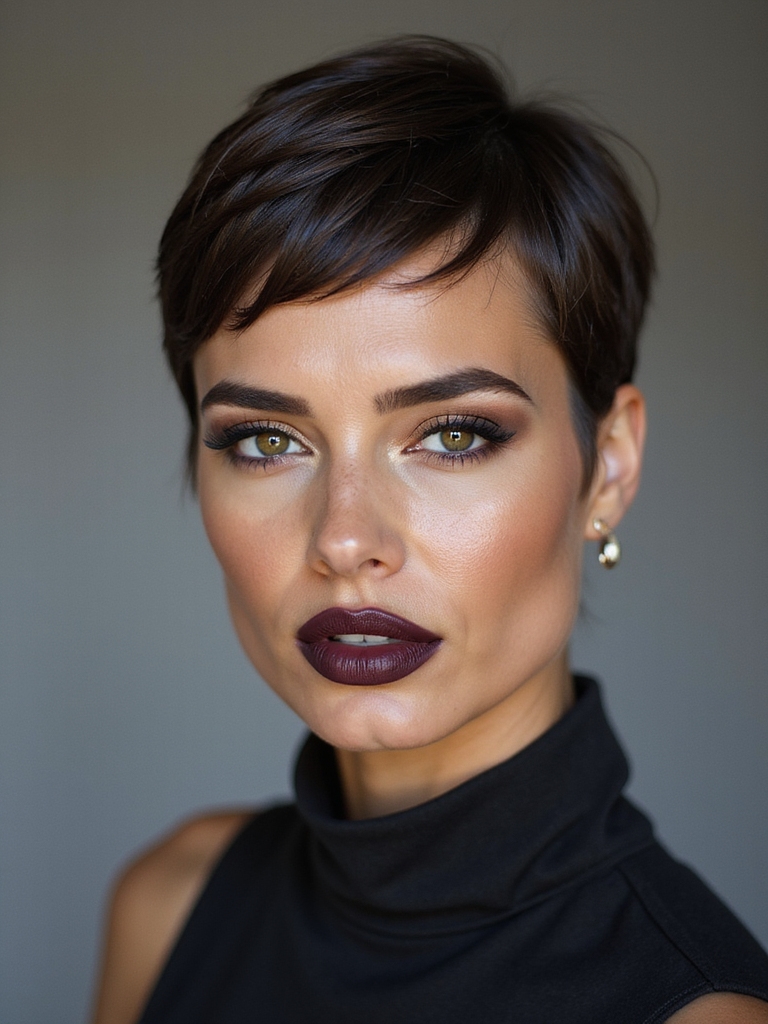
Color can flatter a round face as much as the cut does. Darker, shadowed roots and brighter face-framing pieces create the illusion of depth and length, the same way contouring does on the face. Placed cleverly, color draws the eye up and in, reinforcing every slimming angle the cut already built. It is the finishing trick most people never think to ask for.
- Shadowed roots add depth and the look of height
- Brighter face-framing pieces slim and draw the eye in
- Works alongside the cut to reinforce its angles
Styling a Round-Face Pixie
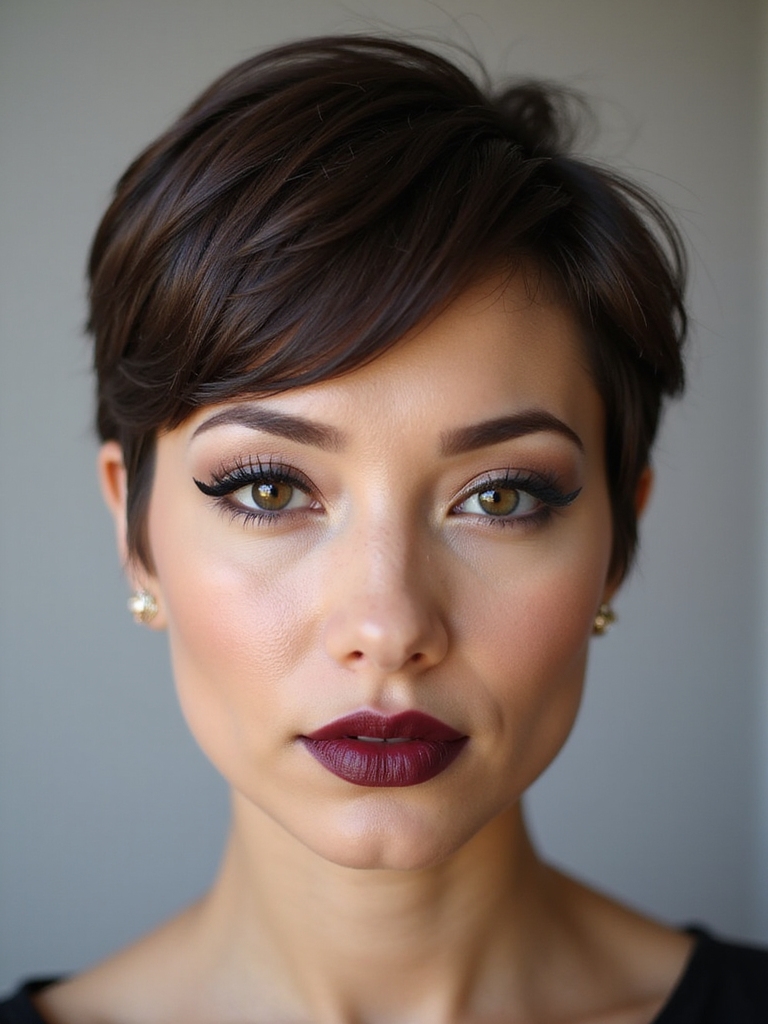
Styling a round-face pixie is mostly about directing volume up and back toward the crown. A medium round brush lifts the top section by section while the blow-dryer works underneath, and a flat palm keeps the sides smooth and close.
A little mousse at the root before drying gives fine hair the staying power it needs, and a light paste pieces out the top for height. Skip anything that puffs the sides.
The whole routine takes about five minutes once you have the motion down. Lift up top, keep it close at the sides, and you are done.
A Flattering Grow-Out Plan
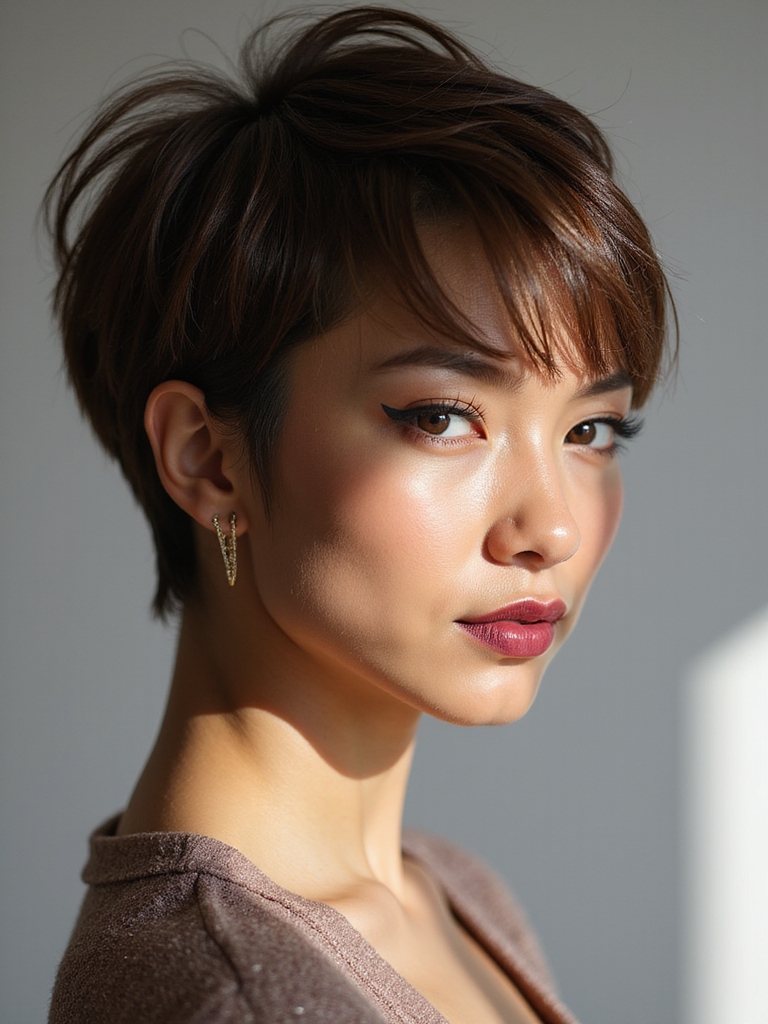
Growing out a round-face pixie is easy if you do it with a plan. The mistake is letting the sides grow wide and flat, which is exactly the width a round face wants to avoid.
Let the top grow, keep the sides close
Trim the sides to keep them close while you let the top and front grow longer, so the cut keeps its slimming shape the whole way. The front length that comes in actually flatters more as it goes.
Done this way, a round-face pixie grows into a long pixie and then a face-framing bob without ever widening. Patience plus the right trims is the whole secret.
What to Bring to Your Consultation
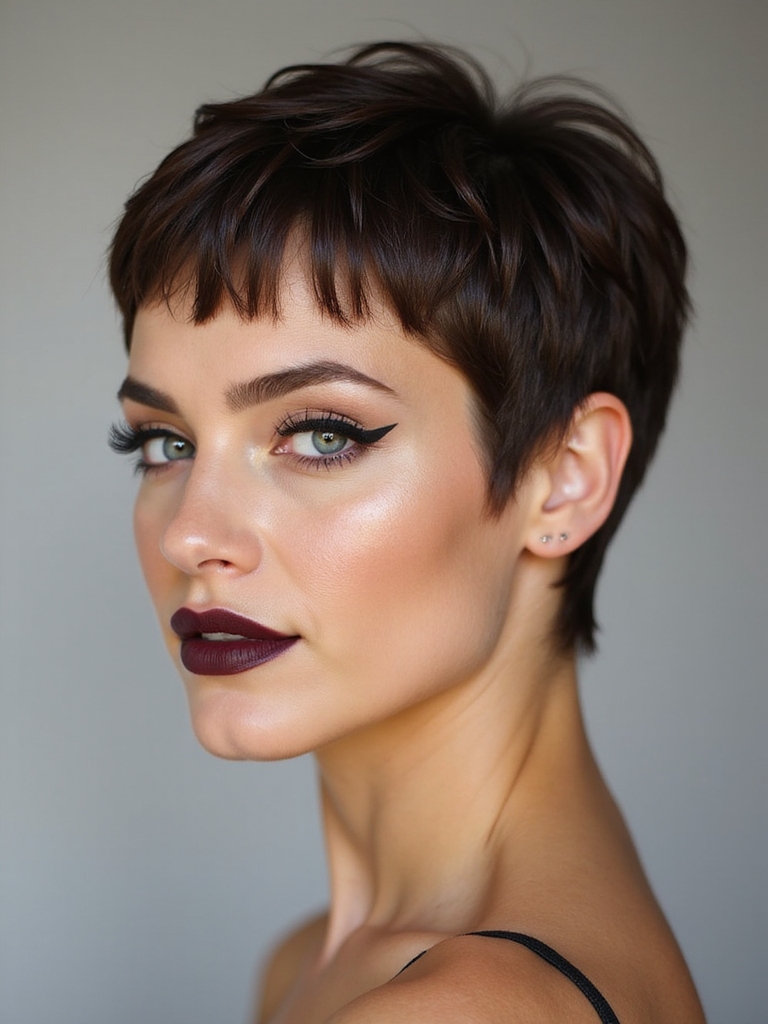
Walk into your consultation with two or three photos and one clear sentence: you have a round face and you want height, angles, and length, not width. A good stylist takes it from there, but naming the goal saves you from a cut that puffs at the sides. Ask specifically about the crown height, the fringe angle, and how close the sides will sit, since those three answers tell you whether the cut will flatter.
- Bring photos and say you want height, angles, and length up top
- Ask about crown lift, fringe angle, and side closeness
- Confirm a trim every 4 to 6 weeks, around $40 to $65
Built to Flatter
The idea that round faces cannot wear short hair is among the most stubborn myths I hear in my chair, and one of the easiest to disprove. A pixie built with height, angles, and face-framing does not widen a round face; it lengthens and defines it.
So the real question is not whether a pixie suits your round face; it is which version flatters you most. Picture the height up top and the angle at the front, bring a photo to a stylist who gets it, and see what your features do when the weight comes off. For more by shape, see our round-face haircuts.
More Worth Saving