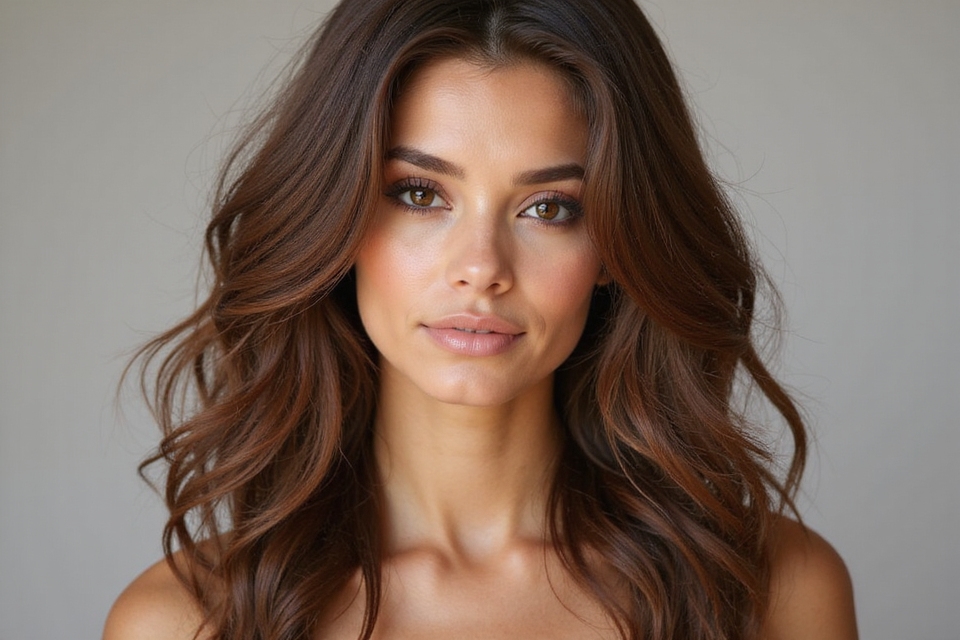
Good hair color ideas for brunettes all share one trait: warmer pieces catching near the face, deeper tones sitting underneath, movement shifting with every step, so “boring” is the last word that comes to mind. Flat, one-note brown earned that reputation; brown with contrast built into it never had it in the first place.
The difference almost never comes from leaving the brown family entirely. It comes from depth: a few lighter pieces, a few deeper ones, and the shine that ties them together. Twenty-five ways to bring that to brown hair follow, from a single gloss appointment to a full color change, each with what it actually costs to keep up.
Brunette Color, Quickly
- Dimension comes from contrast, not from going lighter overall; a few pieces in each direction do more than an all-over lift.
- Balayage and gloss techniques offer the softest grow-out, often stretching three to four months between full appointments.
- A glossing treatment on a roughly six-to-eight-week rhythm is the cheapest, fastest way to keep brown looking rich rather than flat.
Sun-Kissed Balayage

Balayage earned its reputation as the default dimension technique for a reason. Hand-painted lighter pieces, concentrated from about ear-level down to the tips, mimic the way sun naturally lightens hair, so the result looks earned rather than applied.
The real advantage shows up months later. With no harsh root line to grow out, appointments stretch far longer than a traditional foil service without ever looking neglected.
- No hard regrowth line means stretching months between full appointments.
- Warm caramel or honey tones keep the effect looking natural on most brown bases.
- Among the gentlest ways to add lightness to brown hair overall.
A Bold, Dramatic Ombre

Where balayage whispers, ombre makes more of a statement. Color stays dark at the root and melts into noticeably lighter ends, producing a graphic gradient rather than soft, scattered pieces.
Ombre Versus Balayage
Concentrating the lightening on the lengths rather than throughout spares the roots entirely, which keeps regrowth invisible for months at a stretch.
Keeping the tone warm, caramel or honey rather than ash, matters more here than on a softer balayage; a cooler-toned ombre risks drifting muddy at the transition point.
Classic Caramel Highlights

Caramel remains the highlight most requested across brunette consultations, and the reasoning holds up: that golden-brown tone woven through dark hair adds warmth without demanding a full color change.
Foiled application delivers brighter, more uniform lift than balayage does, which some clients prefer for an all-over polished glow. The trade-off is a more visible root line, so a touch-up on a roughly bimonthly schedule keeps it looking fresh rather than grown out.
Chocolate Lowlights for Depth

Dimension doesn’t only run toward lighter. Lowlights work the opposite direction, and they’re often the fix for brown hair that’s gone flat or over-highlighted over time.
When Lowlights Beat Highlights
Weaving deeper chocolate tones back through restores richness and, by contrast, makes any remaining lighter pieces pop rather than blend into a washed-out mass.
This tends to be a one-appointment fix for hair whose highlights have crept too pale, and because deeper tones grow out softly, the upkeep afterward stays comfortably low.
Cool Ash Brown

For anyone who finds warm brown tones read too brassy against their skin, ash brown answers with a cool, smoky undertone that lands as modern and a touch editorial.
The honest catch is upkeep: cool pigment fades unevenly, and warmth tends to creep back in as the color ages, more so than with a warm base.
- A cool-toned gloss on a roughly six-week rhythm holds the ash and keeps brassiness at bay.
- Asking for a soft ash with depth, rather than a flat gray-brown, keeps it from looking dull.
- The ash brown hair guide covers this range in more depth.
ℹ️Why Ash Fades Warm
Cool, ash-based color formulas neutralize warmth using blue and violet pigment, which fades faster than the underlying brown or red pigment in hair. That’s the actual mechanism behind ash brown ‘turning warm’ over time — it’s not turning warm, the cool correction is simply wearing off first.
Bright Face-Framing Highlights

For the smallest commitment with the biggest visible payoff, brightening only the pieces around the face delivers real impact at a fraction of a full highlight’s cost.
Maximum Impact, Minimum Cost
The placement is what makes it work: a few lighter strands framing the cheekbones draw the eye and brighten the complexion instantly, without touching the rest of the head.
Because the brightness sits only at the front, upkeep stays minimal; a quick toner every few months is usually enough to keep the pieces looking fresh rather than faded.
A Honey-Brown Ombre

Honey-brown ombre plays as the cozier, golden cousin of a classic ombre. Roots stay rich and dark, then melt into warm honey through the ends for a soft, gradient effect rather than a hard line.
The honeyed warmth keeps the whole result feeling soft rather than harsh, which is where a cooler-toned fade can sometimes go wrong.
- The melt concentrates on the ends, so regrowth stays out of sight for months.
- A honey-toned gloss refresh keeps the ends glowing between full appointments.
- Suits most brown bases without needing much correction beforehand.
Deep Espresso Accents

Sometimes the richest move for brown hair is going deeper rather than lighter. Espresso accents woven through the base add a glossy, near-black depth that looks thick, healthy, and deliberate:
- Ask for espresso woven through the under-layers, not the whole head, for depth without flatness.
- A high-shine gloss is what keeps espresso reading glossy instead of harsh or matte.
- A few warm face-framing pieces stop the overall effect from feeling too heavy at the front.
Soft Copper Balayage

Copper has swept through salons broadly, and a soft copper balayage is the gentlest entry point for a brunette curious about it without committing to a full color change.
- Warm, coppery pieces add an autumnal glow that reads seasonal but wears comfortably year-round.
- Copper fades faster than most tones, so a depositing copper conditioner earns a spot in the routine.
- Keeping it to balayage placement, rather than all-over, keeps the whole thing low-upkeep.
Mahogany Richness

Mahogany carries a deep red-purple heart, and on brunette hair it comes across as pure luxury rather than a fashion color. The cool-red richness catches light in a way flat brown simply doesn’t.
What makes mahogany distinct is its shine. Red pigment reflects light differently than plain brown, so even a single-process application looks dimensional without any painted pieces added.
Like any red-leaning shade, it asks for cool water and a depositing conditioner to stay rich, since red molecules are the first to wash out of any color.
Dark, Tone-on-Tone Espresso

For anyone wanting dimension while staying close to their darkest natural depth, a tone-on-tone espresso balayage delivers it. The painted pieces sit only a shade or two lighter than the base, creating subtle movement without ever registering as visible highlights.
This approach has real staying power in the salon world right now, since it looks polished and expensive while staying quiet rather than announcing itself.
The upkeep is unusually gentle here, since there’s so little contrast to grow out in the first place. A glossy finish ties the whole result together.
Choosing between two dark, low-maintenance options?
🎯Wants zero visible highlights
A deep, glossy single-process brown skips painted pieces entirely and relies on shine and condition alone.
🎯Wants dimension but still dark
A tone-on-tone espresso balayage adds subtle movement without ever reading as ‘highlighted.’
A Glossy Brown Toning Service

If only one thing gets done for brown hair this year, a gloss is the strongest candidate. A glossing treatment deposits a sheer wash of tone and a mirror shine over existing color in about twenty minutes.
It stands out as one of the strongest-value services on any salon menu for brunettes, since it can warm up, cool down, or simply add shine depending on what the hair needs that visit.
- Costs noticeably less than a full color service, often in the $40 to $70 range.
- Revives faded highlights and flat brown between bigger color appointments.
- A warm, cool, or clear finish can be chosen based on the desired result.
Warm Golden Highlights

Golden highlights bring a brighter, sunnier note to brown hair than caramel does. These buttery-gold pieces light up the whole head rather than staying subtle, and they photograph especially well.
Because the tone leans bright, this suits anyone who actively wants their dimension to show rather than stay understated.
- Noticeably brighter than caramel for a more visible degree of warmth.
- A warm-toned gloss keeps gold from fading into flat yellow over time.
- Works well as either uniform foils or a softer balayage melt.
A Fully Cool-Toned Brunette

Taking every tone in the color fully ashy and smoky produces a sleek, quietly expensive-looking brown with zero warmth or brassiness anywhere in the formula.
This sits at the high end of the upkeep scale, since the moment warmth starts creeping back in, the whole polished effect starts to slip.
- A purple- or blue-toned gloss keeps brass from developing between visits.
- Cool water and color-safe shampoo protect the smoky finish longer.
- Best suited to anyone realistically willing to commit to the maintenance this requires.
📋Before Committing to a Fully Cool-Toned Brunette
- ✓Confirm the natural base doesn’t carry heavy warmth that will fight the cool correction long-term.
- ✓Ask how often a toning gloss will realistically be needed to hold the ash finish.
- ✓Bring a reference photo taken in natural light rather than under salon lighting.
Burgundy Infusions

For color without leaving the brown family entirely, burgundy makes a strong crossover option. Deep wine-red tones infused through brown add a jewel-like glow that lands as bold without tipping into costume territory.
It scales easily: full commitment for a real statement, or ribbons woven through the base for something more restrained.
- Cool washes and a wine-toned mask help hold the depth between visits.
- Testing with woven pieces first is a reasonable way in if a full wine shade feels like too much.
- Bold on paper, but still fundamentally wearable day to day.
Warm Auburn Touches

Auburn brings a warm red-brown lift to brunette hair, threaded through as pieces rather than committed to as a base. It’s a softer, more gradual way to flirt with red than going fully auburn.
Why Auburn Flatters the Face Specifically
The effect on the face is what makes this particular shade worth the mention: the warm reflection brightens the complexion in a way that reads almost like a soft filter.
Auburn fades faster than plain brown, so lukewarm rinses and a weekly red-toned mask keep it from sliding flat. The auburn hair guide covers brighter and deeper versions of this same family.
Cool-Leaning Caramel Accents

Caramel doesn’t have to run warm. A cooler, more muted version delivers the same dimension with a sophisticated, less brassy finish for anyone who finds classic caramel too golden for their taste. The technique stays identical to standard caramel highlighting; only the underlying formula shifts toward a cooler base:
- Requesting a cool or neutral caramel specifically avoids an overly golden result.
- A neutral-toned gloss keeps the accents from warming up between appointments.
- The more grown-up, restrained version of a familiar salon favorite.
Warm Chestnut Highlights

Chestnut highlights bring a warm, reddish-brown glow that looks rich without committing fully to either caramel or auburn territory. It sits in the genuine middle of the two.
This lands especially well on a medium-to-dark brown base, where the reddish glow adds visible life to the face without overwhelming the base color underneath.
Chestnut holds its tone longer than a true red does, though a monthly warm gloss still helps keep that auburn glint from fading flat over time.
An Espresso-to-Honey Fade

For real drama within the brown family, an espresso-to-honey fade delivers a striking, high-contrast gradient that still sits firmly in brunette territory instead of a full color change.
Deep, near-black roots melt down into warm honey ends, and the contrast itself is what makes this shade stand out from a standard ombre.
- Root upkeep stays minimal, since espresso matches most natural bases closely.
- A honey-toned gloss on the ends keeps the fade looking warm rather than dull.
- Bold and dimensional despite being surprisingly low-maintenance at the root.
Sandy Brown Contrast

Sandy brown offers a soft, beige-leaning highlight that adds a relaxed, undone quality without pushing all the way toward blonde. It works especially well on hair that’s already a medium brown, since the base needs relatively little lift to reach the muted, sun-worn shade this look is going for.
- Muted, sandy pieces create gentle contrast rather than a bold statement.
- A neutral-toned gloss keeps the sandy finish from drifting gold or brassy.
- Best suited to anyone wanting understated movement over visible highlights.
🅰️Sandy Brown
Soft, beige-leaning, understated contrast without going anywhere near blonde.
🅱️Smoky Brown
Muted and moody, low warmth throughout, reads modern rather than simply dark.
Smoky, Muted Brown

Smoky brown layers soft, muted tones with a low-warmth cast, producing a quietly moody color that feels modern rather than simply dark. It tends to suit anyone who already gravitates toward cooler, more neutral shades in makeup and clothing, since the effect works best when nothing else in the look is fighting it for warmth:
- Layered smoky tones add real depth rather than flat, uniform darkness.
- A cool-toned gloss maintains the smoky finish and keeps warmth from creeping back.
- A couple of soft face-framing pieces lift the overall effect near the face.
A Deep, Glossy Single-Process Brown

There’s something quietly timeless about a deep, glossy brown done well. A rich, single-tone color with a mirror shine proves that brown doesn’t need any painted pieces at all to look expensive.
The entire effect lives in the gloss and the condition of the hair underneath it. A deep, uniform brown shows every bit of shine or dullness immediately, so a glossing step and a real moisture routine do most of the actual work here.
Molten Gold Shimmer

Molten gold sits at the brightest, most luminous end of the warm-highlight spectrum available to brunettes. Liquid, glowing gold pieces catch light in a way few other shades manage.
This is the boldest version of the golden family covered here, built for anyone who wants real luminosity rather than a subtle warm note.
Keeping it from fading flat comes down to a warm-toned gloss and gentle, color-safe washing, since the shine itself is the entire point of choosing this shade.
Dimensional Chestnut on Waves

Chestnut becomes something more interesting when it’s built in layers rather than applied as one flat tone. Combining warm chestnut highlights with deeper brown lowlights creates a multi-tonal effect that moves visibly on waves and curls.
The interplay between the warm and deep tones gives hair a built-in glow, and on textured hair specifically, it makes waves read thicker and more defined than a single-process color ever could. It’s a technique worth requesting by name, since a colorist working freehand without a reference plan often defaults to a simpler two-tone version instead.
Toffee Flashes

Toffee sits in the sweet spot between caramel and honey, the most brown-forward of the warm tones, which keeps it from ever tipping too bright or too brassy.
Buttery toffee flashes work equally well as soft balayage or brighter foils, which makes this an adaptable choice depending on how bold the final result needs to be. A warm gloss keeps the toffee from fading dull, and the overall upkeep stays reasonably low thanks to how naturally it grows out.
Brunette Color Questions
?How can brunettes add dimension without going blonde?
Balayage in caramel or honey, face-framing pieces, lowlights, and a regular gloss all add real dimension while staying within the brown family. Tone-on-tone balayage specifically, just a shade or two lighter than the base, gives movement with almost no lift and the softest possible grow-out.
?What’s the lowest-maintenance way to add color as a brunette?
A gloss over the natural base, or a soft balayage, both grow out with no harsh line, stretching three to four months between visits. A glossing treatment on a roughly six-to-eight-week rhythm keeps shine and tone fresh for very little cost.
?Which of these colors fades the fastest and needs the most upkeep?
Anything built on red pigment, burgundy, mahogany, and auburn especially, fades faster than gold or ash tones since red molecules wash out first. Copper follows close behind. Deeper, cooler shades like espresso or smoky brown tend to hold their look the longest between salon visits.
Brown Was Never Boring
Brunette hair holds more color range than it tends to get credit for, from a whisper of toffee to a full wine-red infusion, without ever leaving the brown family behind. What runs through all twenty-five of these is dimension and shine, the two things that turn flat brown into something that actually looks alive.
None of this requires abandoning brown to see a real transformation. The two or three ideas here that fit a given complexion and tolerance for upkeep are worth bringing to a colorist as a genuine starting point, not just inspiration to scroll past.
More Ideas Here