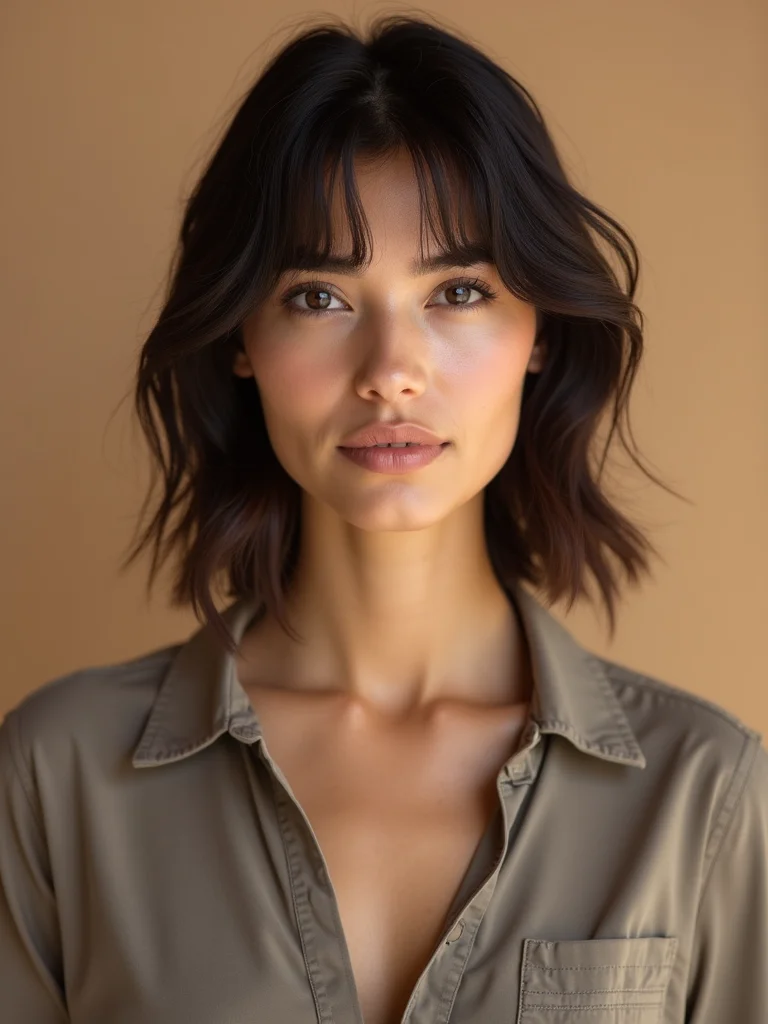
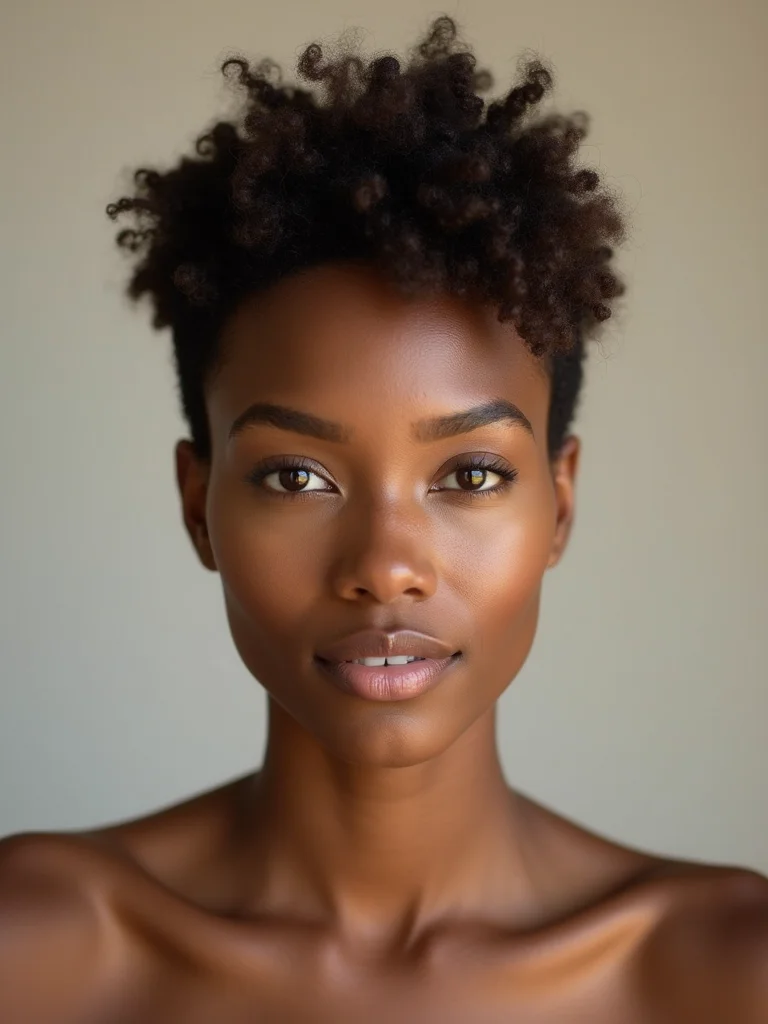
By the third week after a cut this short, the outline is usually the first thing to blur, softening at the nape and around the ears before anywhere else. That single detail decides more about how a very short pixie actually wears than any product bought to style it.
The shapes below split roughly by how much boldness they ask for, starting with the softest, most forgiving crops and working toward buzzed and shaved versions that leave nothing to hide behind.
What Every Very Short Pixie Has in Common
- The cut itself carries nearly all the weight at this length, which is why the choice of stylist matters more than any product bought afterward.
- Face shape and hair type point toward different details: tapered and side-swept versions flatter the widest range, while micro and buzzed shapes reward bolder features.
- Upkeep trades daily styling time for more frequent shape-ups; most of these cuts need a reshape every few weeks to keep the outline clean.
Classic Close-Crop Pixie

The close-crop sits at the foundation of every pixie on this list: short and even everywhere, close against the head, with just enough length left on top to actually style. It stands as the most versatile shape here, the one most stylists start a first-timer with before moving toward anything bolder.
- A scissor-over-comb finish blends the sides softer than clippers alone manage
- Leaving slightly more length on top keeps styling options open
- A deep side part balances a rounder face shape better than a center part does
Micro-Fringe Pixie

A brow-skimming micro fringe added to a close crop shifts the whole cut toward something sharper and more editorial. The short, blunt line sits high on the forehead and pulls attention straight to the eyes.
Who This Fringe Actually Flatters
Oval and heart-shaped faces get the most out of this detail, since the fringe balances proportions that already sit well without adding weight where a face doesn’t need it. On a taller forehead, it can read more exposed than expected, worth raising at the consultation before it becomes a surprise in the mirror.
Straight to loosely wavy hair holds the blunt line cleanest; heavier waves and curls tend to soften the edge faster than the shape is designed to wear.
Textured Baby Pixie

The baby pixie keeps length almost cropped to the scalp, and texturing is the detail standing between that and looking severe. Cut into soft, separated pieces, the top gains a kind of movement a completely smooth cut at this length can’t produce on its own.
What to Know Before Going This Short
This version asks for real commitment, since there’s very little length left to fall back on if the shape doesn’t suit someone right away. A longer consultation conversation about exactly how short it looks in person matters more here than it does for most of the other cuts in this roundup.
By week three, the texture has usually softened just enough to want a light refresh of paste, well short of a full restyle.
| Face shape | Detail that helps | Why it works |
|---|---|---|
| Round | Deep side part or height at the crown | Breaks up width and adds a vertical line |
| Square | Soft, textured fringe | Rounds off a strong jawline |
| Long or oval | Almost any version | Proportions already balance without adjustment |
Sleek Scissor-Cut Pixie

A fully scissor-cut pixie carries a softer, more blended quality than clippers alone produce, with every length graduated by hand into a smooth, sculpted finish. Worn sleek, it lands as polished and quietly expensive-looking.
- Scissor work blends transitions more gradually than a clipper-cut edge
- A shine-free pomade smooths the top without flattening it
- Best suited to straight to loosely wavy hair that lies flat against the head
Choppy Cropped Pixie

Where a sleek pixie stays smooth, this version leans into visible attitude. Point-cutting shatters the hair into distinct, separated pieces, so the short shape moves and looks deliberately undone.
How Point-Cutting Builds the Texture
It’s the most forgiving version here for anyone worried about a stylist’s steady hand, since a little roughness at the edges is the whole point.
Thicker hair shows this technique off best, since there’s enough density to break apart into visible texture; on very fine hair, the same cut can look thin more than textured.
How a stylist typically point-cuts this shape:
1Section the top
Hair is separated into workable pieces rather than cut all at once.
2Hold the shears vertically
Notching straight down into the ends removes weight instead of shortening the length.
3Check the balance
The stylist steps back to confirm the choppy pieces sit evenly before finishing.
Tapered-Nape Pixie

Tapering the nape, graduating the hair shorter down the back of the neck, is the detail that keeps a very short pixie looking finished, not simply cropped.
Why the Back of the Cut Matters Most
The gradual taper sculpts the neckline and keeps the shape from looking blocky at the back, a detail that matters most on this length, since there’s nowhere for a bad line to hide.
It grows out more gently than a hard shaved line underneath, suiting a wide range of neck shapes without frequent touch-ups just to stay clean.
Curly Ultra-Short Pixie

On curly and coily hair, cutting this short becomes a way of working with the natural pattern. Removing the weight lets coils lift and round into a full, energetic shape that sits up off the head.
Why This Shape Has to Be Cut Dry
The shape gets built around exactly how the curls grow, which means it has to be cut dry, on defined curls, so a stylist can see where each coil actually lands once it springs back. Cutting it wet risks a shape that looks right in the chair and different the next morning.
Daily upkeep stays minimal once the cut is right; a curl cream on damp hair and a diffuser typically finishes the look.
Wavy Feathered Pixie

Natural wave gets to do most of the work in a feathered pixie, since feathered layers give it room to bend and lift away from the head. The result carries soft texture with very little daily effort.
- Feathered layers let the natural wave pattern show through the shape
- A light texture spray on damp hair brings out the bend without weighing it down
- Air-drying or a rough-dry keeps the texture; a smooth blowout cancels the effect entirely
Soft Buzzed Pixie

A buzzed pixie with softened edges is the boldest shape on this list, and surprisingly one of the more flattering options once the styling is dialed in. Clipped short and even, with the perimeter blended soft, it keeps a feminine quality while making a fearless statement.
The blended edge is what separates this from a hard, uniform buzz; asking a stylist to soften the perimeter specifically keeps the whole shape wearable, not severe.
Daily styling all but disappears with this cut, and a quick clipper refresh at home, timed to whenever the outline starts softening, is realistic once the initial shape is set.
A few terms that come up when discussing a buzzed shape:
📖Blending
Softening the line where two clipper guard lengths meet so there’s no visible step.
📖Guard length
The numbered attachment on clippers that controls how much hair stays; a lower number cuts closer to the scalp.
Side-Swept Mini Pixie

Sweeping the top of a very short pixie to one side adds a soft diagonal line that takes some of the edge off the boldness of the cut. That single sweep softens a round face and gives an otherwise close crop a touch of movement.
- Pushing the top toward the higher eyebrow usually reads most flattering
- A little light paste on damp hair holds the sweep without stiffness
- The longer top gives a round or square face a softening diagonal line
Piecey Lifted Pixie

Lifting and separating the top into piecey sections gives an otherwise flat crop real height and energy, especially useful on fine hair that tends to sit close to the scalp on its own.
- Drying the top against its natural growth direction builds most of the lift
- A matte paste or texture powder at the roots defines individual pieces
- Best suited to fine or medium hair that wants the appearance of extra volume
Undercut Petite Pixie

Adding an undercut to a petite pixie removes bulk from underneath while leaving the top free to sit however it’s styled, hidden or shown depending on how much edge feels right day to day.
Subtle Taper or Sharp Shave
With the weight clipped away below, the top sits noticeably lighter, which matters most on hair that tends to feel heavy in a short crop. The undercut itself can be a subtle taper or a sharper shaved line at the sides.
A quick clean-up on just the undercut section runs about half of the $45 full reshape, since a stylist only needs to run clippers back over already-short hair rather than reshape the whole top.
Two things people get wrong about an undercut on a pixie:
❌ Myth: Myth: an undercut only works on thick hair.
✅ Reality: A subtle taper undercut lightens fine hair too; it just needs a gentler guard length than a thick-haired client would use.
❌ Myth: Myth: once shaved, it has to stay visible.
✅ Reality: The top can be styled to fully cover a hidden undercut on days it isn’t wanted, which is exactly why hidden placement exists in the first place.
Tousled Crop for Fine Hair

Fine hair and a very short crop actually pair well, since hair this short finally looks full instead of thin at the ends. A tousled finish with separated texture builds the appearance of density that fine hair tends to lose at longer lengths.
The goal throughout is keeping the cut light; too much blunt weight at this length looks thin no matter how it’s styled.
- Light point-cutting through the top builds separation that mimics fullness
- A volumizing powder at the roots adds lift without extra weight
- Heavy creams flatten the exact texture this cut relies on
Sculpted Pixie for Straight Hair

Straight hair is close to an ideal canvas for a sculpted, precise pixie, since every clean line shows with nothing to soften it.
That same lack of natural texture puts precision front and center, worth taking to a stylist experienced specifically with sculpted short cuts.
- A touch of pomade smooths the top without tipping into visible shine
- Sharp, contoured sides make the most of straight hair’s natural sleekness
- Regular reshaping matters more here, since a soft outline shows immediately on straight hair
Pixie With a Shaved Design

For the boldest execution here, a shaved section becomes a canvas: lines, geometry, or a simple shape etched in with a trimmer against an otherwise short crop.
How Long a Design Actually Holds
Simpler, cleaner designs hold their shape noticeably longer than intricate patterns, which tend to blur within days as the hair grows back in.
This is a cut worth bringing a specific reference photo to, since a design that looks clean in a photo can translate completely differently onto an actual head shape.
Soft Pixie for Mature Faces

A soft, layered pixie works at pretty much any age, and it comes into its own on mature faces specifically. Gentle layers and a little length left around the face lift and frame the features, where a harsher, overly cropped shape can read severe.
Face-framing layers over a tight, blunt crop keep the whole cut soft and easy to wear.
- A wispy fringe or slightly longer front pieces frame the eyes without adding bulk
- Soft layers move more forgivingly than a rigid, one-length crop
- Suits most face shapes, since the length is adjustable around the front
Styling Tips
Most of these shapes share the same underlying styling logic: a very short cut is mostly about the precision of the haircut itself, not the products layered on afterward. A small amount of the right product, applied to damp or towel-dried hair, goes further at this length than a full styling routine.
On a canvas this small, a heavy hand with product looks busy fast; a pea-sized amount is usually the ceiling for any of these shapes, whether that’s paste, pomade, or texture powder.
The Cut Decides Everything Here
Every version here comes back to the same point: at this length, the precision of the haircut is what shows, and no product or morning routine covers for the wrong cut underneath.
Bring a reference photo, name the specific detail that caught your eye, and let a stylist experienced with very short cuts weigh in honestly on whether it suits your hair and face before committing to the chair.
More Ideas Here