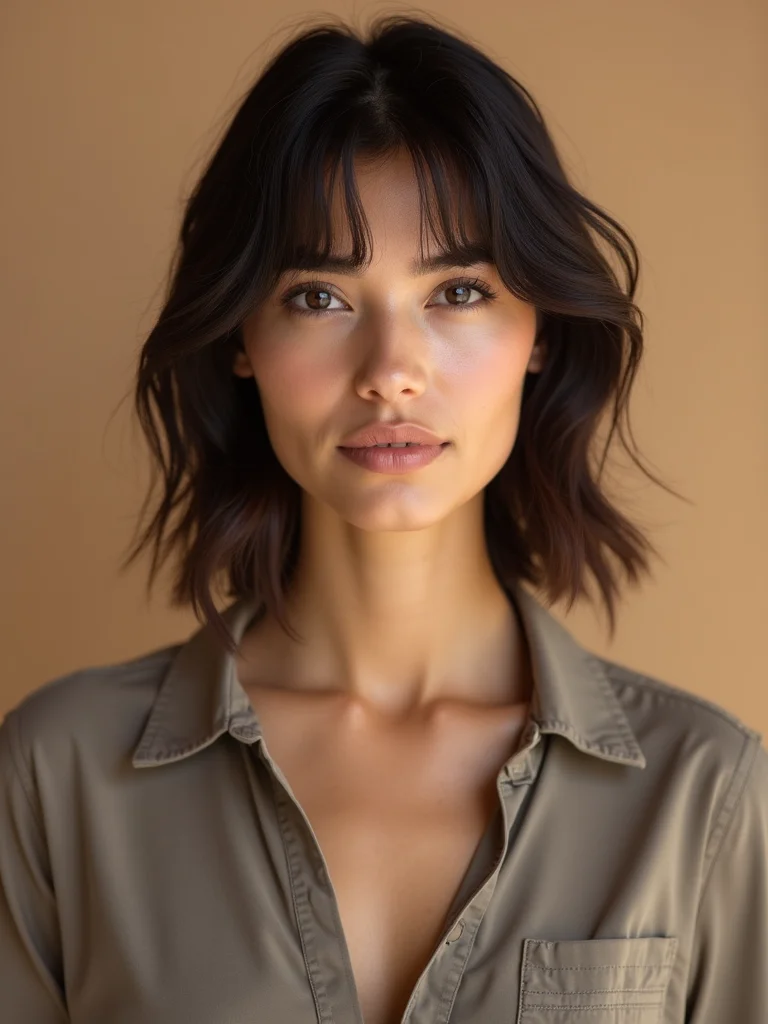
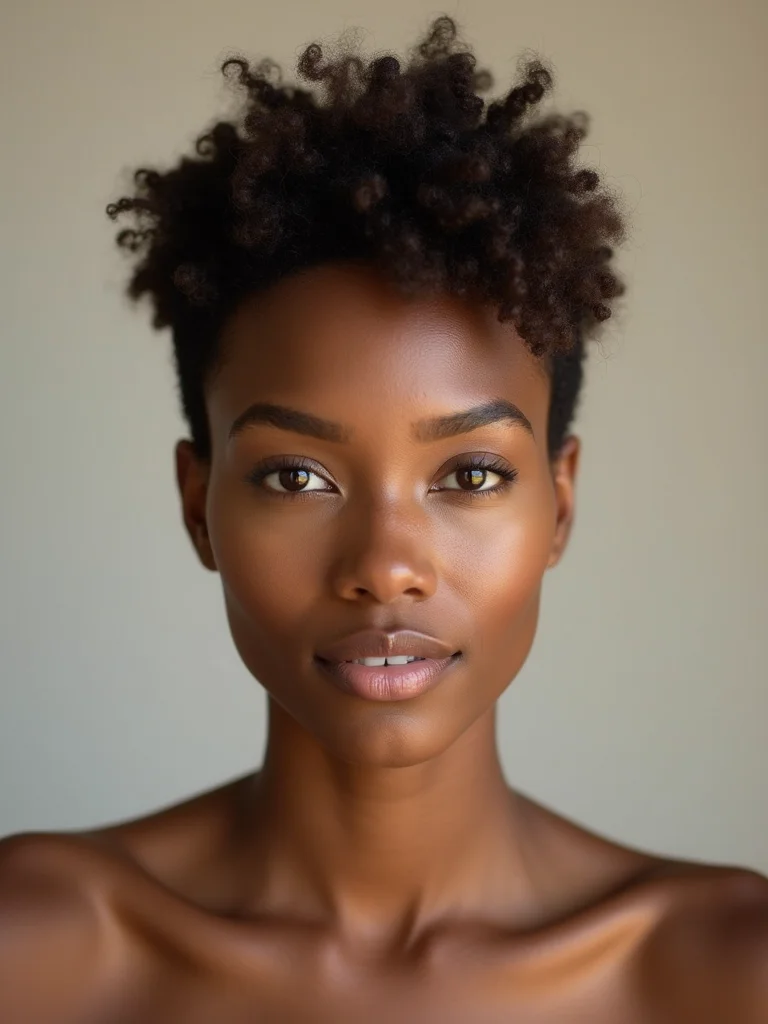
There is an old myth I hear constantly: that curly hair cannot go short, that the curls need length to stay under control. The honest truth is the opposite. A pixie works with your curl pattern instead of fighting it.
Once the weight comes off, tight coils and loose waves alike spring into a shape that is full, sharp, and easy to live with. Below are sixteen curly pixie ideas across every texture, from a soft tousled crop to a tight-coil micro, plus the one rule that makes or breaks all of them.
Curly Pixie Questions, Up Front
Can curly hair really go short? Yes, and short hair often suits curls better, since losing the weight lets coils spring into a full, defined shape instead of dragging flat.
What is the single most important rule? A dry, in-pattern cut. Curls have to be shaped in their natural state, since a wet cut springs up shorter and uneven once it dries.
Is a curly pixie low-maintenance? Daily, very, and many are true wash-and-gos. But plan a trim every six to eight weeks to hold the shape, and never skip moisture.
Soft Tousled Pixie for Easy Volume
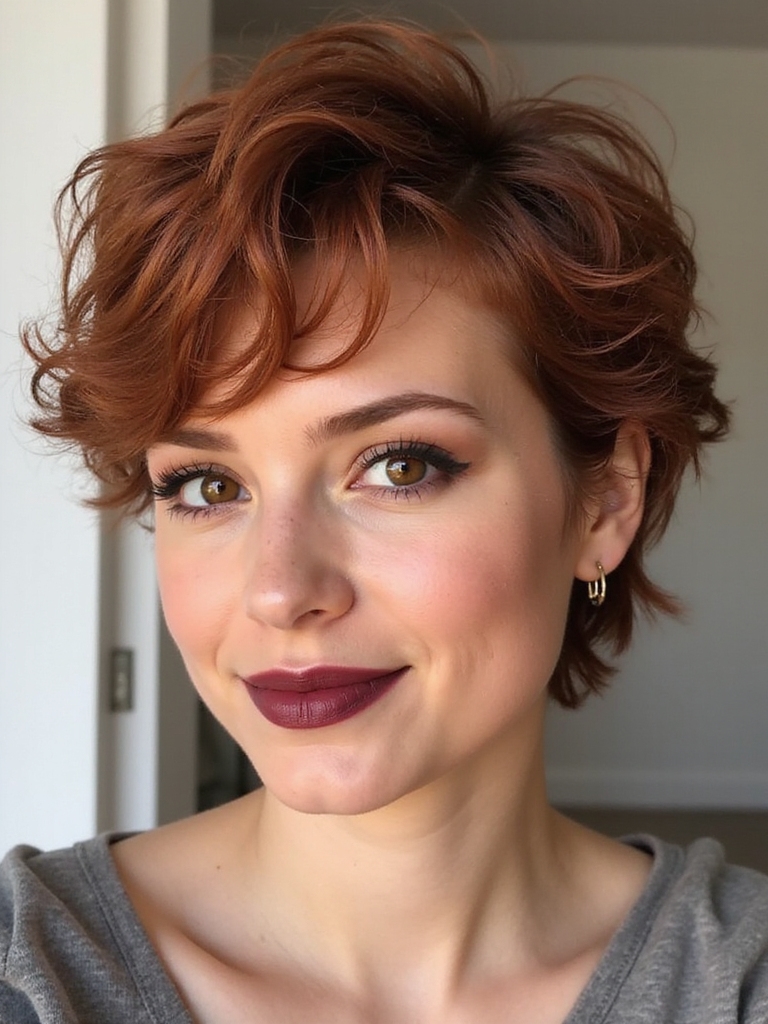
A soft, tousled curly pixie keeps a little length on top so the curls can pile up and bring natural volume. The looseness is the whole look, with no need for sharp lines or heavy product.
It is among the most forgiving curly pixies to live with, since the relaxed shape hides the odd uneven curl and grows out softly.
Leaving weight on top lets gravity and your curl pattern do the styling, so a quick scrunch is often all it needs. It suits loose curls and waves especially. See our curly hairstyles guide.
Defined Ringlet Pixie With Precision Shape
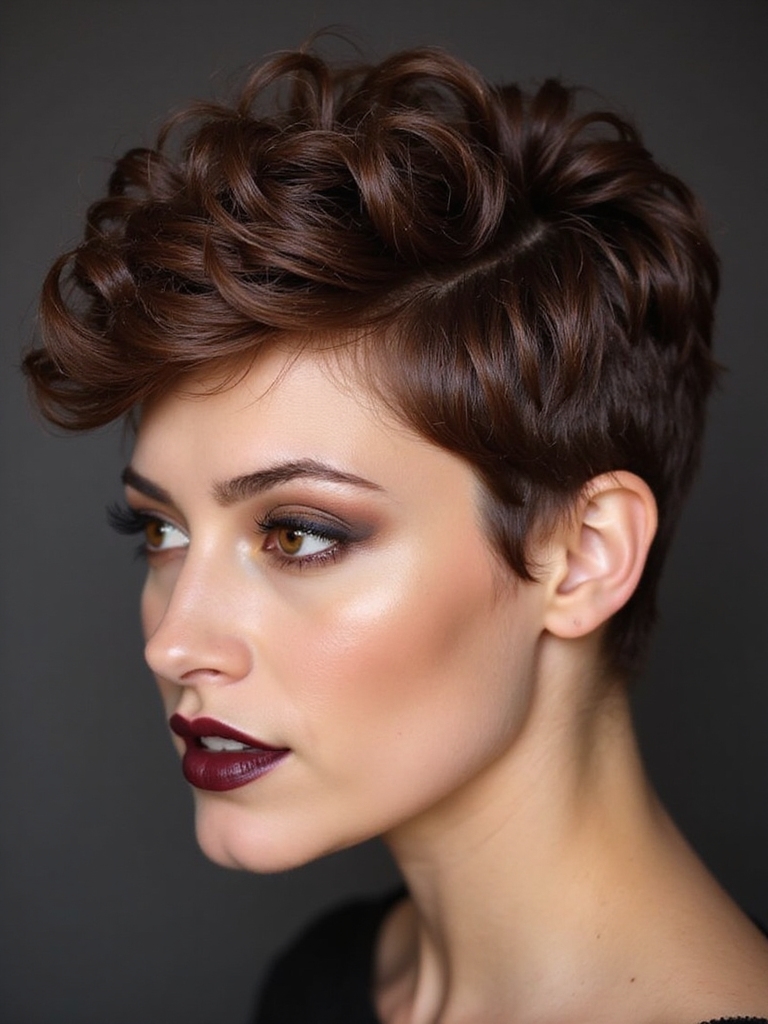
This version leans into definition, with the curls cut and shaped so each ringlet sits cleanly. The precision gives the pixie a polished, intentional outline.
It rewards a stylist who cuts curly hair dry, since shaping the coils in their sprung, natural state is the only way to control where each ringlet lands. I tell clients chasing crisp ringlets to find someone who cuts curls dry, full stop.
Which curly pixie fits you? Two quick questions.
1How tight is your curl?
Loose curls and waves love a tousled or side-swept pixie; tight coils shine in a micro or tapered shape.
2How much upkeep do you want?
Lowest is a micro wash-and-go; a scalp fade or defined ringlet asks for the most.
Tapered Pixie That Highlights Cheekbones
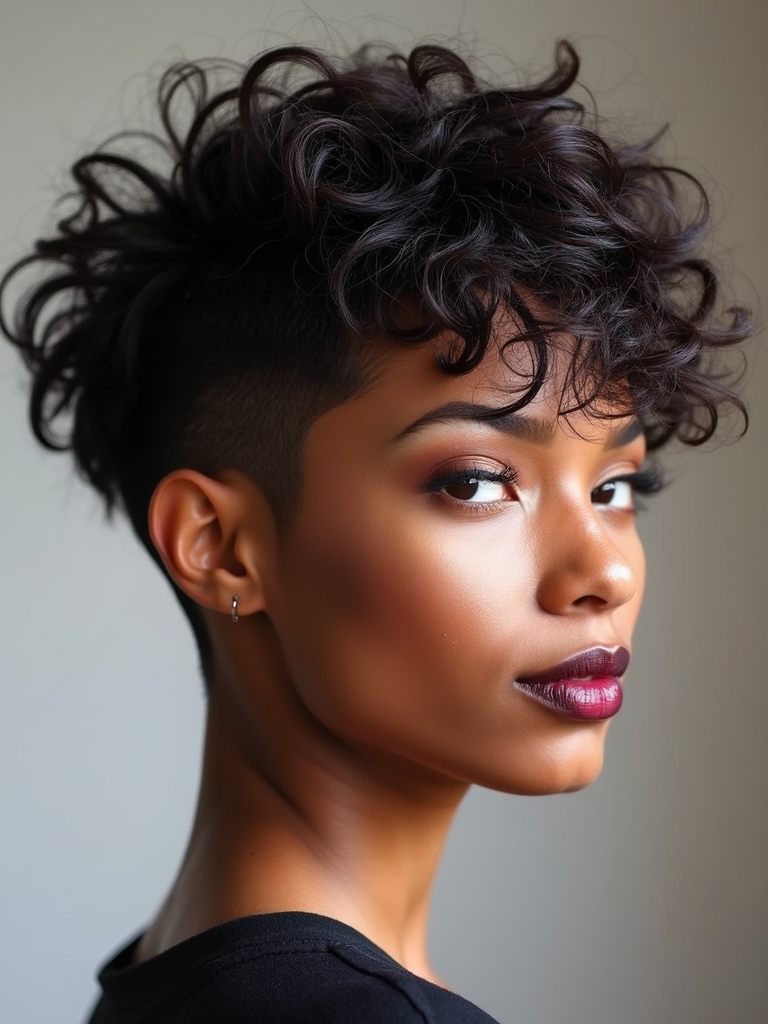
A tapered curly pixie keeps the sides and back close while leaving curl on top, drawing the eye up and out toward the cheekbones. The contrast flatters and lengthens the face.
The tapered sides also keep bulk down, which makes thick or dense curls far easier to wear. It is the most balanced, flattering shape for most curl types. See our curly pixie styles for more.
Curly Pixie With an Undercut for Edgy Contrast
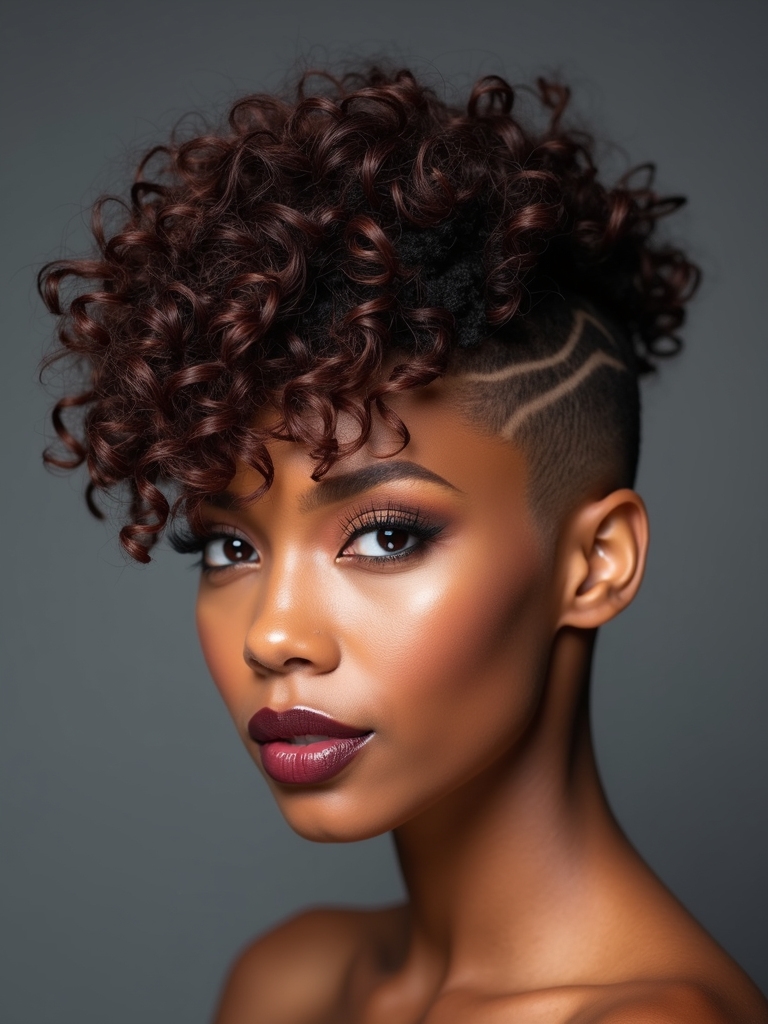
Adding an undercut shaves the sides or back short under a fuller curly top, a bold contrast between smooth skin and springy texture. It reads modern and a little daring.
The removed bulk also makes heavy curls lighter and cooler to wear, so it is practical as much as edgy. See our edgy pixie cuts for more.
💡Definition Tip
For defined, frizz-free curls on a pixie, apply product to soaking-wet hair and smooth it over the curls with flat palms rather than raking through. Then scrunch once and do not touch it again until it is dry. The more you handle wet curls, the more they frizz.
Side-Swept Curly Pixie With Face-Framing Layers
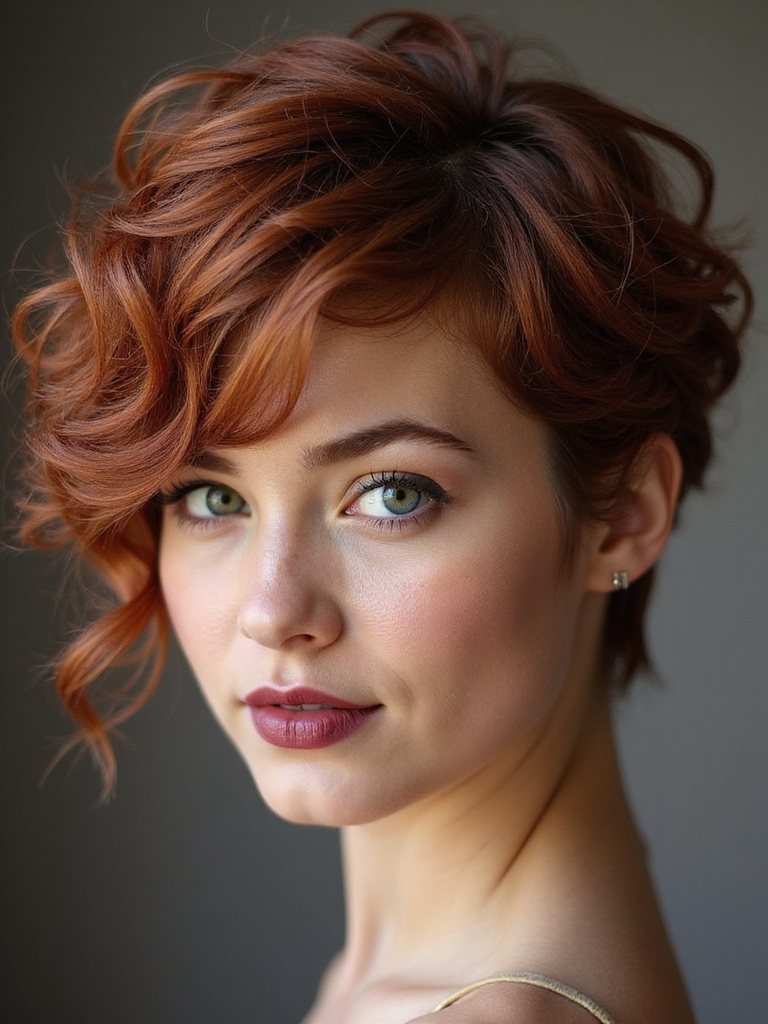
Sweeping the curls to one side with soft face-framing layers softens the whole look, the longer pieces curving around the face. It is a gentler, more romantic curly pixie.
The asymmetry adds movement and leaves a little length to play with on days you want a softer shape. It is the one I suggest for anyone easing in from longer curls.
Micro Pixie for Tight Coils and Maximum Shape
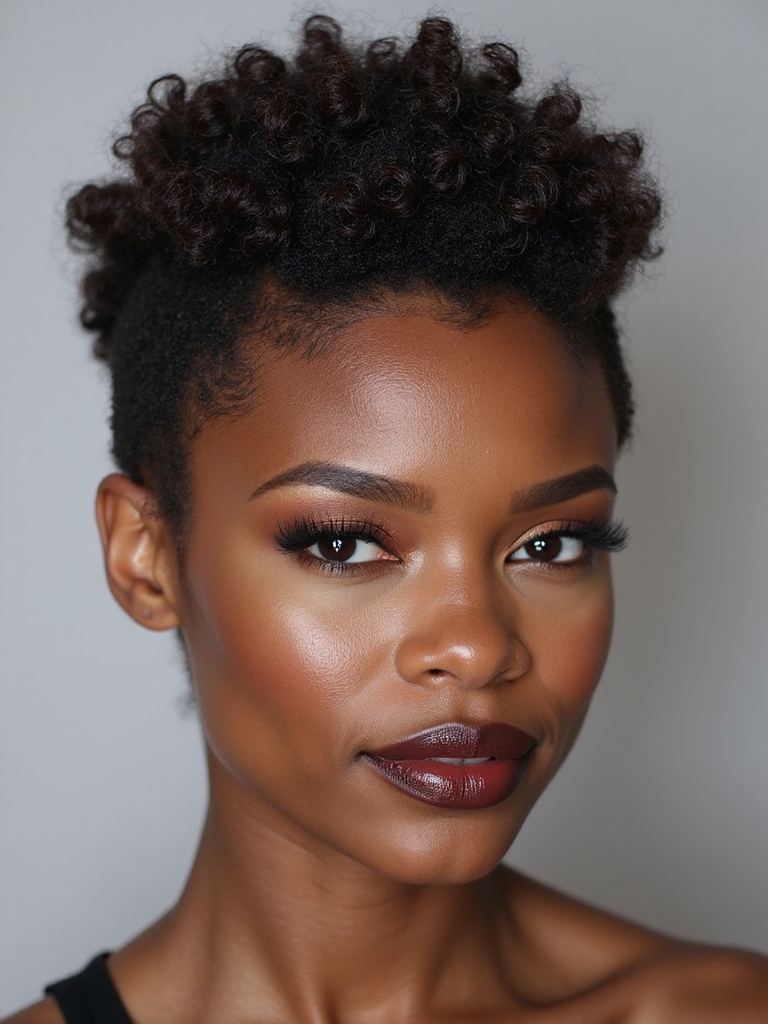
Cut close all over, a micro pixie lets tight coils show as pure shape and texture against the head. On coily and kinky hair it reads sharp, clean, and striking.
Texture as the whole style
It is the lowest-maintenance cut here, often a true wash-and-go, though regular trims keep the close shape crisp. The coil pattern itself becomes the style. I watch coily clients fall for a micro the second the weight comes off.
It is made for anyone who wants the boldest, most pared-back version and loves their natural texture out front. See our short natural haircuts.
| Your texture | Try | Upkeep |
|---|---|---|
| Loose curls and waves | A tousled or side-swept pixie | Low; scrunch and go |
| Springy ringlets | A defined ringlet or tapered pixie | Medium; dry cut, refresh daily |
| Tight coils and kinks | A micro pixie or scalp fade | Lowest daily, frequent trims |
Shag-Inspired Curly Pixie With Airy Movement
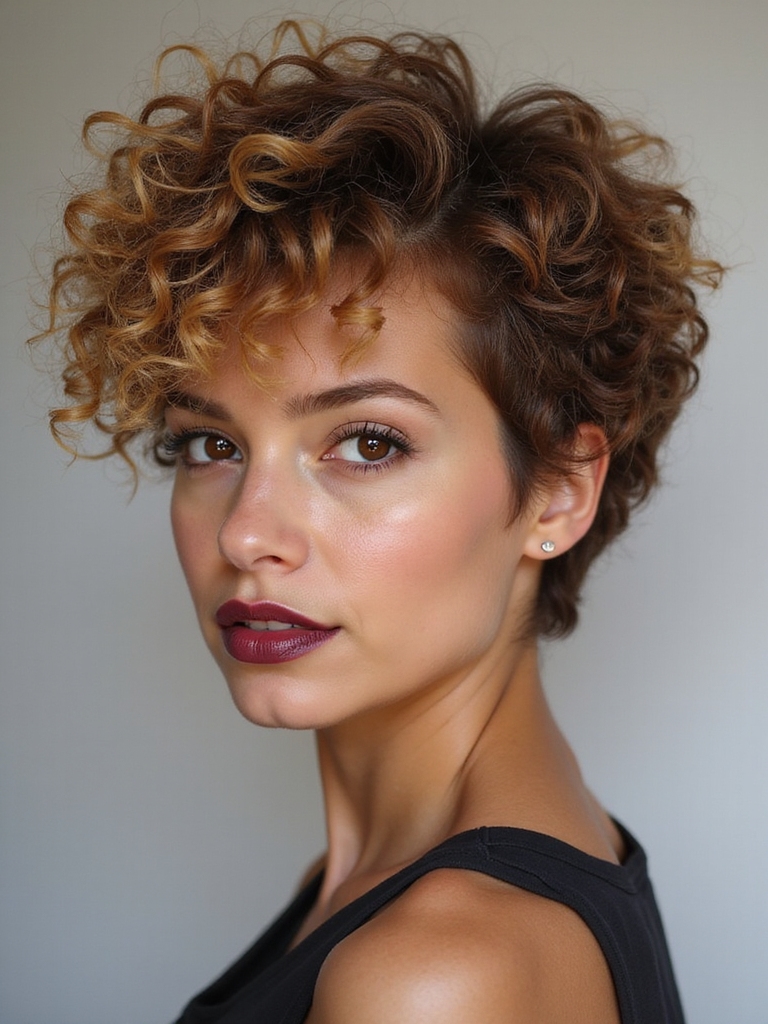
Borrowing from the shag, this pixie adds choppy, piecey layers for an airy, worn-in feel. The layers break the curls into separated, weightless pieces that move freely.
It suits anyone who wants texture and edge without a rigid shape, and it grows out into a longer curly shag with no awkward stage.
A little curl cream and a scrunch keep the pieces defined. It is the cool-girl curly pixie.
Asymmetrical Curly Pixie for Modern Drama
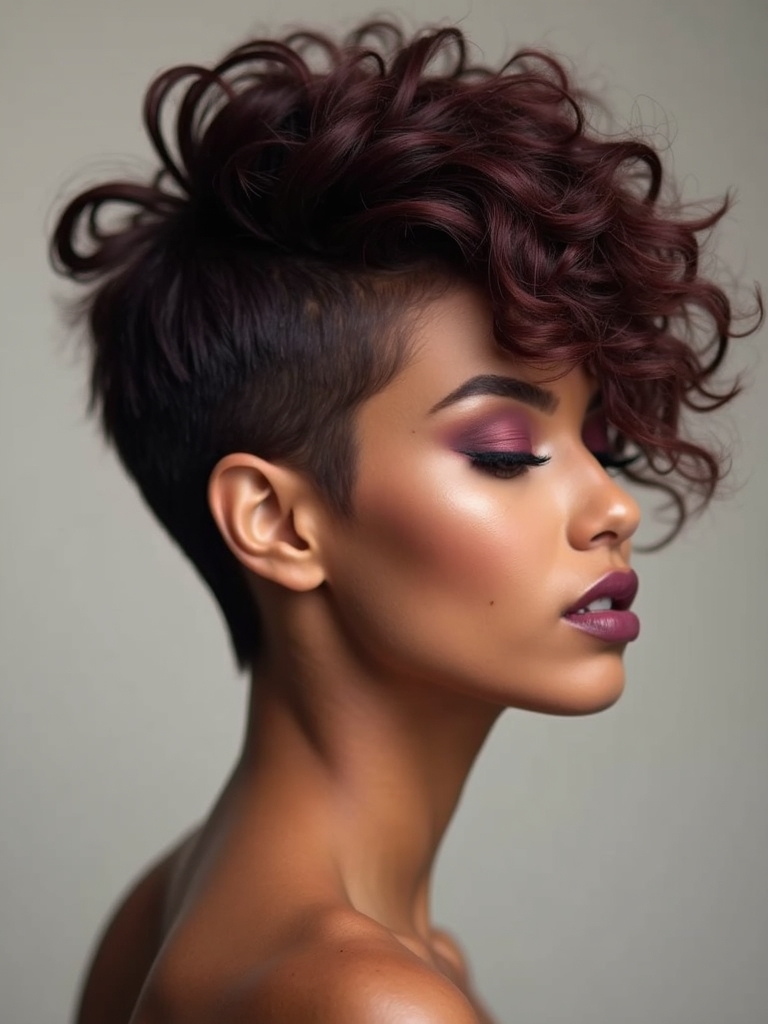
An asymmetrical curly pixie keeps one side longer and fuller for deliberate, modern drama. The off-balance shape plays beautifully against natural curl, since the texture already adds movement.
It is a bold, fashion-forward take that still flatters, the longer side drawing a lengthening diagonal across the face.
- Best for: curls that want a modern, dramatic edge
- The longer side adds a flattering diagonal
- Wear the volume full on the weighted side
Still deciding? Pick by what you want most.
🎯Lowest maintenance
A micro pixie or a wash-and-go
🎯Most volume
A volume-crown or tousled pixie
🎯Boldest edge
An undercut, scalp fade, or pixie mullet
Curly Pixie With Bangs
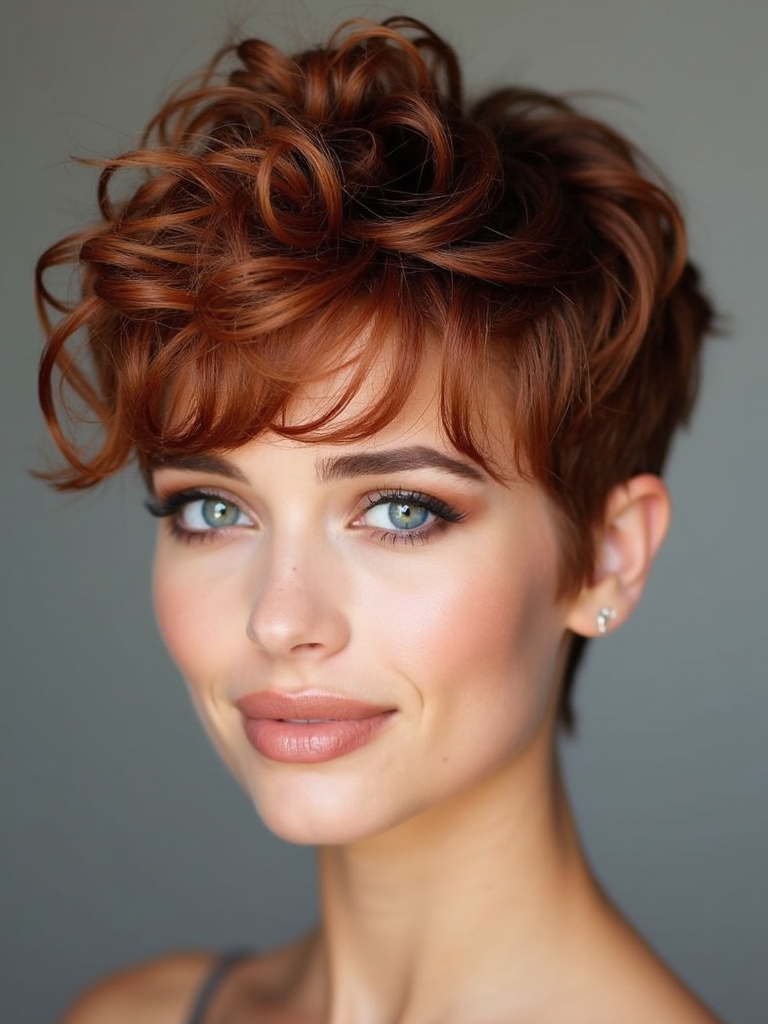
Curly bangs on a pixie frame the face with a soft, springy fringe. On curls, bangs read playful and full, softening the forehead beautifully.
The key is letting them stay curly so they blend with the rest of the texture. They do shrink up, so ask your stylist to leave them a touch long.
- Best for: softening the forehead with a springy fringe
- Let the bangs stay curly, not forced straight
- Leave them long; curly bangs shrink as they dry
Wash-and-Go Curly Pixie
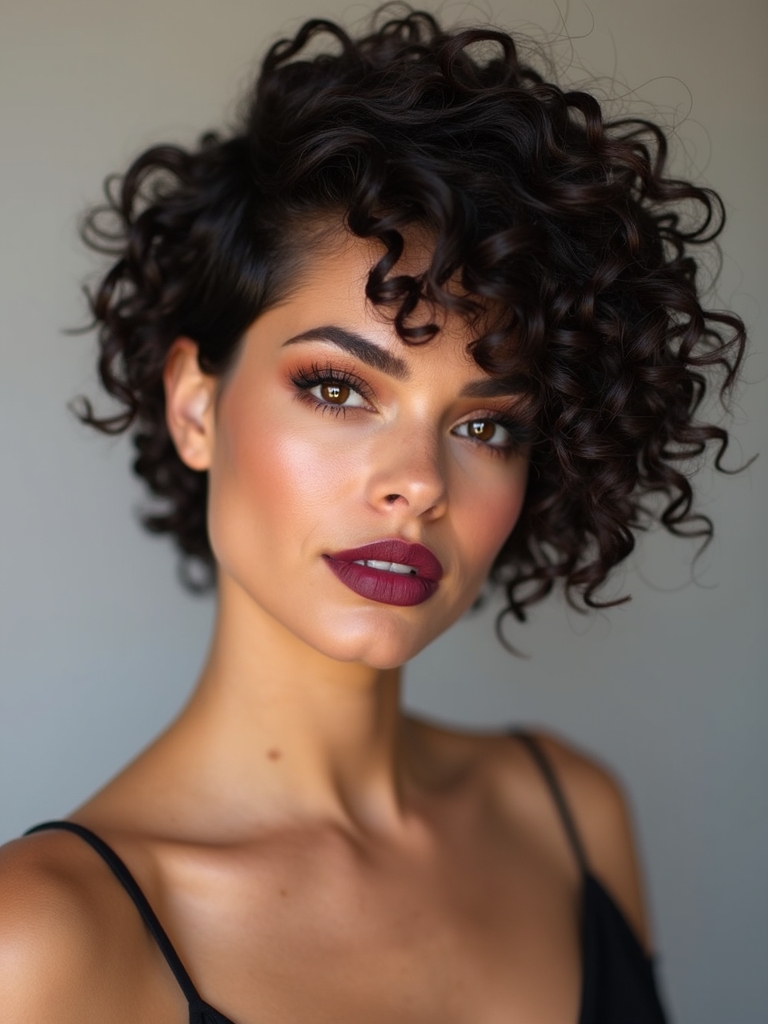
The wash-and-go is the curly pixie at its most freeing, and the reason a lot of people make the cut in the first place. You wash, add product to soaking-wet curls, and let them dry into shape.
On a short crop the whole thing takes minutes, and the short length means the curls dry fast and spring high. It is the closest hair gets to no effort at all.
- Leave-in, then curl cream or gel on soaking-wet hair
- Air-dry or diffuse on low, then leave it alone
- The short length dries fast and springs high
Volume-Crown Curly Pixie

A volume-crown curly pixie builds the curls up tall and full through the crown, for height that flatters and elongates the face. It is the answer for anyone whose curls used to fall flat under the weight of long hair, since a short crop frees them to rise. A pick at the roots and a diffuser pointed up bring the volume to its fullest.
- Best for: adding flattering height through the crown
- Pick the roots and diffuse upward for max volume
- Frees curls that fell flat under long-hair weight
Curly Pixie Mullet
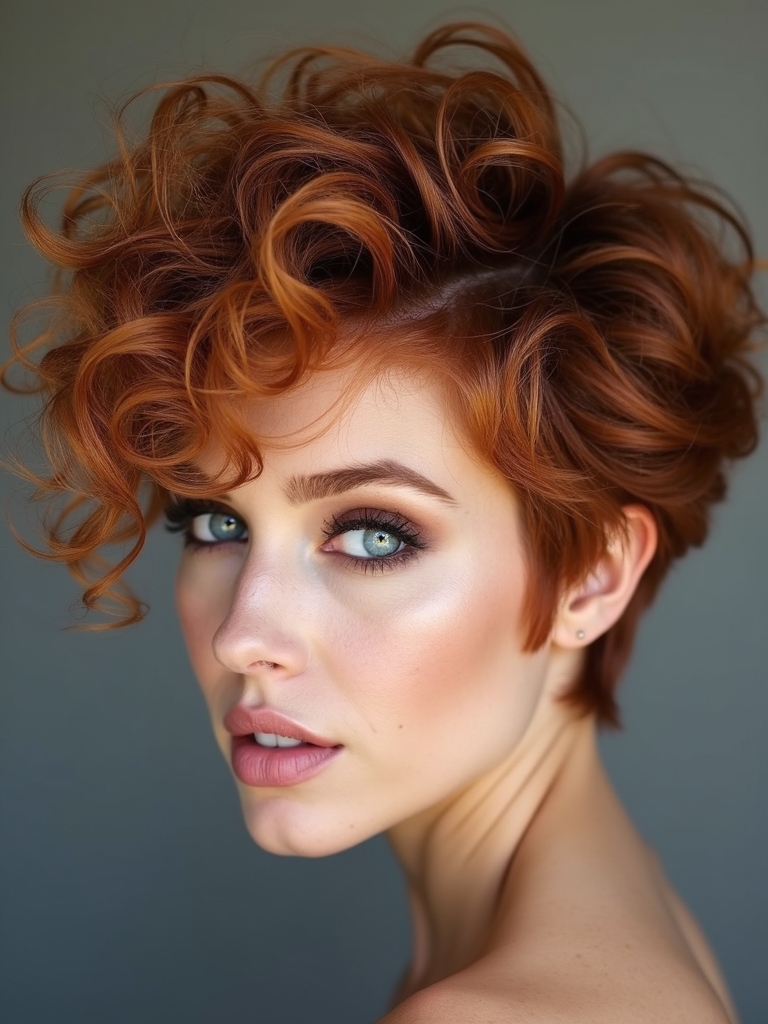
A curly pixie mullet keeps the front and sides short and pixie-like while leaving a little length and texture at the nape, a playful, retro nod with real edge.
On curls it reads especially cool, since the texture softens what could otherwise be a harsh shape. It is for anyone who wants a statement cut that still photographs as fun.
- Short pixie front and sides, a little length at the nape
- Curl texture softens the retro shape
- A statement cut that stays playful, not severe
Curly Pixie With a Scalp Fade
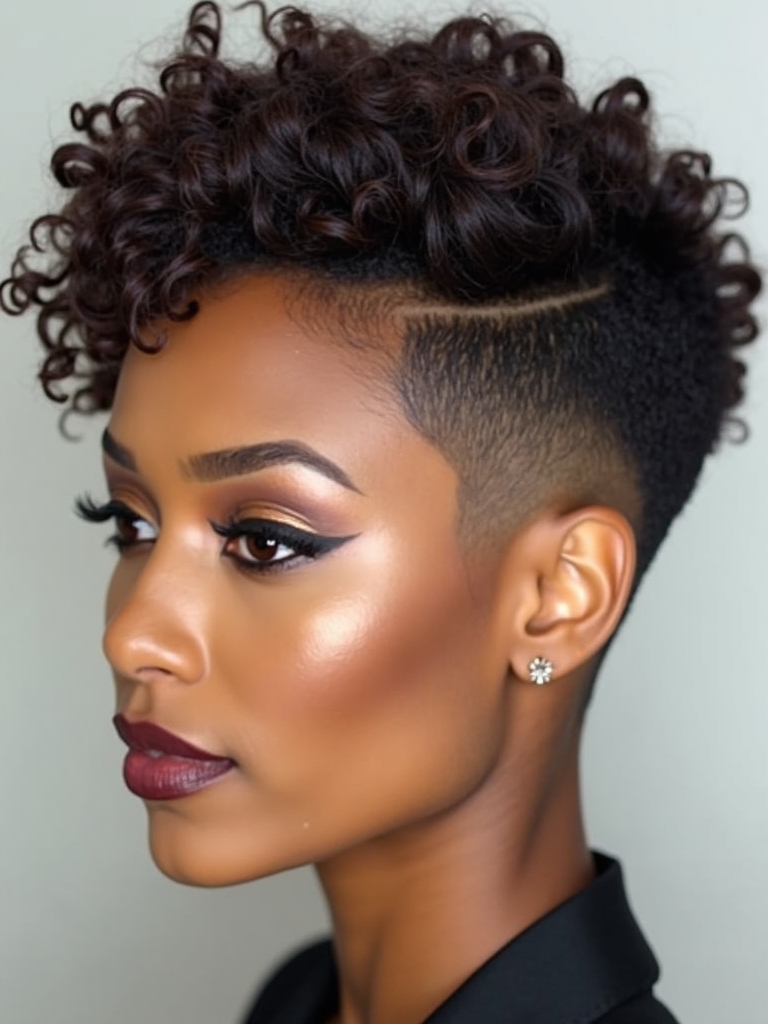
A scalp fade takes the sides down to skin beneath a full curly top, the sharpest, most barber-influenced version of the curly pixie. The clean fade against soft coils is striking contrast, and it is the look that turns the most heads in this guide.
- Best for: anyone who loves a precise, modern edge
- Needs a barber visit every couple of weeks for the fade
- Highest upkeep at the sides, easy on top
Highlighted Curly Pixie
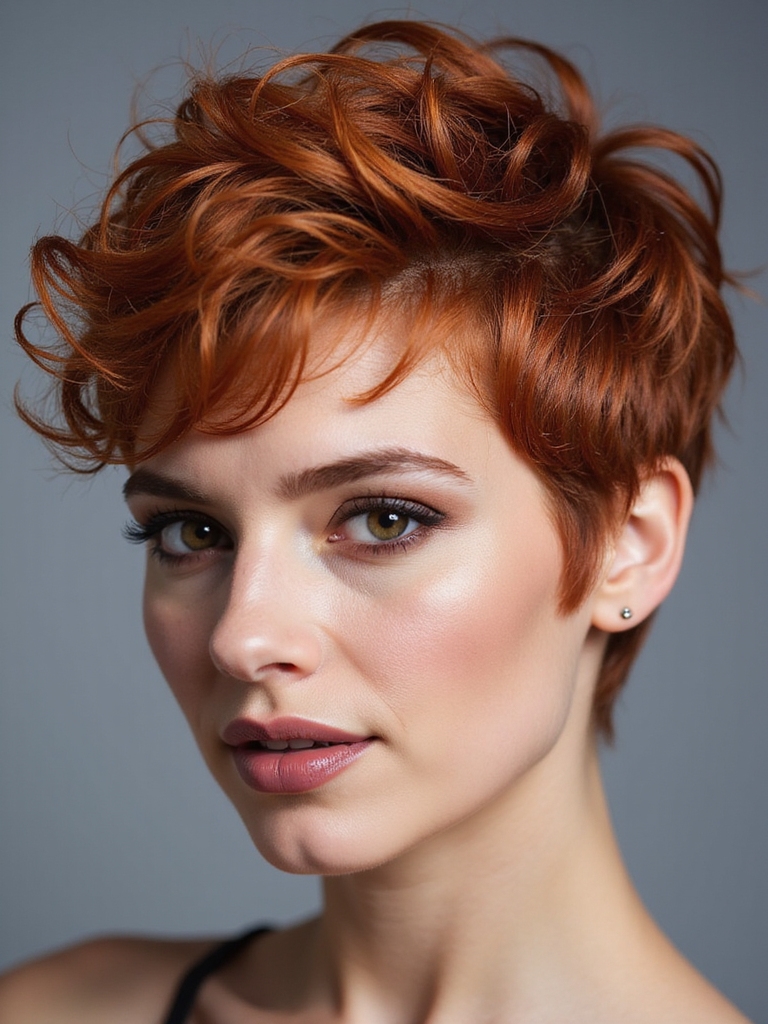
Highlights through a curly pixie catch the light along the coils and add real dimension, so the texture looks fuller and deeper. On a short cut there is less hair to lift, so the color is gentler and cheaper to keep up.
Curls run dry, though, and color dries them further, so a hydrating, color-safe routine matters more than the shade you pick. Honey, caramel, and copper all glow on coils.
Styling a Curly Pixie
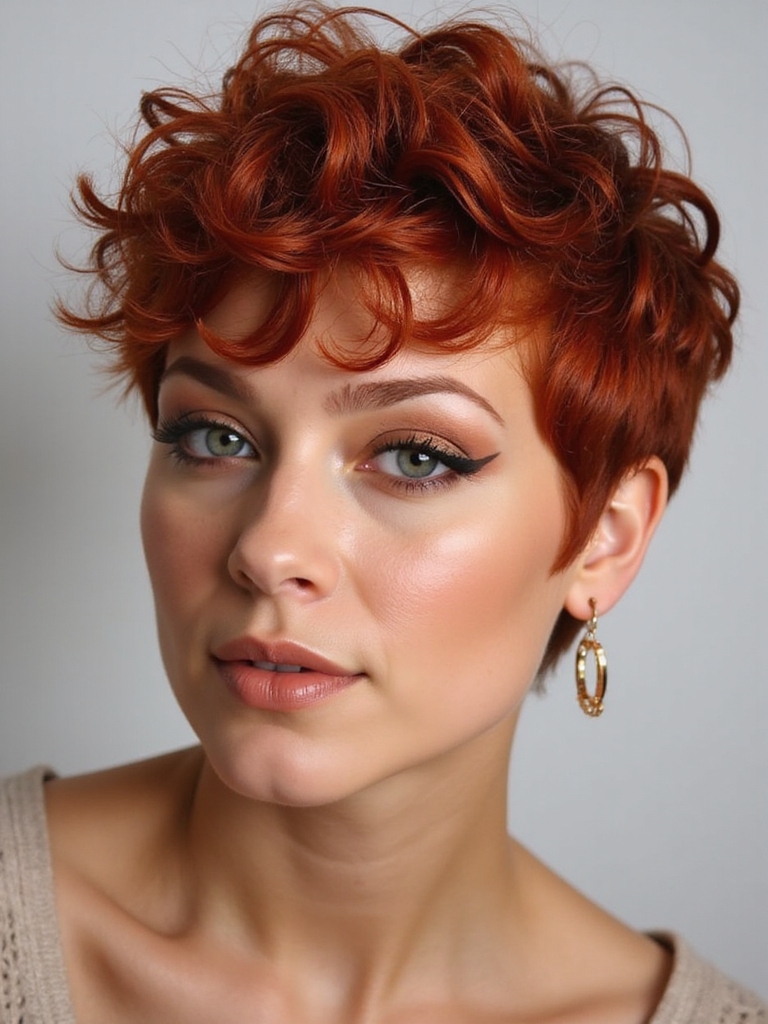
Styling a curly pixie is less about technique than restraint. The biggest mistake is touching wet curls too much, which breaks up the clumps and invites frizz.
The less you touch, the better
Apply product, a leave-in then a cream or gel, to soaking-wet hair, scrunch once, and then leave it completely alone while it dries. Air-dry, or diffuse on low if you are in a hurry.
Between washes, mist flattened curls lightly and work a small amount of cream back through with the fingers, never a brush. Sleep on satin to protect the pattern overnight.
Growing Out a Curly Pixie
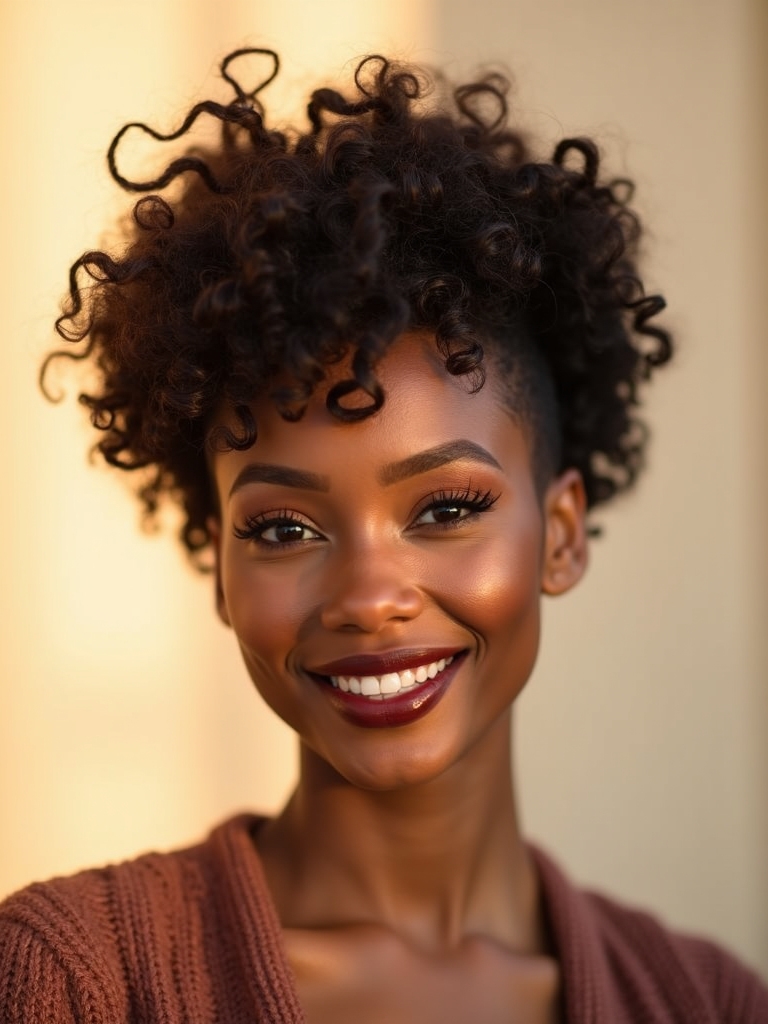
Growing out a curly pixie is far easier than growing out a straight one, since curl texture disguises the awkward in-between stages that plague straight grow-outs.
The trick is regular shaping trims as it grows. A stylist trims to keep a deliberate shape as the length comes in, so it always looks intentional.
It grows into a curly bob and then longer with no truly bad stage, which makes the curly pixie one of the lowest-risk short cuts to try. See our short pixie haircuts for the shorter end.
How to Ask Your Stylist
The single most important thing to say is this: ask for a dry, in-pattern cut. Curly hair gets shaped in its natural, dry state so the stylist can see exactly where each coil falls; measuring against wet, stretched-out hair leads to a finished shape that lands noticeably shorter and choppier than planned. If a salon will not cut curls dry, finding one that will makes the biggest difference in the outcome.
Bring a photo, name your curl type honestly, and ask how short the back and sides will go once the coils shrink. A curl-specialist dry cut runs more than a standard pixie, often $50 to $90, and you will want a shaping trim every six to eight weeks. It is worth every cent for curls cut right.
Curly Pixie Questions
?What’s the biggest technical mistake to watch for with a curly pixie?
Getting it cut to a wet measurement instead of a dry one. Shaping coils in their sprung, natural state is the only reliable way to control where each one actually lands. Skipping that step is the single most common reason people end up disappointed with the result.
?How often does a curly pixie need a trim?
Every six to eight weeks for most shapes, though a tight micro or a scalp fade wants a cleanup every couple of weeks to stay crisp. Daily, though, a curly pixie is low-effort, often a true wash-and-go.
?Will a pixie work on tight, coily hair?
Beautifully. Tight coils and kinky textures show as pure, sharp shape at this length, and a micro pixie is one of the lowest-maintenance cuts you can wear. The rule is the same: cut dry, and keep it moisturized.
?How much does a curly pixie cost?
Expect to pay more than a standard pixie, often $50 to $90, since a proper dry, in-pattern curly cut takes more skill and time. A curl specialist is worth seeking out; the difference between a great curly pixie and a flat one is who holds the scissors.
Ready to Go Short
Curly hair does not need to be forced into a shape it was never going to hold, and a pixie is the cut that finally works with the pattern instead of against it. Take the weight off, and the coils stop fighting gravity and start showing off.
If you have been told your whole life that curls need length, consider this your permission slip. Find a stylist who cuts curly hair dry, bring a photo of the shape you love, and let your texture lead. You may wonder why you waited.
More Inspiration