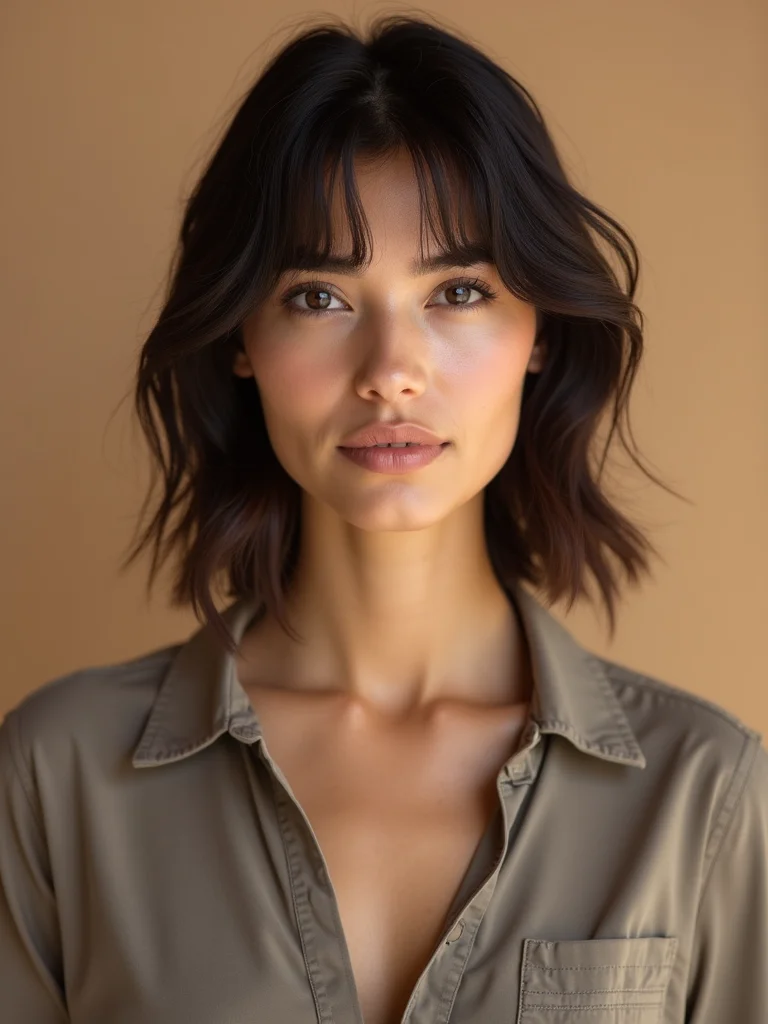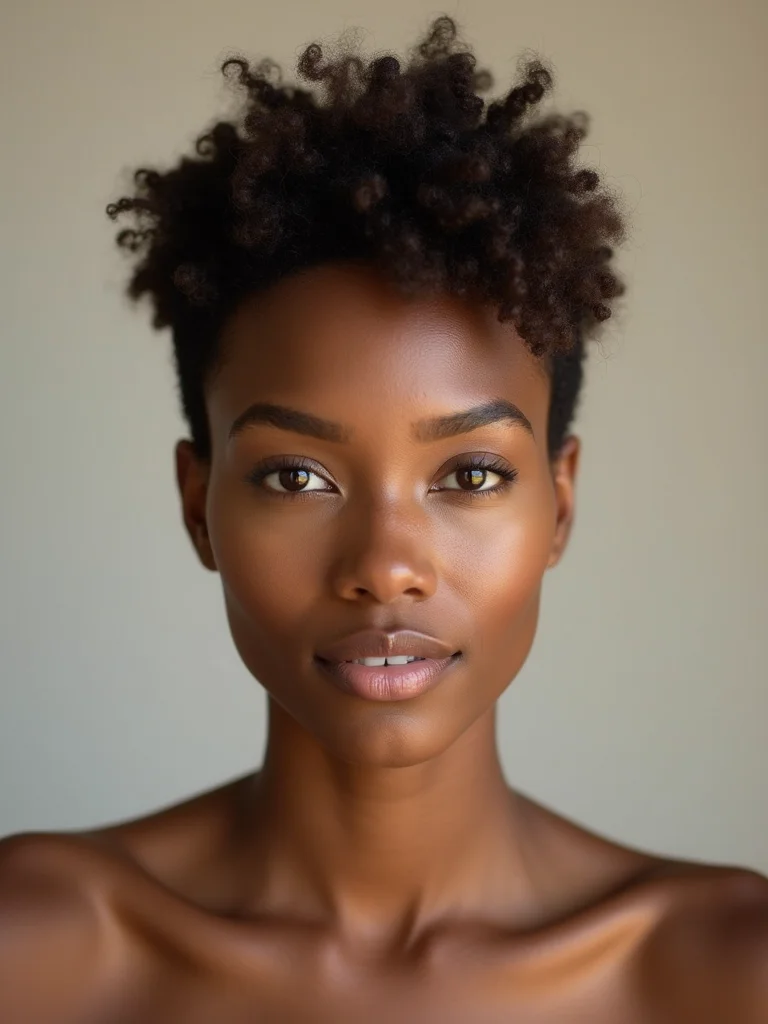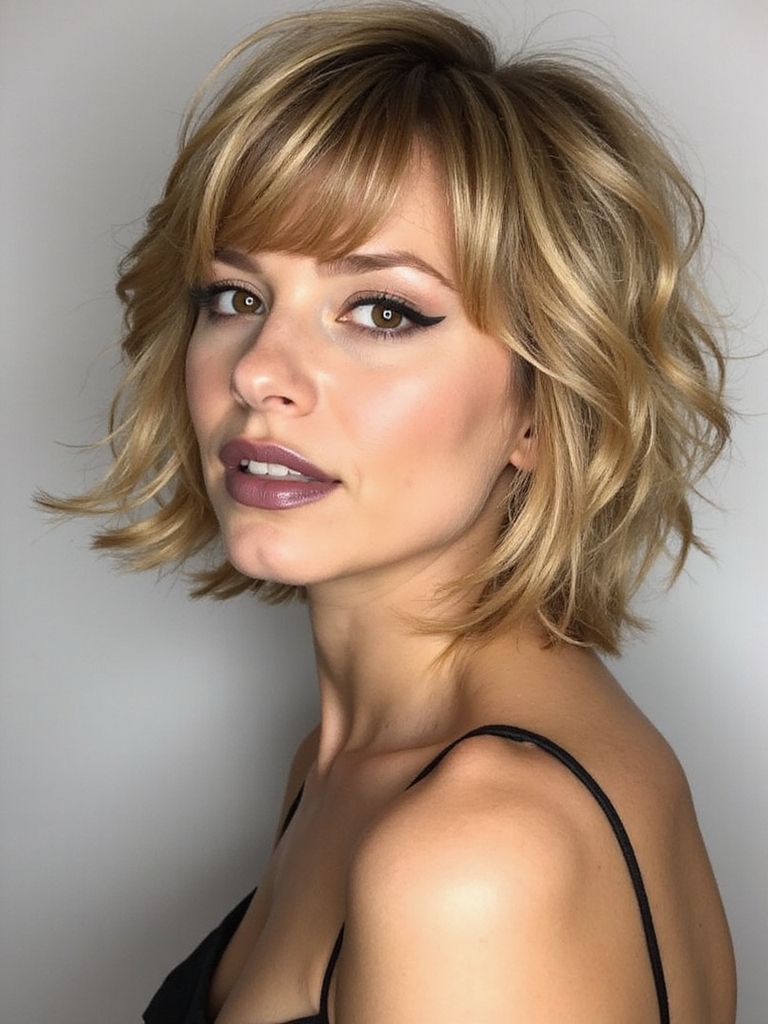
Search “short shag” and two very different kinds of photos turn up: fresh-cut shots with the hair combed smooth and still damp, and the ones taken days later once the layers have relaxed into their real shape. The gap between those two pictures is basically the whole story of this cut.
The lowest-effort version needs almost nothing beyond a scrunch of product; the boldest ones ask for a colorist, a flat iron, or both. Sixteen sit somewhere on that spectrum, along with what it actually takes to keep each one looking shaped weeks after the appointment, well past the fresh-cut stage.
What Decides How a Short Shag Wears
- The cut works on nearly any face shape and hair type, since crown height, layer length, and fringe are all adjustable variables, not fixed parts of the shape.
- Curly and coily hair needs to be cut dry, in its natural pattern, since that’s the only way the layers end up springing the way they’re actually meant to once the curl pattern sets.
- Upkeep runs lower than most short cuts: layers grow out evenly, so trims can stretch further apart than a one-length cut allows.
The Low-Maintenance Layered Shag

The most requested version of this cut asks the least of you: soft layers, a piecey finish, and a wash-and-go routine that still looks intentional. It’s built to look easy while holding its shape all day.
It flatters a wide range of face shapes because the length and volume aren’t fixed; a stylist can dial the crown height and the face-framing pieces to whatever proportions actually need balancing, so the shape actually fits the person wearing it.
- A single spray of texture product into towel-dried hair is usually the entire morning routine
- Works across face shapes since crown height and face-framing length adjust to fit
- Plan on around $65 for the initial cut, since shaping this many layers takes more chair time than a one-length trim

Short Shag for Oval and Heart Faces

Oval faces can wear almost any version of this cut without much adjustment, but heart-shaped faces get the most out of it: fuller layers left around the jaw add width exactly where a heart face narrows, balancing out the wider forehead above it.
- Oval faces have the most flexibility, since nearly every version works
- Heart faces benefit from jaw-length layers left fuller, not thinned
- Crown volume and fringe length are the two easiest variables to adjust at the chair
Choppy Layers for Volume

Fine, flat hair gets real lift from choppy layers stacked into the crown; cutting them short and blunt at the tips forces the ends to spring up with real height, the kind a single length of hair can’t fake on its own.
- Shorter, choppier layers at the crown create more spring than longer ones
- A root-lifting spray plus a rough dry with fingers builds most of the height
- Works best on fine to medium hair; very thick hair may not need the extra volume
| Hair type | Best layer length | What it does |
|---|---|---|
| Fine or flat | Short, choppy crown layers | Builds height and the illusion of density |
| Thick or coarse | Longer, softer layers | Removes bulk without losing shape |
| Curly or coily | Layers cut dry, in pattern | Lets each curl fall and spring on its own |
Debulked Shag for Thick Hair

Thick, dense hair carries a lot of unnecessary weight at the root, and a debulked shag removes it from underneath, right at the source, so the surface keeps its fullness while the head stops feeling heavy.
The result moves in a way a plain layered cut on thick hair rarely does, since the thinning happens where nobody can see it, deep in the interior.
- Ask specifically for interior debulking so the weight comes out where it’s actually heaviest
- The surface layers stay full; the bulk disappears from underneath
- A texturizing shear in a stylist’s hands does this more evenly than thinning scissors
The Layered Curly Shag

Curly and coily hair needs to be cut dry, in its natural pattern, for a shag to work the way it’s supposed to; cutting it wet risks layers that spring up shorter than planned once the curl pattern reasserts itself. Done dry, the layers let curls separate and bounce, each one settling into its own shape.
- Ask for a dry cut, or at minimum a dry check before the final trim
- Layers cut in-pattern let curls spring and separate into individual pieces
- A curl cream on soaking-wet hair, then diffused, defines the shape and controls frizz
Ultra-Short Brow-Skimming Shag

At its shortest, this cut becomes a cropped, brow-grazing shape with barely any length to hide behind, all texture and movement in a small package.
It comes across as the boldest version on this list, since there’s nowhere for choppy layers to disappear into; every piece shows. That makes it a better fit for someone with confidence in strong features than for someone easing into short hair for the first time.
A small amount of matte paste worked through with fingers is really all the styling this length needs most mornings.
Choppy Layers, Shaggy Ends

The real signature of this whole cut isn’t the layers alone or the length alone, it’s the contrast between them: choppy interior layers lifting the shape while the perimeter stays deliberately broken up and uneven rather than blunt. Lose that contrast and it stops reading as a shag at all, no matter how short the hair is cut.
- Choppy layers underneath do the lifting; broken ends do the texture
- Ask a stylist to keep the perimeter uneven, with soft, broken ends throughout
- This contrast is what separates a shag from an ordinary layered cut
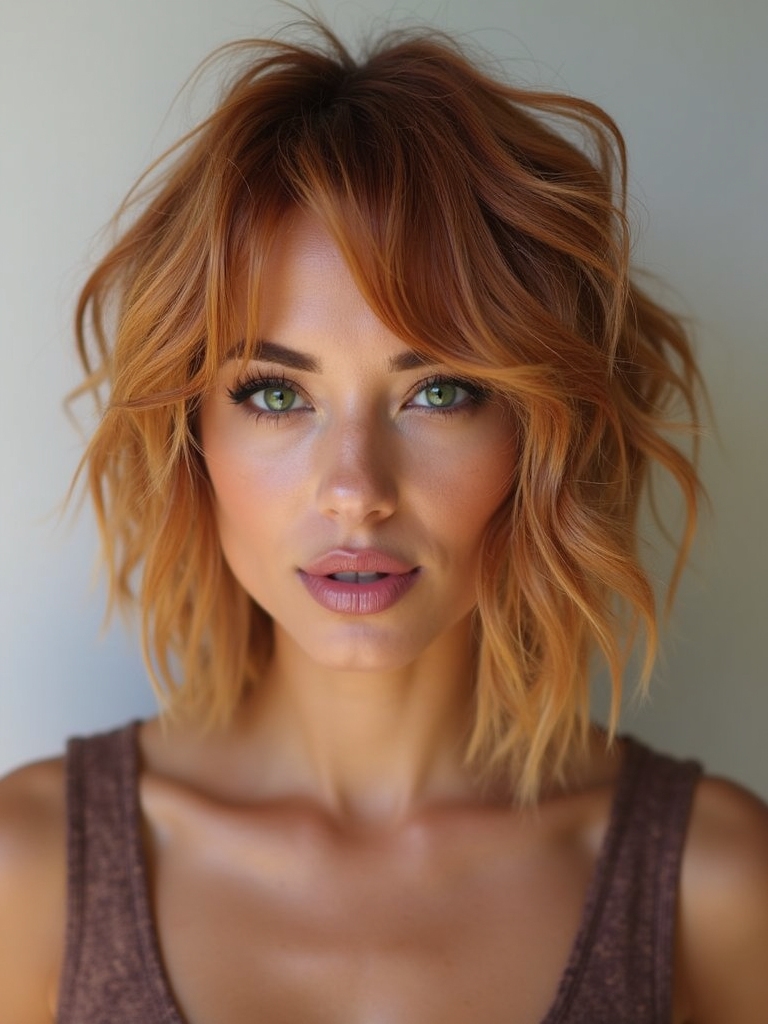
Shaggy Textured Bob With a Fringe

For anyone who wants shag texture without quite as much shortness, this version keeps a jaw-grazing bob length while layering the interior heavily and adding a soft fringe up front.
It sits in a tidier, more structured place than the shorter versions on this list, trading a little of the wilder texture for a shape that lands as more put-together at the office or in professional settings.
The fringe does a lot of the work tying the whole look together, softening the jawline the same way the interior layers soften the length.
Textured Pixie Shag With a Fringe
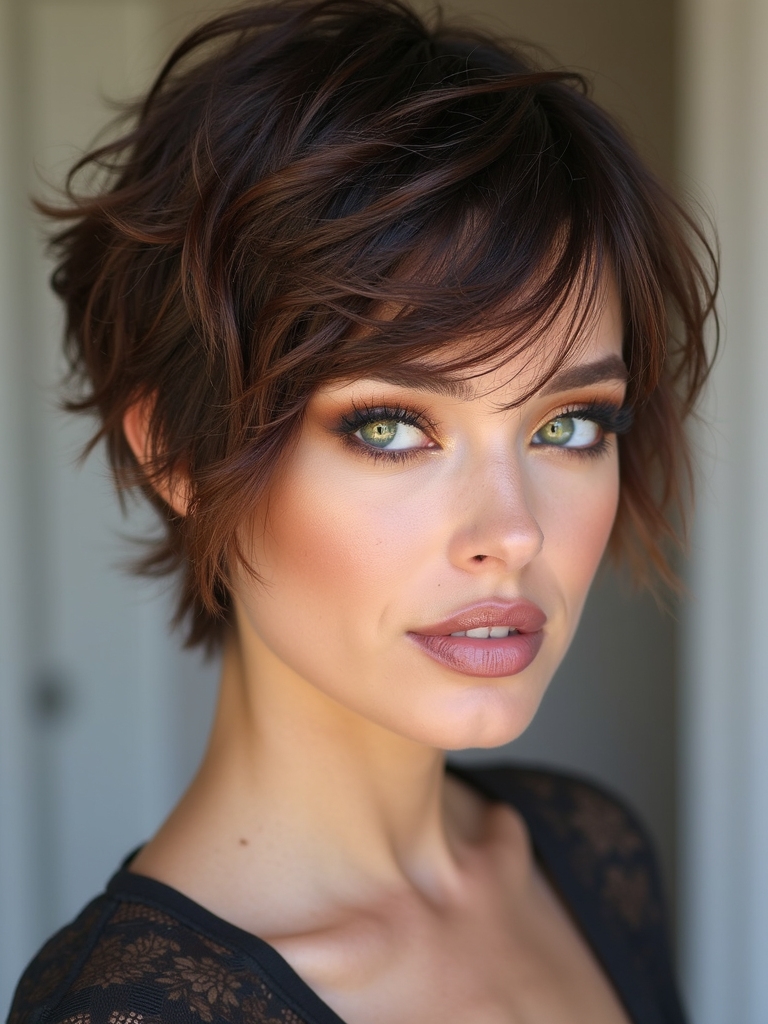
At the cropped end of the spectrum, this pairs a short, piecey pixie base with a soft, textured fringe, giving an already-bold cut real movement it wouldn’t otherwise have.
It asks for almost no daily styling once it’s cut correctly, which makes it a strong option for anyone who wants edge without a morning routine to match.
- A pea-sized amount of matte paste worked through with fingertips is most of the styling
- The fringe softens a pixie’s boldness without adding real length
- Best suited to someone comfortable with very little hair to hide behind
Lightweight Tools for Texture
Product choice matters more on this cut than on almost any other, and the operating word is light: heavy creams and oils weigh down the exact piecey texture the layers are cut to create.
The Three Products This Cut Actually Needs
A texture or sea-salt spray on towel-dried hair builds grip without stiffness, a fingertip of matte paste defines just the ends, and dry shampoo revives the crown between washes.
Applying too much of any of these is the single fastest way to undo what the haircut itself already built.
📋Before You Buy Texture Products
- ✓Choose a spray formula over a cream if hair runs fine or flat
- ✓Skip anything labeled smoothing or anti-frizz; this cut wants texture, not polish
- ✓One matte paste and one texture spray usually covers the whole routine
Air-Dry Texture or Polished Control

Most people wearing this cut settle into one of two routines. Air-drying gives the most natural, worn-in texture with the least damage: product on damp hair, a scrunch, then hands off until it dries. Heat styling trades a few extra minutes for more control, usually a rough-dry at the roots for lift and a flat iron run lightly through the ends on days that call for something tidier.
- Air-dry for the most natural texture and zero heat damage
- Heat-style only when a more polished, controlled finish is the goal
- A heat protectant belongs in the routine any day tools come out
Dimensional Balayage for Texture

Color adds a second layer of dimension to this cut, and a soft, hand-painted balayage tends to suit it better than a solid all-over color, since the painted pieces catch the choppy layers and make the movement noticeably more visible.
Because it grows out without a hard line, the color upkeep stays about as low-effort as the cut itself, which matters on a style that’s already built around asking little of the person wearing it.
Solid color or dimensional balayage, which fits how you actually want to maintain this cut?
1Want zero color upkeep between salon visits?
A single-process solid color grows out with the least visible root line.
2Want the layers to look even more dimensional?
Balayage catches the choppy texture and looks richer in movement.
The Low-Upkeep Case for a Short Shag

Beyond the easy daily styling, this cut is cheap to own across a full year, and that part rarely comes up when people are deciding whether to chop their length off.
Because the layers grow out evenly, appointments can stretch further apart than most short cuts allow, and there’s no color to maintain unless a balayage gets added on top. A handful of visits a year, at roughly the same price as that first cut, adds up to less than most people spend keeping a longer style blown out regularly.
- Trims can stretch to nine or ten weeks, well past the six-week mark many short cuts need
- No color to maintain unless balayage gets added on top
- A handful of appointments a year is the realistic total cost of ownership
Bring Photos and Define the Length

The consultation decides more of the outcome than most people expect, so it’s worth walking in prepared with real reference points. A few photos showing the choppy texture specifically, and a clear answer on length, since chin, jaw, and pixie-short all end up looking like distinctly different cuts, both help.
- Bring photos that clearly show choppy, piecey texture up close
- State the length in specific terms: chin, jaw, or pixie-short
- Point to exactly where the shortest layers and any fringe should land
Soft, Choppy, Tousled Bangs

This kind of fringe is the one that actually matches the piecey energy already happening throughout the cut: undone, textured, and cut with enough give to move across the forehead. A blunt, precisely cut fringe fights everything the layers underneath are doing.
- Cut with texturizing shears for a soft, broken edge
- Softer and lower-maintenance than a heavy, blunt fringe
- A light trim keeps it from growing past brow-skimming length
A few terms that come up when a stylist explains this cut:
📖Point-cutting
Snipping into the ends at an angle to soften the line and add texture.
📖Debulking
Thinning the interior weight of thick hair from underneath, so the surface keeps its shape without the extra bulk.
Growing Out a Short Shag

Growing this cut out is far less painful than growing out most short styles, since the layers are already soft and disconnected. They simply lengthen into longer shaggy layers, skipping the awkward stage most short cuts go through on the way to medium length. Keeping face-framing pieces refreshed and the ends piecey as the length comes in keeps the whole thing looking intentional the entire way down.
- No awkward in-between stage, since the layers are already disconnected
- Refresh face-framing pieces periodically as length comes in
- Keep the ends piecey with periodic point-cutting as length grows
What to Expect
A first appointment for this cut usually starts with a consultation about length and texture, then moves into cutting dry sections to check how the layers actually fall, since a shag that looks right on wet hair can behave completely differently once it dries.
Expect the stylist to check the fringe and face-framing pieces last, once the rest of the layering is settled, and to walk through the styling routine step by step before handing you a brush and letting you try it yourself.
Short Shag Hairstyle Questions, Answered
?Is a short shag too much of a commitment if I’ve never had short hair before?
It’s more forgiving than most short cuts, since the layers are built to grow out without an awkward stage. If the length still feels risky, start with one of the longer, bob-length versions on this list, then go shorter at a follow-up visit once you know how it wears.
?What actually separates a short shag from a pixie cut?
Length and texture placement, mostly. A pixie is typically cut close and smooth at the sides with texture concentrated on top, while a shag keeps more overall length and spreads the choppy texture through the whole head, including the ends. Some of the shortest versions here actually blur the line between the two.
?Does this cut hold up in humidity or on frizz-prone hair?
Better than a smooth, blunt cut would, since the piecey texture is already meant to look a little undone. A lightweight anti-humidity spray on the ends does more good than trying to smooth frizz away completely, since heavy smoothing products flatten the texture the cut is built around.
Short, But Never Simple
Every version here proves the same point: cutting hair shorter doesn’t mean cutting out personality. Whether the pull is toward the lowest-maintenance layered version or the boldest brow-skimming crop, there’s a shape in this list built around an actual hair type and lifestyle first.
Bring the reference photos, say the length out loud in plain terms, and trust that a stylist who cuts shags often can shape this to fit. This is a cut that rewards showing up with a clear idea already in mind.
Next Up