Thinking about getting a bob haircut? You are in good company, because it is the cut people circle for months before finally booking, the one tied to fresh starts and big decisions more than any other. The only real question is how big a change you are ready to make.
This is the practical guide to that decision: every kind of bob from the gentlest trim of length to the boldest chop, what each one actually means when you ask for it, and exactly how to prepare for the chair.
Before You Book, Know This
- Decide how big a change you want first: a lob is a toe in the water, a blunt chin bob is a plunge.
- Bring a photo and name three things, the length, the weight, and the finish; the word bob alone is not enough.
- Expect roughly $40 to $80 for the cut, on top of a shaping trim inside two months.
- Match the cut to your hair texture, not just the photo; fine, thick, wavy, and curly are each cut differently.
- Styling at home is easy once you have the cut; a round brush or flat iron and ten minutes is the whole routine.
Decide How Big a Change You Want

Before anything else, decide how far you want to go, because a bob haircut is a spectrum, not a single cut. At one end sits a collarbone lob that barely registers as a change; at the other, a razor-sharp chin-grazing bob that announces a whole new you the moment you walk out. If you want to see them side by side, our full range of bobs lays them out.
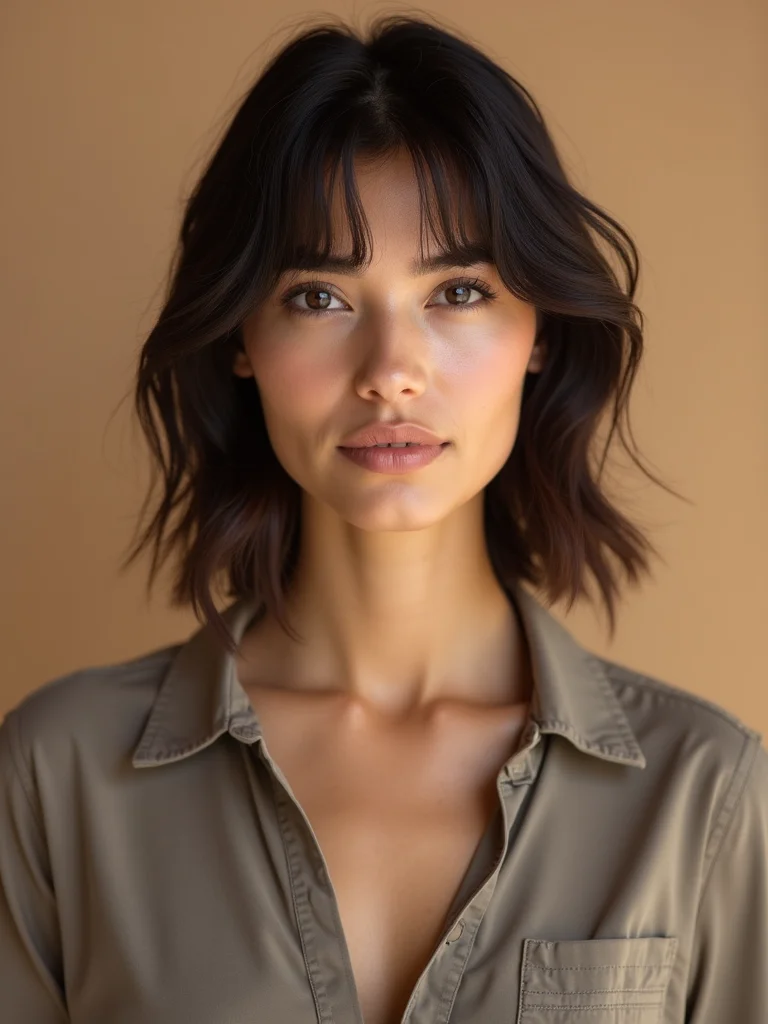
A razored chin bob like this one is a proper, noticeable shift without being extreme: short enough to feel bold, soft enough at the edges to stay wearable. It is where I send clients who know they want a real difference but are not chasing shock value.
Once you have a rough sense of how dramatic you want to be, every other decision, length, weight, and finish, gets much easier to make.

The Blunt Chin Bob, the Boldest Classic

If you want the most decisive version, the blunt chin bob is it: one clean, ruler-straight line right at the jaw, full and heavy with no layers. It is the boldest classic cut you can ask for, and it reads sharp and confident:
- Ask for: one blunt length at the chin, no internal layers
- Best on straight or gently wavy, medium-to-thick hair
- A real commitment: a shaping trim every six weeks keeps the line crisp
ℹ️Good to Know
The bob has been a symbol of change for a century. When women first cut their hair into bobs in the 1920s, it was a public statement of independence, and the cut still carries that fresh-start energy, which is why so many people book one right after a big life moment.
The French Bob, a Chic Middle Ground

The French bob offers a switch that feels stylish rather than severe: jaw-skimming, usually with a soft fringe, and worn a little undone. It is the option for someone who wants to look transformed without looking stark.
Ask your stylist for a jaw-length bob with a wispy fringe and a touch of texture, and tell them you want it to look softly undone rather than blow-dried stiff:
- Request: jaw length, a soft fringe, a piecey finish
- Rewards a natural wave; fake one with a quick bend
- A medium-sized step that flatters most faces
The Lob, the Gentlest Way In

If the idea of short hair frightens you, start with the lob. A blunt, shoulder-skimming long bob is the smallest real change on the menu: enough to feel new, long enough to still pull back and to grow out painlessly.
This long bob is recommended to nearly every first-timer, because it lets you test bob life with almost nothing to lose:
- Ask for: a blunt lob grazing the shoulders or collarbone
- The easiest bob to grow out, should second thoughts arrive
- A gentle step that still feels like a fresh start
📋Before your bob appointment
- ✓Save two or three photos that show the front and the back
- ✓Note your natural texture and how much time you will spend styling
- ✓Decide your shortest acceptable length, then ask the stylist to start longer
- ✓Come with clean, dry, naturally-styled hair so the cut suits your real texture
- ✓Ask about the upkeep and trim schedule before any scissors come out
The Textured Bob, Low-Effort and Fresh

A textured bob is the cut for anyone who wants something new but dreads styling. It keeps a blunt base for shape but breaks the ends up so the cut looks good messy, undone, and on its lazy third day.
A cut that styles itself
Ask for a blunt or soft base with point-cut, piecey ends, and tell your stylist you want wash-and-go rather than a daily blow-dry. On naturally wavy hair it is close to no-maintenance.
It is a fresh, modern look that asks very little of you once you leave the salon, and that ease is exactly what makes it so popular right now.
The Curly Bob, Cut for Your Texture

For curly hair, a curly bob is a liberating move, but only if it is cut correctly, dry and in your natural pattern so each curl lands where it should. For ways to wear it day to day, see our bob hairstyles:
- Ask for: a dry cut, in your curl pattern, by someone who cuts curls
- Leave length; curls shrink dramatically as they dry
- Internal layers stop the shape turning into a triangle
Cutting a bob is the most common ‘I should have done this years ago’ moment in my chair. The fear is always bigger than the regret.
The Asymmetrical Bob, the Edgiest Leap

The boldest leap of all, short of shaving your head, is an asymmetrical bob: deliberately longer on one side for a sharp, off-balance line. It’s the boldest request on this list, and the one that turns heads fastest:
- Ask for: one side noticeably longer than the other
- A striking, confident move that needs regular upkeep
- Best for those happy to style and trim often
The Chin Bob, a Real but Versatile Change

If you want a change you can dress up or down, the classic chin bob is the workhorse. It is a genuine, noticeable cut, yet versatile enough to go sleek for work, waved for a night out, or tucked behind the ears on a lazy day.
This is the bob requested most in the chair, because it threads the needle between dramatic and practical:
- Tell your stylist: chin length, blunt or softly layered
- Reads polished when sleek and relaxed when waved
- A real cut that still suits nearly every routine
How big a leap do you want to take?
1Just testing the waters
A collarbone lob: bob energy, and easy to grow out
2A real but wearable change
A classic chin or jaw bob you can dress up or down
3Go bold or go home
A blunt micro bob, a sharp asymmetrical, or a wet-look finish, with a year-long grow-out to plan for
4Work with my natural texture
A wavy, curly, or razored textured bob cut to your hair
The Jawline Bob, a Crisp Frame

Slightly more defined than the chin bob, the jawline bob sits right at the jaw with a crisp, clean line that frames the lower face like a statement. It is a confident, architectural cut for someone with the features to carry it:
- Ask for: a blunt line right at the jaw
- Best for those who want a sharp, framing cut
- A deep side part softens it if it feels too stark
The Airy Textured Bob, a Light Change

Where the jawline bob is heavy and sharp, the airy textured bob takes the same length and lightens it, with soft, feathered ends that move and breathe. It is a cut that feels gentle even at a short length.
Ask for jaw-grazing length with plenty of internal texture, especially if your hair is thick and you want to lose some of the weight:
- Request: jaw length with light, feathered, point-cut ends
- Great for thick hair that needs weight removed
- A short cut that still feels soft, not severe
The Stacked Angled Bob, Built-In Volume

If your hair falls flat, the stacked angled bob is the move that builds body into the cut itself. Graduated layers stacked at the back create lift and a rounded shape, with the front angled longer toward the face.
Ask for stacked graduation at the back and a forward angle, and tell your stylist you want volume rather than a flat, one-length bob. It is a gift for fine or limp hair that never holds height.
It does grow out faster than a blunt cut, so plan to keep up with the regular trims that hold the shape.
A Deep Side Part for Instant Volume

Not every change needs scissors. A deep side part is the smallest tweak on this list and one of the most useful, a fast way to change the whole shape, adding a swoop of volume and a flattering diagonal to any bob you already have.
The free, no-scissors change
If your bob feels flat or a little severe, ask your stylist to cut it to work with a side part, or simply move your part over yourself and watch the difference.
It costs nothing, takes a second, and on a round or square face it does real softening work, so try it before you book anything more drastic.
The Razored Bob, Soft and Feathered

A razored bob is cut with a blade rather than scissors, which leaves the ends tapered and feather-light instead of blunt. It is the pick for anyone who finds blunt bobs too heavy or helmet-like and wants softness and movement instead.
Ask specifically for a razor cut and check your stylist is comfortable using one, because a razor on the wrong hair, very fine or very curly, can leave it stringy. On fine-to-medium straight or wavy hair, it is beautifully soft.
The Collarbone Bob, the Softest Landing

The longest bob on the list, the collarbone bob, is the gentlest possible move while still being a real haircut. It skims the collarbone with an airy, soft silhouette that flatters almost everyone.
Change without the commitment
Ask for collarbone length with soft, long layers and you get a cut that feels fresh without any of the commitment of going truly short. It is the one I suggest when someone wants something new but is plainly nervous.
And because it still gathers into a low ponytail, it asks nothing of your routine that your longer hair did not.
The Wet-Look Bob, a Bold Finish

Finally, remember the change can live in the styling, not just the cut. A wet-look bob slicks any bob back glossy and sleek for a bold, editorial finish that turns an everyday cut into a statement in five minutes:
- Comb a strong gel through damp hair and slick it straight back
- Works on any bob length, from chin to collarbone
- A dramatic look with zero commitment, since it washes right out
Bob Haircut Questions, Answered
?How do I know if a bob will suit me?
Almost everyone suits some version of a bob; the trick is matching it to your face shape and texture. If you are nervous, start with a longer lob, which flatters nearly every face and grows out easily if you decide it is not for you.
?How much does a bob haircut cost?
Expect roughly $40 to $80 for the cut at most salons, more in big cities or with a senior stylist. Factor in a shaping trim inside two months as well, since a bob loses its line faster than long hair does.
?Will I still be able to tie my hair up?
It depends on the length. A collarbone lob still gathers into a small ponytail, while a chin or jaw bob will not, though you can always pin the front back or use clips. If a ponytail matters to you, say so before you cut.
?How long does it take to grow a bob out?
Plan on the better part of a year to go from a chin bob back to long hair, passing through a lob and then face-framing lengths along the way. Regular trims through the grow-out keep it looking intentional rather than shapeless.
Ready When You Are
A bob haircut is rarely just a haircut; it is the change people put off for years and then wish they had made sooner. Whether you ease in with a collarbone lob or commit to a blunt chin-grazer, the leap is smaller than the fear of it, and the payoff is that rare feeling of looking in the mirror and seeing someone a little freer.
So if you have been holding a photo up to your face for months, take that as your answer. Save the picture, run through the checklist above, and book the appointment; the bob you keep imagining is almost certainly the one you should try.
Next Up