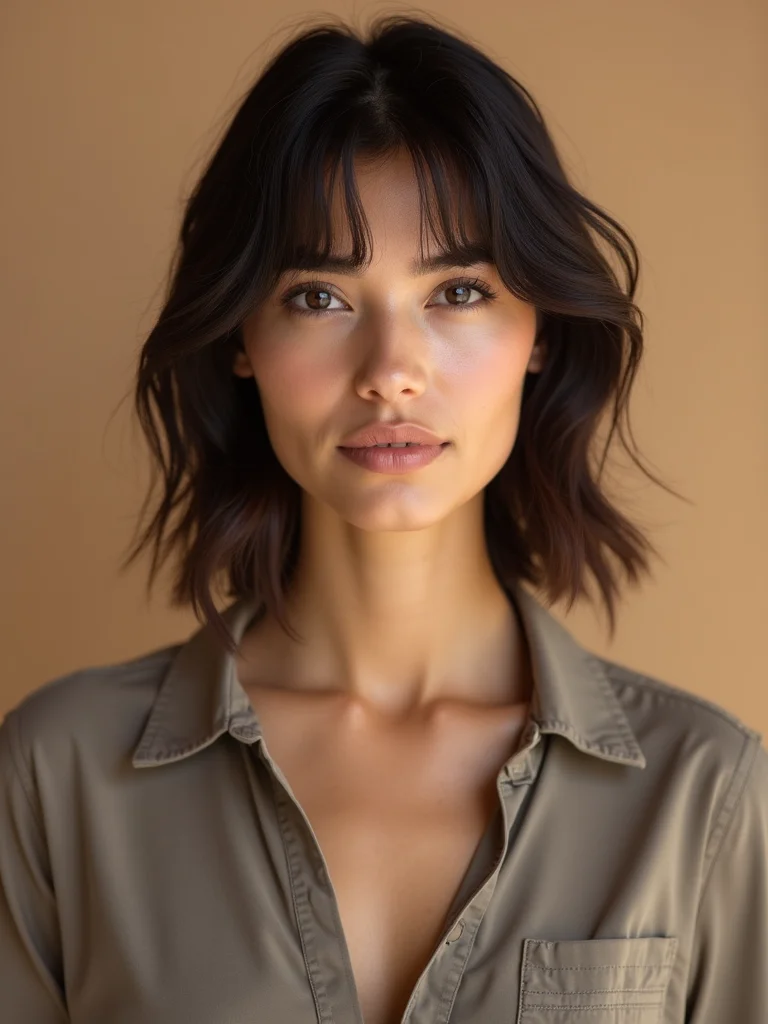
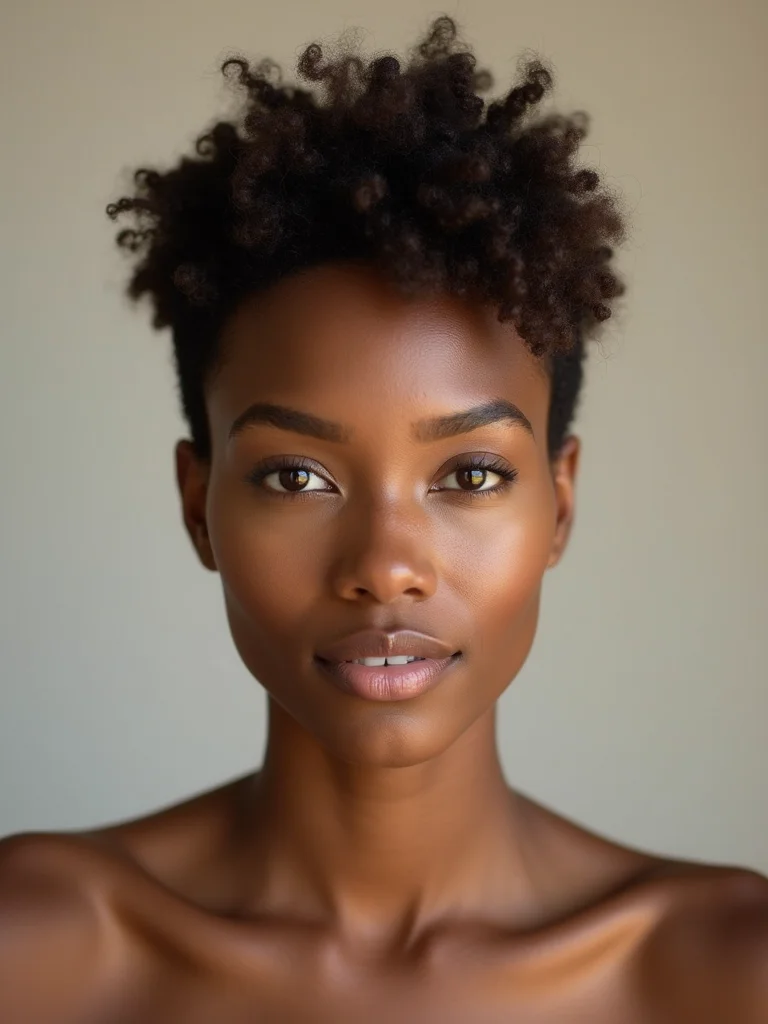
The common assumption is that a long bob is just a shorter version of long hair, a safe, in-between compromise for anyone not ready to commit either way. That undersells it. The lob lands at the collarbone precisely because that length is simply the most livable one on the head, long enough to tuck or tie back, short enough to stay light through a full day.
Fifteen finishes on that same length follow below, from razor-blunt to beachy-undone, each with an honest look at what it actually takes to maintain.
Reading the Lob Before Booking
- The finish, blunt, layered, sleek, or beachy, changes the cut’s whole personality more than the exact length does.
- A clean, one-length edge holds its shape for a shorter stretch than a softly layered version, since a blunt line shows regrowth and wear sooner.
- Texture and part direction do most of the heavy lifting between salon visits; the cut sets the frame, styling fills it in.
The Blunt Lob
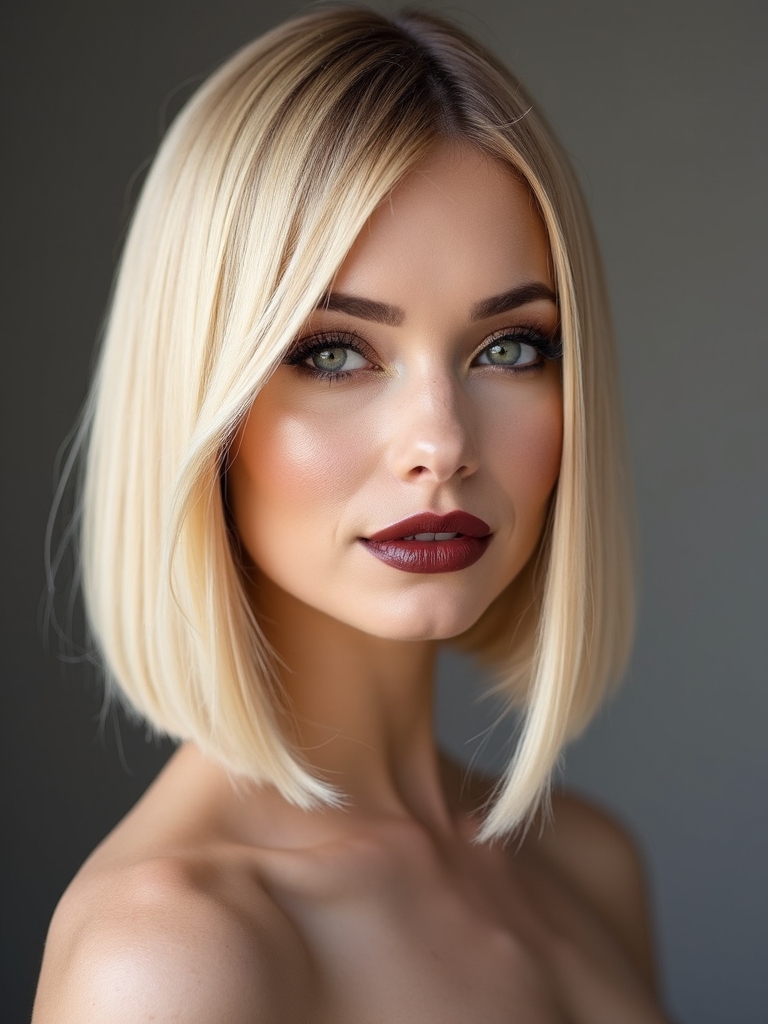
The blunt lob is the shape in its purest form: one clean length, a heavy bottom edge, and no layers cut into it anywhere. That solid line comes across sharp and deliberate, and because none of the weight gets removed, it gives fine hair the illusion of real density.
- A one-length edge that looks sharp and fully intentional.
- Fakes thickness on fine hair by keeping the weight in place.
- Needs a precise blow-dry, since a blunt line shows every flaw.
The Layered Lob
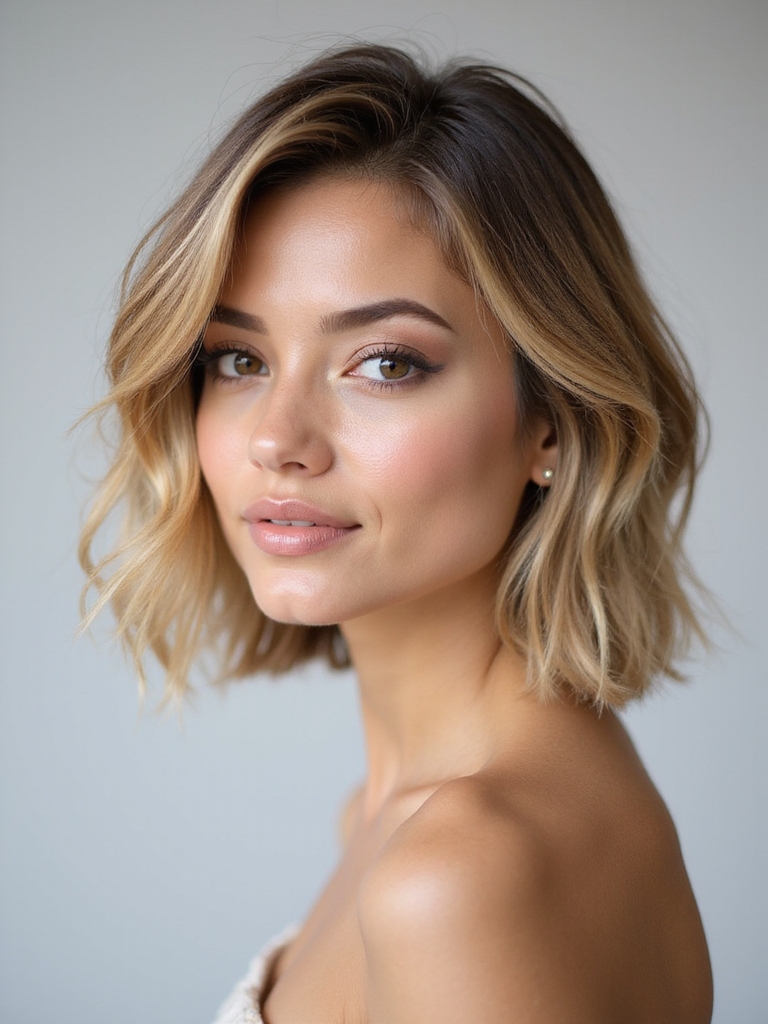
Where the blunt lob is about precision, this version is about movement. Soft layers cut through the length break up the weight, so the hair falls with real body and bounce.
Movement Over Precision
It’s the more forgiving of the two shapes, since the layering hides a slightly uneven blow-dry and gives thick hair somewhere for its bulk to go.
Very fine hair can look stringy if the layers are cut too aggressively, so keeping them soft and on the longer side matters. Most pros steer thick-haired clients toward this version specifically, since removing that extra weight is what stops the cut from ballooning. For a shorter take on the same movement, the layered bob covers the technique at collarbone-and-above length.
Not sure which lob finish fits best? Start here:
1My hair is thick and tends to feel heavy.
Look at the layered or invisible-layer lob. Both remove bulk without losing the clean line.
2My hair is fine and needs to look fuller.
The blunt lob keeps all the weight in place, which is exactly what fine hair benefits from.
The Sleek Collarbone Lob
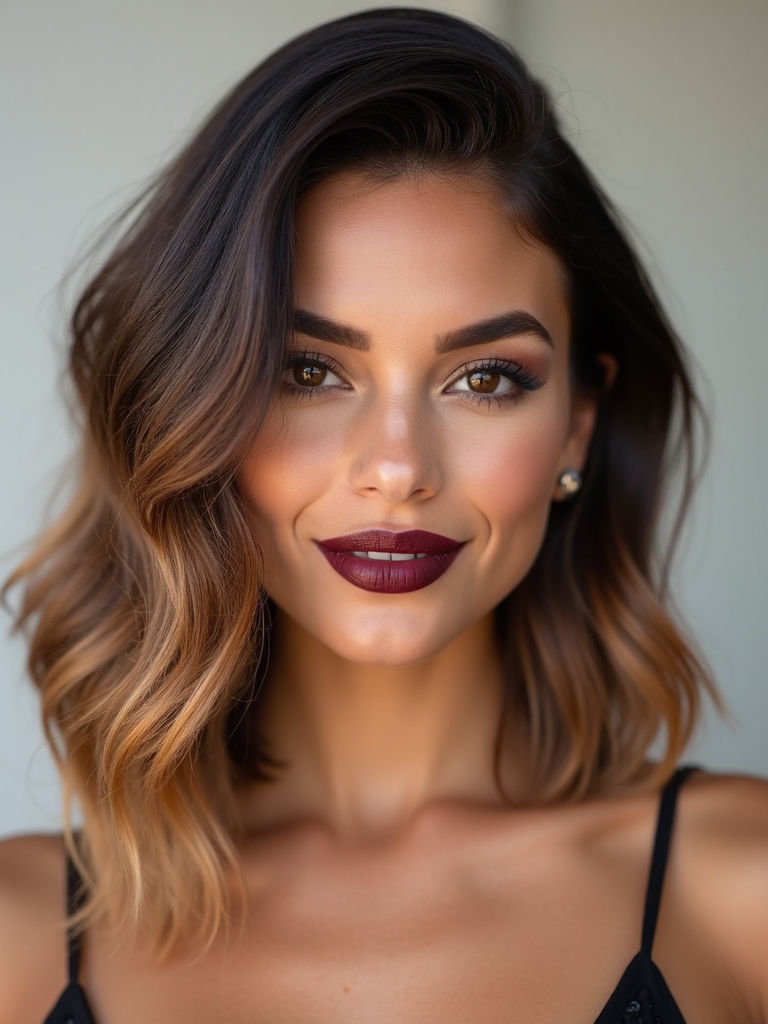
Collarbone is the lob’s home address, the length that flatters the widest range of faces and feels the most livable day to day. The address rarely changes. Worn sleek and smooth right at this length, the cut looks polished and grown-up, elongating the neck and framing the jaw cleanly.
- Sits at the single most universally flattering length in this whole range.
- Smooth and sleek styling gives it a polished, put-together finish.
- Long enough to tuck behind the ears or pull back halfway.
The Beachy Lob
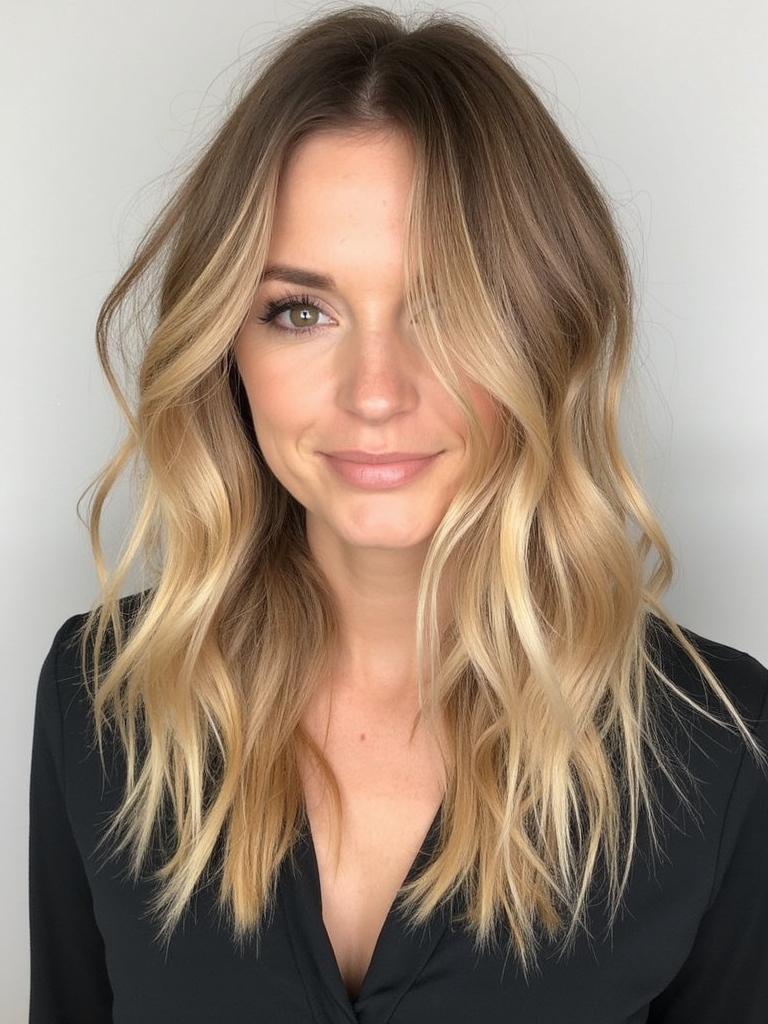
At the opposite end from sleek sits the beachy lob, all tousled texture and undone movement. The length is built for exactly this look, long enough to hold a wave but short enough that the waves keep their shape through the afternoon.
- Loose, undone waves that flatter an unusually wide range of faces.
- A texturizing spray worked through first gives the waves something to grip.
- Rough-drying and finger-styling finish the look without a single hot tool.
The Glassy Blunt Lob
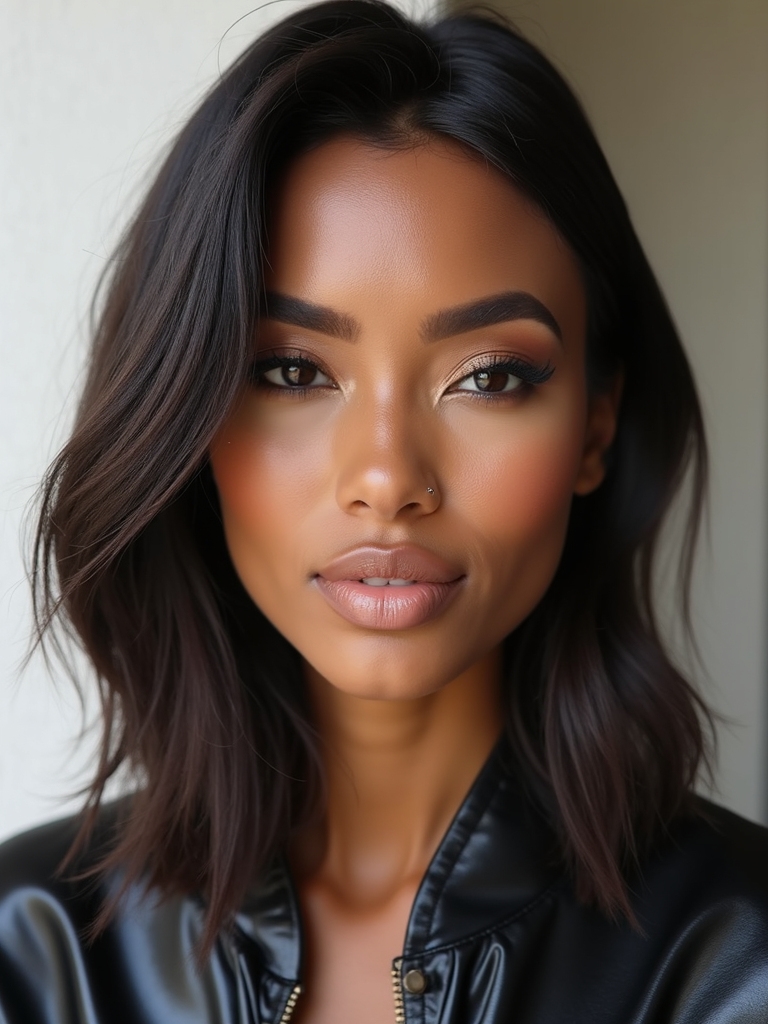
The glassy lob isn’t really a different cut so much as a different finish: the same blunt shape, smoothed until every strand catches light like polished glass. It’s the most fashion-forward way to wear the shape, and it photographs like a finished editorial image.
Getting there comes down entirely to the finish. A smoothing blow-dry followed by a flat iron through thin sections is what builds the mirror effect, finished with a small amount of shine product smoothed over the surface only.
- A mirror-smooth, high-shine finish that looks lit from within.
- Depends on healthy ends, since damage shows up instantly at this shine level.
- Rewards regular trims more than any other finish on this list.
The Side-Part Lob
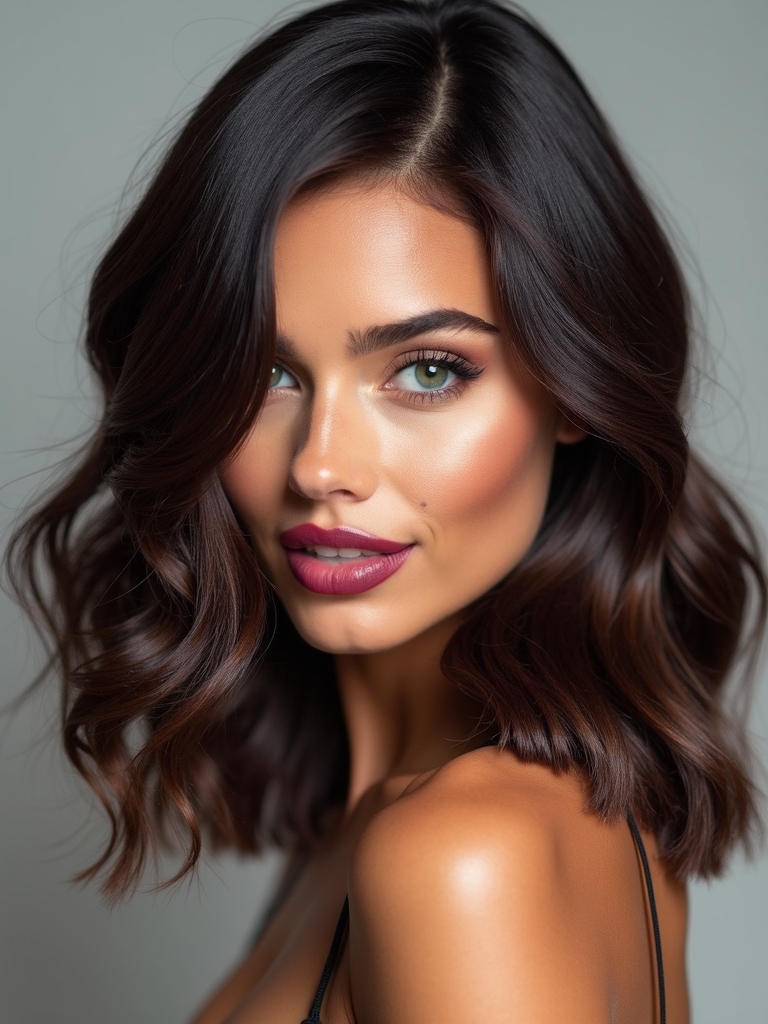
Where a lob gets parted changes its whole personality, and a deep side part is the quickest route to real drama and volume. Pushing hair over from a low part forces it up and away from the roots, giving instant lift on the fuller side and a soft sweep across the forehead.
- A deep part adds real root volume along with a flattering forehead sweep.
- A stubborn part trains over in a few sessions by clipping it while damp.
- Reads as one of the more flattering options for round and square faces.
Training a Stubborn Part
A part that’s worn the same direction for years can resist a switch. Clip the new part in place for the first ten minutes after washing, several days in a row, and it will start holding on its own.
The Center-Part Lob
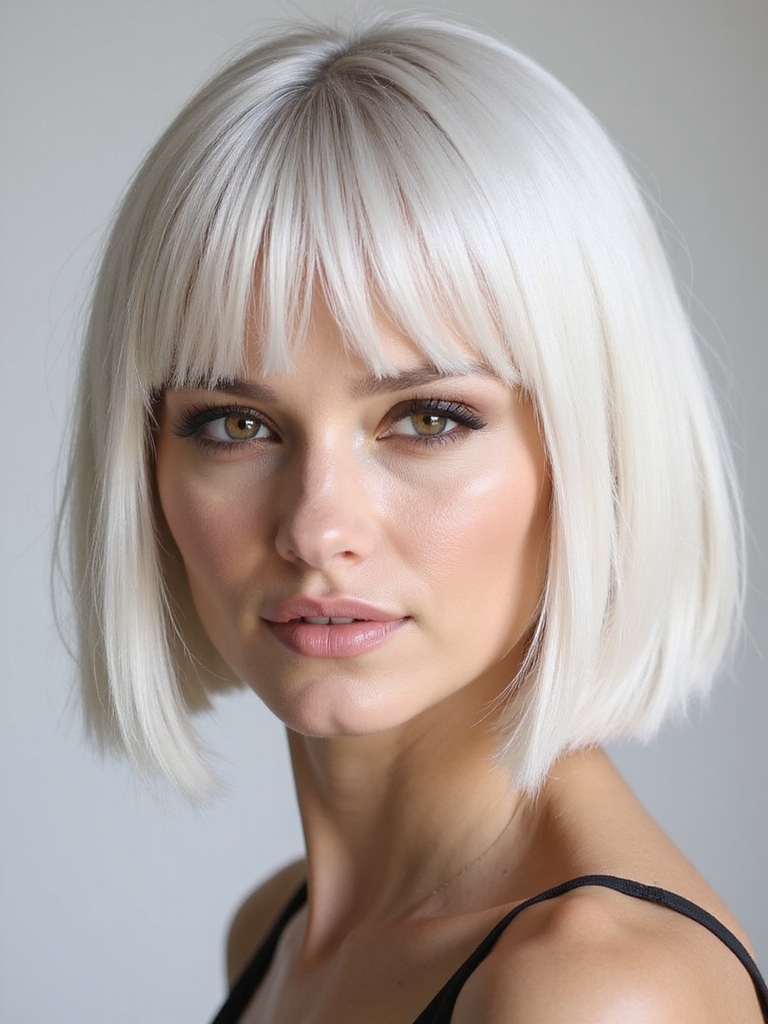
A clean center part gives the lob its most modern, minimalist edge, framing the face with symmetry and an intentional simplicity that feels current without trying hard. The part does the work.
- Symmetrical, quiet, and modern.
- Flatters oval and heart-shaped faces especially well.
- Less forgiving of a cowlick, so it suits a naturally even hairline best.
The Lob With Curtain Bangs
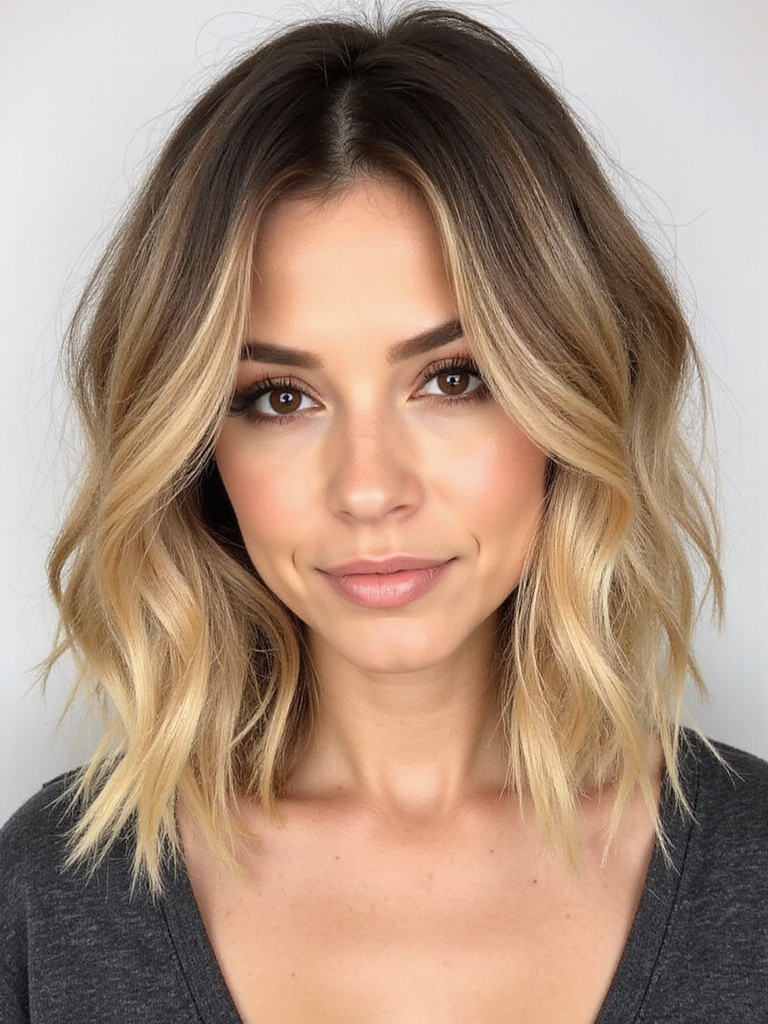
If one fringe was built for the lob specifically, it’s the curtain bang. Parted softly down the middle and swept to each side, it frames the face and adds movement up front without committing to a heavy, high-upkeep fringe.
The Most Natural Fringe Pairing
The pairing works because both pieces are soft and face-framing already, so the bang functions as a natural extension of the cut itself. On a wavy lob especially, the swept pieces blend directly into the surrounding length.
It’s a frequently requested combination for exactly that reason, and it grows out gracefully into longer face-framing layers, skipping the awkward in-between stage entirely.
👍Why Curtain Bangs Suit a Lob
- +Blends smoothly into the cut as one continuous piece.
- +Grows out gracefully with no awkward stub stage.
- +Works on straight, wavy, and curly lobs alike.
👎What to Weigh First
- –Needs occasional shaping trims to keep it looking soft.
- –Can require more styling time on very straight, resistant hair.
- –Not ideal for anyone who dislikes any hair near the eyes.
The Curly Lob
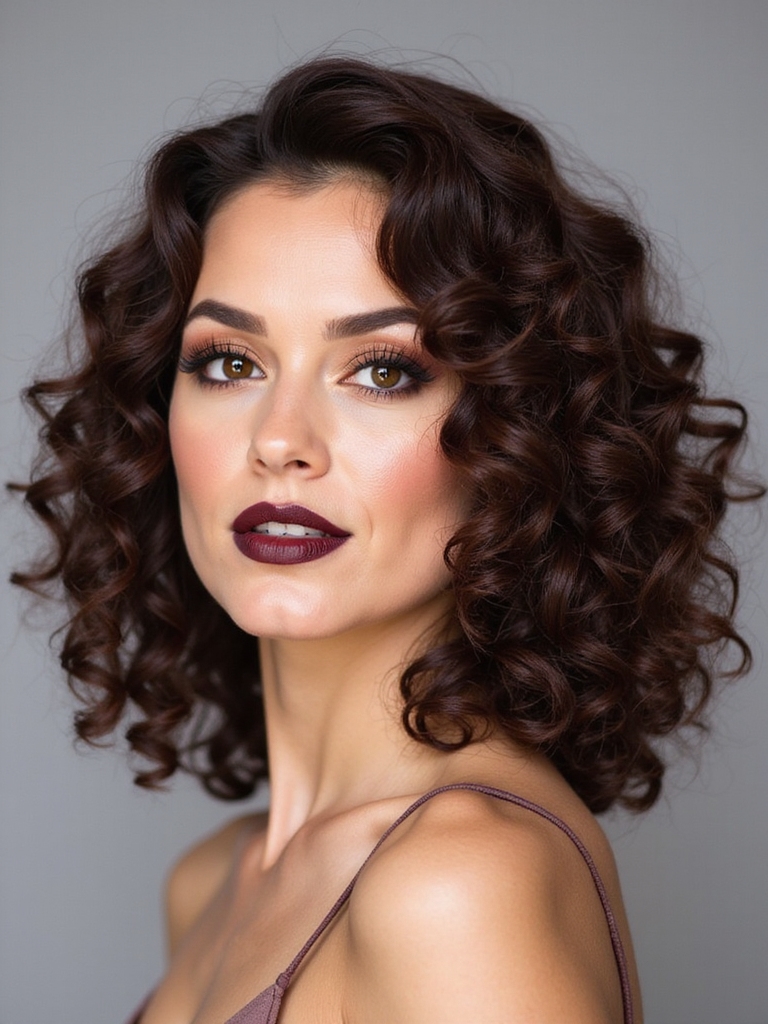
The lob works beautifully on natural curls, provided the cut is shaped for the curl pattern rather than fought against it. Cut on dry hair so the stylist can watch where each curl actually settles, and layered to remove bulk, a curly lob gets real shape and lift instead of the boxy triangle that ruins so many curly cuts.
- Dry cutting lets the shape follow where curls actually land.
- Layers remove the bulk responsible for the triangle silhouette.
- Extra length gets left in to account for how much curls lift once fully dry.
The Shaggy Lob
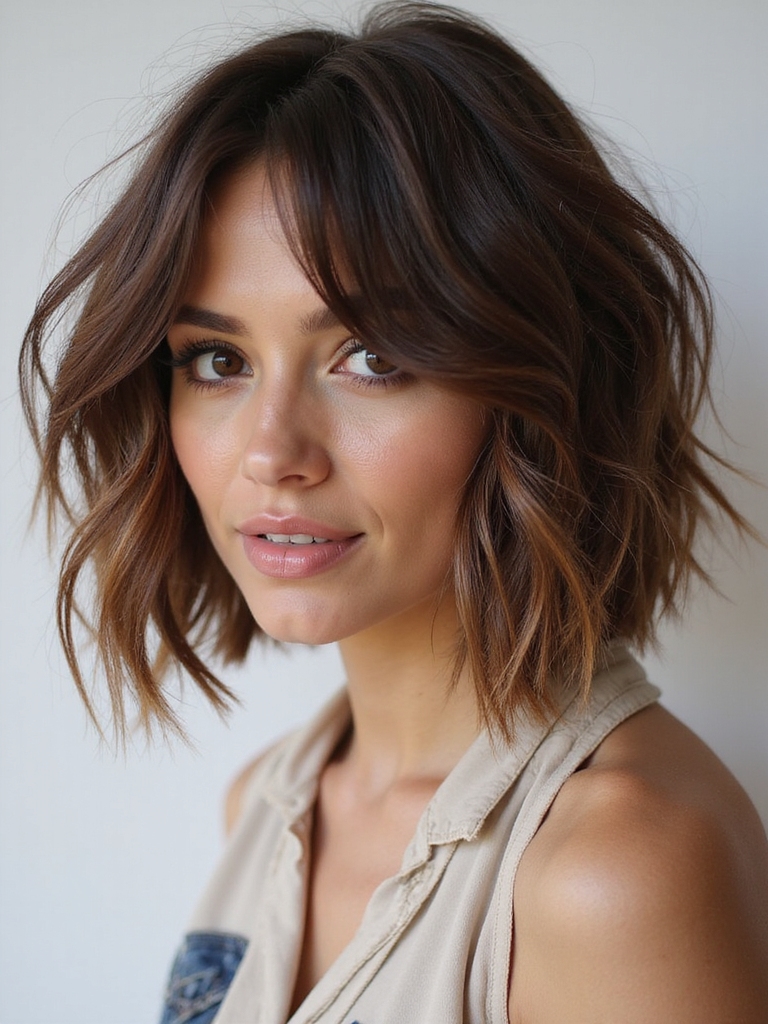
The shaggy lob brings choppy, rock-inspired texture to the shape, built on heavy layering and an easy, relaxed attitude. It’s the lowest-effort version in this entire range, designed on purpose to look good a little undone.
Built for Low Effort
Built on choppy layers and often a fringe, it adds instant volume to fine hair and welcome movement to thick hair, air-drying well with just a bit of texture spray worked through.
It comes across younger and looser than a sleek lob, and for anyone who wants hair that looks styled while doing almost nothing to it, this is the version worth asking for by name.
The Asymmetrical Lob
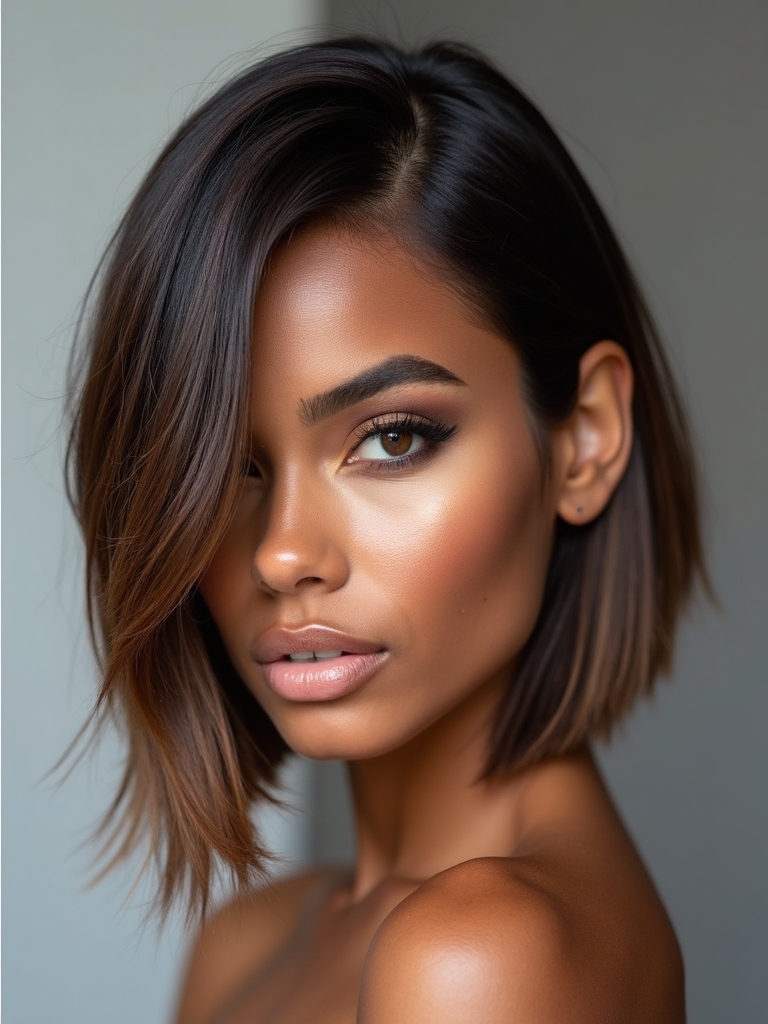
Cut noticeably longer on one side than the other, this version brings a modern, editorial edge to the shape. The angle draws the eye, slims the face, and gives the cut a fashion-forward attitude a symmetrical version simply doesn’t carry. The asymmetrical bob guide covers the same effect at a shorter length.
The difference between sides can stay subtle or go dramatic, with a sharply razored, angled line. Either direction looks fully deliberate, especially worn sleek and straight, where the line shows clearly.
- A longer and shorter side together create an editorial, modern edge.
- Slims and angles the face more than a symmetrical lob does.
- Reads most striking worn straight, where the angled line stays visible.
The Invisible-Layer Lob
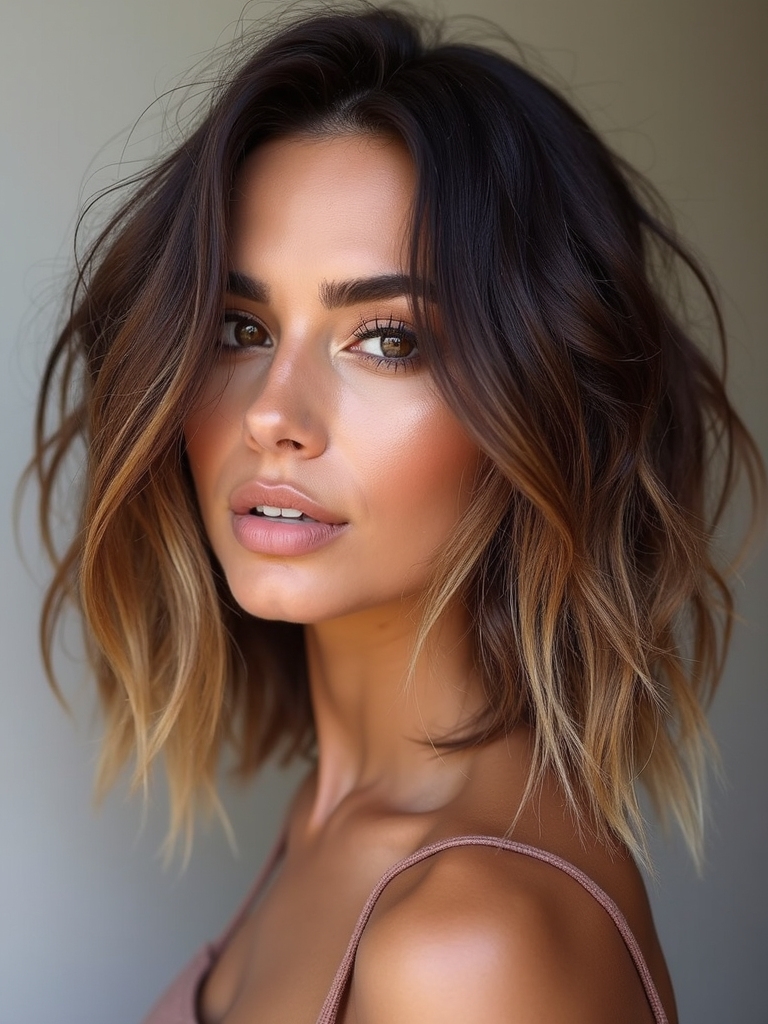
Invisible layers are the modern technique behind a lob that feels light and moves easily but still looks like one length on the surface. The layering happens internally, removing weight from underneath while the top stays blunt, delivering movement without sacrificing that clean line.
It’s the answer for anyone with thick, heavy hair who loves the blunt lob’s look but finds it sits like a helmet in practice.
- Internal layers remove weight while the surface line stays fully blunt.
- Ideal for thick hair that wants movement without visible layering.
- Keeps the sharp outline intact while losing the bulk that weighs it down.
“Invisible layers only work if the stylist plans the internal sections before touching the perimeter. Cut it the other way around and the blunt line suffers for it.”
The Balayage Lob
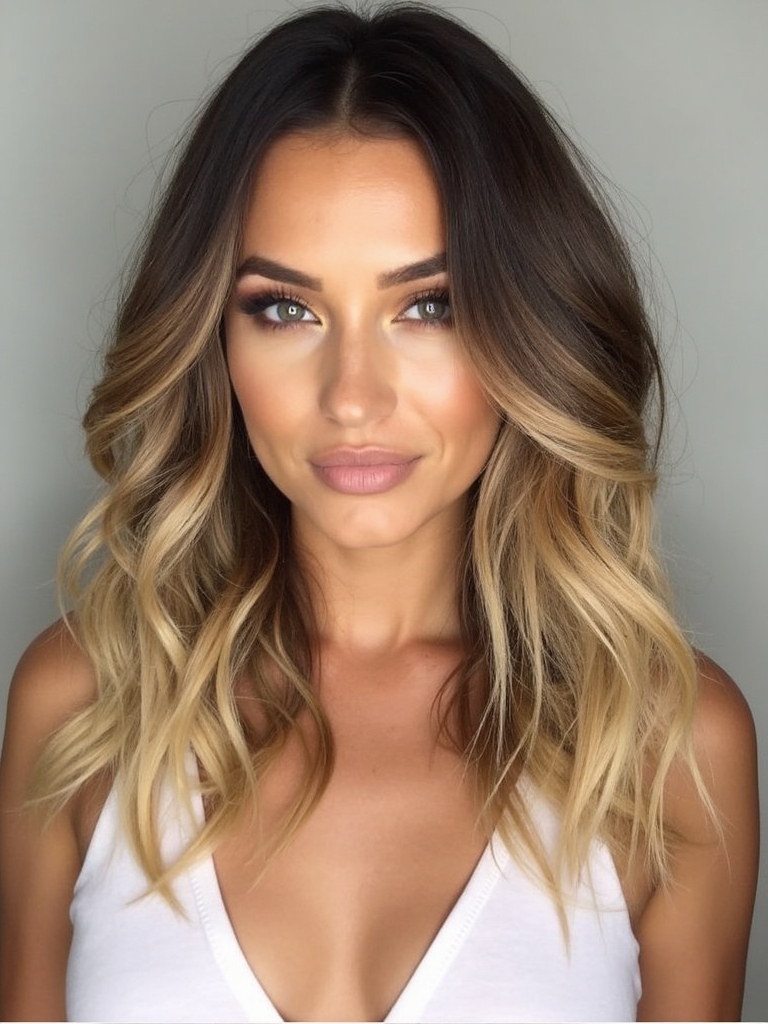
Color does as much for a lob as the cut itself, and hand-painted balayage remains the most requested choice for good reason. Depth sells the shape. Sun-kissed, hand-painted pieces add real dimension, making the cut look richer without a hard, blocky demarcation line.
That graduated color blends out gently at the roots, so there’s no hard demarcation line to chase between visits. A full appointment typically fills a two-to-three-hour session, priced around $200, with a refresh needed only a few times a year.
The Rooted Platinum Lob
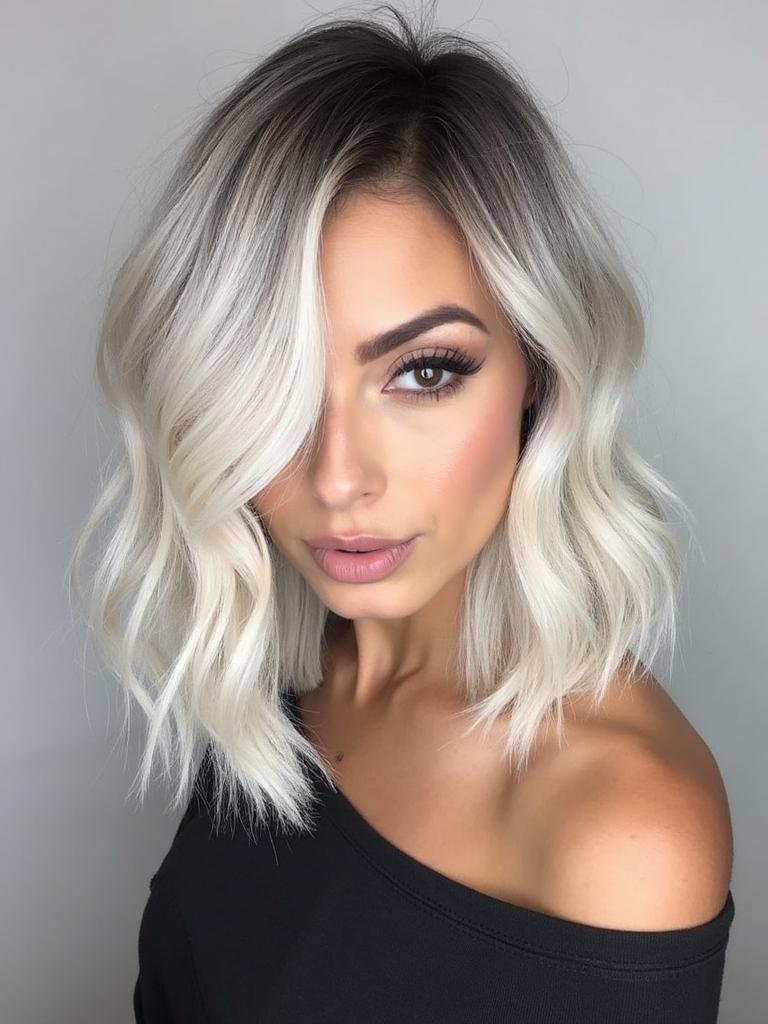
For a bolder statement, a rooted platinum lob pairs an icy, near-white length with a deliberately darker, shadowed root. It lands as high-fashion and striking, and that dark root is the clever part of the design, softening the contrast while stretching the time between touch-ups.
Honesty about the upkeep matters before committing to this one. Going platinum is a genuine lightening process that stresses the hair structure, so it needs serious conditioning and bond-building care to stay healthy at this length.
Consultations for this shade tend to run long, since the color itself is undeniably striking but the maintenance conversation deserves real time.
The Sleek Micro-Bang Lob
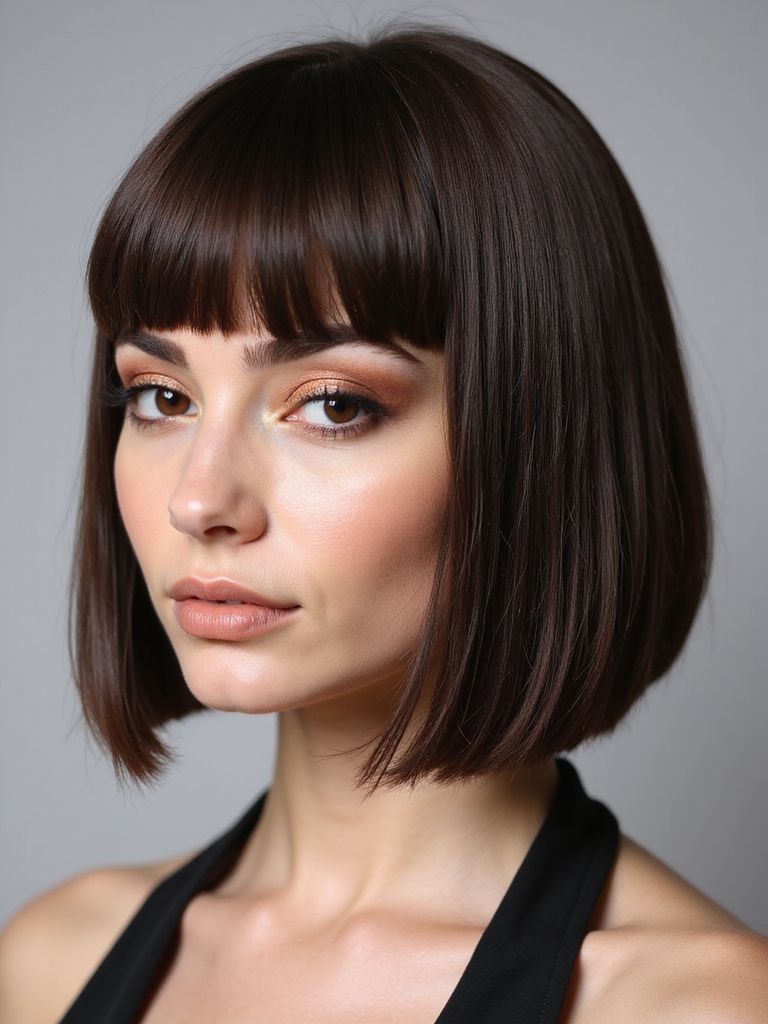
For the fashion-forward, pairing a sleek lob with micro bangs, a very short, blunt fringe sitting high on the forehead, makes a bold, editorial statement. It draws every eye straight to the face, reading confident in a way no longer fringe manages.
This isn’t a low-commitment pairing. Micro bangs need frequent trims to stay sharp and suit strong features paired with a genuine willingness to stand out. On the right person, though, paired with a clean, sleek lob, it ranks among the most striking looks in this entire range.
Common Mistakes to Avoid
The most frequent misstep is choosing a finish without accounting for texture. A blunt, glassy lob on naturally curly or very wavy hair fights the hair’s own pattern daily, while a heavily layered version on already-fine hair can thin the ends past the point of looking full.
The second is skipping the consultation conversation about part and fringe, treating the cut as the whole decision. Part direction and a curtain bang change a lob’s entire character more than length ever does, so naming those preferences clearly matters just as much as picking a length.
Long Bob Questions
?How long is a long bob, exactly?
It typically falls between the chin and the collarbone, with the classic lob grazing the collarbone specifically. That’s the length most people find both flattering and easy to live with day to day, long enough to tuck or tie back, short enough to stay light.
?Will a long bob suit any face shape?
Almost certainly, since part placement and layering do most of the tailoring. A side part paired with face-framing layers softens a round or square face, while a blunt, center-parted lob flatters an oval or heart shape particularly well.
?Does a lob work well on curly or thick hair?
Yes, provided the cut accounts for the texture. Curly hair should be shaped dry with layers built in to remove bulk, while thick hair benefits from internal, invisible layering that keeps the outer line clean while cutting the weight underneath.
The Cut Everyone Keeps Asking For
The long bob earns its reputation as the most requested cut because it’s simply the most adaptable one. The same collarbone length can be blunt or beachy, sleek or shaggy, center-parted or swept to one side, plain or painted with balayage, which means a version of it exists for nearly everyone.
Rather than treating the lob as a single fixed haircut, it helps to treat it as a starting point, then choose the layering, the part, the fringe, and the color that make that starting point truly personal.
Favorites to Revisit