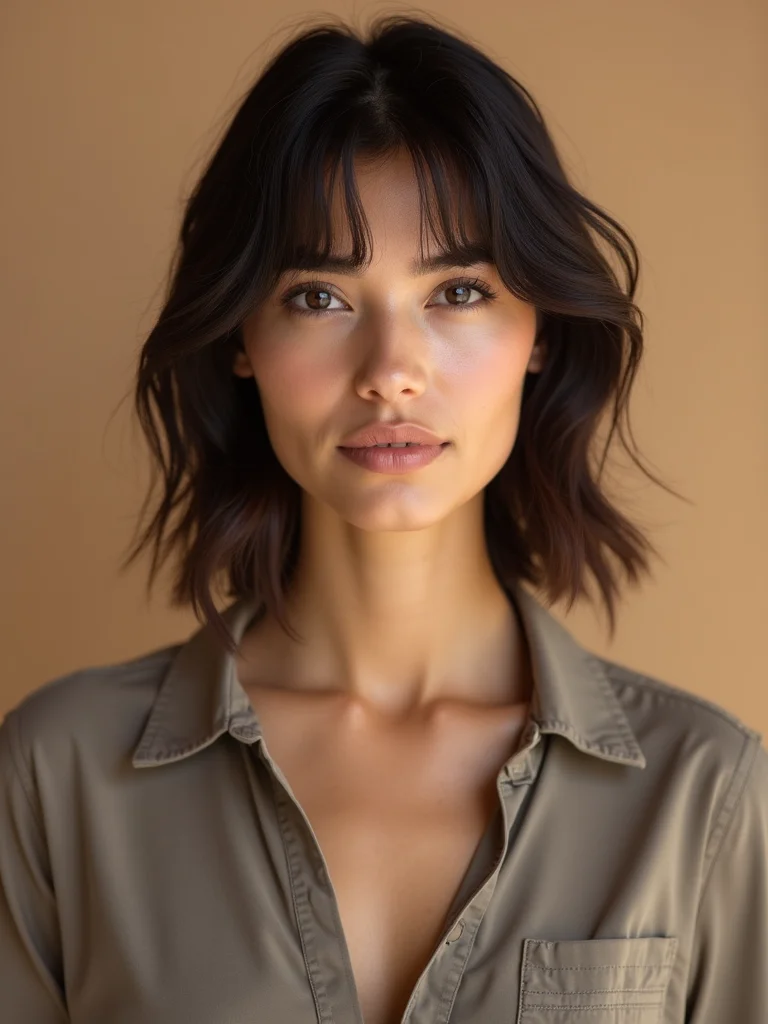
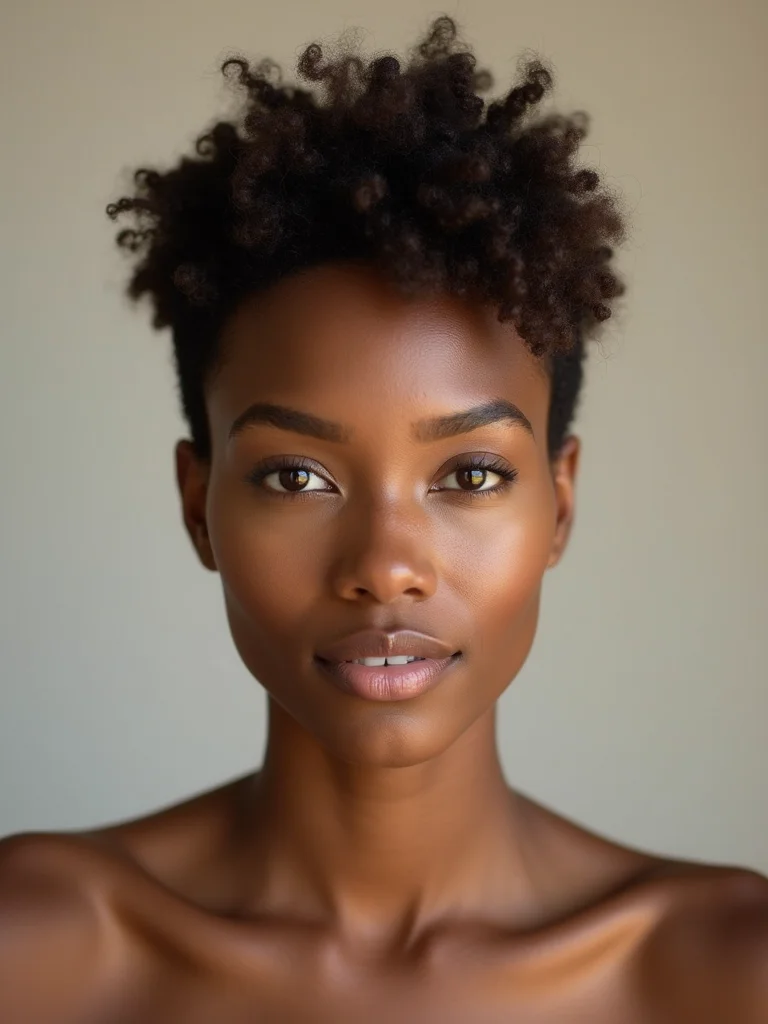
Most people with long hair assume shaggy layering means giving up length to get movement. That’s the wrong trade to make. Shaggy long hair removes weight without touching length, so the ends finally swing instead of hanging in one solid sheet.
Fifteen versions follow, sorted by texture and face shape, with the one technique mistake that turns a good long shag stringy at the ends.
What Changes, What Doesn’t
| Question | Quick Answer | Why It Matters |
|---|---|---|
| Does it cut off length? | No, it removes weight, not inches | Long hair keeps every visible inch |
| How often does it need a trim? | Roughly every ten weeks, often longer | Soft layers blend into new growth with no hard line |
| Does it work on curly or coily hair? | Yes, if cut dry, curl by curl | Wet-cutting long curls almost always over-shortens them |
The All-Over Soft Shag

This is the gentlest version of the cut, threading soft, blended layers through the entire length. In the chair, it’s usually where a first long-shag conversation starts, since nothing about it feels drastic. Most pros reach for a long shag first for exactly that reason.
- Internal layers run the full length, including the pieces past the front
- Weight comes out evenly, so the whole head lifts together
- A safe starting point for a first shag on long hair

Curtain Bangs Layered Into the Length

Curtain bangs carry the shag’s movement all the way up to the face, which is where most people actually notice a haircut. Center-parted and swept to either side, the fringe frames the eyes while the layers underneath keep the lengths moving too.
Where the Two Meet
The bangs blend straight into the longest face-framing pieces, so there’s no hard line marking where one starts and the other stops. That blend is also what makes them low-commitment: growing out simply tucks the fringe back into the layers below.
It’s a strong pick for anyone who wants the change to read at the front, on camera, not only from behind.
A Wolf-Cut Take for More Edge

For anyone chasing real drama, a wolf-cut version keeps the length but layers the crown heavily and unevenly, building volume and disconnection up top while the ends stay long underneath.
Expect noticeably more attitude than a soft all-over shag, since the short, textured crown sits in sharp contrast against long, piecey lengths below it. It reads bold from across a room.
It suits hair with some texture or a natural wave already in it, since a straight, fine crown needs extra styling help to hold that lifted shape through the day.
Face-Framing Layers That Do the Real Work

On long hair, the pieces around the face carry more weight than people give them credit for, since they’re the part of all that length actually touching the jawline and cheeks.
- Start the framing right around the cheekbone or jaw so it has room to sweep
- Cut on a long angle so the piece sweeps naturally against the face
- A low-commitment way to test layering without touching length everywhere else
Quick gut-check before booking:
1Do you want the change to show mostly from the front?
Face-framing layers alone might be all you need.
2Do you want movement through the whole head, not just the front?
Ask for interior layering that runs the full length instead.
Building Body Into Fine, Long Hair

Fine hair carries length badly on its own, since all that weight drags thin strands flat by midday. Light, careful layering fixes it by lifting the interior without thinning out what little density is already there.
The layering has to stay conservative here. Overdo the thinning and fine hair goes stringy fast, which undoes the exact thing this cut is supposed to fix.
Stopping short of extra-long often helps too, since past a certain point fine hair drags flat again no matter how it’s layered underneath.
Airy, De-Bulked Layers for Thick Hair

Long, thick hair often sits like a heavy, immovable mass, and this is the fix most stylists reach for. Removing weight from inside the lengths lets the whole thing finally shift instead of holding one rigid shape.
The outer silhouette should stay clean while that interior thinning happens, since sloppy layering on thick hair tends to expand into a wide, triangular shape. Piecey ends read as texture here, not bulk.
Rounded, Dry-Cut Layers for Curly and Coily Hair

Long curly and coily hair wears this cut well, with the layering freeing curls to fall into a shaped cascade instead of one heavy triangle. The one rule that can’t bend: it has to be cut dry, curl by curl, so each piece lands where it actually settles once it springs.
- On tighter coil patterns, cutting happens on stretched hair to preserve definition while weight comes out
- Ends need consistent moisture, since the oldest, driest part of long curly hair lives right there
- Wet-cutting long curls is the fastest way to end up shorter than planned
A Wavy Shag That Does Half the Work
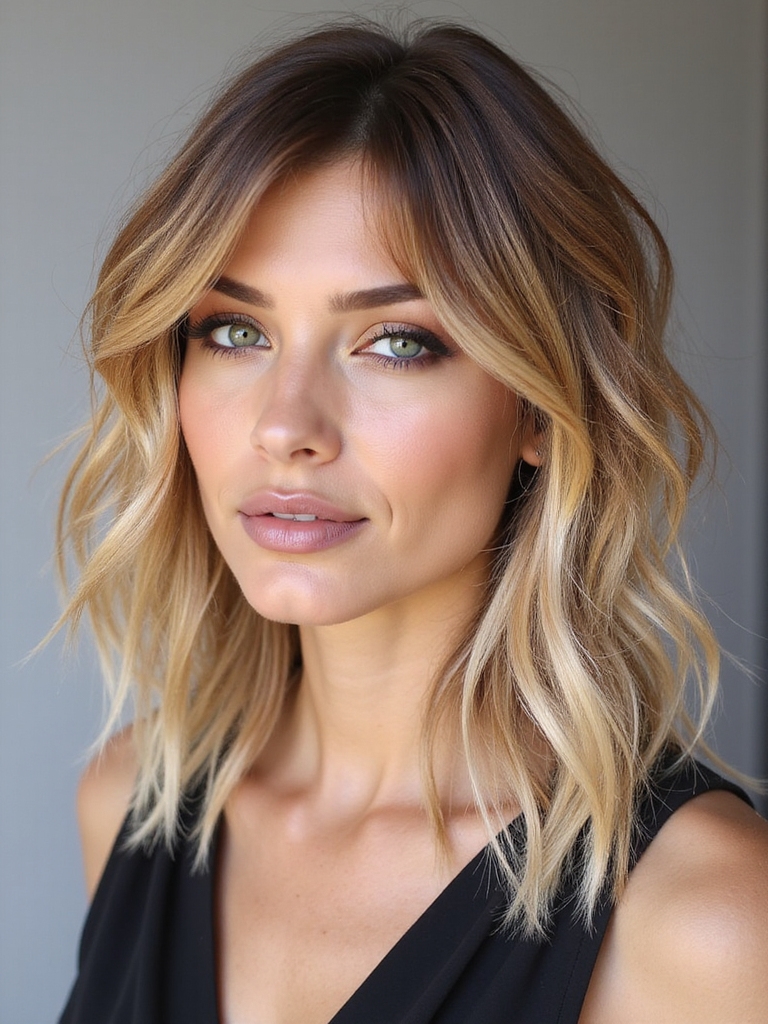
A long wavy shag might be the easiest match for this cut, since the length shows off the layering and the natural wave supplies movement with very little extra effort.
Layering lets the waves lift and separate down the length, breaking up any heavy bend near the ends. Cut through the interior, long waves finally move all the way up, not just at the very bottom.
- A scrunch of sea-salt spray plus an air-dry is often the entire routine
- Waves with more texture can handle heavier layering; looser waves do better with a lighter touch
- This version photographs well undone, straight out of the shower
“Clients ask for this exact texture more than almost any other long look, usually wanting soft movement without a curling iron every morning. The answer is almost always in the cut, not the styling routine.”
Setting the Shag Without Heat

One of the quieter perks of this cut is that it barely needs hot tools, which matters most on long hair. I’ve seen more heat damage collect on long ends than anywhere else on the head, simply because there’s more length for years of styling to add up on.
The Overnight Method
Braiding damp hair into one or two loose plaits, or twisting it into a couple of soft buns before bed, sets soft waves by morning with zero heat involved. Looser sections make looser waves; tighter braids make more defined ones.
It takes about two minutes before bed, and it’s one of the easiest ways to protect long ends from years of accumulated heat exposure.
The Drying Routine That Sets the Bounce

How this cut dries decides how much movement survives the day, and on long hair the difference between bounce and flat, frizzy ends usually comes down to the drying order, not the product.
- Blot gently with a microfiber towel, which keeps long ends from roughing up and frizzing
- Scrunch product into soaking-wet hair, working upward to encourage the layers to bend
- Diffuse on low heat, cupping the lengths up toward the scalp
Two assumptions worth checking before drying day:
❌ Myth: Air-drying always looks messier than a blowout.
✅ Reality: On layered long hair, air-drying with the right product often looks more intentional than a rushed blowout.
❌ Myth: More product means more hold.
✅ Reality: Past a certain point, extra product just weighs long layers down and flattens the movement they’re built for.
Color Built to Catch the Layers

On long hair, color and this cut work well together, since all that length gives painted-in dimension room to travel and catch light as the layers shift.
What Actually Shows Movement
A flat, single color tends to make long hair look heavier than it is. Dimension does the opposite: it makes the length look like it’s already in motion. A soft balayage with brighter pieces around the face and through the ends follows the layers as they move.
Because there’s more hair to paint, a balayage like this on long hair often runs close to $250, and a soft, blended root keeps grow-out gentle enough to stretch salon visits further apart.
Fringe Choices That Change the Whole Feel

A fringe isn’t required on a long shag, but it’s the fastest way to shift the cut’s whole personality without touching the length underneath. Beyond the curtain style already covered above, two other shapes change the feel just as much: a wispy, barely-there fringe and a fuller, winged bottleneck.
On curly or coily hair, either one needs the same dry-cutting rule as the rest of the layers, since a wet cut springs unpredictably once it dries.
- Wispy bangs blur fastest of the three and often need a trim close to every three weeks to stay defined
- A bottleneck fringe takes the most precise cutting and shows grow-out first at the center part
- Both can be layered into an existing long shag without a full haircut, unlike a true blunt fringe
💡Matching Fringe to Face Shape
Rounder face shapes tend to do best with a bottleneck or side-swept fringe rather than a full curtain, since a full curtain can add width right where a round face already has it.
A Low-Maintenance Routine for Growing It Out
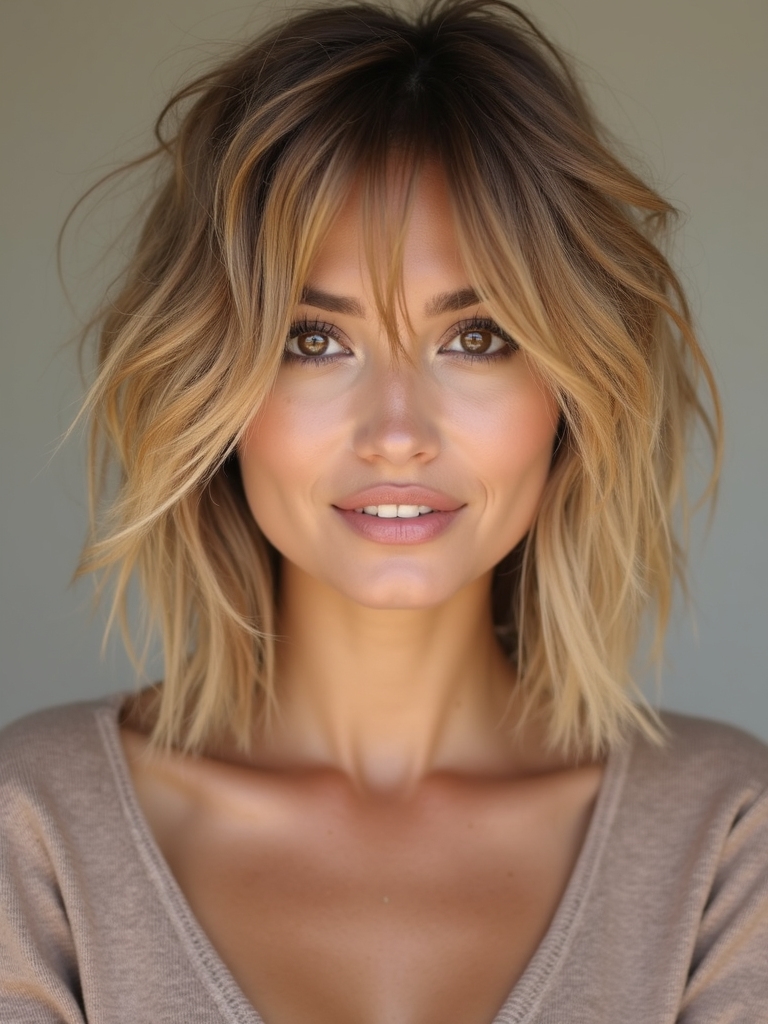
I recommend this version most to anyone who wants a shag but panics at the idea of losing length. A long shag cut like this is close to the most forgiving to grow out, since the layers stay soft the whole time.
Reshapes can stretch out close to three months between visits without the layers looking stale, noticeably longer than the roughly ten-week average for a first-time shag, since soft layering blends into new growth instead of leaving an obvious line.
- Layers blend into new growth with no awkward demarcation
- Trims can wait longer here than on almost any other shag
- An occasional reshape keeps face-framing pieces fresh, but there’s no urgency
Maximum Texture, Paired With Bangs

For the most movement possible, a heavily textured version pushes the layering and piecey ends further, then adds bangs that match that same energy.
Expect choppier, more separated layers throughout, built for obvious, photograph-well movement.
Bangs on this version usually get cut piecey too, matching the rest of the texture. It’s the boldest option here, and the one most likely to turn heads at the length it already is.
Avoid Over-Texturizing, the One Real Mistake
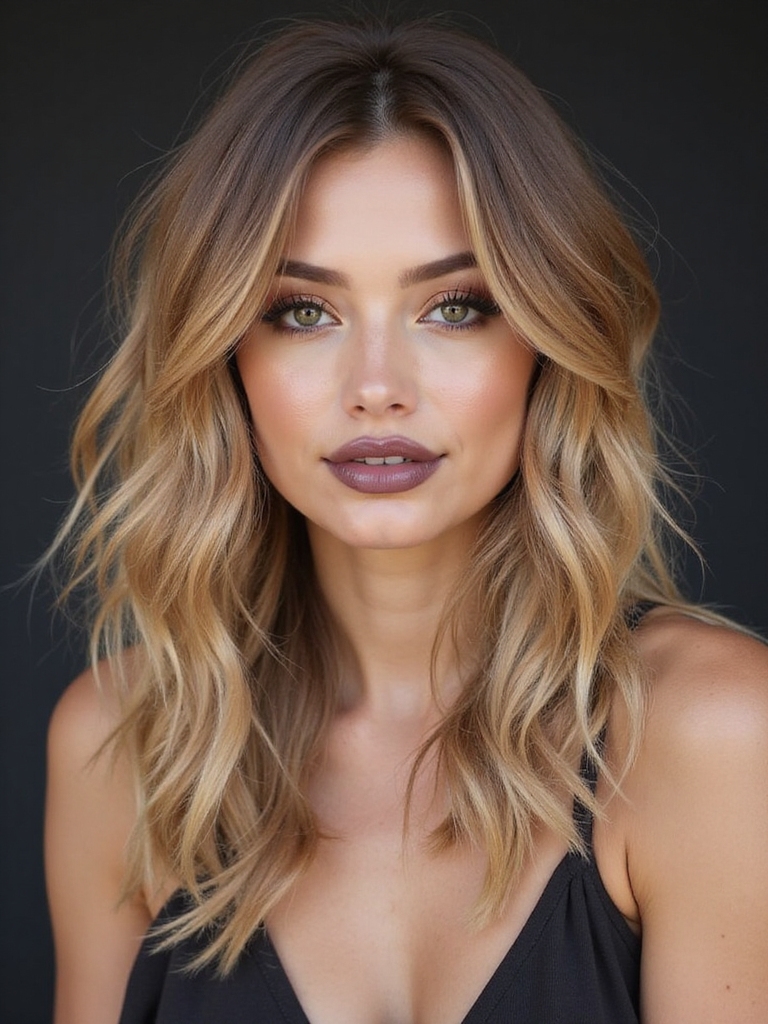
Over-texturizing is the single most common way a long shag goes wrong. A heavy-handed pass with a razor or thinning shears leaves long ends thin, stringy, and see-through in a way no product can fix afterward.
- Ask specifically for texturizing, not aggressive thinning, and say the goal is keeping weight at the ends
- Be cautious with heavy razoring on long ends, since they’re the oldest, most fragile part of the hair
- Stringy ends after a long shag almost always trace back to over-texturizing, not the cut itself
Common Mistakes to Avoid
Beyond over-texturizing, a handful of avoidable habits keep a long shag from living up to its promise, and most trace back to styling, not the cut itself.
Blow-drying it fully smooth flattens the very movement the layers were cut to create; air-drying or diffusing holds it instead. Brushing it out erases the piecey separation, so fingers work better than a brush for breaking pieces apart. Skipping the occasional reshape lets face-framing layers grow past the point where they still flatter.
Long Shag Questions Worth Asking
?Can a long shag still go up into a ponytail or bun without the layers falling out?
Yes, though shorter face-framing pieces will slip loose no matter how it’s tied back — that’s an intentional trade-off of the cut, not a flaw. A couple of bobby pins at the temples keep those pieces in place for anyone who wants a cleaner ponytail line.
?Can a long shag be grown out into one length later?
Yes, more easily than most layered cuts. Because the layers are soft and blended rather than choppy or heavily texturized, growing back to one length mostly just means letting trims lapse for a while and asking a stylist to gradually blend the shortest pieces back in.
?Does color change how often a long shag needs a trim?
Not directly, but chemically processed ends get fragile faster than natural ones. Color-treated long hair often benefits from slightly more frequent shape-ups, mainly to keep those already-stressed ends from splitting and fraying before the next color appointment.
The Length You Wanted, Finally Moving
The choice between keeping length and getting movement was never real. A long shag removes the weight that keeps hair flat, so the result finally swings instead of just hanging there.
Save the versions that matched the texture and face-framing style closest to your own hair, then bring them to a consultation with a clear ask: keep length, remove weight.
More to Browse