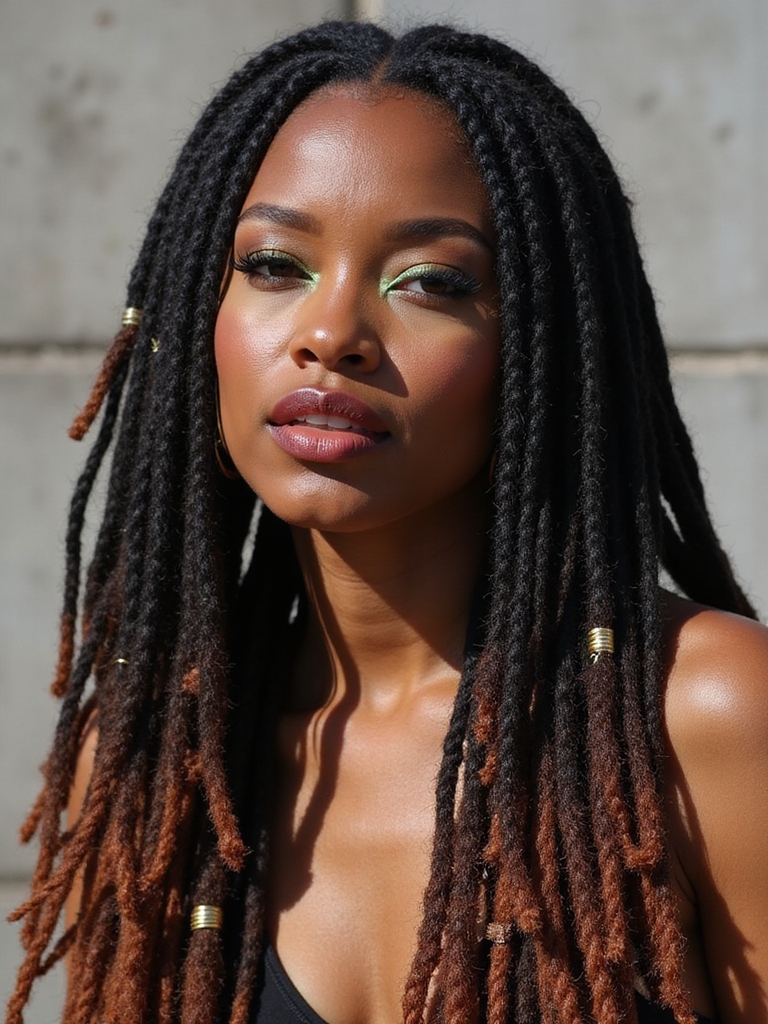
Here is the honest truth about bob hairstyles for Black women: the cut works on every texture you have and every way you choose to wear it. A wash-and-go on natural coils, a bone-straight silk press, a sleek unit, or your own hair braided up underneath, the bob bends to your hair instead of asking your hair to bend to it. That versatility is exactly why it never leaves the rotation.
Here are twenty ways to wear it, from a defined curly bob to a tapered cut, a bold color to a silk press, with how each one is actually achieved and cared for. Find the one that fits your texture and your week.
Bob Basics by Texture
- A bob suits every texture: cut it on natural coils, press it straight, or wear it as a unit or sew-in.
- Account for shrinkage on natural hair; a coily bob is cut longer than it looks because it springs up when dry.
- Protective routes count too; a braided bob or a wig gives you the shape while your own hair rests and grows.
- Edges and moisture do the finishing: a leave-in for softness and a little gel to lay the baby hairs.
- Match the upkeep to your life; a silk press dodges humidity, while a wash-and-go stays true to its name.
The Asymmetrical Bob

The asymmetrical bob is cut deliberately longer on one side than the other, for a bold, editorial line that frames the face on a diagonal. It is a confident, modern choice that reads intentional the moment you walk in.
It shows its shape best sleek, on a silk press, on relaxed hair, or as a unit, where the uneven line stays crisp and clear. Lay your edges, tuck the shorter side behind one ear, and the whole look feels deliberate:
- One side cut noticeably longer for a sharp diagonal
- Reads cleanest worn sleek, on a press, relaxed, or a unit
- A glossy serum and laid edges keep the line looking sharp

The Classic Blunt Bob
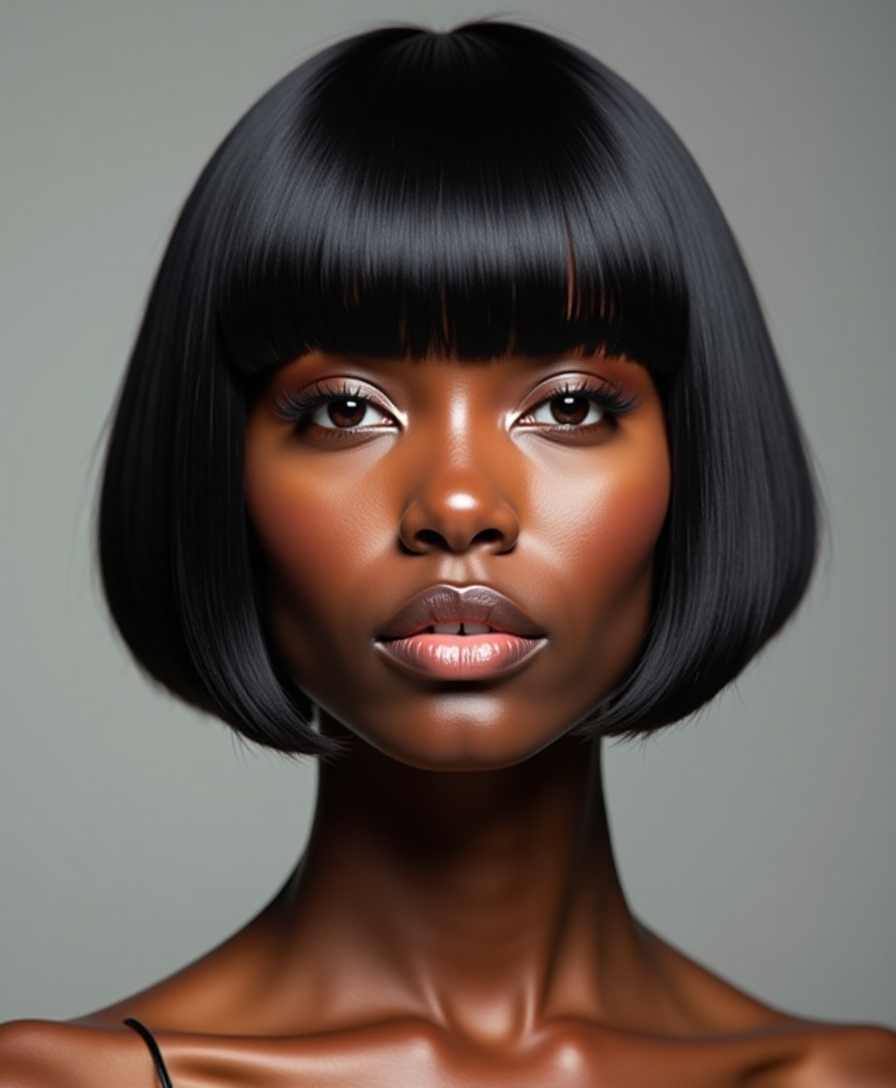
The blunt bob is one clean, heavy line at the jaw, and worn sleek it is a statement of pure polish. Achieved with a silk press, on relaxed hair, or as a blunt unit, that solid line catches the light and reads expensive.
It does ask for smooth styling and humidity protection to keep the line crisp, so a silk-pressed blunt bob is beautiful but it does not love a rainy day. Wrap it at night and keep a satin scarf handy, and it holds its sharp finish for a week or more.
ℹ️One Cut, Three Textures
One bob shape can be worn three completely different ways depending on the day: pressed straight for the week, washed-and-gone curly on the weekend, or set in a twist-out for soft waves. That is why a single cut can feel like a whole wardrobe of hairstyles.
The Inverted Bob
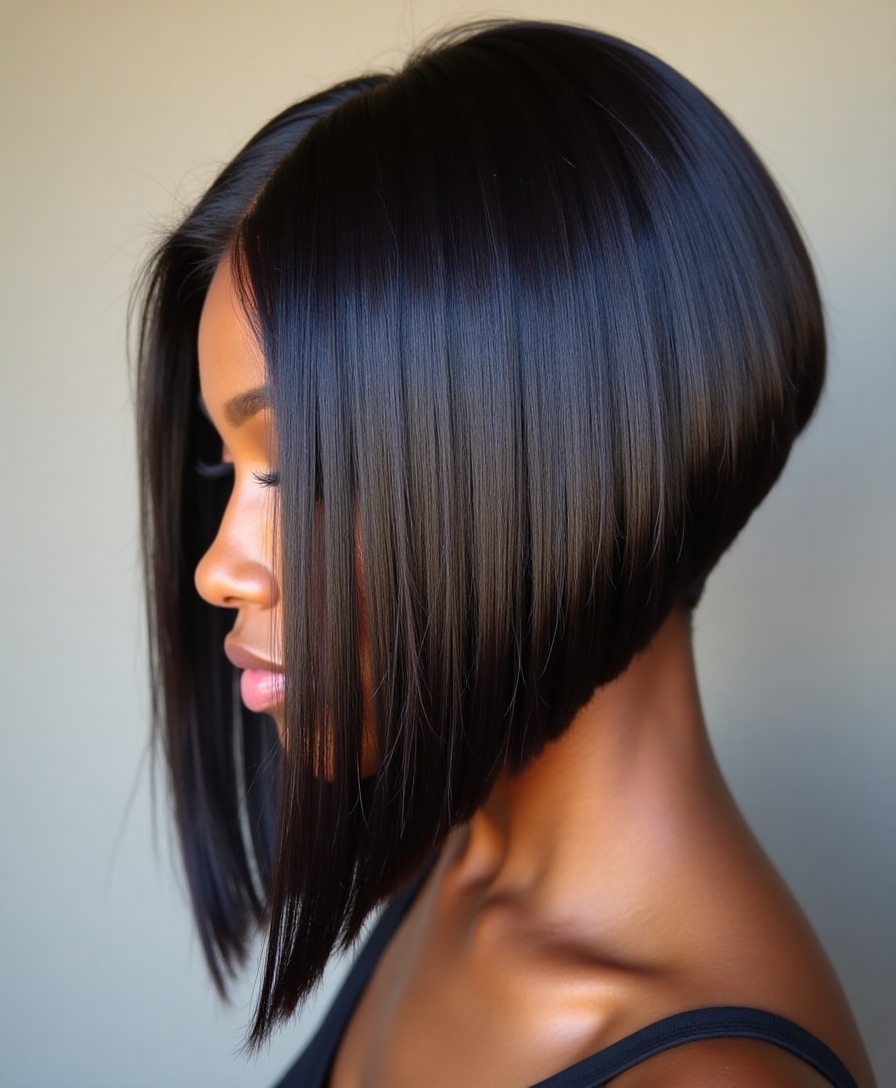
The inverted bob stacks graduated layers at the back and angles the front pieces longer, building a rounded, lifted shape with real volume at the crown. Worn straightened or as a unit, it gives that sharp, sculpted silhouette:
- Stacked short back, longer front pieces that frame the face
- Built-in crown volume, flattering and structured
- Round-brush the back up and under to show off the stack
The Natural Curly Bob

This is the bob in its most natural form: your own coils and curls cut into a rounded shape and worn wash-and-go, with no heat required. It celebrates your natural texture instead of hiding it.
Cut dry, shaped to your curl
The cut is done on dry, defined hair so the stylist can shape it around your real curl pattern and your shrinkage, because a coil that hangs near your collarbone wet can spring up to your chin once it dries. In my chair, a wet cut is the single biggest natural-bob regret I see, because it almost always ends up shorter than anyone planned.
Keep it soft and defined with a leave-in and a curl cream, refresh with a little water between wash days, and the shape holds for days. It stays a low-manipulation style overall, which means it’s kind to your hair.
💡The Cheapest Fix There Is
Protect your style while you sleep, every single night. A satin or silk scarf, bonnet, or pillowcase keeps a silk press from reverting, holds a twist-out’s definition, and stops cotton from drinking the moisture out of your hair. It is the cheapest thing that makes any bob last longer.
The Layered Bob
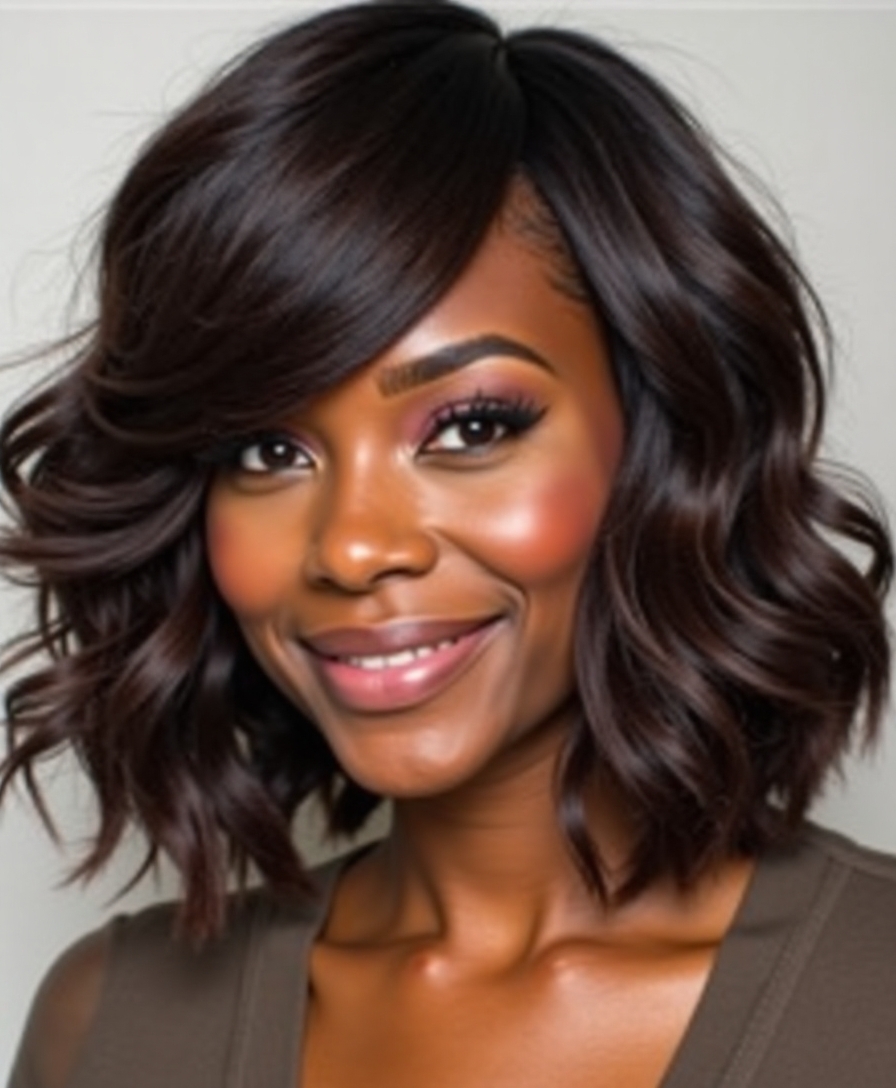
A layered bob breaks up a solid shape with shorter and longer pieces, adding movement and lift wherever your hair needs it. On natural hair the layers give a twist-out beautiful, bouncy dimension; on a press they swing.
It is a smart pick for thick or dense hair, where the layering removes some weight so the bob moves instead of sitting heavy:
- Shorter and longer pieces add movement and lift
- Removes weight from thick, dense hair so it moves
- Defines a twist-out beautifully, or swings on a silk press
The Chic Lob
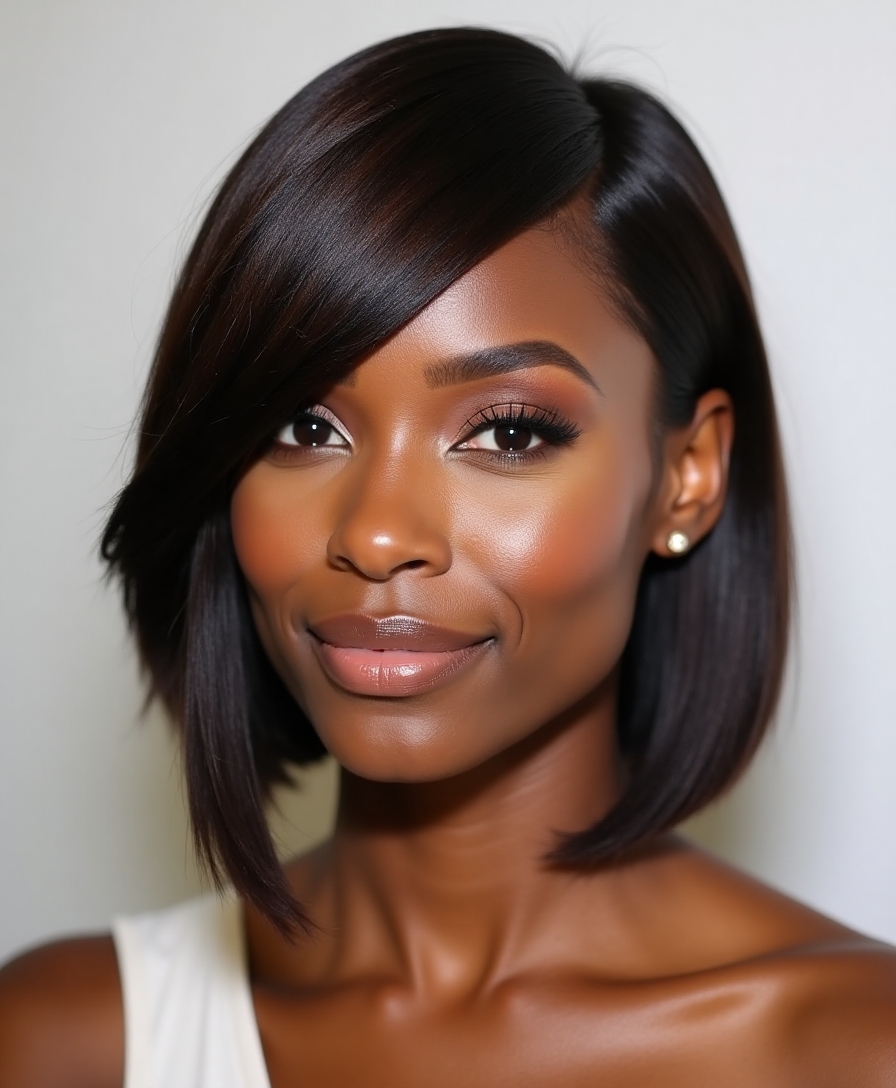
When you want bob energy with a little more length, the lob, or long bob, grazes the collarbone. It is the most versatile length here: short enough to feel polished, long enough to still pull into a low bun or puff.
It flatters nearly everyone and suits any texture, worn curly, pressed, or as a unit. It is also the gentlest way to ease into shorter hair, since it grows out painlessly and gives you room to change your mind.
📋Keeping a bob healthy
- ✓Moisturize regularly: a leave-in and a sealing oil on natural hair, lighter products on a press
- ✓Lay edges with a gentle gel, not a heavy hold that flakes or dries the hairline
- ✓Protect at night with satin or silk, without fail
- ✓Use a heat protectant and a trusted stylist for any silk press to avoid heat damage
- ✓Trim on roughly a six-week cycle to hold the shape, sooner for sharper cuts
The Side-Part Bob
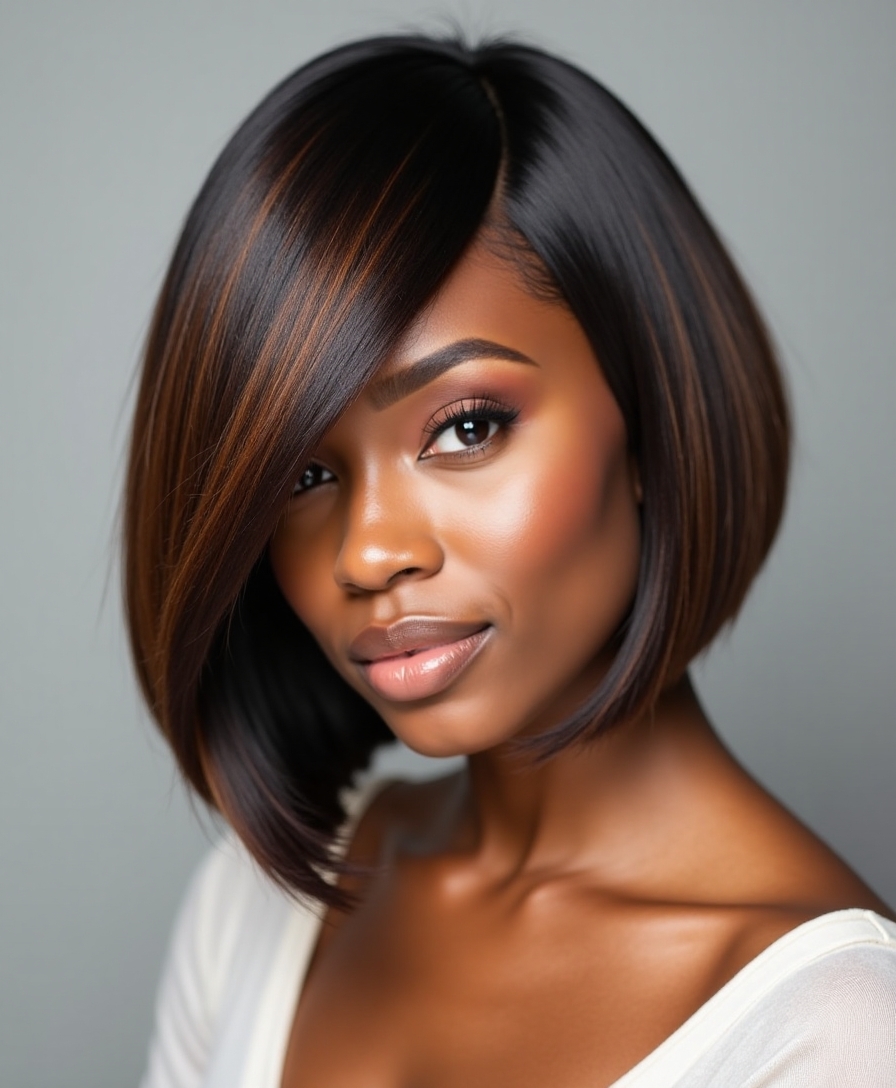
Sometimes the cut stays the same and the deep side part does the work. Parting a bob hard to one side adds a swoop of volume, a soft diagonal across the face, and an instantly more dramatic finish.
One part, a whole new look
It is a flattering move on almost every face shape, softening a round or square face and adding asymmetry to a straight, sleek bob. On a press or a unit the part sits sharp and clean.
Lay the edges along the part, smooth the swoop with a little gel or serum, and tie it down for a few minutes to set the shape.
The Bob With Bangs

Adding a fringe gives a bob with bangs a fresh, youthful frame, and the kind of bang follows your texture. On natural hair a soft curly fringe frames the face with bounce; straightened, a blunt or curtain fringe reads sleek.
Let your texture pick the fringe
Curtain bangs flatter almost everyone and grow out easily, while a blunt fringe makes a bolder, more graphic statement. Match the fringe to how much daily styling you actually want to do.
Whatever you choose, keep the fringe moisturized and defined the same way as the rest of the bob, and refresh it first since it frames everything.
👍The upside of cutting your own
- +Wash-and-go ease with nothing to install each morning
- +Shows off your real texture and your own length
- +Lower cost over time, with no units to buy and maintain
👎The trade-off to weigh
- –It commits the length you have spent time growing
- –Less freedom to switch color or length on a whim than a unit gives
- –Your own hair gets no rest from daily styling the way a protective unit allows
The Graduated Bob

The graduated bob keeps the nape short and stacked while the front pieces run longer, for a rounded shape that builds body where you want it. It is a sculpted, dynamic cut that holds its shape well.
The graduation gives fine or flat hair lift it cannot make on its own, and gives thick hair a clean, controlled silhouette. It sits somewhere between the inverted bob and a soft layered shape.
It does grow out a little faster than a one-length bob, so plan on a shaping trim inside a month and a half to keep the stack sharp.
The Wavy Bob
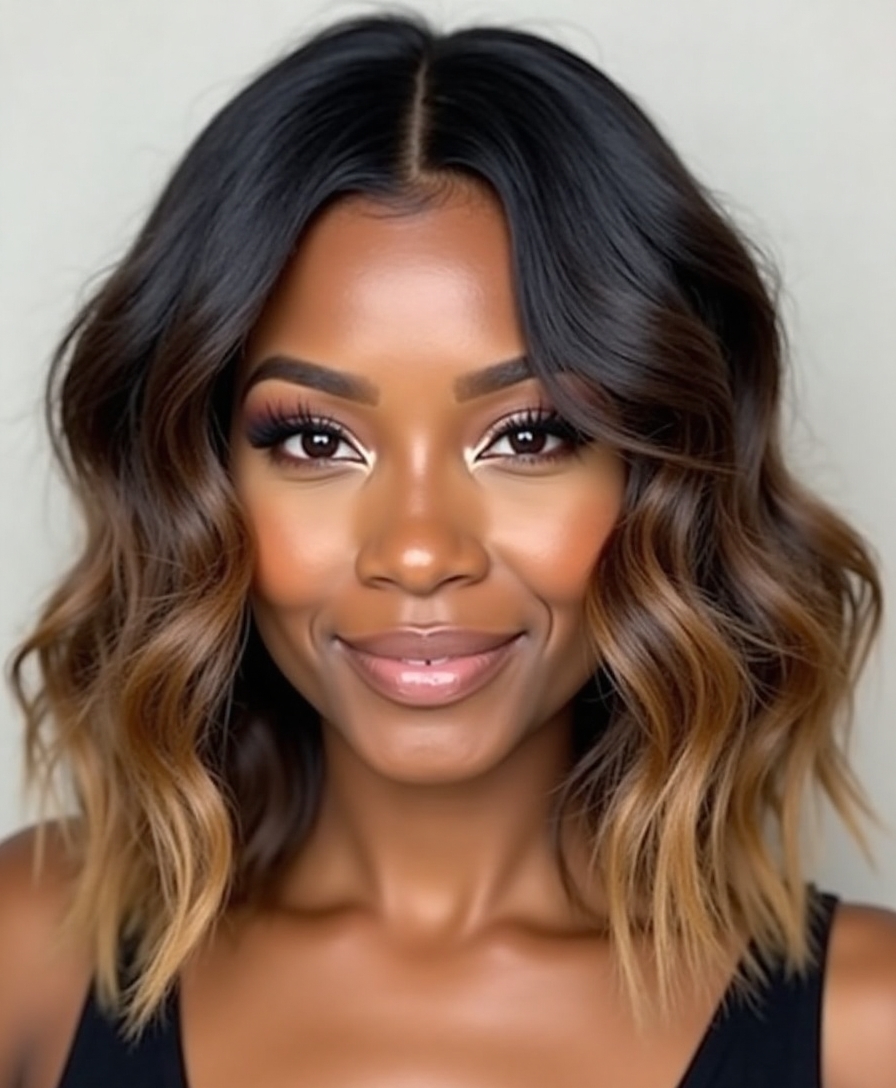
Soft, defined waves turn a bob romantic, and there are two beautiful ways to get there: a classic finger-wave set for vintage glamour, or loose S-waves added with a wand on a press:
- Finger waves: set damp, gelled hair into sculpted S-bends and let it dry
- Wand waves: bend a blowout into soft, brushed-out waves
- Either way, a light hold spray keeps the pattern from dropping
The Bold Colored Bob

Few things make a bob pop like bold color: a warm honey blonde, a rich copper or ginger, a deep burgundy, or a money-piece brightening just the front. Color turns a simple shape into a statement.
Color is a commitment in care, not just looks, especially on textured hair, which can dry out when it is lightened. Lean on a bond-building treatment, deep conditioning, and a color-safe routine, and trust a colorist who works with your texture to keep the hair healthy.
The Razor-Cut Bob

A razor-cut bob has soft, feathered, tapered ends instead of a blunt edge, for a piecey, undone finish full of movement. It is the choice for anyone who finds a heavy blunt line too stiff and wants softness instead.
It works best on looser, wavier, relaxed, or pressed textures, where the razor can feather the ends cleanly; on very tight coils a razor can roughen the cuticle, so this is one to talk through honestly with a stylist who knows your hair.
The Tapered Bob
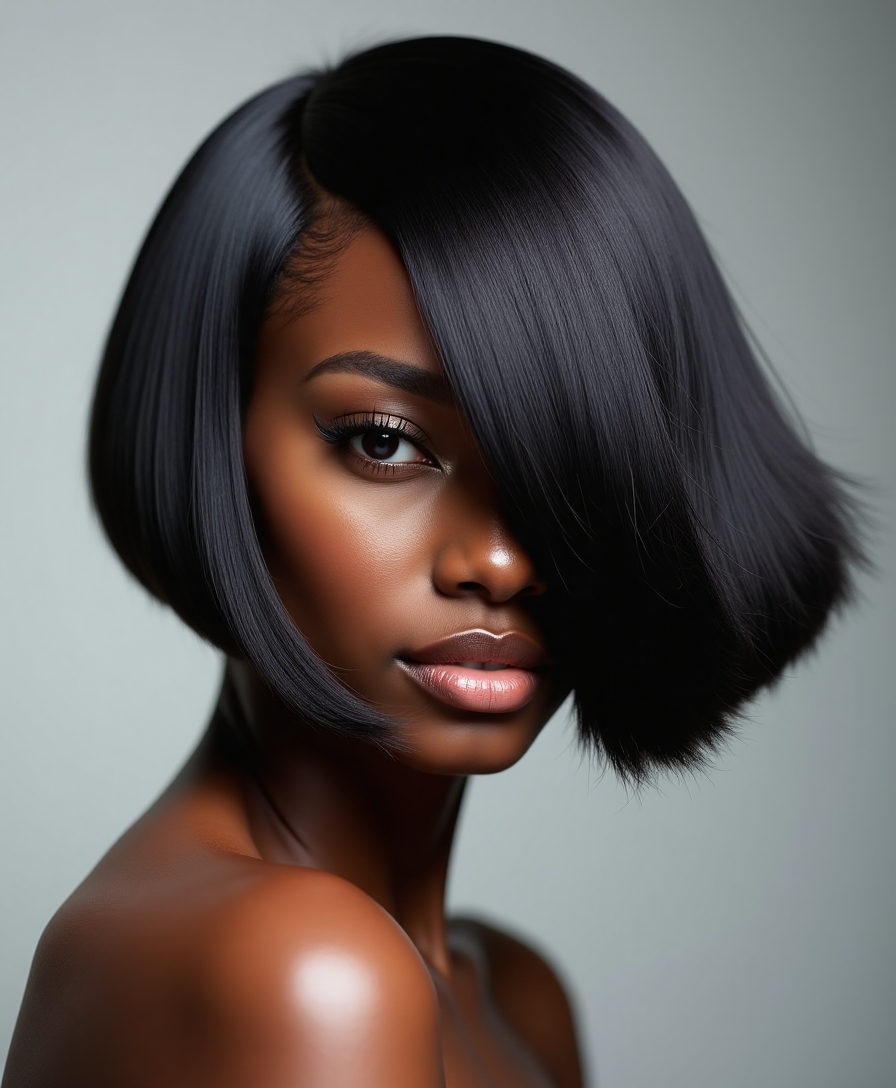
The tapered bob is a barber’s-precision favorite: short and tapered at the sides and nape with length and volume kept on top, for a sharp, freeing shape that shows off your bone structure. On natural hair it is a wash-and-go dream, all shape and almost no daily styling.
It flatters strong features, grows out cleanly, and pairs beautifully with a fluffed, moisturized top or a defined curl pattern. Keep the tapered edges fresh with a line-up roughly every two to three weeks if you love them crisp, or let them grow soft.
The Undercut Bob
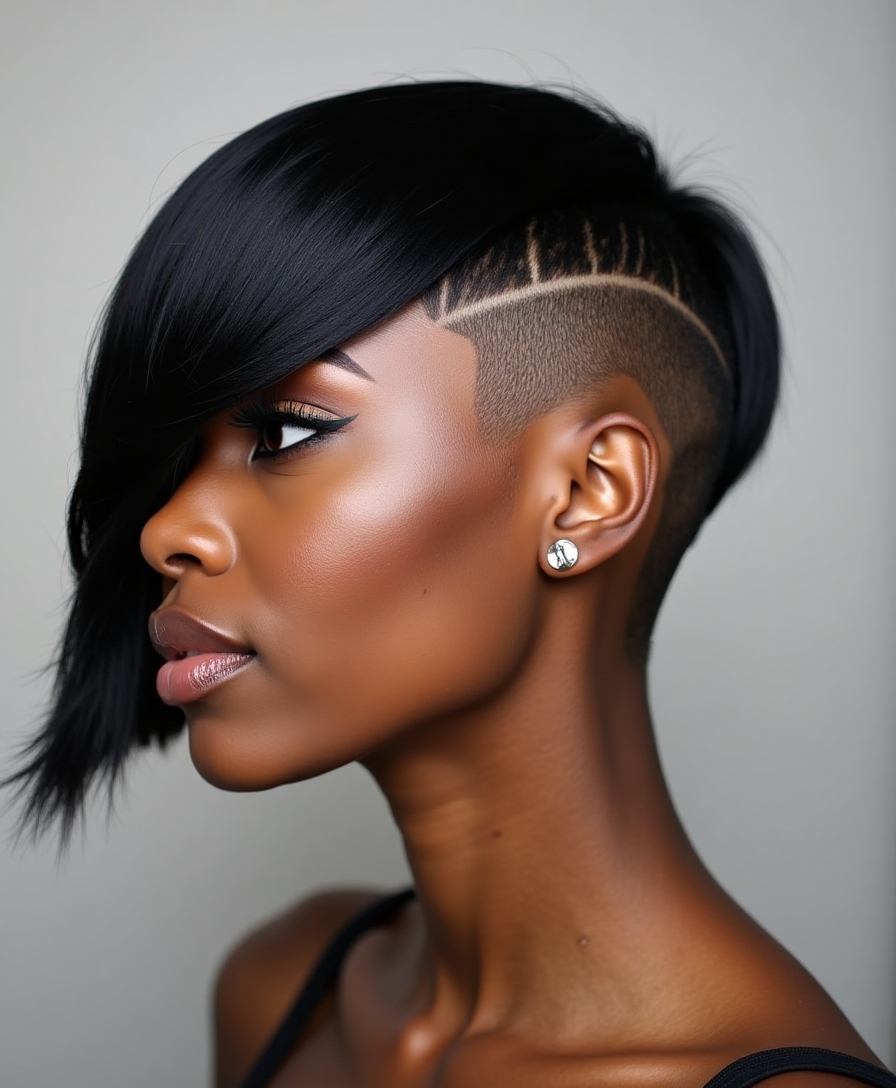
An undercut bob clips or shaves a hidden section, usually underneath at the nape or one side, with the longer bob on top covering it. It is an edgy, modern detail you can show or hide at will.
Beyond the look, it earns its keep on thick, dense hair: removing weight underneath makes a heavy bob lighter, cooler, and faster to style. Some choose to add a shaved design for a few weeks of extra personality.
It grows back in within weeks if you change your mind, which makes it lower-commitment than it looks.
The Pixie Bob
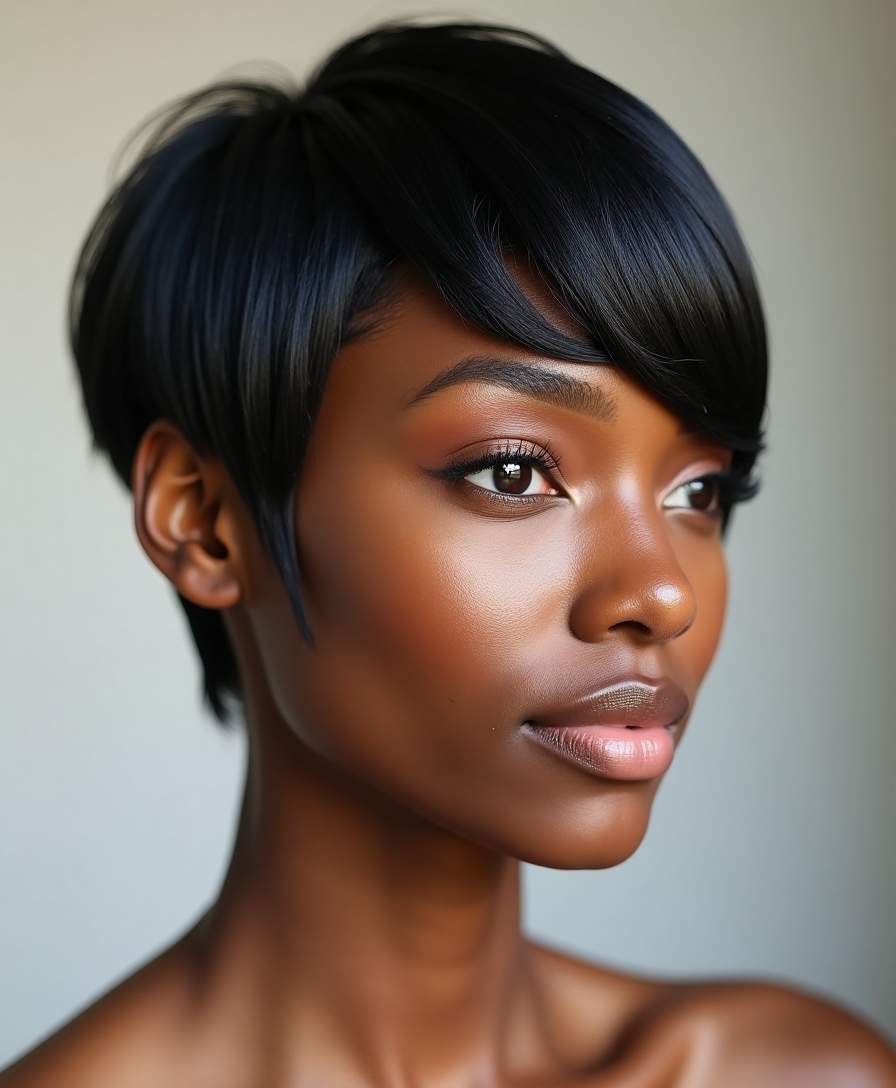
Sitting between a pixie and a bob, the pixie bob is cropped short through the back with slightly longer pieces left around the face. It is bold, freeing, and elegant, and it puts your features front and center.
It is wonderfully low-maintenance, especially on natural texture, where a quick refresh of curl cream or a little paste is the whole routine. It is the cut for someone ready to embrace short hair without losing all their length.
The A-Line Bob
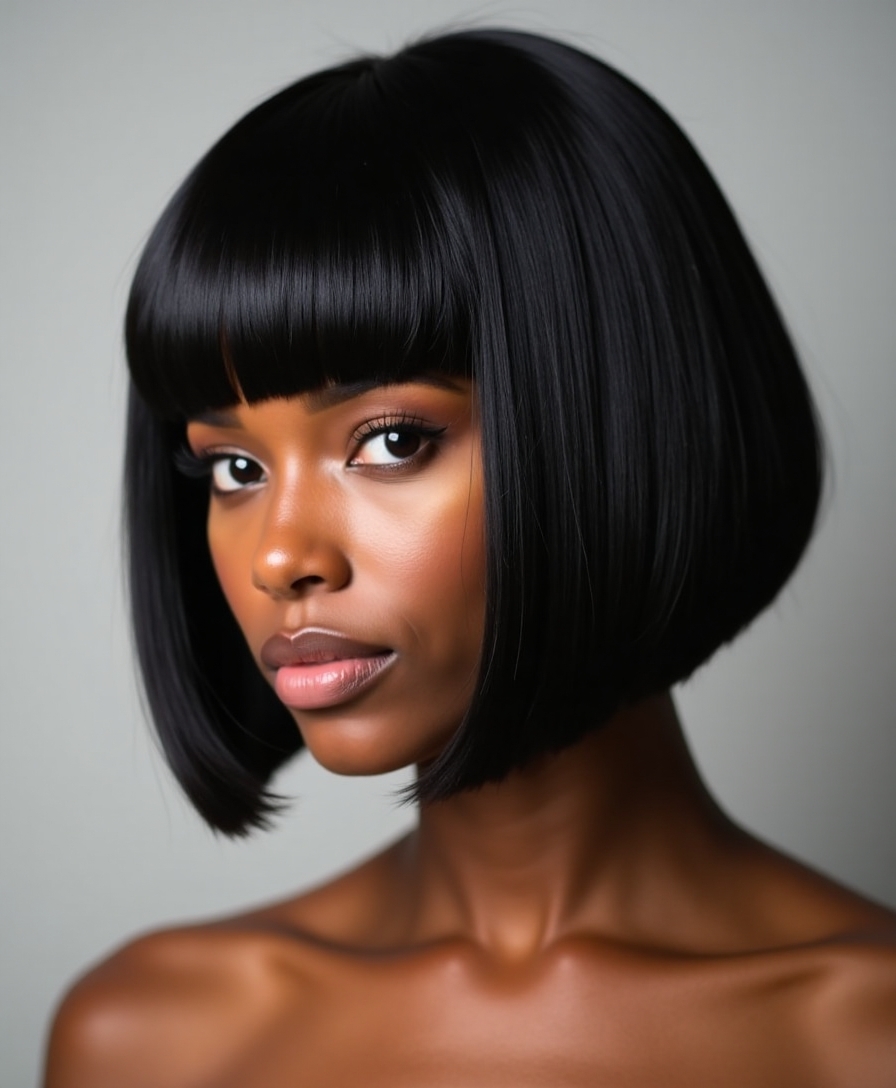
The A-line bob is cut shorter at the back and angled longer toward the front, sloping down like the letter it is named for, a close relative of the angled bob. It is sleek, elegant, and quietly dramatic.
The forward angle frames the face and draws the eye toward your features, and it reads sharpest on smooth, straightened or relaxed hair, or a sleek unit. A flat iron keeps that clean, sloping line precise.
The Straight Sleek Bob
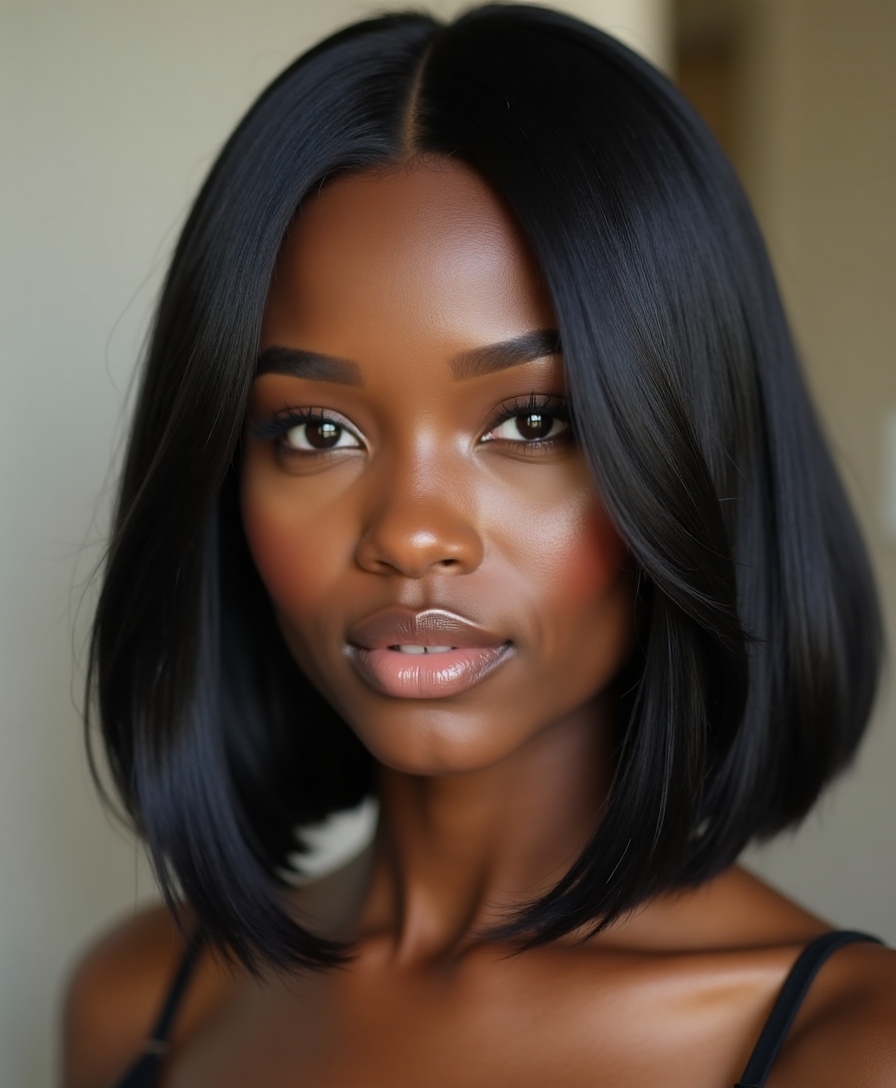
The straight sleek bob is the silk-press classic: bone-straight, glossy, and swingy, whether achieved on a press, on relaxed hair, or with a sleek unit. It is timeless polish, and the art is all in the press.
I always tell clients a press is only as healthy as the heat protectant and the temperature behind it; a good one gets the hair straight and moving without frying it. A salon silk press runs roughly $40 to $100 and, kept dry and wrapped at night, holds its swing for a week or two before a touch-up.
The Textured Bob

Where the curly bob is a wash-and-go, the textured bob is your natural hair set into a soft, uniform pattern, usually a twist-out or a braid-out. The result is stretched, defined, springy waves with real body.
You twist or braid damp, moisturized hair into sections, let it dry fully (overnight is easiest), then unravel for a consistent, elongated texture that lasts several days. It is a beautiful middle ground between a tight wash-and-go and a heat-straightened look, with no heat at all.
Sleep in a satin bonnet to keep the definition, and pineapple it at night so the pattern stays fresh into day two and three.
The Voluminous Bob
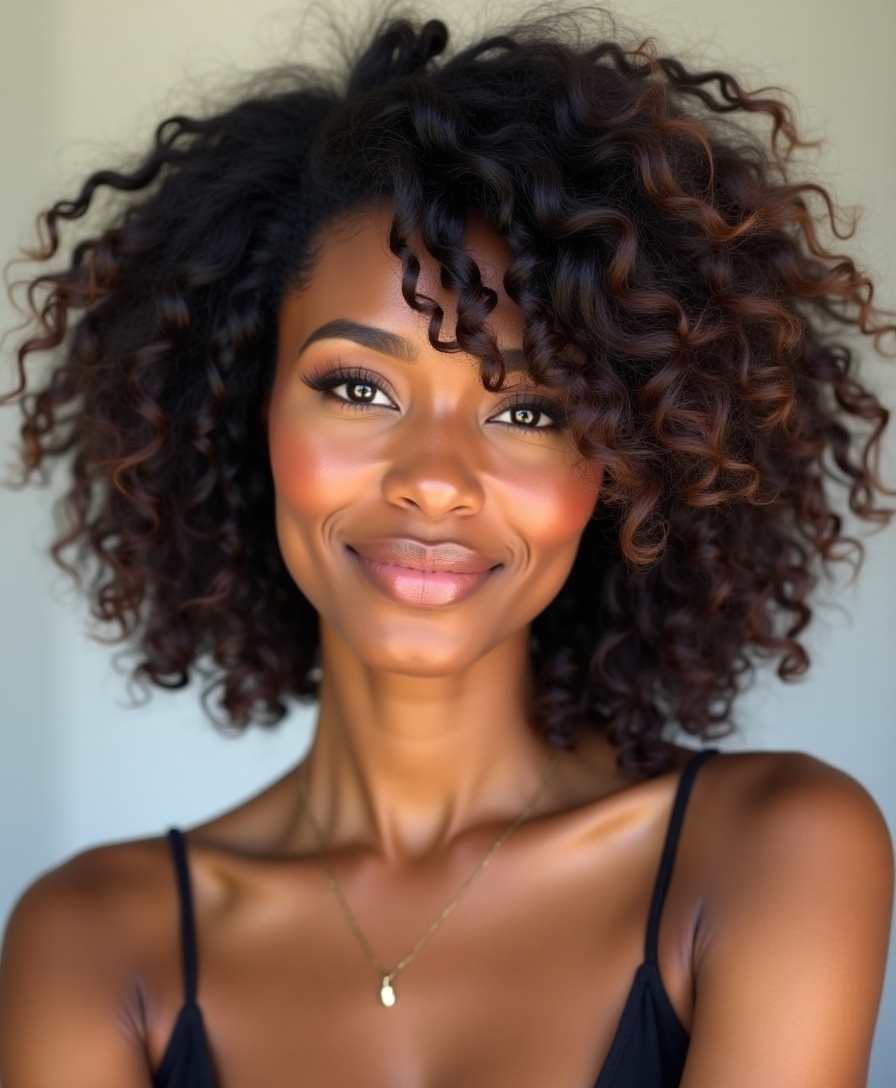
The voluminous bob is all about embracing fullness: your natural volume shaped into a round, full bob that stands proudly away from the head. It is bold, joyful, and unmistakably you.
Let it be big
Build it by fluffing the roots with a pick or your fingers, shaping a clean perimeter, and letting the body do the rest. A leave-in keeps it soft and touchable rather than dry, and a light oil adds sheen.
Few shapes flatter this broadly, drawing the eye up and out and framing the face with a soft, full halo.
The Bob With Highlights
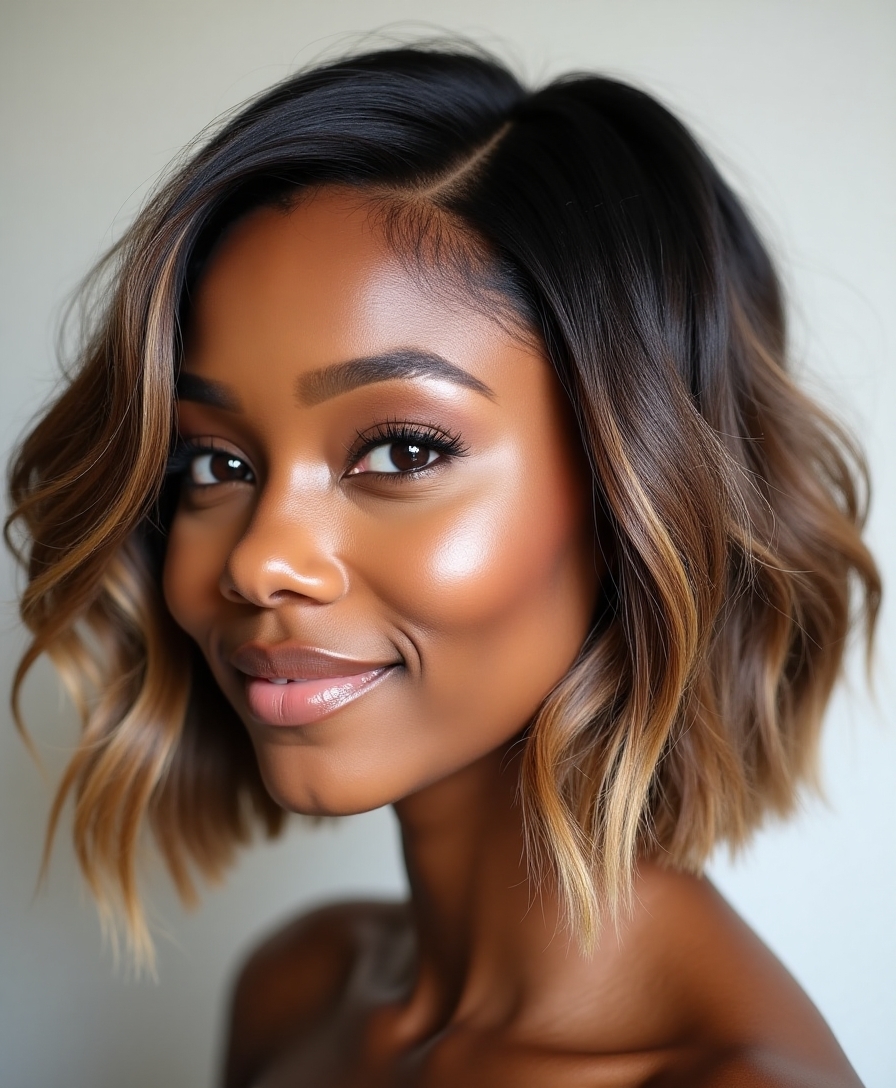
If all-over color feels like too much, highlights add dimension to a bob without committing the whole head, painting in caramel, honey, or copper where the light should catch:
- Face-framing pieces brighten and lift the whole look
- Less upkeep and less lightening than all-over color
- Pair with protective styling and deep conditioning to keep colored hair healthy
Styling Tips for Any Bob
Whatever bob you land on, the care comes down to two things: moisture and protection. Natural hair drinks up a good leave-in and a sealing oil; a silk press wants lighter products and a heat protectant whenever it is styled. Either way, your edges read as the finishing touch, so lay them with a gentle gel and a soft brush. The thing I warn clients about most is overdoing it: heavy daily gel and hard brushing can thin a delicate hairline over time.
At night, satin or silk is non-negotiable: a bonnet, scarf, or pillowcase keeps a press from reverting, holds a twist-out’s definition, and stops cotton from drinking the moisture out of your hair. And keep the shape sharp with a trim on roughly a six-week cycle, sooner for crisp, tapered cuts. None of it is expensive; it is just consistent.
Bob Questions, Answered
?Can a bob work on natural 4c hair?
Absolutely, and it looks beautiful. Cut on dry hair to account for shrinkage, a 4c bob becomes a full, rounded wash-and-go or a sharp tapered shape, landing among the lowest-manipulation styles available. The key is a stylist who cuts coily hair dry and in its natural pattern.
?Should I get a silk press or wear my bob natural?
Both are great; it comes down to upkeep and your hair’s health. A silk press gives you sleek, swingy length but needs heat protection and humidity-dodging, and pressing too often risks heat damage. A natural bob is healthier and lower-effort day to day. Many women happily rotate between the two.
?How do I keep my bob’s edges laid?
A small amount of edge-control gel and a soft brush on clean edges, then tie a scarf down for a few minutes to set them. Go easy, though: heavy daily gel and hard brushing can thin a delicate hairline over time, so lay your edges when it counts rather than every single day.
A Bob for Every You
The reason the bob has stayed in rotation for generations is simple: it flexes to whoever you are that week. Sleek and corporate, curly and free, tapered and bold, or braided up and resting, it is less a single haircut than a starting point you make your own.
So think about your texture, your time, and how your hair is feeling, and pick the version that fits all three. Whichever bob you land on, it will only ever be as good as the care you give it, so feed it moisture, protect it at night, and let it work for you.
Keep the Inspiration Going