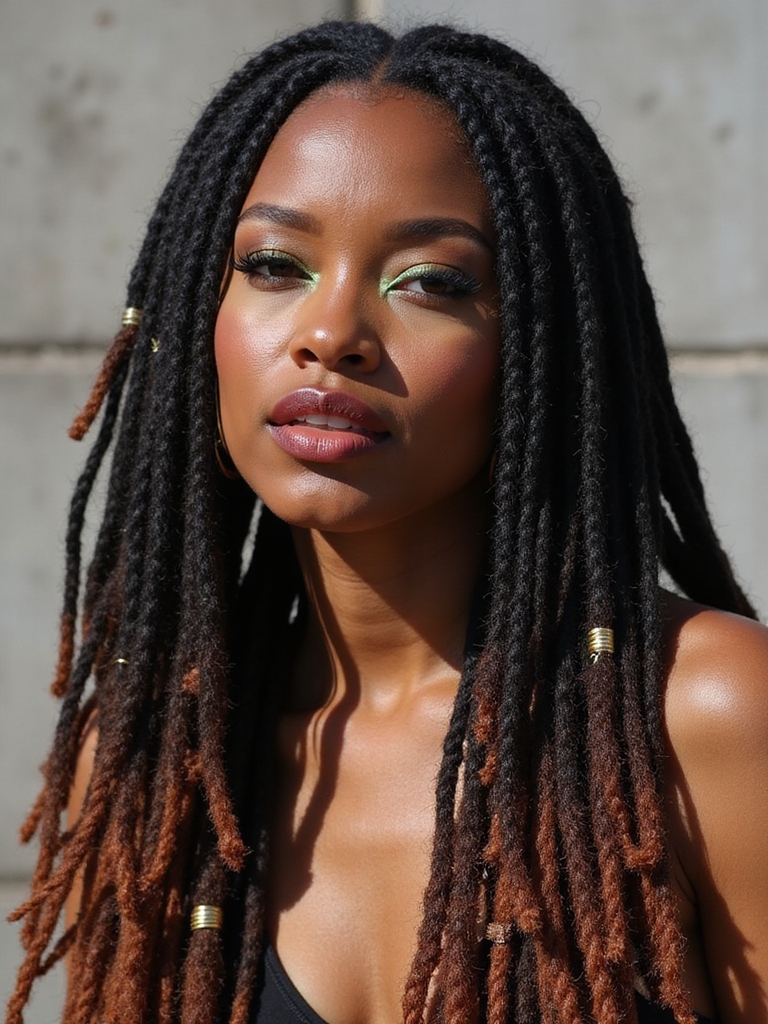
The scalp tells the real story before the mirror does: a fresh set of box braids should feel snug at the root for a day or two, then settle into something you barely notice, not something that throbs at the hairline.
Twenty ways to wear the style follow, from classic and knotless to jumbo, curly, beaded, and styled up into buns and ponytails, each one noting what actually changes about comfort, timing, and upkeep at that size or length.
What Actually Matters Before You Sit Down
- Tension is the single biggest risk factor across every size below: braids should feel snug at the root, never sharp or throbbing, and that goes double at the hairline.
- Size changes the timeline more than anything else: fewer, bigger braids install fast and wear light; many small ones take real hours longer and reward that time with movement closer to loose hair.
- A knotless start is worth requesting by name if the scalp runs sensitive; it changes how the very first section feels against the root from the first braid onward.
Classic Box Braids

Classic box braids part the scalp into even squares and build each section down with added length, landing somewhere around mid-back for most people who choose this size.
The Size Everyone Pictures First
You’ll notice how much range one set actually covers: a low bun today, a high ponytail tomorrow, loose and down the day after, all from a single appointment that carries through weeks of noticeably different looks.
Expect the scalp to feel tight for the first day or two as everything settles, then comfortably present, not sore, from day three onward; anything sharper than that is worth mentioning to the braider before it becomes a pattern.
Jumbo Box Braids

Jumbo braids use fewer, noticeably larger sections, which is exactly what makes them the fastest size to install; a full head can wrap up in a fraction of the time a smaller set takes.
That speed and boldness come from the same trade-off: each braid carries real bulk, so a long jumbo set pulls at the root more than a short one does.
Expect the scalp to need a lighter hand right at the crown, where the biggest sections meet; a good braider adjusts the parting there to keep every section comfortable.
Medium-Sized Box Braids

Medium box braids sit at the balance point of the whole size range: quicker than the smallest braids to finish, more refined than the largest, and light enough to wear comfortably day after day.
- The most common recommendation for a first-ever set, since the tension sits in a real, forgiving middle
- Handles nearly any styling request, from a simple half-up to a full updo
- A realistic pick when the appointment window is limited but jumbo feels too bold
Micro Box Braids
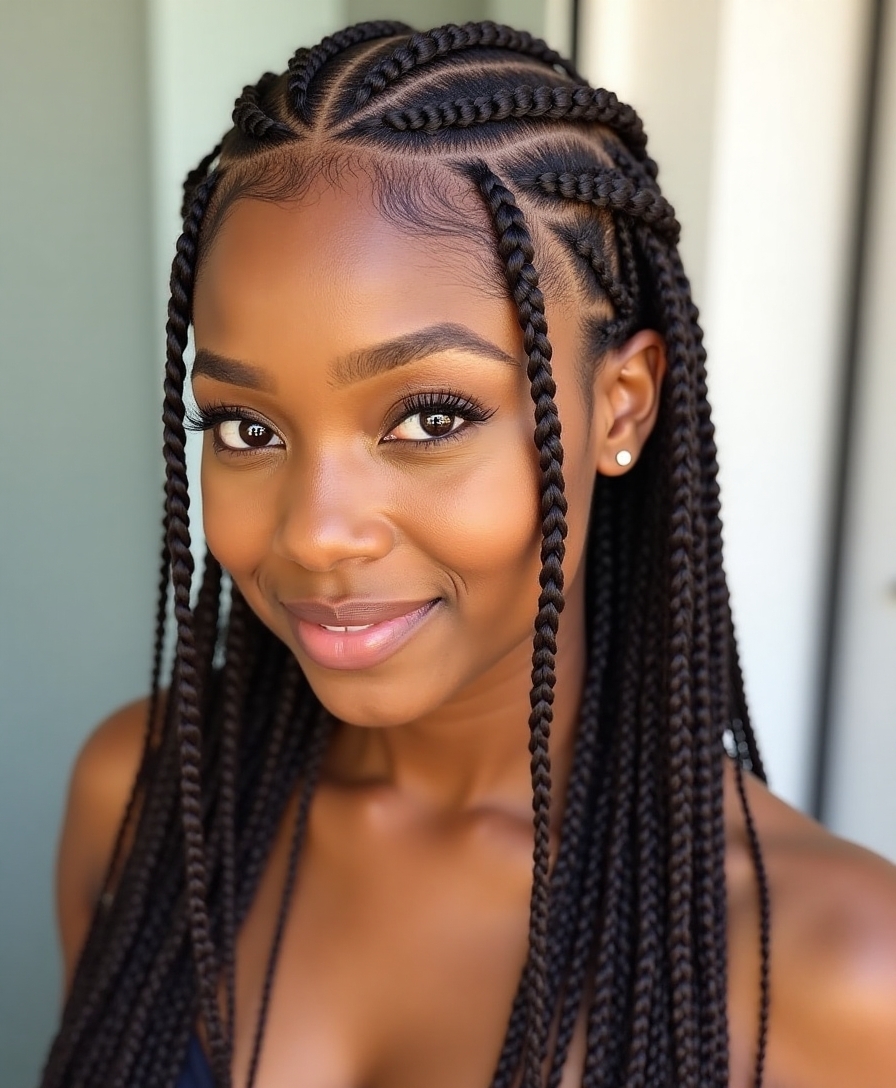
Micro braids take the longest to install of anything on this list, sometimes running a full day in the chair, and reward that time with movement that behaves almost like loose hair rather than braided extensions.
- Budget real time for this one; rushing the install usually means uneven, overly tight sections toward the end of the appointment
- With so many small sections, a little extra tension per braid adds up across the whole head; check the hairline specifically, since that’s where thinning shows first if something’s too tight
- Rewards patience afterward, too, since the sheer number of braids gives the most styling freedom of any size here
Knotless Box Braids

Knotless braids start by feeding the extension in gradually alongside natural hair, skipping the knot that anchors a traditional install, which is most of what makes them feel lighter from the very first braid.
That single difference in technique is why knotless has become the default recommendation for anyone with a sensitive scalp or a history of tender edges.
- Ask for this by name if the hairline has ever felt sore after a previous set
- Sits flatter at the root than a knotted install, which also tends to look more natural where the part shows
- Costs a little more chair time up front, since feeding the hair in gradually takes longer than tying a knot and moving on
Box Braids With Beads

Threading beads or metal cuffs onto the ends turns a plain set into something with real personality: a bit of color, a bit of weight that helps the ends hang, and a soft sound with every turn of the head.
- Mixing sizes and colors reads as more deliberate than uniform beading across every braid
- Adornment with beads carries genuine cultural weight, tied to identity and occasion well before it became a passing trend; the braids for black hair guide covers this history in more depth
- Works especially well on shorter sets, where a handful of beads near the face gets real attention
Ombre Box Braids

Ombre box braids fade from a darker shade at the root into something lighter through the length, and because the color lives entirely in the extensions, none of it touches natural hair underneath.
Honey, caramel, and warm brown fades are the most requested, though the technique works with nearly any two-tone pairing; the appeal is committing to bold color for a few weeks with zero risk to what’s growing beneath it.
Curly Box Braids

Curly box braids leave the ends loose and curled, or use curly extensions the whole length, for a softer, more romantic finish than a sleek, straight plait.
The curl can sit just at the tips or run the full length for a bouncier effect; either version feels looser and less structured than classic braids.
Refreshing the curl pattern rewards a light touch, since pulling at the curls too often loosens them faster than ordinary wear would on its own.
Refreshing Curly Ends Without Loosening Them
A little water and a curl-defining spray brings the pattern back without re-wetting the whole braid. Twisting or scrunching the curled ends by hand keeps the shape intact; combing straight through tends to loosen it fast.
Half-Up Half-Down Box Braids

Gathering the top section into a bun, knot, or ponytail and letting the rest fall is the style most people actually reach for on an ordinary morning, since it takes well under a minute.
It works on any size or length in this list and keeps the braids off the face while still showing off their full length, which is most of why it outlasts almost every other styling idea here.
The Box Braids Bob

A box braids bob keeps every braid short, landing around the chin or jaw, well above where the longer lengths on this list fall. The braided bob guide covers more short-length pairings like this one.
Less Weight, Same Range
That shorter length means meaningfully less weight pulling at the root, which puts this pairing among the gentler options here for anyone whose hairline has felt strained by a longer set before.
Expect it to still hold plenty of range: parted, swept to one side, or pinned back, a short set loses length but keeps nearly all the styling flexibility of a longer one.
Wrapped Box Braids

Wrapping colored thread, yarn, or cord around a braid adds detail without a single extra extension or drop of dye, a technique with roots in traditional adornment that predates it becoming a styling trend.
- A few wrapped accent braids or a fully wrapped head both work; the effect scales with however much time there is to spend
- Changes the whole feel of a plain set without touching anything underneath it
- Removable at the end of the install, so the color commitment stays fully temporary
Box Braids in a Natural Color

Box braids in black or a soft brown that matches natural hair color count as the most versatile base on this whole list, since they pair easily with any outfit and any occasion.
- The most common choice for a first set, since there’s nothing bold to commit to beyond the braids themselves
- Blends cleanly at the root, where a color mismatch would otherwise be most visible
- Dresses up or down without a second thought, from a work week to an evening out
ℹ️Matching Extension Shade to Your Own Hair
Most braiders keep several close natural shades on hand and blend two together at the root when a single shade runs slightly off. Checking the set in daylight, beyond the salon’s own lighting, is the most reliable way to confirm the match before the appointment ends.
Box Braids With Colored Extensions

Colored extensions, burgundy, ginger, blonde, even blue or pink, deliver bold color with zero commitment, since none of it touches the hair growing underneath.
When the set comes out, so does the color, which makes this the lowest-risk way to test a shade that would otherwise feel like too big a leap to commit to permanently.
- A full head in one bold shade makes the strongest statement
- Mixing color through only a handful of braids gives a subtler hint without going all in
- Switching shades at the next install costs nothing more than a different pack of extensions
Waist-Length Box Braids

Waist-length box braids are the most dramatic option on this list, long enough to swing, to style into elaborate updos, and to photograph well from every angle.
- Weight is the real trade-off here; all that length pulls at the root more than any shorter set, so a gentle, not-too-tight hand matters even more than usual
- Wearing the length up in a bun or ponytail on some days gives the hairline a break without sacrificing the length itself
- A longer set is also the heaviest to sleep on, so a silk or satin covering at night matters more here than with a shorter style
Shoulder-Length Box Braids

Shoulder-length box braids sit in the practical middle of the length range: long enough to style up or down, short enough to stay light on the scalp through a full day.
Compared to a waist-length set, they install faster, wash more easily, and put noticeably less pull on the hairline over the weeks they’re worn.
You’ll still get most of the styling range that comes with more length, buns, half-up looks, a simple ponytail, without the extra appointment time or the added weight.
Two things worth clearing up about length:
❌ Myth: Myth: longer braids always last longer before they need to come out.
✅ Reality: Reality: length changes the styling options, not the safe wear window; both a shoulder-length and a waist-length set follow roughly the same overall timeline.
❌ Myth: Myth: a shorter set is automatically less protective.
✅ Reality: Reality: protection comes from how the natural hair is tucked and cared for underneath, not from how long the braids hang.
Braided Box Braids in an Updo

Braiding the box braids themselves into a larger plait, a crown, or a sculpted updo turns an everyday set into something built for an event.
Braids Made Into Something Bigger
The structure holds well because every piece going into the updo is already a braid, which gives a stylist far more to work with than loose hair would.
Expect this to take real time to build, though nothing about it adds tension beyond what the original install already carries, since the reshaping happens well below the root.
Space Buns With Box Braids

Space buns gather the braids into two high sections on either side of the head, a look with a real, playful festival energy that still keeps every braid secured.
- Part straight down the center and gather each side into its own high section before winding into a bun
- Leaving a few loose braids at the front softens what could otherwise look overly precise
- Wearing a high, tight version of this style several days running is worth alternating with a lower one to rest the hairline
Box Braids With Cornrows

Combining flat cornrows at the front or crown with loose box braids through the rest brings two distinct braiding techniques into one look. The cornrow hairstyles guide covers the cornrow side of this pairing on its own.
Two Techniques, One Head
The result reads structured where the cornrows sit and freer everywhere the loose braids take over, which is most of what makes this feel like a deliberate design choice.
Expect the cornrowed section to need its own touch-up on a separate timeline from the rest, since flat braids against the scalp tend to loosen faster than the hanging braids around them.
A High Ponytail With Box Braids

Gathering every braid up into one high ponytail is about as polished and dramatic as this whole list gets, lifting all that length up and off the neck in a single motion.
It’s also the style most worth watching for tension, since pulling braids up high concentrates pull right at the hairline; alternating it with a lower style most days keeps that pull from becoming constant.
👍Worth it if
- +The event calls for something polished and instant
- +The hairline has felt fine under regular wear so far
- +It’s an occasional look, saved for specific moments
👎Think twice if
- –The hairline already feels tender from the current install
- –It’s likely to become the everyday style, worn most days
- –The braids are on the heavier or longer end of this list
Side-Swept Box Braids

Sweeping every braid over one shoulder dresses this whole style up in seconds, gathering all that length into one dramatic line that frames the face.
- Sweep everything to one side and let it fall, then pin the opposite side flat or tuck it behind an ear
- Reads as red-carpet-ready with almost no setup time
- Especially flattering with any of the longer lengths above, since there’s more length to actually sweep
Maintenance & Care
Across every size and style above, the same care routine keeps both the braids and the hair underneath in good shape: a diluted shampoo or foam on the scalp roughly every two weeks, a light oil worked specifically into the scalp and edges between washes, and a satin or silk wrap before bed instead of sleeping directly on cotton.
Plan on around $180 for a full head, more for extra length or a smaller size, so ask specifically what’s included before booking rather than assuming.
Plan on taking any set down by around the two-month mark at the latest; past that point, new growth at the root starts tangling with the braid itself, which makes takedown harder and raises the real risk of breakage. The braids hairstyles and protective hairstyles guides cover more general upkeep across braid types.
?How do I know if my box braids are installed too tight?
Real pain, throbbing at the root, or bumps along the hairline within the first day or two are all signs a section needs loosening. Mild tightness that eases within a couple of days is normal; anything that gets steadily worse is worth going back to the braider about.
?Can box braids actually help hair grow longer?
They don’t speed up growth directly, but tucking hair away from daily heat, friction, and manipulation for weeks at a time cuts down on breakage, which is what usually shows up looking like slower growth in the first place.
?What’s the real difference between knotless and traditional box braids?
Traditional braids anchor with a small knot at the root before the extension is added; knotless braids feed the extension in gradually alongside natural hair from the very first section. That difference is mostly why knotless tends to feel lighter and sit flatter at the part.
?Is it normal for a fresh set to feel tight for the first couple of days?
Yes, a brand-new set almost always feels tighter for the first day or two as the scalp adjusts. It should settle into ordinary comfort after that; if it doesn’t, that’s a signal worth acting on quickly.
?How many packs of extensions does a full head usually need?
It depends heavily on size and length: jumbo braids might need only a handful of packs, while a long, small-sized set can call for a dozen or more. A braider can give an exact count once they know the size, length, and natural hair density involved.
The Right Set Is the One That Fits Your Scalp
Every style above earns its place on this list because it can double as real protection, not just decoration, when the size, length, and tension are all matched to what your hair and scalp can comfortably carry.
Worth asking before the next appointment: which size and length here actually fits the week ahead, beyond just the photo that inspired the idea?
Worth a Look