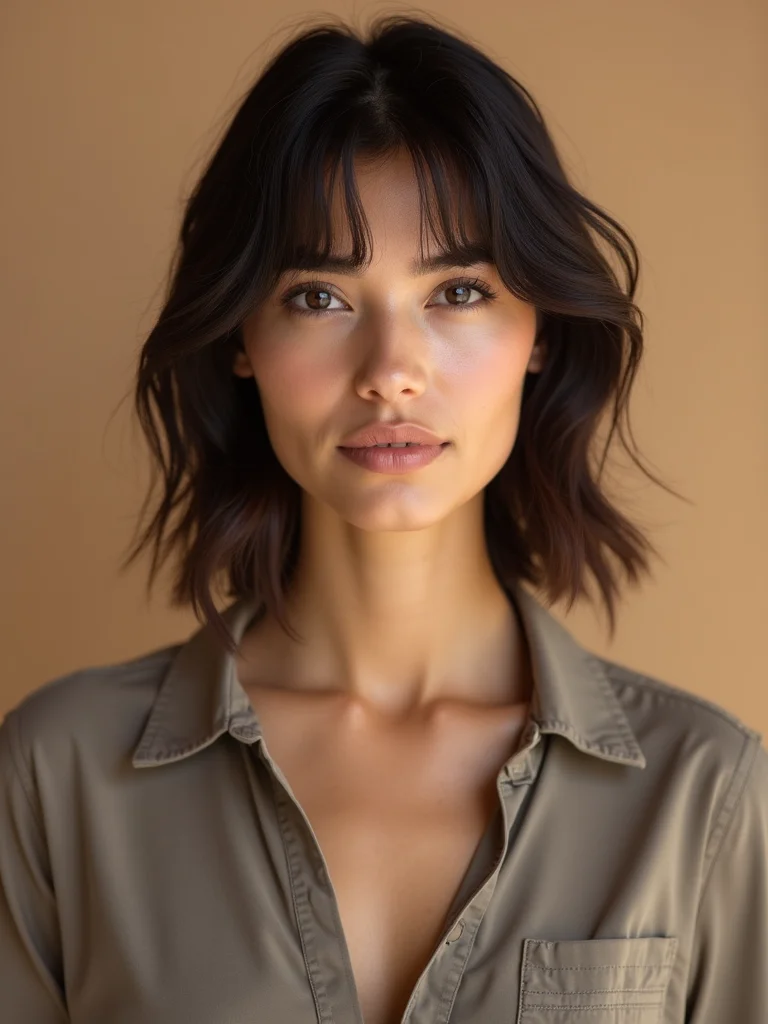
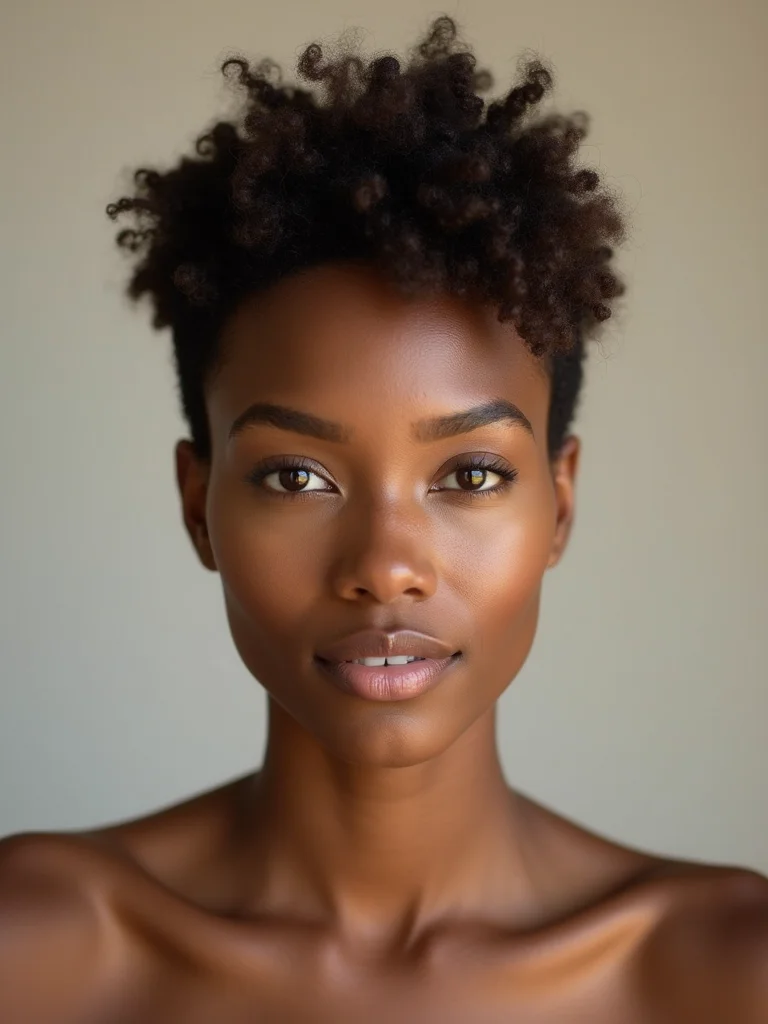
Medium hair gets called the safe length, and a layered wolf cut proves that idea wrong fast. People assume the wolf cut only works cropped and grunge, but the collarbone-to-shoulder zone is where it truly comes alive: long enough to swing, short enough to hold its shape.
I cut more of these than any other version, usually for someone who wants a real change without giving up the ponytail. Here is how the layers behave at medium length, who it flatters, and how to style it on straight, wavy, or curly hair.
Quick Answers
Is medium the best length for a wolf cut? For most people, yes. The collarbone-to-shoulder zone gives the layers room to move while keeping enough length to tie back.
How often will I need a trim? Plan on a shape-up every 8 to 10 weeks. Medium length blurs a touch slower than a cropped wolf cut.
Will it work on my texture? Straight, wavy, and curly all wear it well, with small tweaks to where the layers start and how you finish the ends.
Why a Medium Layered Shag Hits the Sweet Spot

The medium layered wolf cut sits in the happiest part of the length chart. At the collarbone or just past it, you get the airy crown layers and soft face-framing wings of a true wolf cut, plus enough weight at the ends to keep the shape from looking scraggly. That balance is why it photographs well and lives well day to day.
I suggest this length whenever a client loves the wolf-cut idea but panics at the thought of a short, choppy commitment. It is the version you can pull into a half-up, tuck behind your ears, or wear loose and tousled. The layers carry the personality while the length keeps your options open.
The Most Versatile Length for a Wolf Cut

What makes medium length so adaptable is that it answers to almost any styling mood, which is part of why it keeps trending right now. Three quick ways I send clients out the door:
- Round-brushed smooth for a polished, swingy finish.
- Air-dried and scrunched for soft, piecey texture.
- Half-up with the crown layers teased for a bit of height.
The medium wolf cut is the one I recommend when someone wants a real change but still needs to look pulled together at work the next morning.
Building Shaggy Layers on Medium Hair

The magic lives in the internal layering, not the outline you see in the mirror. On medium hair I build short, soft layers through the crown and graduate them down so the ends stay full. Cut too aggressively and medium hair can look thin at the bottom. I check the weight line carefully as I work.
Ask for point-cut ends and a little invisible texturizing through the mid-lengths. That keeps the cut moving without carving holes into the shape.
- Short, soft crown layers for lift
- Graduated mid-lengths so the ends stay full
- Point-cut ends to soften the perimeter
How a Layered Wolf Cut Falls at the Collarbone

Collarbone length is the spot I point most people toward first. The shortest layers land around the chin or cheekbone, the longest graze the collarbone, and the gradient between the two is what gives the cut its swing.
On most face shapes this lands in flattering territory: it draws a round face longer and softens a square jaw with no styling effort at all. If you want a touch more drama, the long layered version drops the length a few inches lower.
📋Before You Book Your Appointment
- ✓A few photos of medium wolf cuts you like
- ✓An honest sense of your daily styling time
- ✓Notes on your cowlicks and natural part
Soft Layers for Everyday Wear

Not everyone wants a rock-and-roll shag, and lately the softer take is what most clients ask for. For a gentler, more wearable version, I keep the layers easy and the fringe blendable. Here is how I dial down the edge.
- Keep the shortest layer at the cheekbone for a subtle frame.
- Choose soft curtain bangs over a blunt micro fringe.
- Texturize with shears instead of a razor for a smoother finish.
Wispy Ends That Keep It Modern

Wispy, tapered ends are the detail that separates a current wolf cut from a dated shag. When the ends feather out to a soft point, the whole cut looks intentional and light on the shoulders.
I create them with point cutting and a light hand on the texturizing shears. At home, a pea of matte paste pinched through the last inch keeps the wispy effect crisp all day. Heavy creams smother it, so go sparingly.
| Texture | Layer Focus | Styling Pick |
|---|---|---|
| Straight | Internal layers for lift | Round brush and texture spray |
| Wavy | Soft graduation | Curl cream and diffuser |
| Curly | Dry-cut shaping | Leave-in and soft gel |
Pairing a Blunt Fringe With a Sleek Finish

A blunt fringe gives the soft wolf cut a sharp, fashion-forward anchor. It frames the eyes and adds a graphic edge that plays beautifully against the piecey layers behind it.
It does ask for commitment, though. A blunt fringe needs a trim every two to three weeks and a quick blow-dry most mornings to sit right.
- Best on straight to lightly wavy hair
- Blow-dry with a round brush to keep it flat
- Budget a fringe trim every 2 to 3 weeks
Styling Waves Into a Medium Wolf Cut
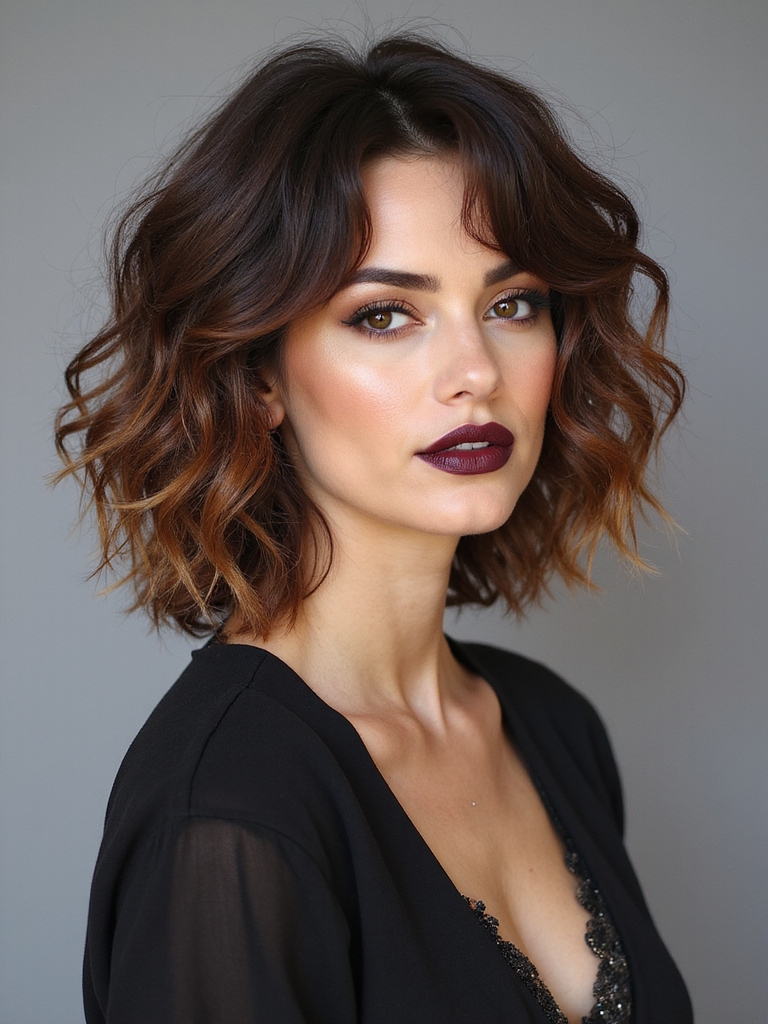
Wavy hair and a medium wolf cut are a natural match, because the waves do half the texturizing for you. The layers give your waves somewhere to spring, so they stop piling up into a triangle by midday.
I style waves with a curl cream scrunched into damp hair, then diffuse on low heat with the cup cradling the ends. Scrunch upward toward the scalp as you go to build root volume. For looser, beachier definition, the wavy wolf cut guide breaks down the drying technique in more detail.
Heads-Up
Fine or fragile hair does better with shears than a razor for texturizing. A razor can carve out so much weight on medium-length fine hair that the layers go limp and stringy almost right away.
Carving Layers for Defined Curls

Curly hair changes how the layers get cut. I shape curls dry, in their natural pattern, so I can see exactly where each one wants to sit before I commit to a length.
Accounting for Shrinkage
Medium length is forgiving for curls because shrinkage works in your favor. What looks like collarbone length wet often dries up to shoulder length, and I map the layers around that bounce.
Define the curls with a leave-in and a soft-hold gel, then scrunch out the cast once dry. The curly wolf cut guide digs deeper into pattern-specific shaping.
Keeping Medium Layers Light and Airy

Medium hair carries more weight than a cropped cut, so the risk is a wolf cut that goes heavy and helmet-like at the ends. The fix lives in the layering and the styling. It almost never means chopping off more length.
Spotting Over-Thinned Ends
I remove weight with internal layers and invisible texturizing, then style with a volumizing mousse at the roots. A round brush lifts the crown while a diffuser keeps the ends from falling flat.
If your hair is fine, ease off the texturizing so the ends still look full. Over-thinned medium hair loses its swing within a couple of weeks.
Strategically Thinning Out Thick Hair

Thick medium hair is where the wolf cut earns its keep, because all that density needs somewhere to go. I thin the bulk out of the mid-lengths and just below the crown so the layers can move freely.
Be patient with thick hair as it grows. It tends to expand outward before it falls, so a shape-up every 8 weeks keeps it from ballooning. A weekly mask also keeps coarse ends from frizzing.
Color That Sculpts Movement

Color and a layered wolf cut were made for each other. Dimensional color, whether soft balayage or face-framing money pieces, tracks the layer pattern so every angle catches a slightly different tone.
I place lighter pieces where the layers turn, so the brightness catches the light as the hair swings. Lowlights woven underneath keep the depth from washing out.
If you are coloring and cutting in one visit, cut first so the colorist can paint the finished shape. For bolder ideas, the shag wolf cut gallery shows how color and texture play together.
At-Home Styling Techniques

Styling a medium wolf cut at home takes about ten minutes once you find your rhythm, and the layers reward a light touch over fussy heat styling. The goal is movement, so I dry for shape first and refine the texture second. My standard routine looks like this.
- Rough-dry to 80 percent, then diffuse or round-brush the crown for lift.
- Mist a texture spray from mid-length to ends and scrunch upward.
- Pinch a little paste through the ends and leave the roots alone.
Low-Effort Upkeep Between Trims

The beauty of this cut is how little it asks once you leave the salon. As long as you work with your texture, medium layers hold their shape for weeks at a time.
Most people get 8 to 10 weeks out of a shape-up. A standard wolf cut runs about $60 to $130 depending on your salon and whether color is involved.
- Dust the ends monthly to keep them from splitting
- Sleep on a satin pillowcase to cut down on frizz
- Revive day-two hair with water and a little mousse
Lightweight Products for Textured Ends

Product choice can make or break a medium wolf cut. The cut is built to look light, so heavy formulas drag the layers down and erase the texture you paid for.
A Simple Product Lineup
I lean on lightweight mousses, salt or texture sprays, and matte pastes. A pea-size amount of each is plenty; piling on product is the fastest way to flatten the whole shape.
Keep the rich oils and heavy creams for your lengths and ends only, and steer them clear of the roots.
Styling Tips
A few habits keep this cut looking salon-fresh between visits. Aim your dryer down the hair shaft to smooth the cuticle, and finish the crown with a quick blast of cool air to set the lift. When you scrunch, work upward toward the scalp to encourage the layers to spring.
On flat days, flip your part to the opposite side for instant volume at the roots. And if the ends start to look stringy before your next appointment, a tiny bit of paste worked through the bottom inch revives the piecey finish in seconds.
Medium Wolf Cut Questions, Answered
?Is medium hair long enough for a wolf cut?
Yes, and many stylists would argue it is the ideal canvas. At collarbone to shoulder length there is enough hair to build distinct layers while keeping the weight that makes the shape look full.
?Will a ponytail or half-up style still work?
Mostly, yes. The longest pieces still reach the collarbone for a low pony or a half-up, though a few short face-framing strands tend to slip loose no matter what you do. Most clients end up liking that piecey look.
?What’s the trick for stopping the layers from falling flat?
Dry the crown lifted with a brush or just your fingers, add a touch of lightweight product at the roots only, and skip heavy oils near the top. Switching your part to the other side is an easy fix for extra volume too.
?Does a medium wolf cut suit thick hair?
It is a top pick for thick hair, since the layering removes bulk and lets the density move. Expect some outward expansion as it grows, and plan a shape-up around every 8 weeks.
?What should I avoid asking for?
For fine hair, go easy on over-texturizing and too many short layers, since both can leave the ends wispy and thin. When in doubt, ask for softer, longer layers you can always shorten later.
Medium Is the Easiest Wolf Cut to Love
If the wolf cut has tempted you but the cropped versions felt like too much, medium length is your way in. It gives you all the movement and edge with a built-in safety net: enough length to tie back, restyle, or grow out gracefully when you want a change.
Bring a few photos, be honest about your styling time, and trust your stylist to place the layers for your texture. You will likely walk out wondering why you waited.
Worth a Look