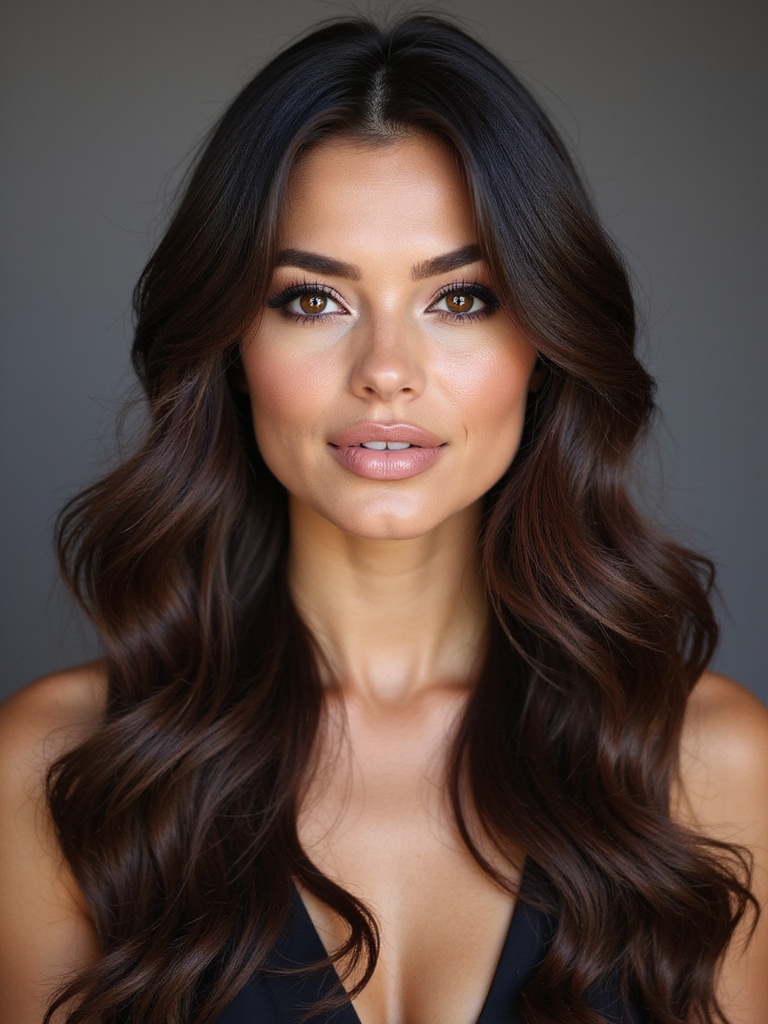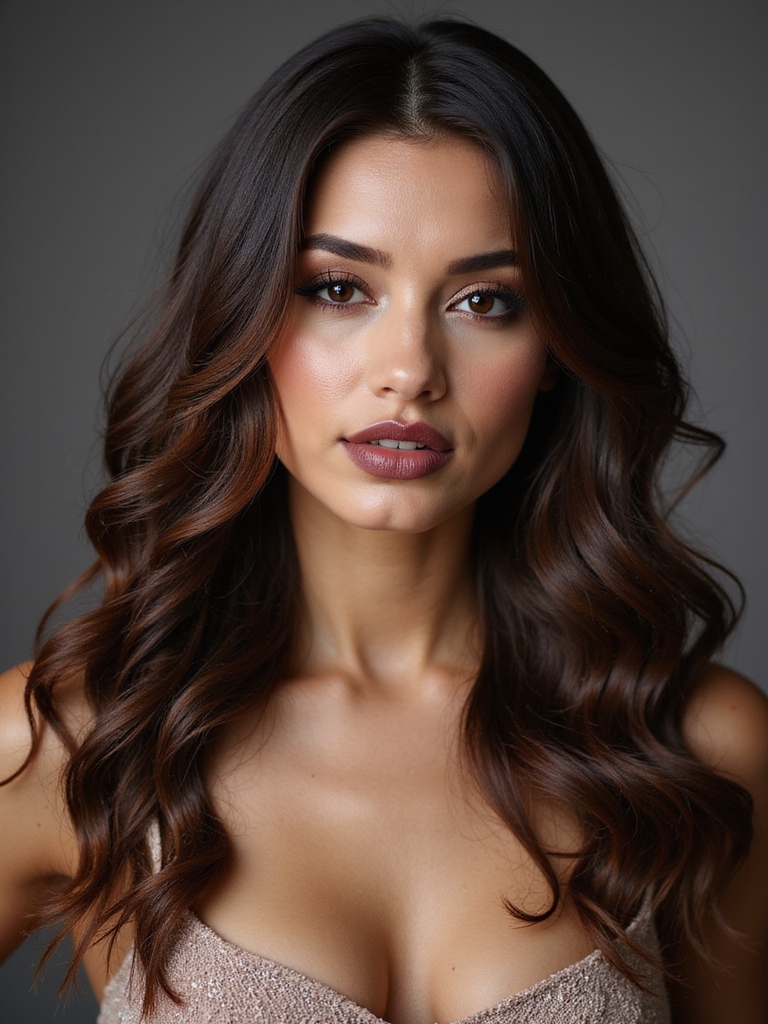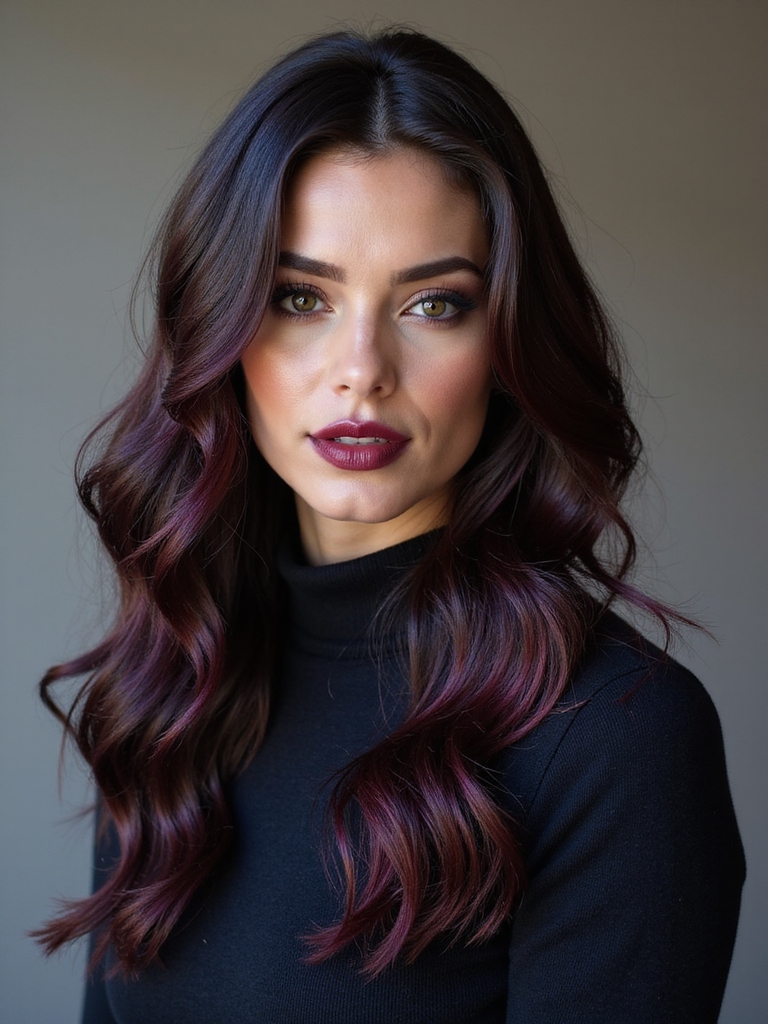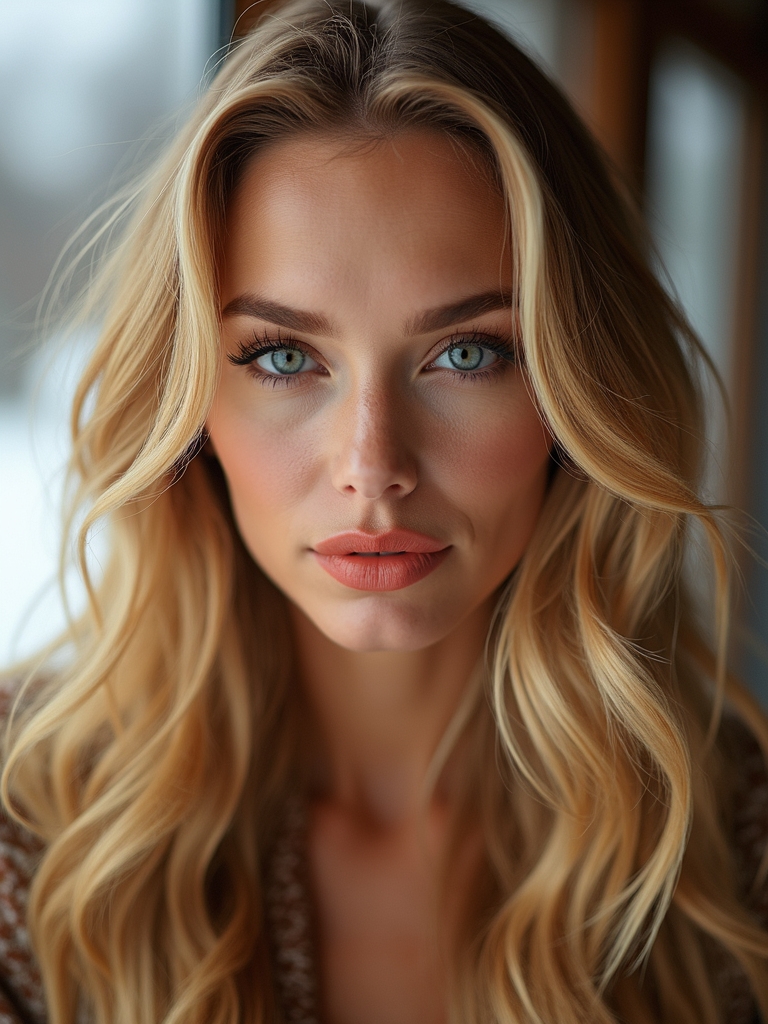
A summer tan does a lot of quiet work for a bright, icy blonde. Once that tan fades and winter light turns flat and gray, the exact same color that looked lit-from-within in August can suddenly read pale and tired against bare winter skin. The blonde itself hasn’t changed; the backdrop has.
The fix isn’t going darker, it’s going warmer: honey, caramel, beige, and golden tones that keep blonde looking bright without the cool edge that pulls color out of a face in low winter light. What follows are 15 ways to make that shift, starting with a toning session and scaling up to an all-over re-color.
Winter Blonde, Quickly
- Icy and platinum blondes tend to read paler and more tired once winter strips away a summer tan.
- Warming with honey, caramel, beige, or golden tones counters that seasonal drain without a full color change.
- A shadow root or lowlights add the depth that keeps a warmed-up blonde from looking flat and one-note.
Warm Honey Balayage for Dimension

Honey balayage stays close to a natural growth pattern, since the color gets hand-painted rather than applied in a uniform block, which is exactly why it’s often the first recommendation for someone moving away from platinum. The rich, golden tone sits close to the skin’s own warmth instead of competing with it.
- The hand-painted placement means regrowth blends rather than showing a hard line.
- Golden pigment tends to sit especially well against fair-to-medium winter skin.
- A warm-toned gloss between full appointments keeps the honey from fading toward flat.

Warm Caramel Lowlights for Depth

A blonde that’s gone one-note and flat usually needs depth added back in, not more lightener. Caramel lowlights solve that specific problem, weaving deeper, warm tones through the existing blonde so it stops reading as a single pale block.
This works especially well going into winter because it adds richness without darkening the overall color. The brightness stays where it already was; the lowlights just give it somewhere to sit.
- Lowlights break up flatness without lowering the overall lightness.
- The added contrast reads as intentional dimension rather than uneven fading.
- Because lowlights grow out softly, the upkeep stays lighter than a full color.
Caramel Face-Framing Highlights

Placement matters as much as shade here. Concentrating warm caramel pieces specifically around the face puts the color exactly where it does the most visible work, while the rest of the blonde stays untouched.
That targeted approach makes this one of the least expensive ways to warm up a blonde, since only a fraction of the head actually gets colored. It’s a reasonable first step for anyone nervous about committing to a full change.
- Face-framing placement concentrates cost exactly where it shows most.
- A smaller service than a full balayage or all-over color.
- Refreshing just the front pieces keeps upkeep visits shorter.
Soft Golden Ombré With a Low Root

A soft golden ombré melts a deeper root into warm blonde ends, which pairs well with winter for a practical reason beyond the color itself: the low root means regrowth stays invisible for months rather than weeks.
The gold undertone is what makes this work. Push the same ombré toward ash instead, and the low-maintenance advantage stays, but the seasonal-flattering effect disappears along with it. Asking specifically for a warm, golden melt rather than a generic ombré is worth the extra sentence at the consultation, since the two versions look meaningfully different once they’ve grown out a few months.
Creamy Beige Blonde With Depth

Beige sits as the neutral middle ground in this whole family: warmer than ash, less saturated than gold. Kept creamy rather than pushed ashy, and given a little tonal depth, it works across a remarkably wide range of undertones without committing to a bold golden shade.
That neutrality is the whole appeal. A soft lowlight or shadow root adds just enough dimension to keep it from reading pale and flat under indoor winter lighting.
- Sits between warm and cool, so it suits more undertones than a committed gold or ash.
- A little tonal depth prevents the flat, one-note look plain beige can fall into.
- Reads as versatile enough to wear year-round, not just a winter fix.
ℹ️Depth vs. Undertone
Depth (how light or dark) and undertone (how warm or cool) are two separate variables. A blonde can be very light and still warm, or medium-depth and still cool — matching undertone to the season matters more than adjusting overall lightness.
Sandy Blonde With a Champagne Gloss

Sandy blonde reads as the most understated shade on this whole list, a soft, warm-neutral tone that looks sun-faded rather than deliberately colored. A champagne gloss on top adds the luminous, faintly golden quality that keeps it from tipping dull.
The gloss does double work here: it warms the base tone slightly while adding the kind of shine that reads as healthy rather than simply light. Because a gloss service is quick, it’s one of the easiest of these fifteen shades to maintain on a regular basis.
This combination suits anyone who wants a warm blonde that still looks like it grew in naturally, rather than one that announces itself as a fresh color job.
Sun-Kissed Face-Framing Highlights

Fine, barely-there babylights around the face mimic the way sun naturally lightens the pieces closest to it, which is what keeps this version reading soft rather than obviously colored. Because the pieces are so fine, a colorist can build them up gradually over a couple of appointments rather than committing to full brightness in one sitting.
- Ultra-fine placement avoids the striped effect chunkier highlights can leave behind.
- Brightness stays concentrated near the face, where it does the most visible work.
- A gentle option for anyone wanting warmth without a dramatic shift.
Almond Blonde, Low-Maintenance

Almond blonde carries a nutty, warm-beige depth, and that depth is what makes it one of the more forgiving shades on this list to maintain. A deeper base means regrowth shows more slowly and toning appointments come less often than with a bright, lightened blonde.
- Request a warm, nutty almond or beige-blonde base specifically.
- Extra depth translates directly into softer, slower-showing regrowth.
- Suits warm and neutral undertones especially well through colder months.
- A gloss on a roughly bimonthly rhythm keeps the tone from fading dull.
Soft Copper-Blonde for Warm Radiance

For maximum warmth, a soft copper-blonde blends golden tones with a touch of copper, leaning slightly toward strawberry. It’s the boldest option here and tends to work best for whoever looks noticeably drained in any cool-toned blonde.
- A hint of copper worked through golden blonde builds real radiance.
- The most warmth-forward option on this entire list.
- Best suited to fair, warm, or neutral undertones that cool tones tend to wash out.
- Copper fades faster than most blondes, so a warm-toned conditioner earns its place in the routine.
Not sure which direction to take? Start with the goal:
🎯Wants maximum warmth
A soft copper-blonde or honey balayage delivers the most noticeable shift for skin that looks drained in any cool tone.
🎯Wants warmth with minimal upkeep
A toasted blonde or honey root melt with a shadow root stretches the interval between salon visits considerably.
Toasted Blonde With a Shadow Root

Toasted blonde carries a deepened, golden-brown warmth, and pairing it with a shadow root solves the maintenance problem that usually comes with any blonde: obvious regrowth. The soft, deeper blend at the root melts into the lengths instead of leaving a hard line.
That built-in shadow is, honestly, the practical part of this combination. Root maintenance is typically the most demanding piece of staying blonde, and a deliberate shadow largely removes that pressure, stretching the interval between salon visits considerably.
Warm Ash-Balanced Blonde, No Brass

Warmth and brassiness aren’t the same thing, though they get confused often. A warm ash-balanced blonde keeps the cozy tone while a controlled undertone of ash holds it back from tipping into orange or yellow, which is the actual risk with any warm color.
- Warmth gets built in, then balanced with a controlled amount of ash.
- The result reads cozy without drifting toward orange or yellow.
- An occasional purple-toning wash keeps that balance in check between visits.
- This is the most technically controlled version of warm blonde on the list.
Warm Luminous Low-Maintenance Blonde

For anyone prioritizing low effort above all else, this combines a warm golden base with a placement designed specifically for easy grow-out, so brightness holds with minimal salon time built into the schedule.
- A golden base supplies warmth without needing constant refreshing.
- Grow-out-friendly placement stretches the interval between full appointments.
- A gloss refresh handles most of the upkeep rather than root-focused visits.
📋Before an Almond or Copper-Blonde Appointment
- ✓Bring a reference photo taken in natural daylight, not under salon or phone-filter lighting.
- ✓Ask directly how the depth of this shade affects the trim and gloss schedule going forward.
- ✓Confirm whether the base color needs adjusting first before the new tone will show true.
Dimensional Bronde With Warm Ribbons

For anyone wanting more overall depth without abandoning blonde entirely, a dimensional bronde laces warm ribbons of color through a deeper base, landing as the richest option in this whole lineup.
Blonde With Built-In Depth
The ribbons are doing the real work: without them, a bronde base alone risks reading mousy or muddy rather than dimensional. Woven through, they keep the color feeling alive rather than flat.
Because the base sits deeper than a full blonde, regrowth stays hidden longer than almost anything else covered here, which makes this a practical choice for a busy season. Anyone wanting to see the full warm-blonde range side by side can browse the caramel blonde hair roundup.
Honey-Blonde Root Melt

A root melt blends a soft, deeper honey tone into the roots so there’s no visible line where color meets natural growth. It’s a technique that solves two problems at once: it adds the season’s warmth, and it removes the harsh regrowth line that’s usually the single biggest complaint about being blonde.
Why a Root Melt Buys Real Time
The melt itself is what makes it work. Rather than masking regrowth with a cool, neutral toner, it uses warm honey pigment, so the transition zone still looks intentional and rich rather than simply covered up.
This tends to suit anyone tired of the six-week root cycle especially well. Colored correctly once, it holds its look considerably longer than a solid, uniform blonde would.
🅰️Caramel Lowlights
Adds depth without lowering overall brightness; grows out softly with light upkeep.
🅱️Warm Ash-Balanced Blonde
More technically controlled finish; needs a colorist experienced in balancing warmth against brass.
Gloss and Glaze to Boost Shine

Whatever warm blonde gets chosen from this list, regular glossing is the habit that actually keeps it looking right through the season. A gloss or glaze redeposits pigment, neutralizes unwanted brass, and seals in shine that dry winter air steadily strips away.
The Habit That Keeps Blonde Looking Expensive
A salon gloss appointment typically takes about half an hour and runs around $40 to $70, and most warm blondes benefit from one on a monthly-to-two-month rhythm. Anyone leaning back toward cooler tones instead can find that direction covered in the ash blonde hair piece.
Between salon visits, an at-home glossing treatment or a gentle toning conditioner does meaningful work keeping tone accurate and shine intact. It’s a small, recurring habit rather than a dramatic one, but it’s the difference most people actually notice.
Winter Blonde Questions
?Why does the same blonde look different in winter than it did in summer?
Mostly because of skin, not hair. A summer tan adds warmth that balances a cool blonde; once that tan fades under winter light, the same shade can read paler and more washed-out than it did months earlier.
?Is there a way to warm up blonde without it turning brassy?
Yes, and it comes down to balance rather than avoidance. A colorist can add warmth while controlling the underlying tone with a measured amount of ash, which is what keeps a warm blonde from drifting toward orange or yellow.
?Which of these options needs the least ongoing salon time?
A toasted blonde or honey root melt with a shadow root, and a dimensional bronde, both hide regrowth for the longest stretch, since the deeper base and blended root delay the point where a touch-up becomes necessary.
The Blonde That Actually Suits the Season
The blonde that worked all summer rarely stays the right choice once winter light and a faded tan change the backdrop it’s sitting against. Honey, caramel, beige, golden, and toasted tones all solve the same underlying problem: putting warmth back into a look the season is quietly working to drain.
Anyone whose blonde has started to feel tired doesn’t necessarily need to go darker to fix it. A gloss, a few caramel pieces, or a full honey root melt can shift the whole effect without abandoning blonde at all — often with results that hold up better through winter than the original color did.
Don’t Miss These