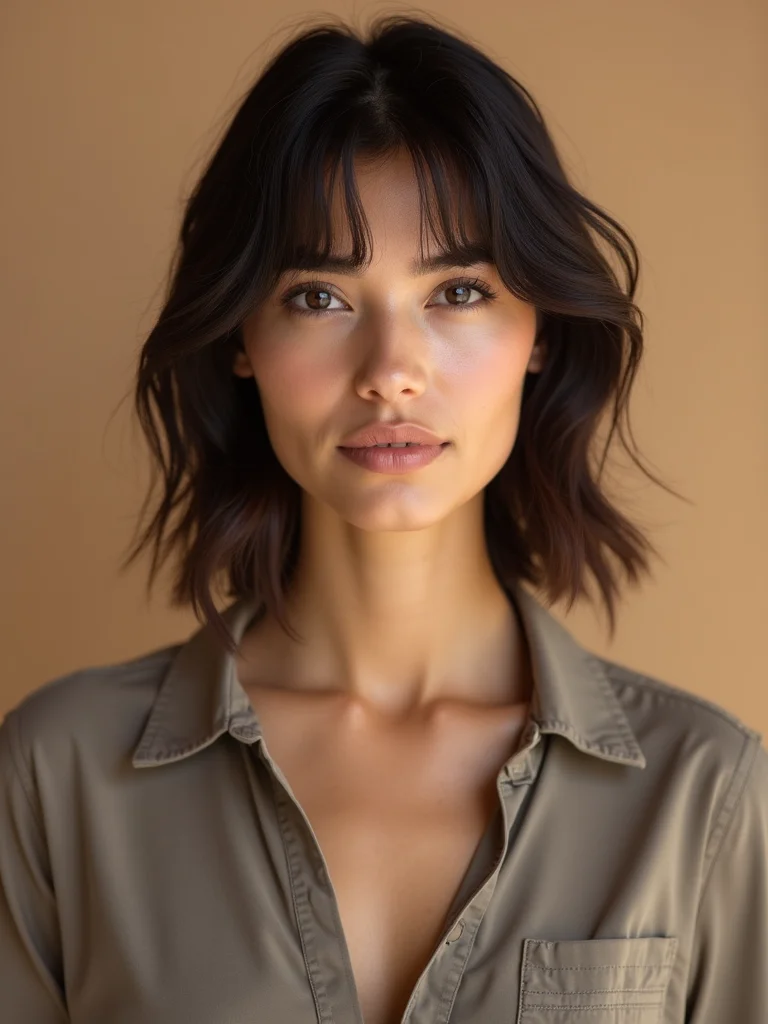
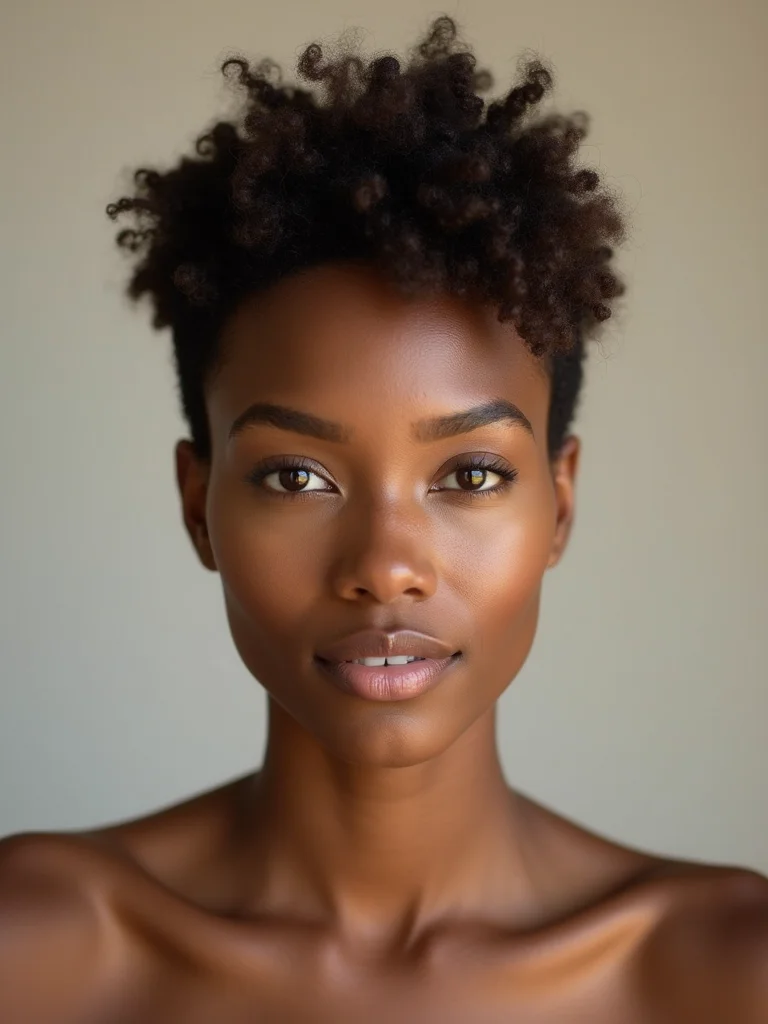
Brave enough to cut your fringe up above your eyebrows? That’s the whole idea behind baby bangs, the ultra-short micro fringe that sits high on the forehead, well clear of the brows. It’s one of the boldest things you can do with a pair of scissors, a look with roots in Bettie Page pin-up and ’70s punk that keeps roaring back onto runways and feeds.
It is not a shy choice, and it isn’t for every face or every morning. But worn with a little confidence, baby bangs are graphic, striking, and unmistakably editorial. Ten versions follow, from a blunt graphic line to a soft curly wisp; each one comes with who it tends to suit and what it actually takes to keep that tiny fringe sharp between trims.
Baby Bangs at a Glance
| Want | Try | Keep in mind |
|---|---|---|
| Bold and graphic | A blunt or asymmetric micro fringe | Reads as a real statement; commit to the look |
| Softer and easier | Wispy, feathered, or micro curtain bangs | Gentler on most faces and simpler to grow out |
| Low fuss | Baby bangs on curls or a shag | Texture hides unevenness between trims |
The Blunt Micro Fringe

This is baby bangs in their purest, boldest form: a straight, blunt line cut high across the forehead, dense and graphic. There’s nothing soft about it, and that’s the appeal. It’s a real statement, the version that turns heads and looks high-fashion. What defines it:
- A solid, straight-across line sitting well above the brows.
- Maximum contrast and drama, with no wispy edges to soften it.
- Best on strong features and bone structure it can play up.
Soft, Wispy Baby Bangs

If a blunt line feels too severe, wispy baby bangs are the friendlier way in. The fringe is thinned and feathered so it breaks into soft, separated pieces, keeping the short length but losing the hard edge. It’s a gentler, more romantic take. Why it’s the easy option:
- The feathered pieces flatter more face shapes than a blunt line.
- Soft edges grow out far more gracefully than a solid fringe.
- It’s forgiving day to day, since a little unevenness just reads as texture.
Blunt or soft, which baby bang is you?
1Want a real, unmissable statement?
Go blunt or graphic; a solid high line is maximum drama.
2Want the look but a little softer?
Choose wispy, feathered, or micro curtain bangs for an easier wear.
Curly Baby Bangs

Baby bangs on curly hair are a joy, letting just a coil or two perch right at the hairline for a playful, characterful fringe. It’s a bold, fun way to show off your natural pattern rather than fighting it.
Cutting for Shrinkage
The one thing to get right is the cut, because curls shrink dramatically when they dry. A fringe cut to look short on wet hair can spring up almost to the hairline, so the stylist needs to work dry, shaping each curl individually with your shrinkage in mind.
Done that way, curly baby bangs are low-fuss and full of personality. Anyone weighing them should look at curly bangs generally first, since the same shrinkage rules apply at every fringe length.
Piecey, Undone Micro Bangs

Piecey micro bangs land between blunt and wispy, cut short but deliberately broken into chunky, separated pieces for a cool, undone edge. They look a little grungy and a little French, the kind of fringe that seems like you didn’t try too hard.
The separation is what keeps them from feeling too precise or done. A touch of texture paste pulls the pieces apart and gives them that off-duty, thrown-together attitude.
They suit anyone who loves the boldness of a micro fringe but wants it to feel casual rather than architectural. Low effort, high cool.
An Asymmetric Baby Fringe

Cut the micro fringe on a diagonal or leave one side longer, and it turns artsy and off-kilter. An asymmetric baby fringe breaks the symmetry of a straight line for something more unexpected and modern. Why it works:
- The uneven line looks intentional, edgy, and a little avant-garde.
- A diagonal is more forgiving on faces a straight blunt line overwhelms.
- It pairs naturally with an asymmetric cut for a fully off-balance look.
Feathered, Airy Baby Bangs

Feathered baby bangs take the wispy idea even further, thinning the fringe down to a light, airy veil that barely grazes the forehead. It’s the softest, most delicate micro fringe there is, closer to a suggestion than a statement. Think barely there.
Because it’s so fine, it flatters those who want the shape without the heaviness, and it’s the friendliest version for thin or fine hair. It frames the eyes softly and grows out with almost no awkward stage, which makes it a low-risk way to test the micro-fringe waters.
ℹ️Where They Come From
Baby bangs aren’t new. Pin-up icon Bettie Page wore a high, rounded micro fringe in the 1950s, punk took it sharper and shorter in the ’70s, and French and runway hair has revived it on and off ever since. Every comeback reads as a little rebellious, which is half the point.
Choppy Micro Bangs on a Shag

Baby bangs and a shag were made for each other, both rooted in the same ’70s rock energy. Choppy, textured micro bangs finish a layered shag perfectly, tying the whole shaggy, undone look together at the front.
The rough, piecey fringe matches the choppy layers below it, so nothing feels too neat. If you’re drawn to this pairing, a full shag with a micro fringe is one of the coolest, most attitude-heavy cuts going, and the shaggy layers mean the fringe never has to look too polished to work.
Micro Curtain Bangs

Split a short fringe down the middle and you get micro curtain bangs, a tiny fringe parted to frame the center of the forehead while sweeping softly to each side. It’s a clever hybrid, part baby bang, part curtain.
The center part softens the boldness of the micro length and opens up the face, which flatters more people than a solid blunt line. It’s a gentle middle ground worth trying before the full blunt commitment, and it borrows the ease of longer curtain bangs.
- The center split softens a short fringe and opens the face.
- It flatters rounder faces by drawing a vertical line down the middle.
- Easier to grow out than a blunt micro fringe.
Graphic, Architectural Baby Bangs

For the boldest of the bold, graphic baby bangs push the fringe into pure architecture, cut with sharp, clean, almost geometric lines. This is fringe as design, the kind you see on a runway or an art-school crop. It makes no apology.
It demands precision and confidence, since a hard geometric line shows every millimeter. Worn with a sleek, sharp cut, it looks powerful and avant-garde, the kind of fringe that becomes the whole outfit.
💡Keeping a Graphic Line Sharp
A blunt, graphic micro fringe lives or dies on that clean line. After washing, blast it dry flat with a round brush or your fingers pulling down, then run a small flat iron through for a millimeter-straight finish. Skip heavy product on the fringe itself, which drags it down and breaks the crisp edge.
A Micro Fringe on a Sleek Bob

Pair a micro fringe with a sleek, blunt bob and you get one of the chicest, most graphic duos in hair. The clean line of the bob and the sharp line of the baby bangs echo each other, all crisp geometry and shine. It’s polished and modern.
The two short, blunt shapes together look intentional and high-fashion, especially glossed up smooth. It’s a natural pairing with a textured bob too if you’d rather soften the bob while keeping the bold fringe. Whichever way you go, keep both lines clean with regular trims and a smoothing serum, since a graphic duo like this lives on its crisp edges and loses its punch the moment it starts to grow shaggy.
Who Baby Bangs Flatter Most
Before you commit, it helps to know how a micro fringe plays with your face. Because baby bangs draw a strong horizontal line high on the forehead, they shorten and open up the face, which is why they’re most flattering on oval and heart-shaped faces and on longer faces that can take a little shortening. Strong features, a defined brow or good bone structure, give the bold line something to balance against.
That same shortening effect is the thing to watch on a round face, where a hard blunt line can widen things further. The fix isn’t to avoid the trend but to soften it: a wispy, feathered, or asymmetric version breaks the horizontal and sits far kinder. Forehead size matters less than people fear, since baby bangs can be cut to expose more or less of it depending on where the line lands.
Confidence does more for this look than any face-shape chart ever will. Attitude sells this one. Baby bangs are a look you wear on purpose, so the people they suit best are the ones who own them. If you love the idea, the right version, blunt, soft, or somewhere between, almost certainly exists for you.
Maintenance & Care
Baby bangs are the highest-maintenance fringe there is, for one simple reason: they’re so short that even a little growth changes the whole look. Hair grows about half an inch a month. On a fringe that sits mid-forehead, that shows fast.
Expect to trim them every two weeks or so, either at a salon, often free between cuts, or carefully at home once you learn the shape. A single salon fringe trim, if charged, takes about five minutes and usually runs around $15.
Styling is quick but matters. A blunt fringe wants a flat blast of the dryer and maybe a touch of a small iron to sit straight and flat; a wispy or piecey one wants a little texture paste to separate the ends. Watch for oil, since a short fringe sits right on the forehead and can go greasy, so a dab of dry shampoo on the roots keeps it fresh. Keep it trimmed and clean, and baby bangs stay as sharp as the day you got them.
Baby Bangs Questions
?Do baby bangs suit every face shape?
Not identically. Baby bangs are kindest to oval and heart-shaped faces and to anyone with strong features to balance the bold line. A longer or rounder face can wear them too, but usually does better with a softer, wispy, or asymmetric version rather than a hard blunt line that can shorten the face.
?How often do baby bangs need trimming?
Often, because they’re so short that any growth is obvious. Most people trim them every two or three weeks to keep the length and shape. Many salons do fringe trims free between full cuts, and once you know the shape, careful at-home touch-ups can stretch the time between salon visits.
?Are baby bangs hard to grow out?
The blunt versions are the trickiest, since a short, dense fringe has a long, awkward journey down to eyebrow length. Softer, wispy, or asymmetric baby bangs grow out far more gracefully, blending into face-framing pieces. If grow-out worries you, start with a feathered version rather than a blunt one.
?Can I get baby bangs with curly hair?
Yes, and they can look wonderful, but the cut has to account for shrinkage. Curls spring up much shorter dry than they sit wet, so a curly baby fringe needs to be shaped strand by strand while dry, or it’ll end up far shorter than planned. Cut correctly, curly baby bangs are playful and low-fuss.
?Will baby bangs work with fine or thin hair?
They can, and a wispy or feathered micro fringe is often especially flattering on fine hair, since it doesn’t demand the density a heavy blunt fringe needs. A blunt line can look sparse on very thin hair, so lean feathered, and a little texture spray helps the fringe hold its shape.
Is the Micro Fringe for You?
For all their boldness, baby bangs are more flexible than they look. Between a blunt graphic line and a soft, feathered veil sit ten different ways to wear the micro fringe, so the real question isn’t whether they’d suit you but which version would, and how much drama you’re after.
So if that high little fringe keeps catching your eye, start softer with something wispy or a micro curtain if you’re unsure, and go blunter once you’ve got the feel of it. Commit to the frequent trims, wear it with confidence, and few looks pay off with as much instant edge.
More Inspiration