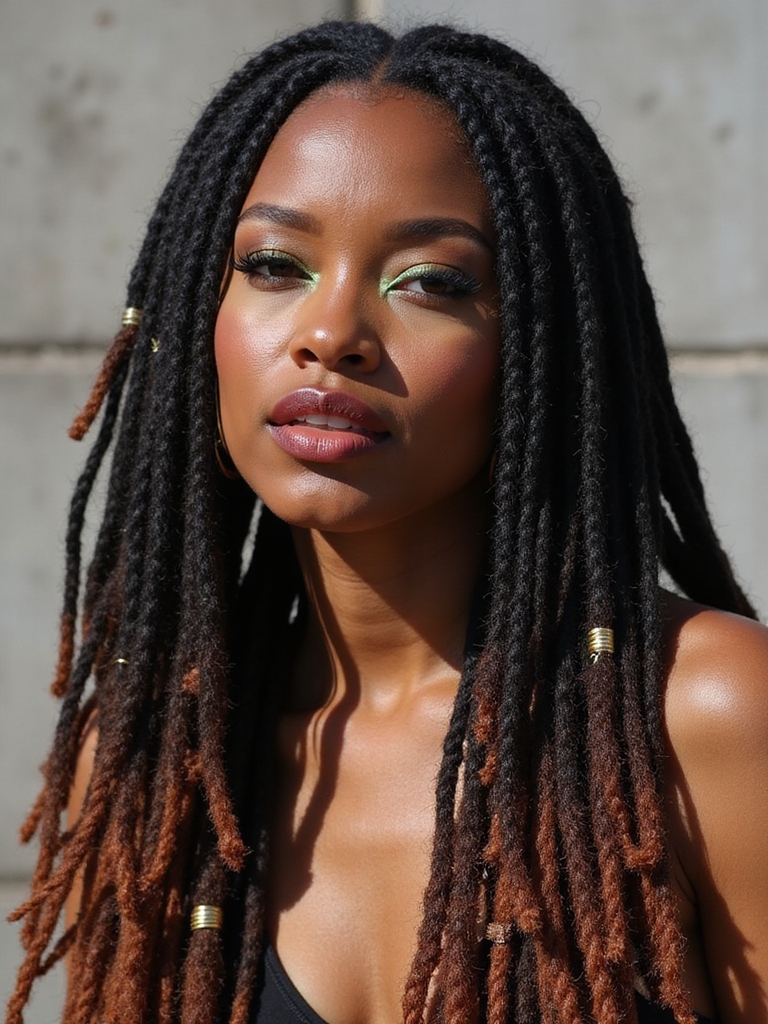
Soft locs might be the most versatile protective style available right now. Installed by wrapping lightweight synthetic hair over a braided base, sometimes using the crochet method, they fall with a loose, weightless drape that swings and moves in a way traditional locs never do, all while natural hair rests underneath.
Most installs use six to eight packs of wrapping hair depending on density and desired length, and the style typically stays in around six weeks before a takedown or fresh install.
What Soft Locs Actually Involve
- Soft locs are a temporary protective style, installed over a braided base with lightweight wrapping hair, not a permanent change to natural hair.
- A full install takes several hours and costs close to $200, similar to what a full set of box braids runs.
- Gentle tension at the hairline matters more than any other single factor in keeping edges healthy through the style.
Soft Locs With Face-Framing Tendrils

A few loose pieces pulled free at the temples is the simplest way to soften a full, uniform install into something romantic. It’s a small move that changes the whole feel of the style. I show this to nearly every new soft-locs client before anything else, since it’s the one adjustment that works on top of any other style on this list.
It costs nothing and takes under a minute once the rest of the install is set.
- Leave two or three tendrils loose at each temple, no more, to keep it delicate
- Curl gently with a low-heat flexi-rod or a cool flat iron pass
- Pull the rest back so the loose pieces stand out clearly
A Boho Half-Up Crown With Loose Soft Locs

The top third lifted into a loose knot while the rest cascades down is the go-to updo for this style, keeping length visible while clearing the face.
Why Looseness Is the Whole Point
Gather the crown section, twist it gently, and pin it without pulling tight. A few pieces left loose at the front keep the shape soft instead of stiff.
It moves easily from a daytime event to something dressier, and more lifted styles work on the same principle.
Side-Swept Soft Locs With Romantic Volume

The full length swept over one shoulder banks volume on that side and adds a soft asymmetry that flatters almost any face shape.
Part deep on one side, gather the length toward the opposite shoulder, and pin a few pieces at the nape underneath to hold the sweep through the day.
A Low, Textured Bun With Wispy Pieces

Gathering the length into a loose knot at the nape keeps this updo relaxed rather than formal, with a few wispy pieces left out to soften the shape. Because the wrapping hair is lightweight, the bun stays comfortable for hours in a way a bun of natural hair rarely does.
- Pin it loosely rather than cinching the base tight
- Pull a few face-framing pieces loose from the bun itself
- More bun shapes work just as well for a dressier version of this same idea
Ask which install method a stylist uses before booking. Crochet and hand-wrapped methods hold tension differently, and that difference matters more than which one gets called ‘better.’
Soft Locs Wrapped With a Silk Ribbon

A thin silk or satin ribbon threaded through a few locs near the face adds color and polish for close to no effort, usually under $10 for enough ribbon to cover several installs’ worth of touch-ups. It suits soft, romantic occasions best; on a sharper, editorial look it can read a little too sweet, so save it for the events where that softness is the point.
- Wrap the ribbon down one or two locs, or weave it through a loose side braid
- Tie it off loosely so it lifts out later without tugging the loc underneath
- A soft, complementary color lands as more deliberate than a high-contrast one
Beachy Waves Blended Into Soft Locs

Curling a few sections gently breaks up the uniform texture of a fresh install and adds a windswept, undone movement.
Keeping the Heat Gentle
A flexi-rod or a low-heat flat iron pass, curling away from the face, is enough. This works best on longer installs, where the waves actually have room to show.
A light shine spray finishes it; heavier oils just drag the curl back out and weigh the locs down.
Floral-Pinned Soft Locs for Outdoor Events

Small blooms tucked into a half-up crown or scattered along a side sweep turn an everyday install into something built for a specific occasion.
Fresh Versus Faux
Faux flowers hold up through a full day outdoors and travel well; fresh ones look softest but tend to wilt by evening in direct sun.
Use a handful of small flowers rather than one large arrangement, pinned with bobby pins that match the hair color.
Before Pinning Flowers
Real flower stems and leaves can stain light-colored locs if they sit against damp hair for hours. Wrap the stem in floral tape first if the flowers will be in for a full day.
Beaded Accents on Soft Locs

Beads are one of the oldest ways to personalize locs, and they suit the soft, lightweight version just as well as traditional locs.
Less Is More Here
Threaded onto a handful of pieces near the face, beads add both decoration and a soft sound of movement that’s entirely personal to the wearer.
Keep them light and concentrated on a few pieces rather than scattered throughout; too many adds weight the install doesn’t need.
A Messy High Pony With Airy Movement

A high ponytail shows off exactly what makes this style worth choosing: length, lightness, and movement that swings when the head turns. Gather it gently and wrap a loc around the base to hide the tie, leaving a few tendrils loose at the front so it doesn’t look severe.
- I watch this style fail fastest on installs where the root got rushed, so a careful base pays off most here
- A loc wrapped around the elastic hides it completely, no separate hair tie needed
- Keep the base soft; a loose gather looks just as intentional as a tight one
| Style | Tension on Edges | Best For |
|---|---|---|
| Worn down | Lowest | Daily wear, sensitive edges |
| Low bun or ponytail | Low to moderate | Work, low-key events |
| High pony or space buns | Highest | Occasional wear, not daily |
Loose Braided Soft Locs With Boho Texture

A single braided section adds a handcrafted texture and breaks up the otherwise uniform surface of the locs.
A loose side braid, a crown braid, or a few small braids mixed through the length all add structure without sacrificing the softness that makes this style what it is. More woven looks build on the same idea.
Kept loose and a little imperfect, a side braid pulling the length over one shoulder is especially useful on a windy day, since it keeps everything controlled without looking overly styled.
Waterfall Soft Locs With Cascading Layers

Locs cut to varying lengths at install, shortest at the crown and longest toward the back, create a flowing, layered effect as they fall past the shoulders. It’s a look built for longer installs specifically; on a shorter set, the length variation barely has room to show and the effort mostly goes to waste.
- Ask specifically for varied lengths at the install if this effect matters
- Style worn down and swept slightly to one side so the layers catch the light
- Minimal pinning keeps the cascade visible; over-styling flattens the whole point of it
👍What Makes This Version Work
- +Movement and dimension a single-length install can’t match
- +Shows off a longer install particularly well
- +Looks dramatic without needing color or extra styling
👎What It Asks For
- –Takes noticeably longer at install than a single-length set, since each section gets measured separately
- –Longer overall length means more weight on the hairline over time
- –Not easily undone once the varied lengths are installed
Space Buns With a Soft Tendril Drop

Two high buns, made by splitting the length down the middle, make up the playful, festival-ready end of this style, keeping every loc up and off the neck on a hot day. It suits younger, high-energy events best; for anything more formal, one of the lower updos on this list reads more appropriate.
- Part down the middle and tie two buns, kept a little loose instead of pulled tight
- Drop a single tendril from each bun for a softer finish
- The buns themselves carry almost no weight; most of the discomfort on this style traces back to the part, not the updo
A Scarf-Tied Headwrap Over Soft Locs

A printed silk or satin scarf tied at the crown does double duty: it adds color and shields the length from sun and friction at once.
It also rescues a second- or third-day install without any restyling required.
- Choose silk or satin specifically; cotton pulls moisture and roughs up the locs
- Tie at the front for a turban look, or wrap back to show the full length
- A bold print works best against simple, loose locs so the scarf stays the focal point
A Minimalist Middle Part With Feathered Ends
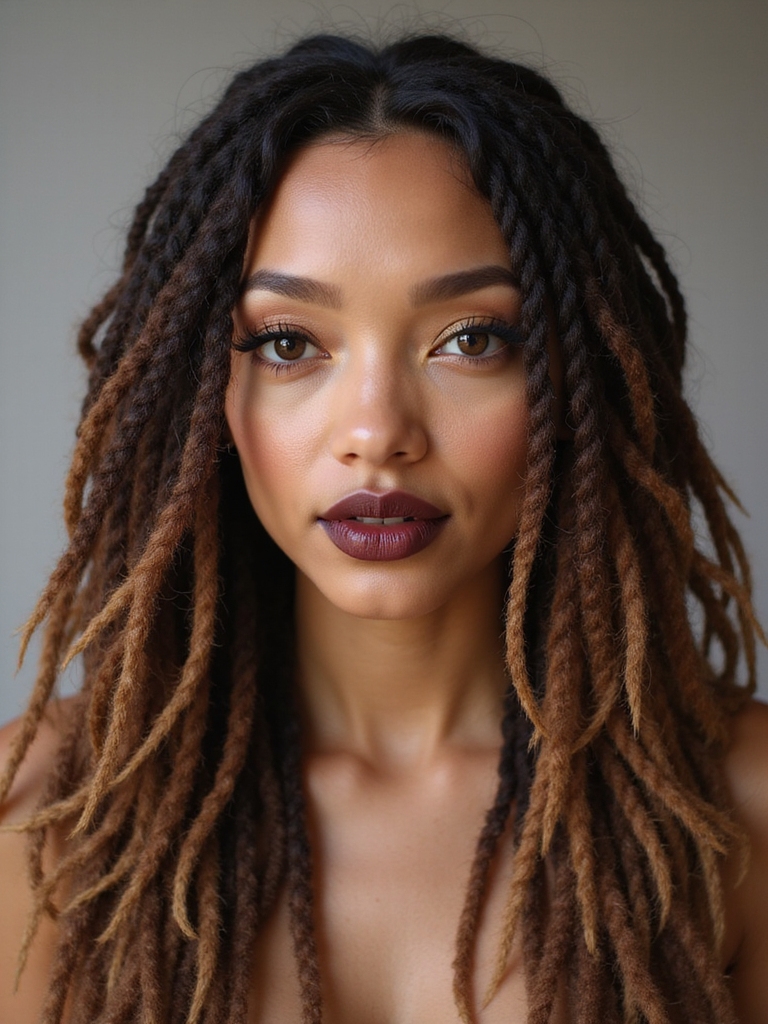
A sharp center part paired with lightly feathered ends gives the style structure without losing its softness. It comes across quiet and put-together, the version most likely to pass a conservative dress code without a second look.
- Ask for feathered ends at the install, or shape them gently at home afterward
- Works especially well for office settings or a minimalist wardrobe
- Worn down and simple, this version lets the clean part do most of the visual work
Soft Locs Worn Down for Everyday Ease
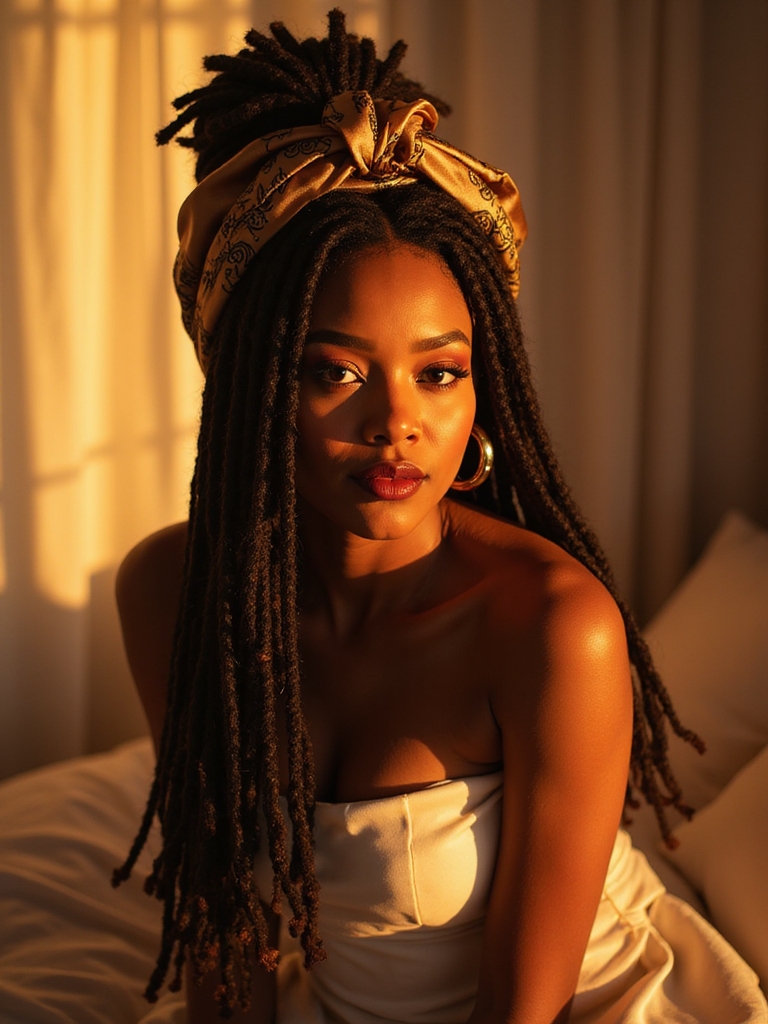
Left loose and unstyled, this is the lowest-effort way to wear the install, and it happens to be kind to both scalp and edges since it involves the least manipulation.
A light mist of water plus a small amount of oil at the scalp keeps everything looking fresh between wash days. Other loc styles follow the same low-manipulation logic once natural hair is ready for its own style again.
- Add a deep side part or a couple of face-framing tendrils for a little shape without real effort
- The default to fall back on between more styled days
- No pins, no heat, no real routine required
Metal-Cuffed Soft Locs for Bold Detail
Metal cuffs slide onto individual locs without any threading, which makes them the fastest accessory option on this list to add or remove entirely. A handful placed near the face catches light differently than beads do, landing more metallic than boho.
Choose cuffs sized for the loc’s diameter so they don’t slip loose during the day, and keep them light. A few well-placed pieces outperform a dozen scattered ones for both comfort and visual impact.
Common Mistakes to Avoid
The single most common mistake is a stylist installing the braided base too tight at the hairline, chasing a neat, uniform look that ends up stressing the edges within the first few days. Gentle tension should always win over a perfectly tidy part line.
The second is skipping nighttime protection: sleeping without a satin scarf or bonnet lets cotton pillowcases fray the wrapping hair and frizz the style well before it’s due for a refresh. The third is overloading with heavy oils, which drag the lightweight locs down instead of keeping them moving.
A Style That Bends to the Day
Worn down, swept to one side, pinned into a crown, or dressed up with flowers and ribbon, this style covers a wider range of moods than most protective options manage.
I tell anyone curious about this style the same thing: bring a realistic sense of your daily routine to the consultation, not just a photo, and let the loctician plan the install time and tension around it.
Worth a Look