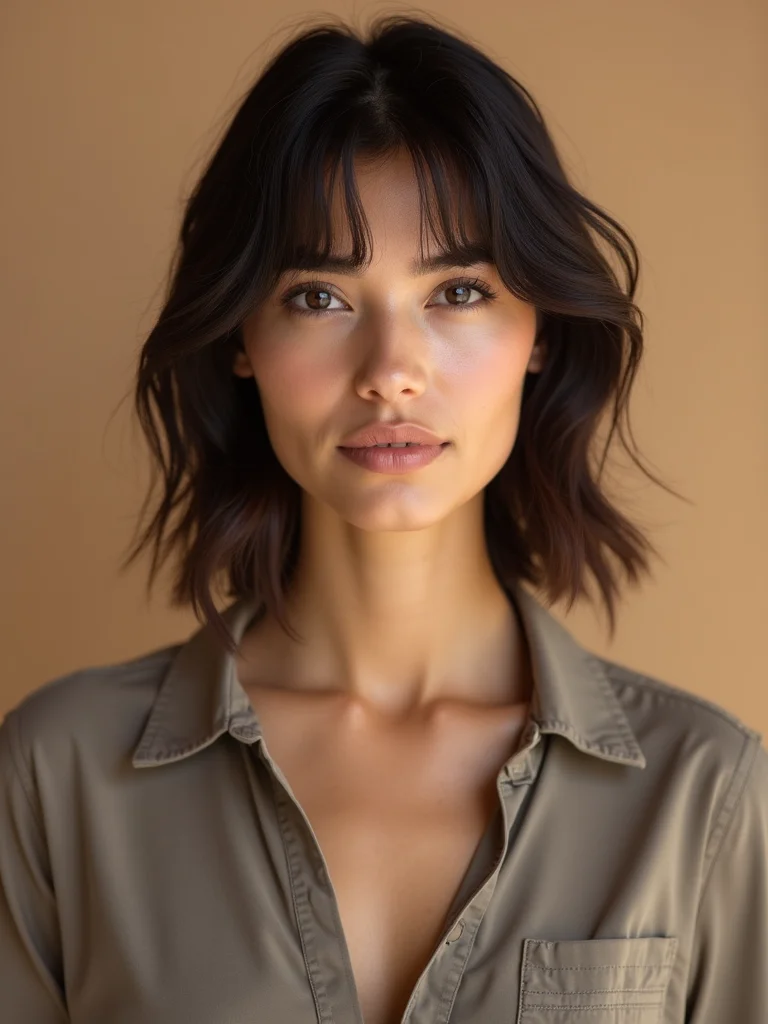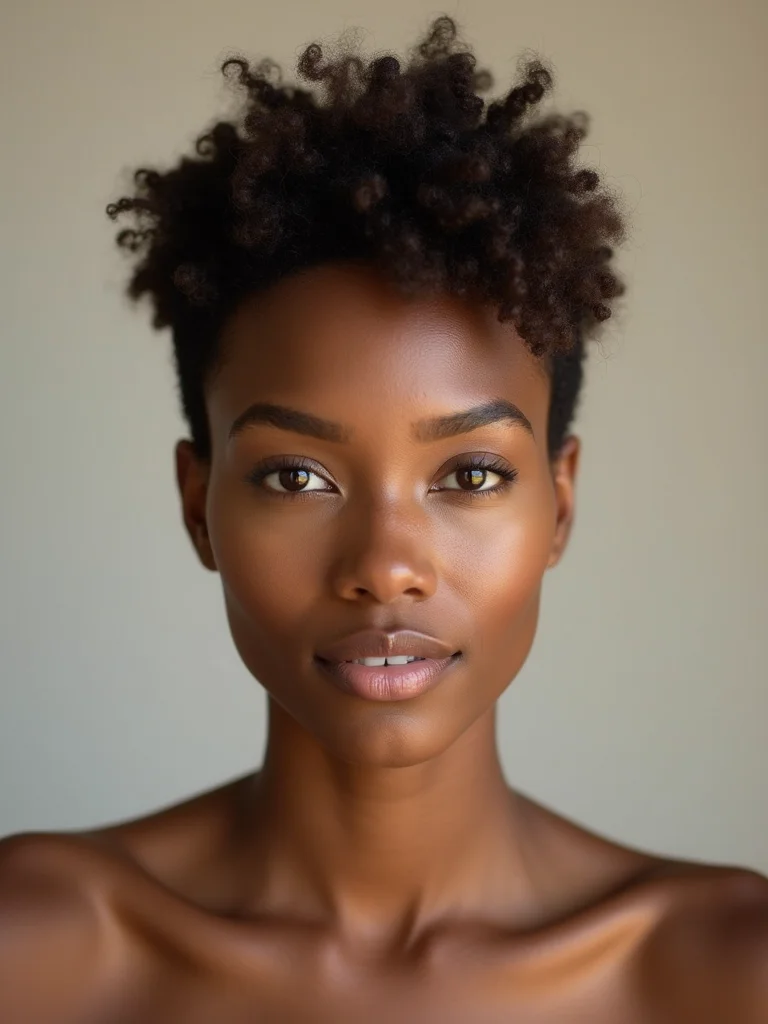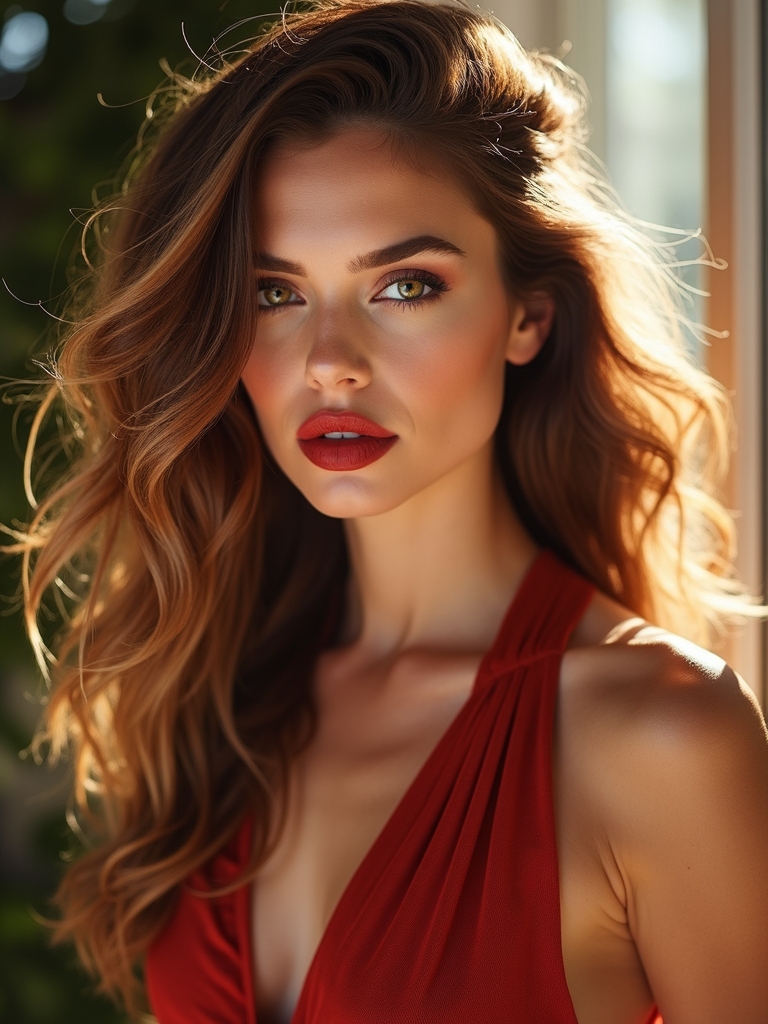
Watch a good feathered cut in motion and the appeal is obvious before anyone explains it: ends that flick back like soft wings, layers that lift and settle again as the head turns, hair that never sits still the way a blunt cut does. Feathered layered hairstyles work this way on almost any length or texture, once the ends are cut and angled correctly.
Fifteen versions follow below, covering the cutting technique, the styling, and the upkeep that keeps that swept movement alive, whichever length or texture you’re starting from.
The Technique Behind the Movement
Feathering is a cutting technique, not a specific length. Fine, angled ends taper so they flick and sweep, usually away from the face, which is what creates that light, in-motion look on anything from a pixie to waist-length hair.
Most pros point to texture as the real variable: fine hair gains the look of body from feathering, thick hair loses bulk, and curls need a dry cut so the flick lands where the pattern actually falls.
Classic Flicked Ends, Away From the Face

This is the original, the cut the whole style takes its name from. Layers are tapered fine and the ends flicked back and away from the face, so the hair frames the cheekbones and sweeps outward in soft wings.
Most stylists point new clients here first, since it works with a little length to flick, anywhere from the shoulders down, and a round brush sets the sweep in a couple of minutes once the shape is right.
Curtain Bangs That Feather Into the Layers

Feathering and curtain bangs pair naturally, since both sweep softly away from the center of the face rather than sitting flat.
Why the Pair Works So Well
The fringe opens to each side and blends into the feathered layers below, so the whole front reads as one airy piece instead of two separate decisions.
Experts map the appeal to a shared cutting logic: fine, tapered ends that move the same direction, whether they’re at the fringe or through the crown.
Lift Without Sacrificing Length on Fine Hair

Fine hair and feathering turn out to be a quiet success story. Light, tapered layers add the look of body and movement that fine hair lacks on its own, since the flicked ends create an impression of fullness rather than actual density.
The trick is restraint in the cutting. Over-feathering thins fine ends into wisps, so soft layering for lift, not aggressive thinning, is what actually builds the look of body.
A lightweight mousse at the root before a round-brush blow-dry holds that lift; heavier creams and oils tend to collapse fine feathering flat within an hour.
Feathering doesn’t add hair. It just lets what’s already there move the way it’s supposed to.
Airy, Swept Movement for Thick Hair

Thick hair is close to what feathering was designed to fix. Tapering and debulking the heavy interior lets all that density move and sweep, instead of sitting like one solid block.
- Ask specifically for interior debulking and feathered ends, not just surface layers.
- Expect a razor or thinning shears through the mid-lengths, not just the very tips.
- Thick hair holds a feathered flick especially well, so a bolder, more dramatic shape works here.
A Swingy Bob With Flicked Ends

Feathering brings real life to a bob. Fine, flicked layers keep the shape from sitting heavy, giving it swing so the ends move visibly when the head turns.
It suits anyone who likes short hair but wants motion over a stiff, blunt line. The flicked ends soften the jaw and frame it at the same time. For more on this shape family, see 90s layered bob.
Keeping the layering concentrated toward the ends is what preserves body at the crown while still letting the perimeter flick freely.
A Feathered Lob With Shag Texture

Pairing a shag’s choppy layering with feathering at lob length produces a cut that reads undone and current rather than dated or overly polished.
- Ask for choppy shag layers, feathered specifically at the ends for soft separation.
- Style with a texture spray and a light flick, skipping a smooth, uniform blowout.
- The most common mistake here is over-thinning; a heavy hand with a razor leaves ends stringy instead of soft.
A Long, Wispy Feathered Cascade

On longer hair, feathering builds a wispy cascade that keeps the full length while adding real movement from the cheekbone down.
- Ask for feathered, face-framing layers that begin around the cheekbone.
- Keep interior layering soft so overall length doesn’t get sacrificed.
- This is the version most requested by anyone growing hair out who still wants movement.
👍What Feathering Adds at This Length
- +Real movement without sacrificing length
- +Softens face-framing pieces around the cheekbones
- +Works on straight, wavy, or loosely curled hair
👎What It Still Requires
- –Needs a stylist comfortable tapering fine ends, not just cutting blunt layers
- –Regular trims to keep the flicked ends from splitting
- –A round brush or diffuser to actually activate the movement
Feathering That Works With Curl and Wave

Curly and wavy hair wears feathering well, but it has to be cut dry, on the natural pattern, so the layers fall where the curl actually sits once it’s finished drying.
- Cut wet, curls spring up shorter than expected and the open movement turns into uneven puffs instead of soft flicks.
- Ask specifically for feathered ends that release the curl, rather than a blunt cut that fights it.
- A light cream, defined and scrunched, sets the flick on curl better than a round brush would.
A Side-Swept Feathered Fringe

A side-swept feathered fringe is the gentlest way to bring this look to the front of the hair, sweeping across the forehead on a diagonal and feathering fine at the ends so it blends straight into the layers behind it.
- Grows out without a hard line, since the feathered ends already blend into the rest of the cut.
- Works on nearly any face shape, which is part of why it’s such a common starting point.
- A round brush directs the sweep back and across during blow-drying.
💡Getting the Sweep to Hold
Blow-dry the fringe in the direction you actually want it to fall, not against it. Fighting the natural fall during styling is the most common reason a feathered sweep won’t hold past midday.
Dimensional Color Through Feathered Movement

Color and feathering amplify each other. Lighter pieces woven through the layers make the movement read even stronger, since the contrast catches the eye as the hair sweeps and flicks.
- Place lighter pieces around the face and through the flicked ends specifically.
- Keep contrast soft for a natural glow, or push it further for a more graphic effect.
- A balayage placement grows out gently alongside the feathering itself. See brown layered hair for more color pairings.
Retro Flicks Framing the Face
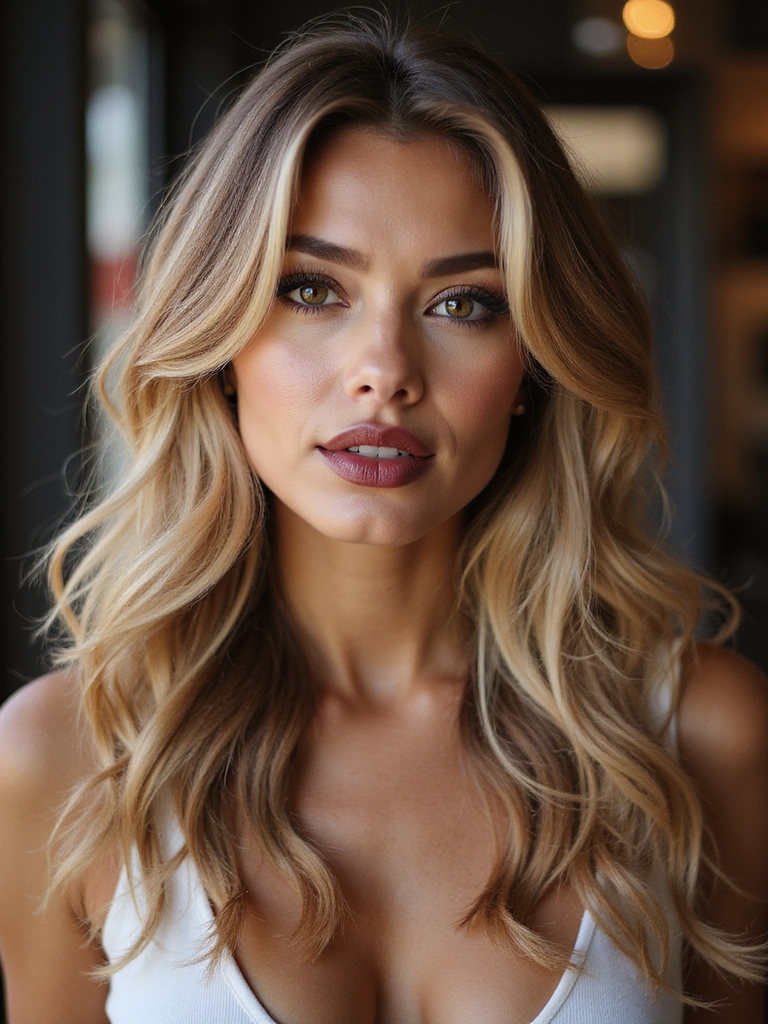
Leaning fully into a seventies silhouette, big feathered flicks around the face make a bold, nostalgic statement rather than a subtle one. For the era that started it, see 60s layered hair.
The face-framing pieces roll back dramatically into soft wings, the exact shape that defined an entire decade and keeps resurfacing.
- Set with a large round brush and a confident hand.
- A blast of cool air or a light hairspray locks the flick in place.
- Midday touch-ups work better with fingers than with more product.
Heatless, No-Tool Feathered Bounce

Hot tools aren’t required to get the flick. Setting feathered layers on heatless rods, foam rollers, or even a loose overnight braid builds bounce and sweep overnight, with zero heat damage.
Letting hair set fully dry before releasing it matters most here; released too soon, the flick falls out by midday.
A light setting spray before rolling helps the bounce hold through a full day, and it’s the routine most often recommended for anyone actively coloring their hair, since less heat means healthier ends.
A Feathered Pixie, Soft and Airy

Feathering softens a pixie considerably. Tapering and flicking the short layers keeps a crop from reading severe, adding airy, piecey movement to what would otherwise be a solid outline.
It suits anyone who likes short hair but finds a completely blunt pixie too sharp for their features.
- Ask for feathered, tapered layers that keep the edges soft rather than crisp.
- Style with a small amount of light paste, pinching pieces apart for separation.
- Grows out more gently than a blunt pixie, since the feathered edges already blend.
A quick gut-check before going this short:
1Are you comfortable restyling every morning?
Feathered pixies need a few minutes of daily shaping; if that’s not realistic, a longer feathered bob asks less of you.
2Do you have features you’re happy to highlight?
A feathered pixie draws the eye straight to the face, so this cut rewards features you’re glad to show off.
A Voluminous Feathered Crown

Concentrating feathered layers at the crown builds soft, lifted volume exactly where hair tends to fall flattest.
Lift That’s Cut In, Not Faked
Shorter crown layers spring upward while the longer lengths sweep down and around them, creating height at the top and movement below it.
The lift is built directly into the cut rather than faked with backcombing, which is what keeps the whole effect looking soft instead of stiff. A little root-lift product and an upside-down rough-dry finish the shape.
A Modern, Softened Feathered Wolf Cut

A wolf cut can read harsh without softening, and feathering is exactly what takes the edge off it.
Softening the Wolf Without Losing the Drama
Feathering the wolf’s heavy, choppy layers turns spiky edges into airy flicks, keeping the bold volume the cut is known for while losing the stiffer, costume-like quality.
It suits anyone drawn to the wolf cut’s drama who still wants hair that moves like hair, not like a styled wig. Feathered ends are the entire difference between the two versions.
How to Get the Look
Whichever version you choose, ask specifically for feathering, not just layers, since the two words don’t always mean the same thing to every stylist. Bring a photo showing how much flick you want at the ends, and say plainly whether you’re a round-brush-every-morning person or someone who wants the cut to mostly do the work on its own.
Plan on around $65 for a basic feathering trim on top of a standard cut, since the tapering itself takes extra time in the chair. Most pros agree the styling habit, whether it’s a round brush or a heatless set, matters more long-term than the cut itself. For more choppy, textured options, see choppy layered haircuts.
Feathered Layer Questions Worth Asking
?Do feathered layers work on thin or fine hair?
Yes, and it’s one of the better options for it. Soft, tapered layers add the look of body and movement that fine hair lacks on its own, as long as the stylist keeps a light hand. Over-thinning is the main risk to watch for.
?How often do feathered layers need a trim to stay sharp?
Plan on a shaping trim on a regular cycle, since grown-out feathering loses its sweep and starts to look shapeless rather than intentional. A quick face-framing trim in between full cuts, often included free at some salons, keeps the front looking crisp.
?Can curly or wavy hair get feathered layers?
Yes, though the cut itself has to change. A stylist working on wet curls is guessing at the final shape, since the pattern pulls up once it dries; feathering only comes across as intended when the shears follow the curl in its resting, dry state.
?What’s the actual difference between feathered layers and regular layers?
The ends. Regular layers just remove length at different points; feathered layers are additionally tapered fine and angled so those ends flick and sweep, usually away from the face. Any layered cut can be feathered, but not every layered cut already is.
Movement That Never Really Left
Feathering keeps resurfacing because it does something few techniques manage this well: it makes hair move on its own, without a single hard line to maintain. Whichever length or texture you’re starting from, there’s a version of this cut built for it. For more of the era it came from, see 90s layered hair.
Bring a reference photo to your next appointment and ask specifically for feathered ends, not just layers. Once the flick sets in, most people say it’s hard to go back to hair that just sits there.
Worth a Look