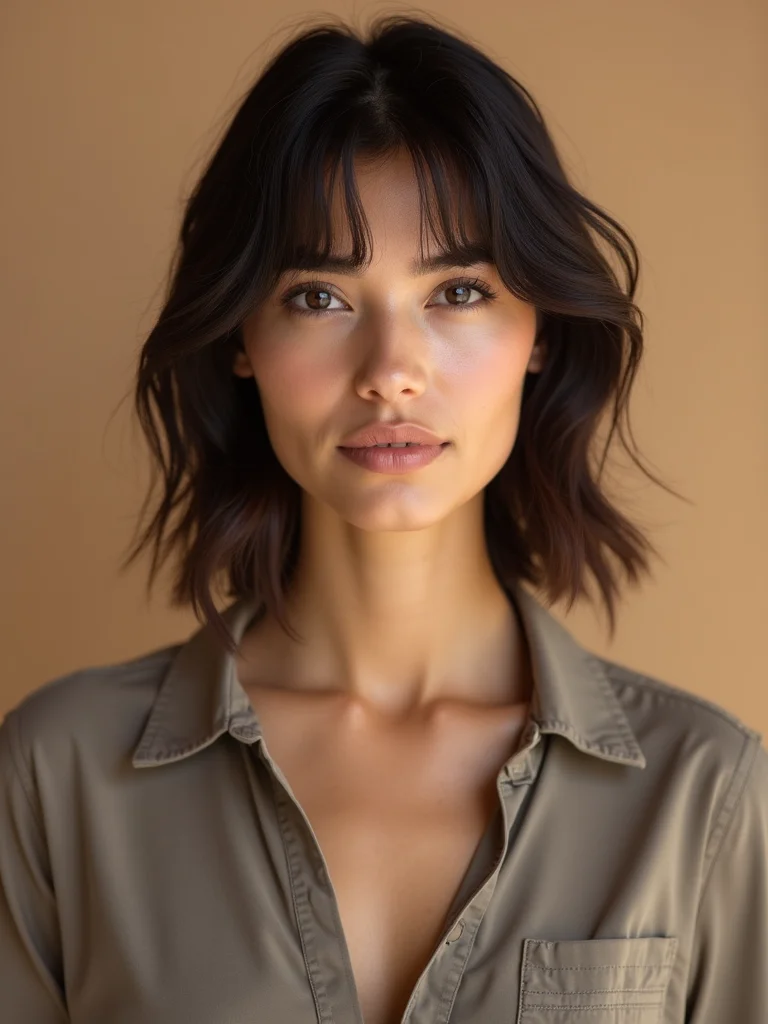
Ask a stylist to run scissors through tight coils for a medium curly shag haircut, and there’s a flicker of hesitation almost every time: will all that layering just collapse into a triangle? Done correctly, the answer is a confident no.
A medium curly shag uses layers to lift and stack curls rather than flatten them, so the shape builds up and out with real energy. Sitting between the chin and collarbone, this length lets curls fall and bounce without dragging under their own weight. The fifteen versions below cover every curl pattern, from airy wolf shags to defined spiral ringlets.
Curly Shag, Quick Facts
- Layers lift and stack curls so the shape springs with real energy.
- Always shaped on dry, already-styled curls, never wet.
- Medium length runs chin to collarbone, giving curls room to bounce.
- Curls hide regrowth well, so this shape can stretch toward three months between trims.
Curly Wolf Shag With Airy Layers
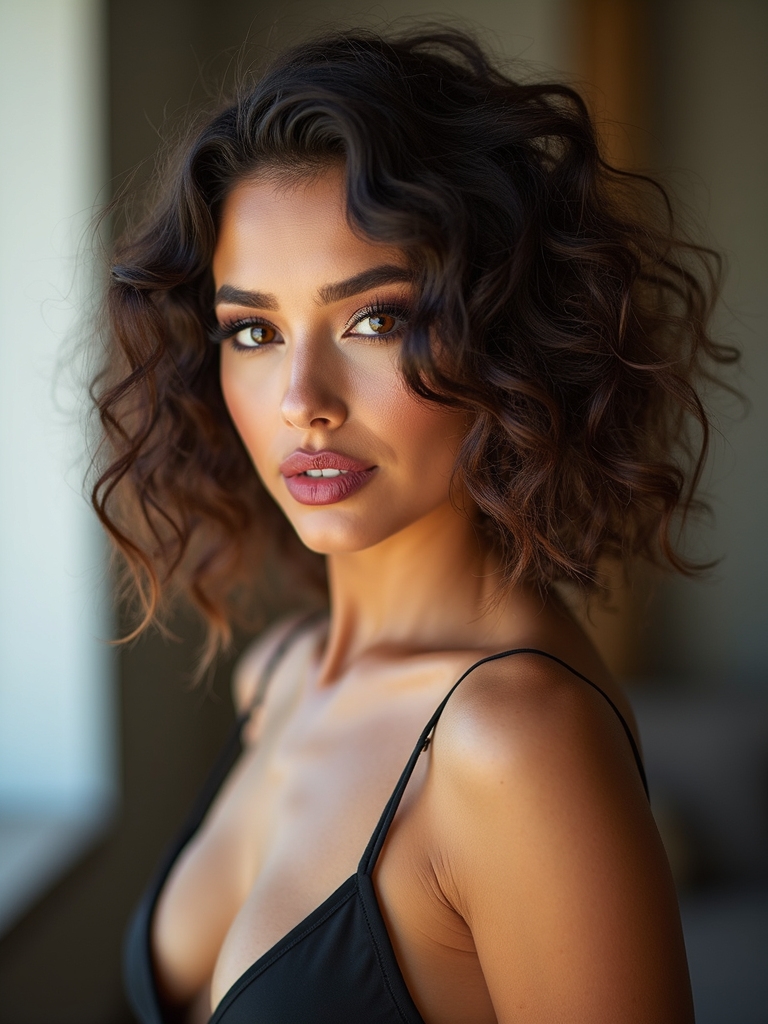
A curly wolf shag borrows the heavy disconnection of a wolf cut and pairs it with airy, stacked layering, so coils at the crown lift while the lengths underneath stay long and loose. It’s bold and a little rock-and-roll, working surprisingly well on curls since all that layering keeps weight off the bottom section.
- The shorter, layered crown gives coils real height and bounce.
- Longer underneath lengths preserve the shaggy, dramatic silhouette.
- Shaping happens dry, so a stylist can place each layer where the curl falls.
Mid-Length Curly Shag With Curtain Bangs

Curtain bangs suit curly hair especially well, since they grow out softly and never demand the precision a blunt fringe requires. On a mid-length curly shag, they part at the center and curl back along the cheekbones, building a soft, bouncy frame around the face.
This pairing suits nearly every face shape and texture, whether the pattern is a loose wave or a tight coil, as long as the cutting happens dry so a stylist can see exactly where each curl will land once it springs into place.
Styling the bangs with whatever product routine already works on the rest of the curls, then letting everything air-dry together, keeps the whole shape reading as one connected look.
Tousled Curly Shag With Face-Framing Curls

A tousled curly shag keeps things soft and undone, with face-framing curls falling loosely around the cheeks and jaw. The layers break up bulk so the curls read airy, lifting away from the head the way curls naturally do once they have room to move.
A Wash-and-Go Kind of Shape
This is the relaxed, everyday version of the cut, well suited to anyone who wants their curls to look easy without a long daily routine behind them.
Scrunching a moisturizing leave-in followed by a light gel into fully saturated hair, then air-drying and lifting gently at the roots, builds the volume this version relies on.
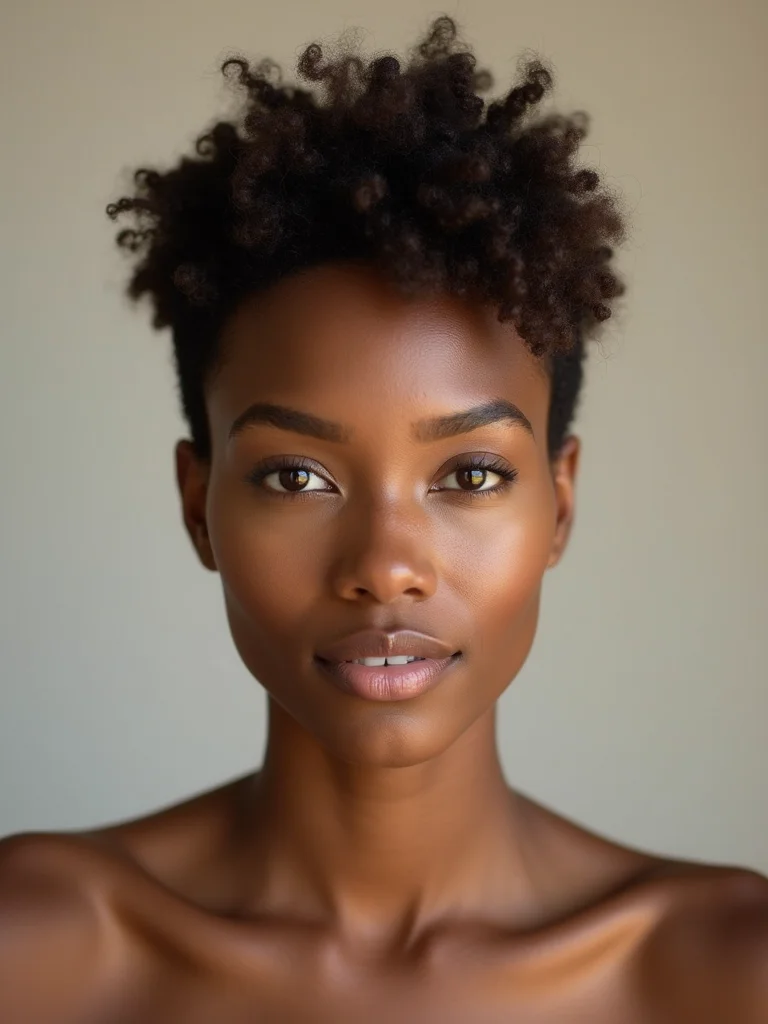
Coily Medium Shag With Crown Volume

On tight coils, a medium shag stacks layers at the crown to build rounded, lifted volume exactly where it’s needed most. Shorter top pieces give the coils height, while longer lengths keep the overall shape balanced through the sides.
Coily patterns shrink more than any other texture, often by half or more once dry, which makes a dry cut essential here rather than optional. A wet cut on coily hair almost always finishes shorter than intended.
Gentle detangling with a wide-tooth comb on wet, conditioned hair, followed by a rich leave-in and a curl-defining custard, keeps the coils healthy through the whole styling process.
Shattered Curly Shag With Piecey Ends

A shattered curly shag chops the ends into separated pieces for a bolder, more broken texture. On curls, this creates defined, distinct coils with clear separation between them, giving the whole cut an edgy, modern feel.
This approach works best on looser curls and waves, where the separation shows clearly. On tighter coils, asking for a softer version of the same technique keeps the ends looking full and defined.
- Best suited to loose-to-medium curl patterns that show separation well.
- A gel applied for hold, then scrunched out once dry, defines the pieces.
- Keeping the ends well-conditioned matters, since chopped curl ends dry out faster.
Worried a shag will wreck your curl pattern? Neither common fear holds up.
❌ Myth: Layers always make coily hair look thinner.
✅ Reality: Layering removes bulk, not density. The coils still cover just as much visual area; they simply move more freely.
❌ Myth: A curly shag needs constant styling to look intentional.
✅ Reality: Once shaped correctly, most versions rely on a wash-and-go routine, not daily heat or heavy product.
Curly Medium Shag With a Rounded Shape

Not every curly shag needs to lean edgy. Internal layering can shape curls into a soft, rounded silhouette instead, the more polished end of the spectrum. This layering builds an even, balanced shape that frames the face without the triangle untrimmed curls can form.
This version suits anyone who wants curly hair to look put-together for a workday, since the rounded shape reads tidy while still moving freely.
Diffusing on low heat sets the shape quickly, or air-drying and gently lifting the roots by hand achieves a similar result with a little more patience.
Soft Curly Shag With a Wispy Fringe

A wispy curly fringe softens a medium shag right at the front, with light, feathered curls falling gently onto the forehead. It’s gentler than a blunt curly fringe and grows out gracefully, making it a low-risk way to add a fringe to curly hair for the first time.
This fringe style frames the eyes and softens strong angles, suiting most curl patterns as long as it’s cut with a light hand.
- Ask specifically for a soft, wispy fringe, kept light and airy.
- Define it with the exact same product used on the rest of the curls.
- Pin it back easily on wash days, or let it spring forward on its own.
Spiral Curly Shag With Defined Ringlets

A spiral curly shag centers entirely on definition, with stacked layers that let tight ringlets coil and spring at every length. The layering gives each ringlet room to form fully, so the curls read clear and springy with real separation between them.
- Well suited to anyone who wants their ringlets to be the main event.
- A generous leave-in followed by gel, applied to soaking-wet hair, builds hold.
- Raking and scrunching before letting curls dry undisturbed encourages the spiral shape.
Deciding between a soft fringe and none at all? Weigh these two.
🎯Wispy Curly Fringe
Low commitment, grows out softly, minimal daily upkeep.
🎯No Fringe
Full length kept up front; simpler single-texture styling.
Curly Shag With Side-Swept Bangs

Side-swept curly bangs cast a soft diagonal across the face, flattering round and full face shapes by adding both length and angle. On a curly shag, the swept fringe settles into the surrounding face-framing layers for a soft, slightly asymmetric frame that feels current and easy.
- The diagonal line visually lengthens and slims a rounder face shape.
- Trains easily with fingers alone as it air-dries, no tools required.
- Kept long enough, it blends naturally into the curls as both grow.
Voluminous Curly Shag With Tapered Sides

When curls tend to grow wide at the sides more than tall through the crown, tapered sides bring back the balance. A voluminous curly shag keeps height and fullness through the crown while the sides taper closer to the head, keeping the overall width in check.
This is a practical fix for dense, thick curls that tend to build outward as they grow, concentrating all the volume up top where it actually flatters.
- Tapered sides stop curls from widening into a triangle shape.
- Crown volume keeps the overall silhouette lifted and balanced.
- Asking for a soft taper keeps it blending naturally with the curl pattern.
Wavy Shag With Beachy Movement

For looser waves, a shag builds relaxed, beachy movement through soft layering that lets the natural bend fall on its own. This is the easiest curly shag to wear for anyone whose texture leans more wave than coil, since the layers add shape without needing much active definition.
A salt-based spray or a light mousse, followed by an air-dry, is usually enough to bring the movement out fully.
- Best suited to wavy and loosely curled textures specifically.
- Mist a salt spray onto damp hair and scrunch gently to activate the bend.
- Air-drying produces the softest, most natural version of this finish.
The goal with a curly shag isn’t forcing the pattern into submission. It’s giving it enough room to actually do what it already wants to do.
Curly Mullet-Inspired Medium Shag

A curly mullet-inspired shag keeps more length in the back while the crown and sides layer shorter, a bold, retro-leaning shape that’s made a real comeback. On curls, the contrast between the lifted top and the longer back reads playful and confident.
- The layered crown builds lift; the longer back preserves the mullet silhouette.
- Defining the curls throughout keeps the shape reading intentional, not accidental.
- Shaping happens dry so the crown and back balance once curls spring up.
Worn-In Curly Shag With Root Lift

A worn-in curly shag leans into soft, relaxed texture with a bit of extra lift built in at the roots, giving curls body starting from the base rather than just the ends. The layering keeps the shape moving, while the root volume stops curls from sitting flat against the head on second-day hair.
Building Lift Without Extra Effort
This is the low-effort version that still looks intentional even on days with barely any styling behind it, which makes it a favorite for busy mornings.
Clipping the roots while damp, or gently lifting them by hand as they dry, builds that soft base volume without any additional product.
A couple of terms that come up in this consultation:
📖Dry cut
Shaping curly hair after it’s fully dry and styled, so a stylist works with the true, sprung pattern.
📖Curl pattern
The specific shape a section of hair naturally forms, ranging from loose waves to tight coils.
Balanced Curly Shag With Internal Layers

For very dense curls, internal layering removes weight from the inside while the outer silhouette stays full. A balanced curly shag relies on this hidden layering to keep curls moving, lifted, and actually light.
Why “Internal” Is the Key Word Here
Visible, chopped layers can thin dense curls in a way that looks patchy and uneven, so asking specifically for hidden, weight-removing layers avoids that outcome entirely.
This approach suits anyone whose curls feel like more volume than they know what to do with, keeping every bit of the pattern intact while losing the excess bulk underneath.
Curly Shag With Micro Bangs and Bounce

Curly micro bangs make a daring, fashion-forward statement, with a short, springy fringe set high on the forehead to echo the bounce of the shag beneath it. Paired with a bouncy curly shag, the whole look reads playful and unmistakably bold.
- Curls shrink a great deal, so micro bangs need extra-careful cutting to land right.
- This shape flatters strong brows and a balanced forehead especially well.
- Plan on shaping visits on a tight, roughly two-week cycle to keep the length sharp.
Common Mistakes to Avoid
Cutting curly hair wet is the single most common misstep, since curls stretch out and hide their true length while wet, only to spring up shorter than expected once dry. A shag cut this way often ends up choppier and shorter than intended.
The second mistake is over-thinning visible layers on very dense curls, which can leave patchy, thin-looking sections where volume should be. Asking specifically for internal, hidden layering avoids this on thick or coily hair. A full curly shag cut typically runs around $85, more with a deep-conditioning add-on for the ends.
Medium Curly Shag Haircut, Answered
?Should a curly shag be cut wet or dry?
Dry, in nearly every case. Curls held wet appear longer than their resting length, so a wet cut risks finishing noticeably shorter than planned once everything springs back up. Shaping section by section on already-dry hair lets a stylist see exactly how each curl actually falls before placing layers.
?Will a shag make curly hair frizz more?
Not when it’s cut and styled well. Good layering lifts weight off the curls so they can form cleanly, and frizz is usually a moisture or styling issue, not something the cut itself causes.
?How much length does a curly shag actually take off?
Less than it might look in photos, since photographed curls are often stretched or diffused for extra visible length. The layering removes bulk more than overall length, so shape is really what’s changing here, more than day-to-day perceived length.
?Can fine, loosely wavy hair wear a curly shag too?
Yes, and it’s actually one of the easier textures to style this way, since looser waves need less definition work to look finished. The layers still add shape, just with a softer, more relaxed result than on tighter coils.
?What actually keeps a curly shag from turning into a triangle shape?
Layering placement matters more than layering amount. Weight needs to come out from the sides and interior specifically, not just the ends, so the shape stays evenly rounded from top to bottom.
Let Your Curls Take the Lead
A medium curly shag works because it lets a natural pattern do what it already wants to do, lifting and springing with help from the layering. Whether the texture is loose waves, defined ringlets, or tight coils, there’s a version here built around that specific pattern.
Two things matter most for getting it right: insist on a dry cut, and be specific with a stylist about the real curl pattern and how much volume is actually wanted.
More Worth Saving