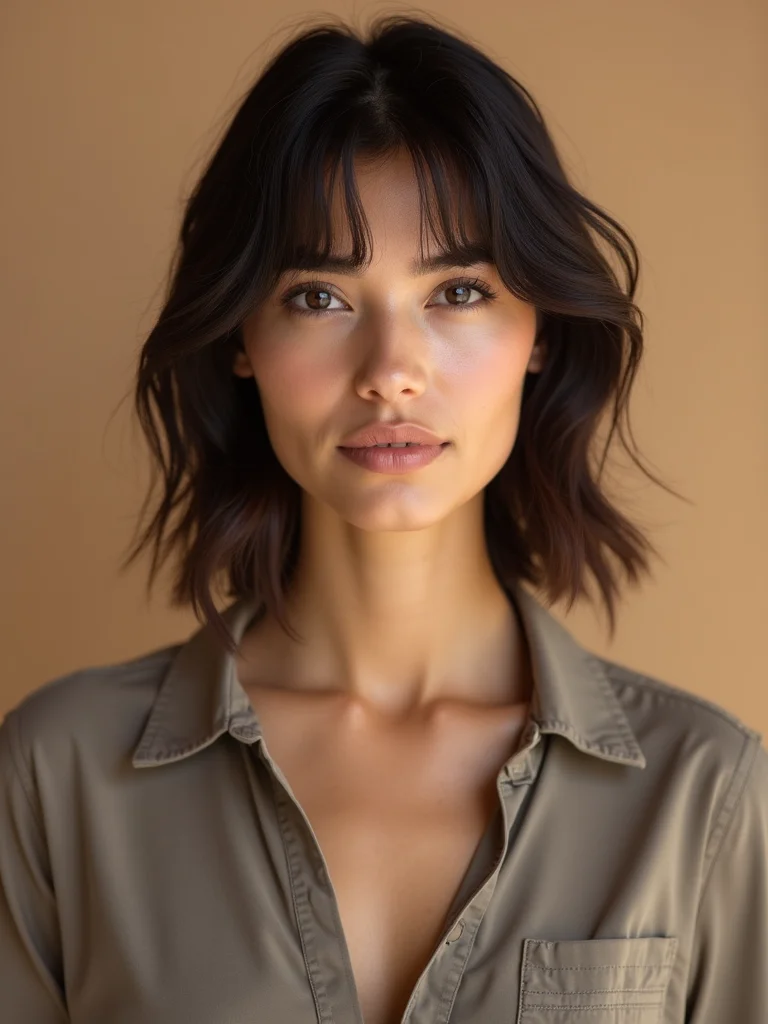
By the third week of August, the same medium bob haircut and a sea-salt spray look like they were never touched by a flat iron. Come December, that identical length turns sleek and glassy under a wool coat collar. One cut, two completely different moods, decided almost entirely by product and finish.
Fifteen versions of that same length follow, grouped by which season they suit best, with notes on fine, thick, and curly hair so the right version actually matches the climate and texture in play.
Medium Bob Haircut, Quick Facts
Why does one length work across every season? The cut stays fixed; only the finish changes, smoothed and glassy in cold months, tousled and air-dried in warm ones.
Does hair texture change which version suits best? Yes. Curly hair needs a dry cut, fine hair needs the layers kept high and soft, and thick hair needs some internal weight removed regardless of season.
How often does the shape need a trim? A bob shows regrowth faster than longer hair, so most people are back in the chair within about two months, sooner for a fully blunt line.
Sleek Blunt Bob for Cold-Weather Polish

By the time indoor heating kicks in, a sleek blunt bob earns its keep. Flat-ironed smooth with one clean perimeter line, it looks polished under low winter light and tucks neatly under a scarf without losing its shape.
Cold, dry air actually cooperates with this finish, since there’s less humidity working against the smoothing. A blunt perimeter carries the whole look; one unbroken edge looks sharpest when every strand falls exactly where it was cut.
Flat-iron in small sections, then run a shine serum through the mid-lengths and ends to seal the surface. A weekly gloss treatment keeps the shine from dulling as the season wears on.

Textured Lob for the In-Between Weather

A textured lob, cut at the collarbone with a soft wave running through it, works exactly when the weather can’t decide what it’s doing. The extra length holds a relaxed bend that doesn’t ask for much daily correction.
A large-barrel wand or a few overnight braids builds the wave, then a finger-rake breaks it up. A light texture spray keeps the movement alive without turning stiff by afternoon.
Chin-Grazing Bob With Face-Framing Layers

At the shorter end of the medium range, face-framing layers carry nearly the entire look no matter what the thermometer says outside. Lighter pieces trace the cheekbones and jaw, softening the angles and drawing the eye upward.
Why the Framing Works Regardless of the Month
This length runs cooler against the neck, which matters once the weather turns warm, and the framing still looks polished when a colder stretch calls for something tucked-in and neat.
Blow-drying with a round brush curves the framing pieces toward the face and tucks the ends softly under.
A quick check before choosing a version:
1Do you run warm or cold most days?
Warm-running hair tends to do better with shorter, lighter versions; cold-running hair holds a sleek finish longer.
2Is your hair naturally curly, wavy, or straight?
Texture decides more about which version suits than the season actually does.
Tousled Bob for Peak Summer Humidity

When humidity climbs, fighting it stops being worth the effort. A tousled bob leans directly into the texture that hot, damp air creates instead of smoothing it away.
The whole routine is heat-free: mist damp hair with a sea-salt spray, scrunch, and let it dry on its own while the rest of the morning happens. Second-day hair hides easily inside this much texture.
A curl-friendly version of the same idea lives in textured bob, for anyone whose natural pattern already leans this direction.
Curtain Bangs That Work Year-Round

Curtain bangs sit comfortably across every season, one reason they’ve held on this long while other fringe trends cycled through. The center-parted fringe sweeps back into the lengths, framing the face without the upkeep a heavier, blunt fringe would demand.
In warmer months they blend straight into beachy texture; in colder ones they sweep back cleanly under a hat with barely any adjustment. Most face shapes take to them well, and the grow-out is forgiving enough that trying them carries little risk.
A round brush sweeps them back and away from center for the soft, parted look, and most days they settle into place without much more effort than that.
Angled Bob With a Subtle A-Line

A subtle A-line, where the front sits just a touch longer than the back, gives a medium bob built-in structure that holds up regardless of weather. The slight forward slope keeps the line looking sharp even on a windy day.
How Much Angle to Ask For
The longer front pieces flatter and slim the face, and lift builds naturally at the crown where the back sits shorter. It’s a step up in architecture from a one-length cut without going dramatic.
Asking specifically for a soft A-line keeps the result looking current.
| Season | Finish | Why It Works |
|---|---|---|
| Cold months | Blunter, flat-ironed, sealed with shine | Low humidity helps a smooth line hold |
| Warm months | Softer layers, air-dried, light texture spray | Movement absorbs humidity frizz into the texture itself |
Layered Bob for Fine-Hair Volume

Fine hair loses its lift fastest of any texture, especially once a hat or humid air flattens it further. Soft internal layers are the fix, adding bounce while the perimeter stays visually full.
In humid stretches a light mousse holds the shape; in dry, colder air a hydrating cream keeps static and limpness in check. Either way, fine hair rewards a light hand with product far more than a heavy one.
Lifting the roots with a round brush during the blow-dry builds most of the volume, with the hidden layers doing the rest quietly underneath.
Air-Dry Wavy Bob for Warm Mornings

An air-dry wavy bob skips heat tools entirely, which matters most on the mornings when adding a blow-dryer to an already-warm day sounds unbearable.
The natural wave pattern dries into soft, relaxed movement on its own, with the right product doing the shaping work a hot tool would otherwise handle.
- Apply a wave cream to soaking-wet hair, then scrunch.
- Let it dry undisturbed; touching it while wet invites frizz.
- Finish with a drop of oil on the ends once fully dry.
Deep Side Part for Instant Lift

A deep side part is the closest thing to free volume on this list. Parting the hair well to one side lifts the roots and adds a flattering diagonal across the forehead.
This trick earns its keep most in colder months, when a hat has usually flattened everything underneath it by midday, though it works just as well on any ordinary morning.
- Set the part while the hair is still damp for the most lift.
- Part against the hair’s natural fall for extra root volume.
- Especially flattering across round and square face shapes.
Curly Medium Bob With Defined Coils

A curly medium bob lets each coil spring into a full, defined shape, with the medium length giving curls room to fall before shrinkage takes over.
Shaping happens curl by curl on fully dry, unstretched hair, letting the stylist see exactly how far each one will spring back before committing to a length. Texture needs shift with the weather too: a stronger hold product defines curls when it’s humid, while extra moisture matters more once the air turns dry.
- A curl cream or gel on soaking-wet hair defines the shape before diffusing or air-drying.
- A water-and-leave-in spray refreshes curls between wash days.
- A satin pillowcase or bonnet protects the shape overnight.
Shaggy Bob With Feathered Ends

A shaggy bob with feathered ends brings a cooler, worn-in texture that suits the colder half of the year particularly well. Choppy layers add movement and an undone edge, the textured opposite of a sleek, glassy finish.
It’s a low-effort style that disguises regrowth and second-day hair, which matters more once busy fall and winter schedules kick in. Thick and wavy textures take to a shag especially well.
A texture spray and a rough finger-dry are close to the entire styling routine, no further tools required.
A few terms that come up when booking this cut:
📖Point-cutting
A vertical snip into the hair’s ends rather than a straight horizontal line, which breaks up the perimeter into softer, separated pieces.
📖Feathering
Very fine, wispy layers concentrated right at the ends, used to lighten the line without touching the overall length.
Inverted Bob With a Stacked Back

An inverted bob stacks the back shorter while the front runs longer, building volume behind the crown that holds its shape across the calendar.
Who the Stacked Shape Suits
The stacked nape gives lasting lift, so the cut keeps its structure whether it’s worn smooth in colder months or textured in warmer ones. Fine or flat-leaning hair benefits most, since the built-in structure does volume work that styling alone can’t always manage.
A round brush rounds out the stacked back for extra lift, and the longer front pieces still handle the framing on their own.
Center-Part Bob for a Minimalist Look

A clean center part gives a medium bob a calm, modern symmetry that stays consistent regardless of the month. Splitting the hair evenly down the middle suits balanced and oval face shapes especially well. A few notes on wearing it:
- Set the part precisely down the middle while the hair is still damp.
- Smooth each side for the polished version, or add a wave for something softer.
- Pairs equally well with warm-season texture and cold-season shine.
A center part on a medium bob is one of the lowest-effort ways to make a cut look deliberate. It photographs well from nearly every angle, which is unusual for something this simple to maintain.
Medium Bob With a Micro Fringe

A short micro fringe adds a bold, current edge to an otherwise classic medium bob. The high, blunt baby bangs sit in deliberate contrast against the longer lengths around them.
What the Upkeep Actually Looks Like
The honest tradeoff is upkeep: micro bangs sit high on the forehead and need trimming often to stay blunt, and they shrink up noticeably shorter on very curly hair than on straight hair.
They flatter strong brows and a balanced forehead especially well. A softer, longer fringe gives a gentler version of the same idea for anyone hesitant about the commitment.
Glossy Bob With Rounded, Curled-Under Ends

A glossy bob with rounded, curled-under ends is the retro-leaning classic that looks especially rich under cold-weather light. Building that mirror shine at home takes a few specific steps:
- Dry each section over a large barrel brush, curving the tips inward at the very end.
- Seal with a shine serum, or book a quick salon gloss for extra reflection.
- Finish the curved ends with a blast of cool air so the bend holds through the evening.
Common Mistakes to Avoid
The most common misstep is treating a medium bob as one fixed look, when the whole appeal is a length built to adapt. Smoothing it flat every single day regardless of season fights the hair’s natural texture and adds unnecessary heat exposure across the year.
The second is ignoring texture at the cut stage: asking for the same layering on curly, fine, and thick hair produces three different results. A standard cut is usually a 45-to-60-minute appointment, often landing somewhere around $65, longer and pricier if debulking or heavy layering is involved. Naming a hair type and a realistic styling routine at the consultation carries more weight than handing over a single reference photo.
Medium Bob Haircut, a Few Specifics
?Does a medium bob actually need different care in summer versus winter?
Mostly just styling, since the cut itself stays the same. Warm months lean on air-drying and texture spray; cold months lean on flat-ironing and shine serum. The underlying shape carries through both without any change at all.
?Can the same medium bob go from sleek to beachy without a fresh cut?
Yes, and that flexibility is really the whole point of choosing this length in the first place. A change in finish and product shifts the whole mood without a trip back to the chair, which isn’t true of most shorter cuts, and it makes the length feel like better value over a full year.
?How does curly hair change what to ask for?
Curly hair needs the cut shaped dry, one ring at a time, with the natural spring-back factored in before any length gets removed. Skipping that step is the most common reason a curly bob comes out shorter than expected, sometimes by more than an inch.
?Is a micro fringe a big commitment on a medium bob?
More than most people expect going in. It needs trimming often to stay sharp, and it behaves differently across textures, so trying a softer, longer fringe first is worth it for anyone hesitant.
One Length, Every Month of the Year
A medium bob’s real advantage isn’t any single finish. It’s how little the length itself has to change while the styling adapts around it, month after month.
Bring a photo of the finish that matches the current season, mention the texture actually growing on your head, and let the same cut carry through the rest of the year.
Keep Reading