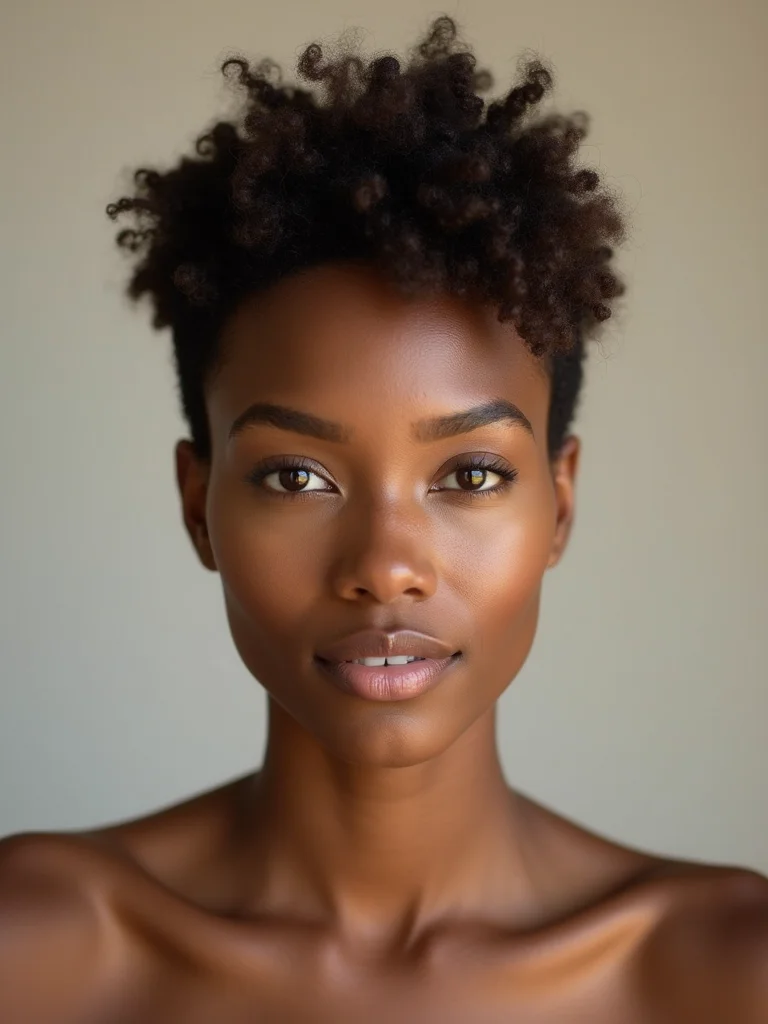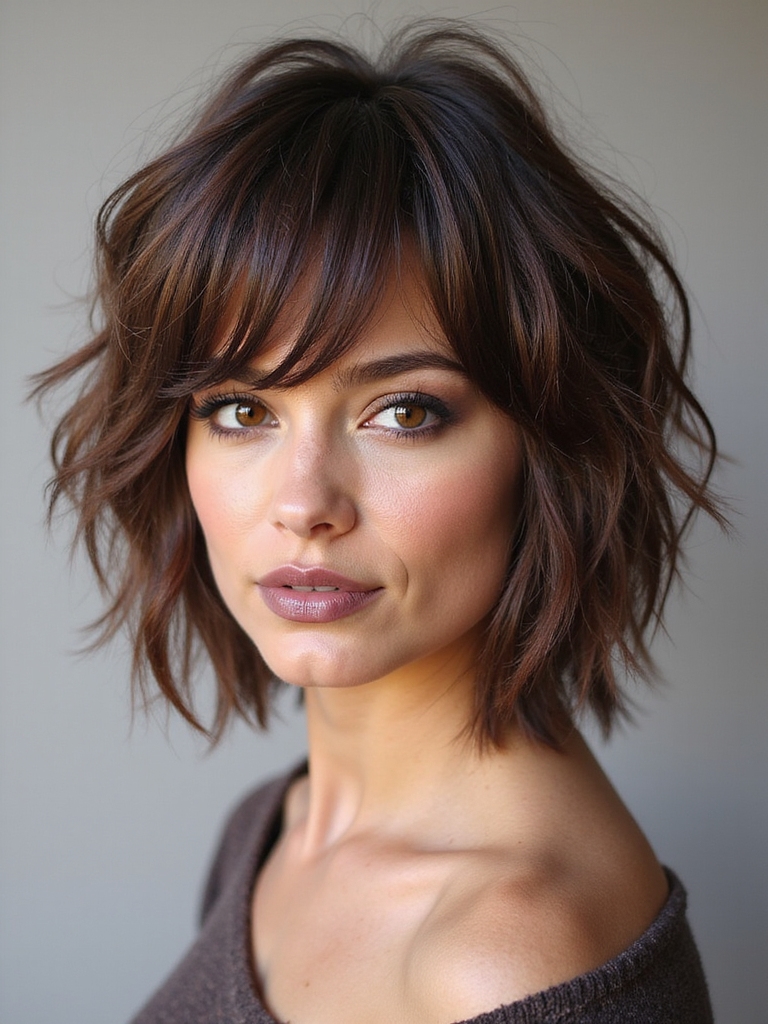
What actually makes a haircut low-effort: the cut itself, or the twenty minutes you spend on it every morning? Short shaggy haircuts answer that with the cut. Heavy internal layering does the shaping before you ever pick up a brush, so a rough-dry and a little product finishes what the scissors started.
Fifteen versions follow below, sorted by face shape, texture, and how much boldness you’re after, plus the everyday habits, product, color, and trim rhythm that keep the cut looking sharp well past the first week.
Quick Answers on Short Shaggy Cuts
What actually makes a short shag low-maintenance? The layering removes most of the styling work up front, so a rough-dry and a little product is close to the whole daily routine.
Does a short shag suit every hair type? Texture, wave, and coarseness give it built-in body; straight or very fine hair can still wear it, just with a bit more product to fake the same volume.
How often does it need a trim to stay sharp? Expect a shape-up on roughly a six-to-nine-week cycle for most versions, with a shorter fringe or micro-length crop asking for a faster rhythm than that.
A Chin-Length Bob With Wolf-Cut Texture
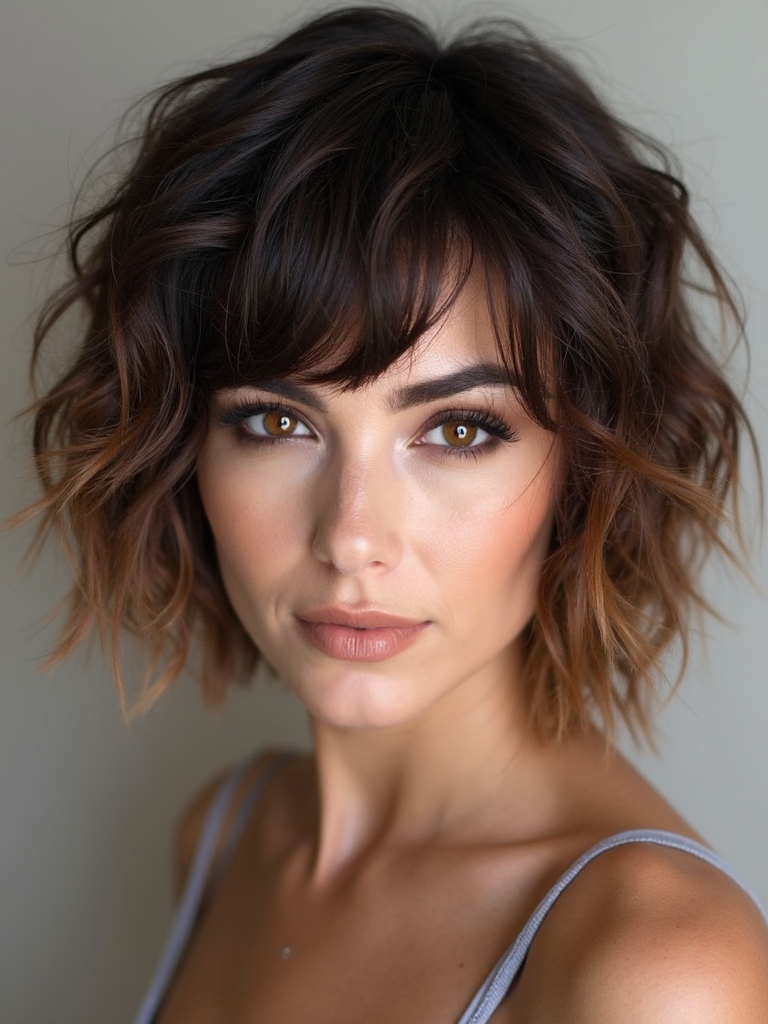
Start here if you want the most wearable version in this lineup: a chin-length bob crossed with the heavy layering of a wolf cut. The familiar bob outline stays recognizable, but it’s filled with choppy, voluminous texture that reads polished from across the room and undone up close.
The Easiest Entry Point
The chin length keeps it office-appropriate, and the outline holds up well as it grows, blending toward a shaggy bob instead of collapsing into a shapeless stage first. Thick hair especially benefits, since the internal layering gives the bob shape somewhere to put all that density.
You’ll notice this version asks the least of your morning of anything on this list: rough-dry with a texturizing spray, break the pieces apart with your fingers, and you’re done.

A Tousled Pixie Shag, Bold and Barely-There
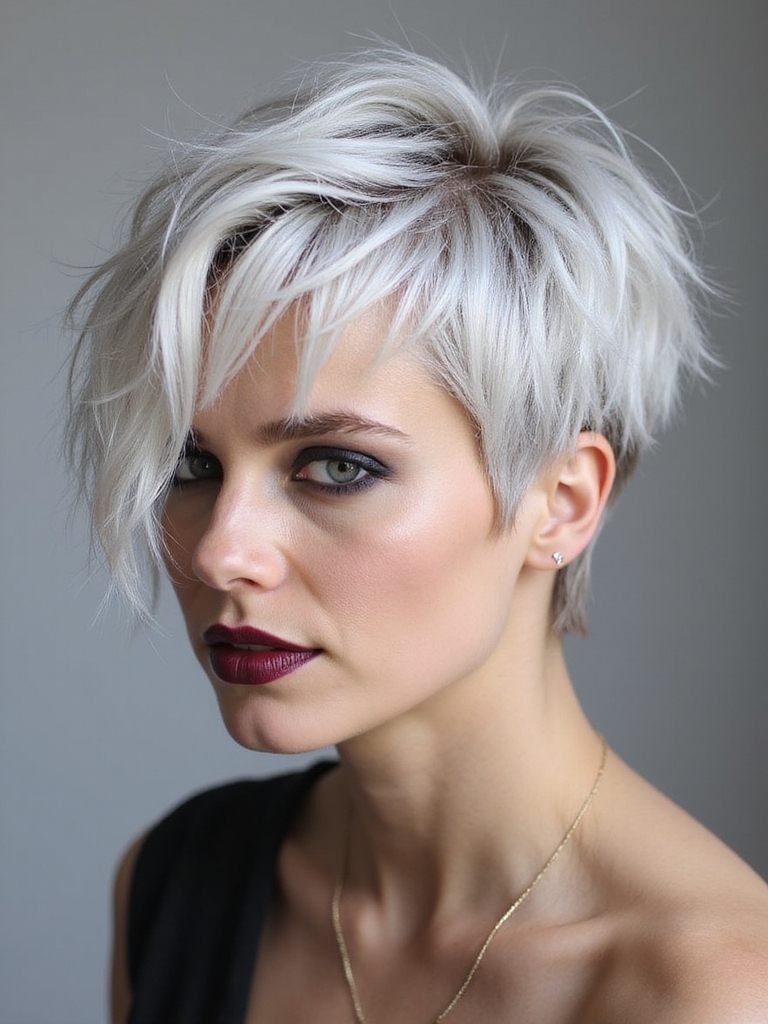
Take the length all the way down to a crop and you land on the pixie shag, the boldest everyday option here. It keeps the same broken-up, piecey layering as the longer versions but in pixie proportions, so it dries in moments and asks almost nothing of your morning.
- Puts your face and features fully on display, so it suits confident features
- A close cousin of the shaggy pixie, just worn softer and more tousled
- Trims come around faster than almost anything else in this lineup
A Short Curly Shag Worn in Its Own Pattern
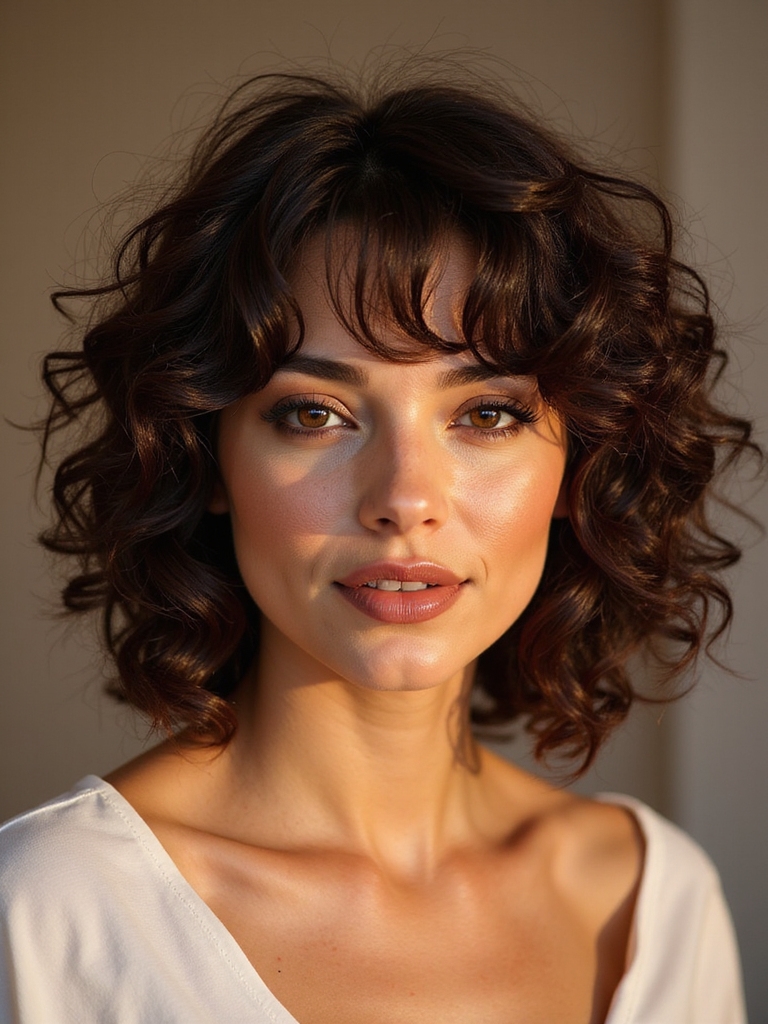
Curls bring this cut to life with almost no effort from you, since the layering gives your natural spring somewhere to go and shapes around it. Everything hinges on the cutting, though: a stylist measures each curl’s true, sprung-back length on dry hair, which is the only way this shape lands where it should.
- Hydrate with a curl cream, scrunch, and let it air-dry
- Tighter, coily patterns turn this into a true wash-and-go
- Refresh day two with a spray of water and a small amount of cream
🅰️Wet-Cut Curly Shag
Length looks even while soaked, then springs up unevenly once it dries, the classic mismatch between what you saw in the mirror and what you get home with.
🅱️Dry-Cut Curly Shag
Each curl gets shaped at the length it actually holds after it bounces back, so the shape you leave with is the shape that stays.
A Wavy Micro-Shag With Bottleneck Bangs
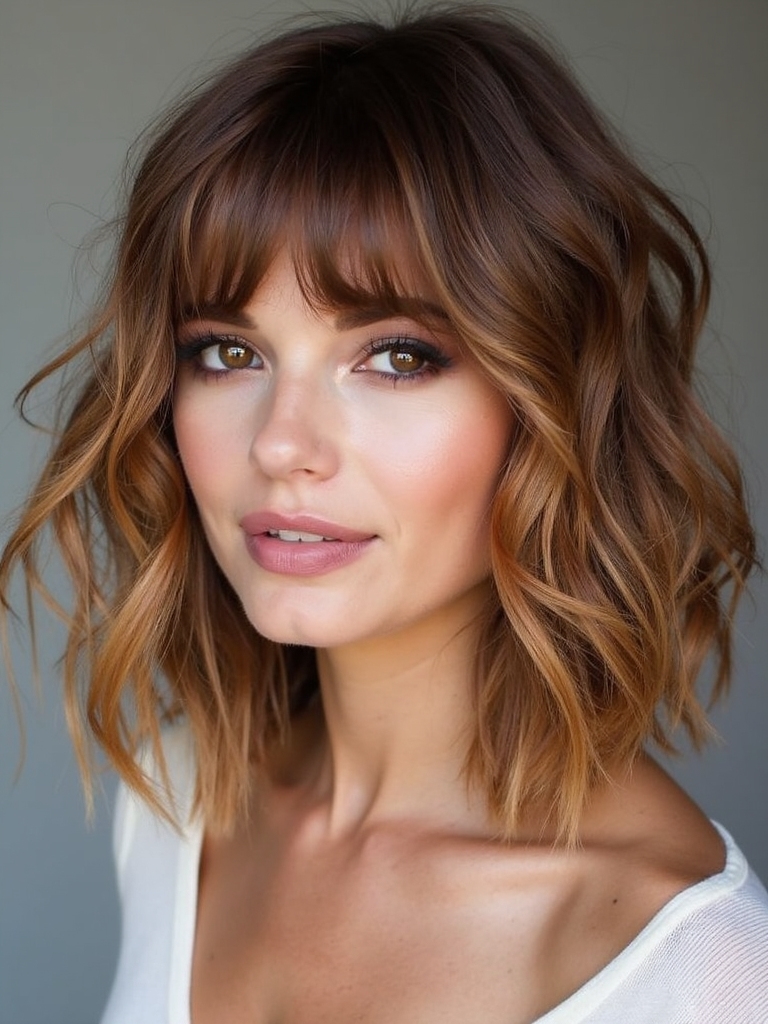
For wavy hair, the micro-shag stays very short and pairs it with bottleneck bangs, a softly rounded fringe that’s wider at the bottom than the top. The wave and the fringe play off each other for a fresh, current look you won’t find on a straight-hair version of the same cut.
Wavy hair falls into this short, piecey shape with almost no coaxing from you, which is exactly the draw for a current look that stops short of a full crop.
- Bottleneck bangs frame the face more softly than a blunt, straight-across fringe
- The wavy shag guide covers the same wave-friendly technique at more length
- Best for those willing to keep both the fringe and the crop on a steady schedule
A Razor-Cut Shag Mullet With Wispy Ends

Leave length at the nape and carve the ends with a razor, and the short shag tips into a wispy, feathered mullet. It shares more DNA with a wolf cut mullet at this point than with anything else in this lineup, and the razor is what gives it that airy, weightless movement.
The Most Editorial Option Here
One real caution here: save the razor for hair that’s sturdy, medium-to-coarse and undamaged. Fine or already-stressed strands don’t hold up to the blade the same way, and the ends fray instead of feathering, so ask for point-cutting scissors to fake the same wispy texture without that risk.
You’ll want to keep the crown-to-nape transition blended at every visit, since a hard line between the two lengths is what dates a mullet fastest.
The two assumptions that talk people out of this one, and why they’re off:
❌ Myth: A razor cut damages every hair type the same way.
✅ Reality: Healthy, medium-to-coarse hair handles it fine; it’s specifically fine or already-fragile strands that need point-cutting scissors instead.
❌ Myth: Extra length at the nape always reads dated.
✅ Reality: A blended transition and razored ends keep it current; it’s an unblended hard line, not the length itself, that reads like a costume.
A Soft Curtain-Bang Shag for a Gentle Start
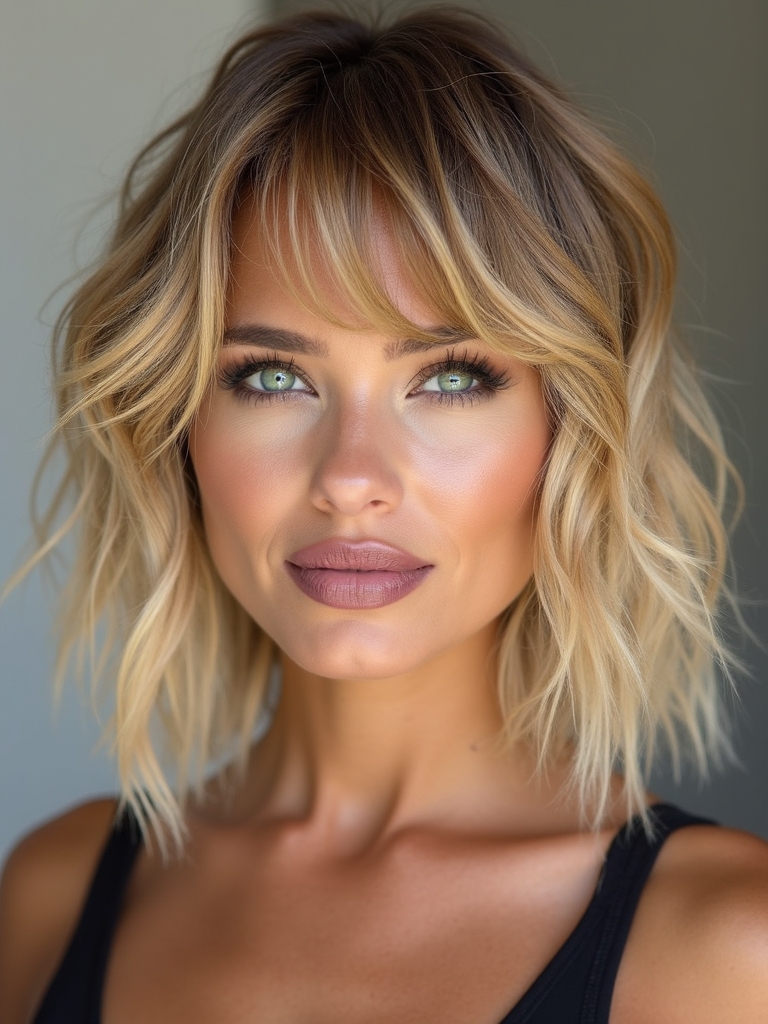
If bold isn’t the goal, this version keeps the layers gentle and frames the whole thing with a curtain bangs fringe. It’s the most universally flattering short shag here, and a low-drama pick for a first attempt at wearing hair this short.
The center-parted fringe grows out without an awkward stage of its own, which takes some of the commitment-anxiety out of the decision. You’ll find it reads soft and easygoing, at home in the office just as much as on a weekend.
Expect a light fringe trim between full cuts to keep the part clean, since curtain bangs lose their frame fastest of any piece in this whole lineup.
An Ear-Length Shag Built to Lift Fine Hair
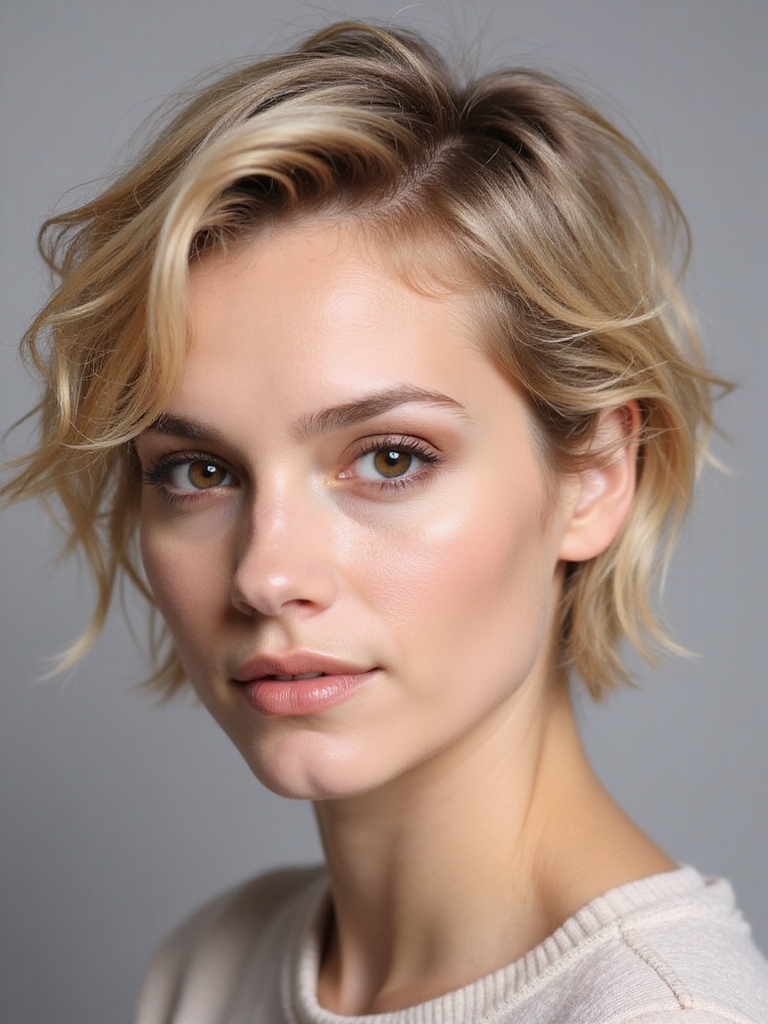
Fine hair usually gets steered toward extra length to fake fullness, which is backward. Cut it short and piecey to the ear instead, and you remove the weight that was flattening it, letting the roots finally stand up on their own.
Less Length, More Lift
The lift lives at the crown, built in by concentrating the layers up top while leaving the ends a touch fuller for balance. A volumizing mousse applied before the hair dries locks that lift in for the day.
A shaggy bob for fine hair chases the same volume goal at more length, worth a look if going this short feels like too big a jump.
A Voluminous Shag That Controls Thick Hair
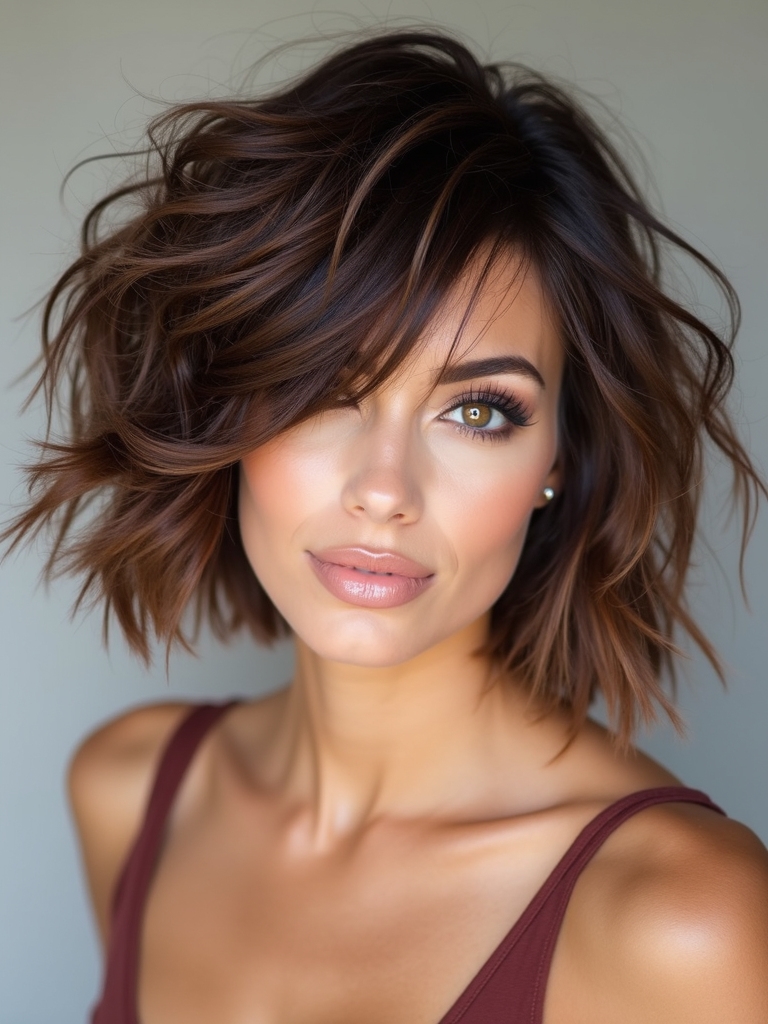
Thick hair has the opposite worry: a short cut that balloons into a heavy, shapeless mass instead of a shape. The fix is removing weight from the inside while keeping the outline intact, so the cut moves and breathes instead of expanding by midday.
- The key request is internal debulking, not more surface texturizing
- Done well, thick hair produces some of the best short shags there are
- Holds its shape for weeks with barely any product once the bulk is out
A Short Shag Built to Flatter Round Faces
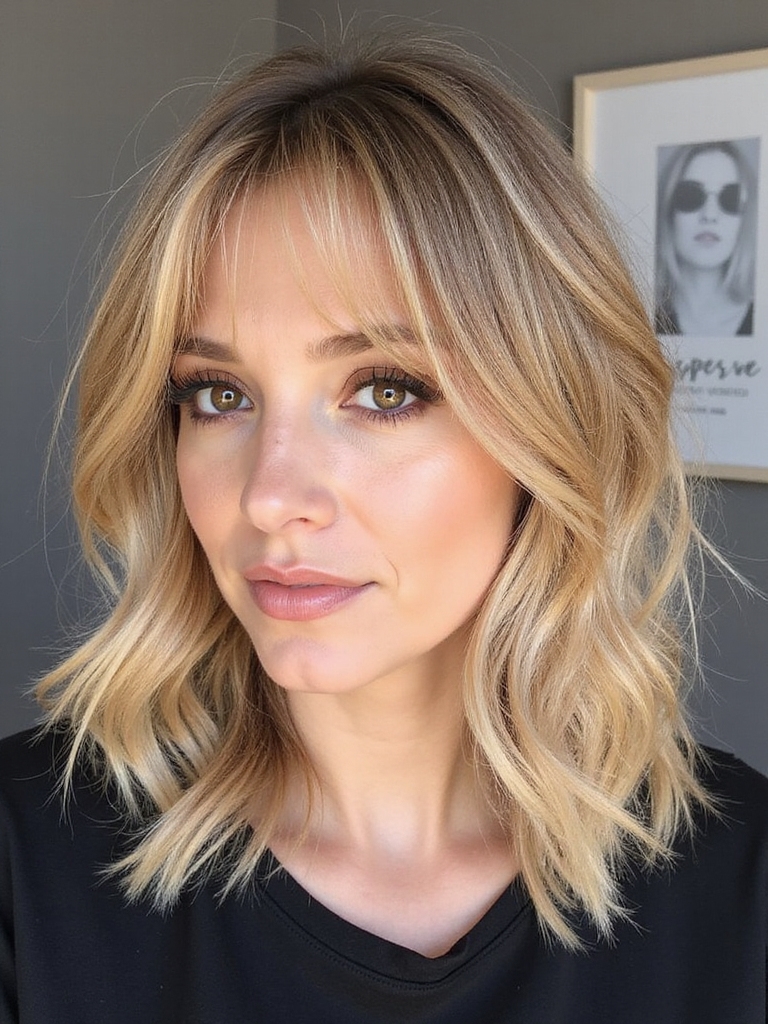
On a round or full face, the goal is length, not width, and this shape has the tools for it: longer face-framing pieces plus a little extra height at the crown draw the eye up and down instead of side to side.
- Keep face-framing pieces long enough to fall past the chin or jaw
- Add height at the crown while keeping the sides closer to the head
- A side-swept or curtain fringe cuts a flattering diagonal across the face
A Short Shag That Softens a Square Jaw
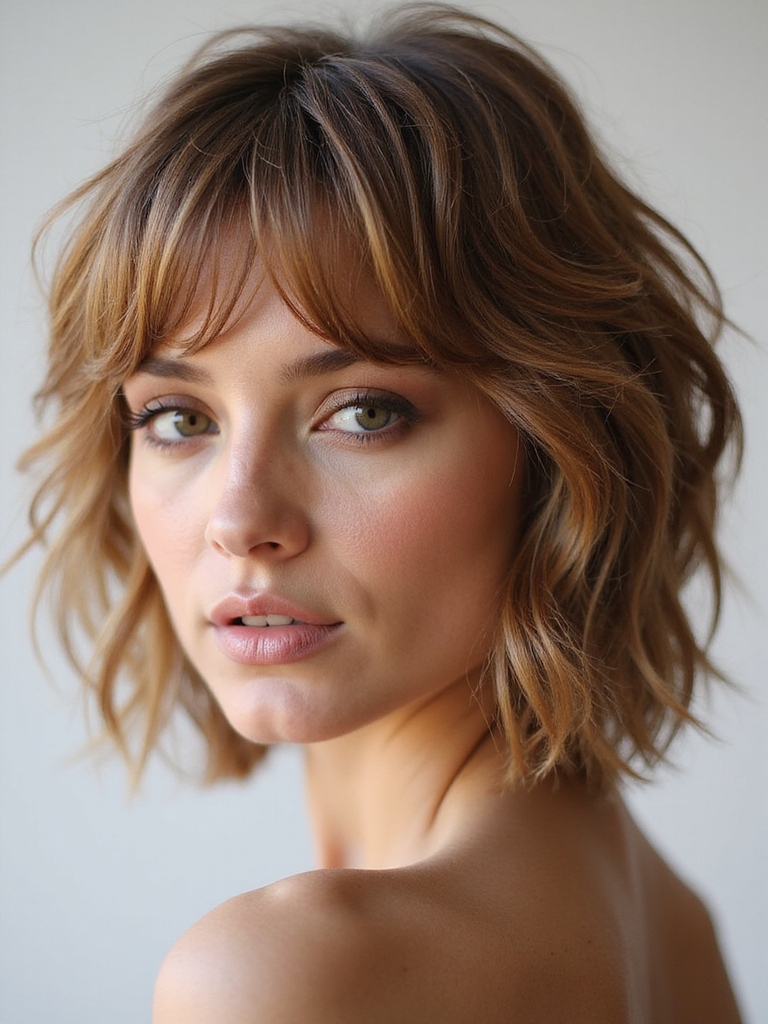
A strong, square jaw doesn’t need fixing, but if you want to soften it, this cut does it without hiding it. The move is breaking up any hard line around the jaw with wispy, irregular pieces cut right at the edge.
Soft, broken-up layers falling around the jawline blur the corners and add movement exactly where a sharp bob would only emphasize the width. A few longer, face-framing pieces past the jaw pull the eye downward and away from the corners too.
- Ask for the shortest layers to land at the jaw corners, not the chin
- Keep the ends wispy and irregular anywhere near the jawline
- A diagonal fringe adds one more line pulling the eye away from the width
💡Where to Focus the Layers
Ask specifically for the shortest layers to land at the jaw corners, not the chin. That’s the width a square jaw actually wants softened, and cutting the layers anywhere else barely touches it.
The Everyday Air-Dry Routine
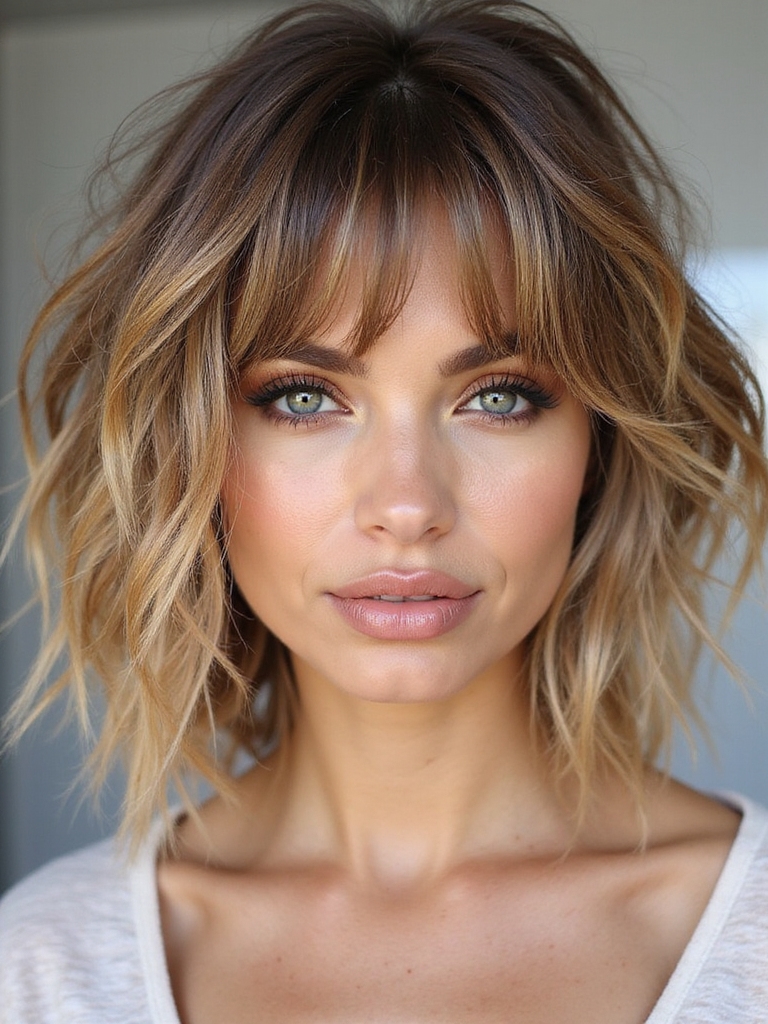
The everyday way to wear this cut skips heat entirely, and the shape is built for it. The whole routine takes a couple of minutes from soaking wet.
Faster Than Deciding What to Wear
Scrunch a leave-in or mousse through wet hair, then squeeze out the excess water with a cotton T-shirt, which roughs up the cuticle far less than a regular towel. Let it dry mostly on its own while you get ready, resisting the urge to touch it before it’s set.
Once it’s dry, separate the pieces with a small amount of paste and finish with a mist of texture spray.
When You Want a Little Heat
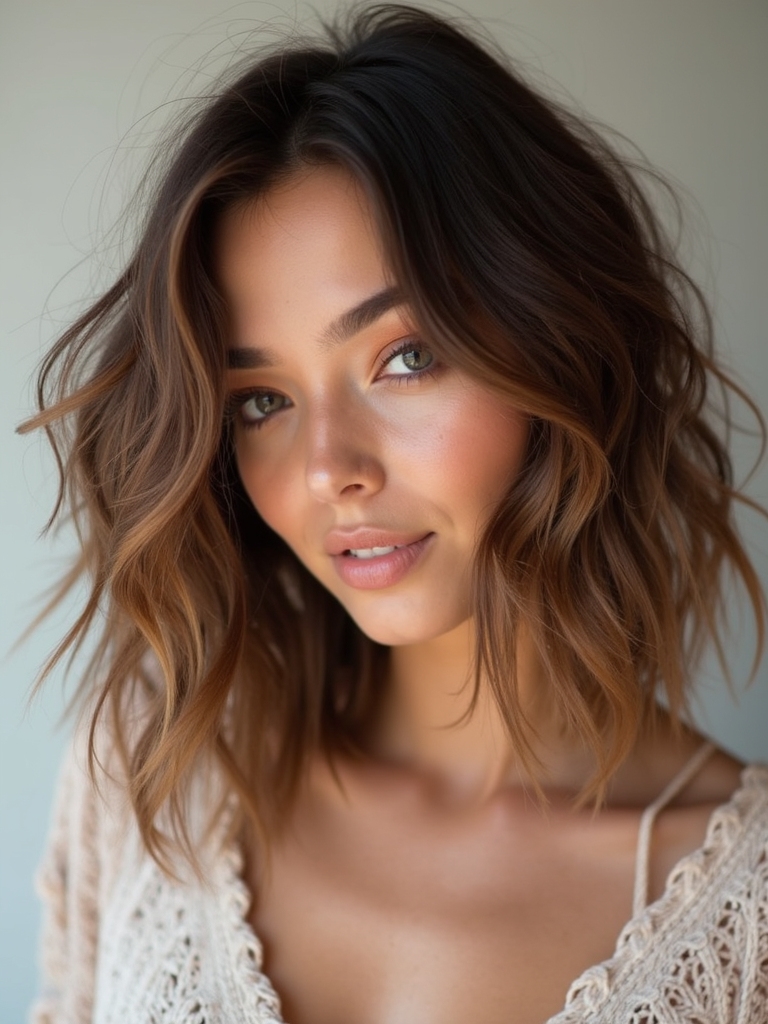
Some days you want it sharper than air-drying delivers, and a touch of heat takes the same cut somewhere more deliberate. Start with a heat protectant, rough-dry to about eighty percent, then use a flat iron only on the ends and the fringe to bend and seal a few pieces.
A blast of cool air right after each section locks the bend in place before you move on. Even on a heat day, the goal stays movement: bend and flick the pieces with the iron, and leave the smoothing for someone else’s straight blowout.
The Short List of Products This Cut Actually Needs
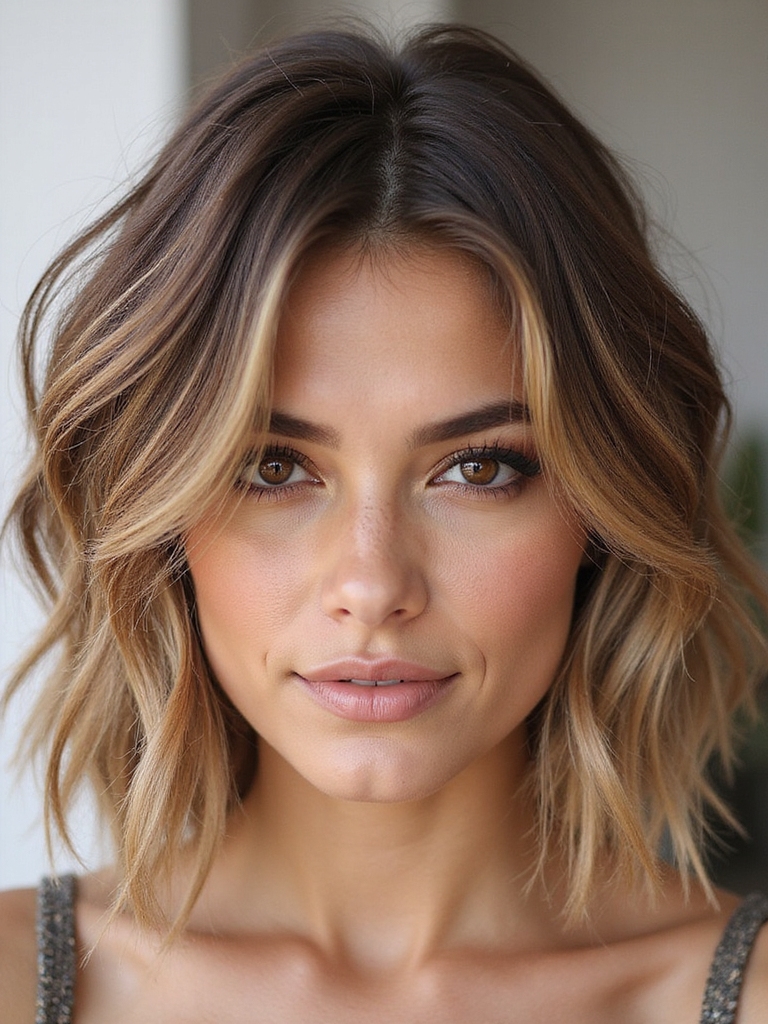
You need only a small, well-chosen lineup here, and the guiding rule is lightweight and matte over rich and glossy. Heavy products are exactly what flattens the texture this cut depends on.
Start with one texturizing spray you can use on damp or dry hair; if you buy a single product for this cut, make it that one. A clay or fiber, warmed between your palms, comes next, pinched onto a few key pieces for definition.
- Match a third product to your density: root powder if hair runs fine and flat
- A smoothing balm instead if hair runs thick and prone to frizz
- Skip anything described as glossy, shiny, or high-shine for daily wear
Dimensional Color Built for This Much Movement

Color is what makes all that movement register in a photo, and the shades that suit this cut are the soft, dimensional ones that match its undone spirit.
A babylights or balayage melt grows out gradually, so root touch-ups aren’t a monthly demand. A hidden panel of brighter color underneath the top layer only flashes when the pieces swing, and a glaze between full color services keeps the tone from dulling.
- Babylights or a balayage melt for the lowest-maintenance root line
- A hidden under-layer panel for color that only shows in motion
- A glaze between full services to keep the tone from going dull
A quick check before booking color on top of this cut:
1Do you want to see a subtle shift, or a real change from your current shade?
A glaze or babylights answers the first; a full balayage or panel of brighter color answers the second.
2Are you willing to book a gloss appointment between full color visits?
If not, a low-maintenance melt that grows out softly is the safer placement to ask for.
The Trim Rhythm This Cut Actually Needs
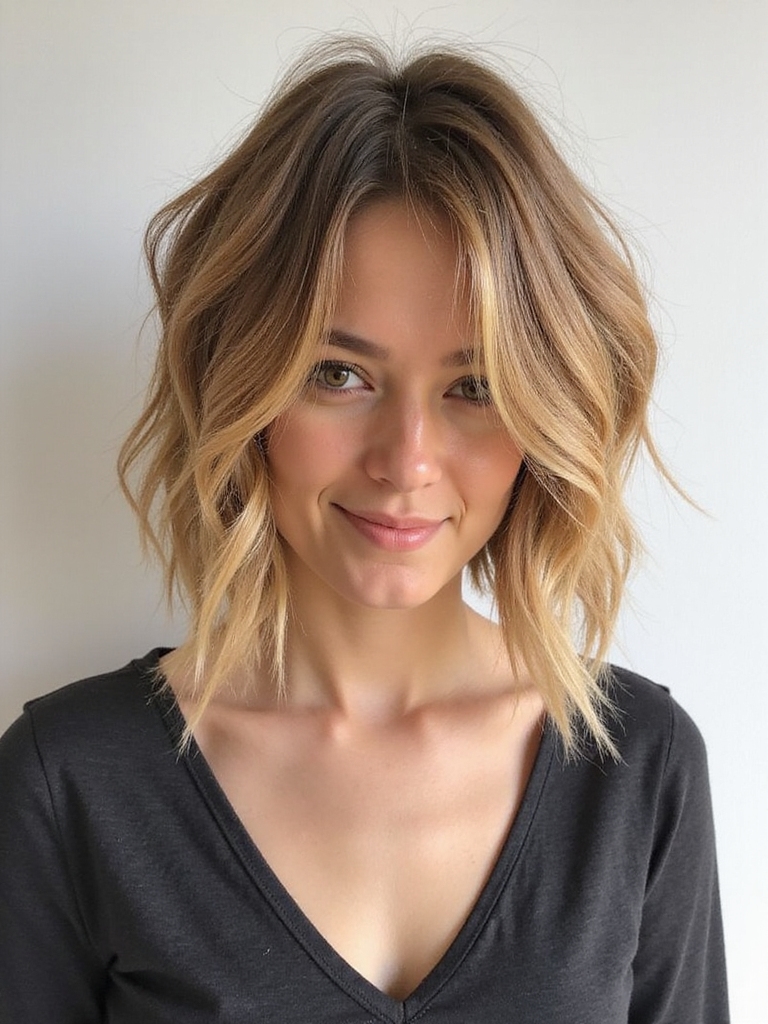
Here’s the one real demand a short shag makes of you: a steady trim rhythm. The cut lives on its layered shape, and that shape loses definition as soon as the weight grows back in. Compare the math for yourself: a box color touch-up at home costs a few dollars and an evening, while a professional shape-up runs closer to $45 to $75 depending on the salon, an appointment on a schedule, not a DIY fix squeezed in between visits.
- Book a shape-up on roughly a six-to-nine-week cycle, depending on how fast your hair grows
- A short fringe wants its own trim on a faster rhythm than that, to stay off the lashes
- Booking the next appointment before you leave keeps the shape from drifting into something formless
Who It Suits Best
This cut rewards anyone who’s tired of a styling routine that outlasts their patience: heavy internal layering, worn air-dried, and it works with wave, curl, or coarseness more easily than with pin-straight, resistant hair. If your texture already does some of the work, this cut just gets out of its way.
It suits a schedule that includes a real trim rhythm, too. Someone who skips haircuts for six months at a time will watch this shape blur into something shapeless faster than a one-length cut would, so it’s worth being honest about how often you’ll actually get back in the chair.
Short Shaggy Haircut Questions
?Can a short shaggy haircut work on hair that’s never been layered before?
It can, but budget extra time in the chair for the first appointment. A stylist is building the whole layer structure from a blank slate, so that visit runs longer than any trim after it, and the shape settles in fully once the second cut catches up.
?Is a short shag a good option for hair that’s color-damaged?
It can be, since shorter layers cut away more of the damaged length in one visit than a subtle trim ever would. A stylist may still recommend a bond-building treatment first if the ends are especially fragile, and some push the first cut out a few weeks to let a repair treatment work before the shape gets finalized.
?Does a short shag work if you’re growing your hair out long-term?
It’s a reasonable stop along the way, since the layering blends into a longer shape without the awkward stage a one-length cut usually goes through. Each trim can leave a little more length than it takes, which keeps the shape intact while the overall length still moves forward.
Where This Cut Takes You Next
A short shaggy haircut isn’t really one decision, it’s a starting point you keep adjusting: softer or bolder, longer or shorter, plainer or colored, as your face, your texture, and your patience for upkeep change over time.
Which version above matches where you actually are right now, not where you think you should be?
Next Up