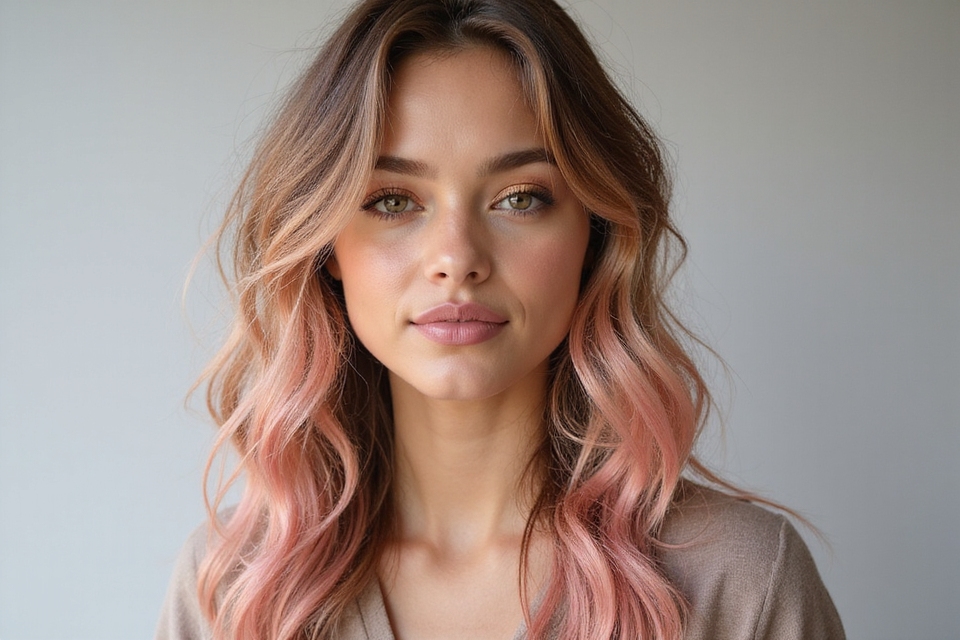
The biggest myth about light pink hair is that it only works once your hair is bleached to white. It doesn’t. Pastel pink does look truest on a pale base, but how pale depends entirely on the shade you are after, and a soft blush forgives far more than a true bubblegum ever will.
Below are eighteen ways to wear light pink, from a single hidden panel to an all-over pastel pixie, with the honest upkeep each one asks for. Most clients who sit down nervous about commitment leave surprised by how many low-stakes versions there are.
Light Pink at a Glance
| Placement | Commitment | Upkeep |
|---|---|---|
| All-over pastel | High, needs a pale pre-lightened base | Tinted conditioner weekly, toner touch-up around the 5-week mark |
| Highlights or balayage | Medium, partial lift only | Gloss refresh every couple of months |
| Peekaboo or dip-dye tips | Low, hidden or grows out softly | Touch up when you feel like it |
Pastel Pink Pixie Cut

A pastel pink pixie turns a sharp cut sweet, and it happens to be the smartest length to try pastel on for the first time. Less hair means less to lighten, less to tone, and a far smaller bill when the color fades and you want it topped up.
It does ask for a confident face and a willingness to sit in the chair often, since short hair shows roots and fade fastest. If you already wear your hair cropped, adding soft pink is a quick afternoon in the chair. Long pastel hair is the all-day commitment. Pair it with our wider hair color trends if you want to plan the next move.
Bubblegum Pink Bob

A bubblegum bob nudges the light-pink family toward a candy tone, brighter and more saturated than a true pastel but still soft against blunt edges. The clean line of a bob shows the color off without fuss, and the mid-length keeps maintenance saner than long pastel hair ever manages.
- The blunt perimeter catches the pink cleanly, so the color looks intentional rather than grown-out.
- A bob holds toner better than long hair because you are refreshing far fewer inches each visit.
- Perfect when you want color and shape settled in one single decision.
👍Why a pastel pixie works
- +Least hair to lighten, so the cheapest way into all-over pastel
- +Fast to apply and fast to refresh
- +Shows the delicate color at its truest on a small canvas
👎What to weigh first
- –Short hair shows roots and fade fastest, so frequent visits
- –A bold, face-forward look that not everyone wants
- –Growing out both the cut and the color takes patience
Rose Quartz Waves

Rose quartz is the cool, crystalline pastel pink with a faint lilac shimmer, and on soft waves it turns luminous. The bends in the hair break up the light so the color shifts as you move, which is what gives this one its dreamy quality.
The cool undertone is the deciding factor here. Because rose quartz leans blue-pink, it glows against fair, cool complexions with pink or blue undertones and can turn faintly ashy on warm, golden skin. A quick strand test behind the ear is worth the five minutes it takes before you commit the whole head.
- Ask for a violet-leaning toner to keep the pink cool and clear.
- Loose waves from a large barrel suit it better than tight curls, which hide the color shift.
- A lilac shimmer looks costly on hair that is already healthy and shiny.
Cotton Candy Highlights

Cotton candy highlights weave soft pink through a lighter base, so the pastel scatters as gentle dimension across the hair. It is the low-commitment route in. First-timers unsure they will love pink usually start here.
Because only the lifted pieces carry color, the grow-out is gentle. You stay free to change your mind. Tire of the pink, and the highlights soften out on their own and ask for no corrective appointment.
- Face-framing pieces give the most payoff for the least lifting.
- A few well-placed ribbons show up brighter than an all-over wash that has faded.
- Pairs neatly with natural blonde or light brown without a full base change.
ℹ️Cool or warm pink
Pink shades split into cool (rose quartz, lilac-pink) and warm (blush, peach-pink). Cool pinks flatter fair, cool skin; warm pinks suit warm, golden complexions. Matching the undertone to your skin matters more than the exact shade.
Dusty Pink Ombre

Dusty pink is the muted, greyed-off pastel that feels grown-up and quiet, and worn as an ombre it melts from a soft root into pinker ends. The deeper top keeps the look modern. It also keeps your upkeep low, since the regrowth stays soft and blurred where the color begins.
- Keep the root your natural depth so new growth blends in softly as it comes.
- A muted, slightly grey pink ages the look up and flatters more skin tones than a sweet pastel.
- Concentrate the lightening on the lower two-thirds so the ends carry the brightest pink.
Blush Balayage

A blush balayage hand-paints the palest pink through the lower two-thirds of the hair for a barely-there wash of color. The painted placement leaves the root soft, so it lands more like a glow than a statement, and it stays among the easiest ways to try pink.
Because the pigment is so delicate, the grow-out is forgiving and the fade is graceful, which means you can stretch two or three months between salon visits while the color quietly washes down through softer and softer versions of itself, well before it ever reaches a patchy line at the root. See how the technique works on other shades in our balayage guide for dark brown hair.
- Painted, root-soft placement means no harsh regrowth line.
- Best for anyone who wants a hint of pink over a full transformation.
- Reads softest on fair and cool skin, where the blush stays clean.
“When I paint a dusty pink ombre, I keep the root a touch deeper than the client’s natural color. It makes regrowth disappear and buys you weeks of extra wear before anyone could tell it is growing out.”
Faded Pink Tips

Faded pink tips dip just the last few inches into soft pink, putting the color where it grows out softest and asks the least of you. It is the experiment version of pink, the one to try when you want to test the idea before committing the whole head.
The upkeep is almost nothing. As your hair grows, the tips simply move down and you trim them off whenever you are ready, no corrective color required. That makes it a favorite for anyone whose job or budget rules out frequent salon trips.
If you decide you love it, you can always build upward into a fuller ombre or balayage later. Starting at the ends keeps your options, and your hair’s health, intact.
Layered Light Pink Shag

A shag thrives on visible movement, and light pink threaded through its layers looks cool and undone. Slightly lighter and deeper pink pieces give the choppy texture somewhere to catch the light, so the cut and the color do the work together.
Styling the texture
This is a good match for fine to medium hair that needs the illusion of fullness, since the layers and the tonal shift both add the look of density. On very thick hair, the same effect still works but takes more product to define.
A texturizing spray scrunched through damp hair brings the layers forward without weighing them down. Skip heavy creams here, which flatten the shag and dull the pastel.
🅰️Faded tips
Color only the last few inches; trim out as it grows. Almost zero upkeep and the cheapest test of pink.
🅱️Blush balayage
Painted through the mid-lengths for a softer, fuller wash. More color payoff, a little more lifting, still a gentle grow-out.
Strawberry Blonde Pink Mix

Blending light pink with strawberry blonde gives a warm, peachy-pink result that passes almost as a natural shade caught in good light. For anyone curious about pink but wary of looking costumey, this is the gentlest doorway in.
The warmth is the whole point. Where a cool pastel can wash out fair, warm complexions, this blend flatters them, and it fades far more gracefully than a true cool pink because it drifts toward a flattering apricot as it goes.
- More wearable day to day than a pure pastel.
- Flatters fair and warm skin with a soft peach glow.
- Fades toward warm blonde, so the grow-out stays pretty.
Shimmering Pink Sombre

A sombre is simply a softer, subtler ombre, and a pink sombre fades the color so gradually there is no visible line at all. The transition is so gentle it looks like soft, natural dimension, which makes it the most natural-looking way to wear pastel.
Because the gradient is barely there, regrowth is invisible and you can wait a long stretch between appointments. A full pastel application takes three to five hours in the chair, so the low-maintenance versions earn their keep. When a client wants pink but cannot keep up with frequent salon visits, this is usually where we land.
Soft Pink Undercut

An undercut brings edge to soft pink by pairing a hidden or shaved section with pastel length on top, so the look balances sweet and bold in a single cut. It suits anyone chasing a little attitude alongside the sweetness.
- A nape undercut stays hidden when your hair is down and flashes when you tie it up.
- Coloring only the top length saves on lightening, since the shaved section needs nothing.
- Best on hair you are happy to commit a clipper to, because growing an undercut out takes patience.
Baby Pink Curls

Baby pink on curls is the softest version of the whole family, the palest pink wrapping around each coil so the color shows at its sweetest where the light hits the curve. The trade-off is honest. Lightening curly and coily hair has to be done slowly and with real care, because the very texture that wraps and holds soft color so beautifully is also the texture most likely to lose elasticity and snap if a colorist rushes the lifting process.
- Work with a colorist experienced in lifting textured hair, not just straight hair.
- Flood the curls with moisture before and after, since lightening is drying.
- Refresh with a pink-tinted mask between lightening sessions to protect the curl pattern.
Elegant Pink Ponytail

A sleek ponytail in light pink looks polished and modern, the soft color smoothed back so the shape does the talking ahead of any styling. It is proof that pastel does not have to look young, and it is a clean way to wear it on a dressed-up day.
Smooth the top with a little shine spray and gather low at the nape for the most grown-up version. A high, slicked pony pushes the same color younger and more playful. Placement quietly sets the mood.
Light Pink Braids

Braiding light pink shows the color off as the strands cross and uncross, catching the pastel at shifting angles down the length. Any tonal dimension in the pink looks prettier in a braid than it does worn loose.
Braid it or add it
You can braid your own pastel color or weave in pink extensions for the effect, which is the route I suggest for anyone who is not ready to lighten. Clip-in or braided-in pink pieces give you the look for an event and come right back out after.
Looser, slightly undone braids suit the soft color better than tight, severe plaits, which can feel harsh against such a gentle tone.
Candy Floss Fringe

A candy floss fringe frames the face in soft pink and draws the eye straight up, letting you wear a flash of pastel without coloring the whole head. It is a clever middle ground, more visible than a peekaboo but far less commitment than all-over color.
Because the fringe sits front and center, keep it the cleanest, freshest pink of anything you do, and trim it on schedule. A fringe grows into your eyeline within a few weeks, so this look rewards people who do not mind regular shape-up visits.
Subtle Pink Streaks

Subtle pink streaks scatter just a few soft pieces through the hair for the quietest hint of color, the lowest-commitment way on this whole list to add light pink. They look like a soft shimmer, a quiet hint of color, and they grow out so gently you may forget they are there until the light catches them.
- Tuck the streaks underneath for color that only shows when you flip your part.
- Two or three face-framing pieces give more impact than a dozen scattered ones.
- An easy first step if you are testing whether pink suits you at all.
Romantic Pink Updo

Gathered into a soft updo, light pink turns romantic, the pastel catching the light as it twists and loops. It is a pretty choice for weddings, showers, and any occasion where you want the color to feel special and dressed up.
Loose, slightly undone updos suit the delicate tone best. A too-tight, sculptural style can fight the softness of the color, while a low, airy twist keeps the pink the gentle thing it is.
If your pink sits mostly through the lower two-thirds of the hair, an updo is the perfect way to bring all that color up and forward where it shows, which works especially well for balayage and ombre placements.
Pink Peekaboo Highlights

Peekaboo pink tucks soft pastel beneath the top layer so it flashes only when your hair moves or you tie it up. It is the most discreet way to wear pink, and the one I recommend most to clients whose workplaces would frown on an all-over pastel.
- The neutral surface keeps the look office-friendly while the hidden color stays your secret.
- Place it where you part and flip most, so it shows on your terms.
- Lifting only the under-layer means a smaller appointment and a smaller bill.
Caring for Light Pink So It Lasts
Everything about pastel pink comes back to the base beneath it. Soft pinks are translucent, so they only show their true tone on pale, pre-lightened hair, which means darker heads usually need lightening first, sometimes across more than one session.
That lifting is the real commitment and the real cost; budget roughly $150 to $250 for a full pastel application on darker hair, less if you are already blonde. Factor in the health of your hair before anything else, because pale, soft pink on damaged hair never looks the way the photo promised.
Once the color is in, light pink fades faster than any shade on the shelf, so the routine matters. Wash as seldom as you can. Always use cool water only, since heat and frequent shampooing flush the soft pigment straight out. A pink-tinted conditioner used once a week tops the color back up between visits and keeps it from washing down to a patchy blonde; I tell every client it is the single cheapest thing they can do, usually under twenty dollars.
Plan a salon toner refresh around the five-week mark for all-over pastel, and protect the hair from sun and chlorine, which strip pink quickly. Browse more shades in our guide to all hair color ideas when you are ready for the next one.
Finding Your Shade of Soft
Light pink bends to whatever you ask of it, from a single hidden panel to an all-over pastel pixie, so the real question is how much upkeep you want to sign up for. Start with a placement that matches your commitment, pick a cool or warm pink for your skin, and keep a tinted conditioner in the rotation from day one.
Pastel pink rewards patience more than boldness: a shade tested at the ends first almost always outlasts one committed to all at once. Whichever placement wins out, the shift is easy to undo and even easier to fall for.
Favorites to Revisit