Braids do more work than most people give them credit for. For natural hair specifically, they protect the ends, give the scalp a rest from daily manipulation, and carry generations of technique and meaning in every pattern. I’ve watched braids carry clients through new jobs, big life changes, and stretches where their hair simply needed a break from being handled every day.
This guide covers natural hair braids fully and respectfully, from the history behind them to the main styles, their honest install times and costs, and how to keep both your braids and the hair underneath healthy. Whether you are booking your first set or your fiftieth, the goal is the same: braids that show off your texture and protect it at once.
Natural Hair Braids, In Brief
- Braids are a protective style with deep cultural heritage, giving natural hair a rest from daily manipulation.
- Install times and costs vary widely: cornrows can take 1 to 3 hours, box braids 4 to 8 hours and $150 to $400.
- The golden rule is gentle tension: braids should never hurt, since too-tight braiding stresses the hairline over time.
The History of Hair Braiding

Few hair techniques have the history braiding does. Its roots trace back across many African cultures over thousands of years, long before it became a global styling trend. A braid pattern once said something specific about the person wearing it, marking community, age, or marital status, and the knowledge of how to create it moved from elder to child.
A Tradition Thousands of Years Old
That heritage still lives in every set of braids today. When you sit for a braiding session, you are part of a long, rich tradition of craft and care, and understanding that history is part of wearing the style with respect.
It is worth honoring where these styles come from, especially as they have moved into the mainstream. Braids are a celebrated art form rooted in Black culture, and that context gives them their depth and meaning.
Braiding and Natural Texture

Braids and natural texture are made for each other, since coily and kinky hair grips and holds a braid beautifully in a way other textures cannot. The very qualities that make natural hair unique are what make braiding so versatile, from tiny, intricate patterns to bold, sculptural styles.
Rather than altering your texture, braids work with it, shaping your natural hair into endless designs while keeping it protected. It is a way of celebrating what your hair does naturally, turning its texture into the foundation for genuine artistry.
👍Why braids are worth it
- +Real protection and length retention for natural hair.
- +Weeks of versatile, styled hair with low daily effort.
- +A celebrated art form with deep cultural meaning.
👎What to weigh first
- –Install can take hours and cost a few hundred dollars.
- –Too-tight braiding stresses the hairline, so tension matters.
- –They need timely takedown and ongoing scalp care.
The Main Types of Braids

Before you book, it helps to know the main families of braids, since the word covers a huge range of styles with different looks, install times, and upkeep. Here are the ones you will hear most:
- Cornrows: braided flat to the scalp in rows and patterns; quick and versatile.
- Box braids: individual braids sectioned in squares, often with added length.
- Knotless braids: box braids started with your own hair for gentler tension.
Cornrows

Cornrows are braided flat against the scalp in continuous rows, and few protective styles carry as much history or as much room for creativity. The patterns can be simple and straight or intricate and curving, which makes cornrows as much a canvas as a hairstyle.
A Canvas as Much as a Style
They are quicker to install than individual braids, often one to three hours depending on the design, which makes them a relatively low-commitment protective style. They also lie close to the head, so they wear easily under wigs, hats, or as a foundation for other styles. In my chair, cornrows are the style I recommend most as a gentle, quick first protective style.
Cornrows have deep cultural significance and a long history as both everyday and ceremonial styles. The cornrow hairstyles page goes deeper into the patterns and how to wear them.
🅰️Knotless braids
Started with your own hair for gentler tension; lighter, flatter, and kinder to the hairline.
🅱️Traditional box braids
Started with a knot of extensions; slightly faster and fuller, but more tension at the root.
Box Braids

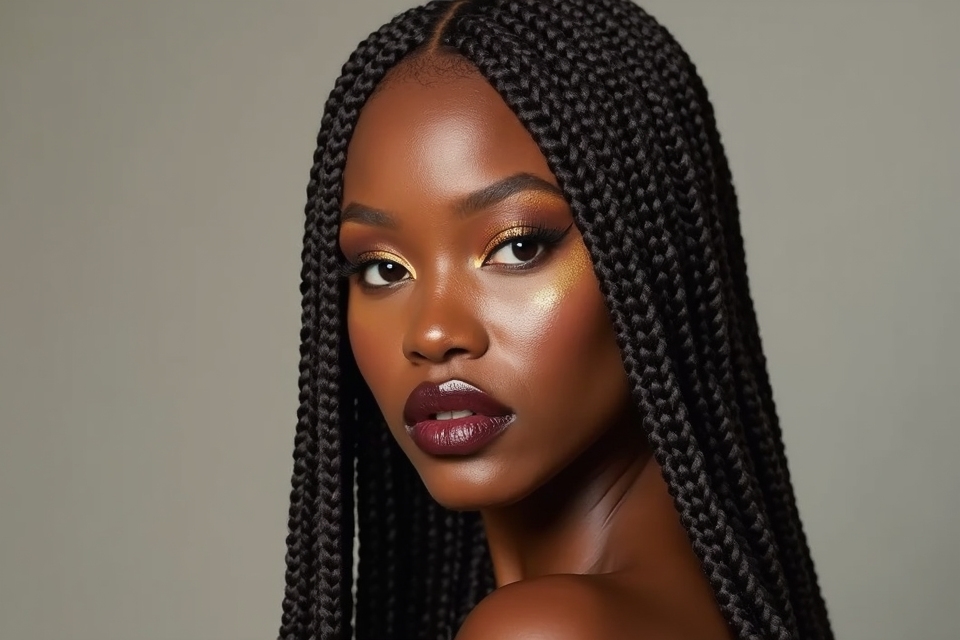
Box braids are individual braids parted into clean, square sections, usually with hair extensions added for length and fullness. Few protective styles get requested more, and for good reason, but they’re a real commitment of time and money. Here’s what that commitment actually looks like:
- Install time: often four to eight hours, depending on length and size.
- Cost: typically $150 to $400 at a salon, more for very long or small braids.
- Wear time: six to eight weeks; the box braids page has more styles.
Fulani Braids

Fulani braids are a striking style rooted in the traditions of the Fulani people of West Africa, known for their distinctive pattern: a central braid down the middle with cornrows along the sides, often finished with beads or cuffs.
A Style Rooted in West Africa
The style is both beautiful and deeply meaningful, and wearing it with awareness of its origins is part of honoring it. The signature beadwork and the mix of cornrows and individual braids make it instantly recognizable.
Because it combines cornrows with added braids and accessories, a Fulani style takes real time and skill to install. It is worth seeking out a braider experienced in the technique to get the pattern and the tension right.
Which braid style fits you? Match it to what you want:
🎯I want quick and low-commitment
Go for cornrows or goddess braids, which install faster than fine individual braids.
🎯I want long-lasting versatility
Box or knotless braids give weeks of styling you can wear up, down, or wrapped.
🎯I want the gentlest option
Choose knotless braids, which reduce root tension and are kindest to your edges.
Goddess Braids

Goddess braids are larger, thicker cornrows, often raised slightly off the scalp for a bold, sculptural, regal look. Their size means they install faster than fine braids. And they still make a dramatic statement.
They can be styled into updos, halos, or left flowing, which makes them as versatile as they are eye-catching. The thickness also means less tension per braid when done well, since the weight is spread across fewer, larger sections.
Goddess braids suit anyone wanting a bold protective style without the hours that tiny braids demand. Adding curly pieces left out along the length softens the look into something romantic and full.
Braids as Protective Styling

The biggest reason braids matter for natural hair is protection. By tucking your ends away and drastically reducing daily manipulation, braids give your coils a genuine rest from the combing, heat, and friction that cause breakage. This is what helps natural hair retain length. In my chair, the clients who hold onto the most length are almost always the ones who rotate through braids and other protective styles.
Here is how that protection works in practice:
- Tucked ends are shielded from the friction and dryness that cause splits.
- Low manipulation means weeks without daily detangling or styling stress.
- Length retention follows, since protected hair holds onto the length it grows.
Heads-Up
Braids should never hurt. Too-tight braiding, especially at the hairline, puts constant tension on the roots and can lead to traction and breakage over time. If you feel sharp pulling, bumps, or soreness at your edges during or after braiding, ask your braider to loosen them, and do not leave braids in much past eight weeks. Protecting your edges always comes before a tighter, neater look.
The Benefits of Braiding

Beyond protection, braiding offers a whole set of benefits that explain why it has stayed central to natural hair care for generations. The advantages are practical as much as beautiful. Here is what you gain:
- Weeks of styled hair with almost no daily effort once installed.
- Versatility, since one set of braids can be worn up, down, or wrapped.
- A break from heat and combing, which keeps your natural hair healthier.
Tools and Products

Whether you braid at home or maintain a salon set, a few key tools and products make all the difference. Good prep and the right supplies keep both the braids and the hair underneath in good shape.
Prep Makes the Difference
Start with clean, moisturized, detangled hair, since braiding over dry or tangled hair causes breakage. A rat-tail comb for clean parts, a good moisturizing leave-in, and an edge-control product for a neat finish cover the basics.
For upkeep, a lightweight oil for the scalp, a satin bonnet for nights, and a spray bottle for refreshing moisture are the essentials. The right products keep braids looking fresh and the hair beneath them hydrated.
The Basic Braiding Technique

At its heart, braiding is the simple act of crossing three sections of hair over one another in sequence, but the artistry comes in the parting, tension, and pattern. A three-strand braid is the foundation for nearly every style, from a single plait to the most intricate cornrow design.
Learning to braid your own hair takes real patience, and most intricate styles are best left to a skilled braider. If you do braid at home, work on damp, moisturized hair, keep your sections clean, and above all keep the tension gentle, since how the braid is anchored at the root matters more than anything for your hair’s health.
Modern Braiding Innovations

Braiding is an ancient craft, but it keeps evolving, and recent innovations have made braids gentler and more versatile than ever. The biggest shift has been the rise of knotless braids, which start from your own hair and feed the extensions in gradually. The difference at the root is real.
The Rise of Knotless
Knotless braids reduce the tension at the root that older techniques could cause, which makes them far gentler on the hairline. In my chair, they have become the default I recommend to almost every client now. They lie flatter and feel lighter too, which is why so many braiders now recommend them.
Other innovations include lighter extension fibers and new finishing methods that cut down on irritation. The craft honors its traditions while truly improving the experience for the hair underneath.
Custom Braid Designs

One of the joys of braiding is how personal it can be, with patterns, partings, and accessories combining into a design that is entirely your own. A skilled braider can turn cornrows into geometric art or weave in color, beads, and cuffs for a custom finish.
A few ways to make a braid style your own:
- Parting patterns, from simple rows to curves, zigzags, and geometric shapes.
- Accessories like beads, cuffs, and thread woven through the braids.
- Color and length, added through extensions for a fully personalized look.
Braids in Cultural Celebration

Braids hold a treasured place in cultural celebrations, from weddings and graduations to festivals and rites of passage. Specific patterns and elaborate styles often mark special occasions, carrying meaning that goes far beyond the visual.
More Than a Trend
This ceremonial role is part of what makes braiding so much more than a trend. The time and skill poured into an elaborate braided style for an occasion is itself an act of care and celebration, often shared between family and community.
Wearing braids for your own celebrations connects you to that tradition. Whether for a milestone or just because, an intricate set of braids can mark a moment beautifully and meaningfully.
Braids in the Workplace

It is worth speaking honestly about braids at work, since natural and braided hair has unfairly faced bias in professional settings, something the CROWN Act and similar laws are working to end by protecting against hair discrimination. Braids are a polished, professional choice, full stop. The growing legal protections reflect that long-overdue recognition.
Sleek styles like neat cornrows or a braided updo read crisp and put-together in any office, while the protective nature of braids means your hair stays neat through long days with minimal fuss. You should never have to choose between protecting your hair and showing up professionally, and increasingly, you do not.
Braided Style Inspiration

When you are ready to choose a style, gathering the right inspiration makes the consultation with your braider far smoother. The trick is to save references that match your hair and your goals, ideally on hair like yours. A few pointers:
- Save photos that show the size and length of braids you actually want.
- Note whether you want a scalp style like cornrows or individual braids.
- Bring a clear idea of any accessories, color, or parting you have in mind.
Braids as Art

It is no exaggeration to call braiding an art form, since the most intricate styles require the kind of vision, precision, and skill any artist would recognize. A master braider reads the head like a canvas, planning patterns and tension to create something both beautiful and structurally sound.
The Skill Behind the Style
This artistry is why a great braider is worth seeking out and paying for. The hours of skilled work behind an elaborate style reflect genuine craft and deserve to be valued accordingly.
Appreciating braids as art also means respecting the people and culture that developed it. The creativity on display in a remarkable braided style is the product of generations of refinement.
Caring for Your Braids

Braids may be low-effort day to day, but they are not no-effort, and good care keeps both the style and your natural hair healthy. The scalp and the hair underneath still need moisture and cleansing while the braids are in.
Caring for What Is Underneath
Cleanse your scalp gently with a diluted shampoo or a scalp cleanser as needed, and keep it and your hair moisturized with a light oil or a water-based spray. At night, cover your braids with a satin bonnet or scarf to reduce friction and frizz.
Just as important is knowing when to take them out. Leaving braids in too long, past about eight weeks for most styles, lets matting and tension build, so a timely takedown protects the hair you worked to grow.
The Future of Braiding

Braiding has never been more visible or more celebrated, and its future is bright as more people embrace natural texture and the styles that protect it. The craft keeps honoring its roots while welcoming new techniques and a wider audience. A few things shaping where it is headed:
- Gentler techniques like knotless braids becoming the default standard.
- Growing recognition of braiding as both art and cultural heritage.
- Legal protections against hair discrimination spreading more widely.
How to Ask Your Stylist
The most important choice you make with braids is your braider, so seek out someone experienced in your chosen style and, ideally, recommended by people whose hair you admire. At the consultation, be clear about the size, length, and style you want, bring reference photos that match your hair, and ask honestly about the install time and cost so there are no surprises, since a full set of box braids can run several hours and a few hundred dollars.
Above all, speak up about tension. Braids should feel secure but never painful, and a good braider will never braid so tightly that it hurts or pulls at your edges. If you feel sharp tension, bumps, or soreness at the hairline during or after your appointment, say so and ask them to loosen the braids, because protecting your edges matters far more than a slightly neater finish. The right braider will always listen.
Texture, Protected and Celebrated
Natural hair braids are that rare thing: a style that protects your hair, celebrates your texture, and carries real cultural meaning all at once. From everyday cornrows to elaborate Fulani and goddess styles, braiding turns your natural texture into the foundation for genuine artistry while giving your coils the rest they need to thrive.
If you are considering braids, go in informed and go in proud. Find a skilled braider, be clear about the style and the cost, insist on gentle tension, and care for the hair underneath. Worn with knowledge and respect, braids protect natural hair as well as almost anything you can do to it, backed by a tradition worth wearing with confidence.
More to Explore