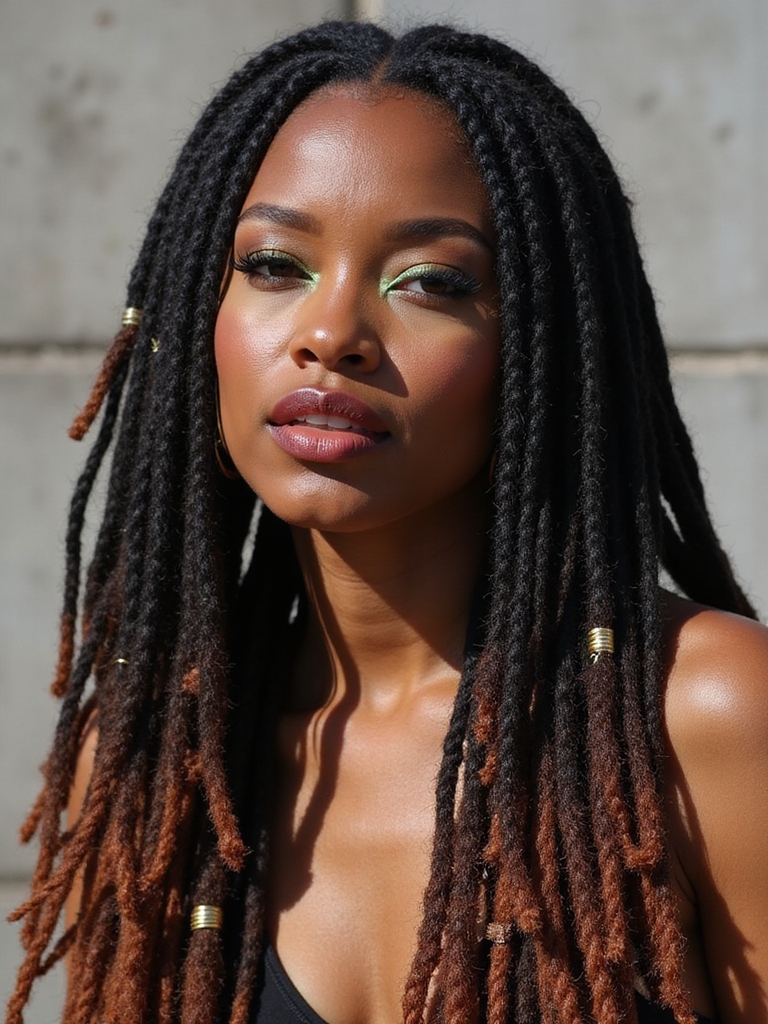
A loc ponytail has one advantage no other hair type can match: the locs grip each other, so the gathered length holds its own shape without a single product. That is the easy part. The part nobody mentions is that the same ponytail, worn high and tight every single day, is the fastest route to a thinning hairline I see in the chair.
So this guide does two things at once. It walks through fifteen dreadlocks ponytail hairstyles, from a five-minute high pony to bubble, side-swept, and double versions, and it tells you honestly which ones to ration and how to anchor them so your edges last as long as your length does.
What Holds and What Hurts
Locs hold a ponytail on their own grip, so you rarely need gel or a tight elastic to keep the shape. A wide satin-covered band and a wrapped or braided base do more for hold than brute tension ever will.
Position is the real health decision. High and tight styles pull the hairline hardest, so save them for occasions and lean on mid-height and low ponytails for daily wear. Tenderness at the temples is your signal to back off, every time.
The High Ponytail With a Wrapped Base
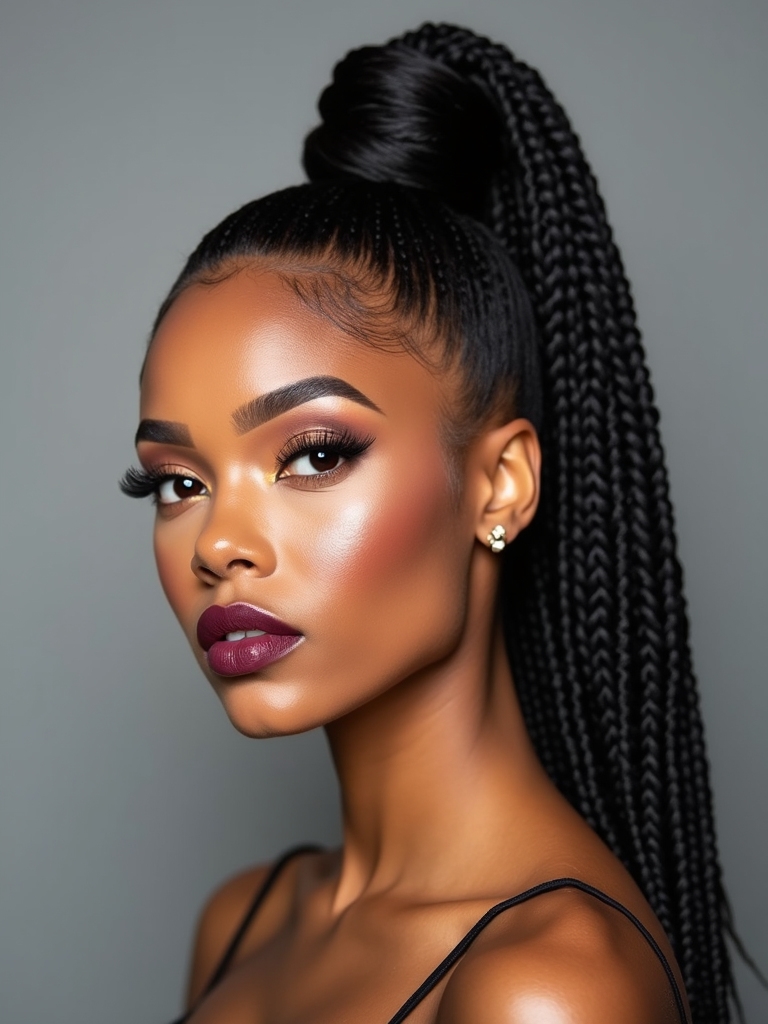
This is the polished one. Gather the full set high at the crown, secure it, then use a couple of thin locs to conceal the band entirely, and you have a finish that looks salon-made in under five minutes.
It photographs beautifully and works for an office or a night out. It is also the style I most often talk clients down from wearing daily, because high and tight is where edges pay the price. Building it without paying that price takes a few small adjustments:
- Anchor with a wide satin-covered band, at least two centimeters across, so tension spreads.
- Pull one or two thin locs aside before tightening, then wrap them over the band.
- Keep it for special days, and skip it the week after if your temples feel tender.
The Mid-Height Everyday Ponytail
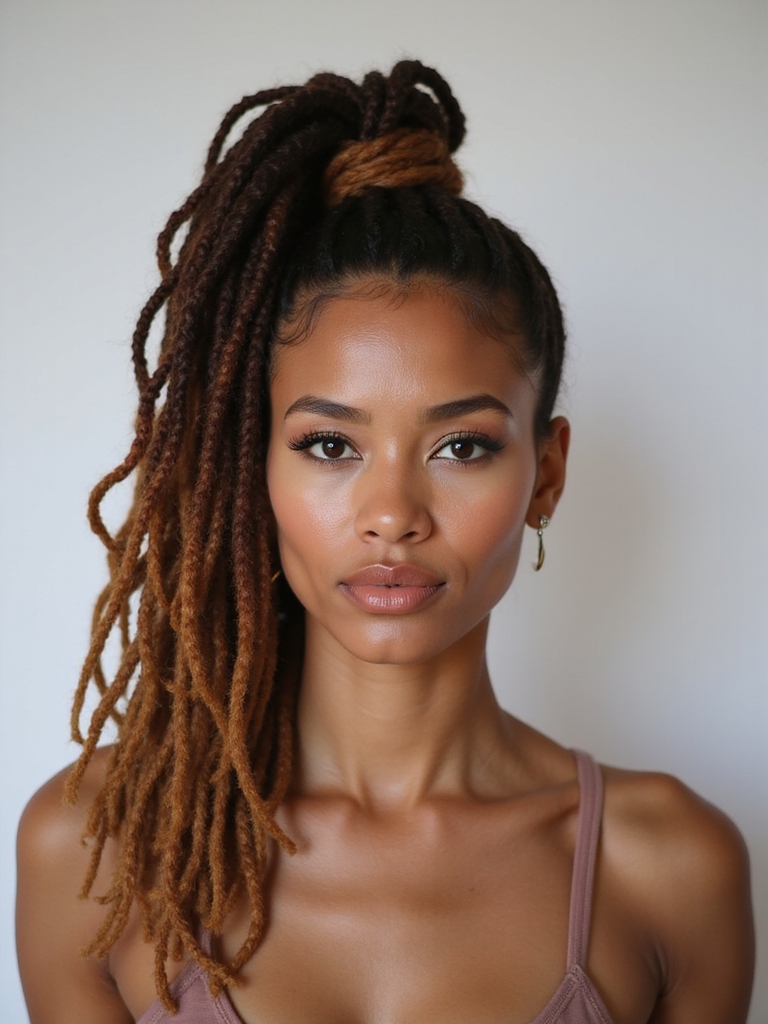
If the high pony is for occasions, the mid-height version is for Tuesdays. Gathered around the occipital bone, the round bump at the back of your skull, it gives you a pulled-together look with far less pull on the hairline than a crown-height gather. Most loc wearers I know default to this position without thinking about why.
Why Mid-Height Is the Safe Default
The why is simple: lower placement shifts the load off the fragile front edges and onto the stronger hair at the back and crown, which is exactly where you want a heavy set carrying its weight all day. It still swings, still looks tidy, and you can wear it morning after morning with a clear conscience.
For longer sets, this is also the most comfortable place to carry real weight. A waist-length set gathered high drags all day; the same set at mid-height sits balanced.
💡Stylist Tip
Before you reach for a tighter elastic, try a wider satin-covered band instead. Width spreads the tension across more of the root, which holds the pony just as well and saves your edges the daily strain a thin band creates.
The Low Nape Ponytail
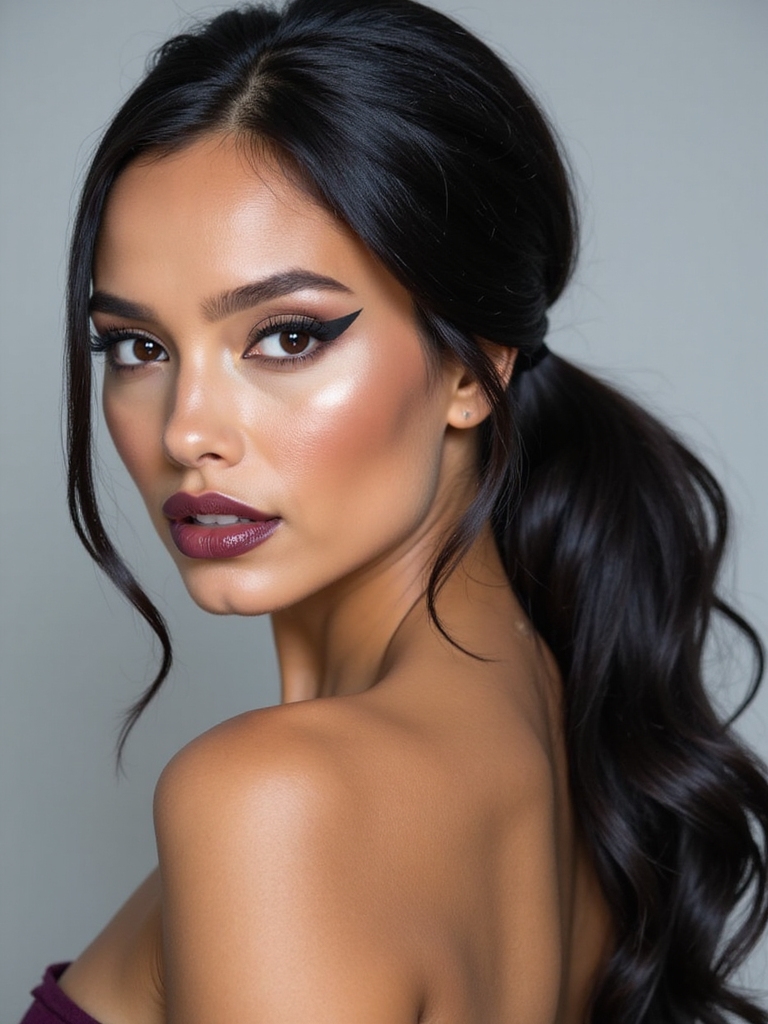
Gathered low at the nape with a clean center part, this is the most formal-reading ponytail position for locs and the gentlest on your hairline. The low anchor barely pulls the front at all, which makes it the one to choose for long days and for anyone already nursing tender edges.
It dresses up easily. Add a single cuff or a wrapped base and it carries a wedding-guest outfit. Leave it plain and it works under a blazer. Either way, your edges stay relaxed. For more pulled-back options that share the weight, see the full range of loc styles.
The Half-Up Ponytail
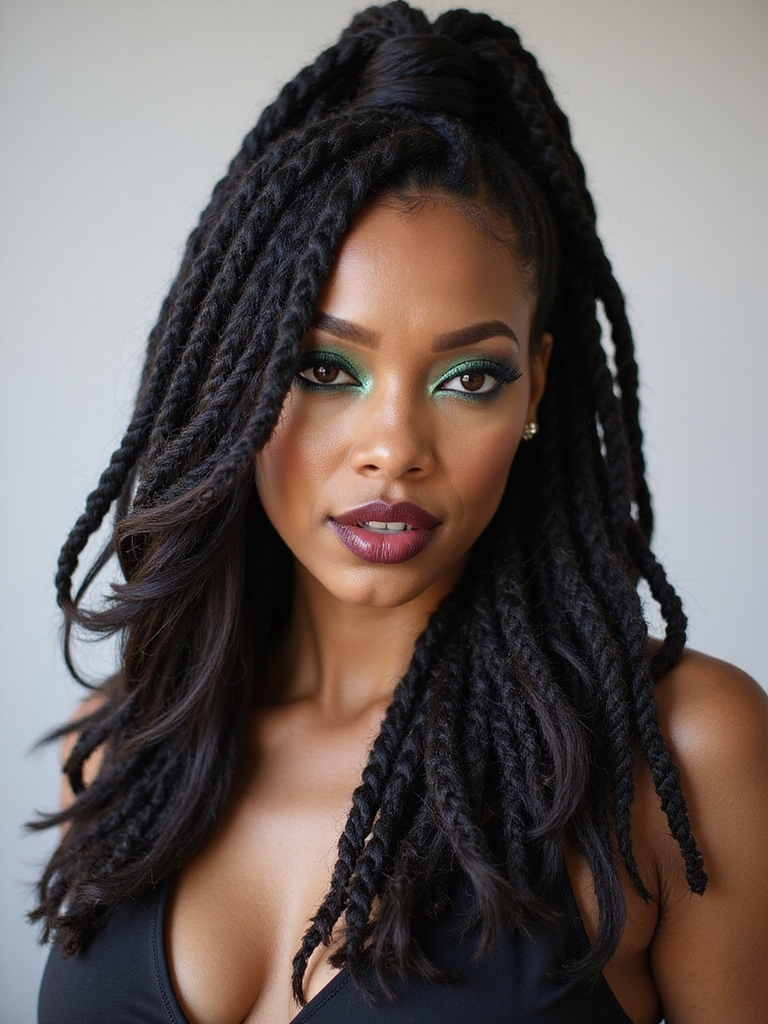
The half-up gathers only the top section at the crown and leaves the rest to hang loose, so your length still shows and the hair around your face lifts clear of your eyes. Only a portion of the hair carries any tension at all, which makes this a smart everyday compromise for anyone who wants the pulled-back look without loading the whole hairline.
It flatters nearly every face shape and suits any loc stage. A few ways to wear it:
- Plain and sleek for work, gathered with a small satin band.
- Coiled into a little top knot at the crown for height.
- Accented with a single cuff on the gathered section for detail.
How to wrap a high ponytail base in under a minute:
1Gather and secure
Collect the full set and secure with a wide satin band, leaving one or two thin locs free.
2Wrap and tuck
Coil the loose locs over the elastic until it disappears from view, then tuck the ends under and pin if needed.
The Bubble Ponytail
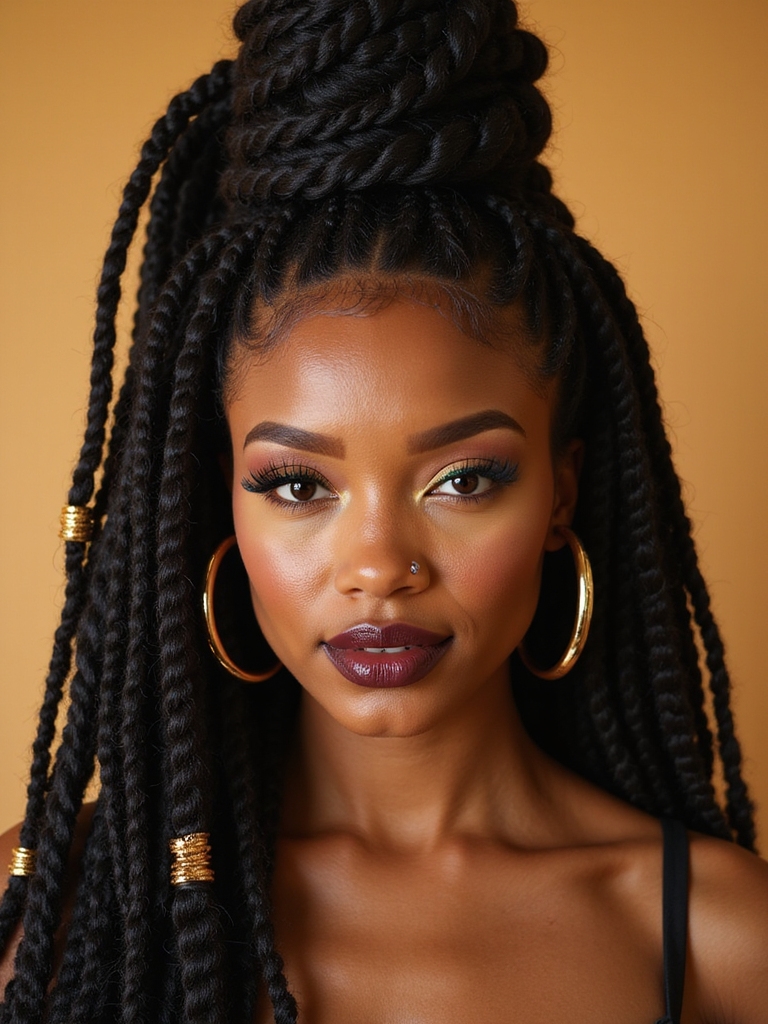
The bubble ponytail takes a long gathered set and adds bands at intervals down the length, puffing each segment into a rounded shape for a playful, architectural column. It needs real length to work, so this is a style for mid-back locs and longer. It looks far more involved than it is, which is its charm. To build one cleanly:
- Start with a mid-height anchor, not a crown-height one, to keep tension reasonable.
- Space the bands evenly, every three to four inches, and use soft satin-covered bands.
- Gently widen each bubble by tugging the sides after the band is set.
The Ponytail With Curled Ends
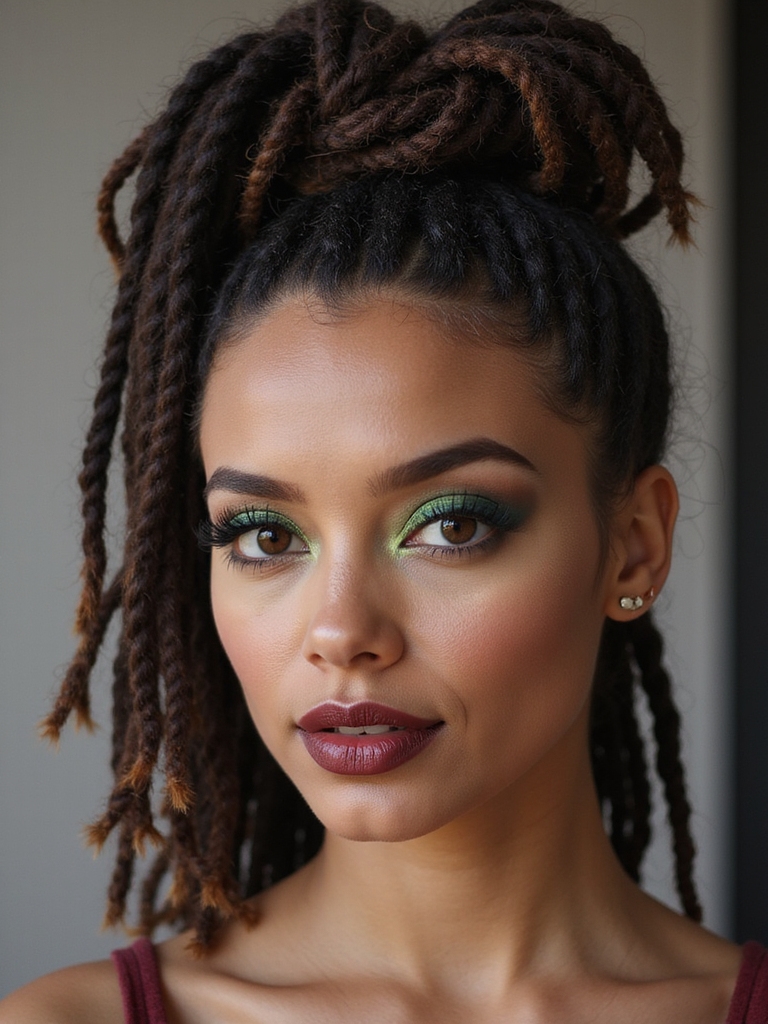
Setting the loose ends of a ponytail on flexi rods overnight, or braiding them down and releasing in the morning, softens the whole style. The curled tips fan out and catch the light, so a pony that would otherwise hang uniform and flat gains real movement and dimension across the whole gathered length. The set holds three to five days, then relaxes back.
This pairs well with the mid-height and low positions, where the curled ends sit visible over the shoulder. If you want more lasting bounce built into the locs themselves, the techniques in curly loc styles go deeper.
One belief that costs loc wearers their edges:
❌ Myth: Tighter means it lasts longer
✅ Reality: Tightness does not add hold on locs, since the locs grip each other already. It only adds tension at the root, which is what thins the hairline over time.
❌ Myth: A daily high pony is harmless
✅ Reality: Repeating a comfortable-feeling high pony day after day still loads the same edges over and over. Rotating height and position is what keeps them strong.
The Beaded Ponytail
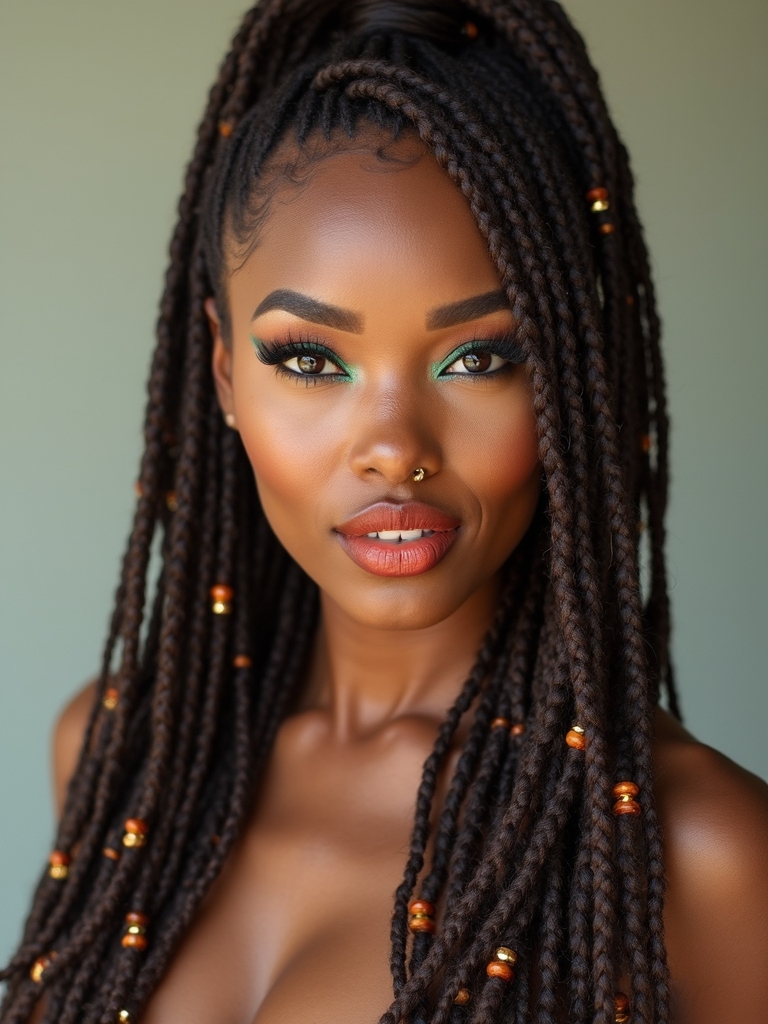
Threading beads and charms onto individual locs before you gather them turns a plain ponytail into something personal, with the adornment visible at the base and scattered down the length. Many wearers add to a bead collection slowly, piece by piece, over years rather than buying a full set at once. A little practical guidance:
- Place beads before gathering, so they sit where you want them in the finished pony.
- Keep heavy metal pieces higher up, since weight low on the length adds drag.
- Spread them across several locs so no single one carries all the load.
The Side-Swept Ponytail
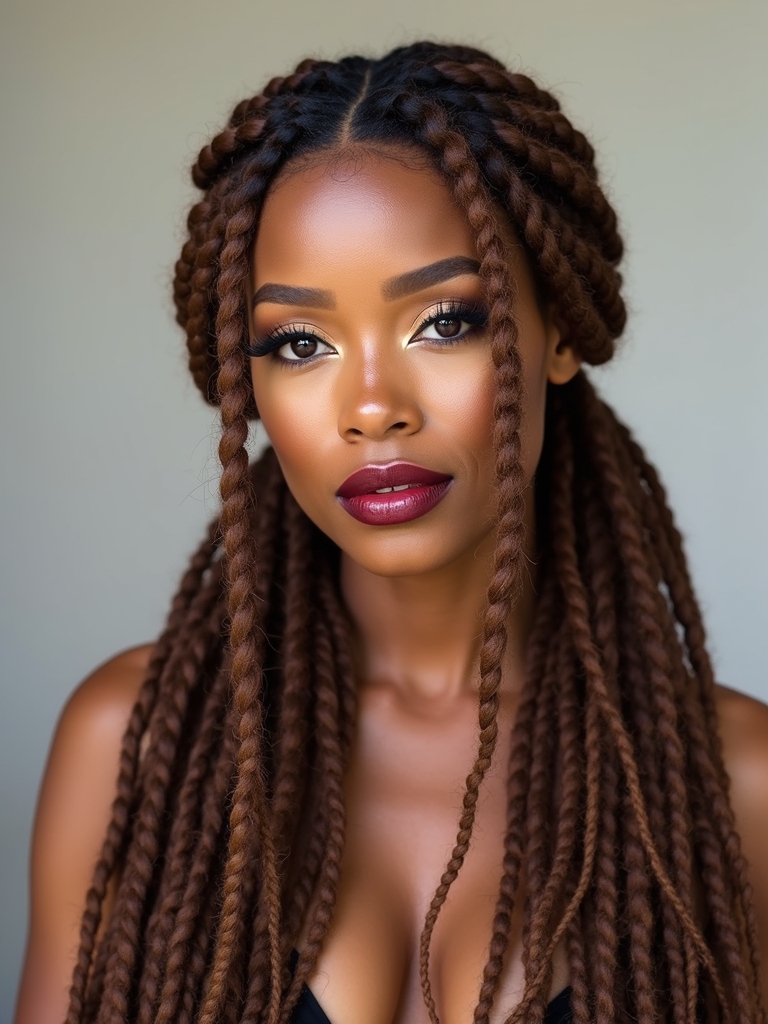
Sweeping the whole set to one side and letting it fall over the shoulder frames the face with a soft asymmetry that a centered pony cannot give you. It feels a little dressed-up and a little undone at once, which is why it works for evenings out and photos. Here is the order that keeps it clean:
- Part on the deeper side first, then sweep all locs toward the opposite shoulder.
- Anchor low and to the side, at jaw level, with a satin band.
- Drape the gathered length forward over one shoulder and let it settle.
🅰️High pony
Polished and striking, best saved for occasions because of the pull on your hairline.
🅱️Mid or low pony
Gentler on the edges and just as tidy, which is why it earns the daily-wear spot.
The Scarf-Wrapped Ponytail
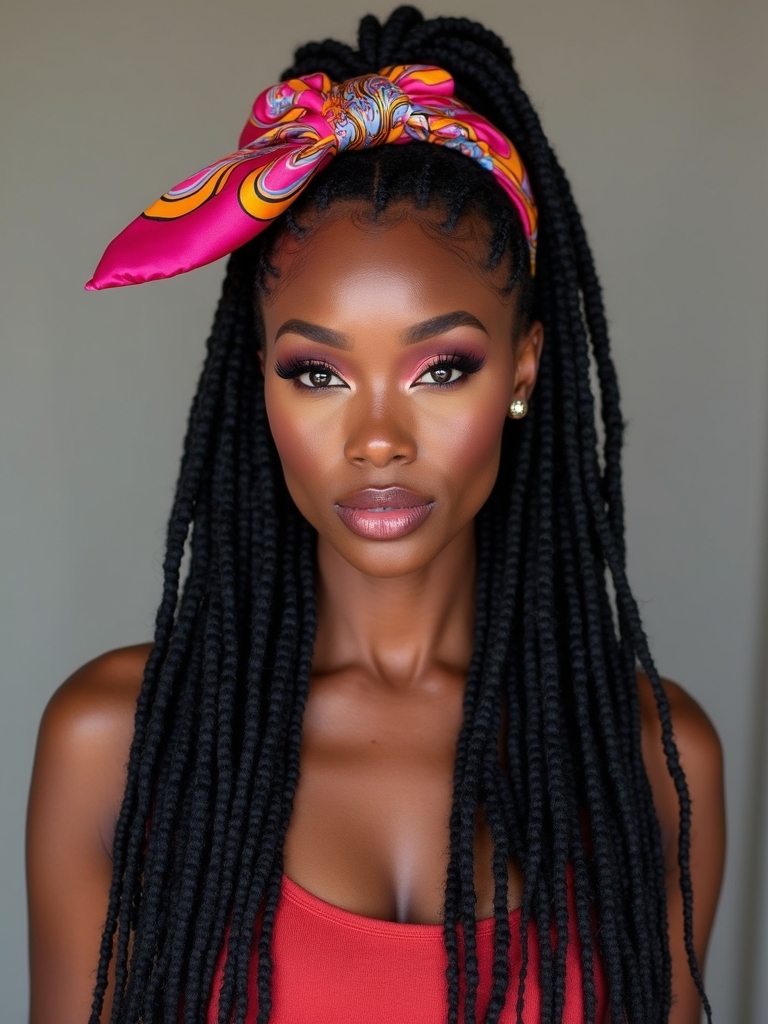
Tying a length of fabric around the base adds color and pattern to a ponytail that already holds its own shape without any help. A silk or satin scarf does double duty here: it looks good and it protects the locs at the contact point where a bare elastic might snag.
This is also the cheapest upgrade on the list, since a single scarf runs a few dollars and lasts for years. A few ways to use it:
- Tie it in a bow at the base for a soft, romantic finish.
- Cover the elastic completely for a clean ring of color at the base.
- Choose silk or satin so the fabric protects rather than catches the locs.
The Cuff-Accented Chunky Ponytail
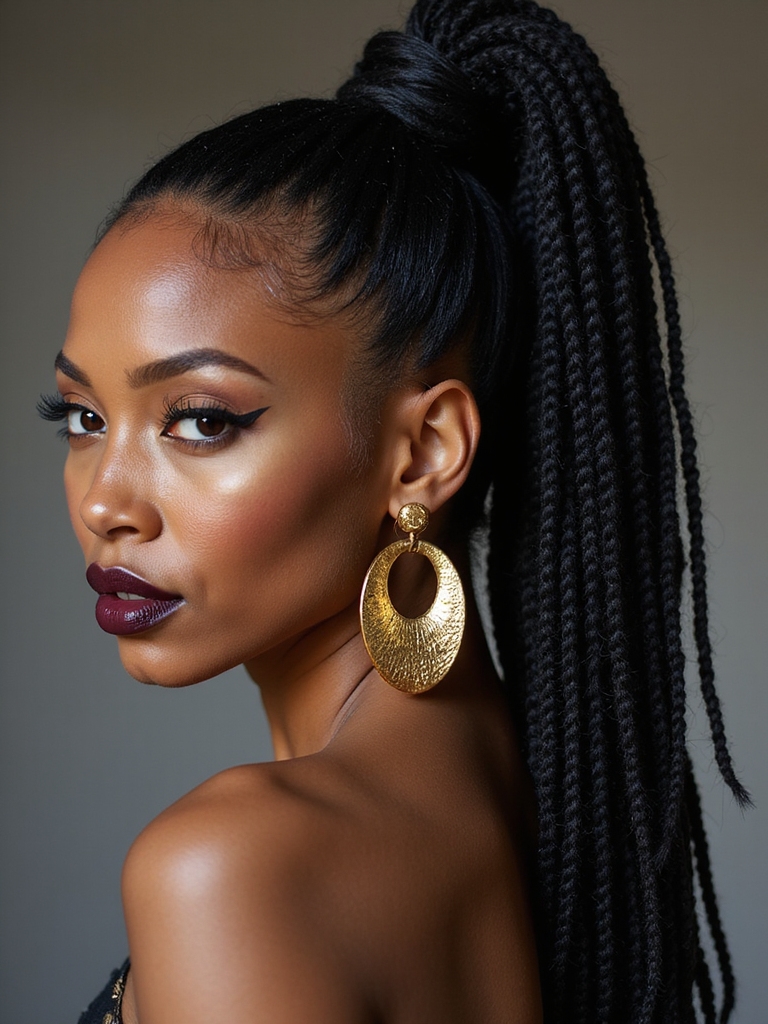
On thick or jumbo locs, large metallic cuffs make the accessories the whole point. Slid onto individual locs before gathering, they catch the light at the base and down the gathered column for a bold, finished statement. The chunkier the locs, the more presence each cuff carries.
Keeping Cuffs From Stressing the Roots
Cuffs are reusable and collectible, and most wearers just keep adding to a set over the years. Simple metal rings run a couple of dollars each; handmade or precious-metal pieces cost quite a bit more.
The one caution is weight. Large metal cuffs concentrated low on long locs pull at the root, so distribute them up the length and avoid stacking several on the same loc.
The Braided-Root Ponytail
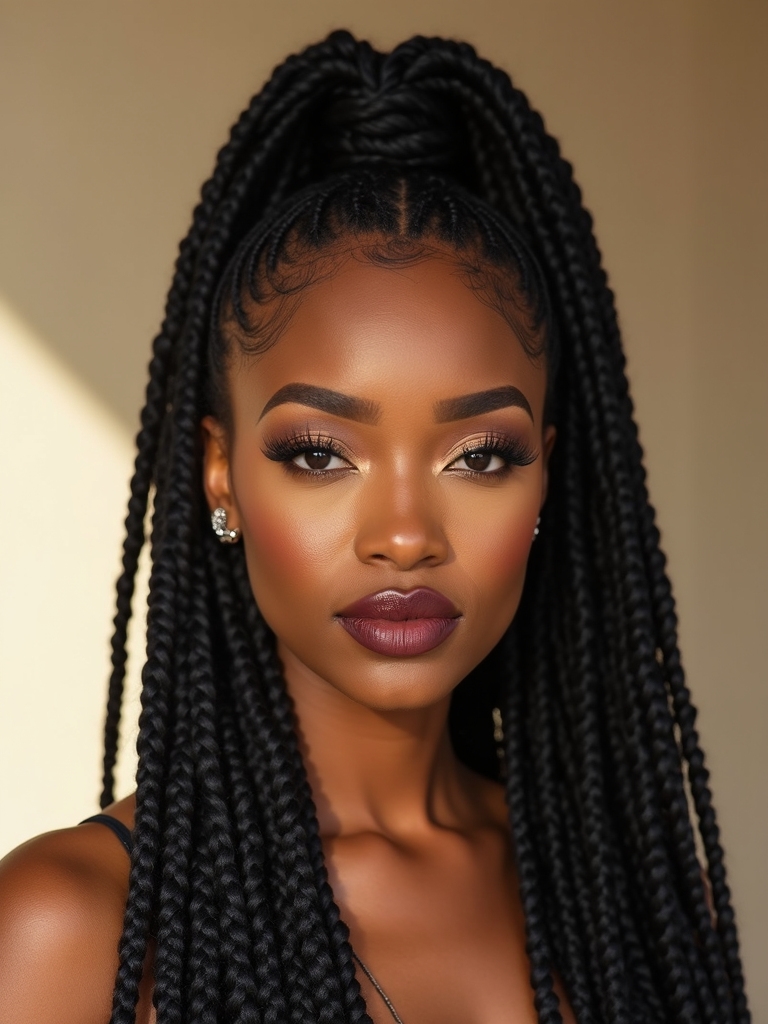
Flat-braiding a few root sections before you gather everything into the ponytail builds a structural base that keeps the anchor from sliding during a long day. The braids lock the foundation in place, so the pony stays put through movement without your needing to cinch the band tighter.
It takes a few extra minutes and a little practice. But it is the move that lets active wearers keep a high pony secure without over-tightening it into the root. Worth learning if yours droops by afternoon.
The Undone Low Ponytail
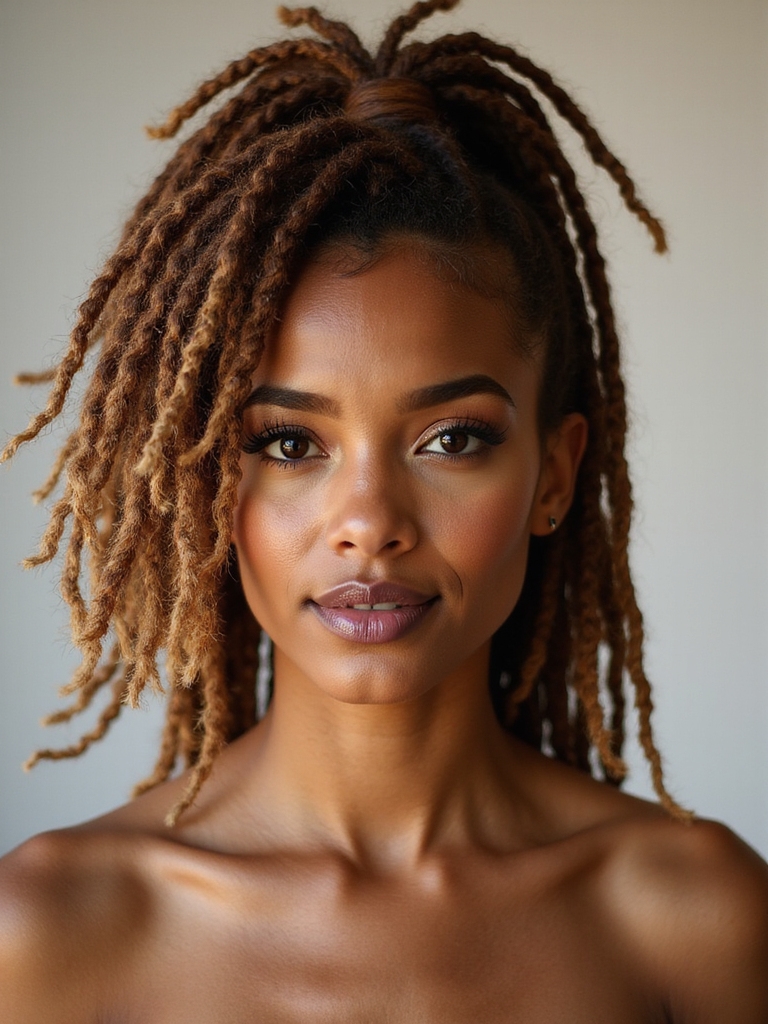
Not every ponytail should be perfect. Leaving a few locs out to frame the face and keeping the gather loose gives you a relaxed, personal look that the polished versions cannot. It looks casual on purpose, and the truth is you did less work, not more.
Choosing Which Locs to Leave Out
The face-framing pieces do real work, softening the hairline and flattering most face shapes, especially rounder or squarer ones that benefit from a vertical line at the cheeks. Pull two or three thinner locs loose at the temples and leave them be.
Because the gather is low and loose, this is one of the kindest styles to your edges, which makes it a good daily choice when you still want some shape.
The Starter-Loc Puff
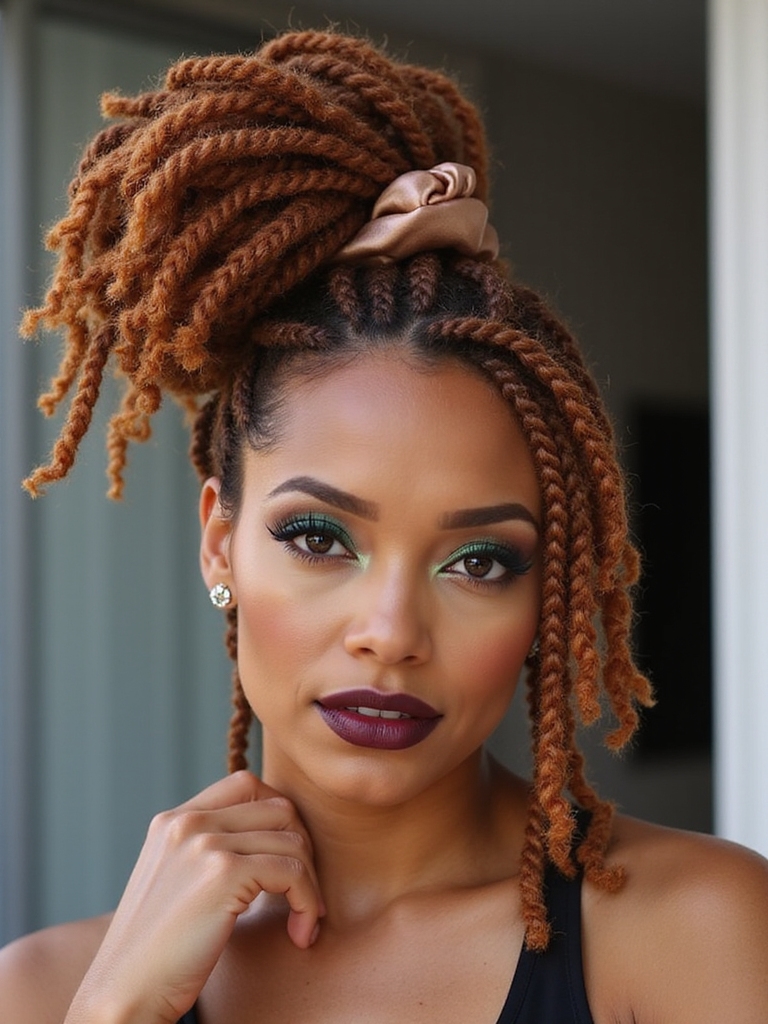
Short starter locs cannot do a long swinging pony, but they can do a puff. Gathering the set high into a rounded puff is one of the few truly shape-defining styles available at the budding stage, and it makes new locs look intentional while they mature.
Protecting Brand-New Locs
The caution here matters more than usual. New locs and new growth are at their most fragile, and a tight puff on budding locs is a real traction risk. What I tell every new-loc client is to keep the puff loose, use a stretchy satin band, and not wear it pulled back every day.
Used occasionally and gently, the puff is a friend to the starter stage. For more early-stage ideas, see short loc styles.
Double Ponytails
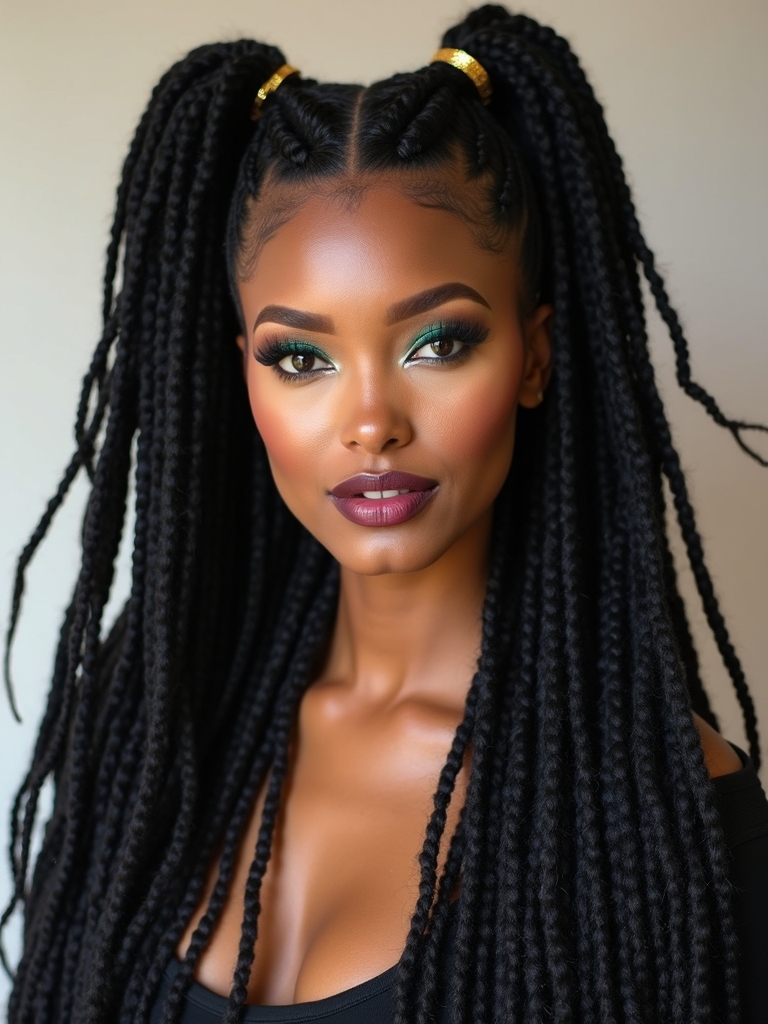
Splitting the set down a center part into two gathered ponytails, one on each side, is playful and clearly deliberate. It has a high-energy, youthful feel that suits festivals, weekends, and creative settings, and it works across loc lengths from short to long.
Because the weight splits across two anchor points, double ponytails can actually be gentler than a single high pony, as long as neither side is cinched too tight. To keep them even:
- Part dead center for two balanced sections, securing each with a satin band.
- Set both at the same height so the look stays symmetrical.
- Add matching cuffs or ribbon on each side to tie the halves together.
The Gym-Ready Ponytail
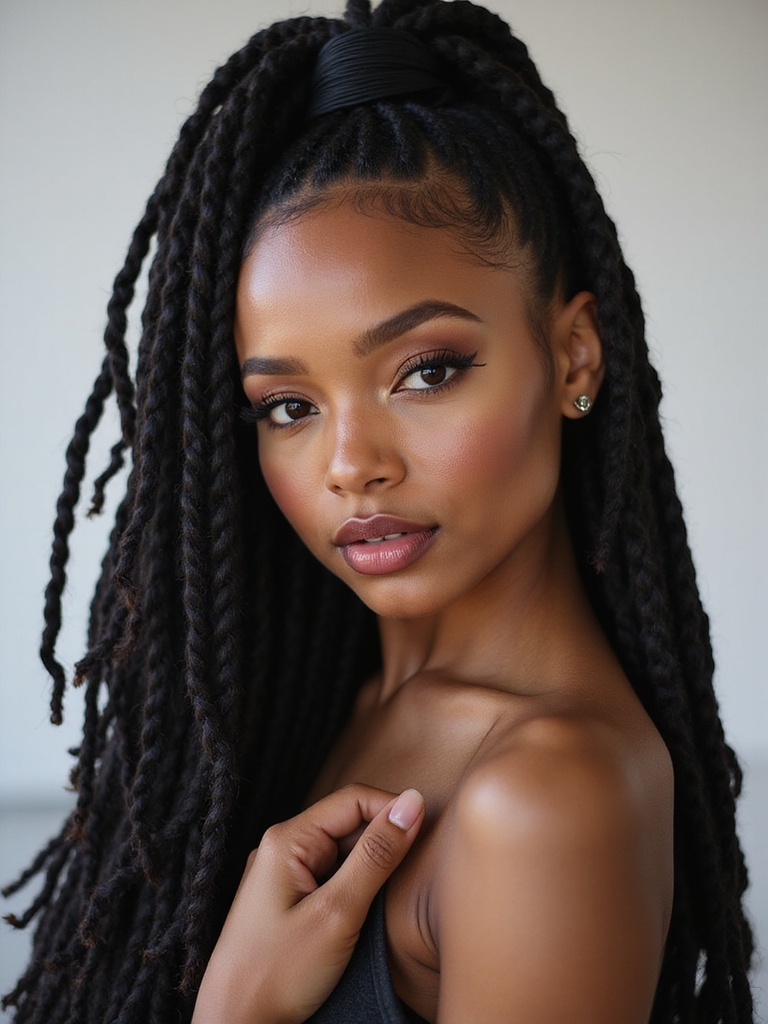
For workouts you want a pony that holds through movement and sweat without re-doing it mid-session. The instinct is to crank it tight. Resist it. Repeated tight gym ponytails are a classic cause of edge loss, and the daily sweat-and-pull cycle only speeds the damage along. The goal is secure, not strangled. Build it this way:
- Anchor with a wide elastic-free satin band that grips without cutting in.
- Smooth edges with a light, water-soluble edge product, around $8 to $15 a jar.
- Tie a satin or moisture-wicking band over the hairline to hold edges without extra pull.
Wear the Pony, Keep the Edges
A loc ponytail is among the most useful styles you own, fast, secure, and dressed up or down in seconds. The only thing standing between you and wearing it for years is tension, and that is entirely in your control: lower the anchor, widen the band, and rotate the position.
Try the mid-height wrapped version first if you have not before. Once you feel how secure a pony can be without being tight, the daily high-and-tight habit gets a lot easier to give up, and your hairline will thank you for it down the road.
More Ideas Here