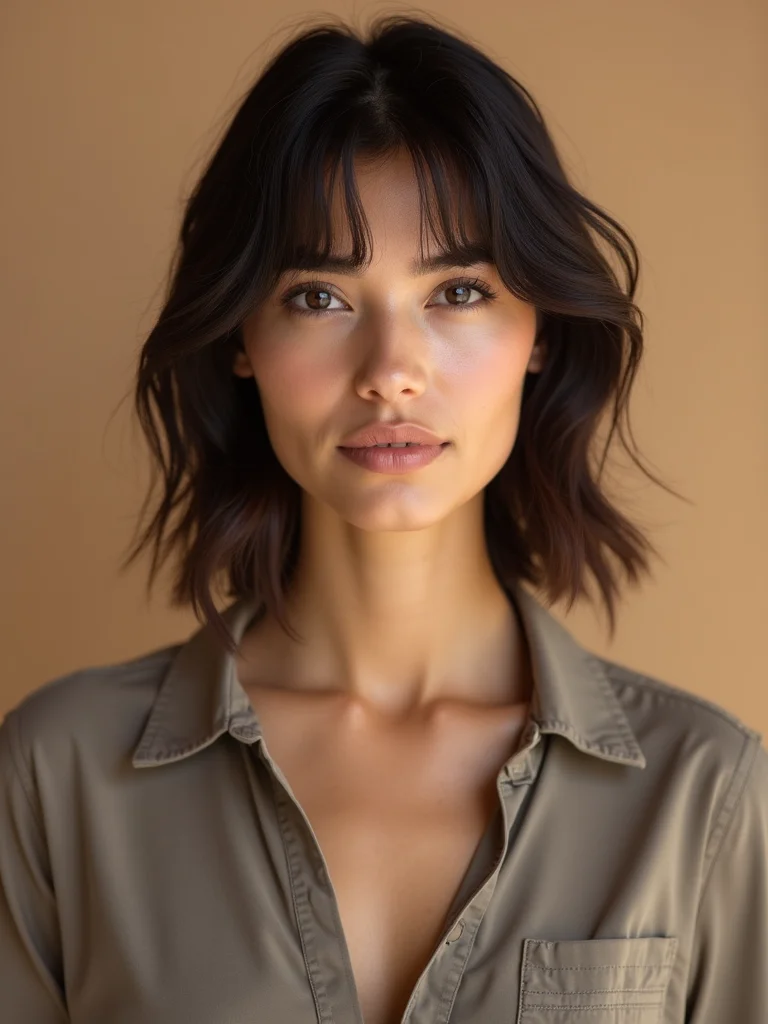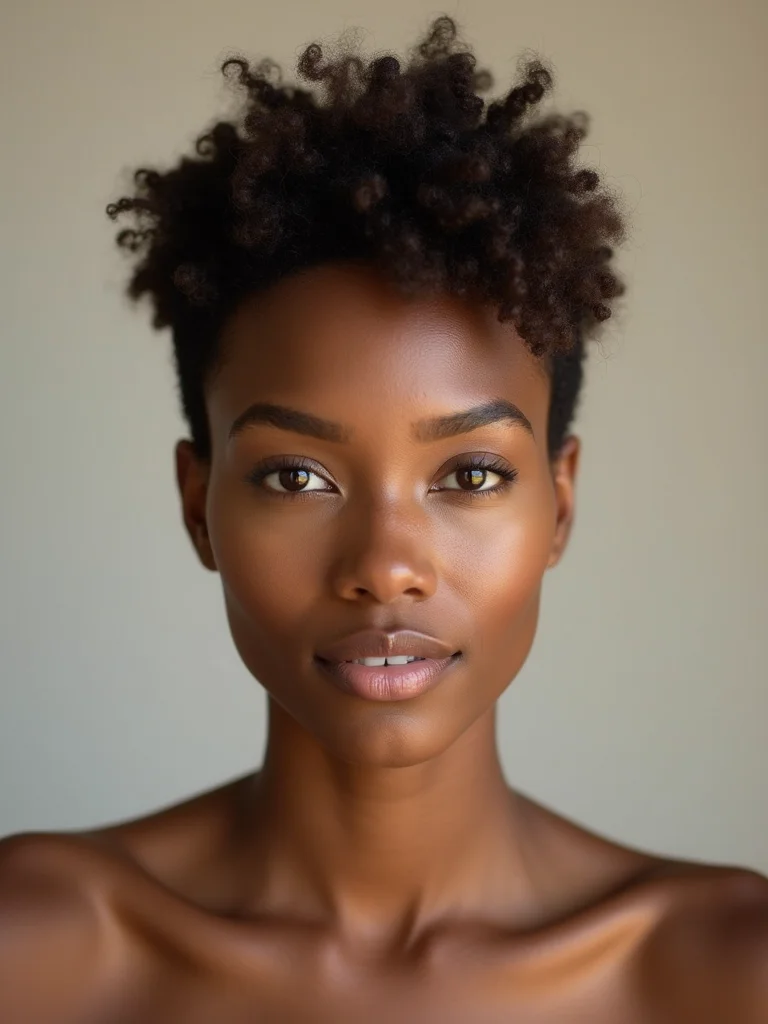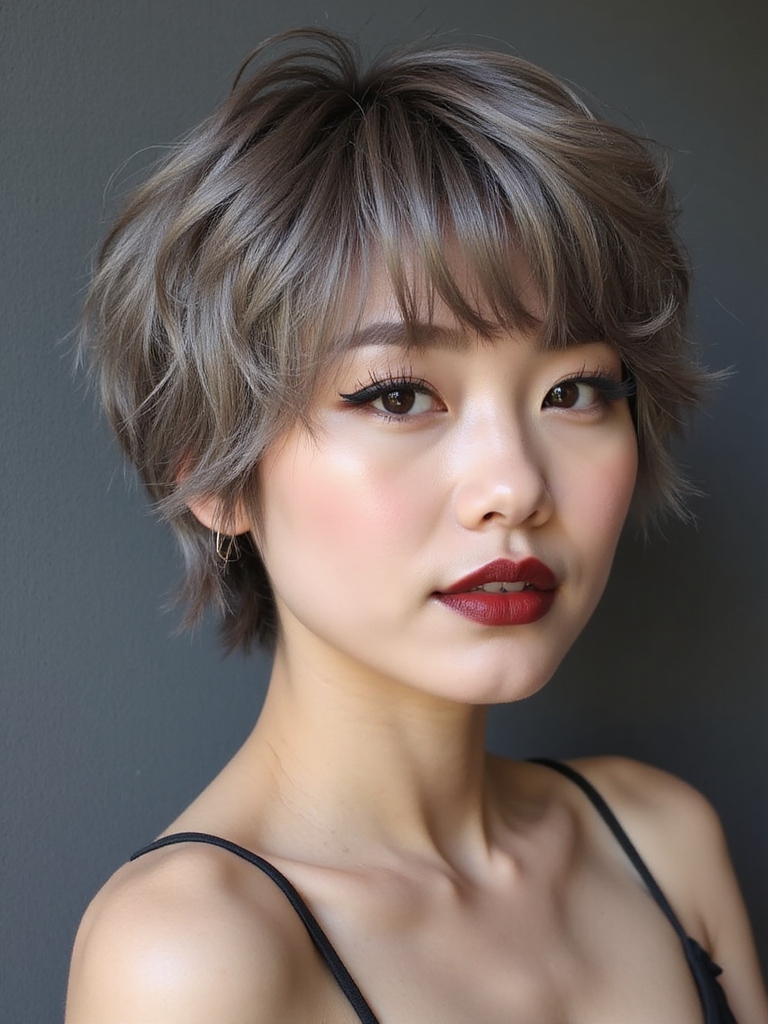
A Korean wolf cut for short hair looks different from the shaggy, grunge version you might picture, and it comes down to one word: softness. Where the Western shag leans rock-and-roll and deliberately undone, the Korean take is gentler, airier, and more polished, with feathery layers and see-through texture that frame the face softly instead of roughing it up.
That softness is what makes the cut so flattering and so wearable at a shorter length. What sets it apart is a handful of choices: the length you land on, the bangs you pick, and the soft, glossy way you finish it at home. Get those right and you have a K-beauty cut that frames the face beautifully and asks very little of you day to day.
The Korean Short Wolf Cut at a Glance
- The Korean wolf cut is softer and more polished than the Western shag, with feathery, translucent layers.
- On short hair, it frames the face delicately and adds volume up top while staying airy and light.
- Soft, wispy bangs are part of the signature look, balancing the face and completing the K-beauty feel.
- Styling leans on lightweight product and gentle volume, staying well clear of the gritty texture that defines the grungier shag.
The Soft, Polished Korean Wolf Cut

The defining feature of the Korean wolf cut is restraint: soft, feathery layers and see-through texture take the place of the heavy, choppy layering a Western shag relies on, so the cut lands delicate and refined while a shag stays deliberately messy. The same basic shape, short and layered, ends up looking polished and pulled-together.
That effect comes from the cutting technique and the styling. The layers are blended and point-cut for a lightweight finish, and the hair is styled with subtle volume and a healthy shine. That shine is the whole point. It is a more feminine, put-together take on the wolf cut.
This is why it flatters so widely and suits people who love the wolf shape but find the grungier version too harsh. On short hair, that refinement is exactly what keeps a bold cut looking wearable.
Tailoring a Short Wolf Cut to Your Face

Because a short wolf cut sits close to your face, it flatters most when the layers and face-framing are tailored to your features. Placement is where a good stylist earns their keep: the soft, face-framing pieces get positioned differently depending on whether the goal is slimming a rounder profile, easing a stronger jawline, or filling out a narrower one.
The general guidance is that crown volume and longer face-framing elongate a rounder face, while softer, cheekbone-level framing flatters most others. Talk through your face shape in the consultation, since on a short cut the placement makes a visible difference to how it suits you.
💡What to Say at the Consultation
Naming your face-shape goal out loud changes the cut. Say “lengthen my face” and a stylist builds crown height and longer framing pieces; say “soften my jawline” and the framing gets cut shorter and rounder at the cheek. The same wolf cut shifts placement entirely depending on which of those two sentences you lead with.
Length Defines Your Vibe

Within short, there is a real range, and the exact length sets the whole mood of the cut. A micro, ear-length wolf is bold and editorial; a mini, jaw-length one is cute and modern; and a chin-grazing version is the softest and most flattering for most faces. Where you land changes everything about how the cut feels.
The shorter you go, the bolder and higher-maintenance it becomes, since shorter layers need more frequent trims to hold their shape. The chin-grazing length is the sweet spot for most people, bold enough to feel like a change but soft and forgiving enough to wear easily.
- Micro, ear-length: bold and editorial, highest upkeep.
- Mini, jaw-length: cute, modern, and current.
- Chin-grazing: the softest and most universally flattering.
Soft Blend vs Choppy Definition
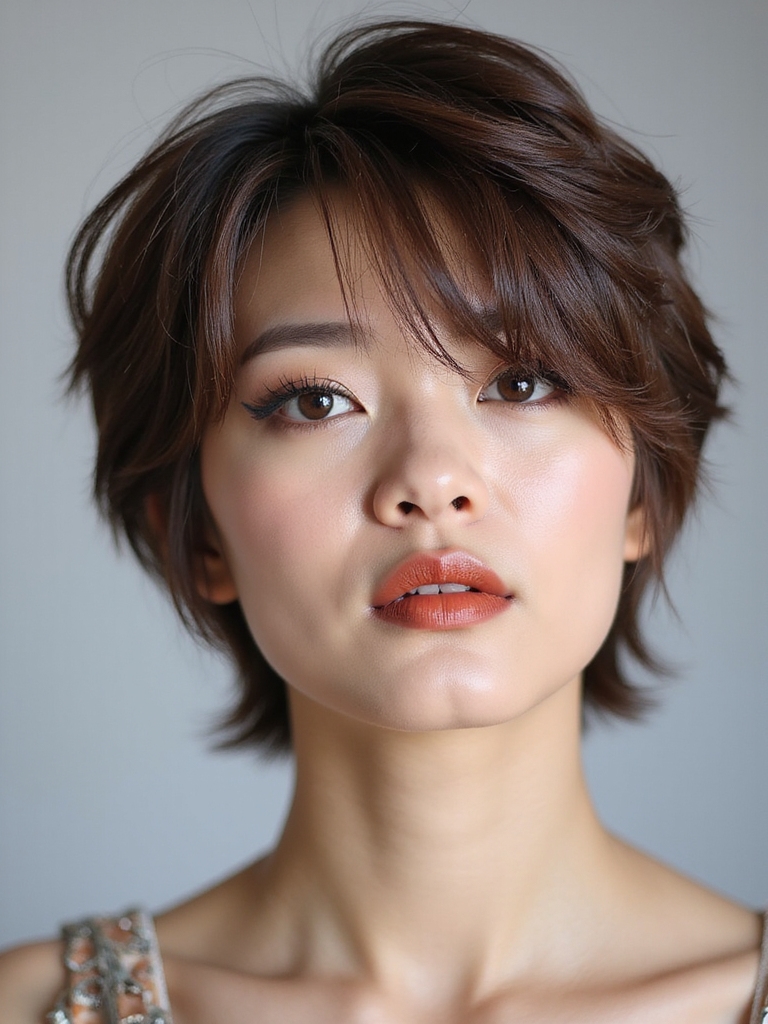
The biggest choice within this style is how soft or defined the layers should read, and it sets the tone of the whole cut. A soft, airy blend keeps the layers feathered and melting into each other for the most delicate, polished K-beauty look, while a slightly choppier definition gives more texture and edge while still staying softer than a Western shag.
Most people drawn to the Korean version want the soft blend, since it is the gentler, more refined of the two and the most flattering on short hair. The choppier option suits those who want a little more grit without going fully grunge.
Either way, the layers stay lighter and airier than a classic shag, which is the through-line of the Korean style. Tell your stylist which end of the spectrum you are after, since it changes the cutting approach entirely.
How often you’ll actually sit in the chair, by blend:
🎯Soft blend
The most forgiving upkeep here: layers melt into each other, so a slightly overgrown stage still looks intentional between visits.
🎯Choppy definition
Needs a shaping trim sooner, since the point-cut edges that create the texture blur first as the hair grows.
🎯Mixing both
A soft crown with choppier ends splits the difference: moderate upkeep, and two textures to maintain instead of one.
How Bang Style Influences Balance
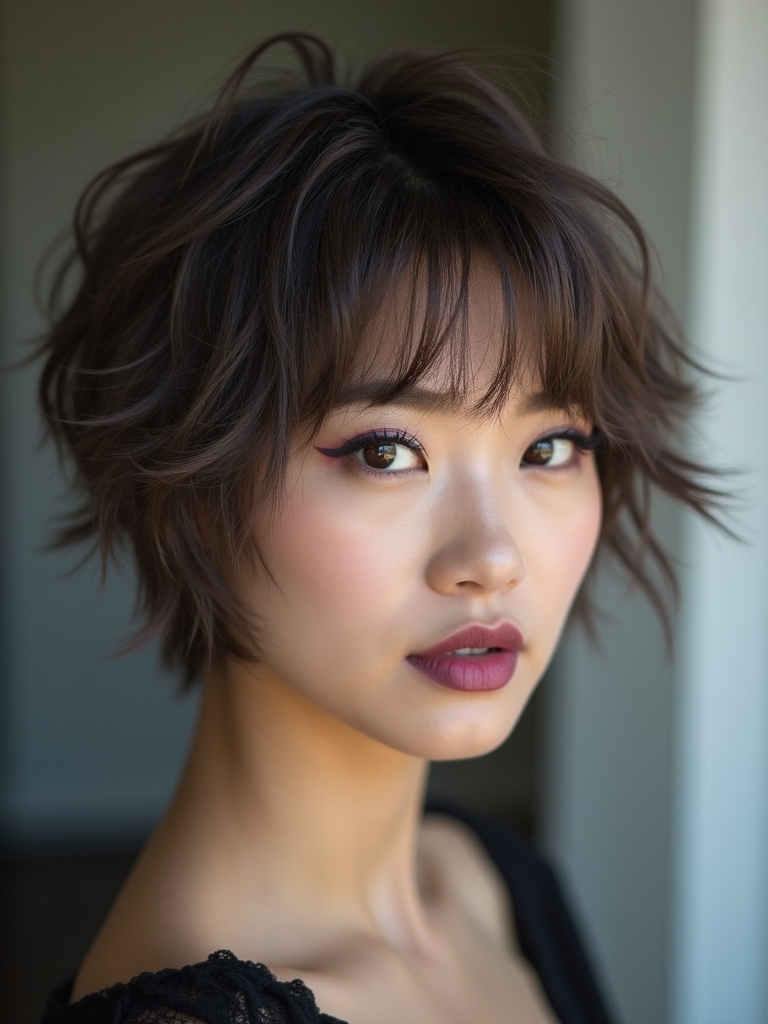
Bangs are central to the Korean wolf cut, and the style you choose balances your whole face. Soft, wispy see-through bangs are the signature, adding the delicate, youthful framing the look is known for, while curtain bangs give a slightly more grown-up sweep and going without bangs keeps the focus on the layers.
The wispy, sheer fringe is the most authentically K-beauty choice, kept light and feathery so it frames the eyes without weight. It softens the forehead and completes the gentle, polished feel that sets this cut apart.
- Wispy see-through bangs are the signature K-beauty choice.
- Curtain bangs give a softer, more grown-up sweep.
- No bangs keeps all the focus on the layered shape.
Crown Volume and Textured Face-Framing

This cut relies on two things working together: a little volume built into the crown and soft, textured pieces framing the face. The crown volume keeps the shape from falling flat and gives that gentle lift the look depends on, while the face-framing texture softens and flatters your features. Get both right and the cut has its signature airy, balanced shape.
- Crown volume gives the cut its soft, lifted shape.
- Textured face-framing flatters and softens the features.
- A quick blow-dry lifted at the crown builds that same gentle volume.
The everyday styling routine in three steps:
1Dry with crown lift
Rough-dry with your fingers or a round brush, pushing volume up at the crown where the shape lives.
2Soften the layers
Work a tiny amount of light cream through the lengths to define the layers without weighing them down.
3Add shine
Finish with a drop of serum for the glossy K-beauty finish, and a light mist of flexible spray if needed.
The Low-Effort Korean Texture

Despite looking polished, this version is surprisingly low-effort to style once it is cut well, because the layers themselves fall into place with very little help. It relies on gentle volume and a light hand. The gritty product and rough-drying that define a Western shag would only weigh these soft layers down. Here is the easy daily approach.
- Rough-dry with your fingers for soft, natural volume.
- Use a round brush at the crown for a little lift.
- Finish with a light cream or a drop of oil, aiming purely for shine.
- Skip heavy matte pastes, which fight the polished look.
Overnight, No-Heat Texture

You can build the soft waves the Korean wolf loves without any heat by setting your hair overnight, which is also kinder to short, layered hair. Damp hair set in loose braids or wrapped around soft rollers before bed unravels into gentle, bouncy texture by morning, with none of the heat damage of a curling iron.
Heatless Bounce by Morning
This method suits the cut beautifully because the soft, undone waves it creates match the gentle, polished aesthetic exactly. It is the heatless route to that K-beauty bounce.
On the shortest versions, even a few pin curls overnight add the soft movement the look wants. A light mist of flexible spray in the morning sets the texture without stiffness.
Which heatless method fits your morning, and your hair?
1Loose braids overnight
Best for the shortest versions, since even one small braid holds enough hair to leave a visible bend by morning.
2Soft rollers before bed
Suits medium-to-thick hair that needs a firmer set to actually hold a curl through a full night’s sleep.
3A few pin curls
The quickest option, five minutes tops, and enough for a subtle wave on already-textured hair.
Lightweight, Soft-Hold Products

The product rule here is light and soft: anything heavy or matte fights the airy, polished finish the look depends on. A lightweight mousse or soft-hold cream builds gentle volume and movement without weight, while a shine serum adds the glossy, healthy finish that is so central to the K-beauty aesthetic. Heat protectant is a must any time you do use tools.
- Lightweight mousse or soft-hold cream for airy volume.
- A shine serum for the glossy K-beauty finish.
- Skip heavy matte pastes that weigh this softness down.
- Always use heat protectant when you reach for hot tools.
Tailoring Layers to Your Texture

Like any wolf cut, the Korean short version has to be tailored to your hair type to look its best. Fine hair benefits most, since the light layering creates volume it otherwise lacks, while thick hair needs the weight removed from inside so it does not sit heavy in a short shape. Wavy and curly hair can absolutely wear it, with the layers cut to suit the texture.
For waves and curls, the same dry-cutting rule applies as with any wolf cut, so the stylist sees where the hair falls once it springs. The Korean style adapts to most textures, but the cutting approach changes for each, which is worth discussing before you commit.
Be honest about your texture and density in the consultation. A short cut shows everything, and the first-timers I see happiest with the result are the ones who described their hair plainly and let the layering be tailored to it.
Subtle Highlights and Shadowed Depth

Color can lift a Korean short wolf cut beautifully when it is kept muted and dimensional, since the understated aesthetic suits subtle color far better than high contrast. Fine highlights add the lightness that makes the layers pop. A shadowed root keeps it low-maintenance and adds depth, and the two together feel very K-beauty.
The key is dimension over drama: blended color that catches the light and emphasizes the lightweight layers. Chunky highlights would fight the cut’s delicate feel. A healthy shine on the color completes the refined look that defines the style.
Growing It Out Intentionally

A real perk of this shape is that it grows out gracefully, the soft layers lengthening into a longer wolf or a shag and skipping the awkward stage most short cuts hit. With a few blending trims along the way, the grow-out looks intentional at every length, so you are never stuck regretting the chop.
If you decide to grow it longer, the layers simply relax into face-framing and longer movement, which means a short Korean wolf can work as a stepping stone toward something longer. That forgiving grow-out is part of why it is such a low-risk cut to try.
The Soft, Airy Everyday Version
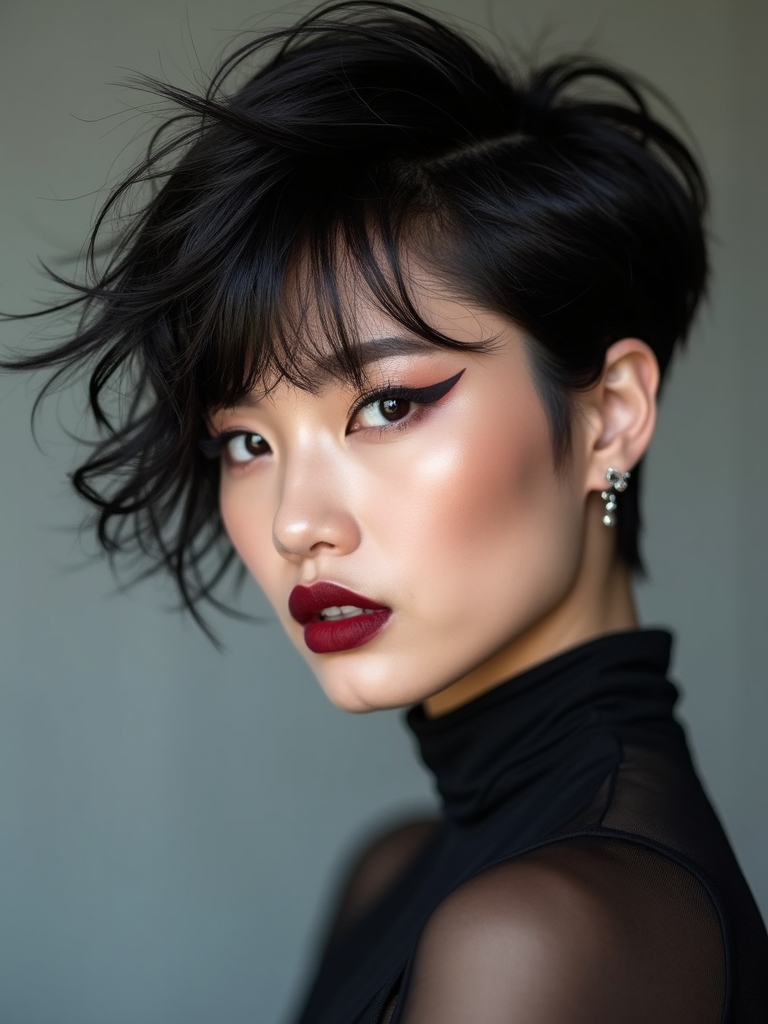
For most people, the everyday version of this cut is the soft, airy one worn with minimal styling, all gentle layers and soft volume that suits work and weekends alike. It is the take that captures the K-beauty feel without any drama, polished enough for any setting and easy enough for daily life.
Most first-timers do best starting here, since it delivers the soft, flattering shape with the least fuss. A quick rough-dry, a little volume at the crown, and a touch of shine, and it is done. Clients are consistently surprised how little a polished cut actually asks, which is exactly the kind of easy elegance the Korean style is loved for.
K-Beauty Takes on the Short Wolf
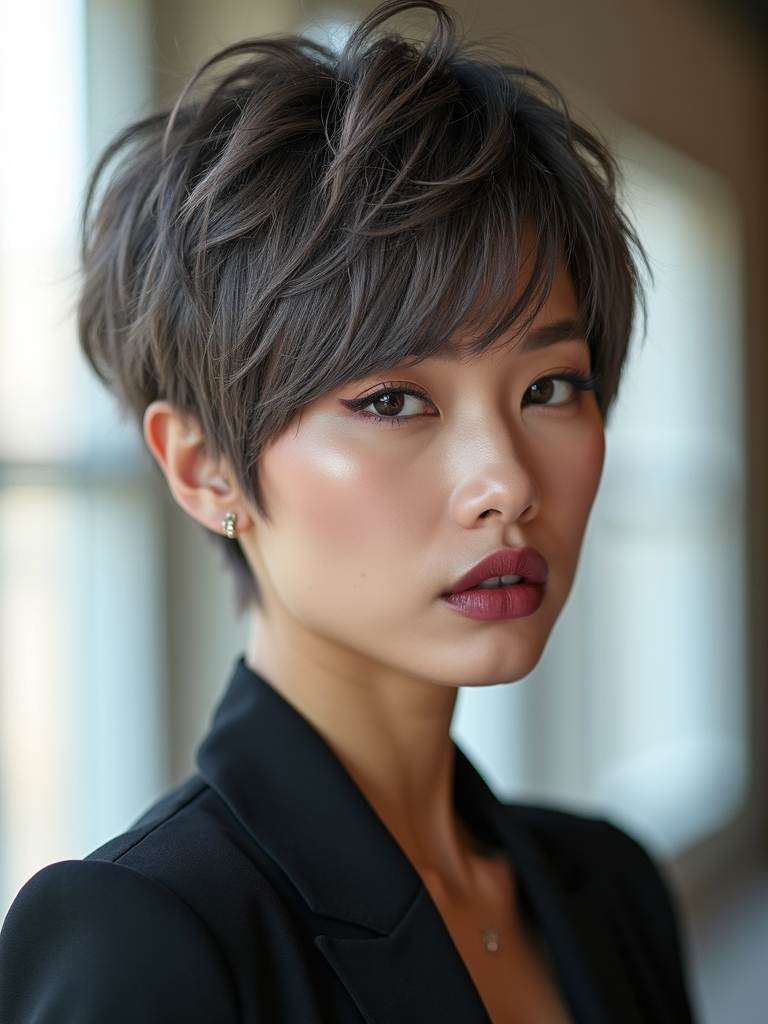
Across K-beauty, the short wolf cut shows up in countless muted variations, but they share a common thread: light layering, sheer wispy bangs, and a healthy finish. Whether worn sleek or tousled, the look always leans feminine and refined, which is what distinguishes it from the Western interpretation.
The Common Thread Across K-Beauty
The popularity comes from how flattering and youthful that understatement reads, framing the face delicately while adding movement and volume. It is a cut designed to enhance your features and let them lead, which is very much the K-beauty philosophy.
If you are gathering inspiration, look for the sheer textures and the healthy finishes, and steer away from the choppy, matte versions, which belong to a different aesthetic entirely. Our wolf cut for short hair guide covers more short takes.
Refreshing the Cut Between Trims

Because short layers grow faster than you would like, knowing how to refresh the cut between salon visits keeps it looking sharp. A quick restyle revives the shape in about two minutes on day-two hair: a round-brush at the crown and a little texture handles most of it. In my chair, this is the cut clients find easiest to keep looking sharp, and a light dry shampoo brings back volume as the cut starts to drop.
When the layers really lose their shape, a small fringe or face-framing trim buys you time before a full appointment. The soft, blended nature of the cut means small refreshes go a long way, since there is no sharp line to maintain.
Most short wolf cuts want a shape-up every five to seven weeks, sooner than a longer wolf, so build that into your routine. Between those visits, a little daily styling and the occasional refresh keep that polished K-beauty finish going.
Styling Tips for the Korean Short Wolf
The single most useful styling habit is to dry your hair with a little lift at the crown, since that gentle volume is the backbone of the whole look. Rough-dry with your fingers flipped forward, or use a round brush to push the crown up, then finish with the lightest possible product so the layers stay airy. Heavy or matte products are the enemy of this cut; everything should feel soft, glossy, and weightless.
On cost and upkeep, a short wolf cut runs roughly $50 to $110 and wants a shape-up every five to seven weeks, more often than a longer version because the short layers drop faster. Bring a photo, but talk to your stylist about the soft, see-through K-beauty texture specifically, so you do not end up with the choppier Western version by mistake. For more, our cute wolf cut and shaggy wolf cut guides show the range of the shape.
Korean Short Wolf Cut Questions, Answered
?How is a Korean wolf cut different from a regular wolf cut?
It is softer and more polished. Where the Western shag is choppy, gritty, and deliberately undone, the Korean version uses feathery, translucent layers, wispy bangs, and a glossy finish, so it frames the face delicately.
?Does a short Korean wolf cut suit fine hair?
Yes, fine hair is a great candidate. The soft layers create the volume fine hair lacks, especially with a little lift at the crown. The key is light, feathery layering rather than heavy thinning, plus lightweight product so the airy shape is not weighed down.
?How often does a short wolf cut need trimming?
Roughly every five to seven weeks, more often than a longer wolf cut because short layers lose their shape faster. Between visits, a quick restyle and a small face-framing or fringe trim keep it looking sharp until your next appointment.
Soft, Polished, and All the Rage
The reason the Korean short wolf cut keeps spreading is that it takes a bold, layered shape and makes it refined and truly flattering, with feathery layers, sheer wispy bangs, and a healthy finish that frame the face gently. It is the wolf cut for people who want movement and edge without any of the grunge.
If that soft, refined aesthetic speaks to you, describe the gentle K-beauty texture specifically when you book — that one clarification is what keeps the result from drifting into the choppier Western shag. Get that across, and a short Korean wolf cut might just be the freshest, most flattering thing you do for your hair this year.
More to Try