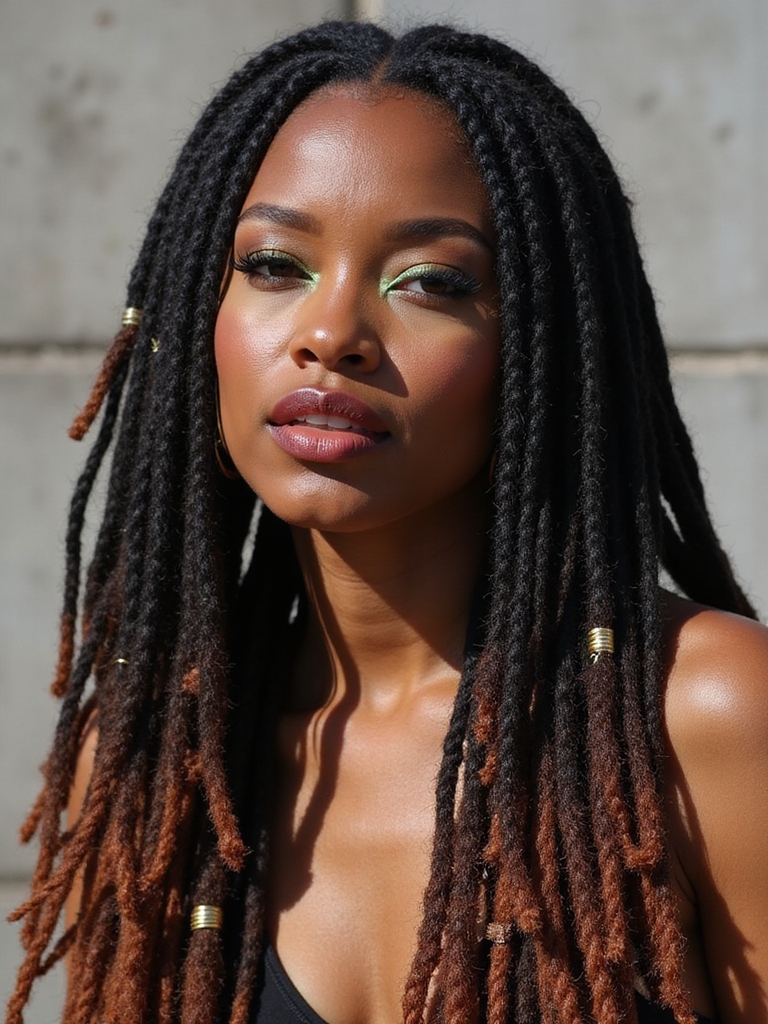
Here is what nobody tells you about dreadlocks bun hairstyles until you have one: the bun holds itself. A mature set grips at the anchor, so the locs do the work that pins and spray do on loose hair. No other texture gives you a bun this self-supporting.
That built-in hold is the whole appeal. The fifteen below run from a gym-ready low pull to an oversized sculptural crown, with one care thread running through all of them: anchoring the weight in the right spot protects your edges, while a heavy set pulled tight in the wrong spot is what stresses them over time.
Why Loc Buns Work So Well
A loc bun relies on something no other hair texture has: the locs grip each other at the gathered point, so the bun holds without heavy product or a wall of pins. On a mature set that grip is strong enough to carry a full crown bun on its own, which is why loc buns are some of the lowest-effort formal styles there are.
The catch is weight. A mature set is heavy, and where you place the bun decides where that weight pulls. A low nape bun lets the back of the skull carry the load; a high crown bun looks striking but concentrates tension up top. Keep every bun comfortable, never tight, and rotate the position, and your edges stay healthy for years.
Sleek High Topknot
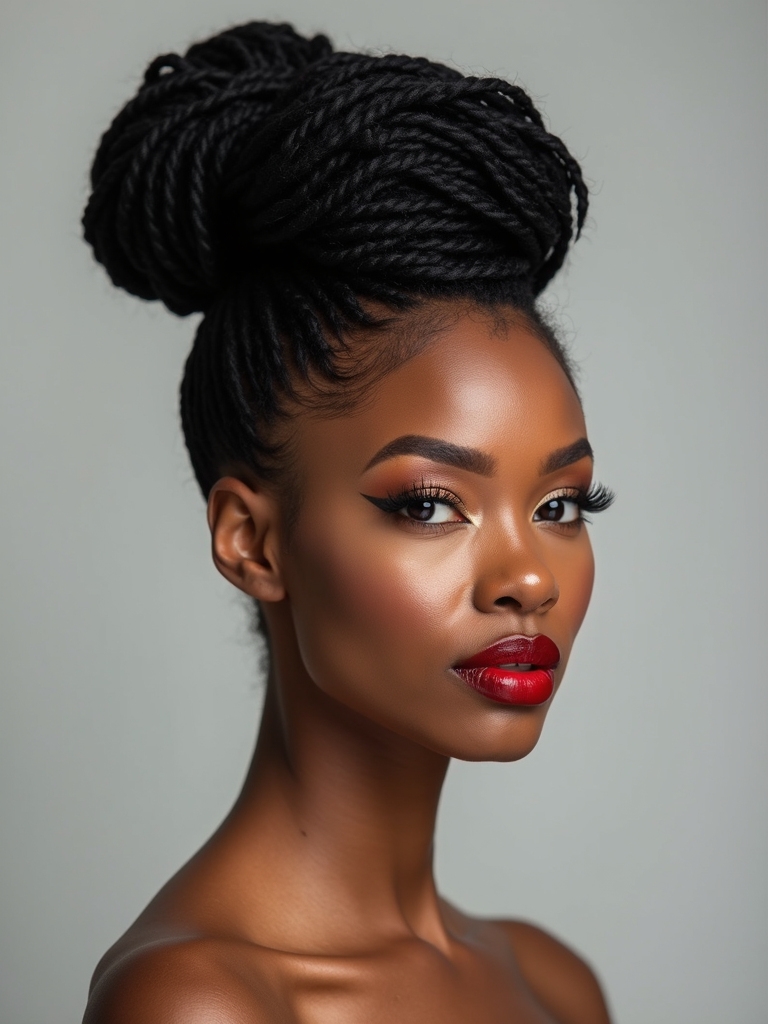
The topknot gathers the full weight of the locs at the top of the head into a rounded, contained shape that looks clearly dressed and deliberate. On a mature set it holds without heavy product. The locs grip each other at the gathered point.
It bares the neck and ears, so it suits a collared shirt or blazer especially well; I send clients here for an interview more than for any other loc bun. It reads dressed in under three minutes. It sits in the same family as our loc updos.
- Gathers the full set high at the crown
- Holds without heavy product on mature locs
- Bares the neck, so it reads corporate-ready
Low Nape Bun With Face-Framing Locs
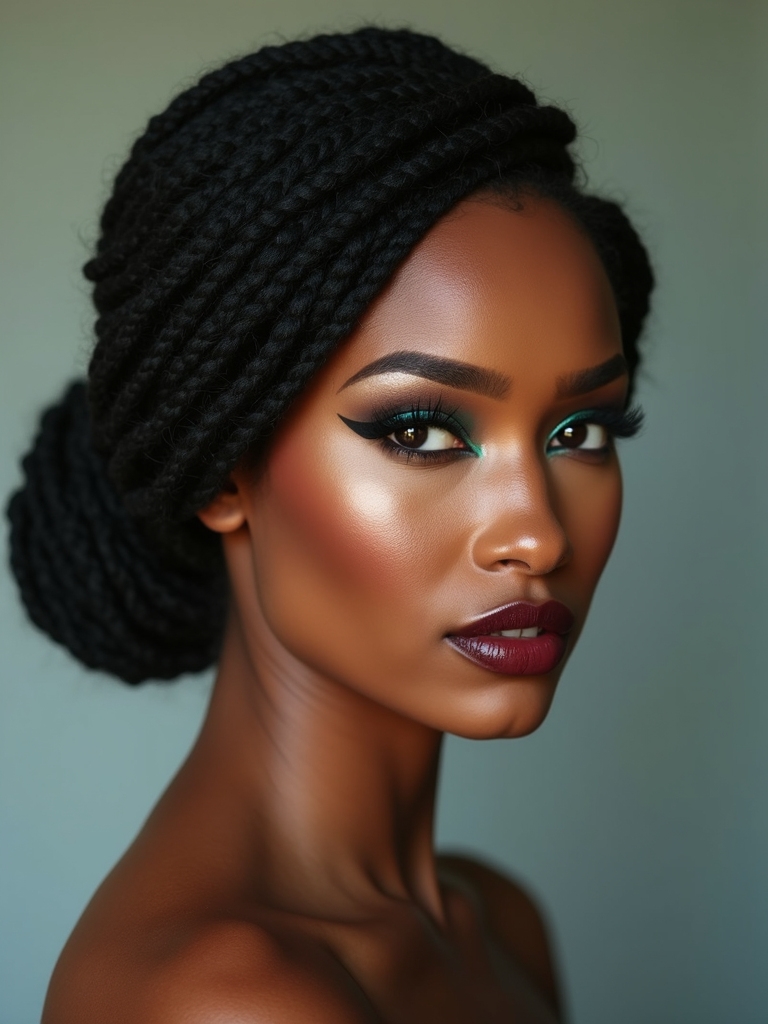
The nape bun gathers the set at the base of the skull, coiling the locs inward and securing them close to the head. A few locs pulled loose at the front, alongside the temples and cheekbones, frame the face and soften the whole shape. The whole thing takes under five minutes. The low position is the kindest place to carry a heavy set, since the back of the skull supports the weight naturally, easing what would otherwise build at the crown over a long day.
- Sits low at the base of the skull
- The skull carries the weight, easing tension
- Loose front locs frame the face in seconds
Build a basic loc bun in four steps:
1Gather the set
Pull all the locs into a ponytail at the height you want, high for a topknot, low for a nape bun.
2Coil the length
Wind the gathered locs around the base in one direction until you reach the ends. The whole bun takes about three minutes once mastered.
3Pin and tuck
Tuck the ends under and secure with the fewest pins that hold the shape; mature locs need very few.
4Smooth the edges
Finish the hairline with a little water-based gel and a soft brush so the bun reads intentional.
Classic Donut Loc Bun
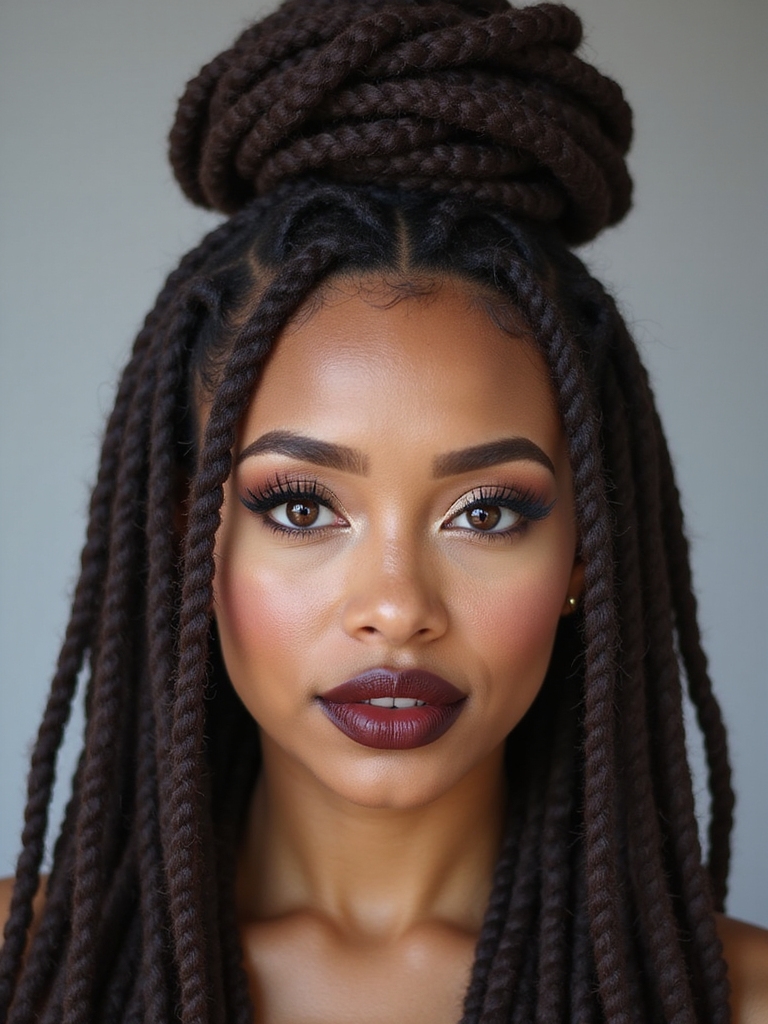
A donut bun gathers the locs into a ponytail, then spreads the ends outward in a ring around the anchor, tucking the tips beneath and pinning to a round, even shape. The finished bun sits flat against the crown with the hollow center that gives it the name.
On longer locs it makes a wide, full ring; on shorter ones, a smaller, compact one. The diameter depends on how far you spread the ends before tucking, so the same set can make different-sized buns.
It is the most uniform, symmetrical loc bun. The one for a polished, balanced finish. A little smoothing of the edges keeps it looking intentional.
Messy Textured Loc Bun
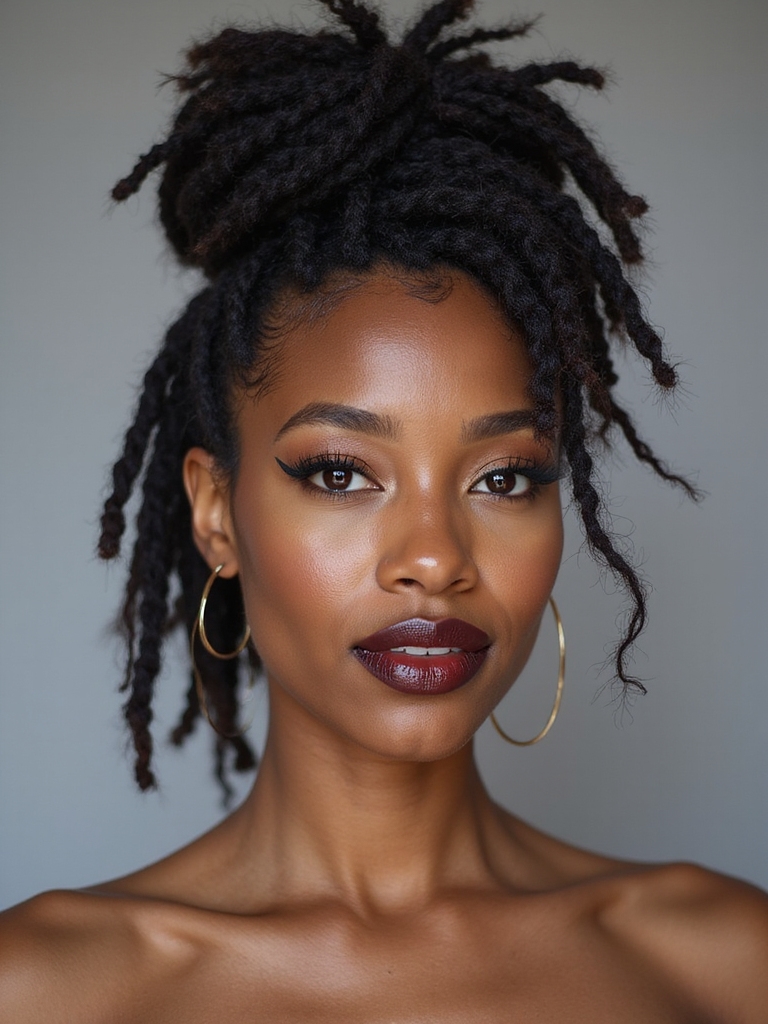
The messy loc bun starts as a loosely pinned bun, then works backward: pulling a few locs free from the outer edges, loosening sections so they fan out, and letting a few ends escape the pin line to hang alongside. The result looks undone. Deliberately so. The edge work is what decides whether it lands as relaxed or sloppy: clean, smoothed edges and a defined part keep a messy bun looking styled rather than unfinished.
- Pin loosely, then pull and loosen sections to fan out
- Let a few ends escape the pin line and hang free
- Smoothed edges keep it relaxed, not sloppy
Which loc bun fits the moment? Start here.
1Work or a formal event
A sleek high topknot, a donut bun, or a smooth micro-loc bun read polished and dressed.
2Everyday or protective wear
A low nape bun or a loose low-tension bun keeps the weight kind on your edges.
Half-Up Loc Bun
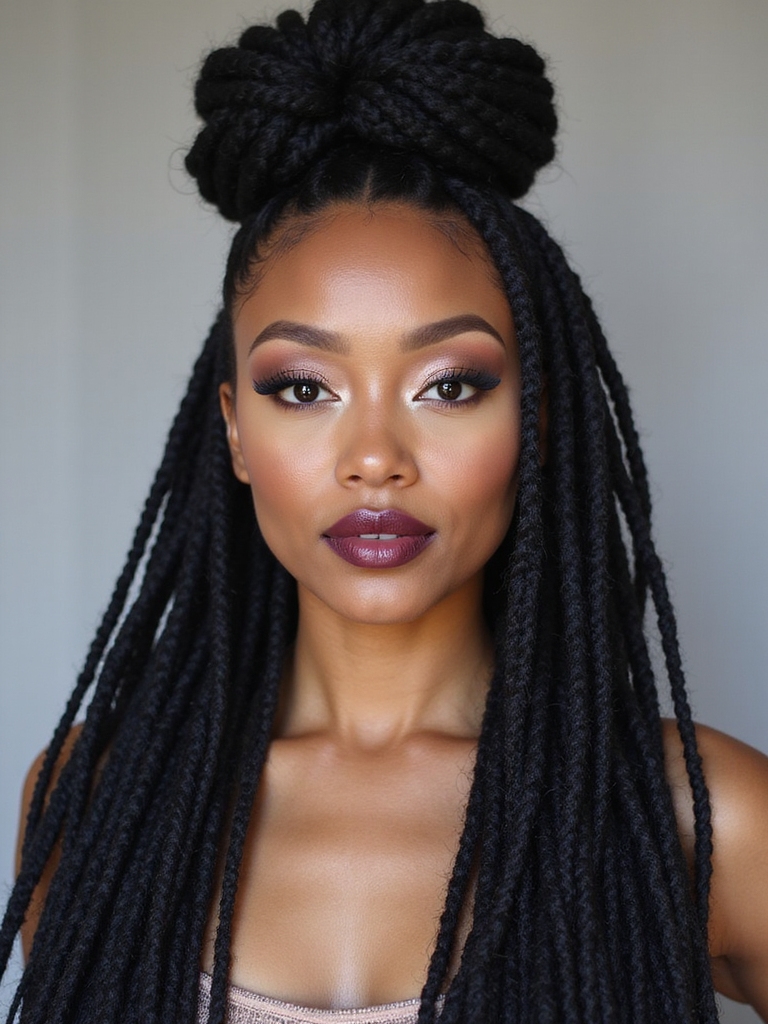
The half-up gathers the front third to half of the set at the crown into a bun, while the rest stays loose behind the shoulders. The structured bun on top and the free locs below create a layered shape more interesting than either a full updo or fully loose locs.
It shows off length, so it works best on shoulder-length or longer sets, where the contrast between the gathered bun and the hanging locs is pronounced. It is my go-to for clients who want their length seen but their face framed, and it pairs with everyday locs hairstyles for women.
- Front third to half gathered at the crown
- Free locs below show off the length
- Best on shoulder-length or longer sets
Braided-Base Loc Bun
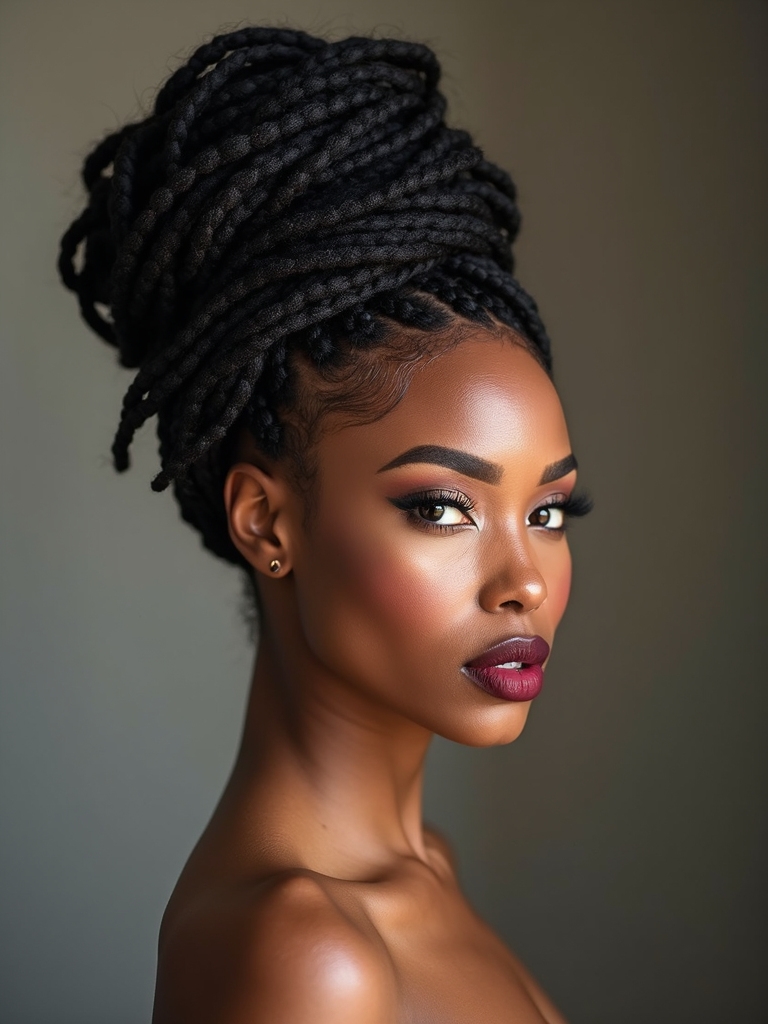
A braided-base bun runs flat braids from the hairline to the anchor before the locs gather into the bun. Those braids add friction at the base, which keeps the bun from shifting during movement, and they show at the crown as a textured pattern against the rounded body above.
It takes longer to build than a simple gathered bun, but it holds far better through activity and a long day. For an event with dancing, or a workday on your feet, the extra grip earns its time.
The braids also dress the style up, turning a plain bun into something with detail. It is the bun I build most for a wedding guest who wants a hold that lasts.
Match the bun to your loc length.
🎯Shorter or starter locs
A compact donut or a small nape bun works; a half-up shows less contrast at this length.
🎯Shoulder-length locs
A half-up bun shines here, with real contrast between the gathered top and the hanging locs.
🎯Long, mature locs
Anything goes, from an oversized crown to double buns; just mind the weight and anchor low for daily wear.
Side-Swept Loc Bun
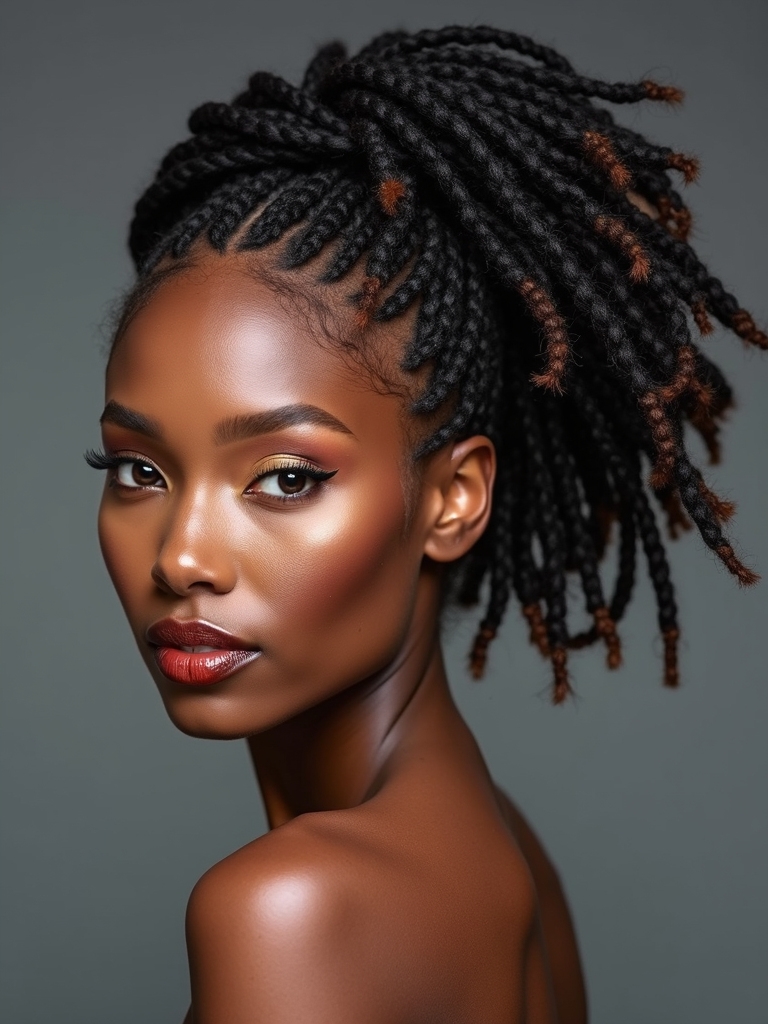
The side bun sits low behind one ear, with the locs not in the bun falling to the opposite side for a strong asymmetry. The contrast between the gathered side and the bare side of the neck signals immediately as a deliberate design choice. A statement comb or a wide decorative pin set horizontally above the bun anchors it and finishes the look, with the comb sized to suit the weight of your set.
- Sits low behind one ear for a bold asymmetry
- The bare opposite side reads as deliberate
- A statement comb anchors and finishes it
Double Loc Buns
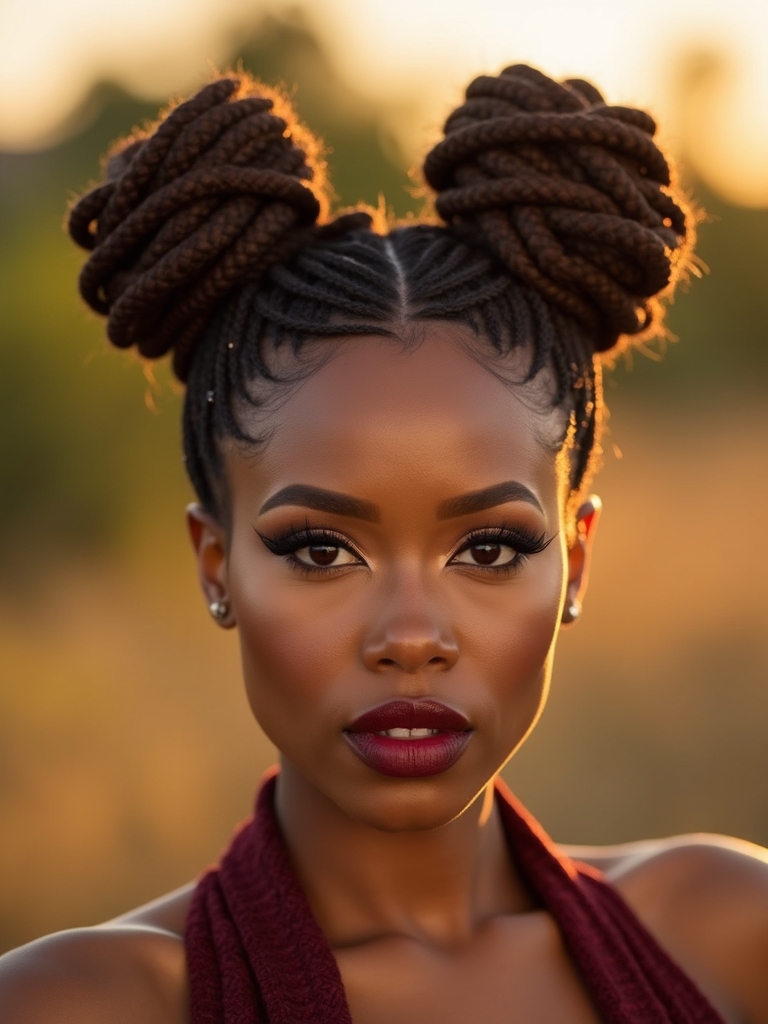
A precise center part from forehead to nape divides the locs in two, and each half gathers at the same height and coils into a bun. The style looks best when both buns sit at exactly the same spot, since even a small height difference shows up clearly in photos as an inconsistency.
On longer locs, double buns carry real visual weight. Two full coils, high on either side, making a bold, playful shape. It is the most youthful loc bun, equal parts fun and statement.
- A clean center part divides the set in two
- Both buns must sit at exactly the same height
- Bold and playful, the most youthful version
| Wear | Best position | Why |
|---|---|---|
| All day or overnight | Low nape or loose low bun | The skull carries the weight, easing tension |
| A few hours, dressed up | High topknot or crown bun | Striking, but the weight sits up top |
| Active, sweaty days | High secure or braided-base bun | Firm hold that stays put, kept comfortable |
Rope-Wrapped Loc Bun
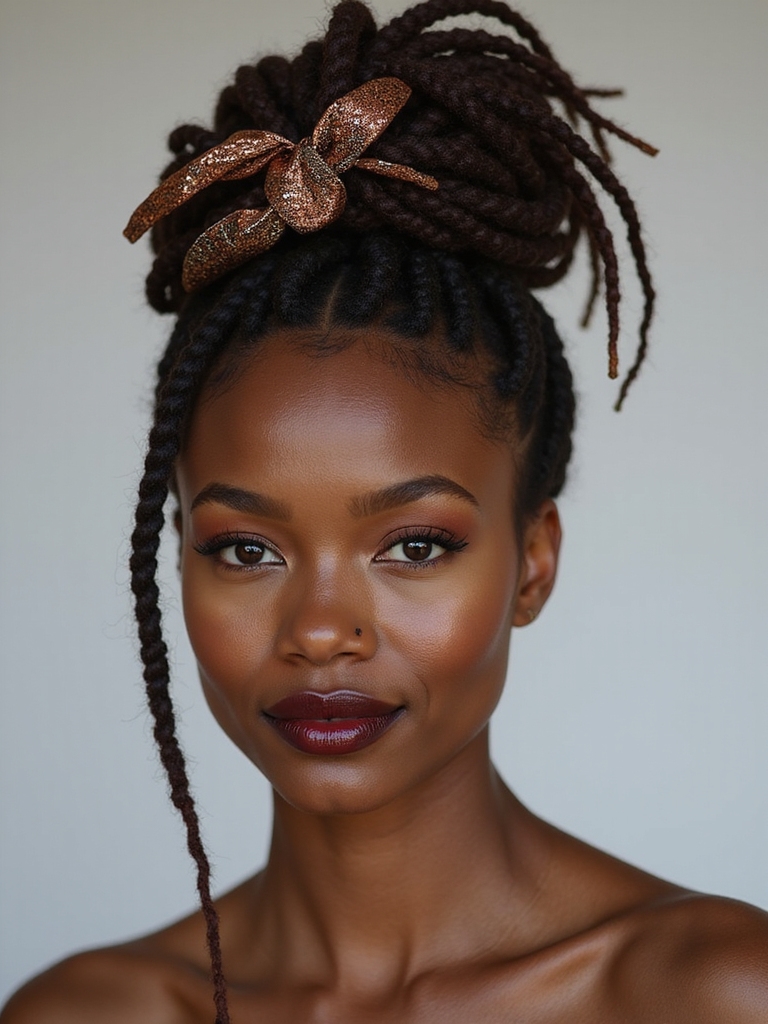
After the bun is built and pinned, a length of cord or thread is wound in even spirals from the base outward, each loop sitting beside the last to cover the surface in a tight pattern. The wrap holds under its own tension, so it needs no extra pins, and it unwinds cleanly when the style comes down.
Thin metallic cord catches light and looks dressy, while cotton embroidery thread gives a softer, boho finish. It is a simple way to turn a plain bun into something crafted for an event.
- Cord wound in even spirals over the bun surface
- Holds under its own tension, no extra pins
- Metallic for dressy, cotton thread for boho
Barrel-Twist Loc Bun
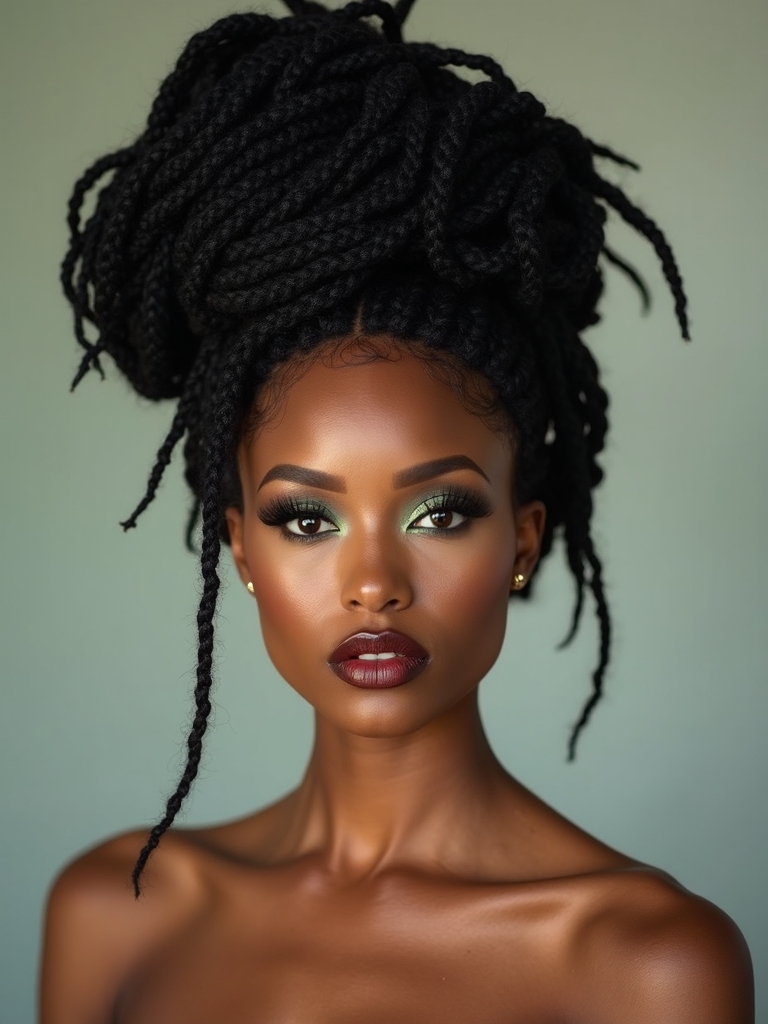
A barrel-twist bun twists thick sections of locs before gathering them, so the twisted cables stay visible in the body of the bun for bold, sculptural texture. The twists catch light along their ridges, giving the bun depth a smooth gathered shape does not have.
It is a striking, texture-forward choice, and the twists also add their own grip, helping the bun hold. For more loc updos, see our loc updo guide. It suits anyone who wants their bun to look crafted and full of movement.
Oversized Crown Loc Bun
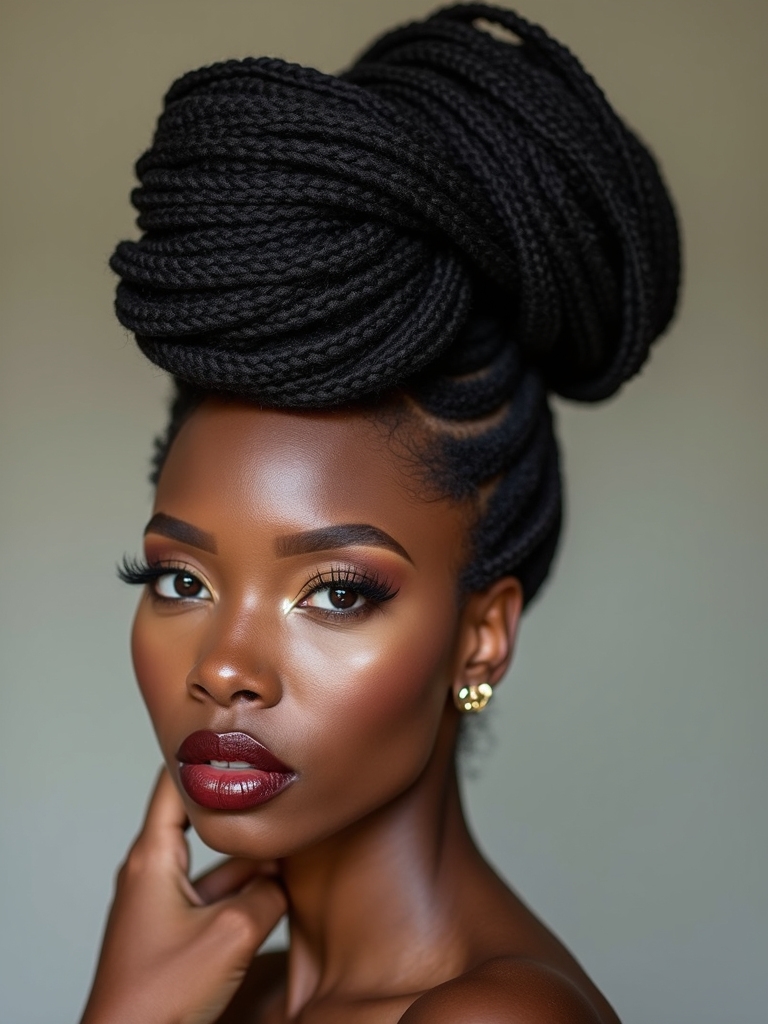
The oversized crown bun piles the full set high at the top of the head into a large, rounded shape that is pure drama. On a long, dense mature set, it becomes a sculptural statement that no other texture can match, the locs holding the volume on their own.
It is the boldest bun here, often built by a stylist for a shoot or a big event, and because it sits high and heavy, it’s best kept for occasions, since the weight sitting high and heavy adds real tension at the crown over a full day.
- Full set piled high into a large, rounded crown
- A sculptural statement on a long, dense set
- An occasion style, since the weight sits high
Sleek Micro Loc Bun
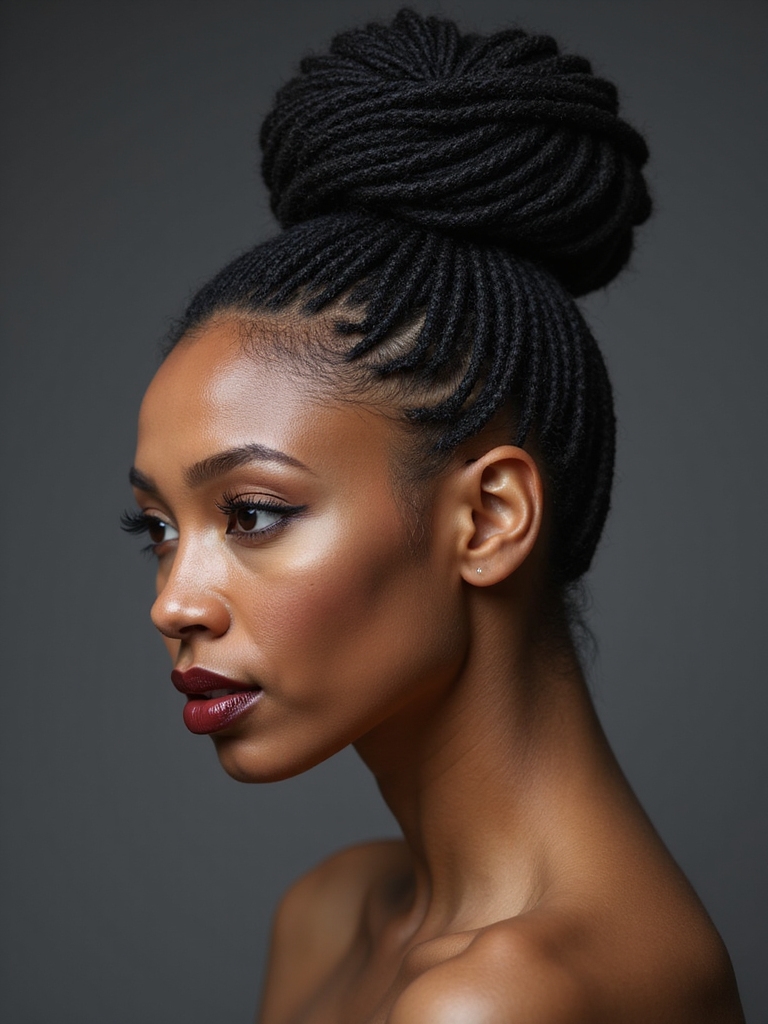
A bun made of micro locs gathers smoother and finer than one of standard locs, since the many small locs behave like loose hair. It coils into a sleek, fluid shape. None of the bulk a thick set carries.
That fineness gives the micro-loc bun the cleanest, most polished finish of any version here, ideal for a formal or minimalist look. It also takes a wrap or a decorative pin neatly.
The trade-off is the weight of so many locs, so the same low-versus-high anchor rule applies: keep a heavy micro set low for everyday wear to spare your edges.
Low-Tension Protective Bun
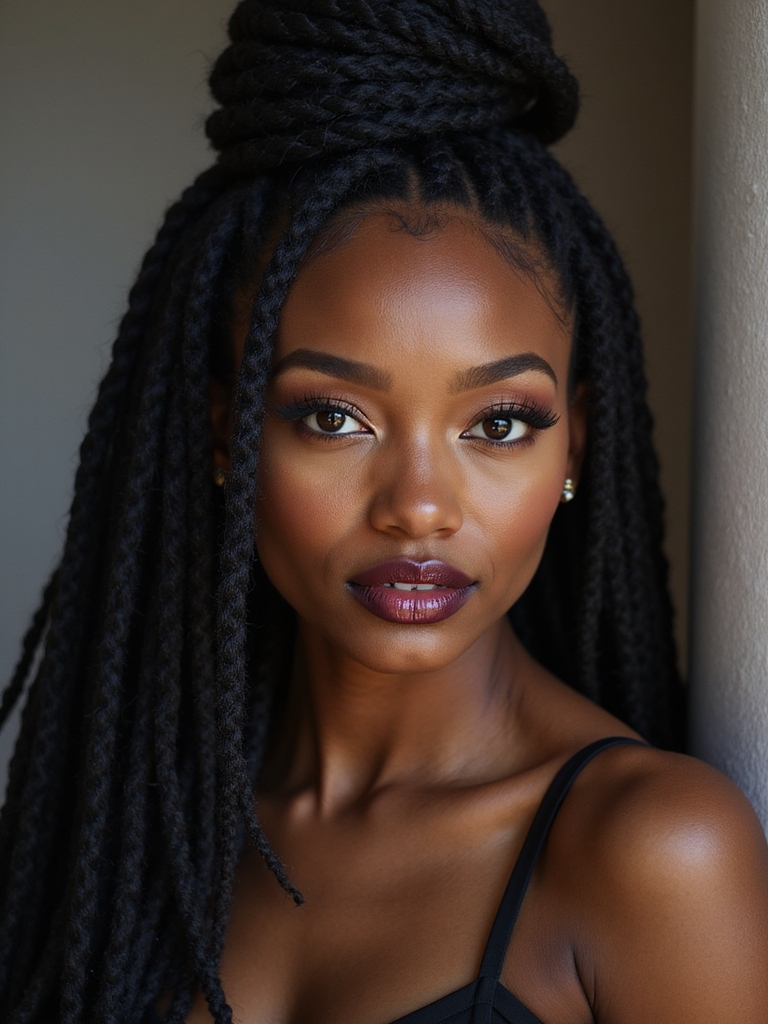
A low-tension bun gathers the locs loosely and sits low, deliberately built to ease strain rather than to make a statement. It tucks the ends away so the locs are protected from friction and snagging through the day or overnight, the same protective thinking behind our protective hairstyles guide.
It is the everyday workhorse, the bun to reach for on the days between styles to give your hairline a rest. Loose at the root. Low at the back. Secured with the fewest pins that hold it.
I tell every loc client to keep one of these in rotation. Alternating tight, high styles with a loose, low bun is the single best habit for protecting your edges over years of wear.
A Loc Bun Dressed With Scarves, Beads, and Cuff Accessories
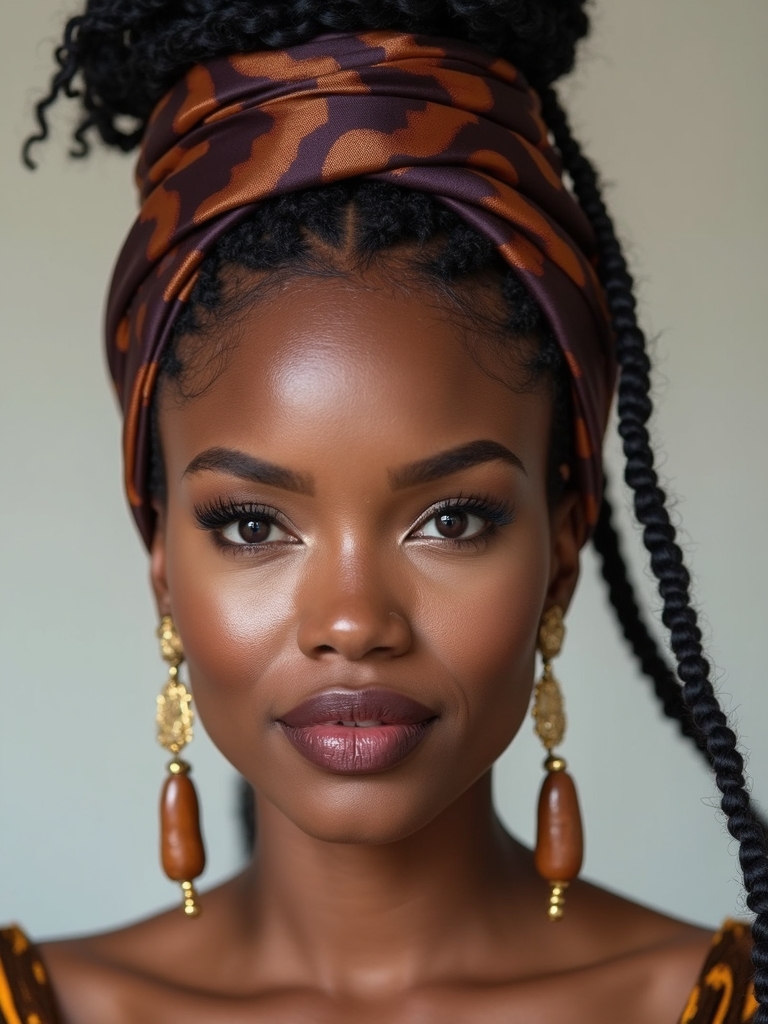
Any loc bun takes accessories beautifully, since the gathered shape gives a scarf, a row of cuffs, or a scatter of beads a clear place to sit. A silk scarf wound around the base dresses a plain bun up in seconds and protects the locs at the anchor at the same time, much like a loc ponytail wrapped at its base.
Detail that dresses up the shape
Beads and cuffs along the surface locs catch the light and break up an otherwise plain knot. Choose a cuff that fits your loc width snugly so it grips instead of working loose by afternoon.
Accessories are the cheapest way to take a bun from everyday to occasion, usually $5 to $15 for a scarf or a set of cuffs. The bun does the work. The detail dresses it up.
High Secure Bun for Active Days
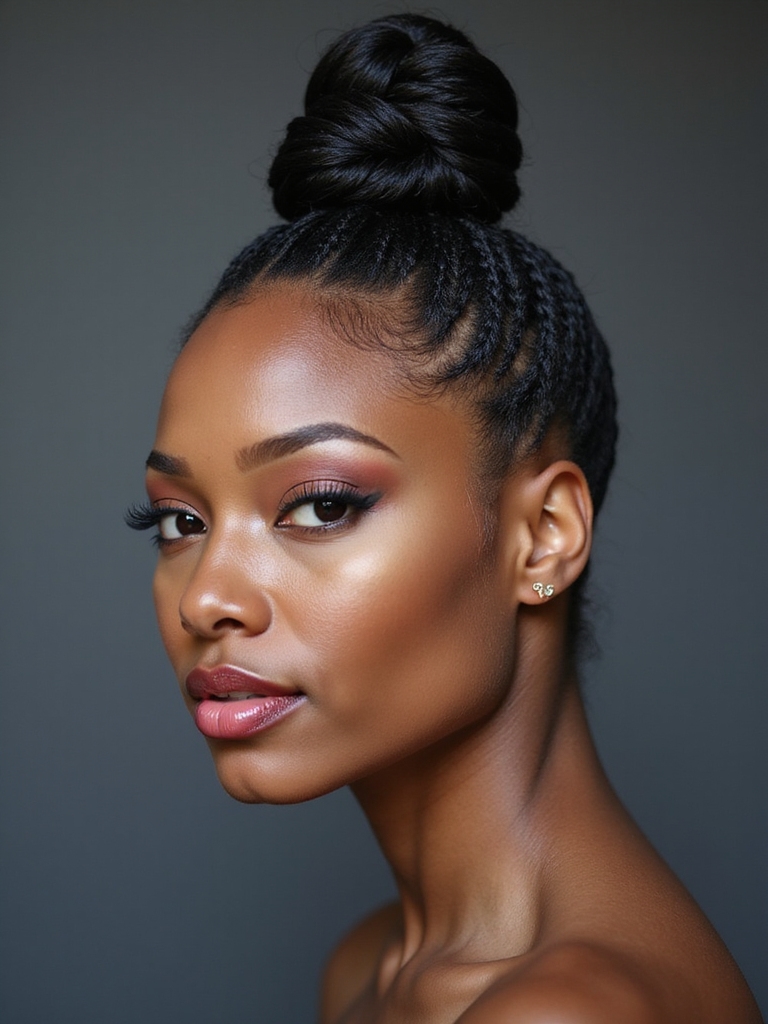
For the gym or a long active day, a high secure bun gathers the full set up and locks it firmly out of the way, so it stays put through sweat and movement. A braided base or a few extra pins give it the hold that a casual bun lacks.
The one rule is to keep it secure but not painfully tight, since a hard, high pull worn for active days still strains the root. Firm and comfortable, not sharp, is the balance that keeps it practical without costing you edges.
Loc Bun Questions, Answered
?Do loc buns damage your edges?
Only when they are worn tight and high day after day. The weight of a mature set pulled hard at the crown strains the hairline over time. Keep buns comfortable, anchor heavy styles low, and rotate the position, and your edges stay healthy.
?How do I get a loc bun to hold without lots of pins?
On a mature set, the locs grip each other once coiled, so you need surprisingly few pins. Wind the gathered locs firmly in one direction and tuck the ends under; for extra hold, braid the base first or add a couple of pins at the anchor.
?What is the best loc bun for everyday wear?
A low nape or loose low-tension bun. It sits where the skull carries the weight, protects the locs from friction, and gives your hairline a rest between tighter styles. It is the one to default to most days.
One Set, Every Bun
The loc bun is proof that a mature set is its own styling tool: the locs hold each other, so the bun needs almost nothing to stay put. From a five-minute nape bun to a sculptural crown, the same head of locs carries every version, dressed up or down by the position, the texture, and a scarf or a few cuffs.
So as you scroll back through these, notice which ones sit low and which pile high, and build your rotation around that. Keep the heavy, high styles for occasions, lean on a low, loose bun for everyday, and keep every anchor comfortable. Do that, and your locs and your edges stay healthy for the long haul. Save the buns you love for your next out-the-door morning.
Keep the Inspiration Going