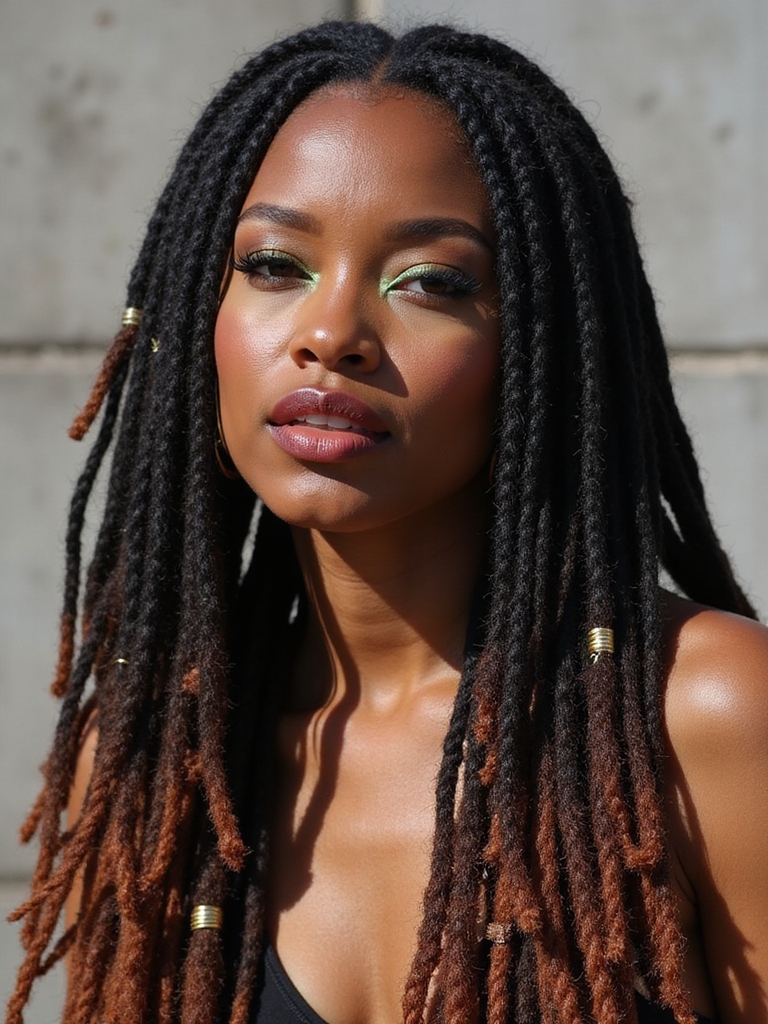
Run your hand along a mature set of dreadlocks and you can feel the years in them, each one a little denser at the root, a record of time and patience few other hairstyles keep quite the same way. But locs are more than a texture.
Rasta dreadlocks hairstyles carry a history that begins with the Rastafari movement, which emerged in 1930s Jamaica out of Pan-African thought, the teachings of Marcus Garvey, and the coronation of Haile Selassie I, born Ras Tafari Makonnen, as Emperor of Ethiopia.
Within Rastafari, locs are not chosen for looks; they carry spiritual significance drawn from the Nazarite vow in Numbers 6:5, a dedication not to cut the hair. The sixteen sections below, styles and care both, are offered in that spirit.
How Locs Are Worn
| Approach | What it involves | Good to know |
|---|---|---|
| Freeform | Grown without manipulation | Most aligned with Rastafari practice; still needs washing and root separation |
| Maintained | Palm-rolled or retwisted roots | Neater and more uniform; common in the wider natural-hair community |
| Styled | Buns, half-ups, twists, wraps | Work with the loc’s structure; use satin bands, never tight elastics |
Classic Freeform Locs
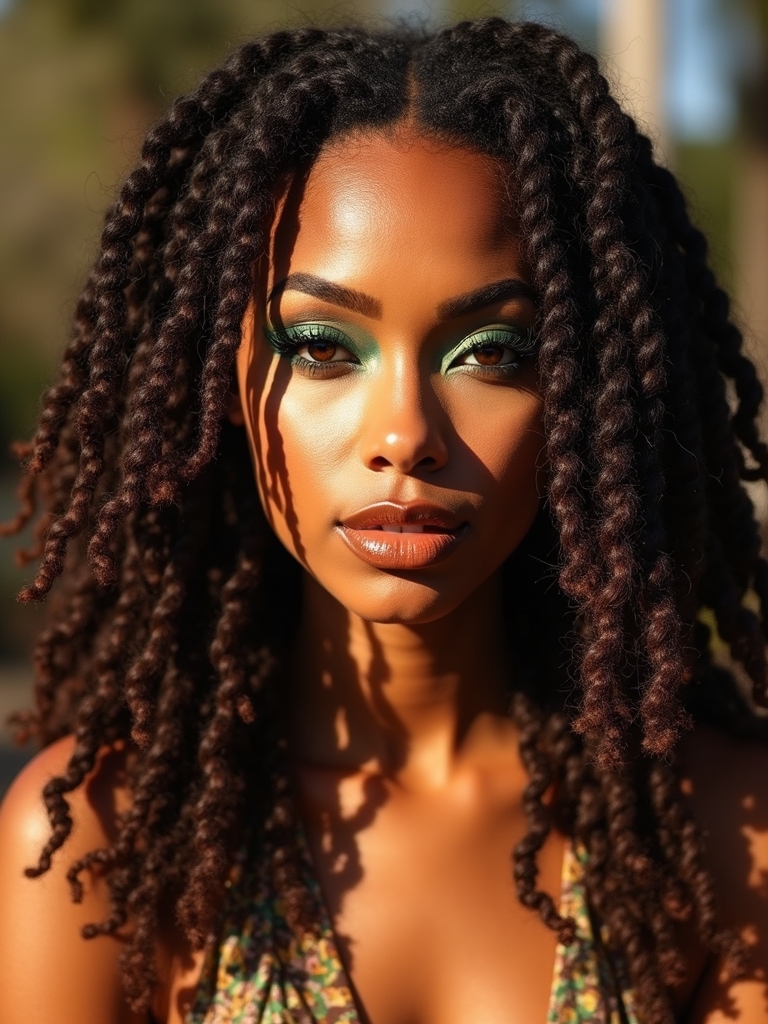
Freeform locs are the form most closely tied to Rastafari spiritual practice. They grow without intervention, the hair finding its own way and forming organic joins between neighboring sections as it grows. The result is a set irregular in thickness, deeply personal, and unlike any other in existence.
Freeform does not mean no care
Despite the name, freeform does not mean zero-care. The locs still need regular washing and periodic separation at the root, so neighboring locs do not permanently merge where the wearer does not want them to. The difference from a maintained set is the absence of palm-rolling and retwisting, not the absence of cleanliness.
For many practitioners, letting the hair lock as it will is the whole point: the locs reflect the natural process itself, unshaped by outside styling decisions. It is the most hands-off approach, and for some, the most meaningful.

Thick Rasta Ropes
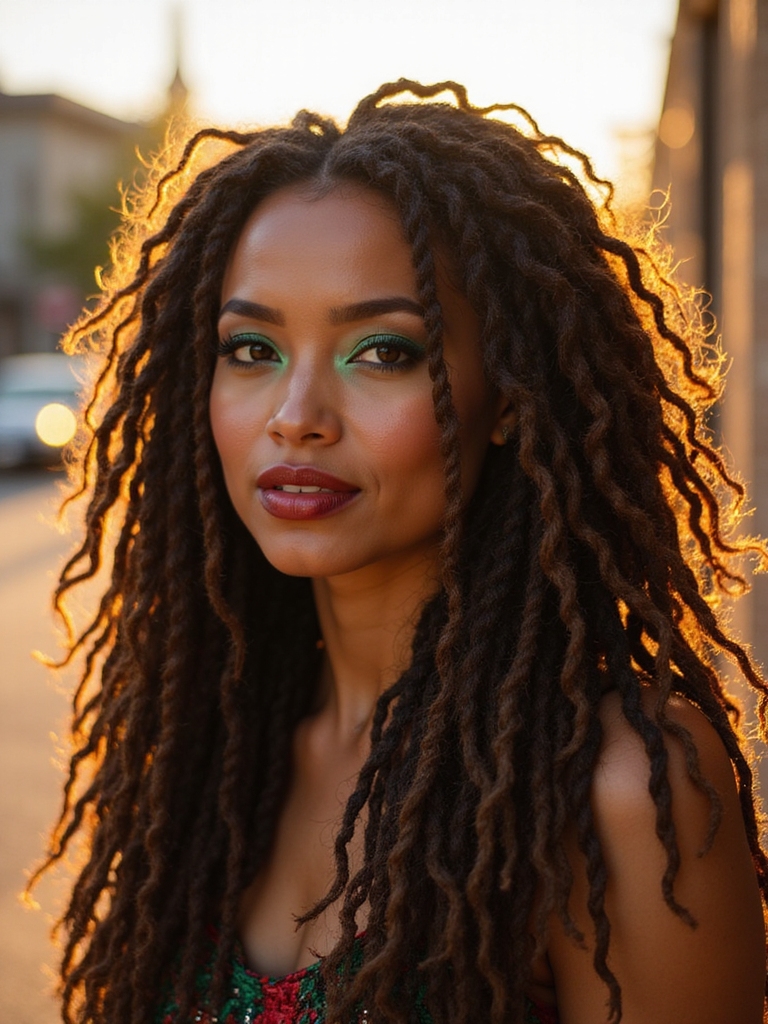
The thick, rope-like locs most associated with Rastafari imagery develop when wide sections of hair lock together over years, each loc reaching finger-width or wider. The weight of a full set at waist length or longer is significant, and it changes how the hair falls, sits, and moves through the day.
In traditional Rastafari practice, that thickness is not chosen for style; the hair grows as it will, and a heavy set represents years of dedicated, uninterrupted growth.
- Wide sections lock into finger-width or thicker ropes over years.
- A full long set carries real weight that changes how it moves.
- Thickness reflects time and dedication, not a styling choice.
Within Rastafari, locs were never a hairstyle. They are a vow made visible, grown over years as a sign of dedication, identity, and a return to one’s roots.
Sun-Kissed Natural Coils
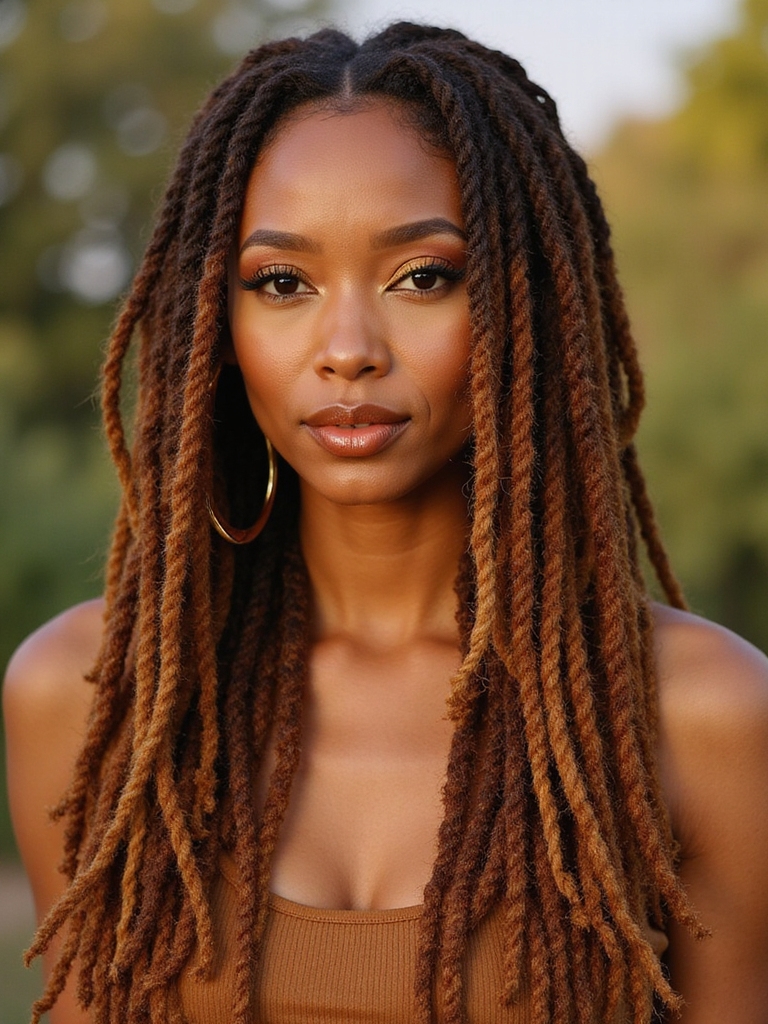
Sunlight works on locs the way it works on any hair, gradually lifting the outer layer along the sections most exposed to light. On black or deep brown locs worn for years in warm climates, this produces a soft, warm lightening along the outer length, as if the hair carries the sun it has been through.
Many Rastafari practitioners see this natural lightening as part of the ongoing relationship between the body and the natural world. In a traditional approach the tone is not managed or corrected, because the point is to let nature take its course rather than to control the result.
- Sun gradually lightens the outer length of dark locs over years.
- The effect is natural, with no product or process involved.
- Often understood as part of living close to the natural world.
High-Top Loc Fade
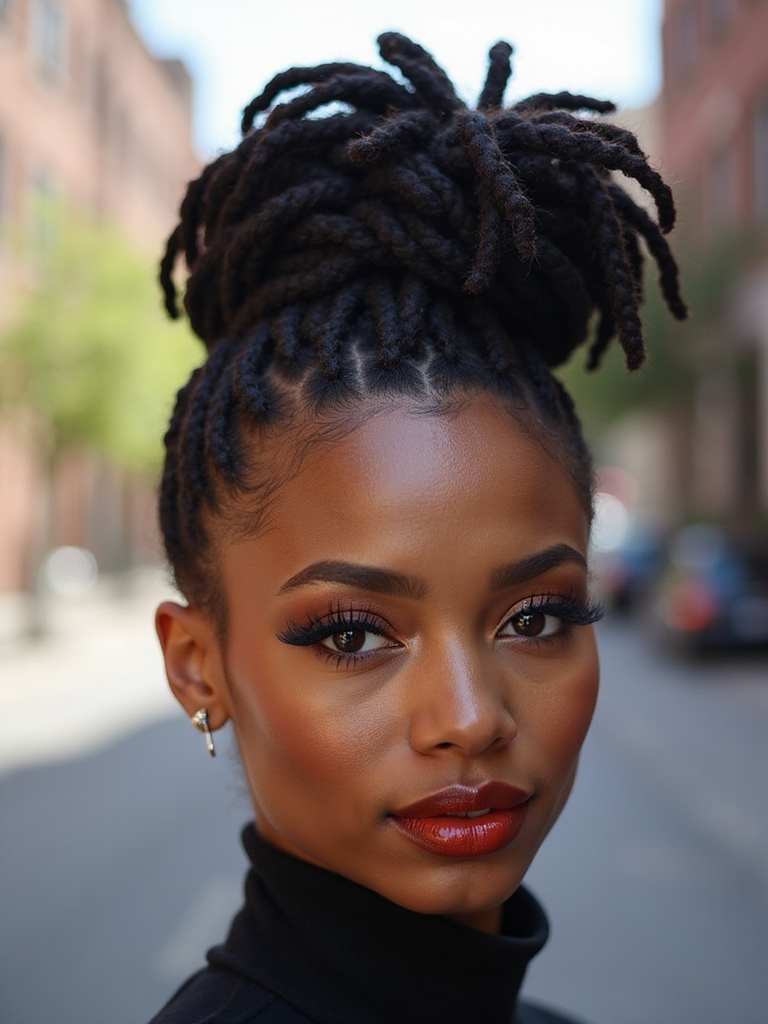
This style sets the locs as a defined column above a faded or closely clipped perimeter, creating a strong contrast between the clean sides and the textured crown. It sits at the meeting point of Rastafari-associated loc growth and modern barbershop technique.
Two styles, two schedules
It is worn widely in urban communities where both traditions come together. The look is sharp, contemporary, and unmistakably intentional, a bridge between heritage and the barber’s chair.
The two parts keep separate schedules. The fade needs a barbershop visit at roughly the two-and-a-half-week mark to stay crisp, typically $20 to $40, while the locs follow their own root-care rhythm. Coordinating both is the real work of wearing this style well.
🅰️Freeform
Grown without retwisting or palm-rolling; the hair locks as it will. Most aligned with traditional Rastafari practice.
🅱️Maintained
Roots palm-rolled or retwisted for a neater, more uniform set; common in the wider natural-hair community.
Waist-Length Regal Locs
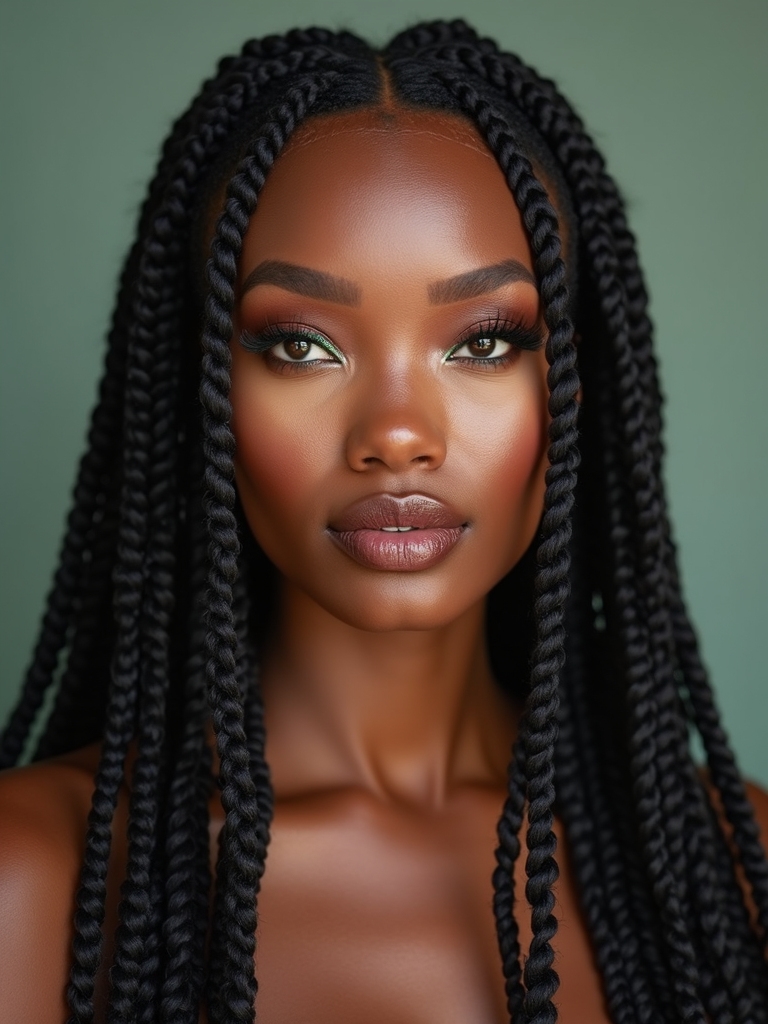
At waist length, locs become a physical record of time. Each inch represents roughly two months of growth, so a waist-length set on someone who began with short hair carries two to four years of consistent care. The weight of the full set is present in every movement.
In Rastafari practice, long locs are not managed toward a target length but allowed to reach wherever natural growth takes them. The length is understood as an expression of ongoing spiritual commitment, the loc holding the history of the journey within it.
Caring for a set this long is mostly about gentleness and patience: protecting the lengths at night, keeping the roots clean, and supporting the weight without stressing the scalp. It is a style that cannot be rushed, only grown.
Short Starter Locs
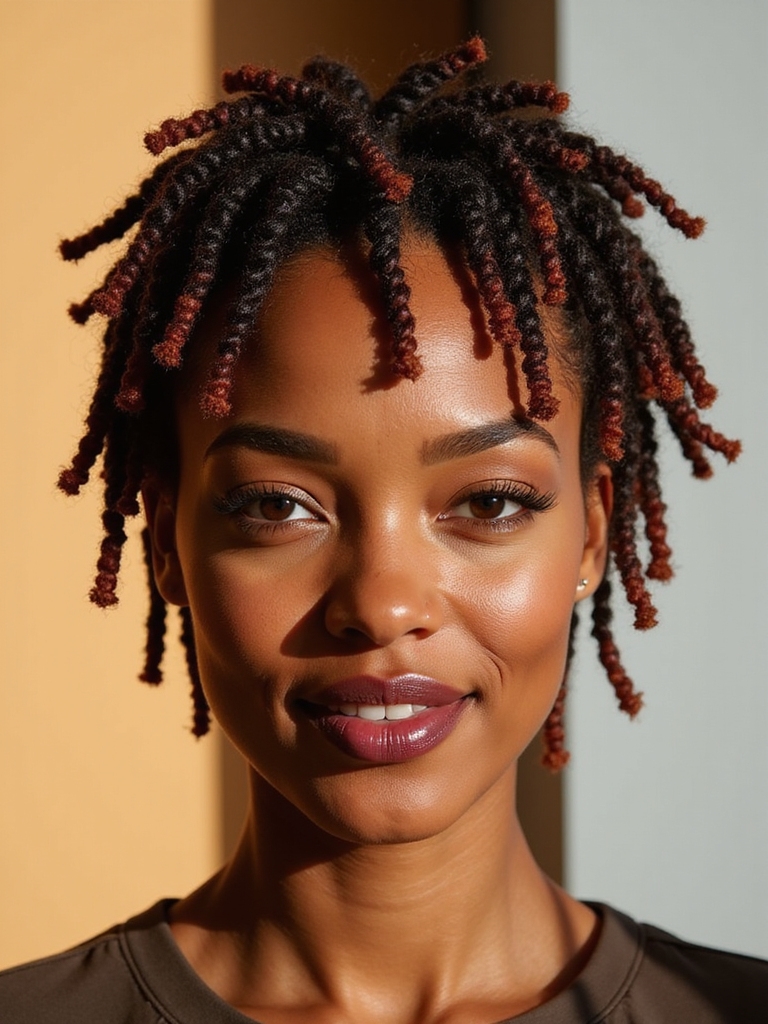
In the first months, starter locs sit short, close to the scalp, and still finding their permanent form, fresh comb coils or two-strand twists in neat spirals that have not yet locked from the inside out. Most people go through a stretch of doubt at this stage, and most people in a mature set are glad they kept going.
For those beginning within a Rastafari context, the starter stage carries its own weight: the decision to start is treated as a commitment, and that framing changes the whole experience of the early months. See our short dreadlocks styles for early-stage ideas.
- Starter locs begin as comb coils or two-strand twists.
- They look nothing like the mature set they will become.
- The early doubt is normal; patience is the whole task. Every loc client I have sat with hits that wall around month three, and almost none of them regret pushing past it.
ℹ️Good to Know
Locs are not zero-maintenance, even freeform ones. They need regular washing, thorough drying, and gentle root care. The biggest day-to-day risks are trapped moisture, which causes mildew, and over-tightening at the roots, which stresses the edges over time.
Beaded and Shell-Adorned Locs
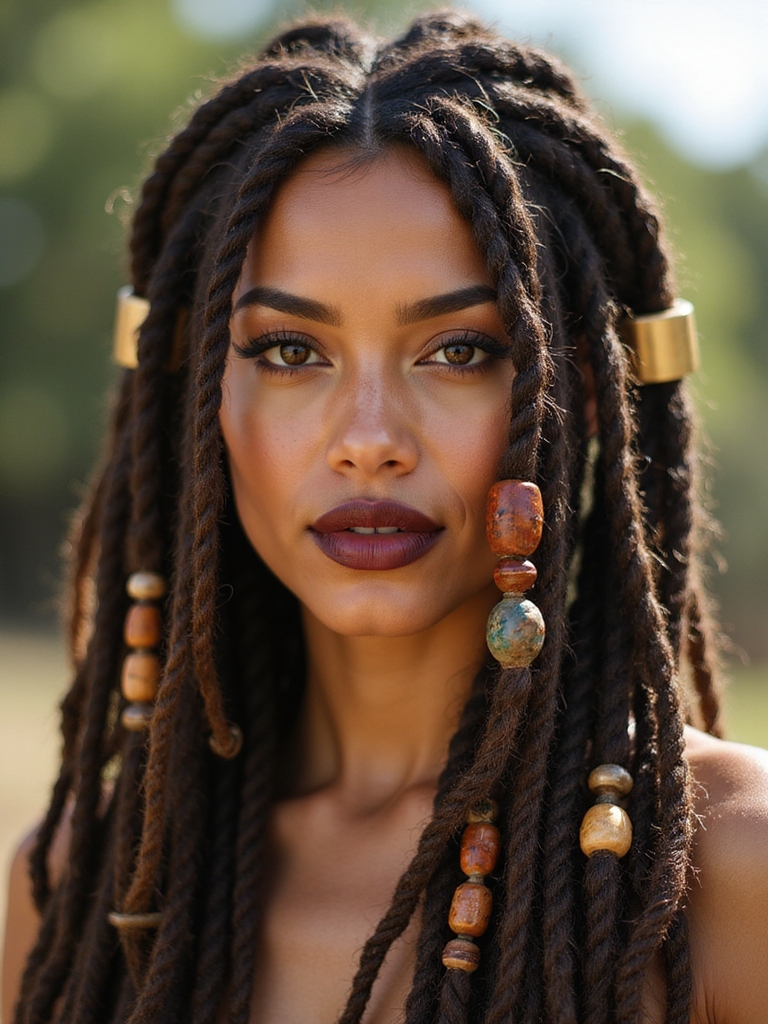
Adorning hair with natural materials, shells, seeds, bone, metal, and stone, has been practiced across West African cultures for centuries, tied to identity, spiritual meaning, and belonging. Within Rastafari, that connection to African heritage is an active, ongoing part of how practitioners understand their roots.
Cowrie shells in particular carry specific significance across many West African traditions, associated with prosperity, protection, and femininity. For wearers who know that history, using them on locs carries real weight beyond decoration; the adornment is a way of carrying heritage visibly. Thread beads and shells onto the locs gently, and avoid heavy pieces that pull at the root over time.
- Cowrie shells carry meanings of prosperity and protection.
- Hair adornment runs deep through West African heritage.
- Keep pieces light so they do not strain the roots.
Ombre and Color-Dipped Locs
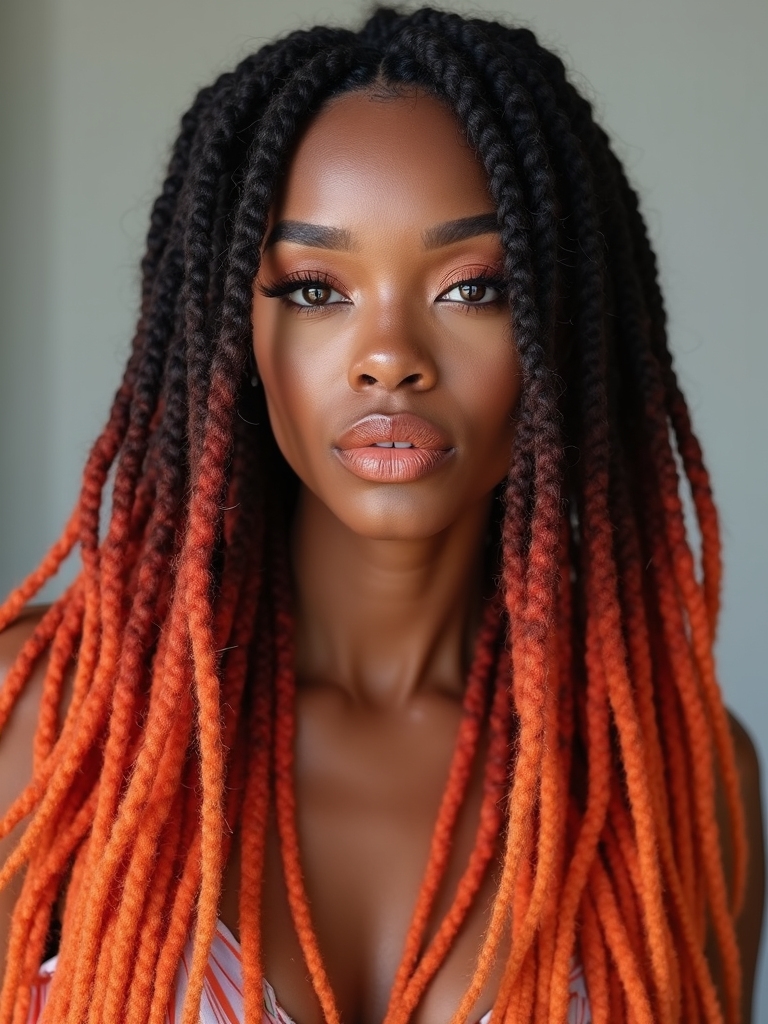
Color sits in real tension with Rastafari values. Many practitioners do not color their locs at all, viewing it as a form of the vanity-driven grooming the practice is partly organized around refusing. It is worth understanding that before deciding whether color fits the look you are building.
Among the wider natural-hair community that has embraced loc culture, color is a common and personal expression, and ombre is a frequently chosen approach. It applies a lighter shade to the lower length, leaving the roots natural, so on a long set the gradient reads over a long visual span with no chemical contact at the scalp.
Pinning a loc bun without stressing the hair:
1Gather with satin
Collect the locs at the crown or nape and secure with a wide satin-covered band, never a narrow rubber elastic.
2Coil and fold
Wind the locs around the base, layering each fold over the last into a rounded bun.
3Pin at the edges
Place wide-tipped pins at the outer edge of each fold, not through the center, to spread the hold evenly.
Sculpted Loc Buns and Updos
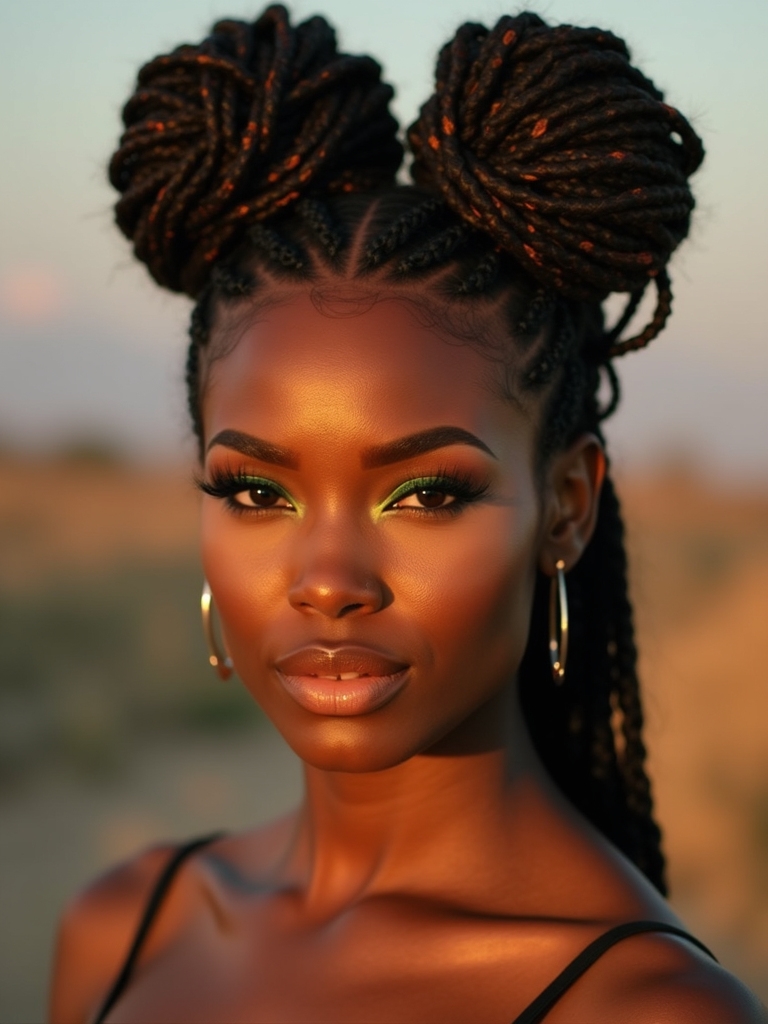
Locs gather, coil, and pin into buns and updos that hold more reliably than almost any other texture, thanks to the natural structure of each individual loc. A high bun at the crown or a low one at the nape both work, secured with a wide satin-covered band or a fabric loop.
The key is gentleness at the anchor. Avoid narrow rubber elastics, which catch on the loc surface and can cause breakage where they grip. Wide-tipped pins placed at the outer edge of each fold spread the hold without straining any single point.
Done with care, a loc updo looks polished enough for any formal setting while staying comfortable for hours. It is the style I reach for most when a loc client needs something formal in a hurry. It is a remarkably versatile way to wear a long set. See our dreadlock bun styles for more shapes.
Half-Up Half-Down Loc Style
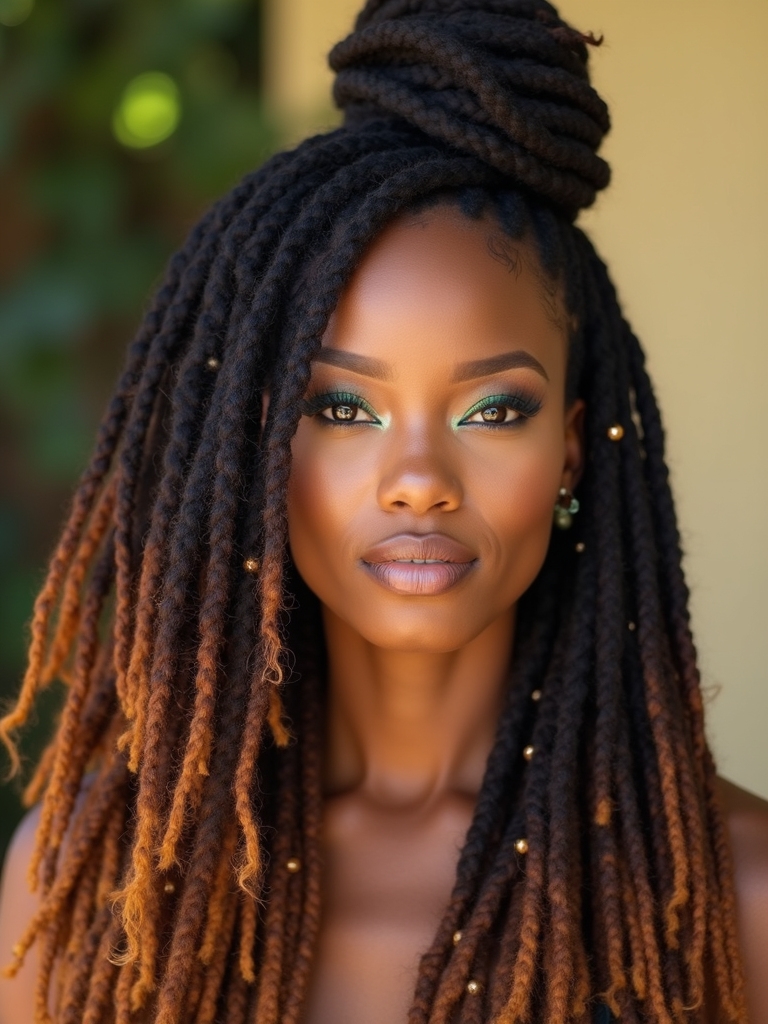
The front section gathers at the crown and secures with a satin-covered band or fabric clip, while the rest of the locs fall behind the shoulders. It is quick, it works at almost every length, and it carries equally well into professional and casual settings. It is the first style I show clients new to their locs, because it is nearly foolproof.
The edges make it intentional
The difference between a half-up that looks considered and one that looks rushed is almost always in the edges. Smoothing the baby locs at the temple and keeping the gathered section sitting cleanly above the occipital bone is what keeps it looking deliberate.
It is a daily staple for exactly that reason: maximum polish for minimal time. A satin-covered band protects the gathered section from friction.
Barrel Twists and Rope Braids
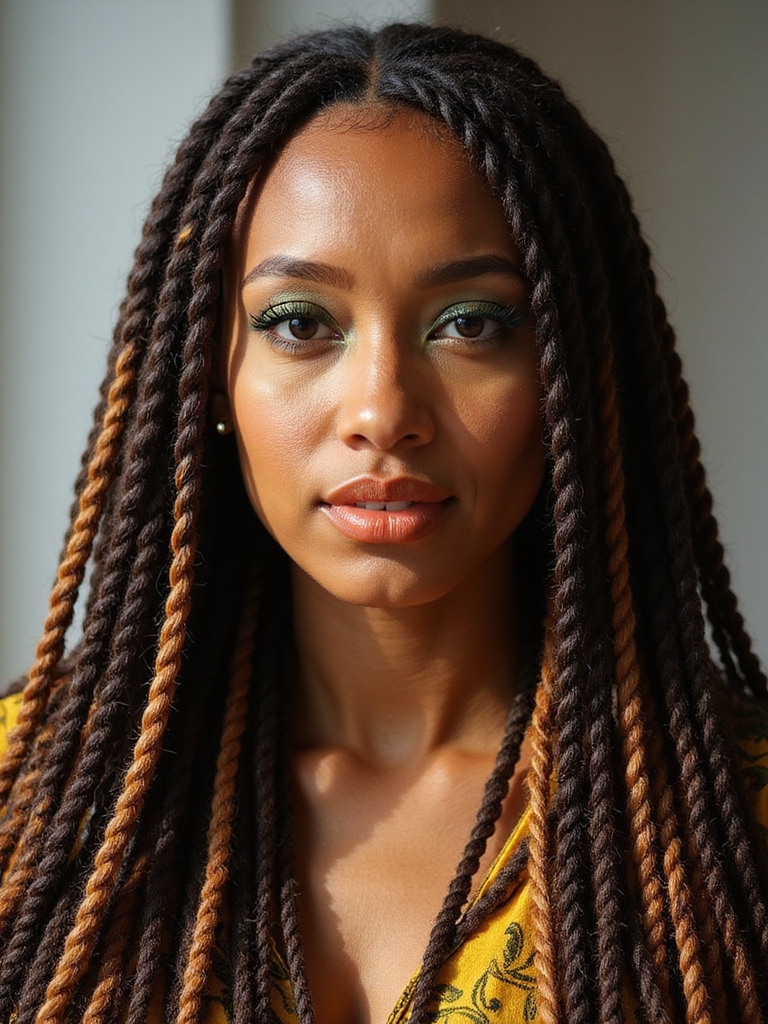
Barrel twists take two or more locs and wind them around each other in a consistent direction, creating a cable-like pattern thicker than a single loc, with a defined, rounded shape. On longer sets they can be arranged in rows along the crown or across the back.
Rope braids follow the same principle at a slightly different tension, producing a tighter, more rigid twist. Both work best on locs that are consistent in thickness, since uneven diameters create irregular tension and a less even result. Neither needs added hair or much product, just patience and a steady hand.
Side-Swept Statement Locs
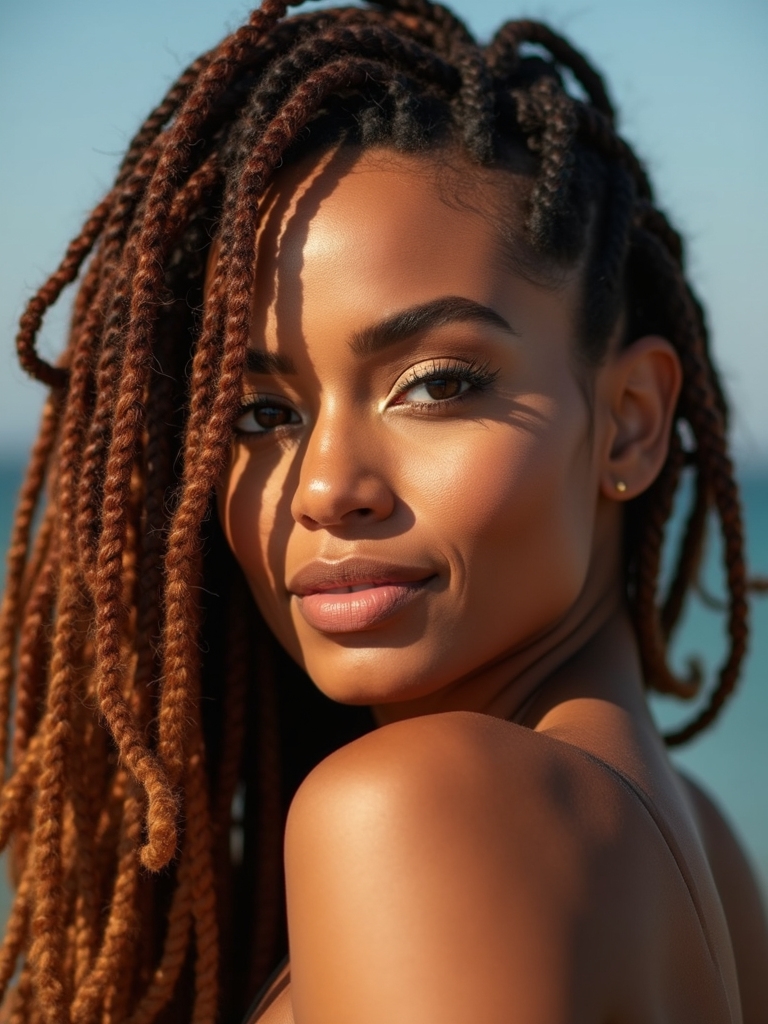
A deep side part placed two or three inches off-center divides the set into a smaller forward section and a larger sweep that drapes over the opposite shoulder. The effect shifts with length: at shoulder length it is subtle, while at mid-back or longer it creates a sweeping silhouette that changes the whole weight of the look.
This is one of the few loc styles that transforms the entire appearance of the hair with no pinning and no product. The placement of the part is the style, and many wearers with longer sets use it regularly as their everyday parting.
- A deep off-center part sends the locs sweeping to one side.
- Subtle on short sets, dramatic on long ones.
- No pins or product; the part itself is the style.
Tapered Sides With Crown Locs
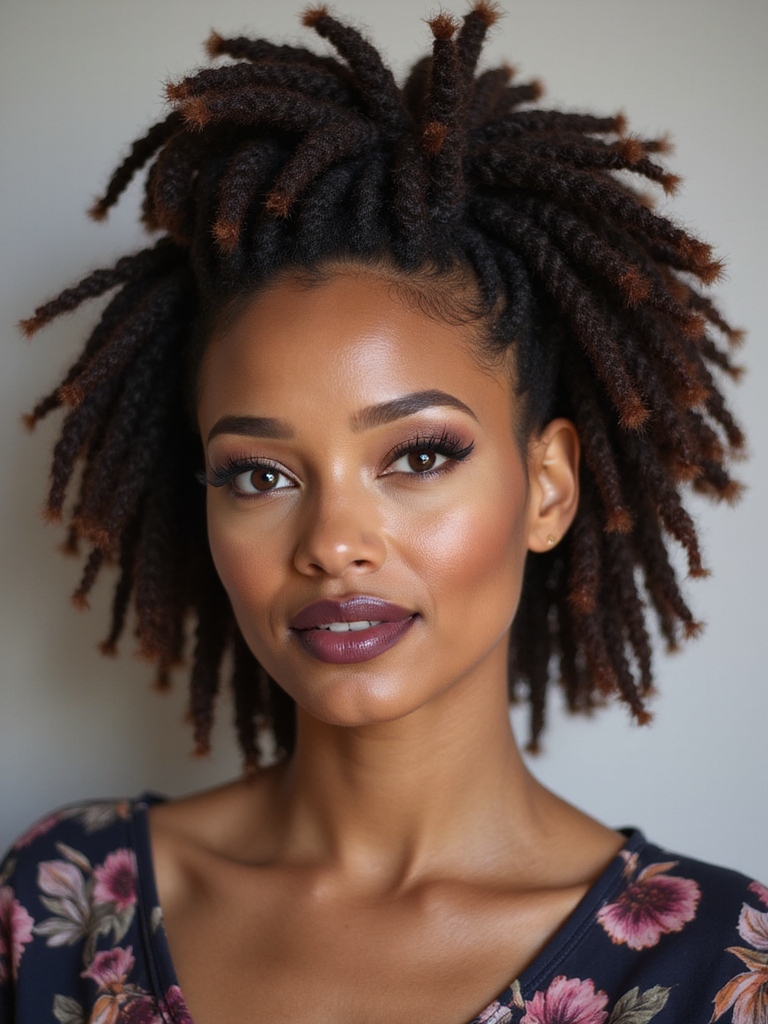
A tapered cut on the sides and back reduces the visual weight of the set by removing density below the crown. The locs sit at full length on top while the sides taper gradually rather than fading to skin, which looks softer and more refined than a full fade.
It suits people whose locs are in the middle stages of growth and who want a more structured silhouette while the set keeps developing. I cut a lot of these tapers for clients in that in-between phase, and the structure it lends a still-developing set really lifts how they feel about it. The taper line holds its shape for about a month before it needs cleaning up again, asking less of the barber than a sharp high-top fade does.
Headwraps and Loc Accessories
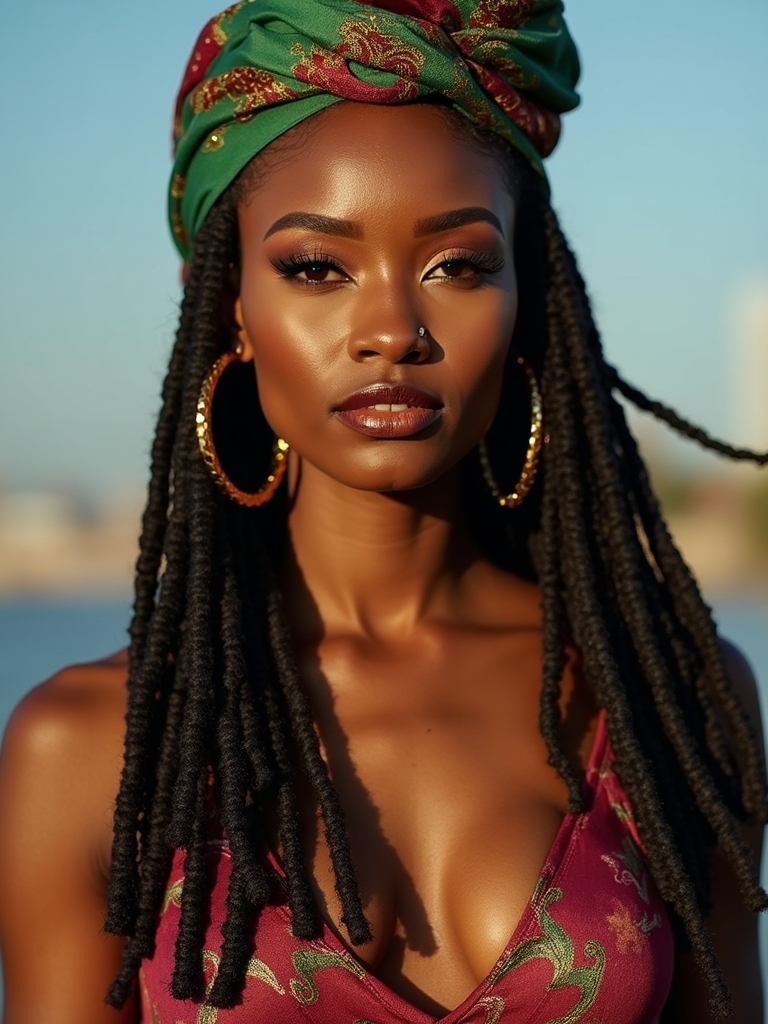
Headwrapping has roots across West African, Caribbean, and South Asian cultures, tied to modesty, spiritual protection, identity, and elegance. In the African diaspora it became a marker of cultural pride and, historically, of resistance to the erasure of African heritage. Worn over locs, a wrap connects both traditions at once, the locs and the cloth.
Within Rastafari communities, headwraps are worn by women practitioners as an expression of modesty and respect, in keeping with the value placed on humility and spiritual covering. A satin-lined wrap protects the locs from friction while it carries that meaning. See our bandana loc styles for everyday wraps.
- Headwraps carry deep heritage of pride, identity, and protection.
- In Rastafari, often worn by women as modesty and respect.
- A satin-lined wrap also guards the locs from friction.
Beachy Loose-End Locs
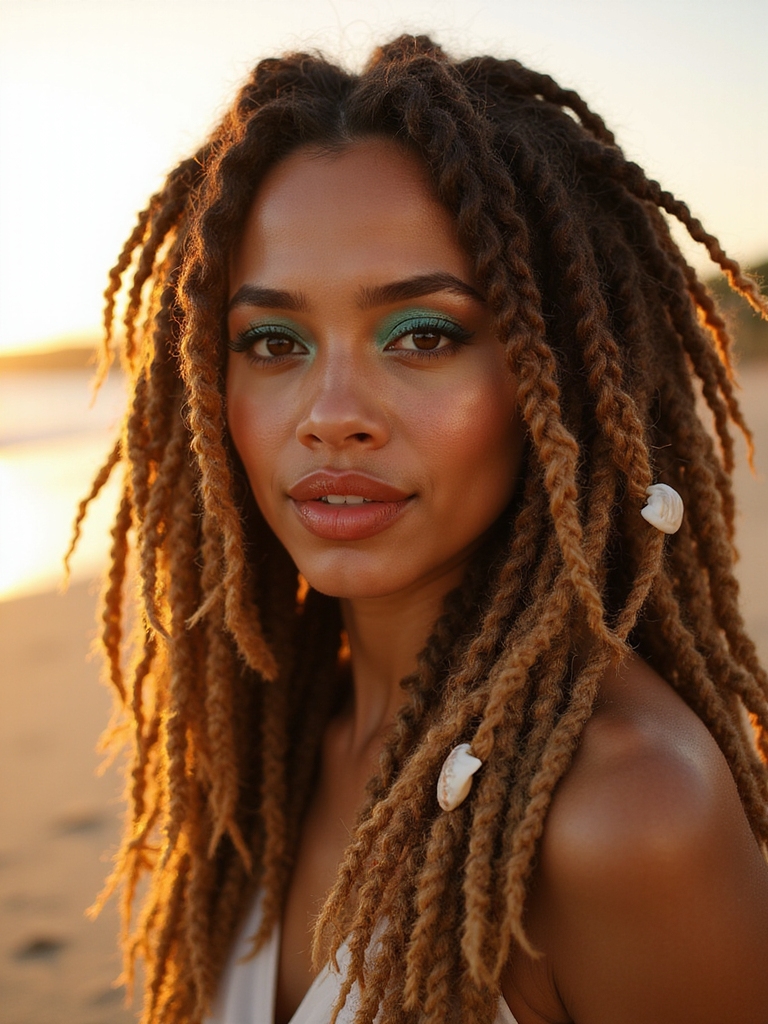
Locs worn fully loose at the beach or outdoors align naturally with the Rastafari value of living close to the earth. The hair moves with the breeze, picks up the texture of salt air, and the whole effect is of hair that belongs exactly where its wearer has brought it.
To keep the loose ends out of your eyes outdoors, pin a few back from the face at the temples with small cuffs or shell-tipped pins, without disturbing the free feel of the rest. Rinse the salt out and moisturize afterward, since salt air is drying over time.
- Locs worn fully loose and free, moving with the air.
- Pin a few back with cuffs to keep them off the face.
- Rinse and moisturize after salt or sun exposure.
Maintenance & Care
Locs reward consistent, gentle care more than any single product. Wash regularly with a residue-free shampoo, since buildup trapped inside a loc causes odor and weakens the structure, and dry them thoroughly, because moisture sitting inside a loc is the most common cause of mildew. Protect the lengths at night with a satin scarf, bonnet, or pillowcase to reduce friction and lint.
Be gentle at the roots. Whether you palm-roll, retwist, or leave the hair freeform, avoid over-tightening and heavy products, both of which stress the hairline and can, over years, thin the edges.
Keep accessories light, use satin-covered bands instead of rubber elastics, and let the locs carry their weight without pulling. Done with patience, a loc set becomes a lifelong relationship with your hair, grown and tended year over year, not a fixed style you check off a schedule.
Rasta Dreadlocks Questions, Answered
?What does Rastafari mean, and why do locs carry spiritual significance within it?
Rastafari takes its name from Ras Tafari Makonnen, the birth name of Haile Selassie I, who became Emperor of Ethiopia in 1930 and was recognized by practitioners as a divine figure.
The movement grew out of Jamaica in the early 1930s around Pan-African identity, a return to African heritage, and a rejection of colonial European values, including European grooming standards. Locs carry spiritual weight drawn in part from the Nazarite vow in Numbers 6:5, which calls for not cutting the hair as a sign of dedication.
?Is it disrespectful to wear locs if I am not Rastafari?
Locs predate Rastafari and appear across many cultures, so wearing them is not inherently disrespectful. What matters is wearing them with knowledge: understanding their history, not treating them as a costume or passing trend, and not claiming a spiritual meaning you do not hold. Respect for where the style comes from is the point.
?Do all Rastafari practitioners color or style their locs?
No. Traditional practice often favors freeform locs and avoids color, viewing elaborate grooming as a form of the vanity the path refuses. Styling, color, and accessories are far more common in the wider natural-hair community that has embraced loc culture than in strict Rastafari practice.
?How do I care for locs day to day?
Wash regularly with a residue-free shampoo and dry them fully to prevent mildew, protect them at night with satin, and be gentle at the roots. Avoid tight elastics and heavy products, which strain the edges over time. Consistent, gentle care matters far more than any single product.
Roots That Belong to the People Who Grew Them
Locs are one of the few hairstyles that are also a history. Within Rastafari they are a spiritual commitment grown over years; across West African and Afro-Caribbean cultures they connect to centuries of heritage, adornment, and pride. To wear or admire them well is to hold that context alongside the look.
If you are growing locs or styling them, lean on gentle, consistent care and the traditions that shaped them. And if you are simply drawn to the styles here, carry that respect with you. For more on event and everyday loc styling, see our loc updo styles and short loc styles.
Hand-Picked for You