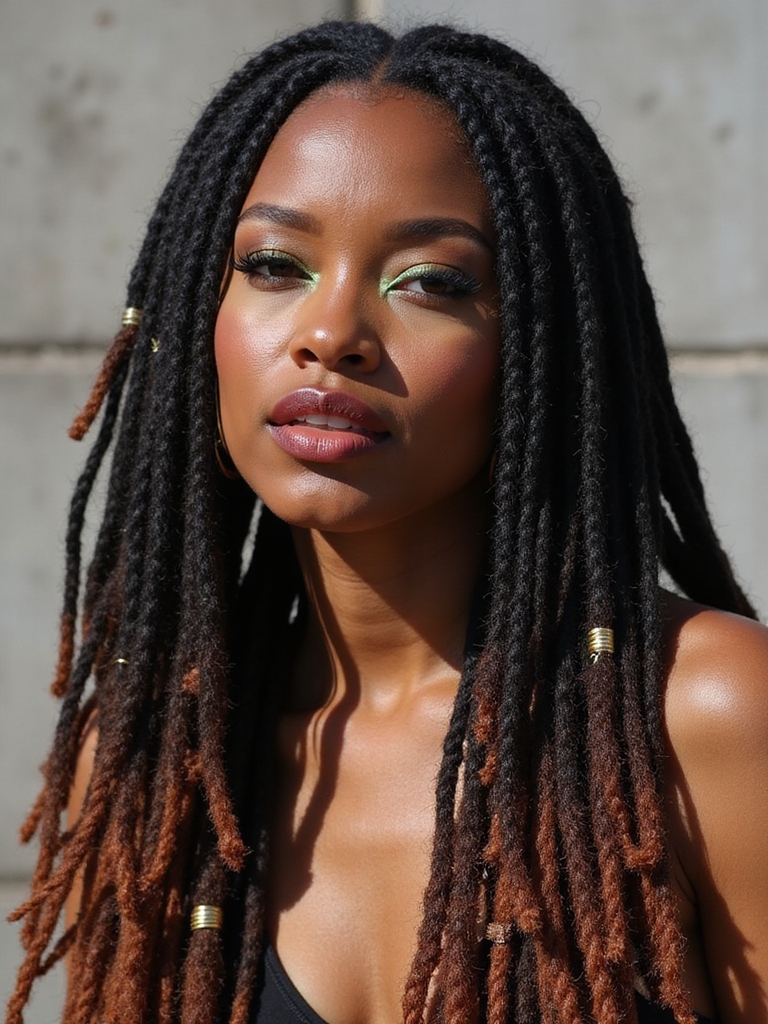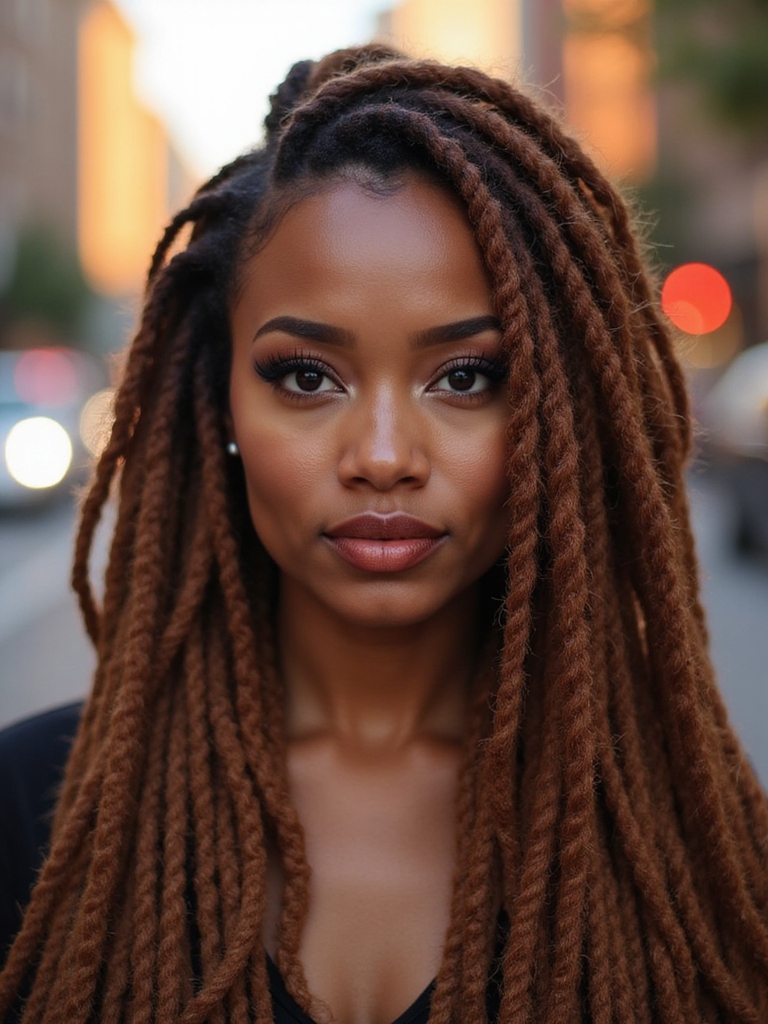
Starter locs and mature locs might as well be different hairstyles. Most pros treat the first few months as an entirely separate project from everything that comes after, since the maintenance, the look, and even the risk of losing a section all change once locs actually mature.
Fifteen dreadlocks hairstyles follow, spanning the full timeline from a fresh two-strand-twist start to a fully accessorized, color-popped mature set, organized by where each one sits on that timeline.
Where Each Style Sits on the Timeline
- Starter locs and mature locs need a distinctly different kind of care, not just a lighter version of the same routine.
- Freeform locs skip the manicured methods entirely, trading a uniform look for less tension on the scalp.
- Faux locs offer a full trial run of the mature-loc look with zero long-term commitment to natural hair.
Classic Starter Locs for Beginners

Every set of mature locs starts as a section of loose, non-locked hair coaxed into a coil through one of several methods, most commonly backcombing, two-strand twisting, or interlocking. Experts map the method choice to hair type more than personal preference, since coarser, tightly-coiled hair locks faster with less manipulation than finer, looser textures.
- The starting method matters more than most people expect going in
- Coarser, coilier hair locks faster with less manipulation
- Patience during this stage prevents locs from unraveling early
Microlocs for a Sleek, Lightweight Look

Microlocs section the hair into dozens more parts than a standard set, each individual loc thinner and lighter as a result.
That extra section count means more time at the start, an installation appointment measured in hours, but it pays off in a lighter, more versatile finished set that styles closer to loose hair.
- More sections, thinner individual locs, more installation time
- A lighter overall set that moves more like loose hair
- Styling options expand once the smaller locs mature
Freeform Locs With Natural Texture

Freeform locs skip the manicured methods entirely, letting hair lock on its own timeline through washing, natural tangling, and minimal intervention, with no scheduled retwist involved at all.
Less Manipulation, More Variation
The result carries genuine texture variation from loc to loc, thicker in some places and thinner in others, an intentional departure from the uniform look most other sets aim for.
Less manipulation also means less tension pulling at the scalp over time, which some wearers choose specifically for that reason.
Two-Strand Twist Starter Locs

Two-strand twists section hair into pairs of strands wound around each other, a starting method gentler on the scalp than backcombing while still encouraging the coil that eventually locks. It’s a common first choice specifically because the twisting itself causes less immediate tension than other starter methods.
- Pairs of strands wound together, no backcombing involved
- Gentler on the scalp than most other starting methods
- A common first choice for exactly that reason
Comb Coil Locs for Defined Roots
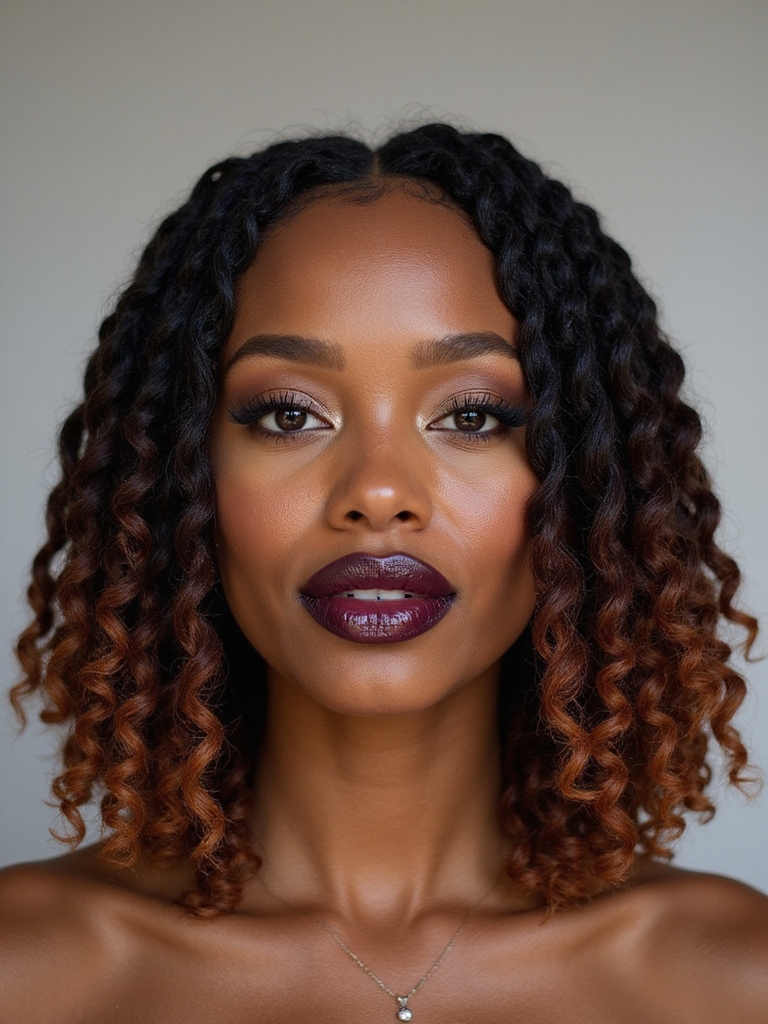
Comb coils use a fine-tooth comb to twist each section into a tight, uniform coil from root to end, with more precision than fingers alone typically allow.
Precision Parting, Defined Results
The precision parting this method requires produces some of the most defined, uniform roots of any starting method, visible clearly even before the locs mature.
Most pros schedule a light maintenance retwist on comb coils sooner than other starter methods, since the tight coil unwinds faster than a looser twist would.
| Method | Scalp Tension | Time to Lock |
|---|---|---|
| Backcombing | Higher | Faster |
| Two-strand twist | Lower | Moderate |
| Comb coil | Moderate | Moderate to slower |
Boho Goddess Locs With Curly Ends

Goddess locs are a faux-loc install, human or synthetic hair wrapped or crocheted onto the natural hair, finished with loose curls at the ends where a permanent loc would typically taper straight.
A Styled Finish, Not a Natural Trait
That curled finish is entirely a styling choice on the extension hair, not a natural loc trait, which means it can be redone or changed each time the style is reinstalled.
The full install typically takes several hours in a single sitting, professionally priced around $150 to $300 depending on length and density.
Faux Locs for a Temporary Change

Faux locs let anyone test the mature-loc look without committing natural hair to the process at all, wrapped or crocheted extensions removed cleanly whenever the wearer chooses.
Experts map the ideal wear window to roughly two months before the install starts pulling at the root more than is comfortable, though this varies by installation technique and hair density.
It’s a full trial run, useful for anyone deciding whether the mature-loc commitment is actually right for them before starting real locs.
👍What Goddess Locs Do Well
- +No commitment to a permanent installation
- +Curled ends soften the overall look
- +Protects natural hair underneath during the wear period
👎The Trade-Offs
- –A full reinstall is needed to refresh the style
- –Heavier than natural locs of the same length
- –Not a substitute for locs actually maturing over time
Wavy and Crimped Locs for Soft Dimension

Wavy and crimped texture on mature locs comes from a heatless setting method, most commonly perm rods or flexi rods; the loc structure itself stays exactly as it was. The curly locs and dreadlocks hairstyles guide covers the same heatless-setting family in more depth. Once the set relaxes, usually within a week of regular washing, the locs return to their normal, straighter shape without any lasting change underneath.
- A heatless setting method, not a change to the loc itself
- Relaxes back to normal within about a week of washing
- A temporary texture change, fully reversible each time
High-Top Locs With Tapered Sides

A high-top gathers the full set upward at the crown while the sides taper down shorter, a bold, sculptural shape that works best on a longer, more mature set with enough length to build real height.
The shorter sides need their own separate upkeep on a schedule independent of the locs themselves, typically a fresh shape-up every few weeks to keep the tapered line crisp.
A couple of persistent myths about styling mature locs, cleared up:
❌ Myth: Myth: Heat styling permanently curls locs.
✅ Reality: Fact: Most curled or wavy styles on locs use heatless setting methods; the effect fades with normal washing rather than lasting permanently.
❌ Myth: Myth: Any change to the shape damages the loc underneath.
✅ Reality: Fact: The loc itself stays structurally the same; only the surface texture temporarily shifts.
Undercut Locs for an Edgy Contrast

An undercut takes a section of hair beneath the mature locs down to skin or very short, creating a sharp visual contrast between the shaved area and the fuller locs above.
A Cut, Not a Style Choice
Because the undercut removes hair entirely, it lands in a different category from every reversible styling choice on this list: a permanent, irreversible cut.
Most pros recommend a fresh shape-up on the undercut section roughly every three weeks to keep the contrast sharp as it grows back in.
Half-Up, Half-Down Loc Styles

Mature locs are heavy enough that a half-up style noticeably eases scalp tension compared to gathering the full set, since only half the weight pulls at the crown.
Splitting the Weight in Half
The top section can gather into a small bun, a twist, or simply a loose tie, while the bottom half hangs free and shows off length; the loc updo hairstyles guide has more structured options for the top section specifically.
It’s a practical everyday option specifically because it splits the weight, easing the load a fully gathered style would concentrate in one place.
Before Committing to an Undercut
Unlike nearly every other style on this list, an undercut on mature locs removes hair permanently. It cannot be undone the way a bun, twist, or wrap can, so it’s worth sitting with the decision before booking.
Loc Buns and Space Buns

Twisted locs pulled into a bun rely on the locs gripping each other at the gathered point, the same self-supporting quality that makes buns one of the lowest-effort formal options for mature locs.
Space buns split the set into two symmetrical gathered points instead of one, a bolder, more playful variation on the same basic technique; the loc bun hairstyles guide runs through fifteen more anchor points and positions.
Either version works best on a set mature and long enough to hold its shape once gathered without a wall of pins.
Loc Bob Cuts for Chic Short Styles

Locs do not need length to read polished; a neat, neck-grazing loc bob proves the point, the shorter length actually cut and shaped by a stylist. Most pros treat a loc bob as a genuine cut requiring the same precision as any other structured haircut.
- Cut and shaped, not just grown-out locs left short
- Requires the same precision as any structured haircut
- Proves length isn’t required for a polished result
Color-Popped Locs and Ombre Effects

Honey-tipped ombre color on locs concentrates the lightest tone at the ends, since color lifted this close to the root risks more visible damage on a structure that’s harder to repair than loose strands. Most pros recommend a gloss refresh on the colored section well before the rest of the set needs any attention, since color fades faster on locs than on loose, non-locked hair.
- Lightest color concentrated at the ends, not the root
- Root-area lifting carries more visible risk on locs
- Color fades faster on locs than on loose, non-locked hair
Accessorized Locs With Beads, Cuffs, and Wraps

Beads, cuffs, and thread wraps dress mature locs up without altering the loc structure itself, purely additive rather than requiring any change to how the locs were installed or maintained. The elegant dreadlocks hairstyles guide covers formal-event styling for anyone dressing a set up beyond everyday wear.
Cuffs sized to fit the individual loc’s width snugly enough to grip rather than slide are what keep the accessory from working loose by the end of the day.
- Purely additive; the loc structure underneath stays unchanged
- Cuffs need a snug fit to the individual loc’s width
- The easiest way to change the look without any real commitment
How to Get the Look
Booking a consultation before starting any loc method matters more here than for almost any other hairstyle, since correcting a poorly-started set later costs far more time than getting the method right from the beginning.
Most pros recommend bringing reference photos of the specific method and finished look, not just the general idea of “locs,” since the starting technique alone determines a large part of how the mature set eventually looks and behaves. The loc ponytail hairstyles guide is a useful next stop once a set is mature enough to style beyond the basics.
Dreadlocks Hairstyles: Common Questions
?How long does it take for starter locs to mature?
Anywhere from six months to two years, depending on hair texture, the starting method, and how consistently the retwist schedule is kept. Coarser, coilier hair generally locks and matures faster than finer textures.
?Can freeform locs be converted to a more manicured style later?
Yes, though it usually takes a professional loctician to comb out and reshape the irregular sections evenly. It’s easier to start manicured and let a section go freeform than the reverse.
?Is it normal for new locs to unravel a little at first?
Some looseness at the ends is common in the first few months, especially with two-strand twists. A little wax or gel at the tips and patience through the early stage usually resolves it without needing to restart the section.
One Takeaway Worth Remembering
The single biggest factor across all fifteen styles here isn’t the look itself, it’s the starting method, since that early choice shapes everything the mature set can and can’t do later.
Bookmark this list and revisit it as locs mature. What works on a two-month-old starter set rarely works the same way on a five-year-old mature one.
More to Browse