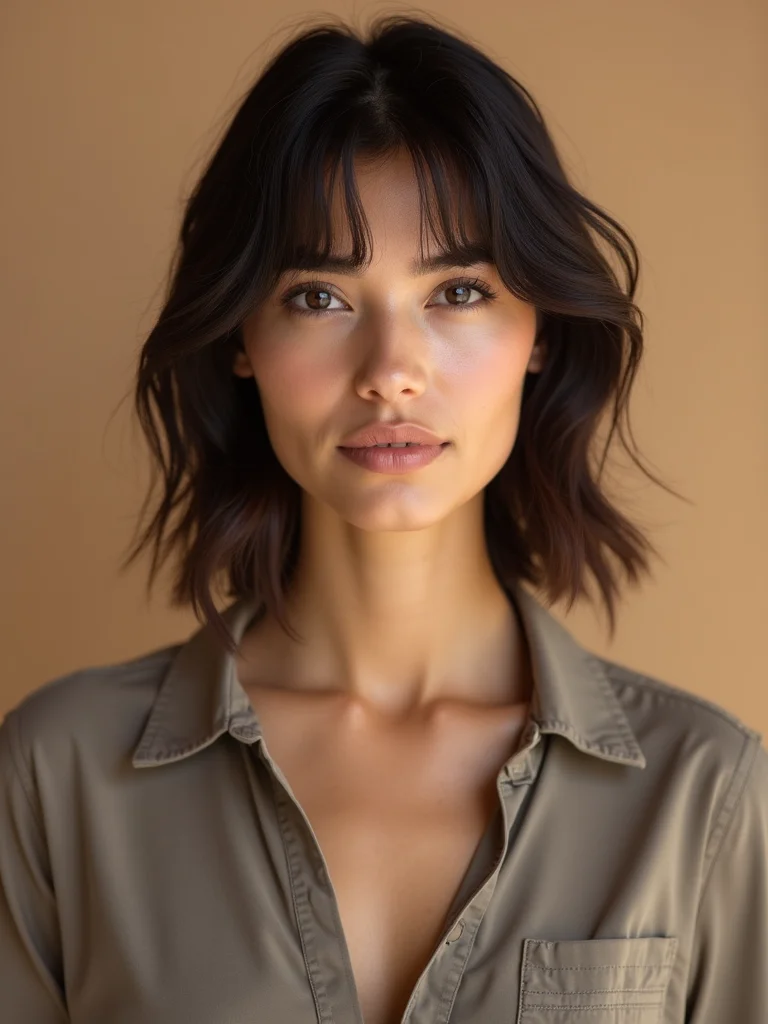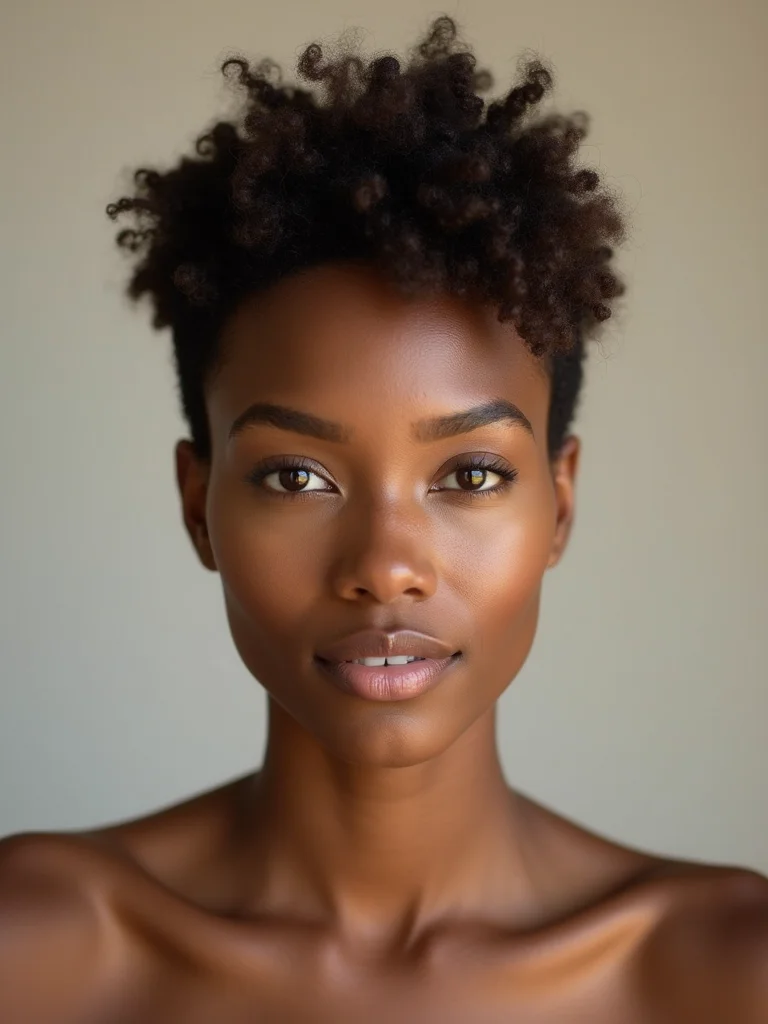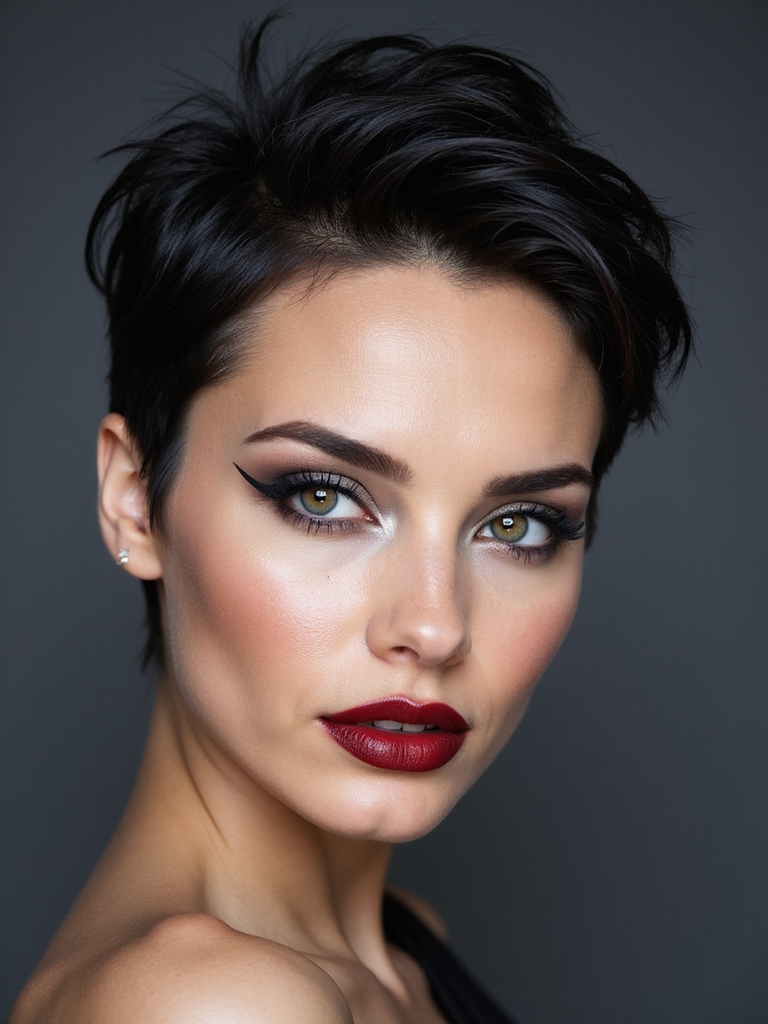
A classic pixie aims for polish. An edgy one aims for attitude, and the two ask for almost opposite things from a stylist’s scissors: soft, blended layers versus sharp, deliberate breaks in the line.
Fifteen versions follow, each pushing that edge a different direction, whether through texture, color, an undercut, or sheer contrast in length. The funky pixie cut guide covers the more playful end of the same spectrum.
Before You Book: Three Real Questions
Does an edgy pixie require thick or coarse hair? No. Texture and product do most of the work; fine hair can carry a choppy, piecey pixie just as well with the right cutting technique and styling paste.
How often does an edgy pixie need trimming? More often than a longer cut, since a short shape grows out visibly fast. Most people plan on a shape-up close to once a month to keep the lines sharp.
Can curly or coily hair wear an edgy pixie? Yes, and often with more built-in texture than straight hair starts with. The cut just needs to be done dry, curl by curl, so the finished shape accounts for shrinkage.
The Choppy Piecey Pixie
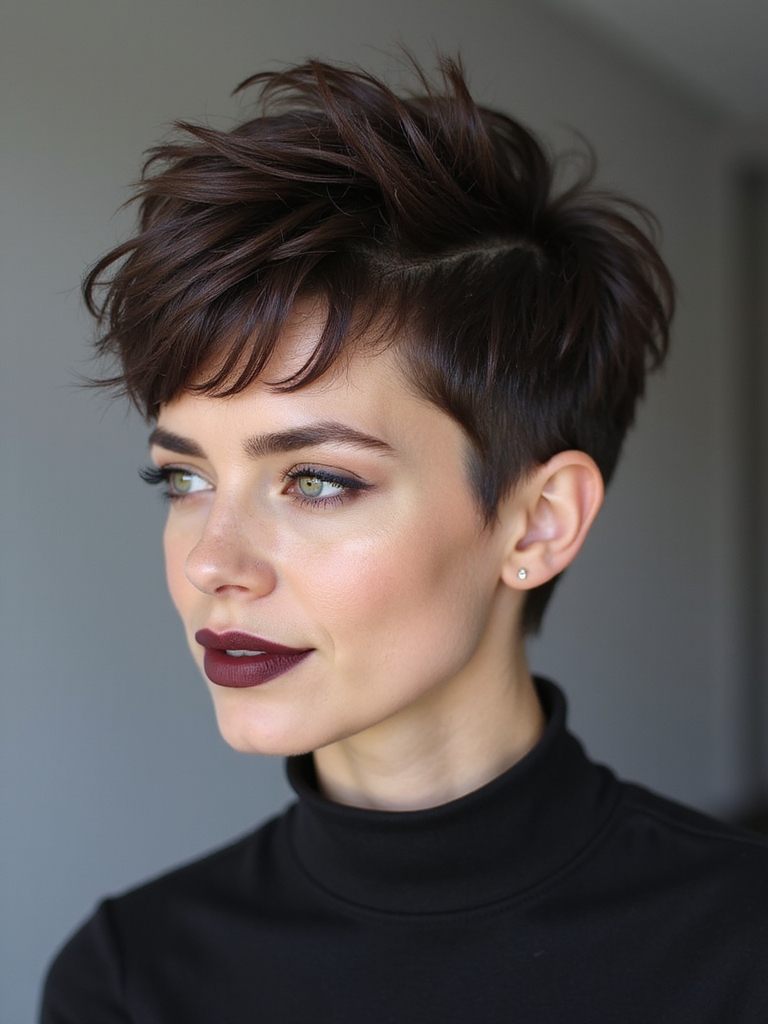
A choppy pixie relies on razor-cut or heavily point-cut layers that separate into individual pieces rather than blending into one smooth shape.
Texturizing paste worked through damp or dry hair activates that separation; without it, the same cut reads soft instead of sharp. A pea-sized amount is usually enough for the whole head, since too much weighs the pieces back down.
It suits nearly every face shape, since the choppiness itself does the framing work rather than relying on one specific length or angle.
The Razor-Cut Pixie

A razor, rather than shears, cuts each strand at an angle instead of straight across, leaving feathered, slightly uneven ends instead of a blunt line.
Why the Tool Changes the Texture
That texture holds up especially well on thick or coarse hair, where blunt shears alone would leave the ends looking heavy.
Because a razor removes bulk as it cuts, the finished shape sits lighter on the head than the same length cut with scissors would.
The Undercut Pixie
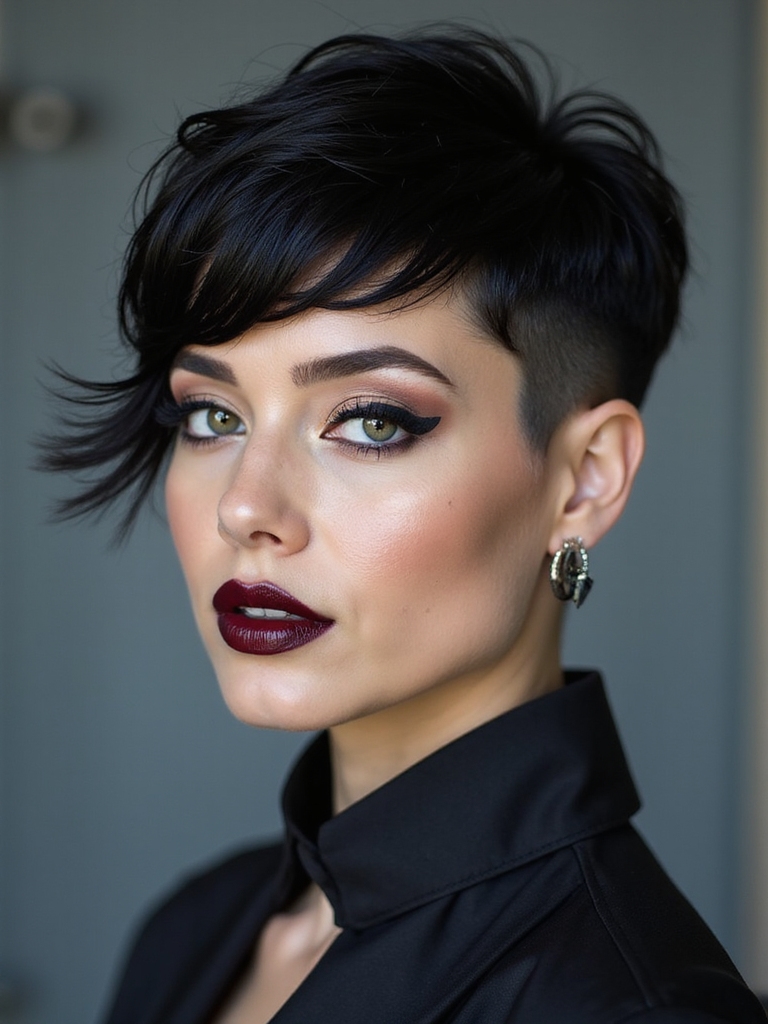
An undercut pixie shaves or closely clips the sides and back while leaving noticeably more length on top, creating a sharp break between the two sections instead of a gradual taper.
A Hidden or Visible Edge, Your Choice
That contrast is the whole point. The shaved section can stay hidden under the top length day to day, or get pushed forward for a more visible, graphic effect.
Growing it out means committing to more frequent trims on the sides specifically, since that section shows new growth faster than the longer top does.
Quick check before requesting a razor cut:
1Is your hair fine or already prone to breakage?
A razor can be too aggressive; ask about point-cutting with shears instead.
2Do you want visible texture without daily styling effort?
A razor cut holds shape and movement with minimal product.
The Asymmetrical Pixie
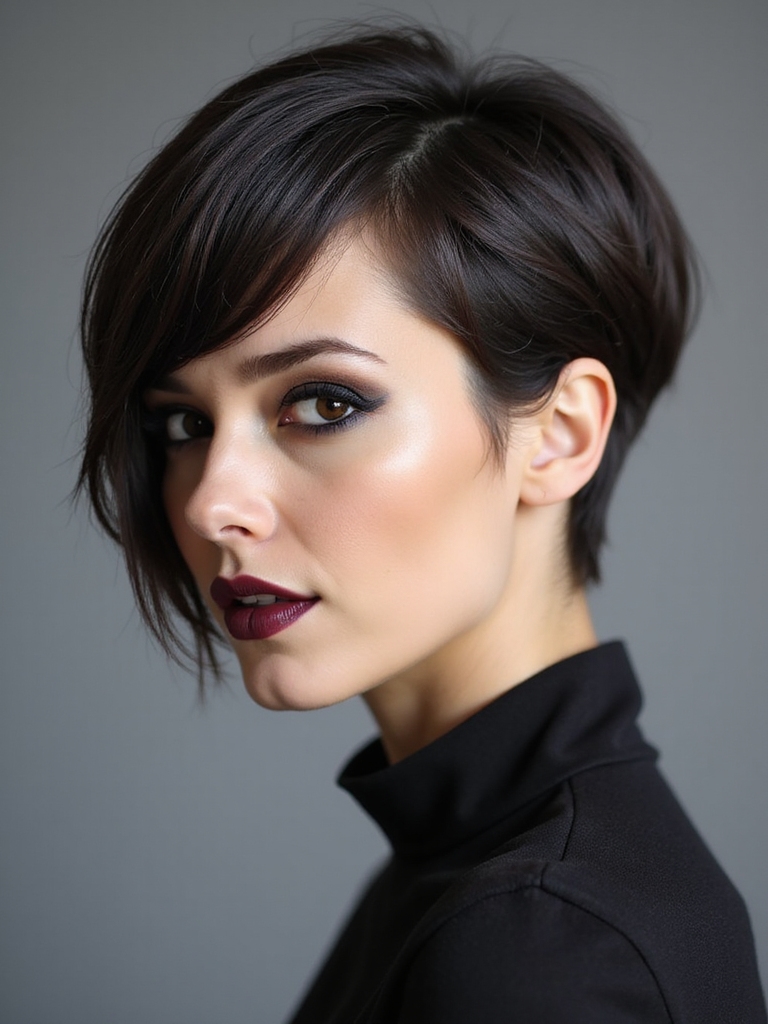
An asymmetrical pixie leaves one side noticeably longer than the other, trading the usual pixie symmetry for a diagonal line that pulls focus across the face. Most versions keep the longer piece toward the front, so it can be swept forward, tucked back, or left to fall depending on the day.
- One side stays cropped close; the other carries visible length
- The diagonal line draws the eye across, not straight down
- Styling direction matters daily, since the longer side needs guiding
- A small amount of pomade keeps the longer piece controlled without stiffness
The Micro-Bang Pixie
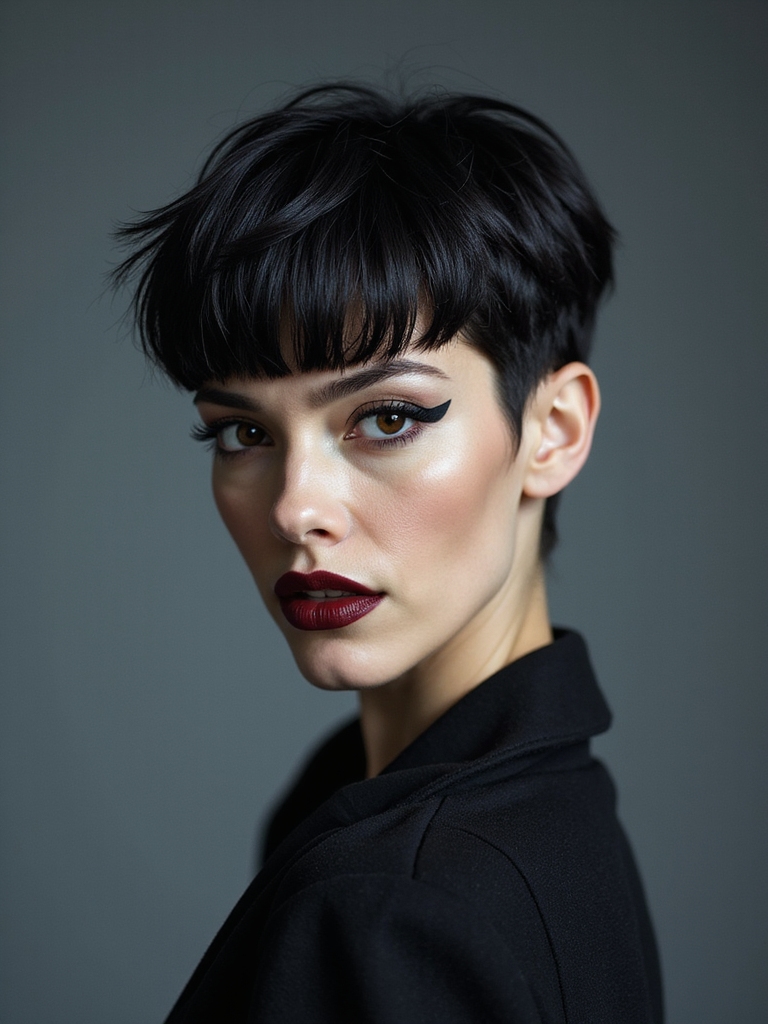
A micro-bang pixie pairs the short crop with an equally short, blunt fringe set high on the forehead, well above the brow line.
It’s the boldest version of a fringe on this list, tied closely to the cut itself rather than added on afterward. Committing to it means committing to trims on both the fringe and the rest of the shape on the same schedule.
The Shaggy Pixie
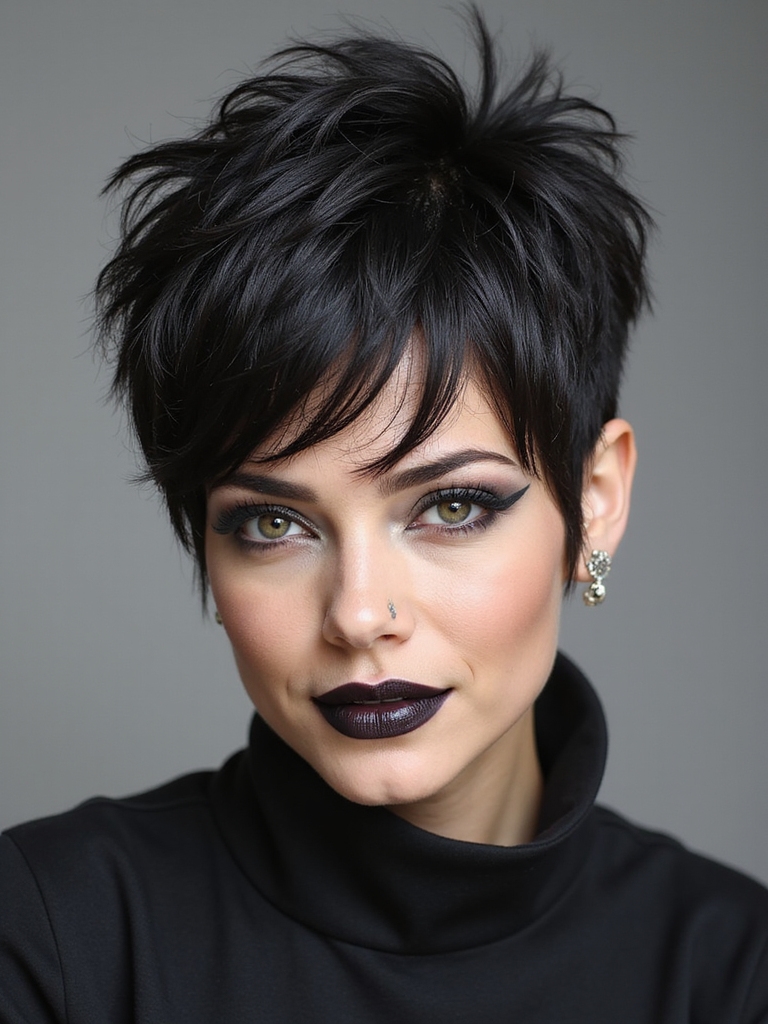
A shaggy pixie borrows the choppy, layered energy of a shag and shrinks it onto a much shorter base, keeping the loose, undone movement without the length.
Heavy layering throughout gives the cut a slightly wild attitude that a smoother pixie doesn’t carry.
It asks for a texturizing product daily to keep the layers reading separated rather than flat, since the cut relies on that lift to hold its shape.
The Curly Coil Pixie
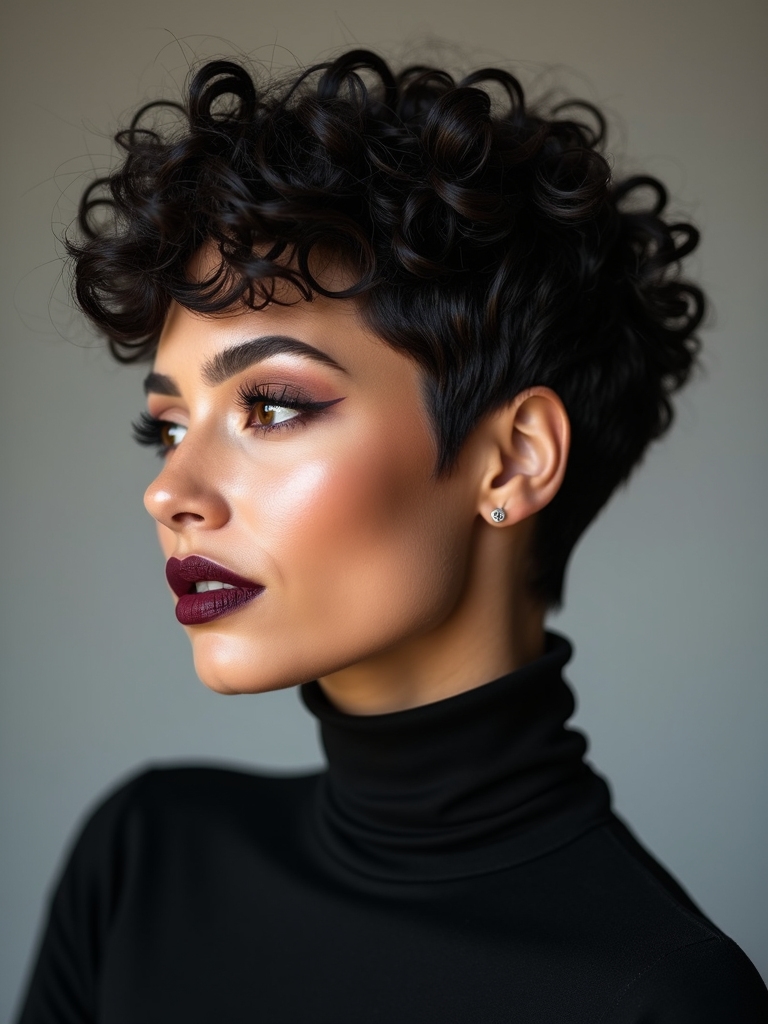
On curly or coily hair, a pixie shows off natural texture at close range instead of minimizing it, with each coil visible rather than smoothed into a longer, looser shape.
The cut has to happen dry, curl by curl, since curls spring up noticeably once fully dry and a wet cut almost always lands shorter than planned. The pixie cut for curly hair guide covers the dry-cutting technique in more detail.
- Defined coils read as the main feature, not something to tame
- A curl cream on soaking-wet hair keeps definition through the day
- A dry cut accounts for shrinkage that a wet cut would miss
The Platinum Pixie

Platinum on a pixie puts color and cut on equal footing, since so little length means every inch of hair shows the tone clearly.
Getting there usually means lifting the whole head to a pale, near-white level, which asks more of the hair’s health than a longer cut would tolerate as easily.
- Near-white tone shows up clearly on such a short length
- Requires a full lift, so bond-building treatments matter
- A purple-toned shampoo keeps the platinum from pulling yellow
The Pixie-Bob Hybrid

A pixie-bob hybrid keeps the sides and back short and pixie-like while leaving enough length at the crown and front to blend toward bob proportions, landing somewhere between the two cuts rather than fully committing to either.
- Short pixie sides paired with bob-length crown and front
- Offers more styling range than a full pixie without losing the edge
- A flexible middle ground for anyone torn between the two cuts
“Most colorists recommend a strand test before committing a pixie-length head to platinum, since there’s so little length to hide any uneven processing.”
The Tousled Pixie
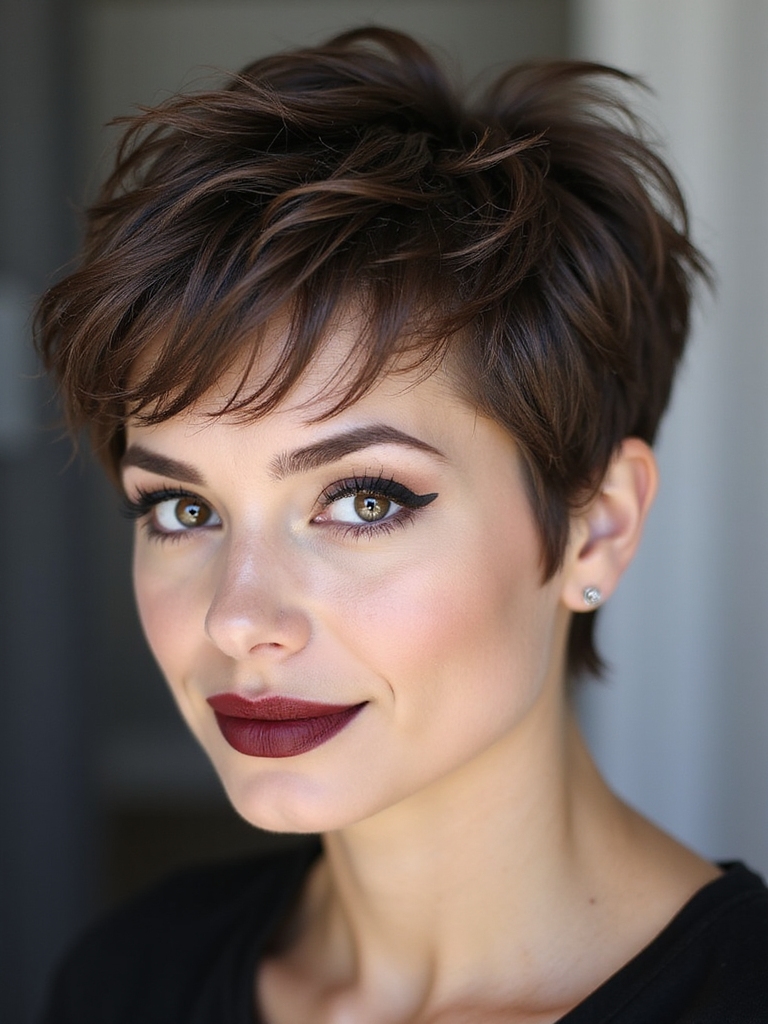
A tousled pixie skips the sharp, sculpted finish for something looser, styled with fingers rather than a comb for a lifted, slightly undone texture through the crown. It works especially well on second-day hair, since a little natural oil actually helps the pieces separate and hold their shape.
- Fingers, not a comb, do most of the styling work
- A texturizing spray at the roots adds lift without stiffness
- Looks more relaxed than a sculpted or slicked-back pixie
- Second-day hair separates and holds better than freshly washed strands
The Slicked-Back Pixie
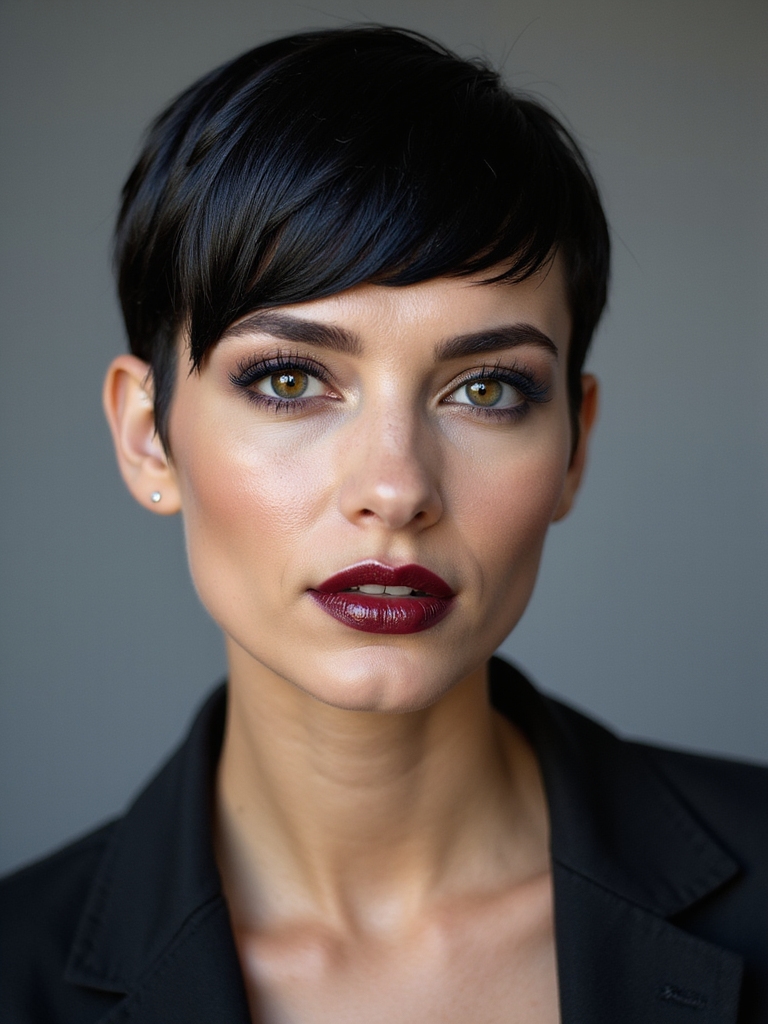
A slicked-back pixie takes the opposite approach from a tousled one, using a strong-hold gel or pomade to press every piece flat and directional for a glossy, editorial finish. A fine-tooth comb, worked through while the product is still damp, is what actually creates those clean directional lines rather than the product alone.
- A strong-hold product presses the shape smooth and directional
- Looks polished and graphic rather than soft or undone
- Holds especially well through humidity compared to a tousled finish
- A fine-tooth comb sets the directional lines while product is damp
🅰️Tousled
Loose, finger-styled texture; casual, everyday energy
🅱️Slicked-Back
Smooth, sculpted finish; polished, editorial energy
The Tapered Textured Crop
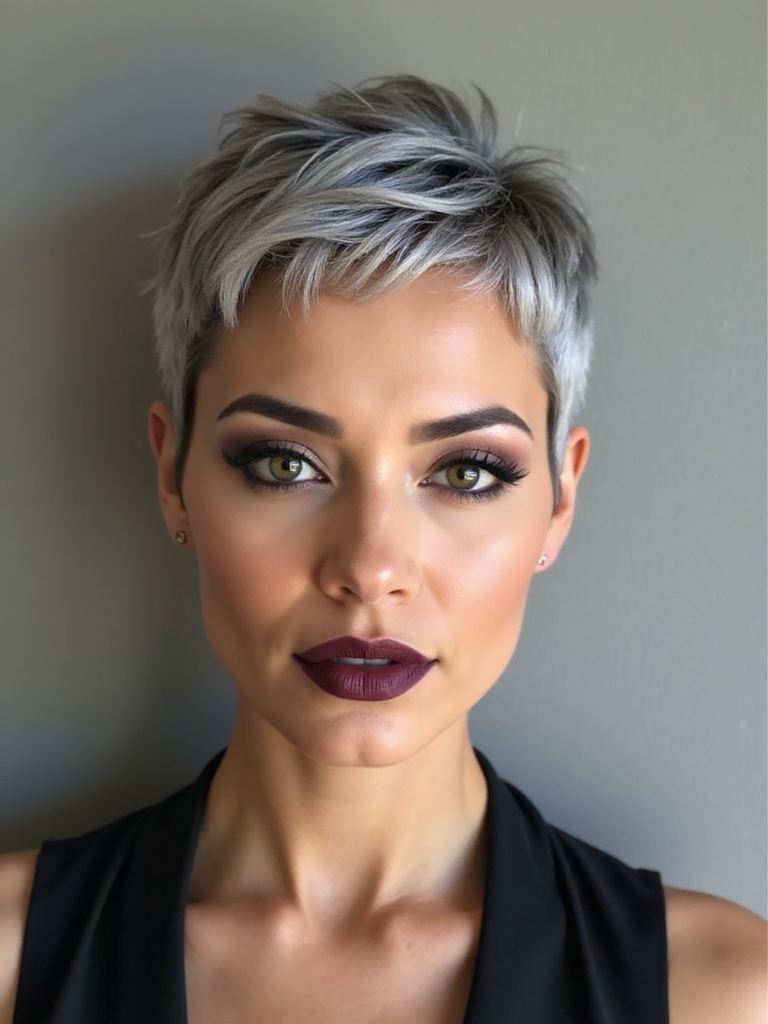
A tapered crop keeps texture through the top while tapering the sides and back down close to the head, landing as one of the lower-maintenance versions on this list since the taper grows out more gradually than a hard undercut line.
- Texture through the top; a gradual taper at the sides and back
- Grows out more gently than a sharp undercut line
- A dependable, everyday version of the edgy pixie family
The Long-Top Contrast Pixie
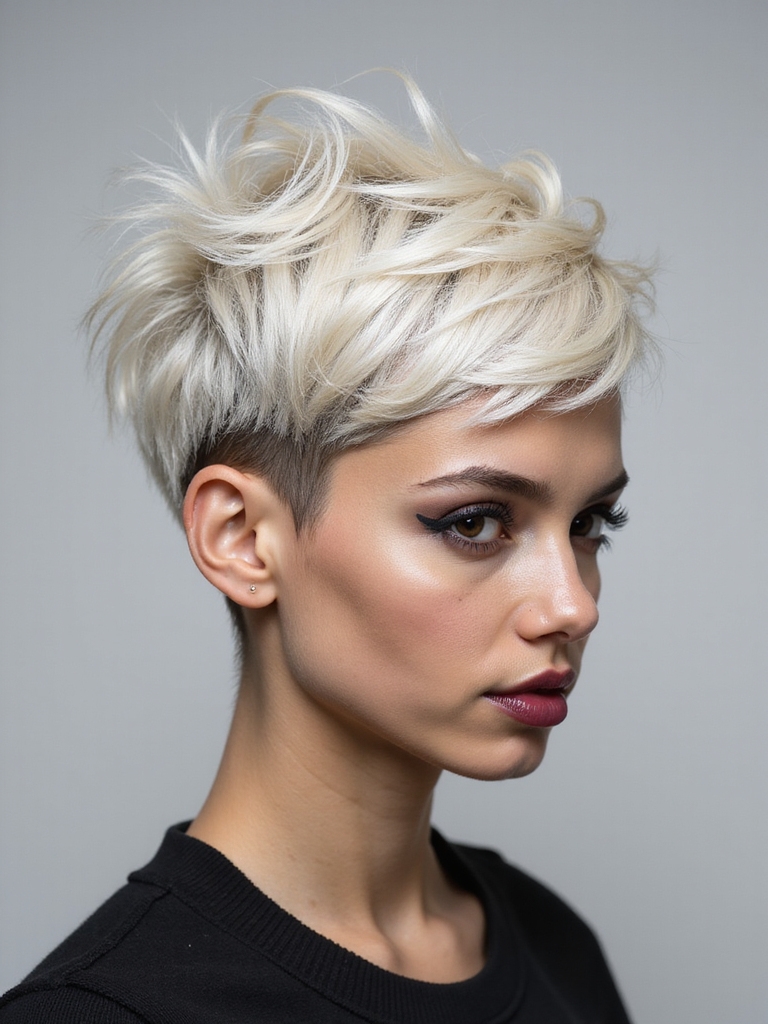
A long-top pixie pushes the contrast between crown length and cropped sides further than most versions here, leaving enough length on top to style in several different directions depending on the day. That extra length also means a slightly longer appointment, since the top gets cut with more precision than a uniform crop requires.
- Noticeably more crown length than a standard pixie
- Enough length on top to style forward, back, or to one side
- The most versatile styling option on this list day to day
- Takes a little longer in the chair than a uniform crop
The Color-Blocked Pixie
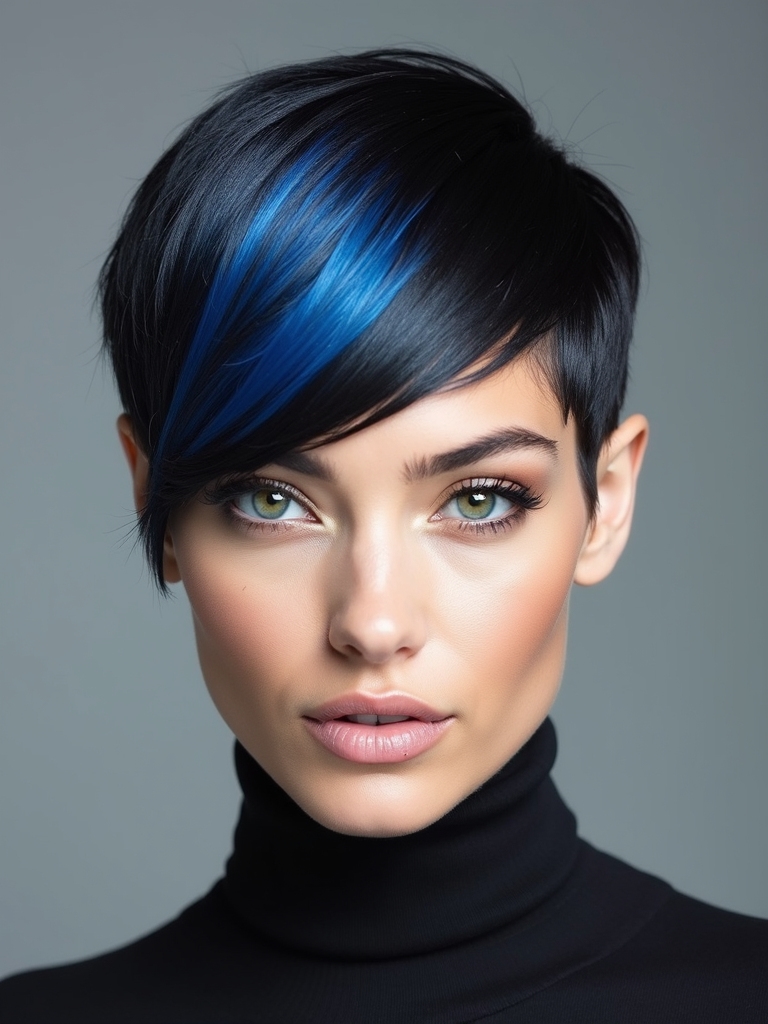
A color-blocked pixie uses graphic panels of contrasting color that follow the actual lines of the cut, rather than blending or painting on a gradient.
That precision takes real planning between the cutting and coloring stages, since the panels need to land exactly where the shape changes for the effect to read cleanly.
- Contrasting color panels follow the cut’s actual lines
- Needs coordination between the haircut and the color plan
- Reads as one graphic statement rather than two separate choices
💡Getting the Most From Extra Length on Top
Ask specifically for enough crown length to grip with a small amount of product; too little defeats the point of this version, and too much starts drifting toward a different cut entirely.
The Buzzed Pixie
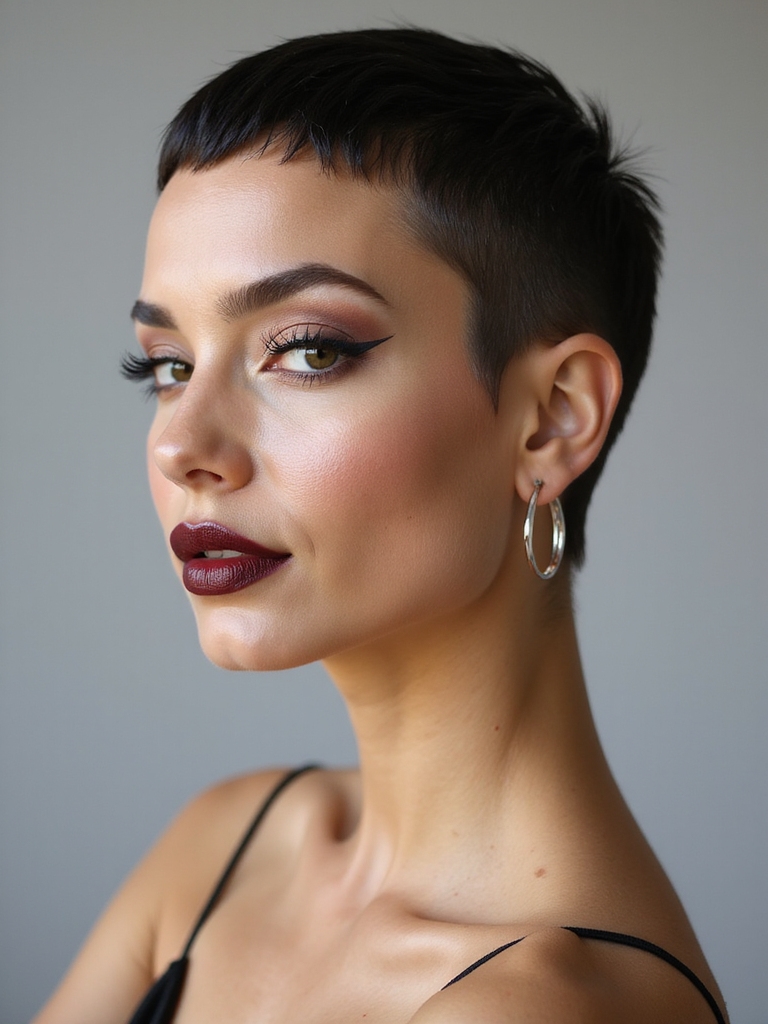
A buzzed pixie clips the entire head to one short, uniform length, trading every bit of styling variation for the lowest-maintenance version on this list.
There’s no daily routine involved beyond regular upkeep on the length itself, which grows out visibly fast given how short the starting point is.
- One uniform length across the entire head
- No daily styling routine required at all
- Grows out fastest of every version here, given the short base
What to Expect
Plan on a shape-up close to once a month for most of these cuts, since short hair grows into the eyes and out of shape faster than any longer style would. Expect the appointment itself to run under an hour once the cut is established.
The first cut into any of these takes longer, often closer to ninety minutes, since a stylist is establishing lines that later trims will simply maintain. Plan on around $65 for that first appointment at most salons.
Edgy Pixie Questions, Answered
?Will an edgy pixie work with a round or square face shape?
Yes, with the right adjustments. Height at the crown and length left at the front counter roundness, while softer, choppier layers ease a strong jawline. The specific version matters more than the face shape itself.
?How much longer does hair need to be before trying an asymmetrical or long-top version?
Not necessarily longer at all. Both work as a first cut; the asymmetry or extra crown length gets built into the initial shape rather than added once hair has grown out.
?Can an edgy pixie be softened later without starting over?
Usually, yes. Growing out the sides slightly and blending an undercut, or softening a razor-cut edge with shears, moves the shape toward something gentler without cutting everything back to the beginning.
The Edge Is in the Detail, Not Just the Length
Every version here starts from roughly the same short base; what changes is texture, contrast, and how much of the shape gets left to chance.
Bring a reference photo and be specific about upkeep tolerance, and any of these translates cleanly from a photo to an actual haircut.
Don’t Miss These