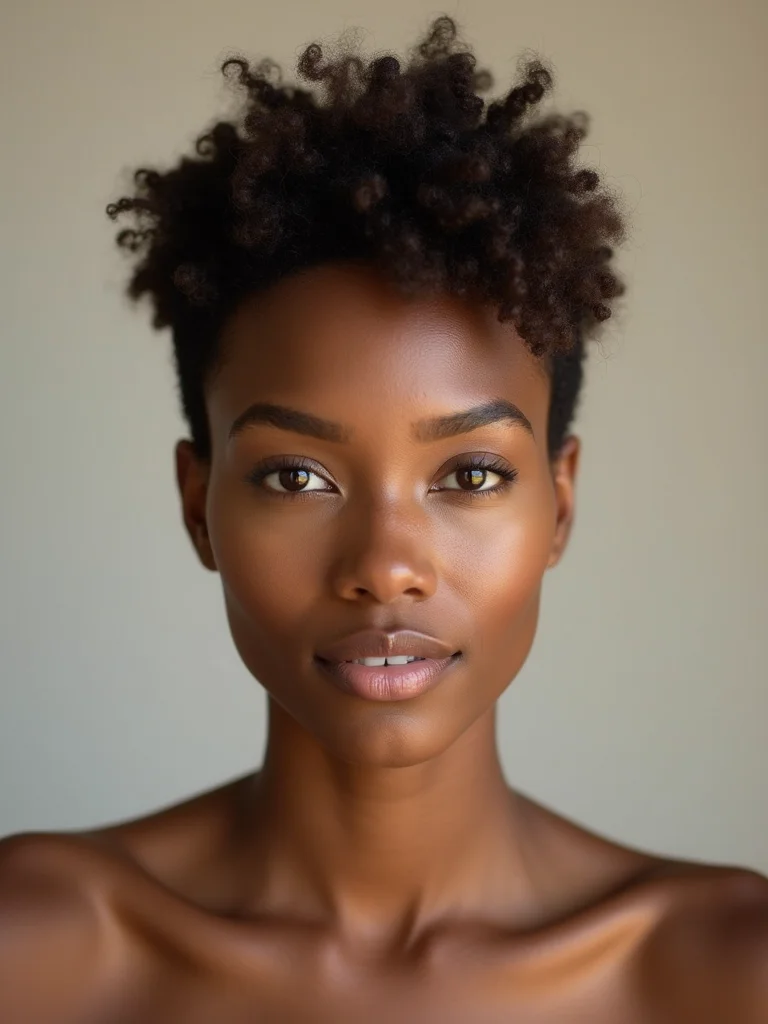
A parting pattern decides more about a braided bob’s final look than the braid size ever does. Move that part from dead-center to a deep side sweep, or replace it with a Fulani cornrow running front to back, and the same length of braids ends up looking like a completely different style.
Fifteen versions of that idea follow, organized around what the parting and structure actually do: create symmetry, create asymmetry, or turn the scalp itself into part of the design.
The Structure Question Worth Asking First
Before picking a look from the fifteen below, it helps to separate two different decisions: the braid size and length, which mostly set the timeline and the weight, and the parting pattern, which sets the actual visual structure of the style.
A center part, a deep side sweep, and a Fulani cornrow all use roughly the same braid size and take roughly the same chair time; what changes is entirely where the lines run across the scalp.
Knotless Bob Braids With a Clean, Unbroken Part

A knotless install feeds the extension in without a starting knot, and on a bob that matters most at the part itself: the line runs clean and unbroken from root to end, without the small bump a knotted install leaves along the way.
- Works with any of the parting patterns below, since it changes the root, not the design on top
- A flatter root also means the part photographs more crisply, which matters more on a shorter length where every line shows
- Takes a bit longer at the chair than a knotted install, since feeding hair in gradually can’t be rushed

Classic Box-Braided Bob With Clean Lines

A classic box-braided bob starts from a grid: individual squares parted across the scalp, each one braided down into an even line. The box braids hairstyles guide breaks that grid technique down across more lengths.
- The grid itself is the design here, so a braider who parts with real precision matters more than any other single choice
- Reads architectural and graphic at bob length, where the whole grid shows at once with no extra length to soften it
- The most flexible base for anything layered on top later, from beads to color, since the underlying structure stays neutral
Quick check before choosing a parting pattern:
1Does the hairline usually feel sensitive after a fresh install?
A knotless base and a gentler part, center or shoulder-length side, ask less of it than a deep side sweep or a full cornrow design.
2Is the goal something low-maintenance or something with real visual impact?
Simple parts like center or side hold their look with almost no upkeep; pattern-based parts like Fulani or stitch need a touch-up on their own separate schedule.
Fulani-Inspired Bob Braids With Face-Framing Details

Fulani patterns run a cornrow straight down the center of the head with braids framing the face on either side, a structure that comes from the Fulani people of West Africa and carries real historical weight.
- The center cornrow is the visual anchor; everything else in the pattern builds around that single line
- Face-framing braids on either side do double duty, adding structure and softening the face at the same time
- Worth asking a braider specifically about Fulani technique, since the pattern depends on precise, even parting along that center line
Side-Part Braided Bob for Asymmetrical Balance
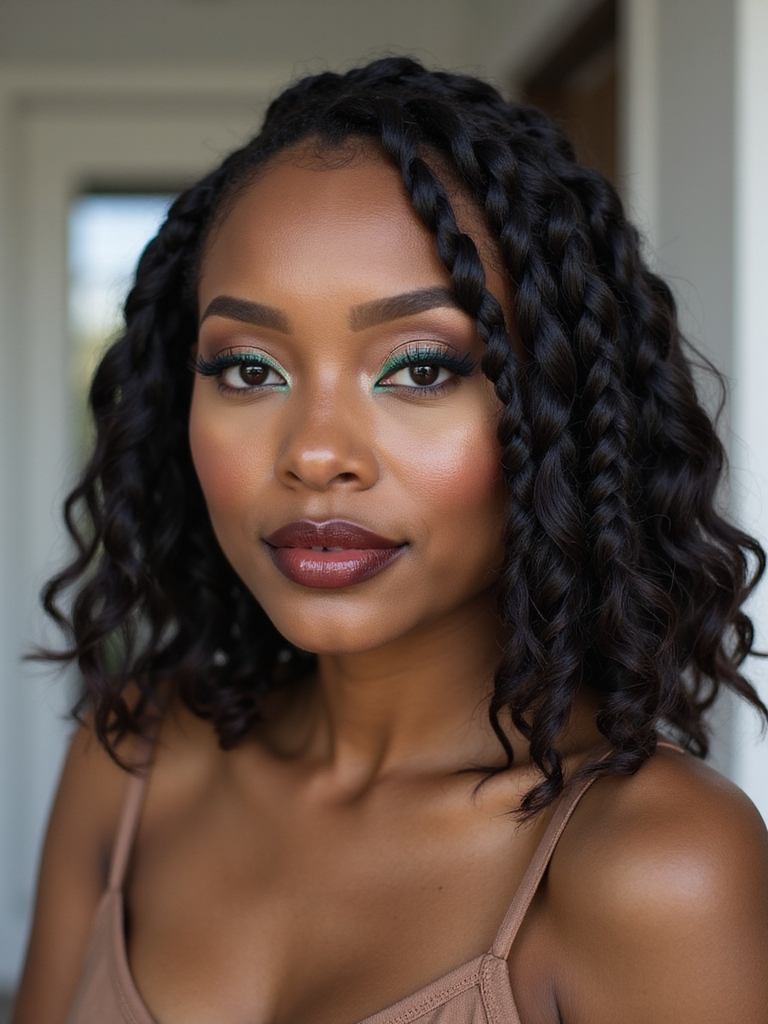
Moving the part from center to a deep side sweep changes the whole structure without changing a single braid: the same braids now run on a diagonal instead of straight down.
That diagonal line feels more dynamic than a centered part, and it adds a bit of volume on the heavier side where more hair gathers.
By the second week, expect that heavier side to need a little more attention when redoing the part, since more weight sits along that one line.
👍A deep side part works well when
- +An asymmetric, more dramatic line is the goal
- +The face has a rounder or squarer shape that benefits from a diagonal
- +There’s a favorite side to sweep hair toward already
👎A center part might suit better if
- –An even, balanced look matters more than drama
- –The scalp runs sensitive on one particular side
- –Low-maintenance restyling matters more than visual impact
Middle-Part Braided Bob for Modern Symmetry

A dead-center part splits the braids into two exactly even sections, the most symmetrical structure any of these patterns can produce.
The Straightest Line on This List
That straight, even line is also the least forgiving: a wandering part shows immediately at bob length, so precision matters more here than almost anywhere else on this list. Anyone deciding between this and a softer cut altogether might compare it against the options in the bob cut guide first.
A rattail comb kept on hand for touch-ups holds that center line straight as the style is worn and restyled over the following weeks.
Curled-End Braided Bob for Soft Feminine Movement

Leaving the ends curled instead of sealed straight softens the structural lines above with movement at the bottom, since the curl is set entirely into the extension hair itself.
- Holds its bounce independently of whatever parting pattern sits above it
- Reads more romantic and less architectural than any of the straight-ended styles on this list
- The curl relaxes gradually with wear, so it looks intentionally softer by the later weeks
Beaded Bob Braids for Cultural Accents and Shine

Beads add a third visual layer on top of whatever parting pattern is underneath: color and movement concentrated right at the ends, where they catch the eye last.
A handful placed with intention, near the face or scattered through just a few braids, comes across as considered; beading every single braid can start to compete with the parting pattern underneath it.
- Placement matters as much as quantity; beads clustered near the face draw attention to the same area a face-framing pattern already highlights
- Wooden or lightweight beads add movement without dragging on the ends the way heavier glass ones can
- Works over any base pattern here, from a simple center part to a full Fulani design, and the braids for black hair guide covers the broader history behind the practice
💡Keeping Curled Ends Defined
A small amount of mousse worked through the curled sections while they’re still fresh helps them hold their shape longer; reworking them dry after they’ve already relaxed tends to frizz the extension hair.
Jumbo Bob Braids for Bold Graphic Impact

Jumbo braids simplify the whole structure question by using so few, large sections that the parting pattern itself becomes almost secondary to the braids.
The bold, graphic scale is the entire point: fewer lines, more visible scalp between them, and a chunky silhouette that reads from across a room.
Because there’s less parting work overall, this is also the fastest structure on this list to install, though the trade-off is a less refined-looking part up close than a smaller size would give.
Micro Bob Braids With Ultra-Neat Texture

Micro braids sit at the opposite end of the same scale: hundreds of tiny sections that turn the entire scalp into a fine, almost fabric-like grid.
That density is what gives micro braids the most fluid movement of anything on this list, closer to loose hair than to a structured pattern.
- The sheer number of parts is the trade-off for that movement; expect a considerably longer appointment than any larger size
- Any parting pattern gets blurred at this density, since the individual lines mostly disappear into the overall texture
- Rewards patience at the install and pays it back with the widest range of styling afterward
Angled A-Line Braided Bob
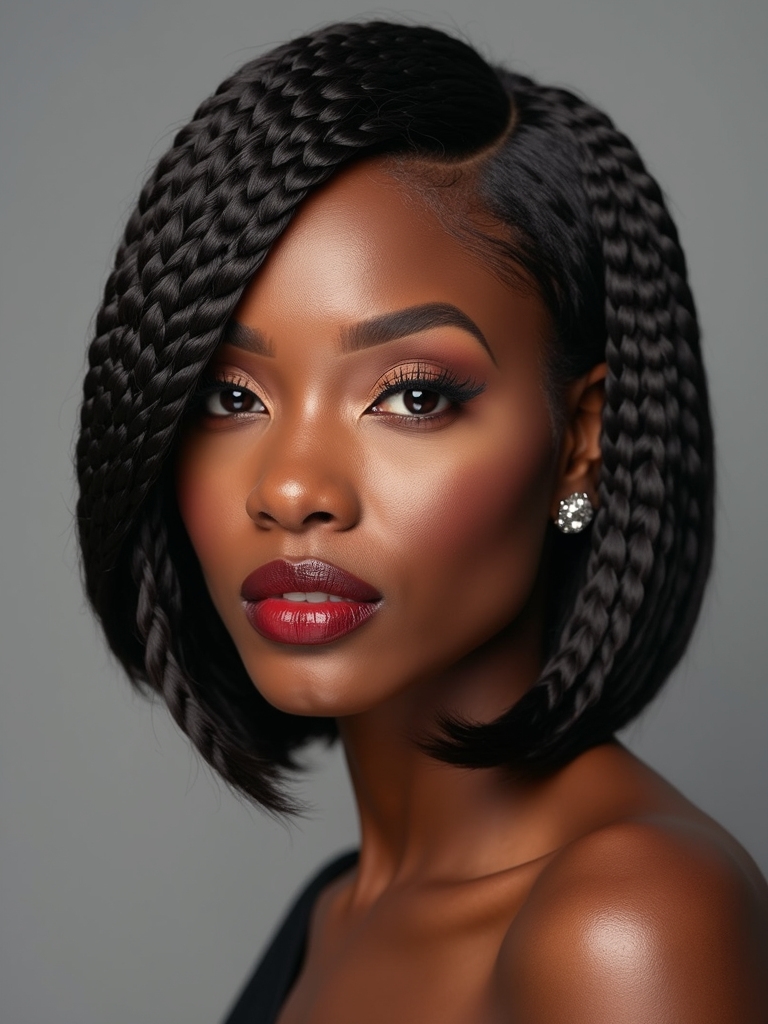
An A-line structure angles the braids shorter at the nape and longer toward the face, turning length itself into the design element rather than the part. The a-line bob guide covers this same angle on unbraided cuts.
When Length Becomes the Pattern
On braids, that diagonal reads especially crisp, since each braid ends at one precise, deliberate point along the angle.
Getting that angle right takes deliberate trimming once the length is in, which makes this one of the more design-forward structures here.
Shoulder-Grazing Bob Braids for Everyday Versatility

Taken to shoulder length, bob braids gain enough extra length to tie back, half-up, or wear fully loose, without changing whatever parting pattern sits underneath. The shoulder-length bob guide has more on this exact length unbraided.
- The practical middle ground between a short, structural bob and a much longer set
- Extra length gives face-framing or side-swept patterns more room to actually drape and move
- Light enough to wear the same way every day without the style feeling like a production
Chin-Length Bob Braids for a Crisp Shape

Cropped right at the chin, a bob braid puts whatever parting pattern is chosen fully on display, since there’s no extra length for the eye to drift toward.
- The shortest length here shows every part line clearly, so precision matters more than at any longer length
- Reads as the most fashion-forward, graphic option on this list purely from how much structure is visible at once
- Best suited to a pattern that’s fully finished, since there’s nowhere for an uneven part to hide
When a Shorter Length Shows Every Flaw
At chin length, an uneven part or a rushed section is far more visible than it would be on a longer, looser set. Worth building in extra time at the install specifically for parting precision.
Color-Blocked and Ombre Bob Braids

Color turns the parting pattern into something with an entirely different kind of structure: two clean blocks of shade, or a gradient fading from dark roots into lighter ends.
- Color-blocking looks graphic and geometric, echoing whatever hard lines the parting pattern already creates
- An ombre fade softens that same structure with a gradual, blended gradient
- Because the color lives entirely in the extensions, switching from one to the other at the next install costs nothing more than a different pack
Stitch and Feed-In Cornrow Patterns

Stitch braids and feed-in cornrows turn the scalp itself into the canvas, sculpting a design directly into the parting itself.
Stitch technique uses clean, ladder-like divisions along each row for a crisp, dimensional line, while feed-in gradually adds hair so the cornrow starts flat and natural right at the hairline.
- The most design-forward structure on this list, since the pattern itself is the whole point
- Worth booking specifically with a braider who works in pattern design, since this goes well beyond a standard part
- The flat cornrowed sections tend to need their own touch-up on a separate schedule from any loose braids around them
Keeping a Braided Bob Fresh

Whatever structure gets chosen, a handful of habits protect it across every pattern on this list: a satin or silk covering at night, a light oil worked into the scalp and edges rather than the length, and a gentle approach to any section that starts pulling.
- Plan on around $180 for a full install, roughly half of a comparable balayage service, worth knowing before assuming braids cost more than color
- A rinse with a diluted shampoo every couple of weeks keeps the scalp underneath properly clean
- Plan on taking any set down within roughly two months, since new growth at the root eventually works against whichever pattern was installed
?Does the parting pattern affect how long a braided bob lasts?
Not much on its own. Simple patterns like a center or side part hold up about as long as a Fulani or stitch design; what shortens the timeline is usually braid size, tension, or how well the scalp underneath gets cared for, not the pattern itself.
?Can a Fulani pattern be adapted for a shorter bob length?
Yes, and a shorter length actually shows the center cornrow and face-framing braids more clearly than a longer set would, since there’s less extra length below the pattern competing for attention. Most braiders can scale the same design down without losing the core structure.
?Is a deep side part harder on the hairline than a center part?
It can put slightly more pull on the heavier side, since more hair gathers along that diagonal line, but a knotless base and a reasonably loose hand keep that difference minor for most people over the full weeks of wear.
?What’s the easiest parting pattern to maintain at home between salon visits?
A simple center or side part, since a rattail comb and a few minutes keeps the line clean without needing a braider’s hand. Pattern-based designs like Fulani or stitch braids are worth leaving to whoever installed them originally.
Structure First, Everything Else on Top
Every pattern above solves the same design question differently: where the lines run, how even or dramatic they read, and how much of the scalp becomes part of the visible structure.
Braid size and length mostly set the timeline; the parting pattern sets the actual look, which makes it worth deciding on before anything else, beads, color, or curled ends included.
More to Try