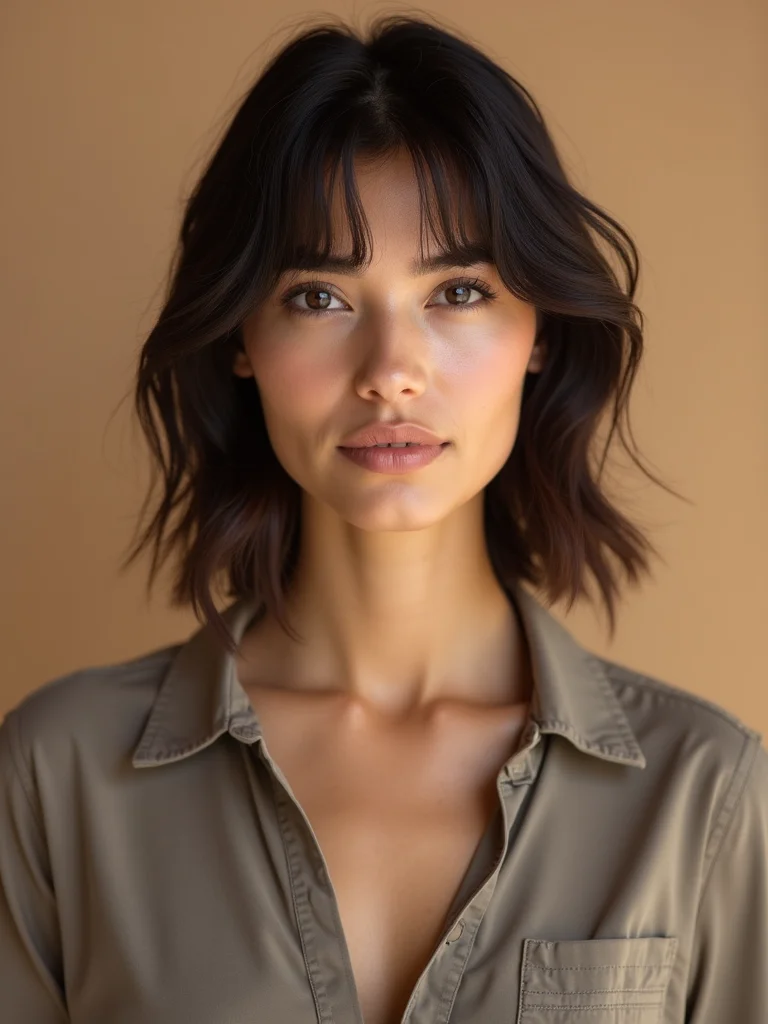
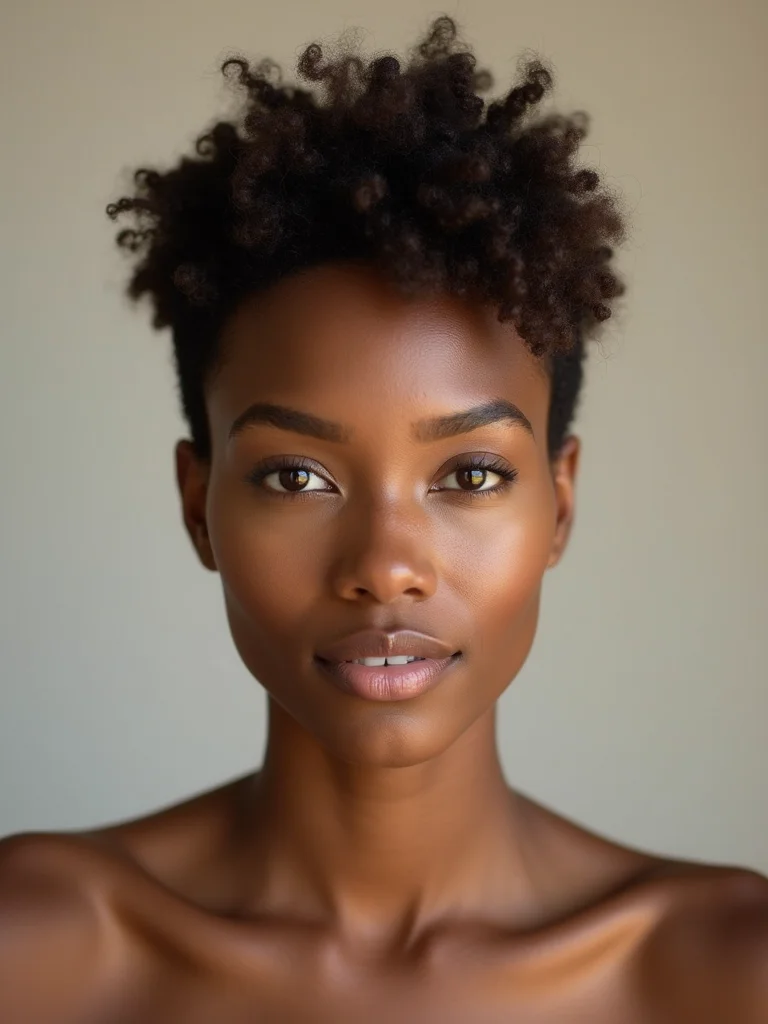
There’s no single correct long layered haircut. The exact cut that makes wavy hair look undone and beachy will leave fine hair looking stringy by afternoon, and the layering that finally lightens thick hair will collapse a head of curls into a flat, shapeless triangle.
The sixteen approaches below are sorted by what they do for a specific texture rather than by name alone, with notes on which one actually matches yours and which ones to skip.
Texture-to-Cut Cheat Sheet
| Texture | Best Approach | Skip |
|---|---|---|
| Fine | Invisible layers or restrained crown lift | Heavy, choppy layering throughout |
| Thick | A U-cut or interior debulking | All-over blunt layering with no interior work |
| Wavy or curly | Layers cut to the pattern, curls always dry | A wet cut on curls, or a cut that ignores the bend |
Face-Framing Layers That Read on Any Texture

This is the one approach that reads the same regardless of what your hair does naturally. Soft pieces cut around the cheeks and jaw catch light and shape the face, and since only the front gets touched, the texture running through the rest of the length never has to change.
- Only the front pieces are shaped; length elsewhere stays fully intact
- Works on straight, wavy, curly, and coily texture without adjustment
- Grows out softly into the surrounding length with no distinct stage
A Long Shag Built for Hair With Some Bend Already

A shag spreads choppy layering everywhere instead of concentrating it in one place, so the volume shows up through every section rather than just at the ends. Most pros point to natural wave as the ingredient that makes this version sing; straight hair can wear it too, but the texture has to be faked with product rather than shown off.
- Loves hair with an existing wave or bend to exaggerate
- Rough-dries into shape with almost no additional styling
- On pin-straight hair, expect to add texture with product rather than rely on the cut alone
A few terms come up often when discussing long layers by texture rather than by name.
📖Interior layering
A technique where the visible outline barely changes because all the actual weight removal happens well beneath the top layer.
📖Point-cutting
Snipping up into the ends at an angle to soften a blunt line without the thinning a razor causes.
Feathered Layers for a Lighter, Retro Kind of Movement

Feathered layers taper to fine points so the ends flutter and lift rather than sit heavy. It’s one of the more flattering ways to move straight or gently wavy hair, since the tapered edges catch the light and show every small bend as the hair swings.
- Loveliest on straight to softly wavy texture that wants a touch of movement
- A round brush flicked outward at the ends plays up the feathering
- Thicker, coarser texture can swallow the effect; it reads best on medium density
Cascading Layers for a Rounder, More Romantic Fall

Cascade layers fall in soft, rolling tiers that build down the back rather than in one clean taper, giving long hair a full, done-up shape rather than a casual one.
Where the Roll Actually Comes From
This pairs especially well with a soft wave, since each tier gets to roll on its own instead of falling as one flat sheet.
Straight hair can wear the shape too, though it needs a curling iron or hot rollers to fake the tiered roll that wavy texture builds in on its own.
Curtain Bangs Blended Straight Into the Layers

Curtain bangs slot into long layers as though they were always meant to sit there. The center-parted fringe drops away on each side and feeds straight into the face-framing pieces, so the whole front sweeps as one open shape instead of two separate elements.
- Keep the fringe long enough to graze the cheekbones for the smoothest blend
- Grows out into the rest of the layers with almost no awkward stage
- Works across nearly every texture, since the fringe borrows its behavior from the layers around it
A V-Cut for Long Hair Dense Enough to Show the Point

A V-cut dips the back to a sharp point and stacks the layers in steep steps toward the face, throwing weight downward so the ends flick apart with real movement as you walk.
- Best on medium to thick density; thin hair can’t fill out the point cleanly
- Delivers the most dramatic swing of anything on this list
- On curly texture, the point has to be cut dry, or shrinkage pulls it shorter than planned
A U-Cut That Protects Real Density in Long Layers

A U-cut rounds the hem gently instead of tapering to a point, keeping the corners long and the back full while interior layers stay blended lightly enough that density survives almost untouched.
It’s the safer pick for anyone who guards their thickness and wants shape without giving up a single ounce of the weight that makes long hair look healthy in the first place.
- Best suited to hair that’s already thick enough to spare
- The rounded hem photographs as polished rather than dramatic
- A blow-dry with a large round brush shows off the curve most clearly
Invisible Layers for Texture That Shouldn’t Change at All

Invisible layers do their work entirely out of sight, tucked beneath the top canopy so what shows from outside is a single smooth length while the hidden interior carries all the lift and bend.
It’s the kindest option for fine hair that needs body but can’t spare any visible density at the ends, since nothing about the outline changes.
Clients rarely describe the layering they want by name. They describe what their hair does that they don’t like, and the name comes after.
Restrained Layers Built Specifically for Fine Density

Fine hair can absolutely wear long layers, but the cut has to show real restraint. The mistake that ruins it is over-thinning, which leaves the ends sparse; the fix is a strong perimeter with just a little lift built into the crown.
- Keep the perimeter strong and the interior layering gentle
- A little crown lift fakes fullness where fine hair needs it most
- Skip heavy thinning shears entirely; they’re what causes the sparse look in the first place
Layers Cut to Follow an Existing Wave

Wavy hair and long layers pair naturally, since the layers give each wave somewhere to bend and break instead of falling in one uniform ripple. Cut to follow the pattern already there, the waves stack into dimensional, undone sections rather than a flat sheet.
- A mist of salt spray worked into damp hair coaxes out the texture
- Let it air-dry, or run a diffuser on the lowest heat setting, for the most natural result
- Cutting against the wave’s natural direction is the most common mistake here
Layers That Let Long Curls Keep Their Shape

Long curls need layering more than any other texture. Skip it, and the sheer weight of the length pulls the crown flat while the ends pile up into one dense, pyramid-shaped mass.
Placed well, the layers let each coil sit in a bouncy, balanced silhouette instead, with real lift at the crown and defined spring running down the whole length.
- The cut has to happen fully dry, curl by curl, since a wet measurement tells a stylist almost nothing reliable
- A stylist who works with textured hair daily reads how far each coil springs before cutting
- A curl cream on wet hair, then diffused low, defines the shape once it’s set
Hidden Layering That Keeps Straight Hair Glassy-Smooth

Straight hair can carry long layers and still stay glassy, as long as the layering hides on the inside. The interior gets thinned so the length glides and bends, while the surface stays polished and the ends hold one clean line.
- Smoothing with a flat iron, then sealing with a light shine serum, finishes the polished look
- Best on hair with enough natural shine to carry a sleek finish
- The thinned interior is what separates this from a heavy, flat one-length cut
“Describe your texture before you describe the look you want. Say whether your hair is fine, thick, wavy, or curly before naming a cut, since the same words mean different things depending on what’s actually growing out of your head.”
A Deliberately Piecey, Textured Finish

This finish leans into a broken-up, piecey look on purpose. Point-cutting separates the ends into irregular sections and the edges get roughed up to match, so the length falls in defined pieces instead of one smooth sheet.
Keeping the Pieces Actually Separated
It plays especially well with texture that’s already there, since natural movement exaggerates the separation the cut is built around.
A texture spray worked through dry hair brings the pieces forward; smoothing serums undo the whole effect by gluing them back together.
Layers Shaped to Fall Into Place With No Heat

Some long layers are cut specifically to dry on their own, with each piece placed to settle into shape as the hair air-dries rather than needing a blow-out to look finished.
- A leave-in worked through damp hair, plus a scrunch, is close to the entire routine
- Best on hair with at least a little natural bend, where air-drying reads as texture
- Poker-straight hair air-dries flatter here than the reference photos usually show
💡Reading a Reference Photo Correctly
A photo of long layers on someone else tells you less than it seems to. Check their texture against yours first; the exact same cut can read soft and wispy on straight hair and completely different, bigger and more textured, on a wave or curl.
Soft, Long Layers Built to Forgive a Late Trim

The lowest-maintenance version of long layers is simply the long, soft, well-blended one that grows out gracefully instead of losing its shape.
Why Soft Layers Age Better Than Sharp Ones
Because the pieces are long and gently graduated, they lengthen into more movement as they grow rather than falling apart, so the cut still looks intentional weeks after a trim.
A visit like this is priced closer to a routine cut than a full restyle, typically around $65, and it stretches comfortably to ten or twelve weeks between appointments.
Getting Your Styling Routine to Match the Cut

The golden rule across every version here is to keep product light. Layers move, and heavy creams or oils drag that movement flat, so a lightweight texture spray beats a crowded shelf of rich products.
Less Product, More Movement
Where the volume goes matters as much as how much product goes on. Lifting at the roots and concentrating any cream on the ends keeps the body where it flatters and the weight off the roots where it would collapse.
A single pass of heat to bend just the ends is usually enough; the layers themselves carry most of the movement.
Long Layer Questions Sorted by Texture
?Which long layers actually suit my texture?
Fine hair wants soft, restrained, or invisible layers with a strong perimeter; thick hair wants a U-cut or interior debulking; wavy and curly hair want layers cut to the pattern, with curls always cut dry. Matching the layering to texture matters more than matching it to a photo.
?Do long layers damage hair over time?
No, a well-placed layered cut doesn’t damage hair. The real risk is over-thinning, which can leave the ends looking sparse, so ask for weight removed thoughtfully rather than aggressive thinning throughout.
?How different does the same cut look on straight versus curly hair?
Considerably different. A cut that reads soft and barely-there on straight hair can read as dramatic volume and texture on a tight curl pattern, since the layers interact with however much the hair naturally springs or bends.
?Can I switch from a low-maintenance version to something bolder later?
Usually yes, since most of these approaches differ in placement and intensity rather than in total length removed. A stylist can typically add more texture at a follow-up visit without starting over.
?Is there a version of long layers that works on hair that’s colored and a bit dry?
Layering itself doesn’t stress color-treated hair, though very processed ends do better with point-cutting than heavy thinning shears. Mention your color history so the technique gets adjusted, not just the shape.
Work With Your Texture, Not Against It
Long layers aren’t a single haircut so much as a method, and the method only works once it’s matched to the hair actually growing out of your head. The cut that makes a wave dance flattens a curl; the layering that frees thick hair thins fine hair out.
So before booking any version above, name what your texture specifically needs, body, swing, definition, or simply less bulk, and bring that description, not just a photo, to whoever’s holding the scissors.
Favorites to Revisit