You don’t need pale skin and freckles to wear red well. That idea has kept more people out of this color than any actual limitation ever has, and red covers a far wider range than the stereotype suggests, from a whisper of strawberry blonde to a wine so dark it borders on black.
Twenty-five shades follow, spanning warm and cool, loud and quiet, high-commitment and barely-there. Matching one to your skin and your patience for upkeep matters more than picking the prettiest photo, and both get covered shade by shade below.
Choosing and Keeping Your Red
Temperature is the first sort: warm reds like copper, ginger, and auburn sit on one side; cool reds like ruby, burgundy, and wine sit on the other. Checking the veins on your wrist under natural light, blue signals cool, green signals warm, is a faster test than staring at swatches under a store’s fluorescent bulbs.
Every shade here shares one hard truth: red fades faster than any other hair color, since its pigment molecule is the largest of any dye. A color-safe, sulfate-free routine and cooler wash water aren’t optional if you want the shade to hold, and a full color service typically runs $120 to $250 depending on length and how much lifting your base needs.
Bright Copper Curls

Copper runs bright and orange-leaning, and on curls each coil multiplies the effect until the whole head seems to catch fire in direct sun.
Gold-leaning, warm skin pulls the most out of this particular shade; on cooler undertones the same copper can look slightly at odds with the complexion underneath it. For a curl-specific breakdown of color and texture together, our red curly hair roundup goes further.
- Bright, warm, orange-leaning; strongest on gold or olive undertones.
- A muted version pulls it closer to neutral skin.
- Shows up most vividly on textured or curled hair.
Classic Fiery Auburn

Auburn sits between copper and true brown, a reddish-brown that has stayed in constant rotation for decades without ever feeling dated.
The brown underneath is doing real work here, pulling the intensity down a notch so the overall effect stays composed even at fairly high saturation.
It’s the shade most colorists reach for with first-timers specifically because the margin for error is small. Fade happens slowly and evenly instead of in one visible drop.
📋Keeping Red From Fading Fast
- ✓Wash no more than two or three times a week.
- ✓Use a sulfate-free, color-safe shampoo and conditioner every time.
- ✓Rinse in cool water; hot water opens the cuticle and lets pigment escape.
- ✓Top up faded sections with a tinted conditioner between full appointments.
- ✓Keep heat styling to a minimum and always use a protectant first.
Alluring Burgundy Waves

Burgundy leans purple rather than orange, a deep wine tone that feels distinctly autumn-and-winter even outside of any actual season.
Check your wrist before committing: a cooler undertone (blue-leaning veins) tends to carry this shade with the least visible clash, and waves show the depth off especially well, catching shifting tones as the hair moves rather than sitting flat.
Bold Scarlet Streaks

Scarlet is the purest, most saturated true red on this whole list, and worn as streaks rather than all-over color, it delivers real impact without a full commitment.
Placed around the face or scattered through the length, streaks let you live with a small amount of scarlet before deciding whether a full head of it is something you actually want.
- The purest true red here, placed selectively rather than all over.
- A lower-stakes way to test a color this bright.
- Fades fastest of any shade on this list, so plan for frequent refreshes.
The Fastest-Fading Color
Red’s pigment molecule is physically larger than most other dye molecules, which is the actual reason it washes out faster than nearly any other hair color. Going from dark hair to a bright red also usually means lightening first, so be upfront with your colorist about both your starting point and how much upkeep you’re realistically willing to do.
Delicate Strawberry Blonde

Strawberry blonde blends pale blonde with a soft red for the gentlest, lowest-intensity shade in this entire lineup. Fair, light complexions tend to carry it especially convincingly, since the pastel tone doesn’t compete with a lot of natural contrast in the skin.
Anyone starting from a dark base should expect several separate lightening sessions before the color takes, spaced out over weeks rather than rushed into one sitting, and the finished shade settles into a soft peach as it grows out instead of turning patchy.
- The gentlest, lowest-intensity red in this lineup.
- Best-suited to fair, light complexions specifically.
- Needs real lifting to reach on dark hair; fades toward soft peach.
Deep Ruby Red
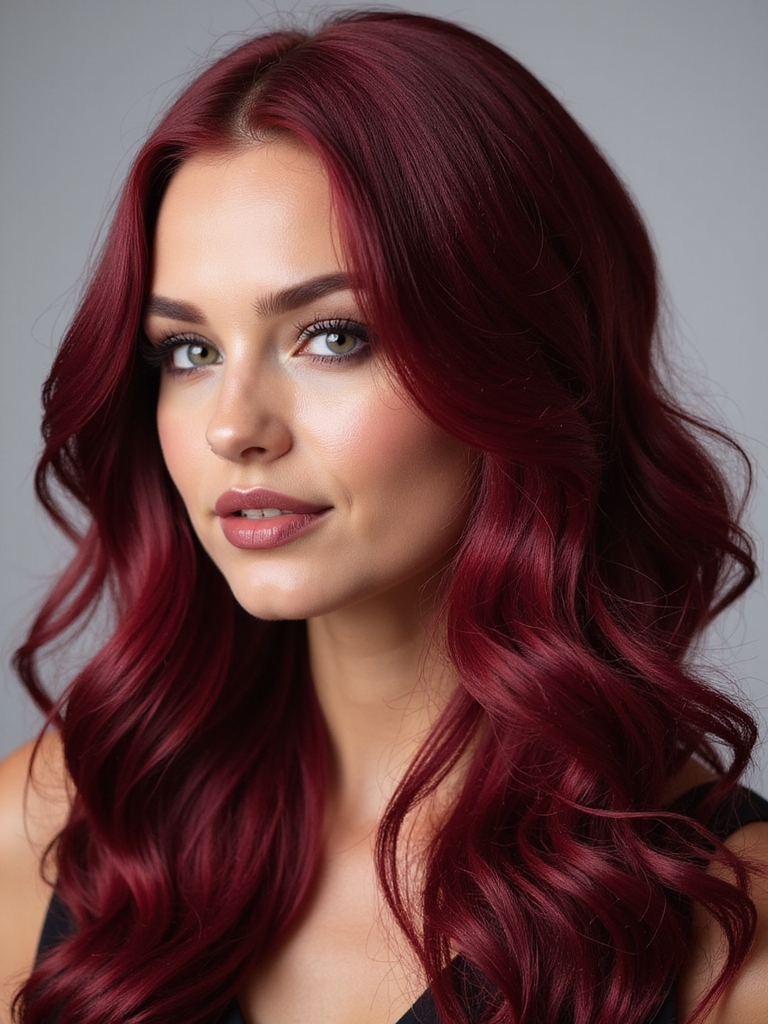
Ruby carries a cool, slightly blue undertone underneath its jewel-toned depth, the kind of red that looks lit from within rather than simply applied.
Red at its most jewel-like
Cool and neutral skin tones carry this one with the least friction, the blue-red depth working with rather than against the undertone already present.
It comes across polished rather than loud even at full saturation, and as a deeper shade it fades more gracefully than anything brighter on this list.
Two quick questions to narrow down your shade:
1Does your skin lean warm or cool?
Warmer undertones tend to favor copper, ginger, and auburn; cooler undertones tend to favor ruby, burgundy, and wine.
2Do you want maximum boldness or something quieter?
Strawberry blonde and cinnamon highlights ease you in gently; scarlet and cherry make the loudest statement.
Radiant Ginger Spice

Ginger runs warmer than pure orange but softer than copper, closer to the color of autumn leaves than a traffic cone. It pairs unusually well with freckles and warm features, and unlike a lot of fashion reds, it convincingly passes as a shade someone was simply born with rather than one applied in a salon chair.
- Softer and more natural-reading than copper.
- Pairs especially well with freckles and warm coloring.
- One of the most convincing ‘natural redhead’ shades to fake.
Mischievous Red Ombre

A red ombre keeps the root dark and fades into brighter red toward the ends, which means the grow-out stays soft with no harsh line demanding an immediate fix.
Almost any two reds can blend this way, deep auburn lightening into copper, or a natural brown melting into scarlet, and the technique doubles as a low-risk trial run before committing to a full head of anything bold.
- Dark root, brighter ends; grows out without a harsh line.
- Works with nearly any two-red combination.
- A practical way to test a bold shade before going all-in.
A simple routine that helps any red last longer:
1Wait before the first wash
Give it roughly two full days after coloring before shampooing, so the color has time to fully set.
2Wash cool and infrequently
Cool water plus a sulfate-free color shampoo, kept to just a couple of washes a week.
3Refresh between appointments
A weekly tinted conditioner in your exact shade replaces color as it naturally fades.
Subtle Cinnamon Highlights

Cinnamon highlights weave warm reddish ribbons through a brown base rather than replacing the base color entirely, so the red functions as an accent rather than a statement.
The lowest-stakes first step into red
The soft, partial placement means an easy grow-out and close to zero maintenance compared with any full-color option on this list.
This is where someone curious about red but not ready for a full commitment usually starts, and for good reason.
Intense Cherry Red

Cherry sits between scarlet and burgundy on the spectrum, a bold, blue-leaning red saturated enough to read as a genuine fashion statement rather than a subtle tweak.
The cool undertone favors cool and neutral skin most, and the color splits the difference between vivid and refined in a way few other bright reds manage.
- A saturated blue-red between scarlet and burgundy.
- Favors cool and neutral undertones.
- Photographs richly without tipping fully orange.
Playful Peachy Red

Peachy red sits somewhere between coral, peach, and true red, a soft, pinkish-orange wash that feels current rather than dramatic.
Fair, light complexions tend to wear this one with the least effort, and because it leans pastel, it needs a truly pale base underneath to show its actual color. For the pinker end of this same family, see our pink hair ideas.
- A soft pinkish-orange between coral, peach, and red.
- Best-suited to fair, light complexions.
- Pastel-leaning, so it needs a pale base and fades quickly.
Sleek Mahogany Red

Mahogany is a brown-based red with cool undertones, and on smooth, straight hair specifically, the shine does most of the visual work, making the color look considerably more expensive than the appointment actually cost.
As a deeper shade, it needs less lifting to reach than a bright fashion red and fades in a way that’s barely noticeable week to week, making it one of the lower-upkeep options here.
- A deep, glossy brown-based red.
- Shows best on smooth, straight hair where shine is visible edge to edge.
- Low upkeep, since it fades gradually rather than all at once.
Enchanting Rosy Red

Rosy red leans pink rather than orange, gentler and cooler in tone than peachy red, with a dreamy, romantic quality to it.
Romantic and blush-toned
Fair skin with a cool undertone carries this one with the softest, most natural-looking result, the pink glowing quietly rather than fighting the complexion.
Being pastel-adjacent, it leans on a pale base and fades fast, so a tinted conditioner between salon visits does real work here.
Blazing Sunset Red Blend

A sunset blend layers copper, ginger, and gold into one multi-tonal gradient, the kind of color that looks like a photograph of dusk rather than a single flat shade. Warm, golden skin tends to echo these tones back rather than compete with them, and the multi-tonal placement means regrowth stays soft compared with a solid, single-shade color.
- A layered blend of copper, ginger, and gold.
- Works especially well against warm, golden undertones.
- Grows out more gently than any single all-over red.
Spicy Pumpkin Spice Red

Pumpkin spice red is a muted, earthy orange-red, quieter and more brown-warmed than bright copper, the kind of color that fills salon calendars the moment temperatures drop. Despite the seasonal name, the muted quality actually makes it wearable well past autumn, since nothing about the shade itself is tied to a calendar.
- A muted, earthy orange-red, softer than copper.
- Reads seasonal but wears well year-round.
- A gloss between full appointments keeps the warmth from dulling.
Chic Merlot Red Tint

Merlot carries real brown depth underneath its wine tone, a touch warmer and earthier than burgundy, the sort of red that photographs well in low, moody light.
Wine-deep and understated
The brown base keeps the whole thing grounded rather than costume-bright, a quality that lands as intentional rather than accidental.
As a deep shade it fades gradually and holds its tone well, asking for noticeably less upkeep than any bright red on this list.
Sultry Sangria Red

Sangria red carries real purple underneath a deep, fruity red, brighter and juicier than burgundy despite the similar family.
Deep, fruity, and layered
On layered hair especially, the color pools and shifts as the layers move, giving flat single-length hair an argument for adding some shape.
Cool, neutral undertones handle the purple lean best, and like other deep reds here, it holds its color considerably longer than anything closer to scarlet.
Rose Gold Red

Rose gold red blends pink, gold, and copper into a metallic-looking blush, more current than tied to any one decade’s trend.
The gold running through it keeps the pink from ever tipping cold, and because the base has to be truly light for the blend to show through, expect to keep up with color-safe care between visits.
Sunny Tangerine Red

Tangerine red pushes further into orange than copper does, a bright, citrus-adjacent shade built for people who actually want to be noticed.
Tanned and olive complexions tend to carry the strong warmth here especially well, the shade closely matching a glow already present in the skin.
Like most bright warm reds, it fades quickly and usually needs lightening first to reach its full brightness. For the broader orange family beyond red, see our orange hair ideas.
Warm Chestnut Red

Chestnut red is a brown-based shade with golden-red running through it, deeper and more understated than auburn. It functions almost as a brunette with a secret, wearable by nearly anyone who wants a hint of red without committing to a full color change, and because the brown base grounds everything, it fades gently and asks very little upkeep in return.
- A brown-based red, deeper and quieter than auburn.
- Reads as brunette-with-a-twist rather than a bold statement.
- Fades gently; among the lowest-upkeep reds here.
Edgy Scarlet Balayage

A scarlet balayage hand-paints bright red through the lower lengths while leaving the roots noticeably darker, trading some of the impact of an all-over color for a far softer grow-out.
The dark-to-bright gradient does a version of face-framing on its own, depth near the roots and brightness where it catches the eye lower down, without the constant root touch-ups a solid scarlet demands.
Ethereal Red Velvet

Red velvet sits between burgundy and a true red, muted and plush rather than sharp, with a dimensional quality that earns the dessert comparison in its name.
The balance between warm and cool keeps it wearable across a wide range of undertones, and the muted finish feels elegant rather than bright even at real depth.
- A muted, plush red between burgundy and true red.
- Wearable across a wider undertone range than most bold reds.
- Fades softly, keeping it low-maintenance for its depth.
Passionate Cranberry Red

Cranberry red sits between cherry and wine, a tart, saturated berry tone with a cool, jewel-like glow underneath it. Cool and neutral undertones pick up that glow most clearly, and the shade carries enough sophistication to work as a genuine statement color through autumn and the holidays without reading as costume.
- A saturated berry red between cherry and wine.
- Glows most clearly against cool, neutral undertones.
- A cool-water, color-safe routine keeps the berry tone from fading dull.
Delicate Coral Red

Coral red is a soft, warm pink-orange, brighter and pinker than peach, built for anyone who finds a classic fiery red more intensity than they actually want. Fair, warm complexions carry it especially well, and since it’s a very light shade to begin with, it depends on a pale base underneath and fades on the faster side of this whole list.
- A soft pink-orange, brighter than peach.
- Best-suited to fair, warm complexions.
- Light and pastel-leaning; needs consistent color-safe care.
Timeless Wine Red

Wine red closes out this list at the darkest, moodiest end of the spectrum, a cool, glossy depth that has stayed in steady rotation for as long as fashion color has existed.
Cool, neutral undertones carry the depth with the least visual friction, and as one of the deepest shades here, it holds its color longer than anything brighter, making it the lowest-maintenance way to wear something this dramatic.
Who It Suits Best
If you’re still deciding whether red works for you, start with the vein test: blue or purple under natural light points toward cool skin, which tends to carry ruby, burgundy, cherry, and wine most convincingly; green points toward warm skin, which leans into copper, ginger, and auburn instead. Neutral undertones, where the veins don’t clearly favor either, can wear nearly the full spectrum.
From there, weigh upkeep honestly rather than aspirationally. The brightest shades demand refreshing every few weeks; the deepest ones stretch that timeline considerably. And if full commitment still feels premature, cinnamon highlights or a soft ombre deliver real red without asking for a total color change up front.
There’s a Red for You
Twenty-five shades in, the real takeaway is that red was never one color reserved for one type of person. It’s a full spectrum, and somewhere in it sits a shade that matches your undertone, your tolerance for upkeep, and your actual nerve.
Figure out your temperature first, then decide how bold and how high-maintenance you’re actually willing to go. Bring a photo to your colorist, ask directly about the lightening involved, and commit to the care routine before you commit to the color. If a full head of color feels like too big a leap, our red highlights on brown hair guide covers a way to test the water without touching your whole head.
You Might Also Like