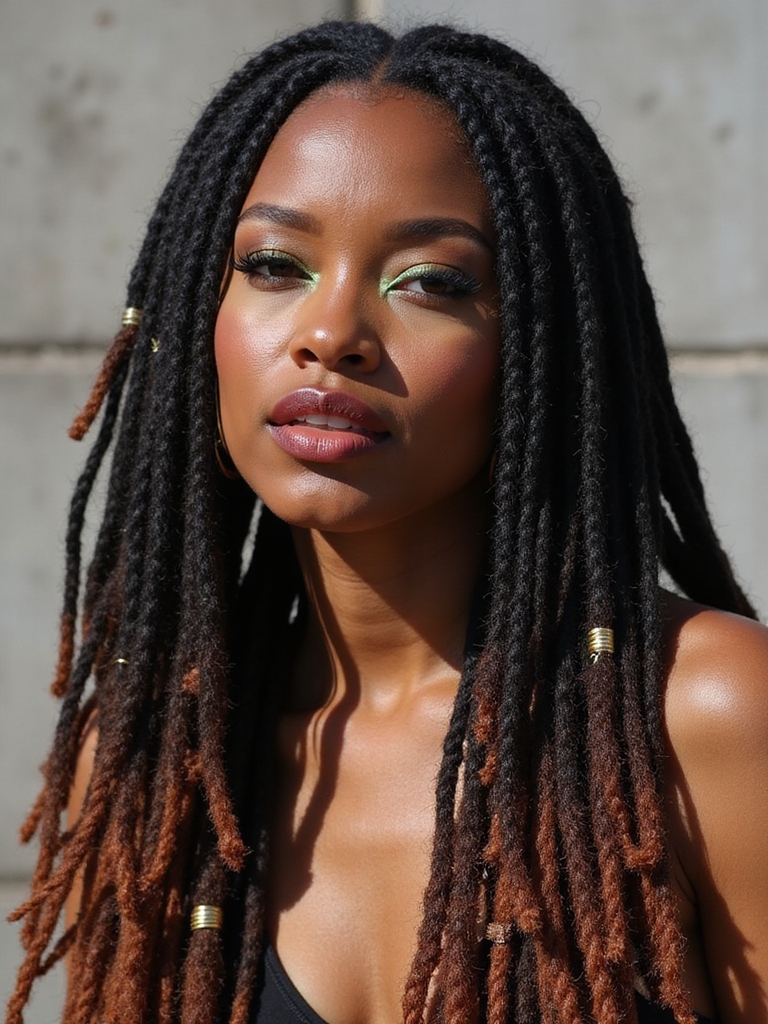
Most people picture one specific image when they hear the word dreadlocks, and that image covers only a fraction of what locs actually are. They can be pencil-thin or as thick as a thumb, a few months old or decades deep and past the waist, worn loose, wrapped, braided, or pinned into something formal.
What looks from a distance like one hairstyle is really a whole language of texture, length, and method, carrying real history behind it. Throughout this guide, the word locs gets used specifically, since that’s the term most wearers actually prefer. Twenty angles follow: the styles, the starting methods, the honest upkeep, and the cultural weight worth understanding before booking a first appointment.
What to Understand Before Anything Else
- Locs are a protective, low-manipulation style with roots across African, Caribbean, Indian, and other cultures, carrying real spiritual and identity meaning for many who wear them.
- They take months to a year or more to fully mature, and the early, frizzy-looking stage is the loc settling in, not a sign anything’s gone wrong.
- Healthy locs come from a clean scalp and gentle tension, not from leaving them alone entirely; too-tight retwisting is the fastest way to damage a hairline.
What Locs Actually Are

At the simplest level, locs are sections of hair encouraged to coil, mat, and bind onto themselves until each one holds together as a single rope. Unlike a braid or a twist, which gets taken down and redone, a loc is meant to stay in place, growing and tightening over months and years. That permanence shapes nearly everything about how a set gets started, styled, and cared for.
- A protective, low-manipulation style; once locked, strands are left largely alone
- Tightly coiled, kinky texture locks most readily, though most textures can lock with the right method
- Locs are meant to be permanent from the start, not a temporary experiment

A History Older Than the Word

Locs are not a modern trend, and they don’t belong to any single place. Versions of locked hair show up across the world and across centuries, which is part of why the style carries such real weight today.
- Ancient Egypt, where locked hair has been documented on preserved remains
- India, where Hindu sadhus wear matted jata as a sign of renouncing vanity
- Jamaica, where the Rastafari movement gave locs much of their modern spiritual meaning
Two persistent myths about locs, cleared up:
❌ Myth: Myth: Locs are dirty or unwashable.
✅ Reality: Reality: locs need regular washing with a residue-free shampoo, just like any other hair; skipping washes causes buildup, not health.
❌ Myth: Myth: Once locked, hair is permanent and can never be undone.
✅ Reality: Reality: locs can be cut or combed out, especially in earlier stages, though a mature set takes real time and patience to fully unravel.
Why the Meaning Runs Deep

For many people, especially across the African diaspora, locs are not simply a way to wear hair. They can represent a spiritual commitment, a connection to ancestry, or a quiet refusal to force natural texture into something it was never meant to be.
None of this makes locs off-limits to admire or ask genuine questions about. It means wearing them, or discussing them, with some awareness of what they’ve meant and to whom, which is the real difference between honoring a tradition and treating it like a costume.
- A spiritual practice for many Rastafari wearers, tied to specific religious teachings
- A connection to ancestry and cultural identity across the African diaspora
- For some, simply a personal choice to let natural texture exist undisturbed
Locs as a Record of You

No two heads of locs look exactly the same, and that isn’t a marketing line; it’s simply how they grow. The way hair coils naturally, the size chosen at the start, sleeping habits, and retwist frequency all leave visible marks over time.
There’s an emotional side to this that surprises a lot of people. Because a single loc holds years of growth compressed into it, cutting one off can feel like a genuine decision, and many wearers can point to exactly what was happening in their life when a particular length came in.
Over a few years, locs become something close to a personal record in a way few other styles can claim, since almost nothing about them can be faked or rushed.
“Most pros who specialize in locs will say the same thing: ask what a client’s locs mean to them before assuming anything. The answer ranges from deeply spiritual to purely practical, and both deserve equal respect.”
One Style, Many Names

Because locs grew up in so many places independently, they carry different names and different customs depending on where the tradition comes from. Jata in parts of India, the spiritual locs of Rastafari in the Caribbean, and the bound styles of several East African communities are not interchangeable, even though an outside observer might lump them together.
Understanding that distinction keeps a rich, varied history from getting flattened into one single stereotype. Wearing locs means stepping into a story that many cultures wrote separately, and a little curiosity about which thread actually resonates only makes the choice feel more grounded.
Choosing a Loc Style That Fits Your Life

Before falling for a photo, it helps to match loc size and length to an actual daily life, since those two variables decide how much upkeep, time, and money a set really demands.
- Microlocs look refined but take real hours to retwist; thicker locs move faster
- Tightly coiled hair locks quickly; looser textures need more patience and a suited method
- Locs worn past the shoulders carry real weight and can pull steadily at the roots
Keeping Locs Healthy, Not Just Tidy

One of the more persistent misunderstandings about locs is the idea that they’re low-effort because they can just be left alone. Healthy locs are clean locs, and a scalp underneath them still needs regular washing with a residue-free shampoo so nothing builds up and turns a loc soft or sour.
Too-Tight Roots Are the Real Danger
The bigger risk actually sits at the roots. Retwisting or interlocking too tightly, or doing it too often, wears down a hairline faster than almost anything else in the routine, and once edge locs snap off from that stress, they don’t grow back into the loc the same way.
Gentle isn’t a soft suggestion here; it’s what actually keeps a loc attached to the scalp long-term rather than pulling itself loose.
Loc Styles for Men

Men wear locs across a wide range, from short, tapered cuts with a sharp lineup to long, free locs gathered into a high bun. A taper or undercut at the sides keeps a heavier set from reading bulky, giving a clean, barber-fresh edge that fits nearly any setting.
For anyone wanting something equally wearable to work and to the gym, medium-length locs that pull into a bun tend to be the practical middle ground: pulled-together pinned up, relaxed worn down, and undemanding beyond a clean scalp and the occasional root retwist.
Short Loc Styles

Short locs, including the early stages nearly everyone passes through, carry a sharp, light appeal longer locs can’t quite match. They take noticeably less time to wash and dry, holding a crisp, modern shape well suited to low fuss with high visual impact.
A short loc bob in particular has become a real favorite: blunt at the ends, full of personality, and proof that years of length aren’t required for locs to look intentional and finished.
- Faster to wash, dry, and retwist than any longer set
- A lower-commitment way to live with locs before deciding to grow them out
- A clean base for a taper or fade at the sides
Long Loc Styles

Long locs are the image most people picture first, with reach, movement, and a presence that only comes from years of accumulated growth. They’re also the most versatile to style, since real length allows braiding, wrapping, piling high, or simply letting them hang. Our dreadlocks bun styles guide covers the gathering side of this in more depth.
The real trade-off is weight, and it’s not a small one. A full head of waist-length locs carries real, noticeable weight, pulling steadily at the roots all day long, so styling needs to share that load rather than add to it.
- Varying where locs get gathered prevents strain on the same few edge locs
- Half-up styles take weight off the hairline while still showing length
- A loose, low gather distributes pull more evenly than a tight, high pony
Braided Loc Designs

Once locs reach a workable length, they can be braided, and the result differs from braiding loose hair since each loc is already a solid rope rather than loose strands.
The finished braids read chunky, defined, and architectural, holding a pattern crisply for days with none of the slippage loose hair tends to have. A set can be cornrowed flat to the scalp, plaited into a few accent braids through an otherwise loose set, or braided entirely into a design for a specific event.
It also works well as a practical second-week style, since a braided pattern hides new root growth cleanly while it settles.
📋Before Committing to a Long Set
- ✓Confirm the loctician has experience with mature, heavier locs specifically
- ✓Ask how to rotate gathering points to protect the hairline over years
- ✓Budget realistically for the extra time a longer retwist actually takes
Adding Color to Locs

Color does something distinct on locs, since a solid rope of hair catches a shade in a bold, clearly defined way, whether that means honey tips, a full copper transformation, or just a few accent locs in a bright tone.
Temporary Color Is the Gentler Route
The honest catch is reversibility. Dye and bleach sink deep into a packed loc and are hard to fully rinse or grow out, and bleach specifically can weaken a loc, making it more prone to thinning or breaking right at that spot.
For anyone wanting lower commitment, temporary color options give a similar visual payoff without the same long-term risk to the loc’s structure.
Accessorizing Locs

Few styles take accessories as naturally as locs do. Beads, metal cuffs, shells, and thread wraps slide onto individual locs and stay put, changing the entire feel of a set in an afternoon and coming right back off just as easily.
The one real thing to watch is weight. Heavy metal cuffs and a lot of beads concentrated on fine or newer locs add steady pull right at the root, so a light hand and regular rotation between locs matters more than it might seem.
- Beads and cuffs in metal, wood, or glass add color, texture, and even sound
- Thread or yarn wraps add a band of color without any permanent commitment
- Rotating accessories between different locs prevents concentrated root strain
Natural Locs Versus Faux Locs

Not every set of locs represents a lifetime commitment, and it helps to know which kind is actually wanted before starting anything. The main fork in the road runs between locs grown from a person’s own hair and faux locs installed using added hair. Our crochet dreadlocks guide covers the fastest version of the faux route in more detail.
- Natural locs grow from a person’s own hair and are effectively permanent, maturing over years
- Faux locs are a temporary protective style, installed and removed within weeks
- A faux install commonly runs $150 to $300, depending on length and salon
Starting Your Loc Journey

How locs get started decides their eventual size, early appearance, and a good deal of their overall character, which makes this the choice worth slowing down for rather than rushing.
Comb coils, two-strand twists, interlocking, and freeform are the common starting methods, and an experienced loctician will typically steer a client toward whichever one actually fits their texture best. A professional starter set commonly runs $100 to $400 depending on method and length, with ongoing upkeep landing somewhere around $50 to $150 on a roughly monthly cycle after that.
Locs at Work

One of the most common questions, sometimes asked almost apologetically, is whether locs read as professional enough for a formal workplace. The honest answer is that well-kept locs are as polished as any other style, and any bias suggesting otherwise is exactly that: a bias, not a fact about the hair itself.
There’s also real legal protection in a growing number of places. The CROWN Act, now passed in many U.S. states, makes it illegal to discriminate against natural hairstyles, including locs, in workplaces and schools.
- Keep the scalp and roots clean, with new growth retwisted on a regular schedule
- Choose a gathered or pinned style for the most conservative offices
- Know the CROWN Act protections that apply in your specific state
Appreciation, Not Appropriation

Locs sit at the center of a real, ongoing conversation about culture, and that conversation deserves an honest look rather than being tiptoed around.
The Double Standard Is the Real Issue
The friction rarely centers on who’s technically allowed to lock their hair. It centers on a real double standard, where the same style gets labeled unprofessional on one person and edgy or trendy on another, depending entirely on who’s wearing it.
Appreciation looks like learning the actual history, using the terminology wearers themselves prefer, and supporting the broader loc community rather than treating the style as a passing trend to borrow from and discard.
Preparing locs for a formal office setting:
1Retwist the Roots
Schedule a fresh retwist a few days before, not the morning of, so the new growth has time to settle.
2Choose a Gathered Style
A low bun or pinned-up style reads more conservative than fully loose locs.
3Keep the Scalp Visible and Clean
A clean, product-free part shows intentional care, which reads as polish.
Maintaining Locs at Home

A significant number of people maintain their own locs to save both money and salon time, and the routine becomes learnable fairly quickly once the rhythm sets in. The core routine stays fairly simple: wash with a clarifying, loc-friendly shampoo every week or two, dry fully, and retwist or interlock new growth once there’s enough of it to hold.
The two mistakes that show up most often at home are retwisting far too tight and retwisting far too frequently, both of which thin the hairline over time rather than keeping locs neat. Waiting for real new growth and keeping tension gentle protects far more than an aggressive weekly routine ever would.
Finding Your Inspiration

With this many directions available, the most useful thing to do before a salon visit is gather a handful of clear reference photos, since a loctician can plan far more accurately from an image than from a spoken description alone. For a texture-specific angle, our curly dreadlocks guide is worth a look too.
- Pick references with a loc size and length close to what’s actually achievable now
- Note whether a reference photo shows real locs or a faux install; upkeep differs sharply
- Bring more than one angle, since front-facing photos alone miss a lot of detail
Locs in Fashion and Media

Locs have steadily moved from the margins into fashion, music, film, and professional sport, worn by people who’ve made the style a genuine signature rather than a passing phase. That visibility has done real good, normalizing natural texture and giving younger wearers images that actually look like them.
It cuts both ways, though. The same media landscape that celebrates locs can still reduce them to a trend or flatten them into a stereotype. The healthier approach treats runway or red-carpet locs as loose inspiration to adapt, not an exact target to replicate, while staying aware of the history and people behind the look. Our dreadlocks for black women guide covers more of that history and range.
- Treat celebrity or runway locs as inspiration to adapt, not an exact copy target
- Notice which stories get told about locs in mainstream coverage, and which get left out
- Support loc-focused stylists and creators directly when a look resonates
Loc Questions Worth Asking
?How long does it actually take for locs to fully mature?
Most locs take roughly one to two years to fully lock and settle, though the timeline varies a lot based on texture and starting method. Tightly coiled hair typically locks faster; looser textures take longer. The early months, which look frizzy and unfinished, are the hardest stretch to stay patient through, but they’re a normal part of the process rather than a sign anything’s wrong.
?Do locs actually need less daily care than other natural hairstyles, or is that a myth?
It’s partly true and partly myth. Day-to-day styling really does take less time once a set matures, since there’s no daily detangling or combing involved. But scalp health, gentle retwisting, and regular washing still need consistent attention; low-manipulation doesn’t mean no maintenance at all, and treating it that way is what leads to buildup or root damage.
?Is it possible to remove locs later if someone changes their mind?
Yes, though how easily depends on how mature the set is. Early-stage locs can often be combed out with patience and a lot of conditioner. Fully mature, tightly locked hair usually requires cutting the length off instead, since combing out years of locked growth can cause significant breakage. Discussing this honestly with a loctician before starting helps set realistic expectations.
A Crown Grown Over Time, Not Bought in a Day
Whatever direction a set of locs takes, they ask for something most styles don’t: real time, patience, and a measure of respect for where the style actually comes from. In return, they offer something rare: a protective style that lets hair rest, and a connection to traditions multiple cultures have carried for a very long time.
Save whichever direction resonated most here, learn a bit more about its specific history, and find a loctician whose care feels trustworthy before committing to a start date. Locs reward gentle roots and patience far more than they ever reward rushing.
More Ideas Here