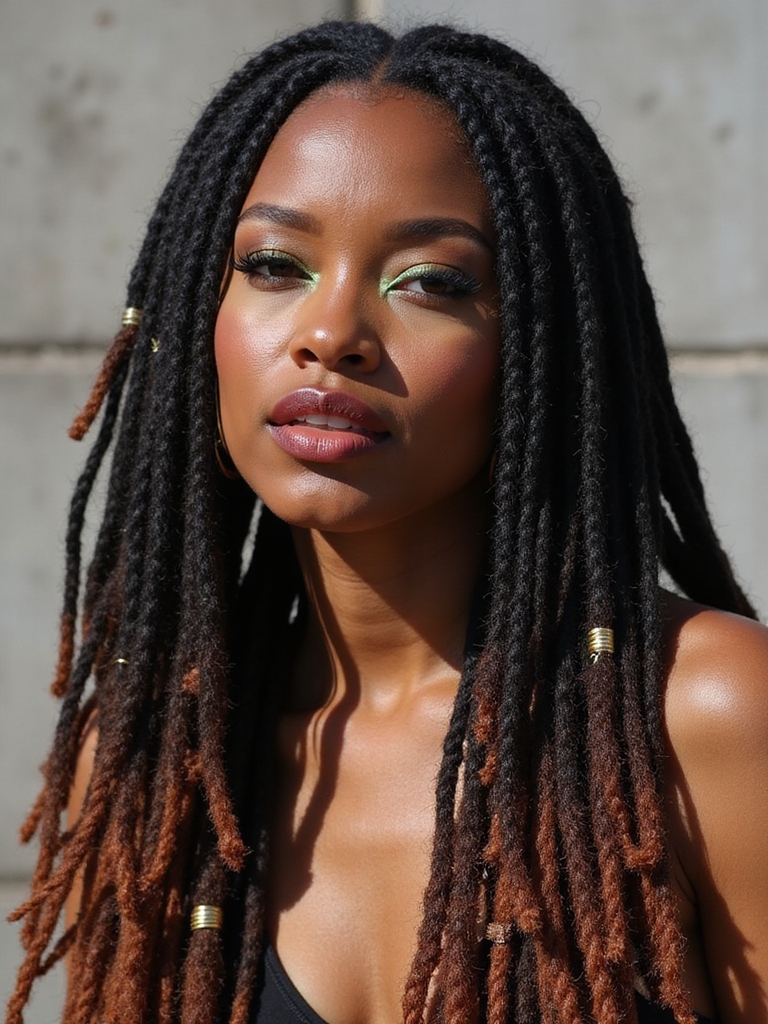
Somewhere between a full blowout and second-day frizz sits a whole category of hairstyles that ask for almost nothing: no heat, no real skill, no more than a few minutes standing at a mirror. Most people who call themselves hopeless with hair were just never shown these.
Eighteen of them follow, from a two-second bun to a five-minute crown braid, plus the handful of tools that cover every single one.
Before You Start: Three Real Questions
What’s the single easiest style on this list? A messy bun or a scatter of clips. The bun is nearly impossible to get wrong since undone is the actual goal, and clips do the shaping for you.
Do any of these need heat or special tools? None of them. A handful of clips, soft elastics, bobby pins, and a scarf cover the entire list.
Do these work better on freshly washed hair? Usually the opposite. Day-old hair grips buns, twists, and braids far better than hair that’s just been washed.
The Foolproof Messy Bun

The messy bun works for anyone who insists they can’t do hair, because messy is the entire assignment. There’s no clean line to ruin and no symmetry to chase, which makes it the obvious starting point for a first attempt.
Gather everything into a loose ponytail, twist the length around itself, and tuck the ends under a soft tie. Pieces falling loose around the face are the look, not a mistake, and it holds high or low on nearly any length in about twenty seconds.

The Sleek Low Ponytail

A low ponytail proves easy and polished aren’t opposites. Smoothing hair back and tying it at the nape takes seconds, yet it reads finished enough for a meeting or dinner out.
One optional move upgrades it: wrap a small strand around the elastic to hide it, and the whole thing looks more deliberate. A drop of serum smooths flyaways if extra shine is the goal, and it works on nearly every hair type.
The No-Skill Braided Headband

A braided headband sounds advanced, but it leans on the same three-strand braid most people learn as kids, and even an uneven one still looks good swept back over the crown.
- Braid one small section near the temple, a plain three-strand plait
- Sweep it back over the crown toward the opposite ear
- Pin it behind the far ear and let everything else fall loose
The Tied Scarf Trick

Handing the whole job to a scarf is the shortest route available. A square of fabric turns unwashed, unstyled hair into a deliberate look in one move, while covering roots at the same time. The scarf hairstyles guide has more wraps beyond these three.
- As a headband, folded narrow and knotted under the hair at the nape
- Around a ponytail or bun, tied at the base to hide the elastic
- Over the crown like a kerchief, the fastest cover for a bad-hair day
The Half-Up Top Knot

A half-up top knot solves hair falling in the face without committing to a full updo. Only the top section goes up into a small knot; the rest hangs loose.
Grab the top half, twist it into a little bun, and secure it. That’s the entire move. Precision isn’t part of it, and a few stray pieces only soften the result further. A small claw clip holds the knot if the hair is fine or tends to slip.
The Easy French Twist

A French twist has a reputation for being formal and tricky, yet the everyday version is a single motion once it clicks: gather, twist up, pin, and the roll hides any mess inside it.
- Sweep the hair to one side and twist it back flat against the head
- Roll the length upward into a vertical fold and hold it in place
- Pin along the seam and tuck the loose ends down inside the roll
The Relaxed Side Braid

A loose braid pulled over one shoulder needs only the basic three-strand braid, and since relaxed is the actual goal, an uneven plait beats a tight one here.
- Sweep all the hair over one shoulder and split it into three sections
- Braid straight down to the ends and fasten with a soft tie
- Pancake the edges wider for a fuller finish that hides any wobble
A few terms that make every style on this list easier to picture:
📖Second-day hair
Day-old hair with natural grip that holds buns, twists, and braids better than freshly washed strands.
📖Pancaking
Gently widening a finished braid by tugging its edges apart for a fuller, less tight look.
The Textured High Ponytail

A high ponytail is about as easy as hair gets, and a little texture is the only upgrade that carries it from gym-bag to actually styled.
One Small Upgrade That Changes Everything
Gather everything to the crown, tie it, then rough it up slightly instead of smoothing it flat. That small bit of texture adds the body that makes it look intentional rather than rushed.
Leave a couple of pieces loose at the face, and wrap a strand around the elastic for a tidier base. For more no-fuss options, the ponytail hairstyles guide covers the rest, and the secure versions in the gym hairstyles guide hold through a full workout.
Simple Pinned-Back Waves

Pinning the front pieces back might be the easiest style here. Two small sections from the sides get secured behind the head, so the hair stays off the face but still down.
- Take a section from each side of the face, roughly an inch wide
- Pin them back behind the head with bobby pins or a small clip
- Add a decorative clip so it reads styled rather than plain
Getting texture into a high ponytail without heat:
1Tie it smooth first
Gather hair to the crown and secure it tightly, exactly as usual
2Rough it up
Pull gently at the base and along the length to loosen the shape
Simple Milkmaid Braids

A milkmaid braid looks like a woven crown but it’s really two basic braids pinned over the top of the head. Anyone who can manage a three-strand braid already has the whole technique.
Two Braids, One Crown
Braid each side, cross them over the crown, and pin. It works best on longer hair that reaches across, and loose, soft braids beat tight, neat ones, so there’s no pressure to get it exact.
Pull the braids a little wider before pinning for extra fullness, and let a few pieces fall at the face. For more looks built on the same moves, the braided hairstyles guide has plenty.
Tousled Beach Waves

Soft, tousled waves sound like they need a curling iron and a steady hand, but the easiest version uses neither. It leans on overnight braids or a quick mist of salt spray instead.
Braid damp hair into one or two loose plaits before bed, then unravel them in the morning for soft, even waves with no heat involved at all.
For a faster route, scrunch salt spray into damp hair and skip the blow-dryer entirely. Either method finishes with a shake-out of the fingers to break up any obvious wave pattern.
The Easy Chignon

A chignon sounds like stylist-only territory, but the easy version is just a low bun with the ends tucked under instead of coiled on top, and it looks refined for how little it asks of clumsy hands.
- Gather the hair low at the nape and twist it into a loose loop
- Fold the ends under the loop rather than wrapping them on top
- Pin along the fold and smooth flyaways for a clean finish
Playful Space Buns

Space buns are the most playful style on this list: two little buns set high on each side, and the messier they turn out, the better they tend to look.
Part down the middle, gather each side into a ponytail, twist each into a bun, and pin. The whole thing runs a couple of minutes, and there’s no real way to overthink it.
They suit every texture, and on curly or coily hair they double as a comfortable way to wear length up and protected. A satin scrunchie works better than a tight elastic for that specific use.
The Rolled Headband Tuck

The headband tuck feels like a small trick: slip on a soft, stretchy headband and tuck the hair up and under it, and the rolled result looks far more involved than the one move it actually takes.
It hides unwashed hair completely and needs no pins and no braiding. It works best on second-day hair, which grips the band better than fresh strands, and on medium to long lengths with enough to tuck.
- Slip a stretchy headband over the head and down onto the forehead
- Tuck sections of hair up and under the band, working around the head
- Adjust for volume, loose and full or smoothed close to the head
| Mood | Bun Placement | Finish |
|---|---|---|
| Polished | High, tight, smooth | Sleek edges, no flyaways |
| Playful | High, loose, messy | A few curls springing free |
| Protective wear | High, loose | Satin scrunchie, no tight elastic |
The Faux Bob Illusion

Curious about a bob without the cut? The faux bob fakes it by tucking and pinning length under to read chin-length, a commitment-free trick that takes only pins and washes out the moment they come loose.
- Roll the ends of the hair under to where the bob should sit
- Pin the roll all the way around, hiding the pins underneath
- Wear it down or half-up, then unpin whenever the length is wanted back
A Simple Hair-Clip Ensemble

Sometimes the easiest style is barely a style at all, just a few well-placed clips doing the work. A scatter of clips sweeping one side back, a single claw clip twisting up the back, or a row of minis pinning bangs aside all turn plain hair into something deliberate.
Clips read as a choice rather than a rescue, even on a day the hair would otherwise be a write-off. Keeping a small dish of them by the mirror means a styled look is always ten seconds away.
- Sweep one side back with a couple of decorative clips
- Twist up the back with a single claw clip in one motion
- Pin bangs aside with a row of minis for an off-face look
Two beliefs worth dropping before starting any style on this list:
❌ Myth: Myth: you need styling experience to pull these off.
✅ Reality: None of these techniques go beyond a basic three-strand braid or a simple twist-and-pin.
❌ Myth: Myth: freshly washed hair styles better.
✅ Reality: Most of these hold better on day-old hair, which grips far more than slippery, just-washed strands.
The Bohemian Side Bun

A side bun leans boho by design: gathered low to one side, twisted loosely, and pinned without much fuss over where every strand lands.
Loose on Purpose
Sweep all the hair to one side at the nape, twist the length into a loose coil, and pin it in place against the head.
Pull a few pieces free at the front for softness, and don’t smooth the twist too much; a little texture is what keeps it reading relaxed instead of formal.
The Twisted Crown Halo

A twisted crown halo wraps two twisted sections around the head like a soft headband, framing the face without any braiding involved at all.
- Twist a section from each side of the part toward the back
- Pin the twists together at the back of the head
- Wear the lengths down, or tuck them under for a fuller halo
Common Mistakes to Avoid
The most common mistake with every style on this list is overworking it. Brushing out a bun until it’s perfectly smooth, or pinning a braid until not one piece moves, removes the exact texture that made the style easy and forgiving in the first place.
The second is fighting freshly washed hair into these shapes. Most of them grip and hold far better on day-old hair; a light dust of dry shampoo at the roots gets slippery, just-washed strands closer to that texture when a style is needed the same day.
Easy Hairstyle Questions, Answered
?Do any of these hairstyles require heat styling tools?
No. Every style on this list works with clips, soft elastics, bobby pins, or a scarf. A curling iron or straightener isn’t part of any of them, though a few can be adjusted with heat if that’s already part of the routine.
?Which of these hold up best for workouts or exercise?
Space buns, the sleek low ponytail, and the textured high ponytail hold up best under movement. All three keep hair fully secured away from the face and stay in place through sweat far better than loose braids or tucks.
?What’s the one tool worth buying if none of these are in a routine yet?
A handful of bobby pins and one stretchy headband, plan on around $10 total, cover more than half the styles on this list between them and solve most of the friction people run into trying these for the first time.
?Do these styles work on shorter hair, like a bob or lob?
Several do. The half-up top knot, pinned-back waves, hair clips, and the twisted crown halo all work on shoulder-length hair or shorter, since none of them require full length to gather or braid.
Easy Was Always Within Reach
None of these eighteen styles need a skill that takes practice to build. They need a few basic moves, repeated until they feel automatic, and permission to leave things a little undone.
Which one would actually fit into a real morning, not a fantasy one with an extra twenty minutes?
Keep the Inspiration Going