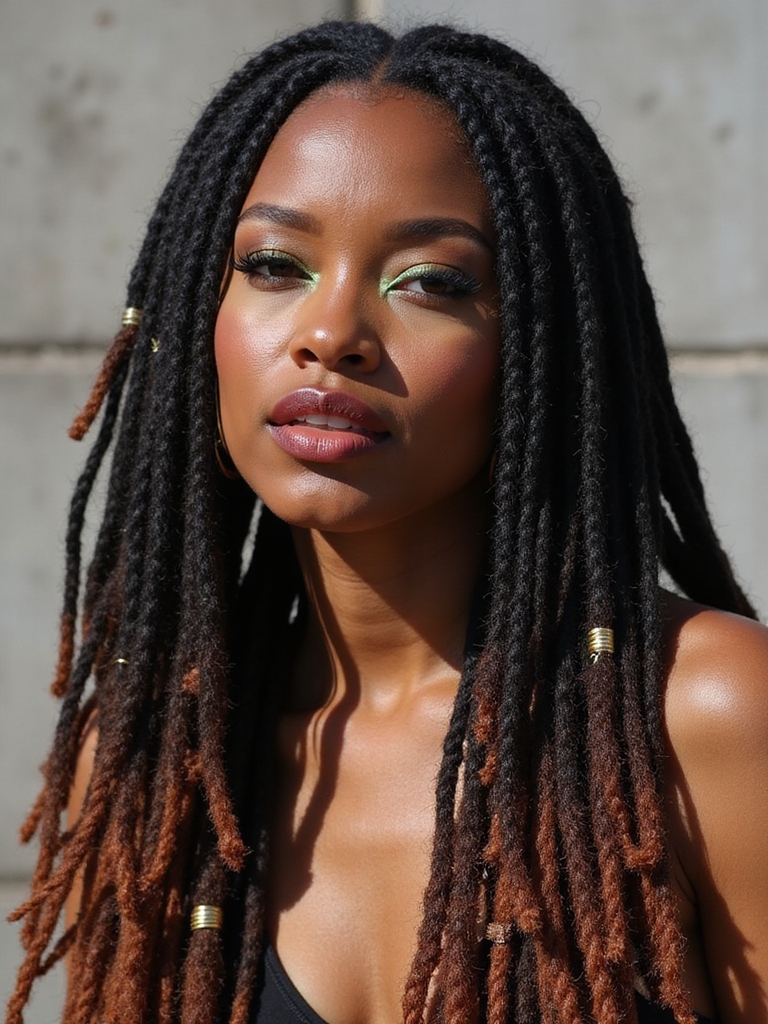
Dreadlocks bob hairstyles aren’t really a loss of length so much as a change of format, and the bob is the sharpest version of that trade. A chin-length loc bob dries faster, sits lighter on the scalp, and looks more polished than most people expect from a shorter cut.
Fifteen versions follow, each built from the same core shape but shifted through part, texture, color, or loc size. If cutting still feels premature, artificial dreadlocks hairstyles offer a reversible way to test the length first.
What Actually Changes When You Cut
- A bob dries in a fraction of the time a long set takes, and the reduced weight eases tension at the roots.
- The shape adapts through part, curl, color, and loc size, so one cut supports many different looks.
- A crisp bob line needs its own trim schedule, separate from your usual retwist.
Sleek Chin-Length Loc Bob

A chin-length loc bob cut blunt and worn sleek is the crispest, most polished version of the style: clean lines, nothing soft about the edge. The locs are trimmed to an even length that frames the jaw and pulls the eye straight to your face. It’s a confident, low-fuss choice that reads corporate-ready without trying to.
- An even, chin-grazing length that frames the jaw
- A light shine product keeps the surface smooth
- Dries noticeably faster than a longer set

Bob Locs With Curled, Bouncy Ends

Leaving the ends curled softens the blunt line of a loc bob with a little bounce and movement. The curls set on rods or with a curl-defining product, adding personality to what’s otherwise a structured shape. Expect to protect the curl with a satin bonnet overnight, since friction against a cotton pillowcase undoes the set fast.
- Ends set on rods or with a curl-defining product
- Adds bounce and movement without losing the bob shape
- Detangle at the ends only; never tug at the root
The Blunt-Cut Loc Bob, Cut Dead Even

A blunt-cut loc bob keeps every loc at exactly the same length, so the perimeter reads bold and graphic instead of soft. The hard line is the whole statement here; nothing about it apologizes for being structured. Expect a shaping trim on a regular schedule to keep that edge crisp as new growth comes in.
- Every loc cut to the same even length
- A bold, architectural perimeter line
- Regular trims keep the blunt edge sharp
Two myths that stop people from cutting locs into a bob:
❌ Myth: Myth: cutting locs makes them unravel.
✅ Reality: A loctician seals each cut end, so the loc holds firm and the rest of the set stays untouched.
❌ Myth: Myth: shorter locs look less mature or established.
✅ Reality: Length and maturity aren’t the same thing; a bob just shows the pattern and texture at a different scale.
A Deep Side Part on Shoulder-Length Locs

A deep side part gives a loc bob instant volume on one side and a flattering diagonal across the face. The asymmetry softens the overall shape without touching the cut itself.
It’s the free restyle to try first, since switching where the part sits costs nothing and changes how the whole bob reads. On a round or square face, the lifted side and the diagonal line both work in your favor.
- A deep part lifts the locs on the heavier side
- The diagonal line softens a round or square jawline
- Switching the part is a no-cost way to restyle
Middle-Part Locs, Symmetrical and Calm

A middle part frames the face evenly, splitting a loc bob into two clean curtains that fall to each side. It looks balanced and a little more formal than an off-center part.
This one flatters oval and heart-shaped faces especially, and it’s the most classic way to wear a loc bob down. A crisp, straight part takes patience to set but holds the whole look together.
Soft Layers That Add Roundness to a Loc Bob

Soft layers cut into a loc bob build rounded volume instead of letting the shape sit flat against the head. Shorter locs near the crown add body while the longer ones keep the bob’s overall length.
The result is fuller and more dynamic than a blunt cut, and it suits anyone hoping for real movement instead of one dense, heavy block.
One Longer Side: The Angled Loc Bob
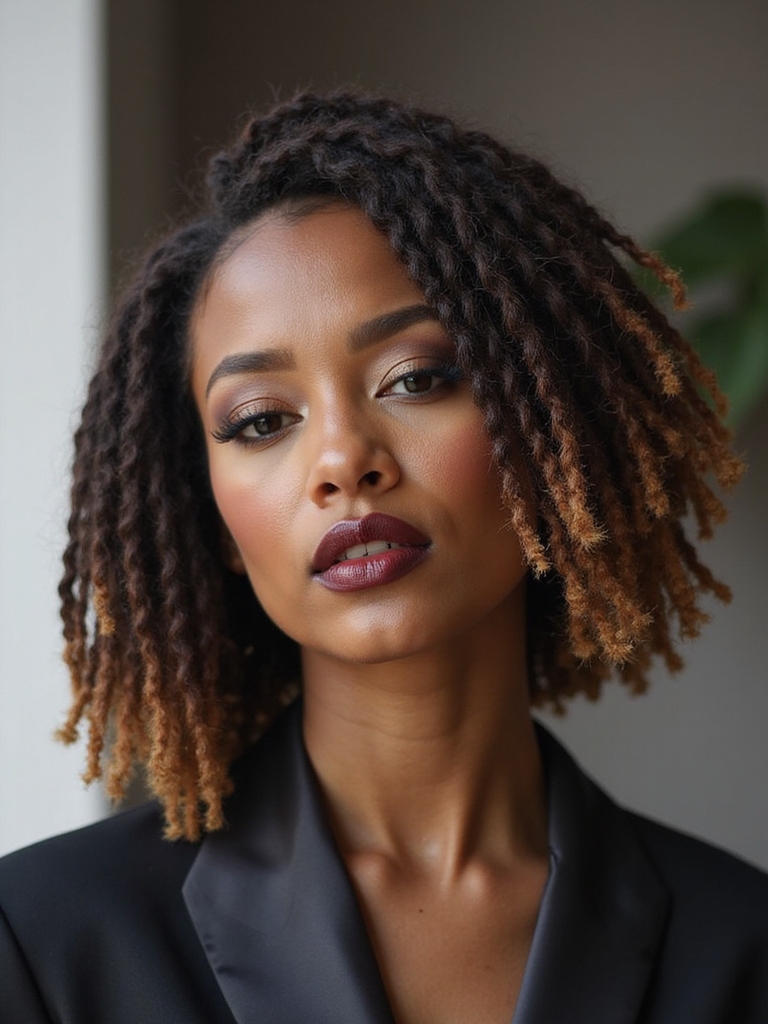
An asymmetrical loc bob cuts one side noticeably longer than the other, drawing a bold diagonal that reads modern rather than uneven. The longer side frames the face while the shorter side stays close to the jaw and sharp.
- One longer side pulls focus toward the face
- The shorter side stays sharp and close to the jaw
- A confident choice when the cut itself should do the talking
A few loc terms worth knowing before your appointment:
📖Retwist
The ongoing maintenance that palm-rolls or twists new growth into the existing loc.
📖Loctician
A stylist specifically trained in starting, maintaining, and cutting locs.
The Shoulder-Grazing Loc Lob

A loc lob, or long bob, grazes the shoulders for the longest and most forgiving version of this style. There’s enough length left to tie back or pin up on days you’d rather not wear it down.
Not Ready to Commit? Start Here
It works as a gentle step into a shorter cut, ideal for anyone easing into the idea rather than diving straight into a full chin-length bob. It bridges short and medium, and the everyday styling overlaps with regular locs hairstyles for women.
Going shorter later is always possible. Getting length back once it’s cut is not, which is why the lob makes sense as a first step for anyone hesitant.
Dip-Dyed Tips on an Otherwise Natural Set

Dyeing just the tips of a loc bob adds a pop of color while keeping the roots completely natural, from a subtle caramel dip to a bold contrast shade.
Color on locs is best left to a professional who works with textured hair regularly, since locs hold product differently and can process unevenly. A color-safe routine afterward keeps both the tone and the strands healthy.
- Color sits only at the tips; roots stay natural
- Draws the eye straight to the blunt bob line
- Best handled by someone experienced with locs specifically
Quick gut-check before you book:
1Do you reach for a bun or ponytail most mornings?
A lob keeps enough length for both; a full bob won’t.
2Are you cutting mainly to reduce weight and drying time?
A full bob delivers more of that benefit than a lob does.
Setting a Loc Bob Into Soft, Loose Waves

Setting a loc bob into soft waves trades the sharp perimeter for body and movement, a noticeably more relaxed take on the cut. The waves go in on large rods or through overnight braiding on damp locs, then release into a soft bend through the length.
- Set on large rods or overnight braids
- Trades the sharp line for soft body and movement
- A satin bonnet protects the wave pattern overnight
A Bob Built Entirely From Micro Locs

A loc bob built from micro locs moves more like loose hair than a standard set does, since so many small locs shift and settle independently.
The bob shape holds either way. What changes is texture: micro locs gather, part, and curl with more ease than thicker locs, so this version offers the widest styling range on this list.
The trade-off shows up at installation. Micro locs simply take longer and cost more to put in than a standard-size set, though the ongoing retwist upkeep afterward matches any other loc size.
Rope Locs Give a Bob Real Weight

On the opposite end, a loc bob made from thick rope locs carries serious presence. Each chunky strand adds weight and a bold, sculptural quality the whole way around.
The blunt line looks especially graphic against locs this thick, and the cut needs almost no extra styling to look finished worn down. Fewer, larger locs also means less to retwist, which lowers upkeep per session even though each loc takes longer individually.
Beads and Cuffs on a Jaw-Length Bob

Dressing a loc bob with beads and cuffs adds a personal, decorative touch, small details that catch the light along the blunt ends. A scatter of wooden beads or a few metal cuffs turns a clean cut into something that feels distinctly yours.
- Wooden beads or metal cuffs finish the ends with a personal touch
- A small, inexpensive way to change the character of a cut
- Size each cuff to your loc width so it slides on without forcing
Caramel Ribbons Woven Through the Set

Threading a few lighter locs through an otherwise darker set adds dimension without touching the whole head, so the cut looks fuller and more sculpted from every angle.
Dimension Without a Full-Head Lightening Service
Caramel or honey-toned locs scattered through the set catch the light and break up a solid block of color, adding a sun-warmed quality without an actual lightening service.
Only the highlighted locs need touching up down the line, which keeps ongoing color upkeep lower than a full-head treatment would. Lightening locs specifically takes a colorist experienced with textured hair, since the interior of each strand can process unevenly.
Pick beads and cuffs that actually mean something to you, not whatever’s easiest to grab off a shelf. The detail should say something specific, or skip it.
A Tapered Nape for a Lifted Silhouette

Tapering the nape of a loc bob keeps the back close to the head and the perimeter clean, baring the neck for a lighter, more lifted shape than a blunt-all-around cut gives.
The shorter nape reduces weight at the back while the front stays long enough to keep the face-framing bob shape intact. Expect a tidy-up on that taper on its own schedule, separate from the rest of the perimeter.
What to Expect
The length you remove won’t grow back overnight, so most locticians recommend going slightly longer than your goal at first and trimming up from there once you’ve lived with the shape for a few weeks.
Book roughly two hours for the appointment itself. Pricing typically lands around $50 to $100 depending on the size and density of your set, separate from your regular retwist visits. For more styles at this same length, bob dreadlocks hairstyles covers a different set entirely.
Loc Bob Questions, Answered
?Will cutting my locs into a bob damage them?
The cut itself doesn’t harm a healthy loc. A trained loctician finishes each cut end so it stays sealed and locked, and everything above where the scissors went keeps growing and maturing exactly as it was.
?What length should I ask for the first time I cut?
Ask for more length than you think you want. Living with a slightly longer lob first gives you a real sense of how a shorter loc bob actually feels day to day, and a second cut later costs far less regret than going too short on the first pass.
?How soon after the cut will I need another trim?
Budget for a shaping trim every four to eight weeks to keep a blunt or tapered perimeter crisp as new growth comes in. That’s separate from your regular retwist schedule, which continues on its own timeline.
The Length Was Never the Whole Story
Fifteen versions of one core shape make the same point: a loc bob bends through part, color, texture, and finish far more than the length alone would suggest.
The real question isn’t whether locs can handle being shorter. It’s whether you’re ready to see the same set differently once they are.
Next Up