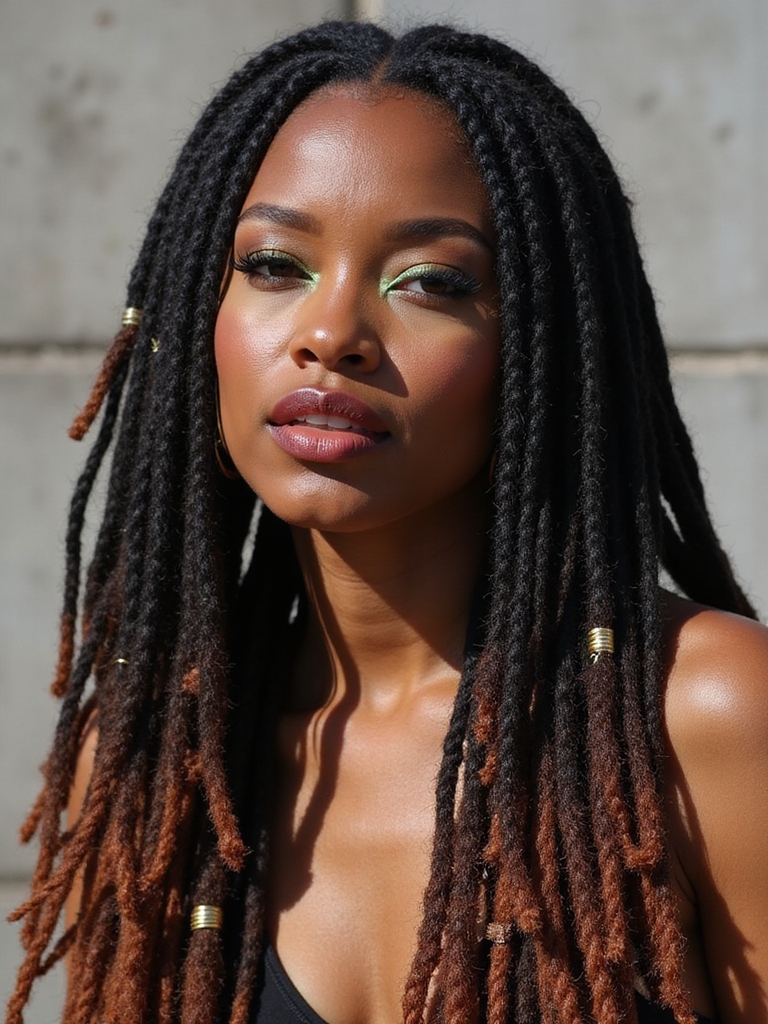
Dreadlocks hairstyles for Black women get treated like one hairstyle when they’re really a dozen different journeys wearing the same name. A freshly installed set of microlocs has almost nothing in common, day to day, with a decade-old freeform set left to do its own thing, and choosing between them is usually choosing a lifestyle as much as a look.
For many Black women, that choice carries real weight beyond the mirror: identity, heritage, and a personal relationship with hair texture. None of that needs explaining in a blog post. What follows is the practical side, fifteen ways to wear locs at every stage, with the honest trade-off each one asks for.
Four Ways Into the Same Style
| Style Family | Best For | The Trade-Off |
|---|---|---|
| Microlocs | Maximum styling range, a delicate look | Longest, priciest install of any loc method |
| Traditional grid locs | A neat, classic silhouette | Regular retwisting to keep the grid sharp |
| Freeform locs | A personal, hands-off process | Less predictable shape while it forms |
| Faux or goddess locs | Testing the look without commitment | Temporary, comes down after a season |
Microlocs, Finely Parted and Versatile

Microlocs are locs parted so small that a full head can hold several hundred of them, each one thin enough to move almost like loose hair.
That small, uniform parting is what gives microlocs their styling range. You’ll notice they gather into updos, ponytails, and buns the way looser hair does, in a way thicker locs never quite manage.
Expect the install itself to take the better part of a day, and plan on it costing more than any other method here, since a loctician is hand-parting hundreds of sections one at a time.

A Traditional Grid Parting on Mature Locs

Traditional locs sit in an even, structured grid, groomed on a regular schedule to keep every section uniform from root to end.
This is the shape most people picture when they hear the word locs, and it holds that reputation because the grid does stay neat longer than a looser method would.
- Started with comb coils, two-strand twists, or palm-rolling, depending on hair texture and the loctician’s method.
- Retwisting on a consistent schedule keeps new growth from blurring the grid.
- A structured, deliberate look that reads polished at any length.
Freeform Locs on Their Own Timeline
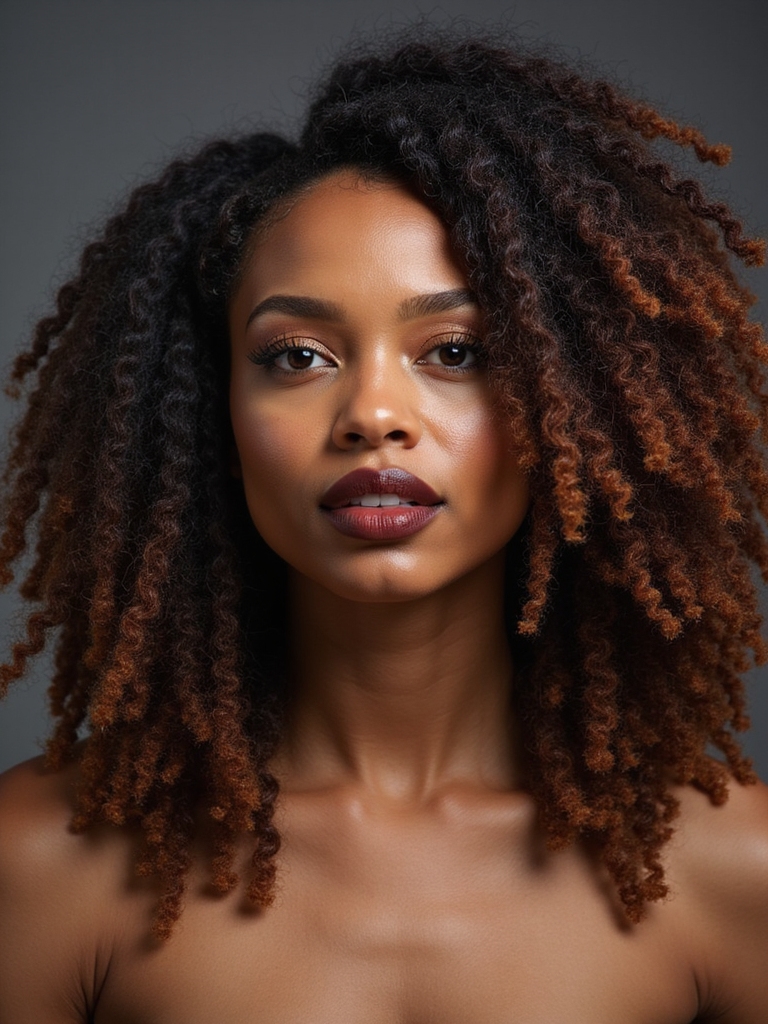
Freeform locs skip the grid entirely, left to twist, section, and lock however the hair naturally wants to.
The Washing Myth, Retired
You’ll notice each loc ends up a different width and shape than its neighbor, which is the entire point rather than a flaw to correct.
Clean hair still locks better than unwashed hair, despite a persistent myth to the contrary. Regular, gentle washing doesn’t undo the process. It just keeps the scalp healthy while the process happens.
ℹ️How Long Freeform Takes
A freeform set can take a year or more to fully lock on its own timeline, compared to a groomed grid style that reaches the same maturity faster simply because retwisting speeds the process along.
Goddess Locs With a Soft, Bohemian Finish

Goddess locs are usually installed as a faux or extended style, with soft curly pieces left loose along each loc for a romantic, undone finish.
Underneath, natural hair is braided and protected, so the style doubles as a break from daily manipulation while it’s worn. For a deeper look at faux methods specifically, see artificial dreadlocks hairstyles for black women.
Expect this set to last several weeks before it needs taking down, and a light oil worked through the curled pieces keeps them defined rather than fuzzy.
Faux Locs as a Protective Switch-Up

Faux locs build the look with added hair, wrapped or crocheted onto braided natural hair underneath, and they come out again once the style has run its course.
As a protective style, the appeal is less about imitating permanent locs and more about resting your own hair: no daily heat, no daily manipulation, for as long as the set stays in.
The install itself takes hours in the chair, and how comfortably it’s braided underneath matters more than almost anything else. Tight, painful tension isn’t a sign of a longer-lasting set. It’s a sign to ask the stylist to loosen it before the appointment ends.
Fine Microlocs Built for Everyday Speed
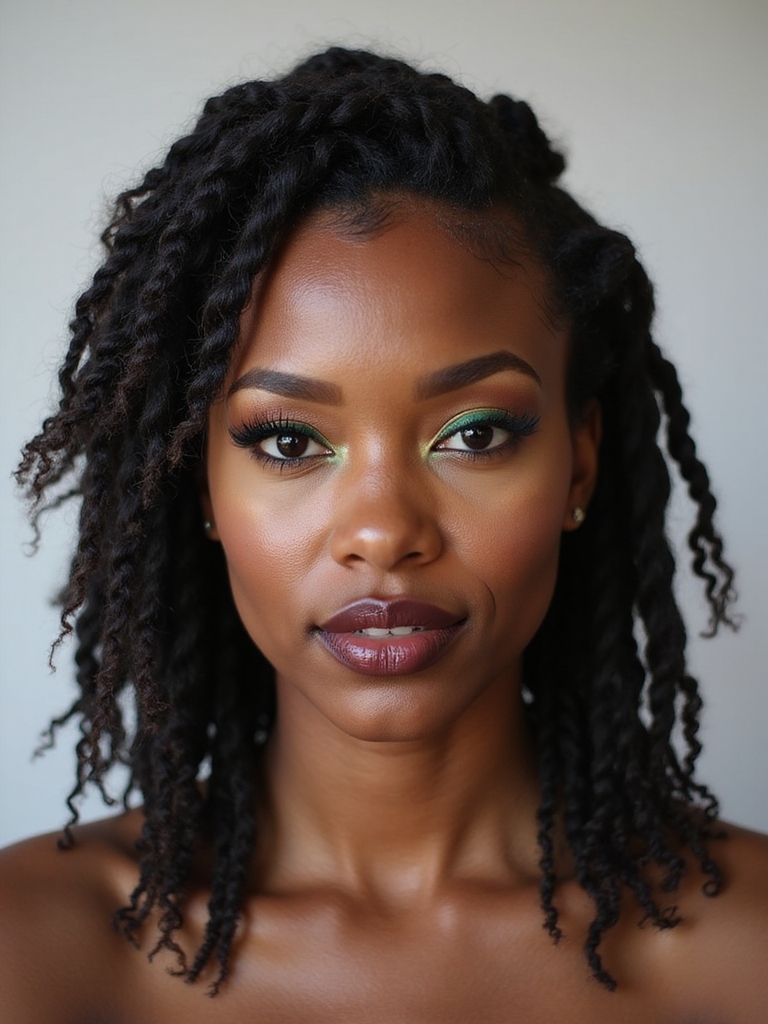
Worn at an everyday length, fine microlocs stay light on the head and gather into a ponytail or bun almost as fast as loose hair would.
Light Now, Longer Later
That lightness is the entire draw for anyone with an active routine, since there’s no heavy set of thick locs pulling at the roots by afternoon.
The trade-off is the same one every microloc style asks for: a longer, pricier install up front in exchange for the lightest day-to-day feel of any loc method.
Thick Locs With Rope-Like Statement Volume
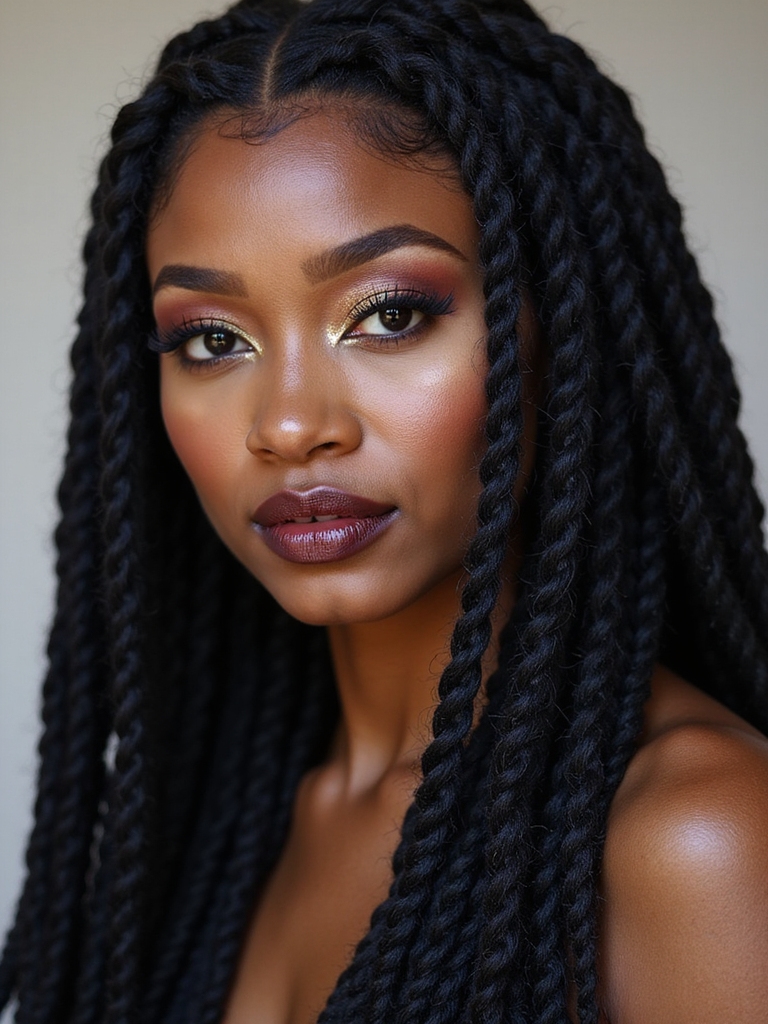
Thick locs use fewer, larger sections, trading the styling range of microlocs for bold, rope-like volume that reads as a statement from across a room.
- Fewer sections mean faster retwisting, since there’s simply less to maintain than a fine, dense set.
- Worn down with no additional styling, a thick set already looks finished.
- The larger width limits some updo options that rely on locs gathering like loose hair.
A Blunt, Chin-Length Loc Bob

A loc bob trims an established set down to one chin-length line, trading length for a sharper, more structured silhouette.
Cutting Locs Is a One-Way Decision
Cutting locs is permanent in a way retwisting never is, so this is usually a decision made once a set has already matured rather than something to rush into.
You’ll notice a bob-length set dries faster and sits lighter than a long one, which is often the actual reason people choose it over the visual change alone.
Deciding how much length to keep? Start with what actually matters to you:
🎯Maximum versatility
Keep the length. Longer locs gather into more updo and half-up options.
🎯Speed and ease
Go with the bob. Shorter locs dry faster and need less daily handling.
Rod-Set Curl at the Ends of Mature Locs
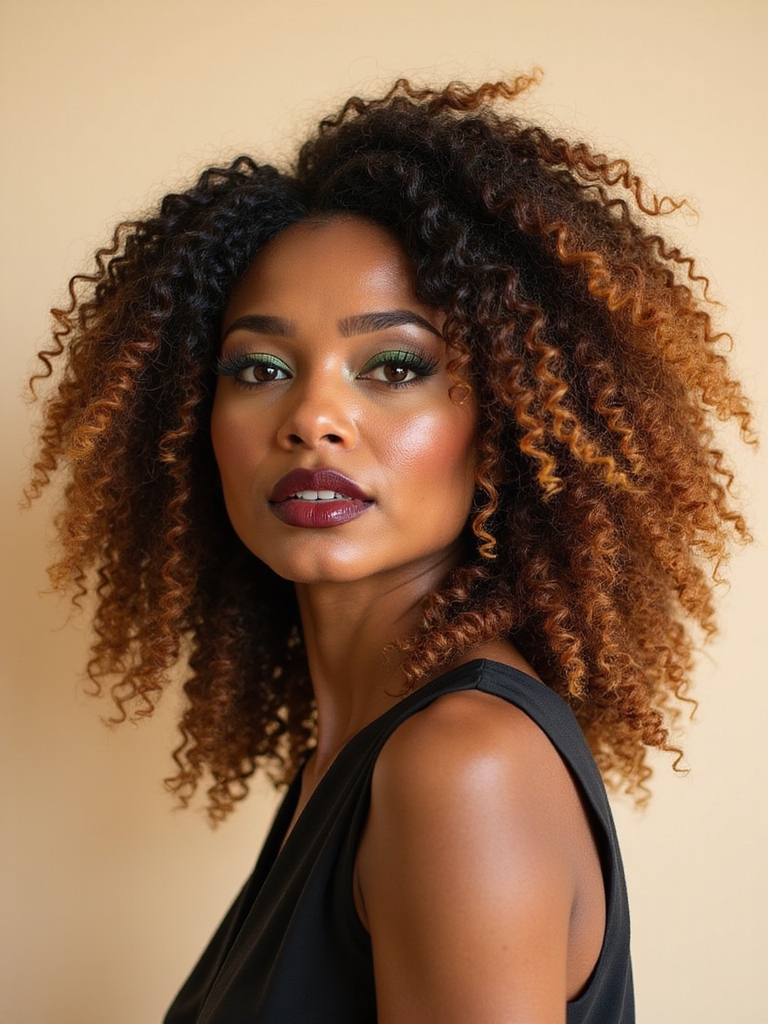
Setting the ends of mature locs on flexi rods or perm rods, left to dry fully overnight, softens the tips into a loose curl without touching the locked body of the loc.
The curl spirals away from the loc itself, giving movement at the ends while the rest of the set stays exactly as it was.
It’s temporary by design, usually fading back to straight within a few days, which makes it one of the lowest-risk ways to change a set without cutting or coloring anything.
Loc Updos Built to Hold Through an Event

For a wedding, a gala, or any event that needs to survive a full day on camera, gathering a mature set into a smooth, pinned updo does the job better than almost any other hair type manages. For bridal-specific options, see bridal dreadlocks hairstyles for black women.
- Mature locs hold whatever shape they’re pinned into, since they don’t slip the way loose hair can.
- A single statement cuff or pin finishes the shape without extra styling.
- Expect the style to hold from morning through a full evening with no touch-ups needed.
🅰️A Full Pinned Updo
Holds all day without a single touch-up. Best when the event runs long.
🅱️A Half-Up Style
Faster to put together. Better when comfort matters more than a formal finish.
A Sleek Half-Up Gather Over Flowing Locs

Gathering just the crown section while the rest of the locs hang free clears the face without the full commitment of an all-up style.
- The gathered section takes the weight off the neck on a warm day.
- Loose face-framing locs at the front soften the whole look without extra effort.
- Works on nearly any loc length or age, from a fresh set to a fully mature one.
Braids and Twists Woven Into a Loc Set

Braiding or twisting a few neighboring locs together adds a scalp-level pattern to an otherwise plain set, without touching the locs hanging free below the pattern. Our full dreadlocks braids hairstyles guide goes deeper into combinations like this.
- A handful of flat braids or chunky twists changes the look of a whole set with minimal added time.
- This holds for several days as a low-manipulation style, since the pattern itself needs almost no daily upkeep.
- Keep any tension at the scalp comfortable, never tight, to protect the hairline underneath it.
Color Dimension Through a Loc Set

Color on locs ranges from a subtle caramel woven through dark roots to a full ombre fading into a much lighter end.
- Lightening works best on mature locs, since a fully locked interior processes color more evenly than a newer set still forming.
- This isn’t a box-dye job. A colorist experienced specifically with locs should handle the lift, since the interior of a loc can process unevenly under the wrong hands.
- Color-treated locs need more moisture than an uncolored set, since lightening dries out the hair shaft along with the color change.
| Loc Age | Color Option | What to Expect |
|---|---|---|
| Newer, still forming | Subtle root-to-end blend only | Full lightening processes unevenly on hair that hasn’t fully locked yet |
| Fully mature | Bold ombre or all-over color | Interior locks evenly, holds color better |
Locs Adorned With Beads, Shells, and Cuffs

Beads, shells, and metal cuffs threaded onto individual locs turn a plain set into something with real detail, without changing the locs themselves.
Adornment With Real History Behind It
This kind of adornment carries real weight across West African and Afro-Caribbean traditions, where beading and wrapped hair have long expressed identity and status, not just decoration. For more decorative styling, see cute dreadlocks hairstyles for black women.
Match the size of any cuff to the thickness of the loc it’s going on, since a cuff that’s too loose will slide and one that’s too tight can catch and pull.
Healthy Locs Start With Clean and Moisturized
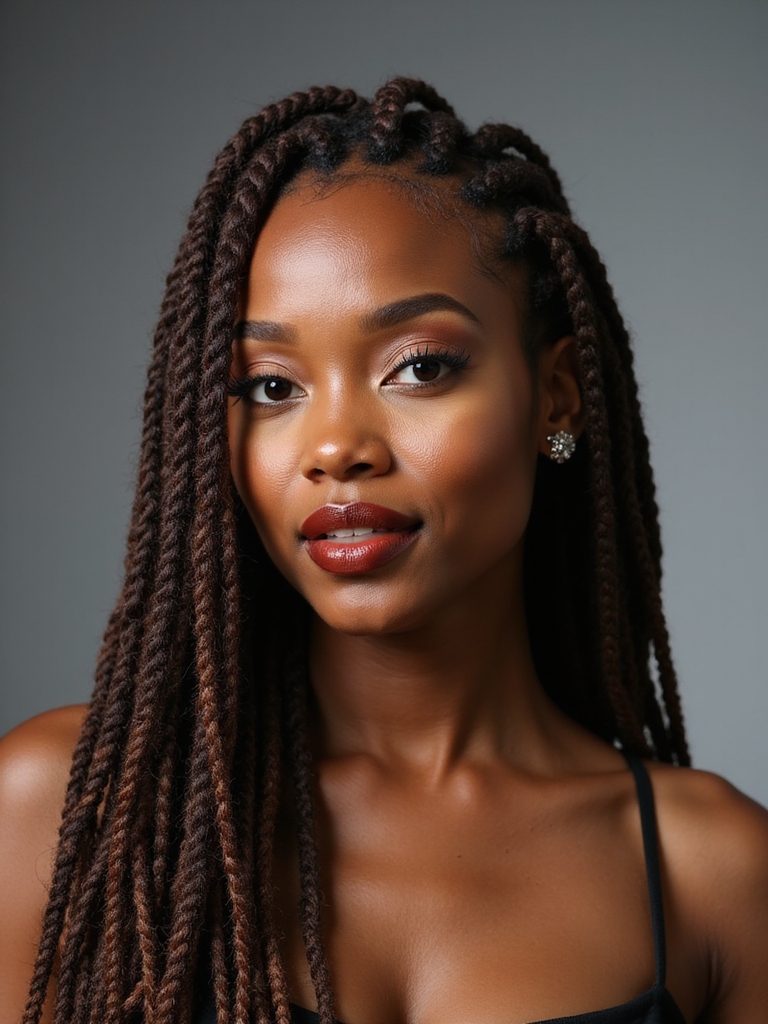
Two things keep locs healthy over the years: staying clean and staying moisturized, in that order.
Wash on a regular schedule with a residue-free shampoo. Clean locs actually lock and mature better than dirty ones, despite the old idea that washing slows the process down.
A light, water-based spray adds moisture without leaving the waxy buildup that heavier oils can trap inside a loc, and a satin bonnet or pillowcase at night protects against the friction that dries hair out fastest.
Maintenance & Care
Retwisting keeps new growth from loosening the pattern at the roots, and how often that’s needed depends entirely on the style: a tight grid needs it more often than a looser or freeform set ever will. A loctician who works with locs daily, not occasionally, is worth seeking out over a generalist stylist.
Plan on around $80 for a basic retwist appointment, more for a full install with color or a new method. For anyone weighing an updo-friendly length, dreadlocks bun hairstyles covers more ways to gather a set. Locs reward patience more than any other hair type on this list. The early stage looks rough before it looks finished, and that’s normal, not a sign anything’s gone wrong.
Whichever Path, the Locs Are Yours
Microlocs, a traditional grid, freeform, or a faux set worn just for a season: none of these is more legitimate than another. Each one asks for a different amount of time, money, and patience, and the right one depends on what you actually want day to day, not on which look photographs best. For more shapes to compare, see elegant dreadlocks hairstyles.
Whatever stage you’re at, find a loctician who works with locs as their specialty, not an occasional add-on, and give the process the time it actually needs. The early months are the hardest part of any method, and they pass.
More to Try