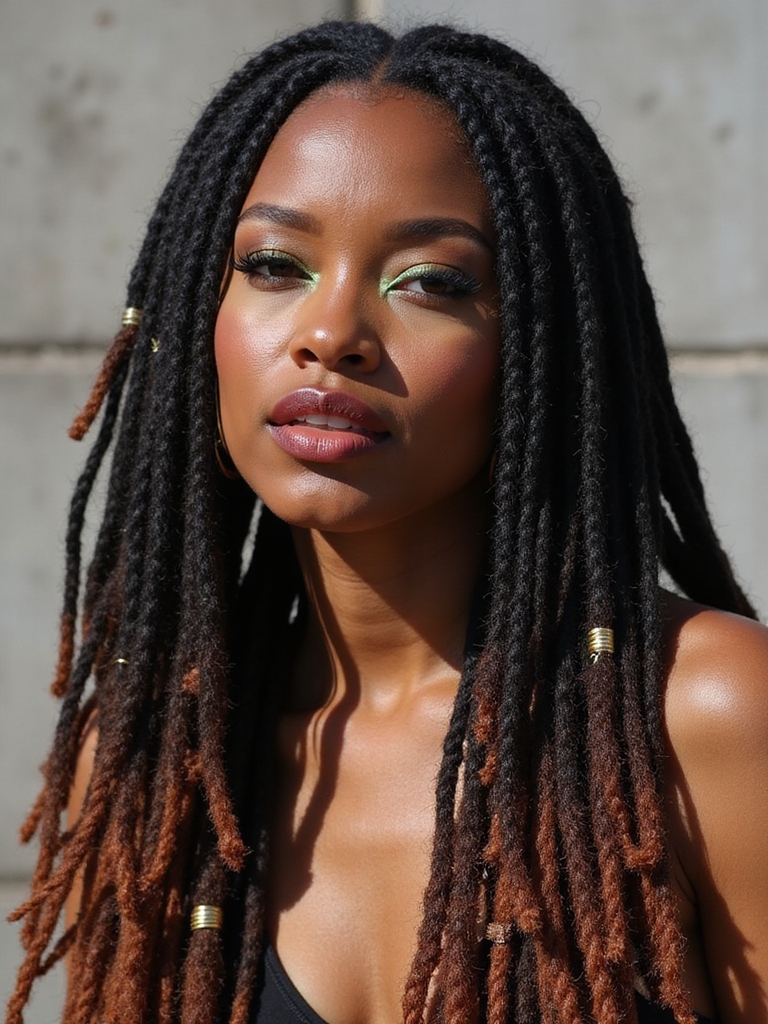
Most gym hairstyles get one job right and fail the other. They hold through burpees and a sweaty spin class, or they protect the hair, but rarely both at once. By week three of the same too-tight ponytail, the hairline usually shows it first: a little thinner, a little more see-through at the temples, and nobody connects it back to the elastic.
The gym is harder on hair than most routines admit, between sweat, friction against collars and equipment, and tension from styles pulled tight for an hour of movement. What follows is sorted by length, texture, and workout type, so the style matches the actual session.
Before the Next Session
Build gym styles on second-day hair when possible, and trade a thin, hard elastic for a wider, softer tie to spare the hairline and ends from friction.
Match the style to the workout rather than to habit: low and soft for floor work, braids for anything high-impact, a secure low bun for lifting.
Why Gym Hairstyles Need a Rethink

Most gym-goers reach for the tightest elastic and the highest ponytail on autopilot, since it feels the most secure. The trouble is that a workout stresses hair in three specific ways, and the habits that feel safest are often the ones causing quiet damage over a training cycle:
- Friction from hair rubbing against a collar, mat, or equipment roughens the cuticle and snaps ends over repeated sessions.
- Sweat is salty and mildly acidic; left to dry in the hair, it gradually weakens the strands over time.
- Constant tension from tight, high styles pulls directly on the hairline, and repeated pulling is a documented cause of thinning at the temples.
The Essential Tools for Gym Hair

A gym hair kit does not need to be large, just chosen to hold without causing harm. The single biggest upgrade is the hair tie itself: a thin, hard elastic is usually the main culprit behind both midday slippage and long-term edge thinning.
None of these swaps cost much. A good silk or satin scrunchie runs around $8 and lasts through months of training, holding up far longer than a cheap elastic typically does.
- Spiral ties grip without leaving a dent or pulling at the root the way a standard elastic does.
- A silk or satin scrunchie slides freely through hair, which matters most for fine or fragile strands.
- A small tin of edge cream or gel tames flyaways at the hairline without the crunch of a heavy hold product.
A few terms worth knowing before restocking a gym hair kit:
📖Spiral tie
A coiled, telephone-cord-style hair tie that grips through tension rather than pulling, leaving no dent or crease behind.
📖Traction alopecia
Gradual hair loss caused by repeated pulling at the same spot on the scalp, most often from tight, high styles worn day after day.
The Double-Dutch Braid for High-Impact Days

For sessions that involve jumping, sprinting, or anything that sends a loose ponytail swinging, two Dutch braids are about as secure as a style gets. Braided flat against the scalp, they cannot swing, snag on equipment, or slip loose partway through a class.
The protective side benefit matters just as much as the hold. Because the hair sits woven close to the head, there is far less friction against a collar or a bench than a loose tail generates, which means fewer snapped ends across a week of hard training.
Plan on roughly ten minutes to braid both sides cleanly, which makes this a style best done the night before on second-day hair, when strands already have a little grip to hold the shape.
A Soft Crown Braid That Stays Put
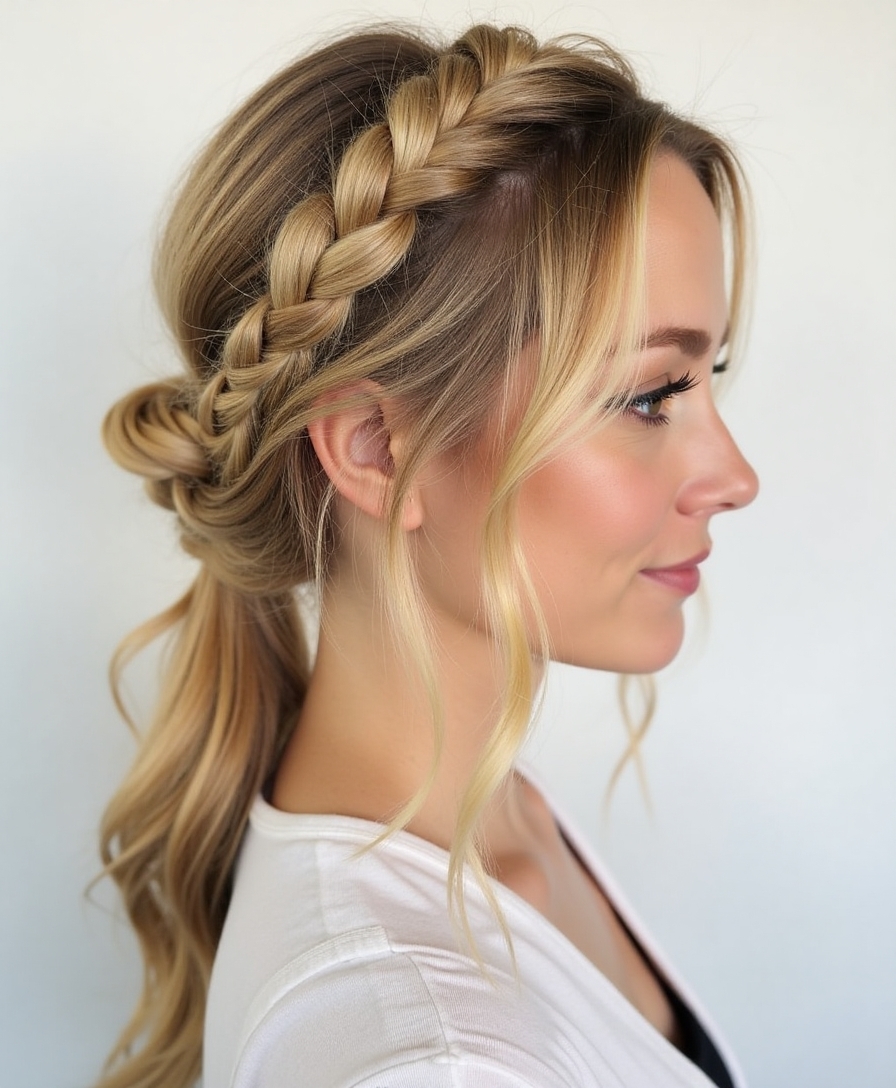
A crown braid that wraps up and around the head solves the specific misery of hair touching a sweaty neck mid-workout. It lifts everything off the skin where sweat pools first, and it looks tidy enough to wear straight into errands afterward.
- It lifts all the hair off the neck, exactly where sweat tends to collect most during a hard session.
- It sits close to the scalp, so nothing swings loose or catches on gym equipment mid-set.
- Tucking and pinning the tail under leaves no loose end for anything to snag on.
A Low-Impact Messy Bun

For yoga, Pilates, weights, or a steady walk on a treadmill, a locked-down braid is more than the session calls for. A low, loose bun at the nape comes together in under a minute and puts almost no strain on the hair.
Keeping the Bun Low and Loose
The word doing the most work here is low. A bun worn at the nape stays clear of the mat when lying back for floor work, where a high topknot would dig straight into the skull.
A soft scrunchie holds the shape without the bite of a tight elastic, and leaving it a little undone on purpose keeps the whole thing comfortable through a full class.
Root Tension Warning
A bun or braid that feels tight enough to leave a headache is tight enough to strain the hairline over time. If a style leaves marks or soreness after removal, it’s pulling harder than any workout requires.
Matching the Style to the Sport

The single most useful habit here is choosing a style around the actual workout rather than around mood or muscle memory. What holds up in a quiet stretch class falls apart within minutes of a boxing session.
Reading the Workout First
For high-impact cardio, running, or interval training, braids win, since nothing about them can swing or slip loose.
For lifting, a secure low bun keeps hair fully off the face while under a bar. For yoga and floor work, low and soft is the priority, since anything tall presses uncomfortably into the head while lying down. Swimming is its own category entirely: braiding before a cap goes on cuts down on both tangling and chlorine exposure to loose strands.
Pre-Workout Styling in Two Minutes

A little prep before tying anything up saves the hair a meaningful amount of stress later. Starting on second-day hair helps whenever it’s an option, since freshly washed, slippery hair needs a tighter grip to hold in place, and that extra tightness is exactly what strains the hairline.
Two Minutes Well Spent
A small amount of light cream or a couple drops of oil smoothed over the lengths and ends before braiding or bunning cuts down on friction and helps the style come apart cleanly afterward, without tangling into knots.
Heat styling gets skipped entirely here. There is no real reason to flat-iron or curl hair that’s about to go through an hour of sweat, so saving that step also saves the strands some avoidable damage.
Not sure which pre-workout routine fits the session ahead?
🎯Long or thick hair
Split the weight into two braids or buns before starting, so no single tie carries the full load through the session.
🎯Short or fine hair
Lean on a headband and a few bobby pins instead of a ponytail; there usually isn’t enough length for a tie to grip properly.
Protective Styles for Natural Hair

For natural, coily, and textured hair, the gym is where protective styling proves its value. Flat twists, cornrows, and a low braided bun tuck the ends away and need no daily manipulation, keeping hair safe through a full week of sessions while shrinkage and sweat would otherwise mean constant re-styling.
Clients training in box braids or cornrows tend to have the easiest gym hair of anyone, mostly because the style is already finished before they ever walk into the studio; they wrap it and go. A well-installed protective set typically lasts a couple of weeks of regular sessions, which is a big part of what makes the up-front salon time worth it.
For install options built to hold up under regular movement, the braids for black hair guide covers the sturdiest patterns.
A satin or silk bonnet, or a lightweight wrap, protects the style overnight between sessions, which stretches how long a set stays neat before the next touch-up is needed.
Secure Options for Short Hair

Short hair carries its own gym problem: there isn’t enough length to gather into anything, so the front and sides slip loose and stick to a sweaty face by the halfway point of a class. The fix is less about a dramatic style and more about catching the specific pieces that tend to escape.
- A thin, non-slip headband holds the front back and absorbs sweat right at the hairline where it collects first.
- A handful of bobby pins crossed at the temples locks down face-framing pieces that are too short to tie back.
- Tiny clips or mini-braids tame layers that are simply too short for any elastic to catch.
Braided Combinations for Heavy Hair

When a single braid isn’t quite enough, combining a braid with a bun delivers the hold of woven hair plus a tidy, swing-free finish. Braiding the front or crown locks down the pieces that usually escape first, then gathering the rest into a low bun handles the remaining weight.
Braid Plus Bun, Explained
This combination works especially well for long, heavy hair that pulls a single ponytail loose halfway through a class. The braided section takes the strain off the hairline, while the bun keeps the bulk of the weight controlled and off the neck.
It looks more involved than it actually is. Once the sequence has been done twice, the whole thing takes about five minutes from start to finish.
Sweat-Proof Products Worth Stocking

The right product for gym hair isn’t about maximum hold, it’s about smart hold and a quick, painless reset afterward. A short list of well-chosen items keeps a style intact through sweat without coating the hair in anything heavy:
- Dry shampoo at the roots before training absorbs sweat as it happens, so hair feels less weighed down once the session ends.
- A light edge cream or gel keeps the hairline smooth through movement, without the stiff crunch of a heavy-hold formula.
- A leave-in mist used post-shower rehydrates ends that sweat and repeated washing have left dry.
ℹ️Sweat Chemistry
Sweat carries a similar pH to slightly diluted vinegar. Left to dry directly on the hair shaft repeatedly, that mild acidity gradually roughens the cuticle, which is why a rinse or a light reset after training does more good than most people assume.
Healthier Alternatives to Tight Elastics

If only one habit changes after reading this, the hair tie is the one worth swapping first. The thin, hard elastics most people default to concentrate all the tension on a single point at the root, snagging the cuticle every time one gets pulled out.
One Swap Fixes Two Problems
Spiral ties spread that grip out across more surface area, so there’s no single pressure point and no visible dent left behind afterward. Silk or satin-covered ties slide free instead of catching on strands as they come out.
Rotating where the tie sits from session to session matters too. The thinning most visible at a hairline usually belongs to whoever has worn the same high, tight spot for years without ever varying it.
Five-Minute Styles for Rushed Mornings

Some mornings leave no real time to style anything, and the hair still has to hold and still needs to come out unharmed afterward. The gentlest gym styles also tend to be the fastest, so a rushed morning doesn’t have to mean reaching for the tightest elastic in the drawer out of pure convenience.
Fast and Still Kind to the Hairline
A low braided pony, tied off in one quick three-strand plait, takes under two minutes and won’t swing loose through a session. A twisted low bun secured with a scrunchie comes together just as fast.
Keeping a couple of these in regular rotation means a hurried morning never has to cost the hairline anything. For more no-fuss options built for exactly this kind of morning, the simple hairstyles guide has a few extra shortcuts worth trying.
Long-Hair Solutions for Heavy Sessions
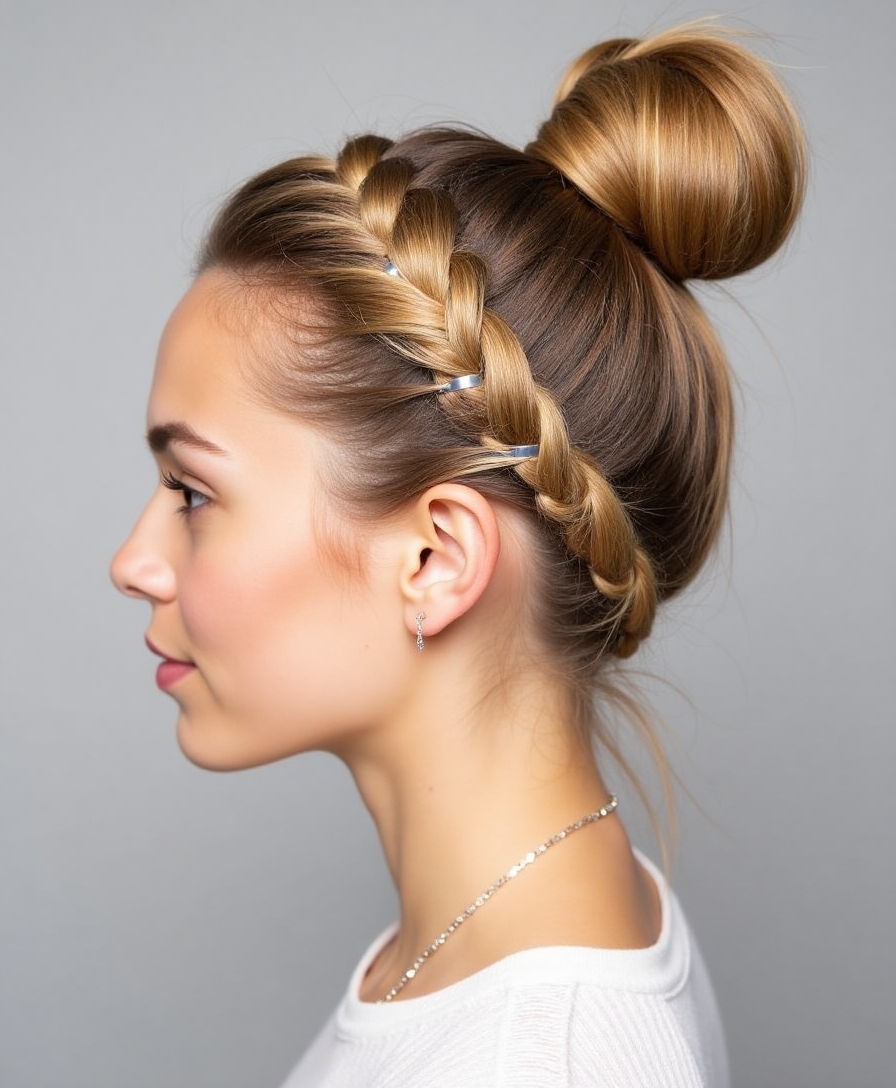
Long hair brings extra weight, and that weight is exactly what drags a style loose and pulls at the roots through a long session. The fix is dividing and controlling that weight rather than asking a single tie to hold all of it, which is where one high ponytail typically goes wrong.
- Split the length into two braids or two buns so no single tie carries the full weight of the hair.
- Loop a ponytail halfway through the tie into a folded, bubble-style tail so the ends can’t whip around during movement.
- Pin a braided bun flat against the head for lifting sessions, so heavy lengths stay off the neck and back entirely.
Post-Workout Hair Recovery

What happens after a workout matters just as much as which style got chosen beforehand. Sweat left to dry in the hair is both salty and acidic, and over weeks that residue leaves ends brittle, so the goal after most sessions is a quick reset rather than a full wash every single time.
On non-wash days, rinsing the sweat out with plain water and smoothing a little leave-in or conditioner through the lengths handles most of the damage before it sets in. On wash days, air-drying or gently rough-drying hair beats blasting already-stressed strands with high heat right after a hard session.
Taking the tie out as soon as possible afterward matters too. Hair doesn’t need to stay bound for the rest of the day, and loosening it the moment a session ends gives the hairline a real break before the next round of tension starts.
How to Get the Look
Start by picking one habit to change rather than overhauling the whole routine at once: the elastic, the tie placement, or building around second-day hair instead of freshly washed strands. Small, consistent swaps do more for hair health over months than a single perfect style ever will.
From there, match the style to the actual workout on the calendar rather than to whatever feels fastest that morning. A five-minute reach-for-it style and a ten-minute Dutch braid solve different problems, and picking the wrong one for the session is usually what leads back to the same damaging habits.
Train Hard Without Wearing Your Hair Down
Gym hair was never just about staying put through a session; it’s about staying put without slowly wearing the hairline down in the process. Matching the style to the workout, swapping out the thin elastic, building around second-day hair, and rinsing the sweat out afterward together protect edges and ends over the long haul, not just for one class.
Pick a single swap to try at the next session, whether that’s the tie, the placement, or the timing of the wash, and notice the difference over a few weeks. For quick, everyday options beyond the gym, the hairstyles for women and cute hairstyles guides carry the same second-day-friendly approach into the rest of the week.
Keep the Inspiration Going