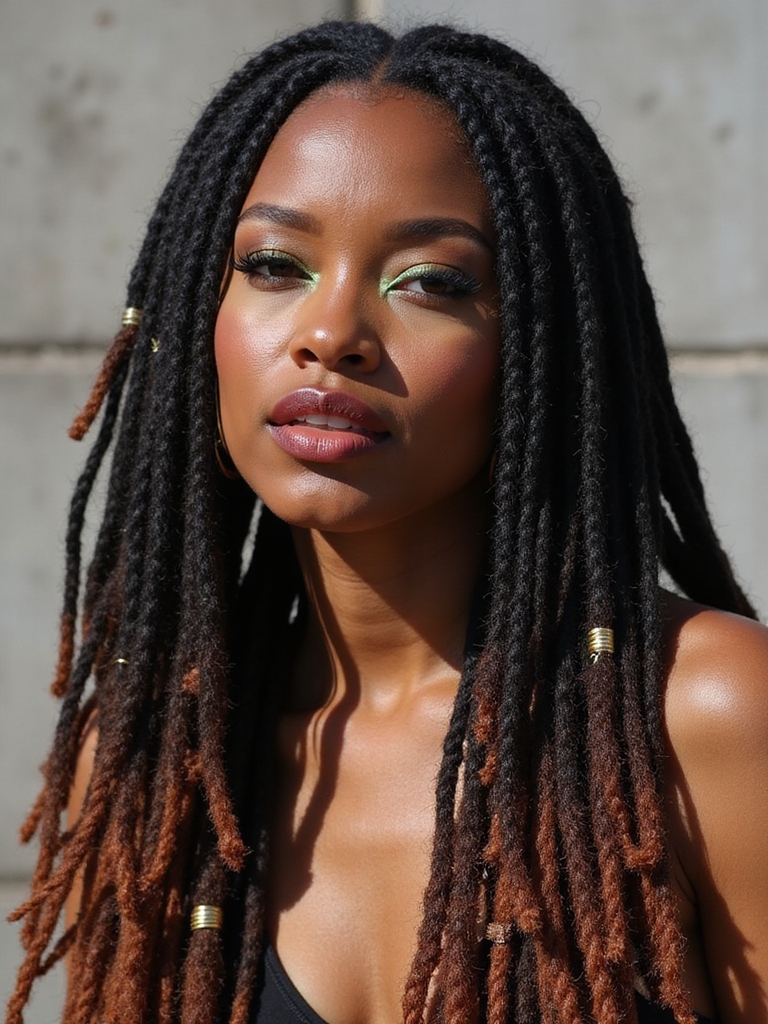
The morning of a wedding has a particular hush to it: the rustle of a garment bag, the smell of hairspray and coffee, someone’s hands lifting a section of your hair and pinning it while you hold still. Bridal hairstyles have to survive all of it, from that quiet morning through the last dance, looking as good in hour ten as in the first photo.
That is the real brief here: not just pretty, but built to hold. This guide runs through the looks worth considering, the prep that makes them last, and the small fixes that save the day when a pin slips at the reception.
Bridal Hair, the Short Version
- The best bridal style suits your hair texture, not just the inspiration photo.
- Prep matters as much as the style: day-old hair holds pins far better than freshly washed.
- A trial run a few weeks ahead is the single best way to avoid a wedding-morning surprise.
- Hold it with flexible product and a hidden grid of pins, and keep a small fix-it kit for the reception.
Bridal Hair That Lasts, by the Vibe
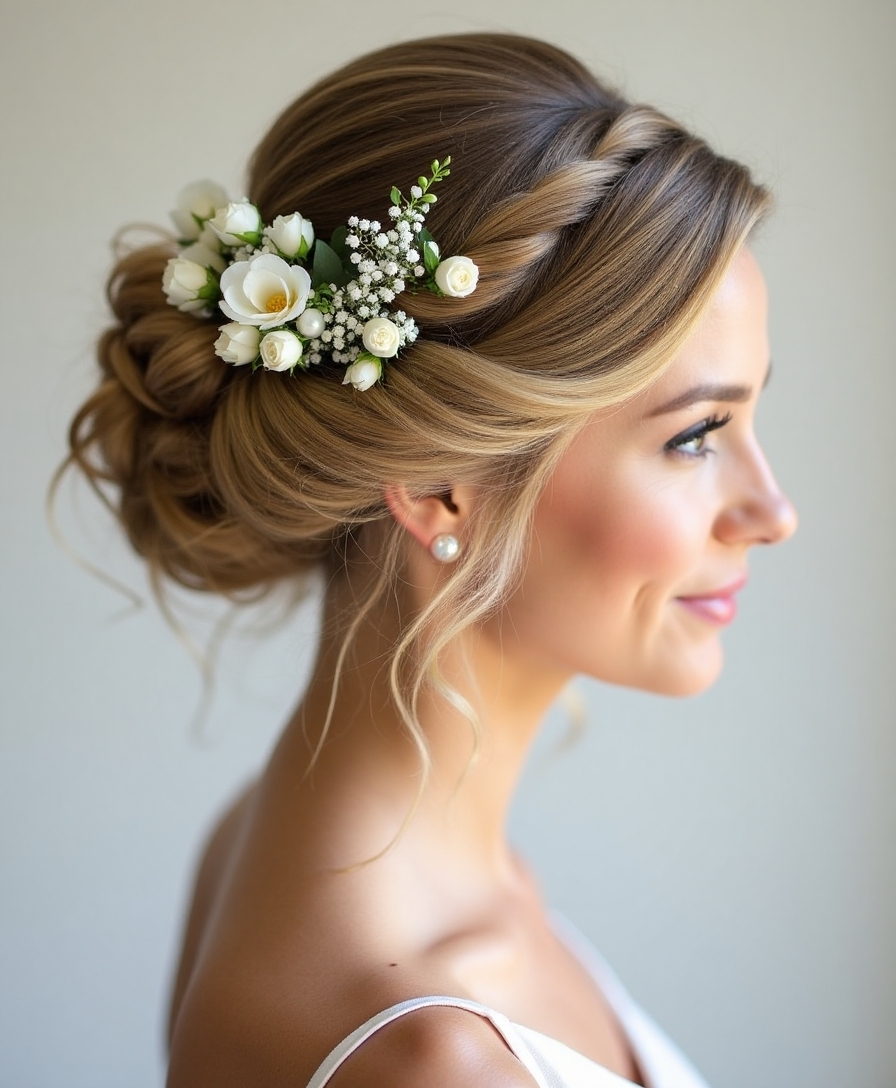
Before any pin goes in, decide on the vibe. A romantic garden wedding asks for something soft and undone; a black-tie ballroom wants a sleeker, more structured look. The style should match the dress, the venue, and the way you want to feel walking down the aisle.
Almost every bridal look falls into a handful of families: flowing waves, a polished updo, a half-up, or a sleek finish. Pick the family first, then refine the details to your hair and your day. Browse broader wedding hairstyles if you are still narrowing it down.
- Match the formality of the hair to the dress and venue
- Soft and undone for garden and beach; sleek for black-tie
- Choose the family first, then fine-tune the details
Start With Your Hair Texture
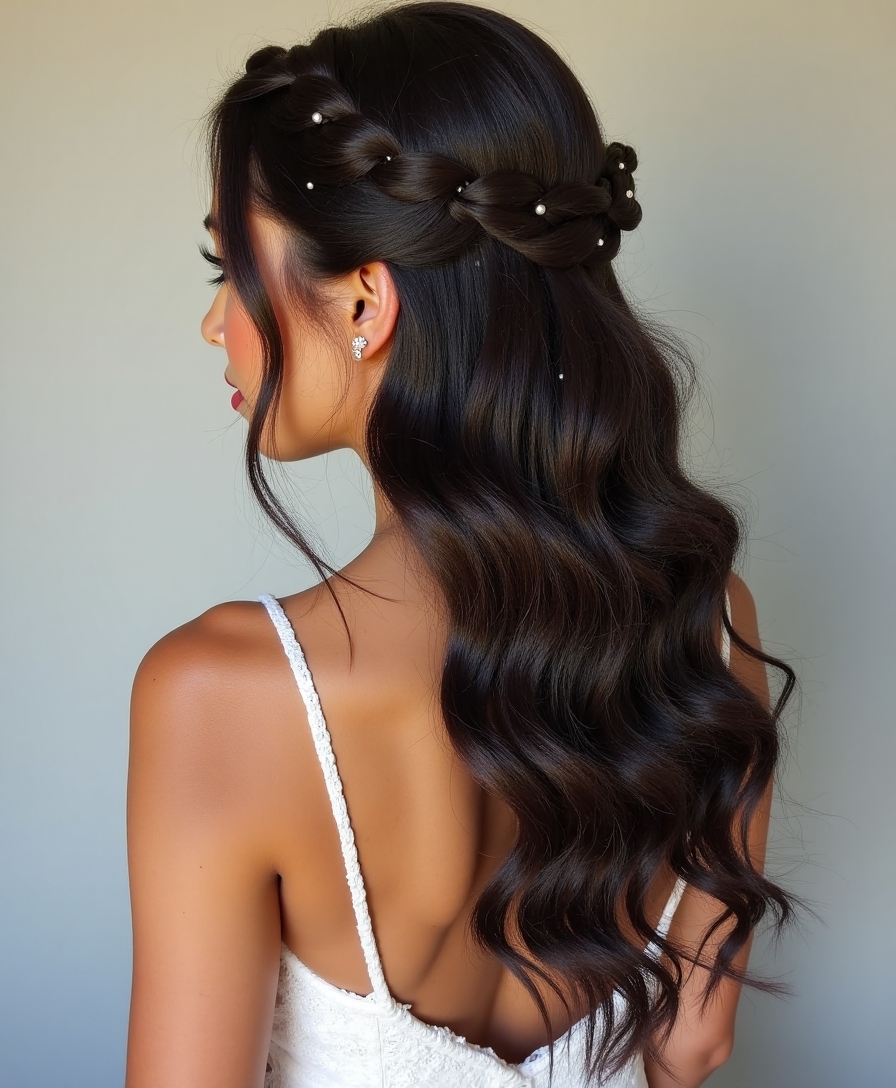
The look that lasts is the one that works with your texture, not against it. Fine hair holds a soft updo beautifully but needs volume worked in first; thick hair carries braids and full waves but can drop a curl by the reception without the right set.
Curly and coily hair brings its own strengths, holding shape and volume that straight hair has to be coaxed into. The mistake is fighting your texture into something it does not want to be by lunchtime. Tell your stylist your texture honestly so the plan is built for the hair you have, not the hair in the photo.
Quick gut-check before you commit:
1Garden or ballroom?
Garden leans soft waves and braids; ballroom leans a structured updo or sleek finish.
2Veil or flowers?
A veil sits best under an updo or half-up; fresh flowers suit looser, romantic styles.
3Hair up or down?
Up lasts longer and stays out of your face; down photographs soft but needs more holding power.
Preparing Your Hair for the Day

Counterintuitively, squeaky-clean hair is not the goal. Freshly washed hair is slippery and drops pins; most stylists prefer hair washed a day or two before, with a little natural grip that holds a style in place for hours.
In the weeks before, treat your hair gently: trim split ends, keep it moisturized, and avoid any drastic new color or cut right before the day. A deep-conditioning treatment a week out leaves the hair soft and shiny without making it too slippery to hold. The healthier the hair, the better any style sits and catches the light.
Choosing Your Bridal Accessories
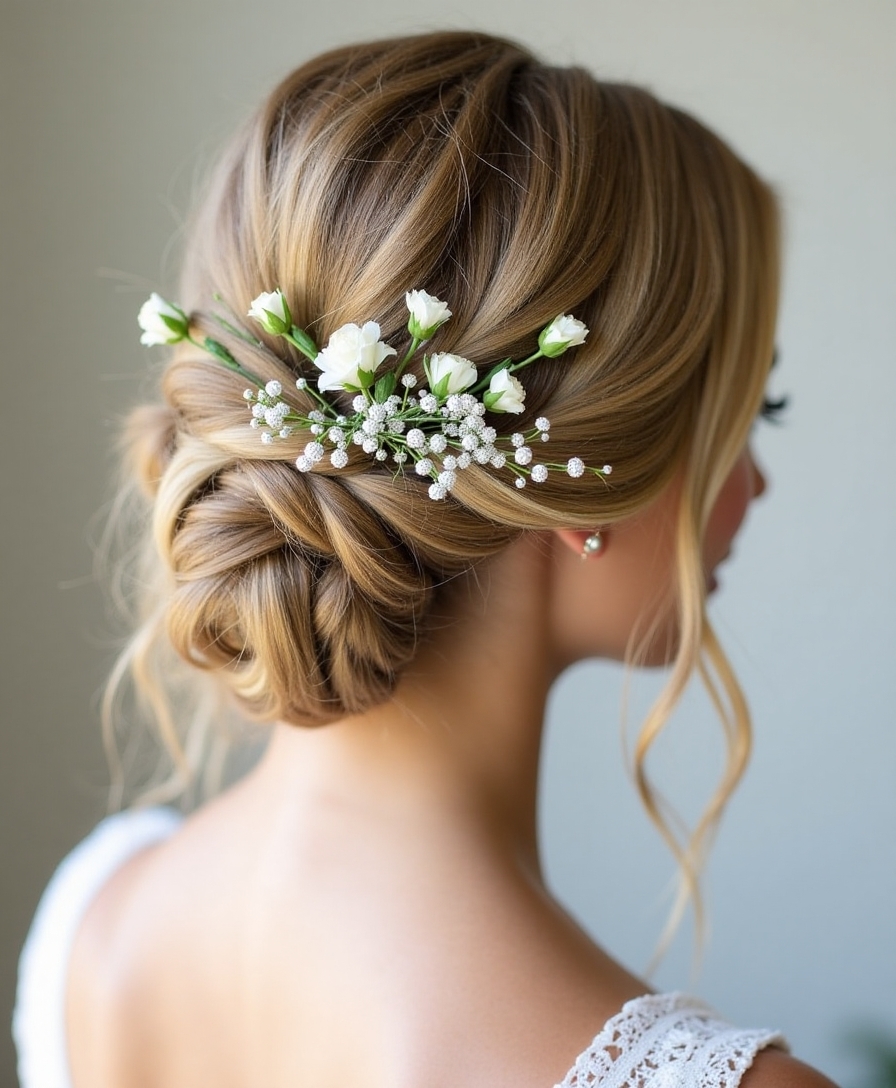
Accessories are how a simple style becomes the style. A comb, a few pins, or a single clip can carry as much impact as the hairstyle itself, so choose them to suit your dress and the overall mood.
- Pearl or crystal pins scattered through an updo for a soft glow
- A statement comb or clip to anchor a half-up or side-swept look
- Fresh or dried flowers for a romantic, garden-wedding feel
👍Wearing it down — the upside
- +Soft and romantic in every photo
- +Shows off length, waves, and color work
- +Quick to refresh with a curling iron
👎Wearing it down — the catch
- –Loses shape as the night and humidity wear on
- –Blows into your face at an outdoor ceremony
- –Holds a veil less securely than an updo
Romantic Bridal Waves
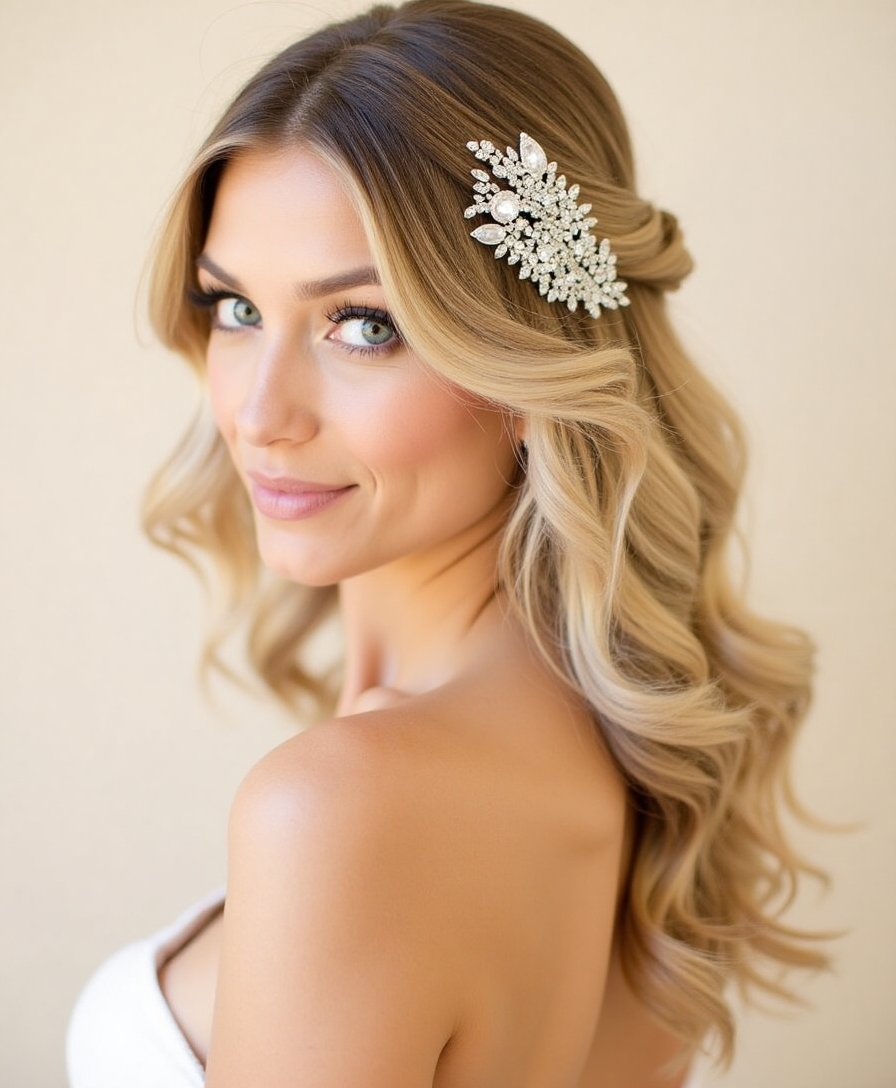
Soft waves are the most-requested bridal look for good reason: they read romantic, suit almost every dress, and photograph well whether worn fully down or pulled half-back.
Soft, brushed-out, and built to hold
The trick is a wave that lasts. Hair is curled away from the face, left to cool fully, then brushed out into a loose wave and set with a flexible hairspray so it stays soft rather than crunchy.
On the day, a few hidden pins at the back keep the waves from falling flat by the reception. It is the look that feels like you on your best hair day.
The Elegant Bridal Updo
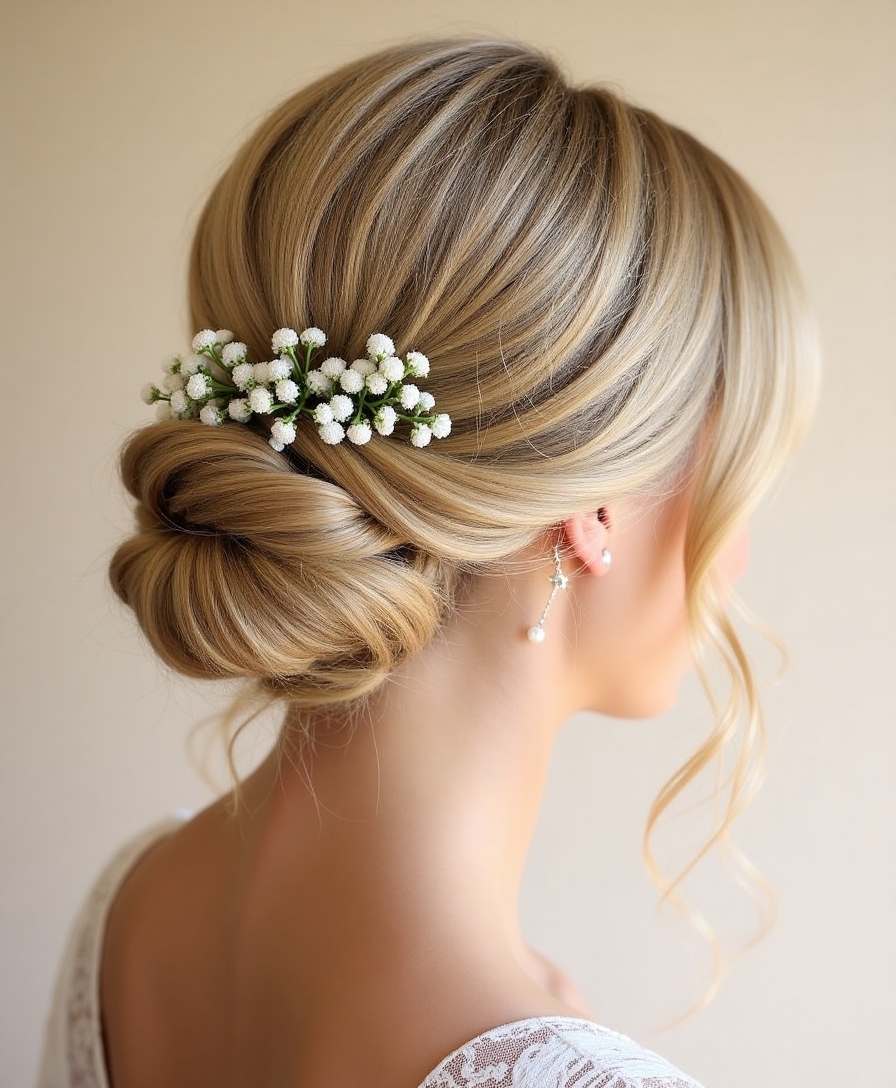
An updo is the classic for a reason: it keeps hair off your face all day, holds a veil securely, and shows off the neckline and earrings. From a smooth chignon to a softly tousled knot, the updo flexes formal or relaxed.
The best updos look light and easy but are anchored by a hidden grid of pins. Ask for some pieces left loose around the face to soften the look, so it frames you rather than pulling everything tight. A too-tight updo reads severe in photos and aches by the reception, so soft-but-secure is the goal. For more classic options, see these bride hairstyles.
Pick an updo by the feeling you want:
🎯Polished and formal
A smooth, low chignon for a ballroom or black-tie wedding
🎯Soft and romantic
A loose, tousled knot with face-framing pieces pulled out
🎯Intricate and detailed
A braided or twisted updo that rewards a closer look
Bohemian Bridal Braids
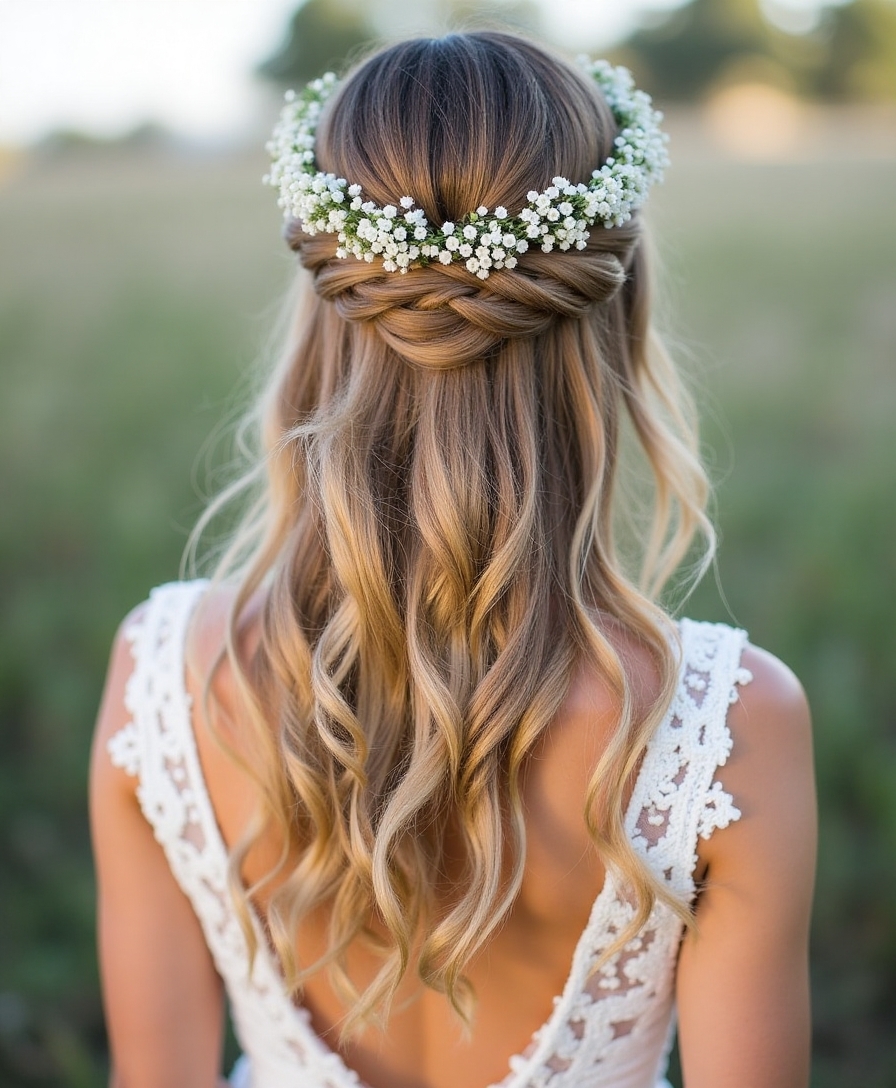
For a relaxed, garden, or beach wedding, braids bring a soft, bohemian feel that holds up to wind and movement. A loose side braid, a braided crown, or braids woven into a half-up all suit an outdoor day.
Braids also hold flowers and greenery naturally, tucked between the strands. Explore more braids for ideas, then loosen and gently pull the braid wider so it looks soft rather than tight.
- A loose side braid for a relaxed, romantic look
- A braided crown or halo for a whimsical feel
- Braids woven into a half-up to hold flowers
Glamorous Hollywood Curls

For old-school glamour, nothing beats Hollywood waves: deep, polished, uniform curls brushed into one sweeping, glossy wave, usually worn to one side. It is the look for a bride who wants drama and shine.
This style needs cooperative hair and a steady setting routine, so it is one to test at your trial. Done right, it is timeless and reads beautifully in photographs.
- Deep, uniform waves brushed into one smooth sweep
- Worn to one side for a vintage, red-carpet feel
- Best tested at a trial to confirm it holds
💡Photograph the Trial From Every Angle
Whatever look you choose, have your stylist photograph the finished style from every angle at your trial. On the wedding morning, it becomes the exact reference to recreate, with no guesswork.
The Low Bridal Chignon

The low chignon sits at the nape of the neck, smooth and quietly elegant, and it is the style that never looks dated. It suits a sleek modern dress and a classic gown equally, holds a veil at the crown, and stays put from ceremony to send-off.
- Sits low at the nape for a refined, classic line
- Holds a veil and accessories at the crown securely
- Stays neat all day with minimal fuss
The Bridal Half-Up
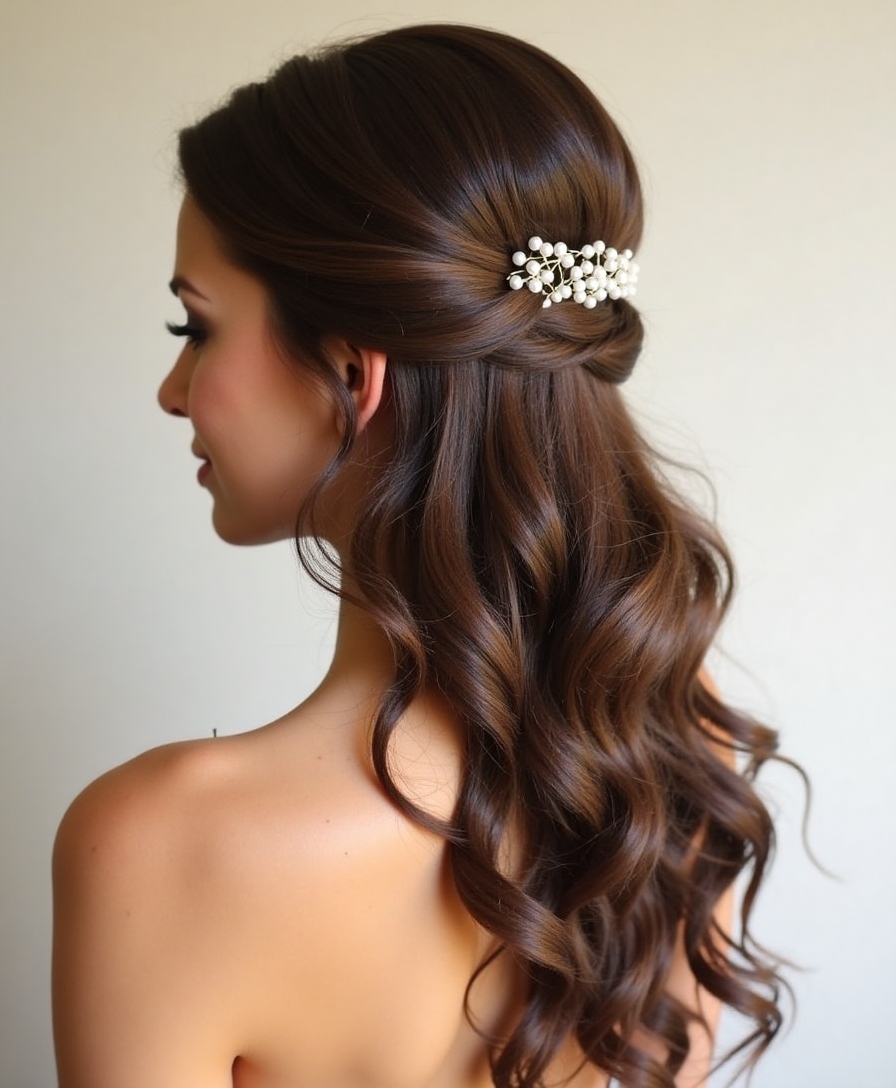
A half-up style splits the difference on purpose: hair pulled back off your face at the crown, with soft length left flowing down underneath it. That combination gives the romance of hair worn down alongside the staying power of hair pinned back.
It works with waves, curls, or braids, and it leaves room for a comb, flowers, or a veil at the back. For a similar everyday version, see these wedding guest looks.
- Keeps hair off your face while showing length
- Holds a veil, comb, or flowers at the back
- Flatters waves, curls, and braided textures alike
Sleek Straight Bridal Hair
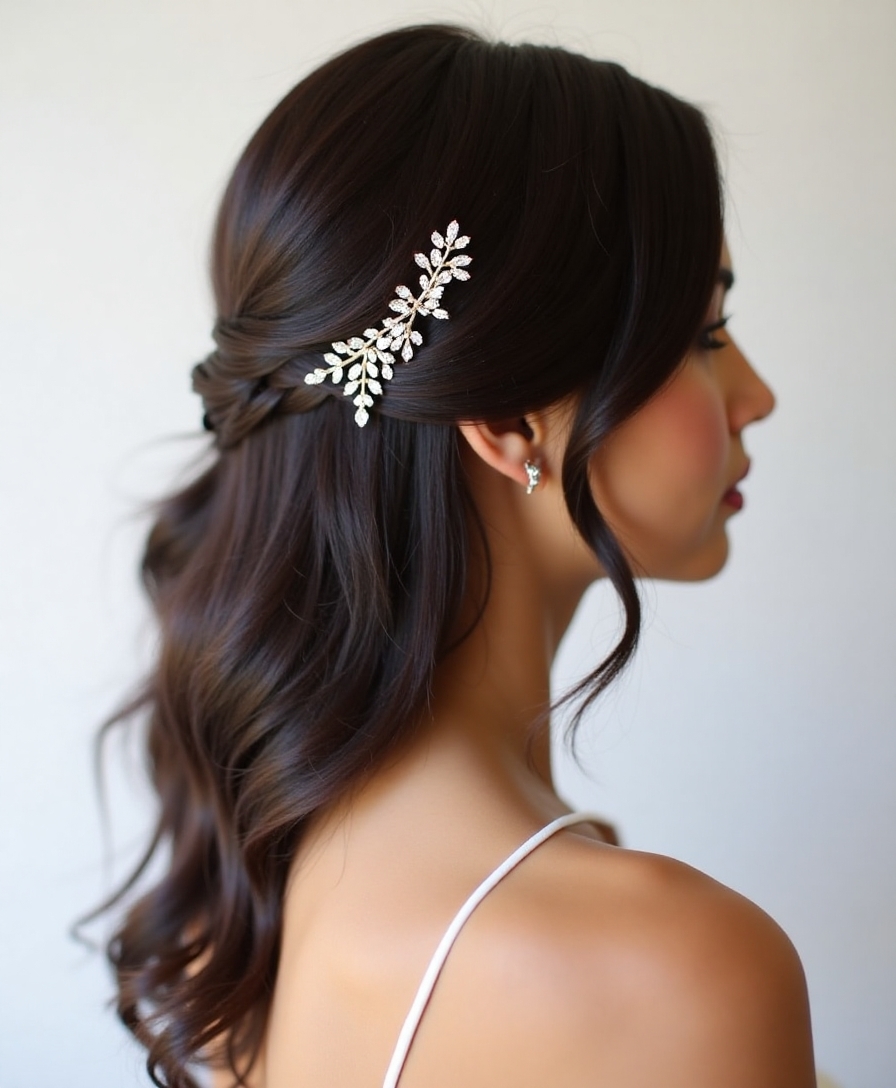
Not every bride wants curls. Sleek, straight hair is modern, sharp, and quietly confident, suiting a minimalist dress and a clean, contemporary venue. The look lives or dies on shine and a smooth, frizz-free finish.
- Modern and minimal for a contemporary wedding
- Needs a smoothing routine and an anti-humidity finish
- Pairs well with a simple part and a sleek low ponytail
The Textured Bridal Ponytail
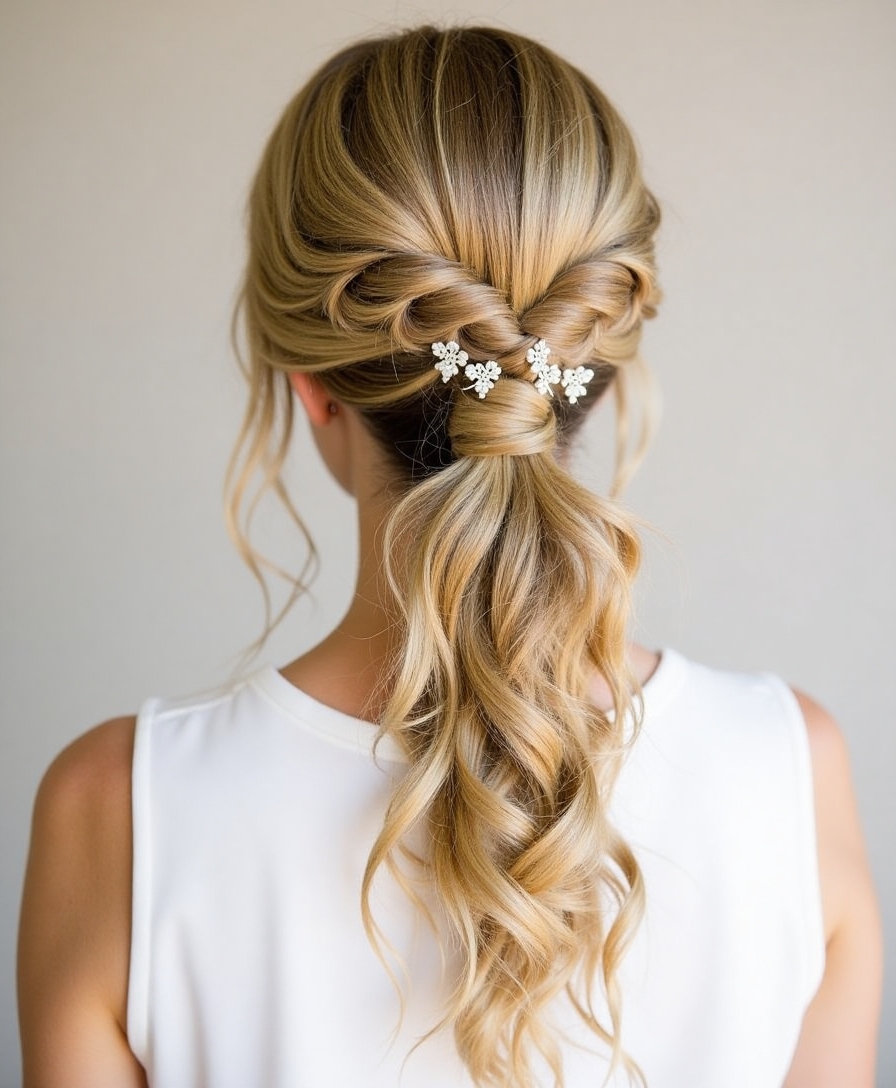
The bridal ponytail has grown up. Worn low and full, with a little texture and a piece of hair wrapped to hide the band, it is sleek and unexpected without losing any elegance.
It photographs well from behind, which matters for the ceremony shots, and it keeps hair controlled through dinner and dancing. Add a curl through the tail or a soft, deconstructed front, and the look reads bridal rather than gym. For inspiration beyond the aisle, see these ponytail styles.
Veils and Tiaras
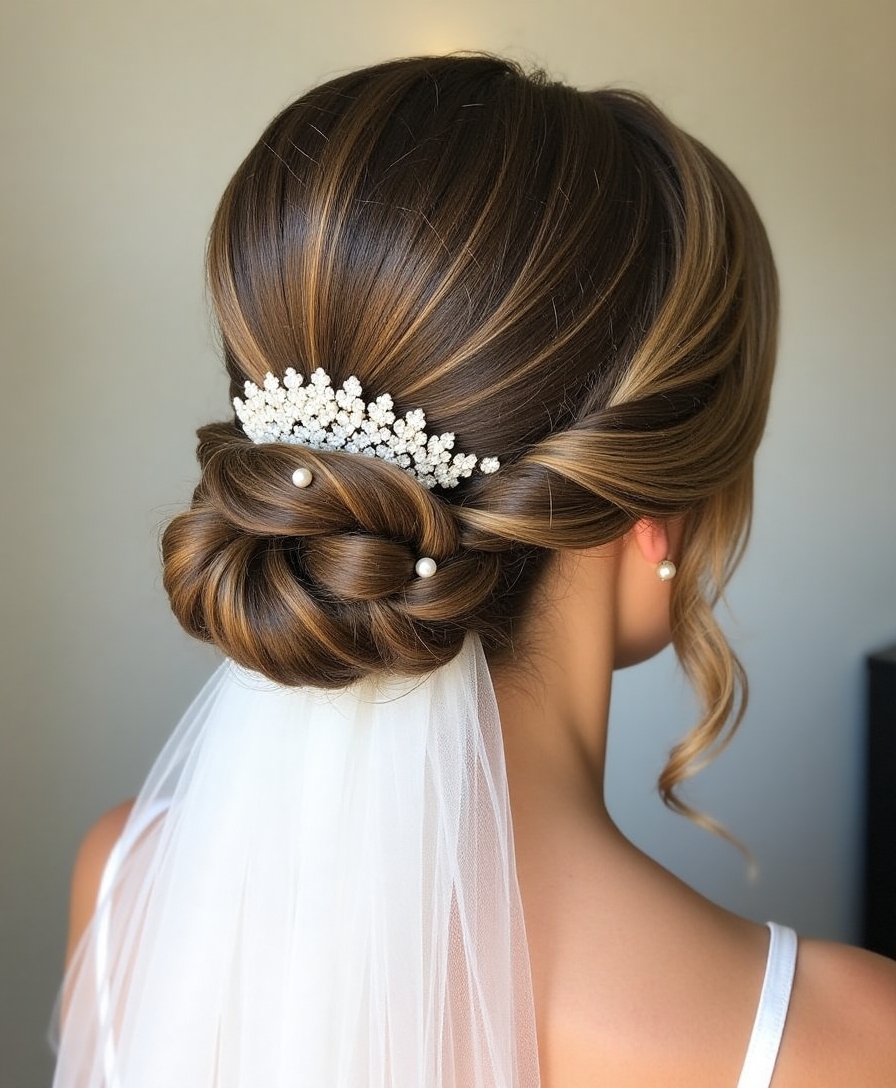
If you are wearing a veil, plan the hairstyle around it. A veil comb tucks most securely under an updo or into a half-up, and it should be placed and tested before the style is locked down.
Tiaras, combs, and headbands each sit differently, so bring the actual piece to your trial. Where it sits changes how the whole style is built, especially at the crown.
Decide, too, whether the veil comes out after the ceremony. The style underneath should look complete on its own, so it carries the reception without the veil.
The Products That Hold It

A bridal style is only as good as what holds it. A flexible hairspray is non-negotiable, locking the shape without turning it stiff or dull.
Flexible hold beats heavy hold
Beyond spray, a smoothing serum tames frizz and adds shine for the photos, while a light texture spray gives fine hair the grip it needs to hold pins. Curly and coily hair benefits from a curl cream that keeps the pattern defined all day.
Less is more on the morning itself: build hold in layers rather than drowning the hair in product, which weighs it down and dulls the shine.
Securing the Style So It Lasts
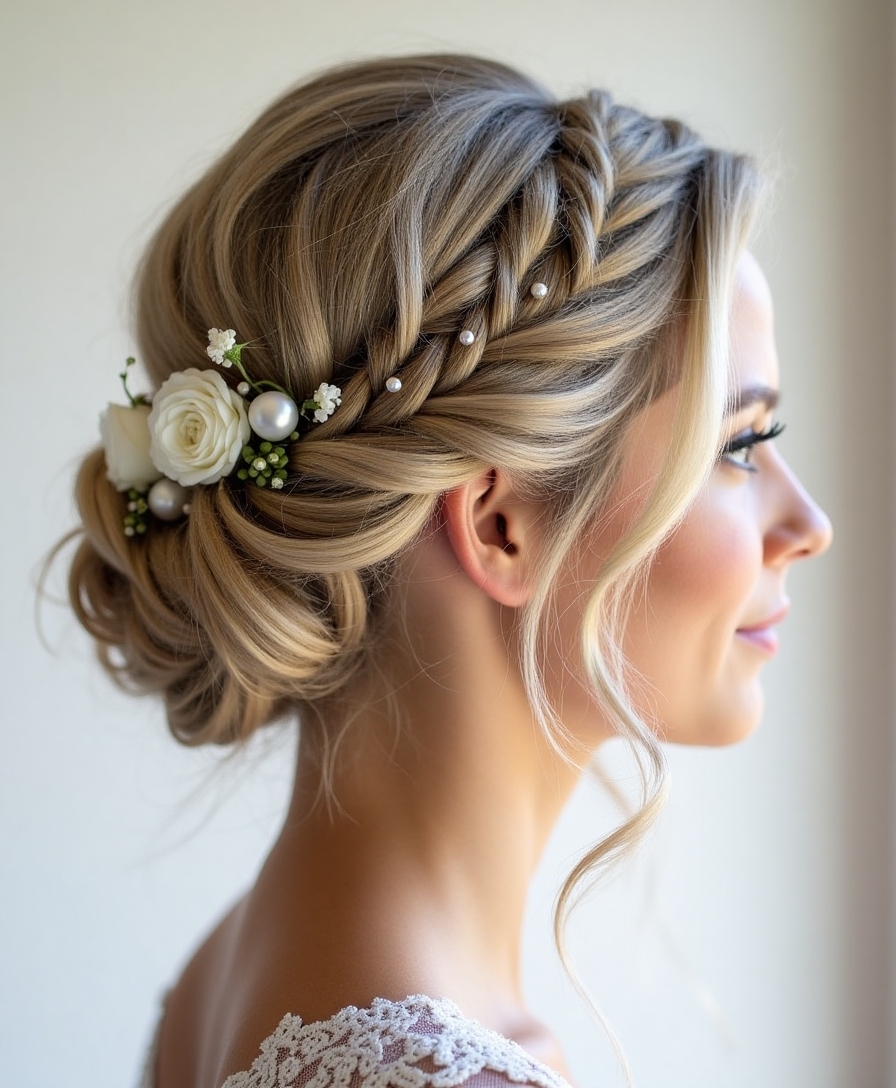
The difference between a style that survives and one that sags is hidden support. Bobby pins matched to your hair color, placed in a crossed grid, anchor an updo far better than a scattered few.
Anything heavy, like a thick braid or a full bun, needs a pin into the stronger hair underneath rather than just the surface. A stylist will weave a quiet structure you never see in photos.
Test the hold before the day by shaking your head, dancing a little, and giving it a gentle tug at the trial. Better to find a weak spot then than at the reception.
Quick Fixes for the Day
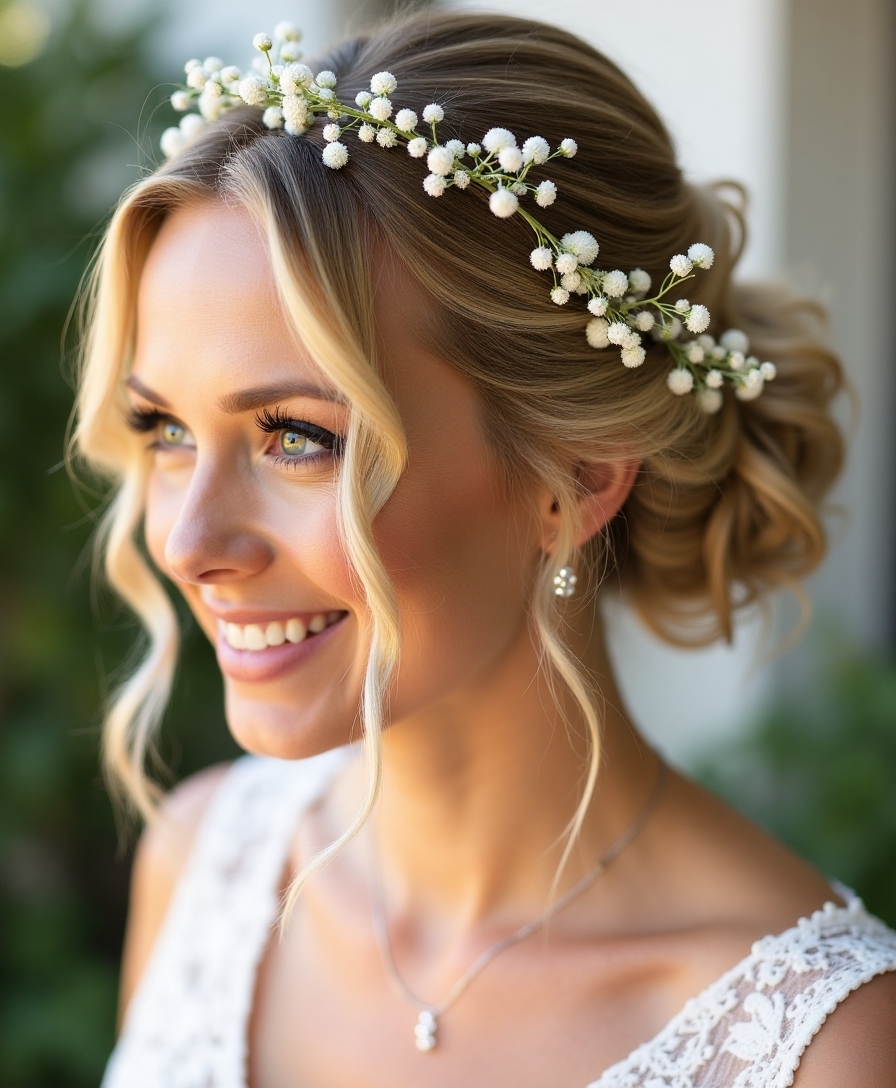
However well a style is built, small things slip over a long day. A tiny fix-it kit stashed with a bridesmaid handles almost any surprise in seconds.
- Matching bobby pins to re-anchor any piece that loosens
- A travel hairspray to tame flyaways before photos
- A small comb and a clear elastic for fast on-the-spot repairs
Weather-Proofing Your Hair

Weather is the bride’s quiet enemy. Humidity is the big one: it swells the hair shaft and drops curls, so an anti-humidity spray and a style with built-in grip matter most in summer and the tropics.
Heat and wind argue for hair up and secured rather than down and loose. An outdoor ceremony in a breeze will undo soft waves fast, while an updo holds its ground.
If rain is possible, have a plan: a sleeker, pinned style weathers damp far better than a delicate set that depends on bone-dry hair.
Bridal Hair Extensions
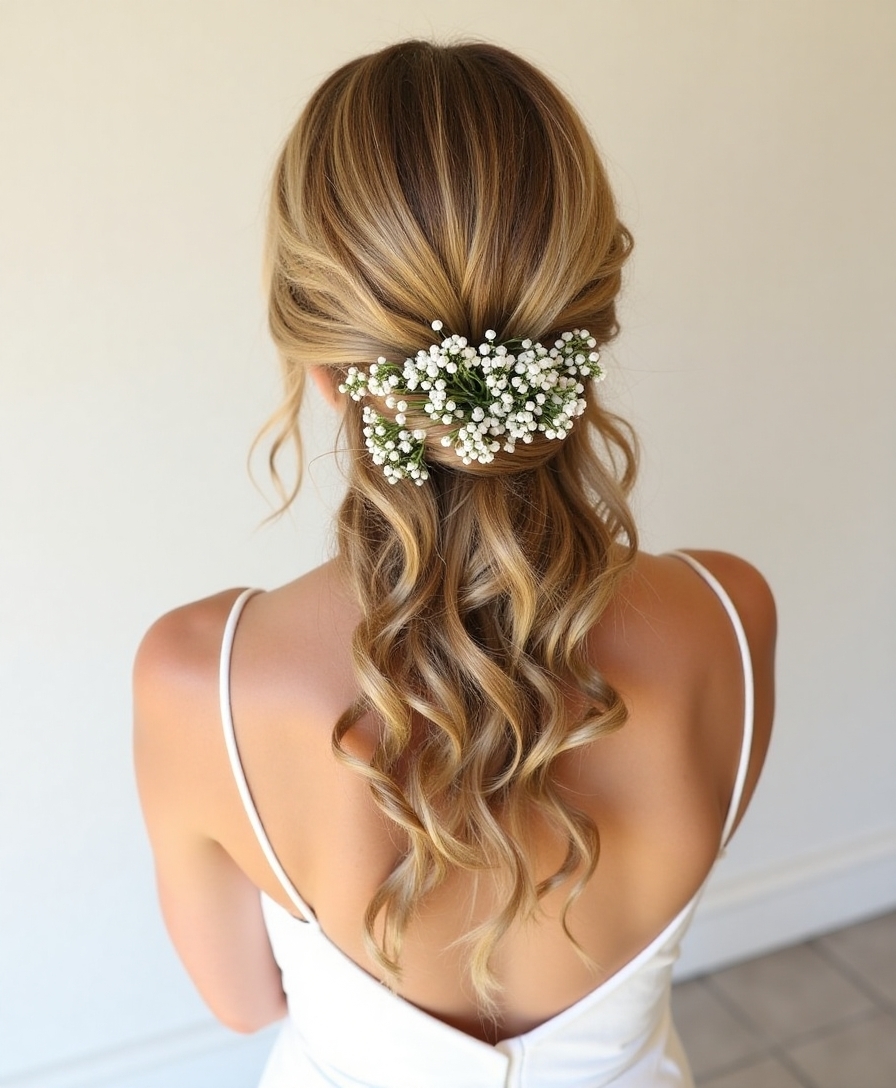
If you want more length or fullness than your own hair gives, clip-in extensions are a common bridal secret. They add body to an updo, length to waves, and thickness to a braid, all removable at the end of the night.
Match the color and texture carefully, and have them blended at your trial so they sit invisibly. Clip-ins are the easiest to wear for one day, but tape-ins or a sewn-in piece can give a smoother blend if you want them in for the honeymoon too. Good extensions read as your own hair, only more of it.
Working With Your Stylist

Your stylist is your partner here, and the more you share, the better the result. Bring photos of looks you love and looks you do not, your accessories, and a clear sense of your dress and venue so the plan fits the whole picture.
- Bring reference photos of both yes and no looks
- Show your dress neckline, veil, and accessories
- Be honest about your hair texture and daily routine
The Bridal Hair Trial
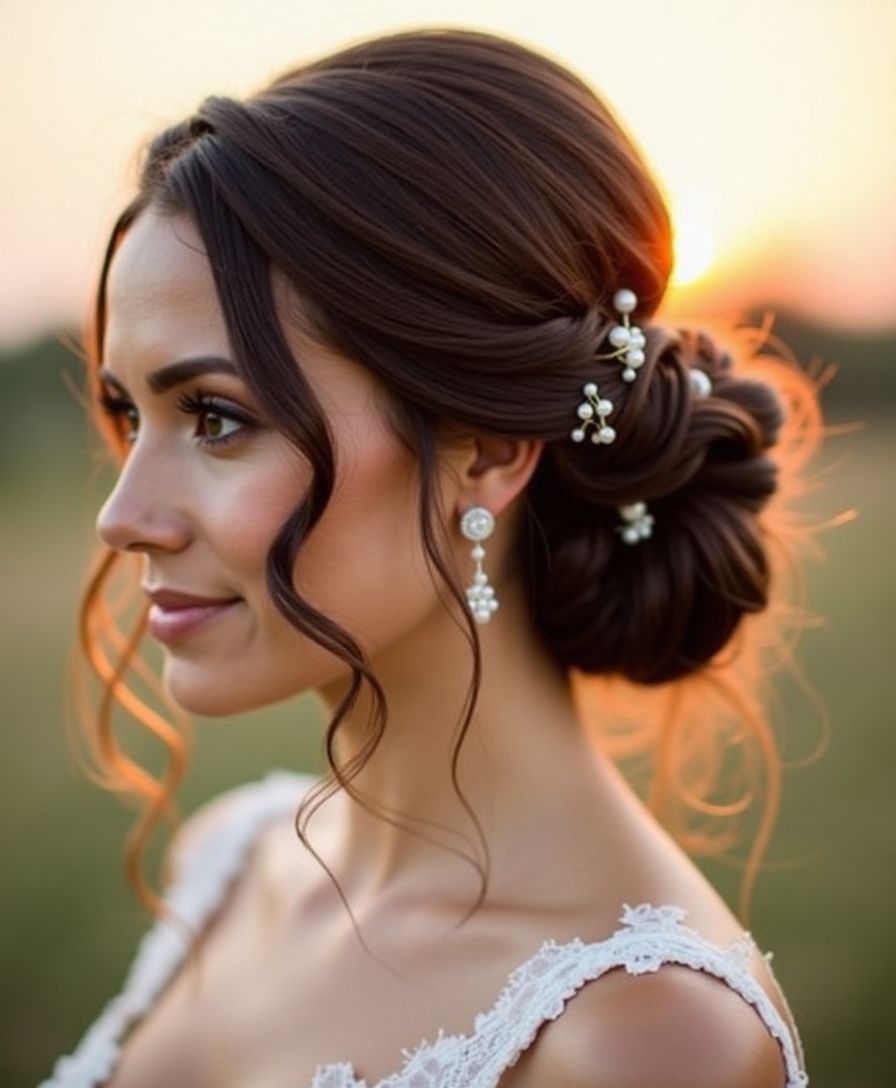
The trial run is the most valuable hour in the whole process, and most stylists price it as its own separate appointment, often around $75 to $150 on top of the day-of styling fee. Booked a few weeks ahead, it lets you and your stylist test the style, the accessories, and the hold before the day that actually counts.
Go to the trial with your hair in similar condition to the wedding day, wear a white or pale top to mimic the dress, and take photos from every angle in natural light.
If something is not right, this is the moment to say so. Adjusting at the trial costs nothing; adjusting on the morning costs you calm you cannot spare.
Locking In Hair Health Before the Day

The looks that shine start with healthy hair, and that work happens in the months before, not the morning of. Regular trims, gentle handling, and steady moisture build the condition that makes any style sit well.
The glow starts months ahead
Time your color and any big change carefully: a few weeks before the wedding, never the week of, so there is room to fix anything and let the color settle.
Treat the final week as maintenance, not experiments. Hair that has been cared for quietly for months is what photographs as that bridal glow.
Bridal Hair Questions, Answered
?Should I wash my hair the morning of the wedding?
No. Wash it a day or two before. Freshly washed hair is slippery and drops pins, while day-old hair has the natural grip that holds a style in place through a long day and night.
?How do I keep my wedding hairstyle from falling during the reception?
Anchor it with a hidden grid of pins, set it with a flexible hairspray, and keep a small kit of matching pins and travel spray with a bridesmaid for quick touch-ups. Choosing a style up rather than down also buys you hours of extra hold once the dancing starts.
?What bridal style lasts best in heat and humidity?
An updo or a secured, pinned style holds up far better than soft waves worn down. Add an anti-humidity spray and choose grip over delicacy for a summer or outdoor wedding, and skip a sleek straight finish, which falls flat the fastest in damp air.
?How far ahead should I do a hair trial?
Around three to six weeks before the wedding. That leaves time to adjust the look, rebook if needed, and finalize your accessories without any last-minute pressure, while keeping the trial close enough that your hair length and color still match the day.
Beautiful in Every Hour
A bridal hairstyle carries a long, full day, from the quiet of the morning to the last song of the night. The looks that last are not the most complicated ones; they are the ones chosen to suit your hair, prepped with care, and anchored by structure no camera ever sees.
Pick the style that feels like you, test it at a trial, and trust the prep. Then you can forget about your hair entirely and spend the day looking at everything else that matters.
Next Up