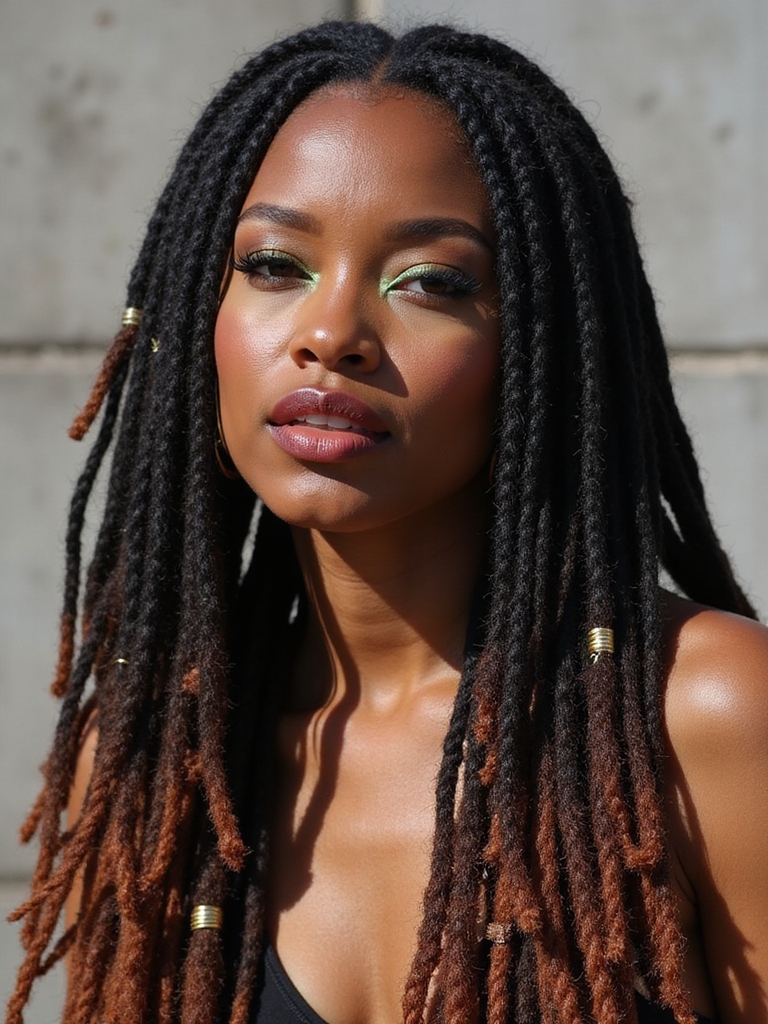
The word cute, used on locs, means something specific. Not formal, not bold, not dramatic. A fresh top knot that sits just right. A half-up with two locs left loose at the temples. A low ponytail wrapped in silk that takes under three minutes and looks like it took longer.
The quality is in the mix of ease and intention. These fifteen cute dreadlocks hairstyles hit that mix. Some suit a long, mature set, a few work at shoulder length or the starter stage, and all of them read as considered rather than rushed. None of them ask much of your morning.
What Makes a Loc Style Read as Cute
- The detail is small. One cuff, one scarf, two loose face-framing locs shift a plain gathered style into a cute one.
- Edges do the talking. One minute of edge control is what separates a planned style from a rushed one, on the same exact look.
- Personality counts. A color, an accessory, a braid detail makes the look a choice rather than a default.
- Time is short. Most of these take three to ten minutes once the locs are clean and dry.
Half-Up Top Knot for Everyday Charm

Coil the front third of the set at the highest point of the crown, secure it with a band or a single pin, and let the rest fall behind the shoulders in their natural column. The contrast between the small tight coil up top and the loose length below looks far more considered than the assembly time suggests.
- Slide a cuff onto one gathered loc before coiling for a metallic detail
- Smooth the edges first, since they set the whole tone
- Two minutes, and it works on any length past the shoulders
Side-Swept Locs With Soft Tendrils

Drop a deep part an inch or two off-center and sweep the front of the set to one side. Before you gather it, pull two locs loose at the front and let them hang alongside the temples and cheeks.
The tendrils do the framing
Those face-framing tendrils do not need to match in thickness or length. A slight difference between the two sides comes across as natural, not mismatched, and they change how the face looks from the front more than any other single element of the style.
Without them, a swept set frames one side and leaves the other bare. The two loose locs solve that in seconds, which is why I suggest them to clients more than any other little trick.
💡Edges First, Always
Before you build any gathered loc style, spend one minute on the edges. Smooth them with a little water-based gel and a soft brush. It is the single thing that makes a two-minute style look like you planned it, and it photographs far better than a perfectly placed bun with messy edges.
Space Buns With Beads

Split the set down a clean center part, gather each half at the same height, and coil each into a compact bun. On longer locs the buns sit full and round; on shorter sets they look more compact but just as deliberate from every angle.
Thread beads onto a few locs before you build each bun, so they surface at the bun and at the base where the gathered and free sections meet. Matching beads on both sides tie the two buns together, so the pair looks like one deliberate choice.
Low Ponytail With a Silk Scarf Wrap

Gather the set at the nape, secure it with a band, then wind a square silk scarf folded into a long strip several times around the anchor. The wrap covers the band and sits flush against the gathered locs.
Pick the scarf for the effect you want
Tie the ends in a small knot or bow at the back so it stays visible from behind and from the side. This is the three-minute style that photographs like it took ten.
The scarf color sets the effect. A contrasting tone shows from across the room. A scarf in the same warm shade as the locs feels understated and intentional. Silk also protects the locs at the anchor, so it earns its place beyond looks.
“The clients whose loc styles always look cute are not the ones spending the most time. They are the ones who add one small, deliberate thing. A single cuff, two loose tendrils, a scarf that matches the outfit. One considered detail reads as more put-together than a complicated style done in a hurry.”
Braided Front Crown on Starter Locs

Gather the front locs from temple to temple and flat-braid them across the crown from one side to the other, then pin the braid at the back with a single wide pin. The rest of the locs fall from the back and sides in their natural state.
Built for the starter stage
The braided crown is the only structured element, and the contrast between the structured front and the free back comes across as a deliberate choice, not a half-finished style.
This one shines on starter locs especially. It turns the limited length of the starter stage into the whole point of the style, which is exactly what new loc wearers want to hear. Our dreadlocks hairstyles guide has more for every stage.
High Puff With Curly Loc Ends

Gather the set at the crown with a wide band and let the locs fan outward, loose and open at the crown. Curled ends, set on flexi or perm rods the night before, add spiral movement at the tips that radiates out from the center of the puff.
Position the band at the very top of the crown, not a few inches below, so all the loc volume sits above the anchor. That one placement choice is what gives a puff its height. The rod-set ends do the rest, turning a plain puff into something full and textured.
ℹ️Good to Know
Starter locs are not too short to style. Flat-braided crowns, front sections, and clip details all use the limited length as a feature rather than working around it, so you do not have to wait for a mature set to wear something cute.
Sleek Bun With Statement Cuffs

Slide statement cuffs onto two or three locs that will sit near the outer surface of the bun, then gather the full set and build it. The cuffs end up on the visible outer locs, catching light from the sides through the day.
The sleek bun is the structure; the cuffs are the personality. I keep a small dish of cuffs at my station for exactly this, since one good piece changes the whole feel. For it to read as truly sleek, the edge work has to match the polish the cuffs promise. Clean, smoothed edges along the temple and nape bring the whole thing into alignment.
Half-Up Heart-Shaped Braid Accent
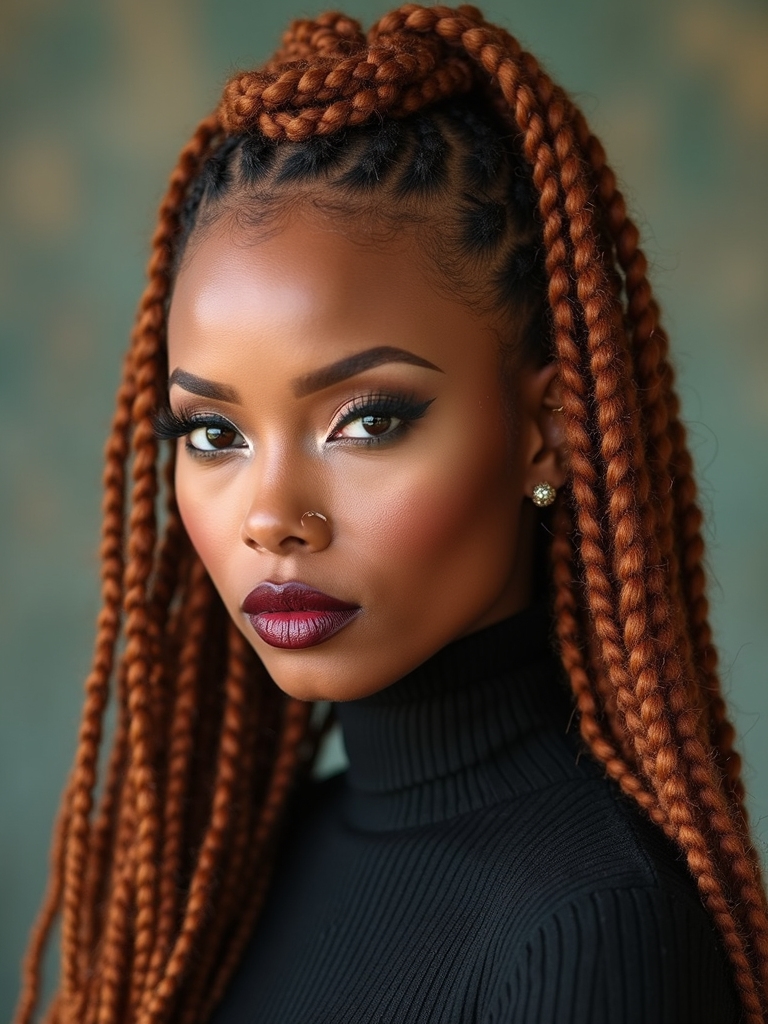
Part a small section of crown locs into two equal parts, braid or twist each half inward in a curve that meets at a downward point, and pin where they join to form a heart. The rest of that section falls below the shape while the remaining locs gather in a half-up around it.
It works best on sets with enough section density at the crown to produce two braids that stay clearly separate. It is a sweet detail for a birthday or a photo day, and it takes patience more than skill.
- Needs enough crown density for two distinct braids
- Pin where the two curves meet at the point
- A cute accent for birthdays, dates, or photos
🅰️Contrasting accent
A scarf, ribbon, or cuff in a color that pops against your locs makes a clear statement you can spot from a distance. Best for a bold, eye-catching day.
🅱️Tonal accent
An accessory in the same warm shade as your locs feels understated and refined. Best for an everyday, put-together look.
Butterfly Clips on Shoulder-Length Locs
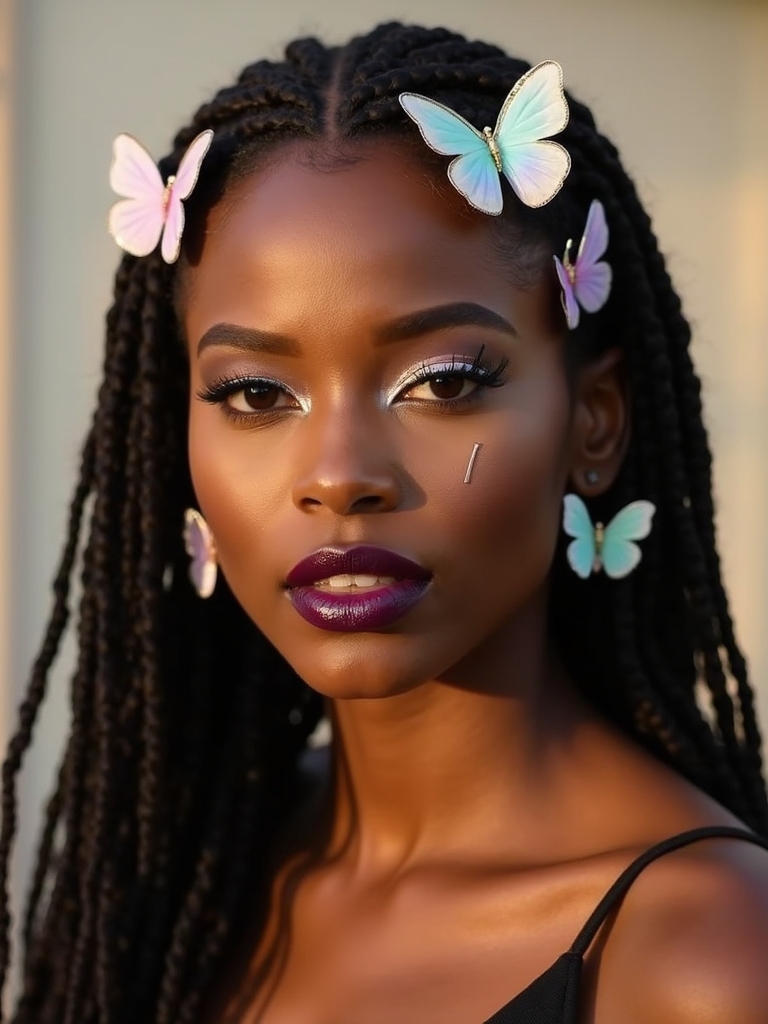
Press a butterfly clip open and clamp it over a section of locs at the crown or along the side of a low ponytail. It holds a portion of the locs folded while the rest falls naturally, and it adds color, texture, or sparkle with no pinning skill and no product.
Two clips placed symmetrically on either side of a center part, or one oversized clip set asymmetrically at the back, are the easiest configurations. A decent pair runs about $8 to $15 and turns an everyday set into something playful in one click.
- No pinning skill or product needed at all
- Symmetrical pair, or one oversized clip off-center
- About $8 to $15 a pair for an instant change of mood
Chunky Two-Strand Twists for Volume

Combine two or three locs and wind them around each other in one consistent direction from root to tip. Each cable ends up noticeably heavier and better defined than any of the individual locs going into it, and across a full head the whole set comes across bolder and more graphic than usual.
Two-strand twist styles on locs hold for two to four days before the cable tension starts to unwind at the root. A satin bonnet overnight is the most effective way to stretch the twists past that, which is the same care that protects locs generally.
- Combine two or three locs per cable for thickness
- Holds two to four days before it loosens at the root
- Wrapping in satin before bed extends how long the twist holds
Color-Peek Highlights With Thread Wraps

A peekaboo highlight colors only a few locs beneath the surface layer, so the color shows when the locs part or move but stays quiet from the front. Of every color option here, it asks the least of a first-timer.
Quiet color, visible detail
Wind a length of colored or metallic thread around a few of those same locs, covering the top inch or two in a tight spiral. The wrap contrasts with the natural loc surface below it.
Together, the hidden highlight and the visible wrap build a layered effect: the wrap draws the eye to the surface, and the color appears below it as the locs shift. For color help, our curly locs guide covers setting and care.
Messy Boho Updo With Loose Pieces

The boho updo is built loose on purpose. Gather the main set at mid-height or the nape and pin it into an open, loosely coiled shape, using the fewest pins that hold it together. A slightly irregular coil is part of the reading.
- Pin loosely, just enough to hold the shape
- Pull two or three locs loose at each side to frame the face
- Let a few ends from the body of the updo hang free
Side-Parted Lob With Barrel Curls

At shoulder length, locs fall into a natural bob line that moves with you. A side part an inch or two off-center adds an asymmetry that gives the length a more considered quality than a centered set, and rod-set ends add spiral movement at the tips that catches light at the hemline.
This look needs no pinning and no accessories to look complete, which makes it a practical everyday style for loc wearers at this length. It’s a version many people default to on days off.
- A side part adds easy, flattering asymmetry
- Rod-set ends curl the tips for movement
- No pins or accessories needed to look finished
Loc Petals Bun for Special Occasions

Petal folds are built by folding individual locs, or small groups, back on themselves toward the scalp and pinning the fold flat into rounded, leaf-like shapes. Arranged in overlapping rows around a gathered center bun, the petals create a pattern that looks architectural and crafted from every angle.
Work from the outer edge of the bun inward, overlapping each fold slightly with the one before it, which keeps every section reachable as you go. I always set aside a full half hour for this one, because rushing the petals is where it goes wrong.
- Fold each loc back on itself and pin the fold flat
- Overlap the petals in rows around a center bun
- Work perimeter inward to keep every section reachable
Low Bubble Pony With Ribbon Detailing
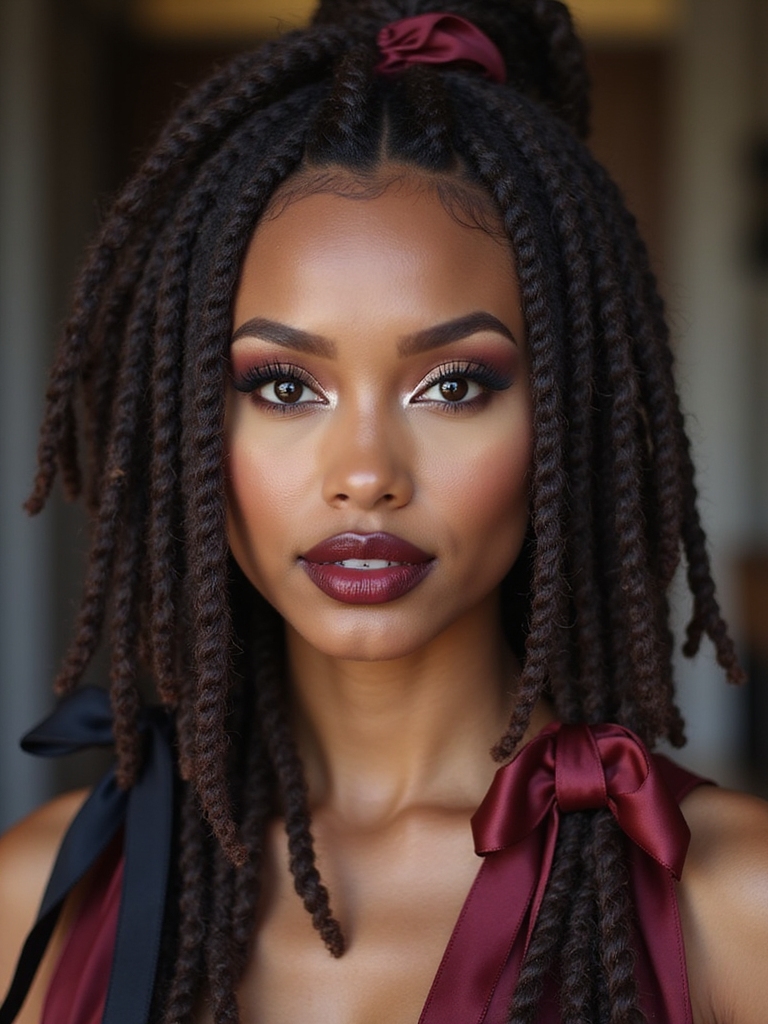
Gather the set into a low ponytail, then add bands at even intervals down the length, gently puffing the locs between each band to form bubbles. Tie a length of ribbon at each band to hide it and add a soft, finished detail.
It is a playful style that still looks put-together, and the ribbon lets you match an outfit or an occasion. Keep the bubbles even and the ribbon color consistent, and a simple ponytail turns into something special.
- Add bands at even intervals and puff between them
- Tie ribbon at each band to hide it and finish the look
- Match the ribbon to your outfit for an instant theme
Common Mistakes to Avoid
A few small things separate a cute loc style from a rushed one. The first is skipping the edges. A gathered style with smoothed edges looks polished, and the same style with unattended edges looks like a quick fix, so a minute of edge control changes everything. The second is over-pinning. Cramming in pins from every direction flattens the shape and strains the locs; use the fewest that hold the look together.
The third is forcing tension your locs are not ready for. A style anchored too tightly, kept in that state day after day, gradually strains the hairline, so switching between tighter and looser looks keeps the anchor from staying under constant load.
And do not skip satin before bed: a wrapped scarf or a satin pillowcase keeps the shape intact overnight and spares the locs themselves from friction damage, so the next day starts from a noticeably cleaner base. None of these take real effort, but each one is the difference between cute and careless.
Small Details, Best-Day Locs
Cute loc styles are not about effort. They are about one deliberate detail on a clean, well-kept set: a cuff, a scarf, two loose tendrils, a row of beads. The structure can be as simple as a top knot or a low pony, and the small touch is what makes it read as a choice.
Smooth your edges, protect your locs at night, and pick one accent that feels like you. Do that, and any length or stage, from starter to long and mature, has a cute style waiting. Save the ones that fit your set, and wear them on the days your locs are at their best.
Worth a Look