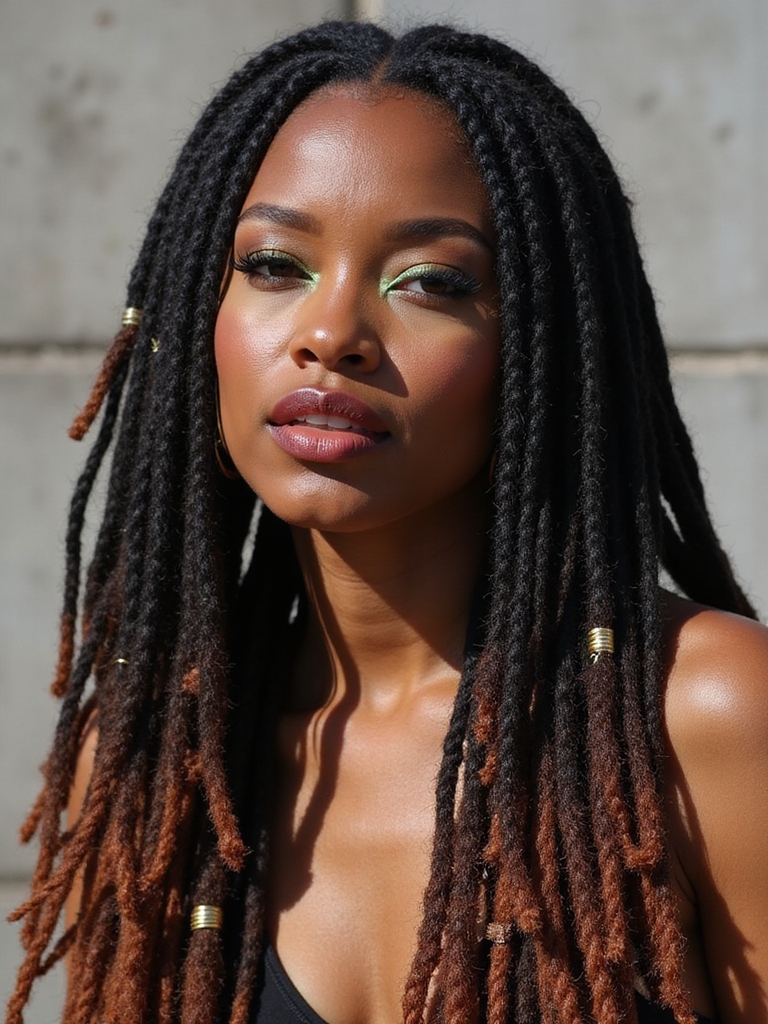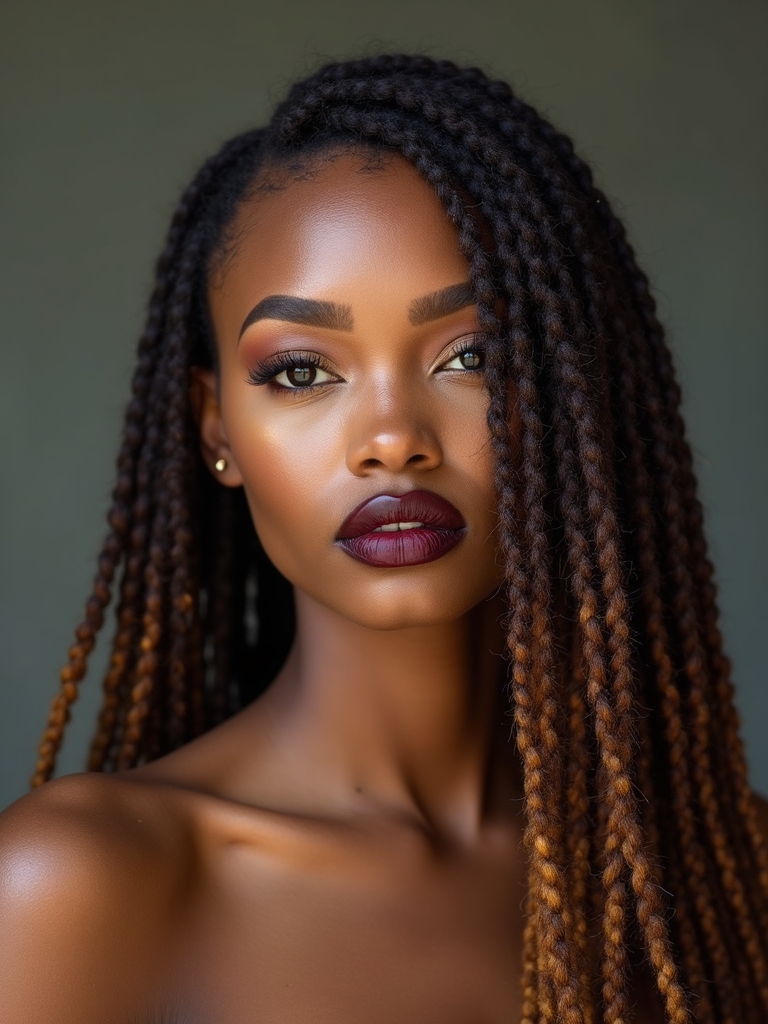
Locking an entire head isn’t required to wear locs. A half-head style, where one section is loc’d and the rest stays loose and natural, gives both textures room to exist at once, and it’s become an actively creative direction in textured hair right now.
Caring for two textures at once takes a little more planning than a single-texture style, but the routine itself is straightforward once it’s established. Fifteen ways to wear it below, each with the styling and the upkeep it actually asks for.
Half-Head Locs at a Glance
A half-head style pairs a loc’d section with loose, natural hair, which makes it a real, lower-commitment way to try locs without committing the whole head. The loc’d portion needs a loctician’s retwist on a roughly monthly rhythm, while the loose section runs its own separate moisture routine.
The single most important habit across every version here is gentleness at the roots. Locs retwisted too tightly, or a parting that pulls, can stress the hairline over time, so keep tension light and protect the edges specifically.
Locs Meet Loose Waves

Pairing a side-swept loc’d section with loose, waved hair on the other side makes for one of the gentler entry points into a half-head look.
The structure of the locs plays against the movement in the waves, and sweeping both textures toward the same shoulder blends them into one cohesive shape rather than two competing halves.
- Set the loose section into a loose wave, using either a wide iron or a rag-rolled overnight set for a no-heat option.
- Sweep both textures toward one shoulder so they read as a single style.
- A light oil on the locs and a curl cream on the loose side keeps both textures defined without weighing either down.
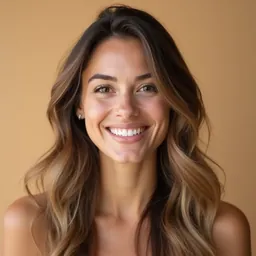
A Half-Up Loc Knot

Gathering just the loctician-maintained loc’d section into a half-up knot on top, with loose hair flowing underneath, gives height at the crown and softness through the ends.
It works equally well for an ordinary day and something dressier, and it keeps length off the neck when the weather calls for that.
- Gather only the loc’d portion and wrap it into a loose knot.
- Secure with a soft, fabric-covered band to avoid snagging.
- Leave the loose section free below, refreshed with water and a leave-in as needed.
| Texture | Daily Care |
|---|---|
| Loc’d knot | A light oil to keep shine; minimal handling otherwise |
| Loose ends | A water-and-leave-in refresh every few days |
A Curly Leave-Out With Side Locs

A leave-out, the section of natural hair deliberately kept out of the locs, sits at the center of most half-head looks, and pairing it with chunky side locs makes a striking version. Planning it with a loctician:
- Decide the parting together, keeping the line clean and the tension gentle.
- Match the loc size to hair density so the locs aren’t heavier than the roots can comfortably carry.
- Care for the leave-out with its own wash-and-go routine to keep the curl pattern defined.
A Slicked Half-Loc Ponytail

Pulling both textures into one smoothed-back ponytail is the most polished way to wear a half-head style, suited equally to work or an evening out.
- Smooth the loose section with a brush and a light gel for a clean front.
- Gather everything into one pony, letting the locs add texture through the length.
- Keep the gathering point loose so the edges and roots stay free of tension.
A Braided Crown Into Locs

A braided crown that flows into a loc’d side bridges the two textures elegantly, the eye moving smoothly from the woven section into the locs.
It reads as intricate and considered, dressy enough for a wedding or a celebration without needing anything else added to it.
The braid does double duty, styling the loose hair and building a clean line into the locs at the same time. Working out the exact parting with a loctician beforehand keeps the transition looking deliberate.
Beads and Cuffs on the Loc’d Side

Adornment carries real meaning within loc culture, and beads or metal cuffs let a wearer decorate the loc’d section as a personal choice. Wearing them well:
- Size the beads to the individual locs so they slide on without forcing.
- Scatter them rather than clustering, keeping the added weight light on the roots.
- Shift them along the loc every so often rather than leaving them anchored on one spot of new growth.
Color-Blocked Locs

Coloring only the loc’d section gives a half-head look real visual impact with the least amount of processing, a bright or warm shade against the natural loose texture beside it.
It also keeps lightening contained to one section, leaving the loose, more fragile hair completely untouched by chemical processing.
Booking with a colorist who has specific experience on locs matters here, since locs absorb and release color differently than loose strands do.
📋Before Coloring a Loc Section
- ✓A colorist with real loc experience, not general color experience alone.
- ✓A strand test on one or two locs before committing to the full section.
- ✓A plan for how the color will fade and need refreshing over time.
An Undercut With One-Sided Locs

Pairing a shaved or tapered undercut with locs on one side creates a bold, architectural version of the half-head look, the buzzed section throwing the loc texture into sharp relief.
It also lightens the practical load, since removing hair from one section leaves less overall weight for the remaining locs to compete against.
Glam Waves Beside a Loc Panel

For a formal-feeling result, setting the loose section into smooth, old-Hollywood waves and letting a full panel of locs stand beside them makes a strikingly dramatic pairing.
The glossy waves and the structured locs set each other off, each texture reading more distinct next to the other than it would alone.
If pressing the loose section for the waves, a heat protectant and a conservative temperature matter, and keeping heat entirely away from the loc’d roots protects both textures at once.
Setting old-Hollywood waves on the loose section:
1Section and prep dry hair
with a heat protectant worked through evenly.
2Wrap each section around a large curling iron
angled away from the face, holding for a few seconds.
3Let curls cool completely before brushing
so the wave holds instead of dropping.
4Brush through gently and pin the S-shape
at the front for the classic finished line.
Space Buns and Loose Curls

Space buns made from locs, set against loose curls on the other side, bring a playful, festival-ready energy to the half-head look.
It also functions as a reasonably protective option for a busy or active day, since the loc’d section stays gathered and secure.
- Split and wrap the loc’d section into two buns, secured with soft bands.
- Let the loose curls hang free, refreshed with water and a leave-in.
- Keep the buns loose at the base so they don’t pull at the hairline.
Feed-In Braids Into Locs

Feed-in braids that transition into locs connect the two textures with a distinctly clean line, the braid starting tight at the scalp and gradually opening into the loc’d section. What it involves:
- A braider feeding the loose hair smoothly into the loc’d section as the pattern progresses.
- Medium tension throughout, never tight, to protect the edges and scalp.
- Regular moisturizing along the braided parts to keep the scalp comfortable.
Butterfly Locs With a Silk-Pressed Section

Butterfly locs, the soft, distressed, looped style built by wrapping hair around the natural strand, pair strikingly with a smooth, soft dreadlocks section beside them. Because they’re installed rather than grown, this version offers a lower-commitment way to test the half-head look without locing natural hair at all.
- Installation typically takes several hours and runs somewhere around $150 to $250, depending on length and density.
- Silk-press the loose section with low heat and a protectant to limit damage.
- Wrap both sections at night to preserve the style for several days.
A Headwrap Framing Your Locs

A headwrap counts among the most versatile accessories in textured hair, and styled to reveal just one section of locs, it turns the half-head look into an easy, any-day option.
Style and Protection, in One Step
Wrapping the loose or still-growing section while letting the locs spill out creates something that reads intentional, and it protects the wrapped hair at the same time.
It works especially well on a second-day style or a morning that calls for minimal effort. A satin-lined wrap protects both moisture and edges best.
A few terms that come up when discussing half-head locs:
📖Loctician
A stylist specifically trained in starting, maintaining, and retwisting locs.
📖Retwist
The maintenance appointment that keeps new growth at the root twisted into the loc.
📖Leave-out
The section of hair deliberately left out and kept loose.
📖Interlock
An alternative retwisting method some locticians use instead of a palm-roll twist.
Twisted Bangs Around a Loc Section

Twisting the loose front hair into soft, face-framing pieces around a loc’d section adds a gentle, sculptural border that softens the boldness of the locs behind it.
- Two-strand twist the loose front pieces and pin them softly into a frame.
- Keep the twists loose at the root so they don’t strain the hairline.
- Refresh every few days with a small amount of cream, re-twisting gently.
A Low Bun With Side Locs

For a more formal result, gathering the loose hair into a low bun at the nape while letting a few side locs fall free adds just enough texture to keep it from feeling plain, a quieter cousin of a full loc bob. Building it:
- Smooth the loose hair into a low bun, leaving a few face-side locs out.
- Secure the bun without pulling tension across the edges or nape.
- Mist the loose locs with a light oil so they catch the light beside the smooth bun.
How to Get the Look
Most of these styles start with the same conversation: bring reference photos to a loctician and talk through the parting, the loc size, and how much of the head stays loose before any cutting or sectioning happens.
Day to day, the two textures need separate attention. A satin bonnet or pillowcase at night protects both, light oil keeps the locs from looking dry, and the loose section needs whatever routine already works for its natural pattern.
Half-Head Dreadlocks Questions
?What exactly are half-head locs?
A style where one section of hair is loc’d while the rest stays loose and natural. It offers both textures in a single look and works as a real, lower-commitment way to try locs without committing the entire head.
?How do I care for the loose and loc’d sections at the same time?
Treat them as two separate routines running in parallel. The loose section needs regular moisture and whatever styling its natural pattern already responds to, while the locs need a loctician’s retwist on a roughly monthly schedule plus their own cleansing routine.
?Will a half-head style damage my natural hair or edges?
Not when the tension stays light. Most of the real risk comes from retwisting too tightly or a parting that pulls consistently at the same spot, so keeping the loc’d section gentle at the root is what actually protects the hairline over time.
?Can I try a half-head look without permanently locing my hair?
Yes. Installed styles like butterfly locs create the look temporarily, without starting real locs, which makes them a reasonable way to test the style before deciding whether to commit long-term. Most last several weeks before needing removal or a refresh.
Two Textures, One Personal Look
A half-head style carries the structure of locs and the movement of loose, natural hair in a single look that adapts to a huge range of moods and occasions.
Whether the entry point is a soft, side-swept blend or something bolder like color-blocked locs with an undercut, the throughline is the same: gentle tension, a loctician who knows the craft, and a routine for each texture. Which version actually fits the life already being lived?
Worth a Look