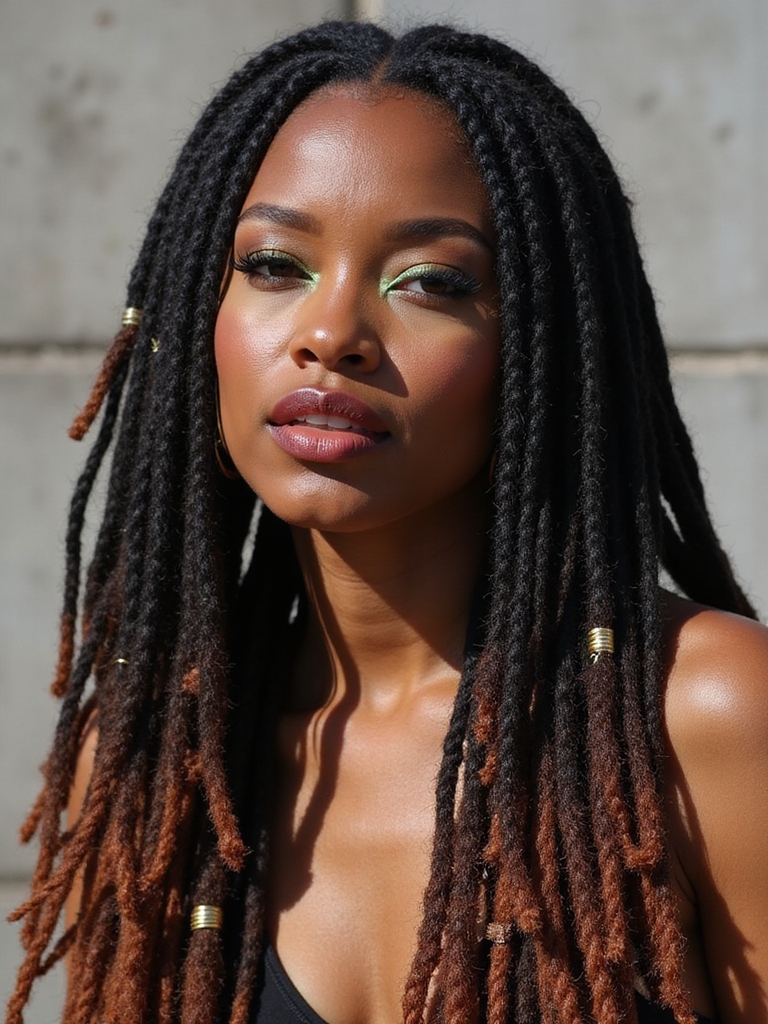
A bride once burst into tears at her hair trial, not because anything had gone wrong but because the mirror finally matched the day she’d been picturing for months. That reaction is the actual goal here: hair that makes a bride recognize herself, built sturdily enough to survive tears, hugs, a veil, and hours on a dance floor.
Wedding hair carries a different job than almost any other kind, since it has to hold from the first look through the last song while photographing well the entire time. Eighteen looks follow, sorted by aesthetic, each with the honest trade-off that comes with wearing it.
Matching Bridal Hair to the Day
| Wedding type | Style that fits | Why |
|---|---|---|
| Formal, black-tie | Old-Hollywood curls or a chignon | Structured or timeless, both photograph well decades later |
| Outdoor or garden | Boho waves with braids | Braids hold shape against wind and movement |
| Beach or destination | Loose beachy waves | Works with humidity instead of fighting it |
| City or rooftop | Sleek ponytail or glassy low bun | Handles travel between venues without falling apart |
The Minimalist Bridal Updo
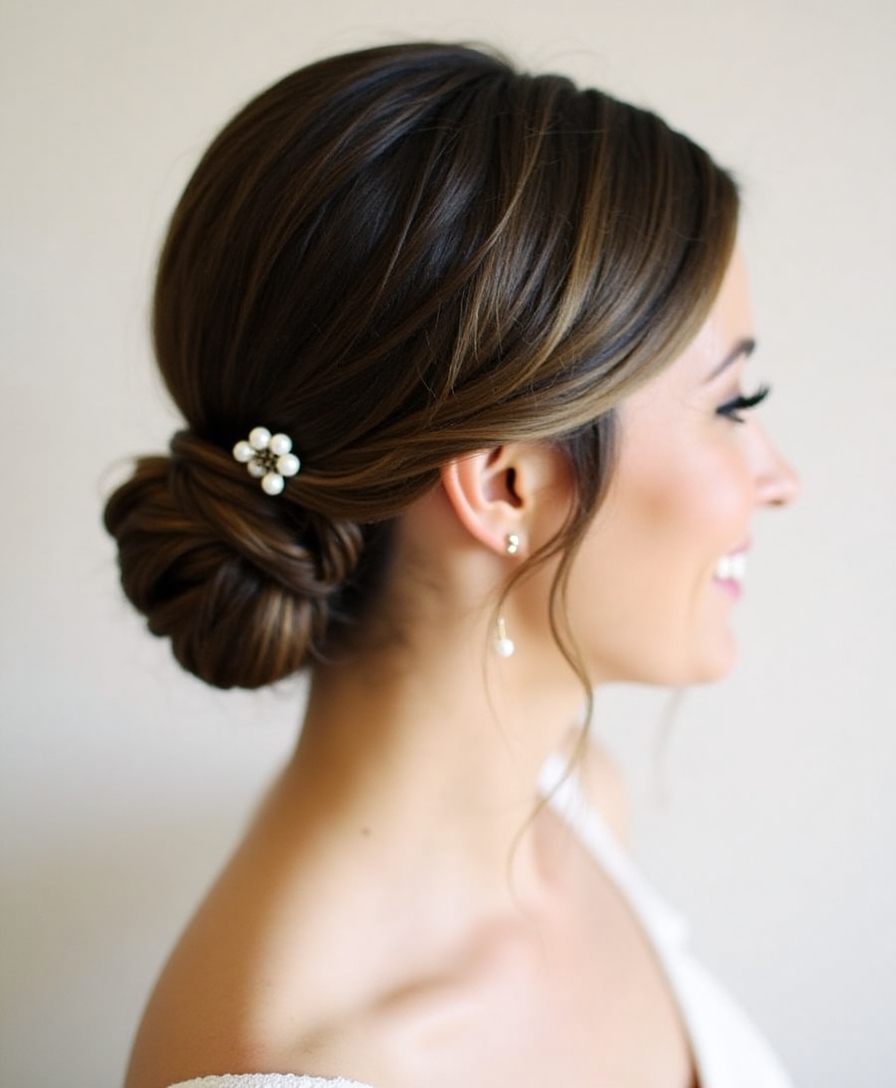
A clean, gathered updo with no embellishment does more work than it looks like it’s doing: it puts the dress, the face, and the day itself in front of everything else. Minimalist isn’t the same as unplanned; every pin still has a job to do.
The style holds because of the foundation underneath, not any finishing product layered on top. A smoothly gathered base with weight distributed across several pins outlasts a rushed one built from a single anchor point, which is why stylists often reach for it first when a bride wants safe and beautiful over elaborate.
Boho Waves With Braids
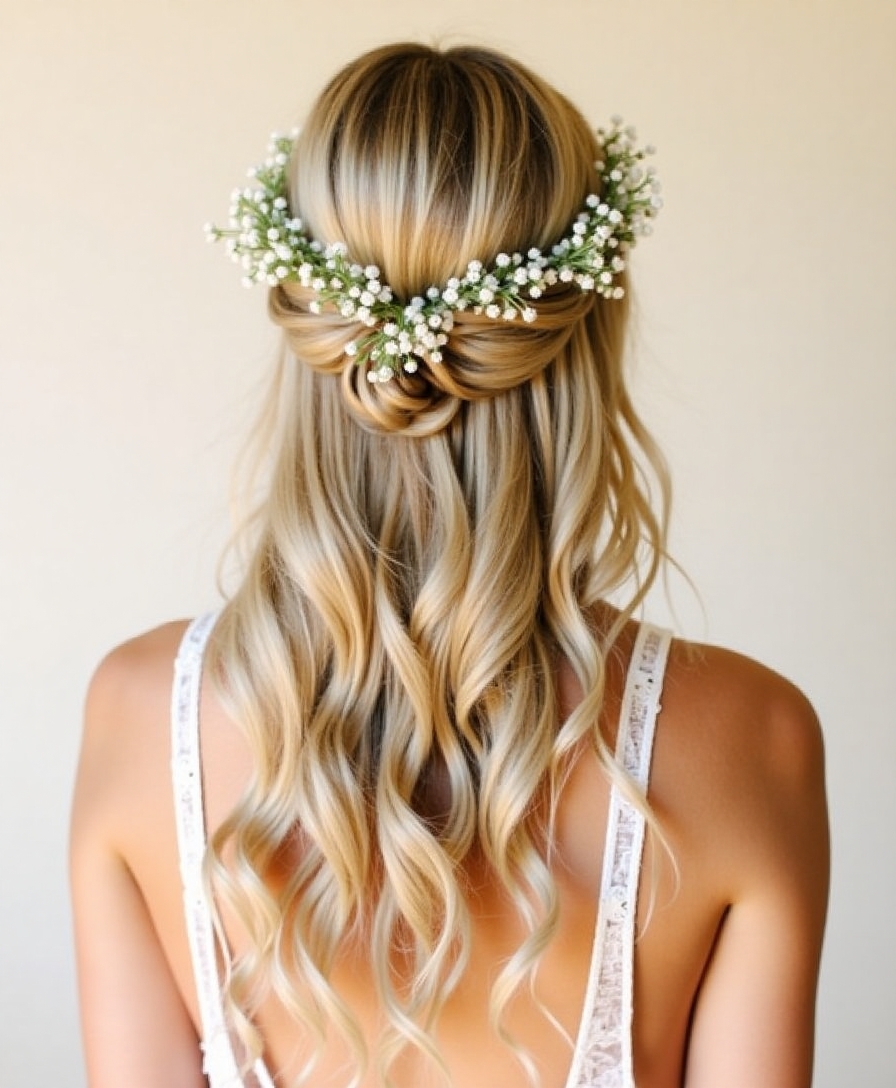
Soft waves threaded with one or two thin braids read as the free-spirited option, suited to a garden ceremony or anywhere the setting already has movement built into it.
Why the Braids Do More Than Decorate
The braids aren’t purely decorative. Woven through the crown or temple, they anchor sections of hair that would otherwise catch wind, which is the actual reason this look survives an outdoor ceremony better than loose waves alone manage to.
Small flowers or a delicate vine tucked into the braids finish the style without adding weight or stiffness.
The Chic Bridal Low Bun
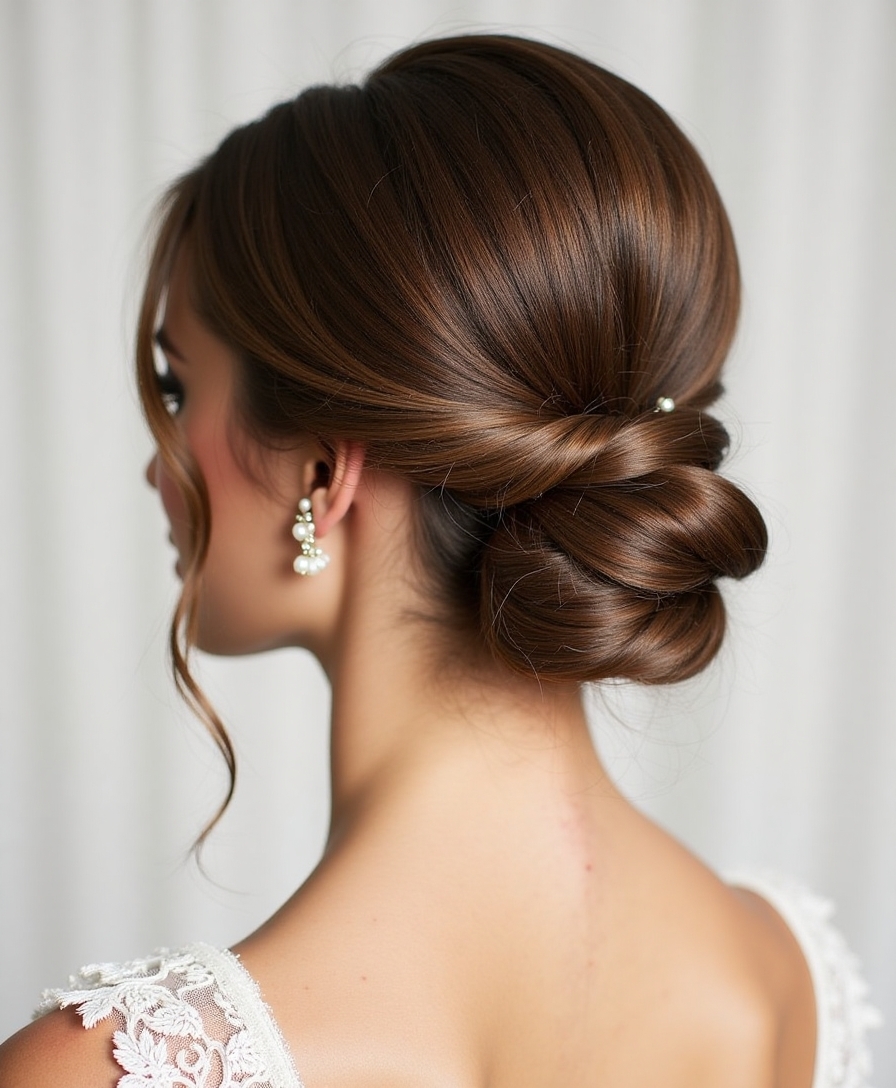
A low bun sits comfortably under a cathedral veil and just as easily bare at a courthouse, which makes it the most adaptable single style here.
The Detail That Makes It Veil-Friendly
It also wears a veil more gracefully than almost anything else here: a comb tucks in cleanly just above the gathered hair and lifts back out after the ceremony without disturbing the shape underneath.
Smooth and sleek leans formal; a few loose, textured pieces around the face pull the same shape toward romantic.
The Bridal Half-Up
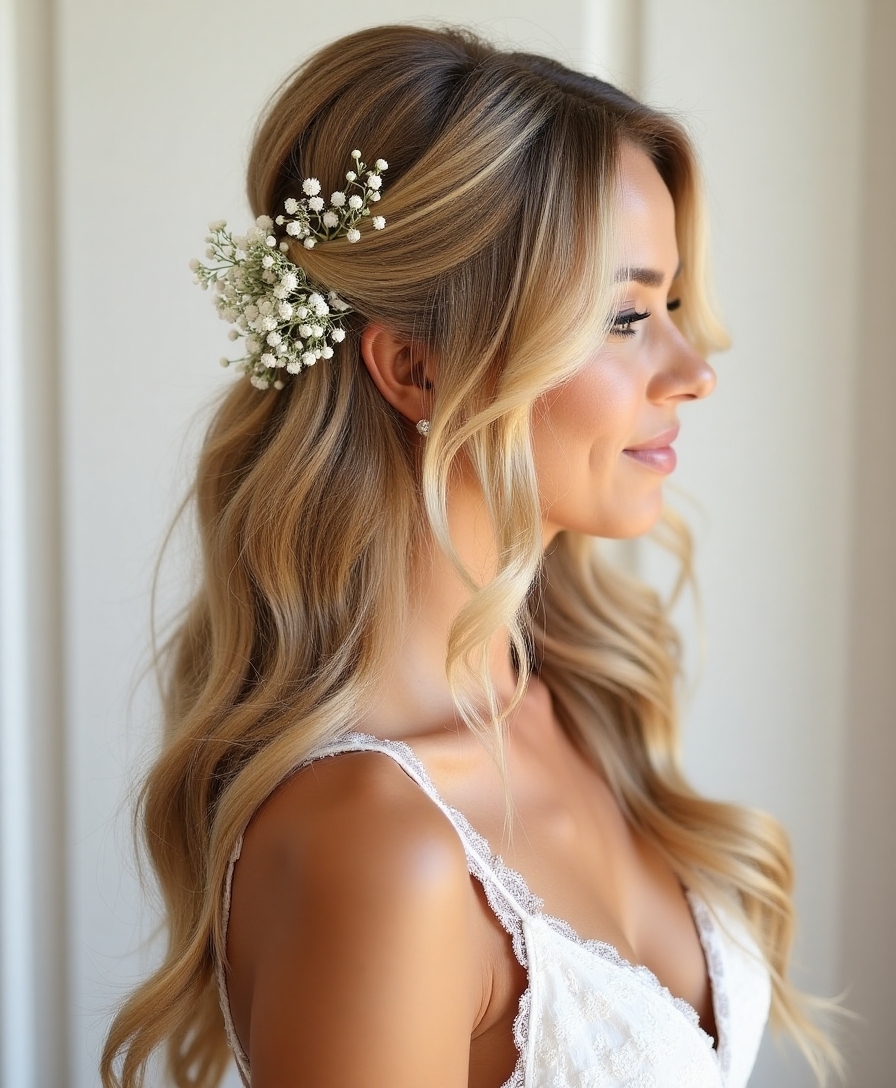
A half-up style asks for very little compromise: polish gathered at the crown, length and movement left loose below.
Where This Style Actually Fails
It also gives an accessory somewhere obvious to sit, since a comb, vine, or pin has a natural anchor point right where the crown section gathers.
The section holding everything up needs to be secured firmly and low-profile, since the weight of the hair left down works against it all evening; a loosely pinned crown is the most common reason this style slips before the reception ends.
Old-Hollywood Curls
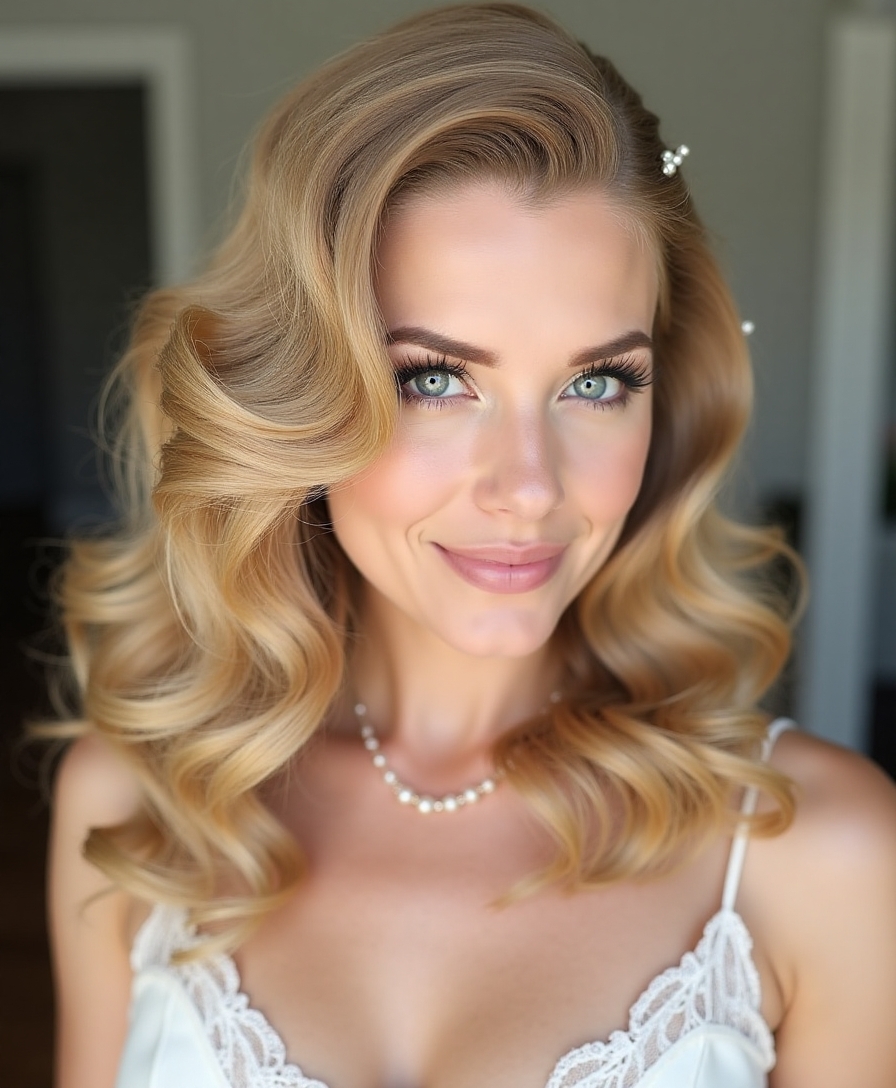
Sculpted, glossy waves set in the old-Hollywood style bring genuine red-carpet drama, structured and unmistakable in photographs, suited to a formal, black-tie setting more than a casual one.
The catch is that this is the least forgiving style in this roundup: it depends entirely on a practiced hand with rollers or a curling iron, set in a specific direction and pinned while cooling. This isn’t a look to attempt without help on the morning itself.
A strong-hold set with real shine typically holds its structure for several hours, but only a trial run beforehand confirms it actually behaves this way on a given head of hair.
📋Before Booking Old-Hollywood Curls
- ✓Confirm the stylist sets waves for weddings on a regular basis
- ✓Schedule a trial run specifically to test how long the set holds on your hair
- ✓Ask what backup pins or spray the stylist packs for touch-ups during the day
The Sleek Bridal Ponytail
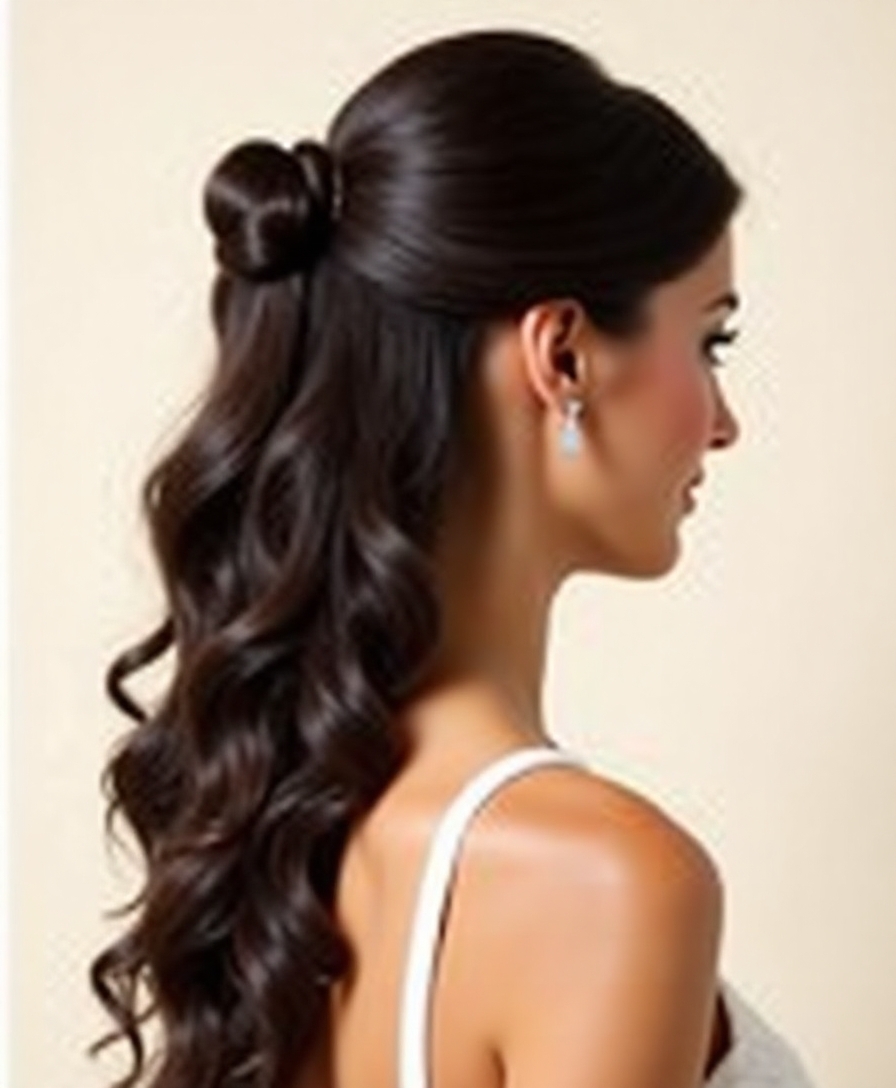
A sleek, polished ponytail is the modern bride’s answer to a soft updo: sharp, current, and impossible to miss in a room full of gathered, textured updos.
- Hidden pins alongside the elastic keep a bare ponytail from sagging over a long day
- A veil clips in just above the base and lifts out without disturbing the shape
- A wrapped strand of hair, or pearls woven through, dresses it up beyond an everyday finish
The Braided Crown
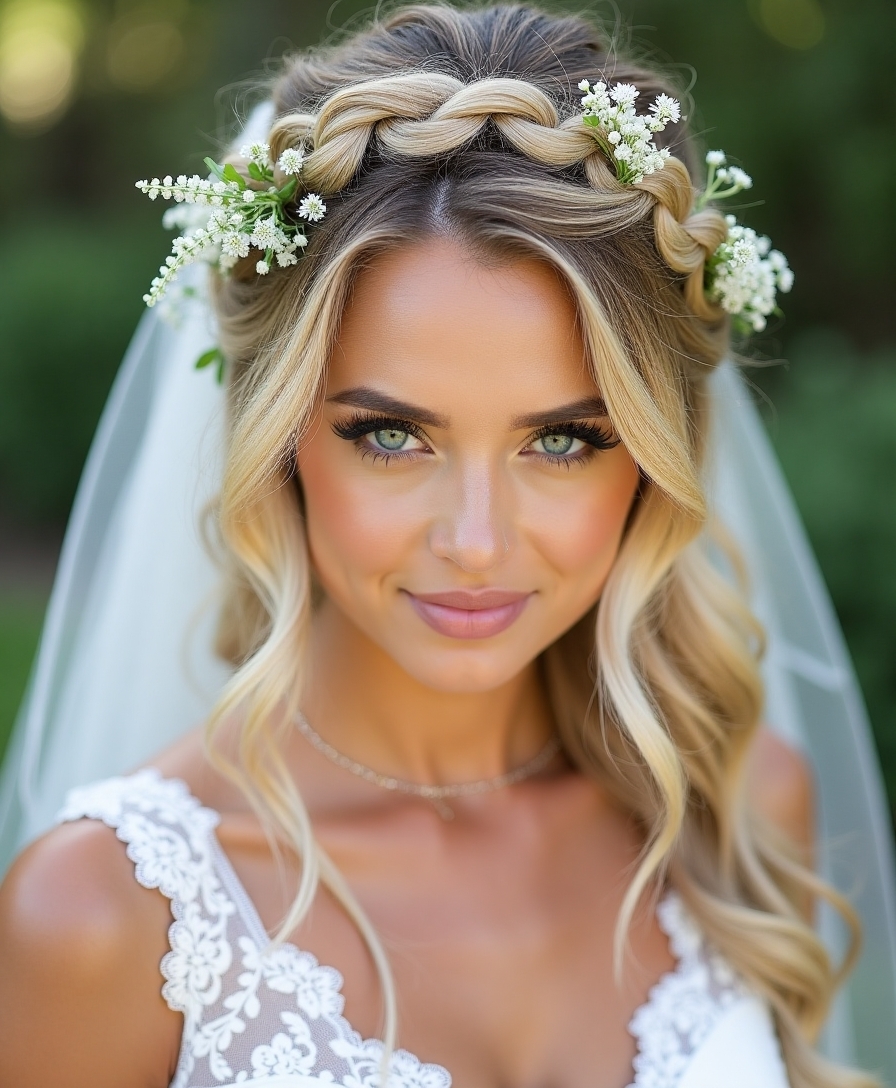
A braid wrapped over the head like a halo ranks among the surest-holding styles here, since every section is pinned flat, holding its shape through wind and movement both.
- Works especially well on natural texture, which grips the braid and holds its shape longer
- A veil comb tucked in just below the crown keeps the halo as the visible focal point
- Anchor it more firmly than an everyday braid; a wedding day outlasts hugs, dancing, and at least one veil change
Deciding between a braided crown and a plain updo:
🎯Wind or an outdoor ceremony?
The braided crown pins every section down, holding better against movement.
🎯Indoor, controlled setting?
A plain gathered updo works just as well without the extra braiding time.
The Timeless Chignon
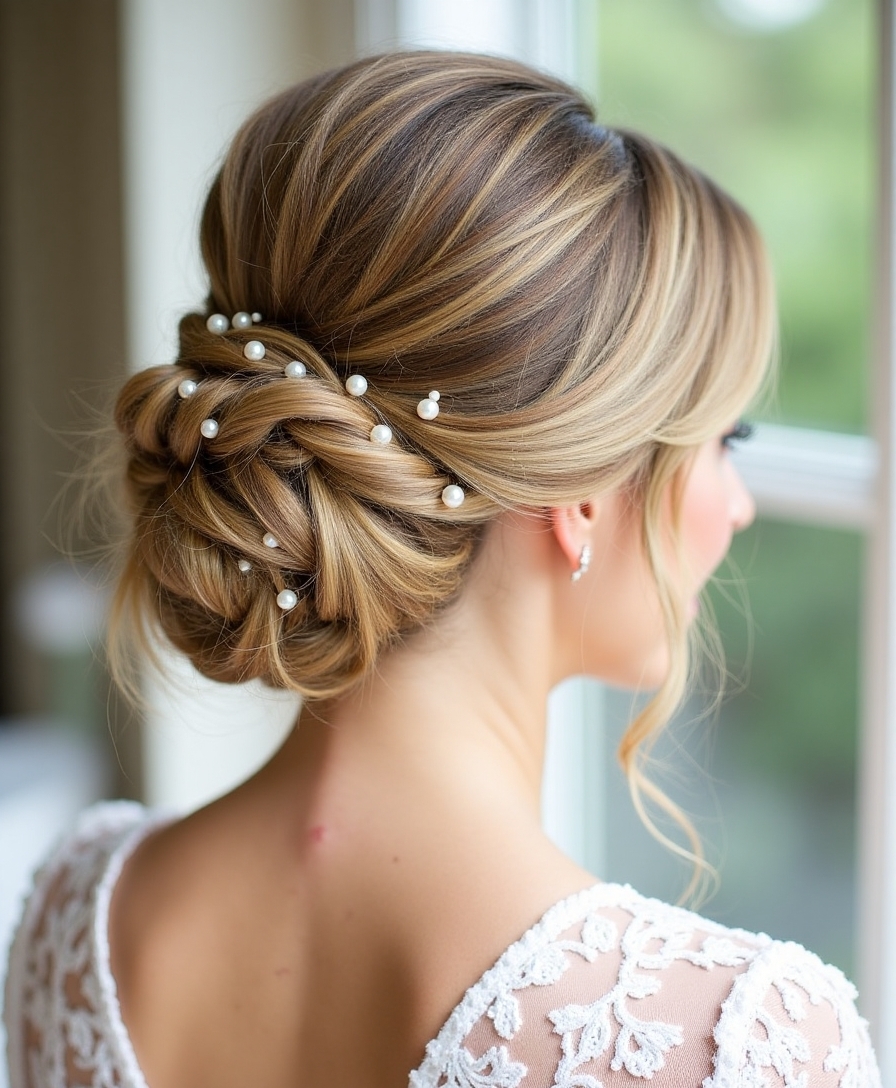
The chignon, a low, smooth, tucked knot, is the bridal updo generations of brides have chosen before this one, and it photographs just as well decades later as it does on the day itself.
Its low, anchored shape holds through a full day and a veil with very little mid-day maintenance, which is exactly why it endures as a genuine classic, closely related to the everyday low bun dressed up for the aisle.
Beachy Waves for a Destination Bride
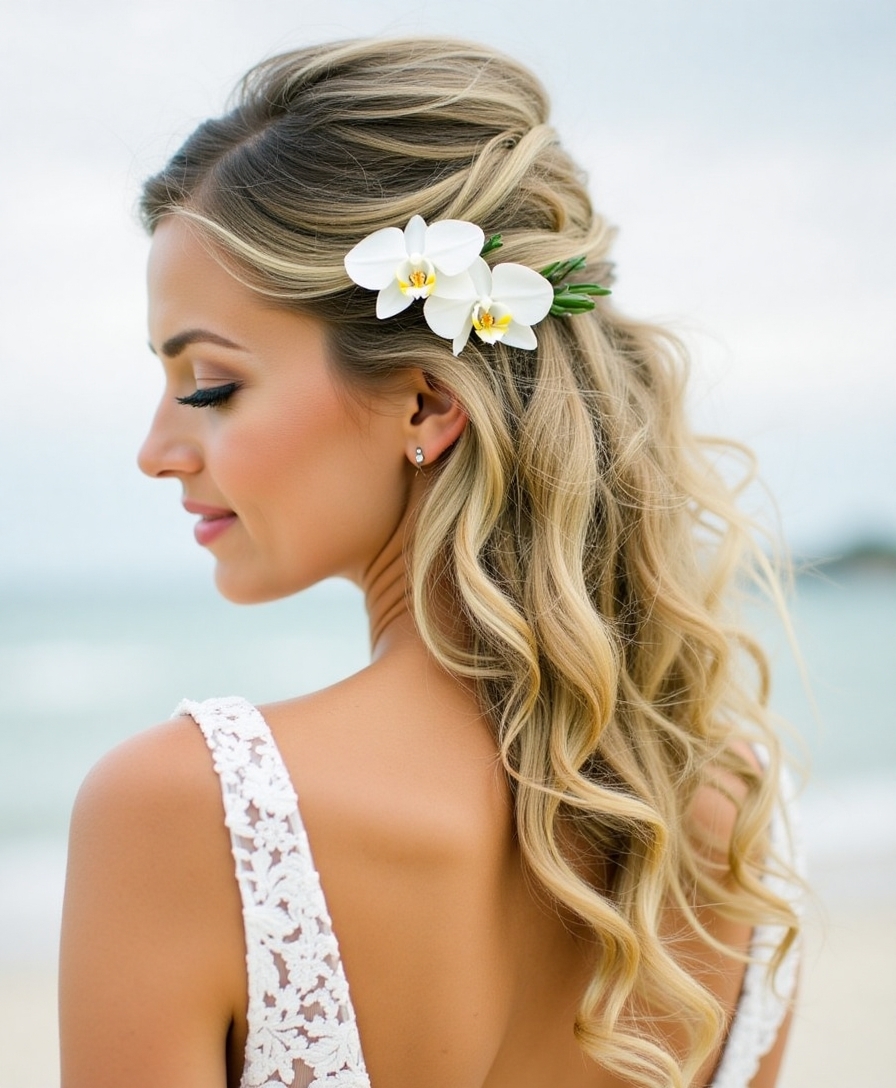
For a beach or destination wedding, loose, undone waves suit both the setting and the climate better than anything structured would.
Working With the Climate, Not Against It
Where this look actually struggles is humidity: salt air and heat work against any set, so an anti-humidity product and a flexible hold matter more here than the styling technique itself. A few hidden pins keep the front pieces from blowing across the face during the vows.
A little imperfection belongs in this style; on a beach, waves that look slightly undone read more at home than a rigidly set style ever would.
Floral Accents
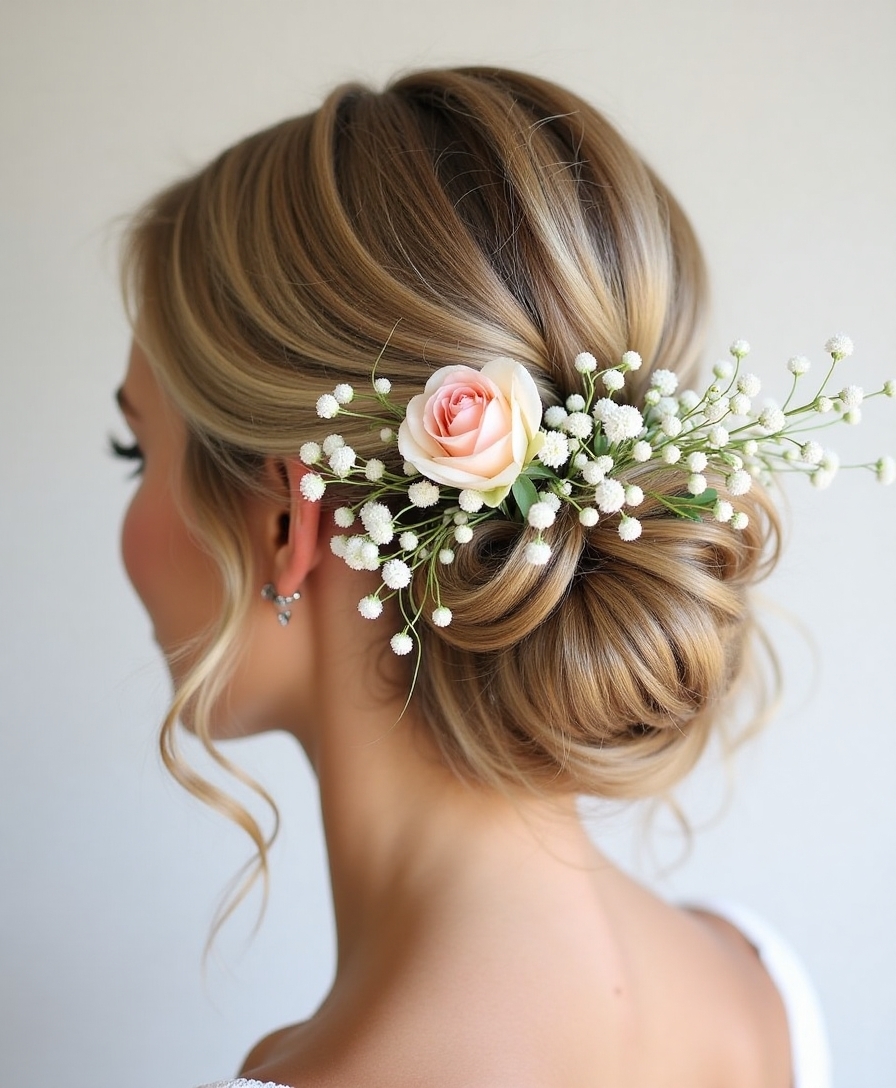
Fresh or silk flowers tucked into almost any of these styles add a soft, garden quality that suits a spring or outdoor wedding especially well.
The detail brides forget most often is coordinating the hair flowers with the bouquet and ceremony arrangements ahead of time, so the whole day comes together as one cohesive palette, planned from the start.
How florist and stylist typically coordinate hair flowers:
1Choose blooms on wire stems
Wire stems let a stylist tuck and secure flowers without crushing the petals.
2Match the arrangement to the bouquet
The florist preps hair-specific pieces alongside the bouquet so the palette matches.
3Place them at the trial, not the morning of
Deciding placement in advance avoids a rushed, uneven result on the wedding day itself.
Retro Victory Rolls
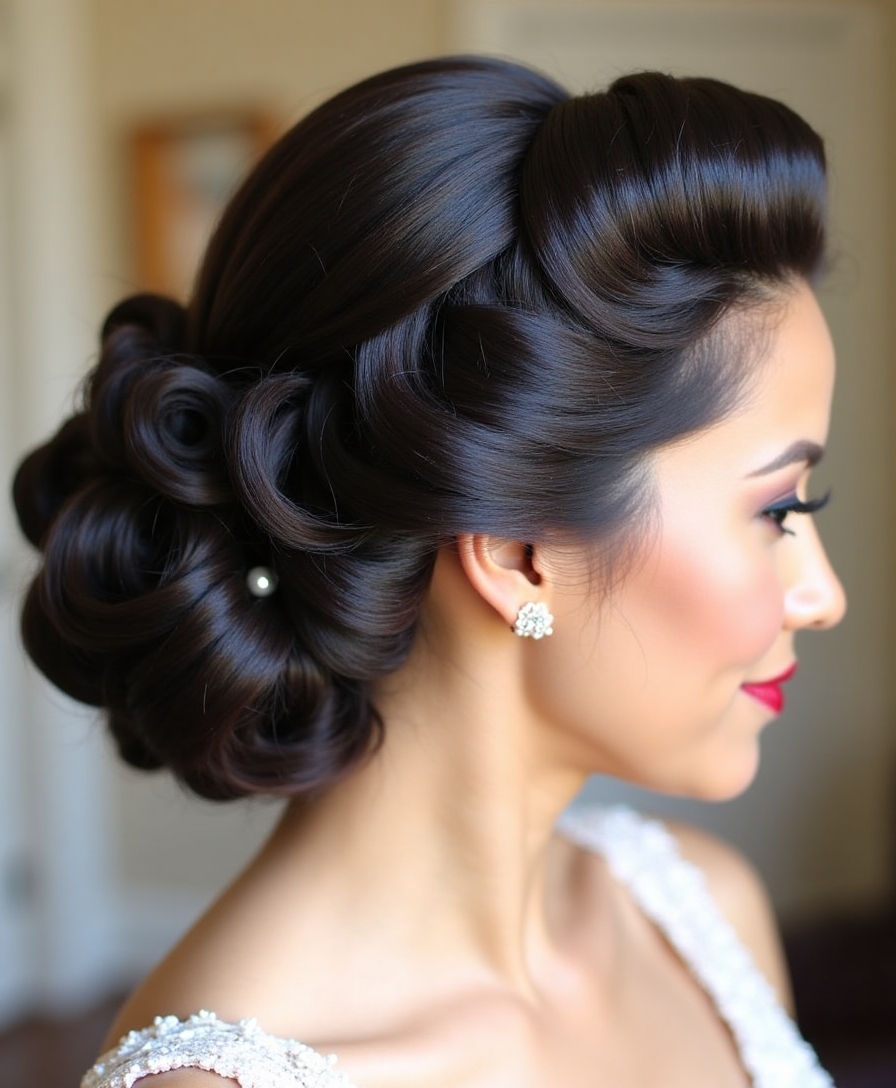
Victory rolls, the rolled-and-pinned front sections straight out of the 1940s, make a bold, joyful statement built for a vintage or rockabilly-leaning bride, sculpted and unapologetically retro.
- Sections of the front are rolled up and back into smooth, pinned coils
- This is a precise, structured set that calls for a practiced hand or a trial beforehand
- A strong-hold hairspray matters more here than almost anywhere else, since the rolls depend on holding their exact shape
The Bridal Top Knot
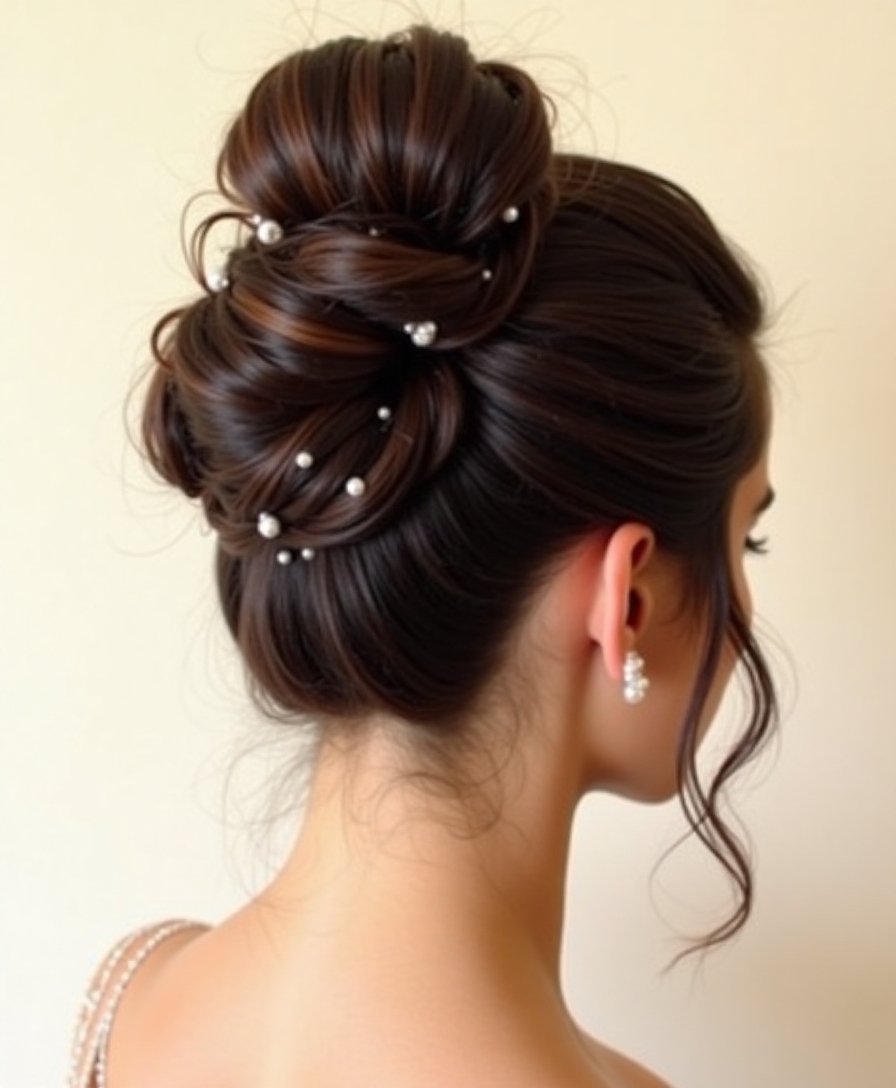
A high, polished top knot is the most architectural, modern option here, sleek enough to lift the whole face and show off statement earrings or an open back.
- Hair is brushed smooth up to a high crown, secured, then wound into a tight knot
- A little gel worked along the edges keeps flyaways controlled for photos
- Pairs best with a minimalist gown, where the knot’s clean line has room to stand out
Side-Swept Glamour
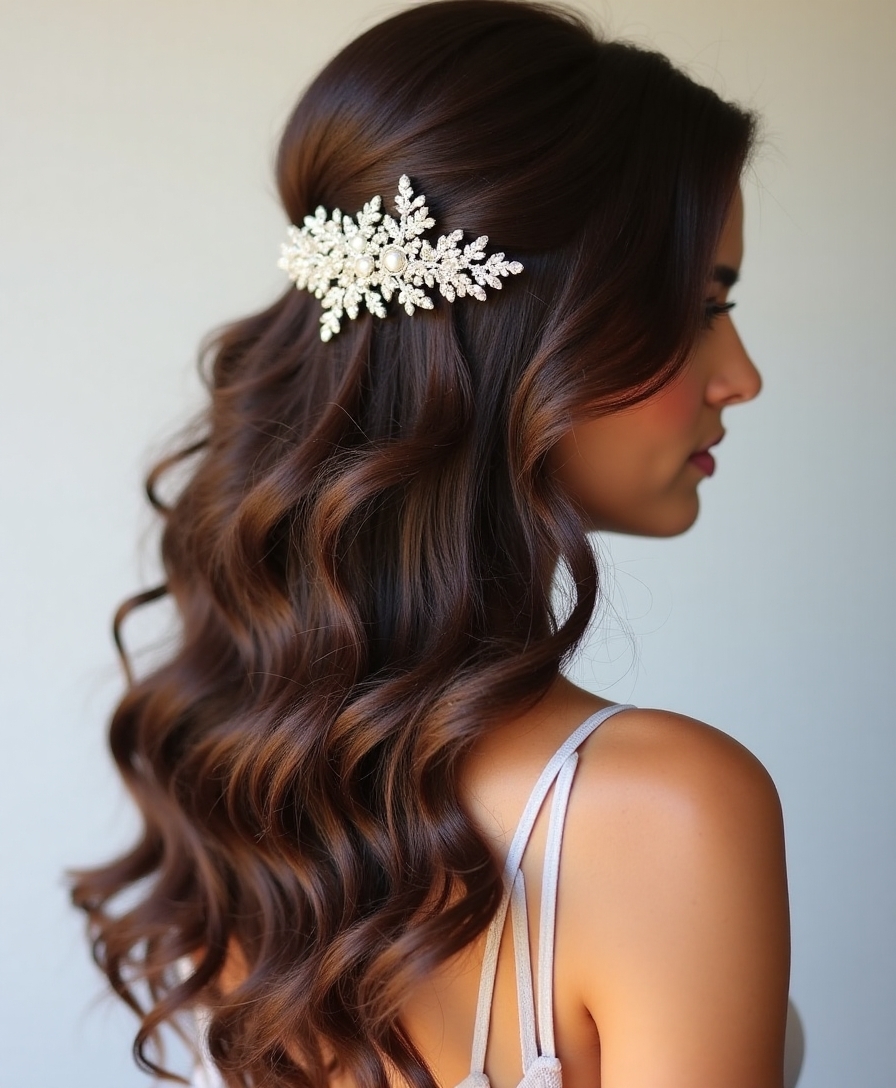
Sweeping soft curls dramatically over one shoulder is a timeless bridal look, and a practical one for anyone wanting a detailed back, a low neckline, or statement earrings shown off clearly.
It clears one whole side of the back deliberately, which is the real reason this style gets chosen over a symmetrical updo when a gown’s back detail is the point.
A veil sits best clipped at the crown on the swept side, and a generous set of hidden pins is what keeps the sweep from sliding loose as the night wears on.
Loose Tendrils and Soft Twists
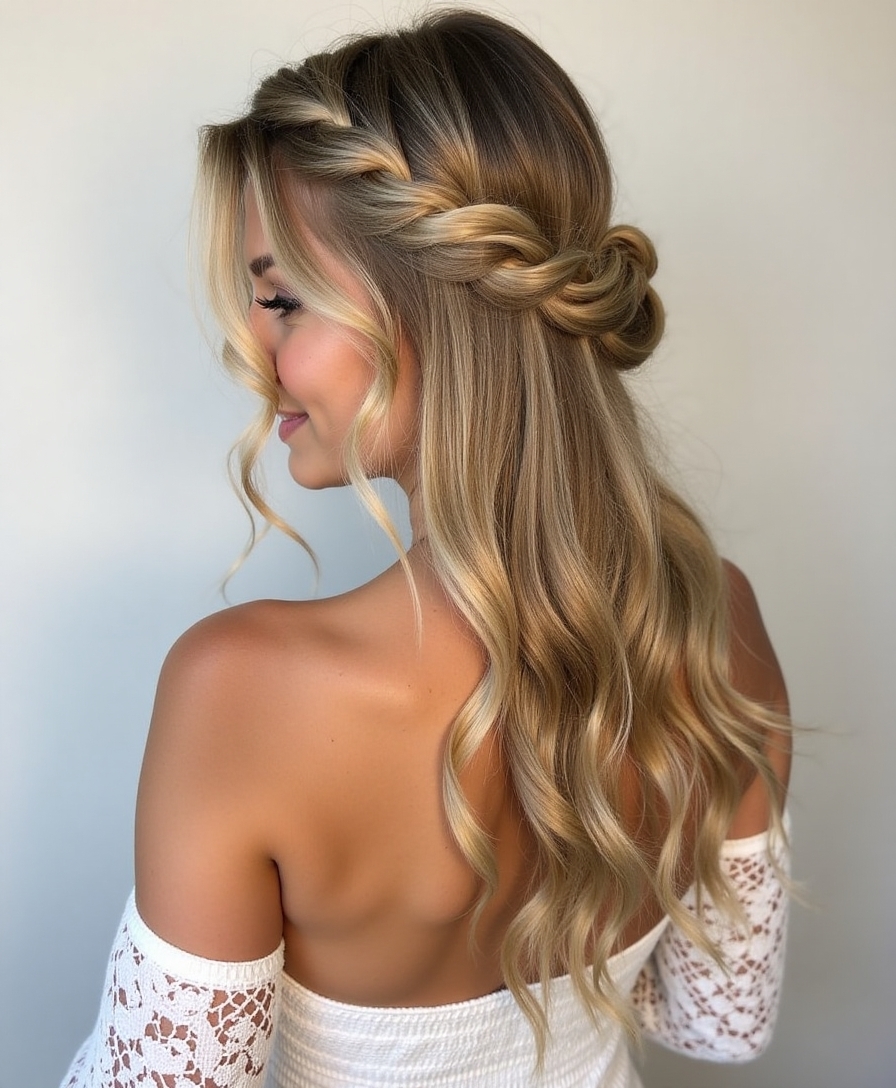
A few loose face-framing pieces left out before pinning, plus small twists worked into the sides, is the detail that keeps any updo from reading stiff or overly done.
- Leave face-framing pieces out before securing the rest, then curl them softly
- Work small twists into the sides of an updo for texture without adding bulk
- Set the loose pieces lightly so they hold curl without turning crunchy by the reception
For Short-Haired Brides
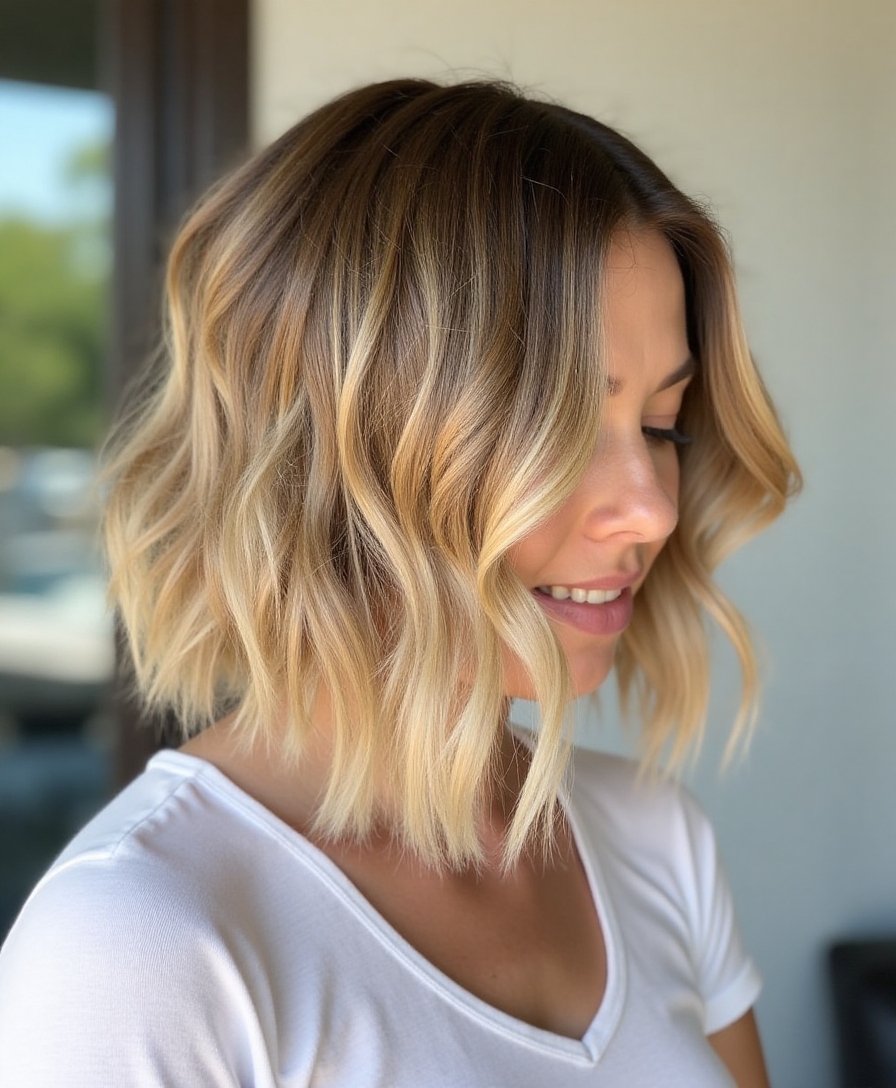
Short hair makes a striking bridal look on its own, and it’s no obstacle to a beautiful wedding style; the details just shift from an updo’s structure toward volume and an accessory.
A volumizing mousse worked through damp hair, followed by a round-brush blowout, gives a short cut soft, full movement, while a sparkling clip or a small comb carries the bridal detail an updo would otherwise provide. A glossy, well-styled pixie or bob looks every bit as bridal as a long updo.
Embellished Hairpieces
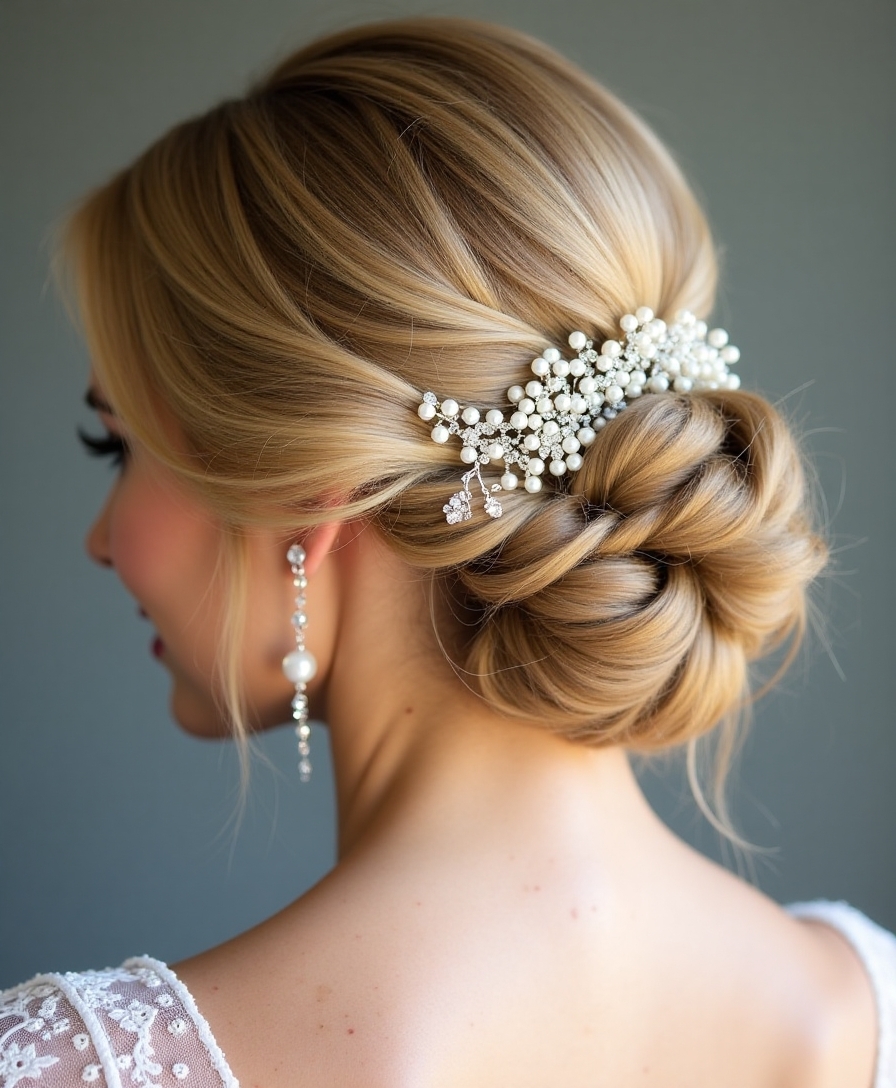
The right hairpiece turns the simplest style into a bridal one, and matching it to both the gown and the day’s formality matters more than the piece itself.
Whatever gets chosen, having a stylist place and secure it at the trial, well before the wedding morning arrives, avoids surprises when there’s no time left to fix them.
- A jeweled comb or vine suits a formal gown and a classic, sparkling finish
- A pearl or crystal pin scattered through an updo looks more understated
- A flower crown or delicate band leans boho or garden in feel
A few terms that come up when discussing bridal hairpieces:
📖Comb
A hairpiece with a curved base and teeth that anchor directly into an updo without visible pins.
📖Vine
A flexible, wire-based piece, often set with pearls or crystals, that wraps around or through a style.
The Modern City-Wedding Look
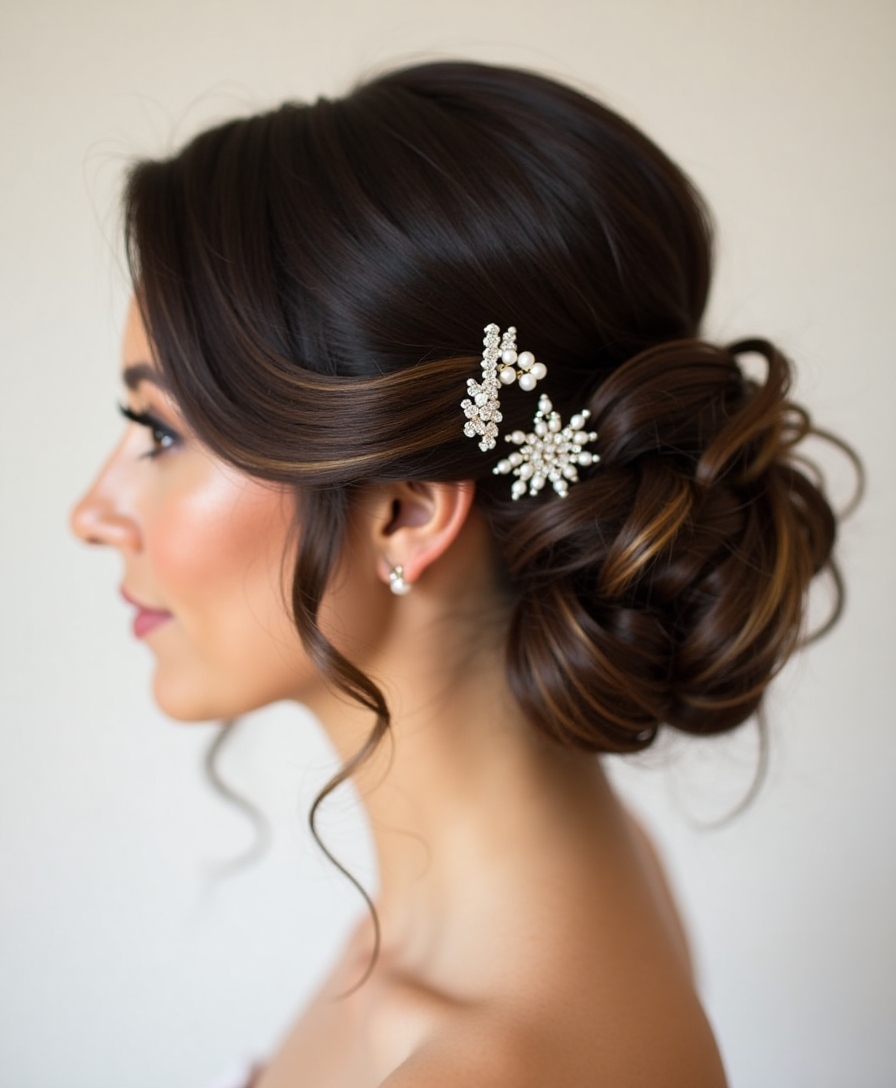
A city or rooftop wedding tends to call for something sharper and more current than a soft, traditional updo, the kind of polished shape that holds its own against a skyline.
There’s a practical side to this too: pinned, controlled hair handles a car, an elevator, and a gust of wind between buildings far better than loose waves manage on a day spent moving between venues.
- A glassy low bun, a sleek ponytail, or a sharp side part all read modern and current
- Minimal, architectural accessories let the clean lines of the style speak for themselves
- A strong but flexible hold matters more here than on a single-location wedding day
The Relaxed, Natural Bride
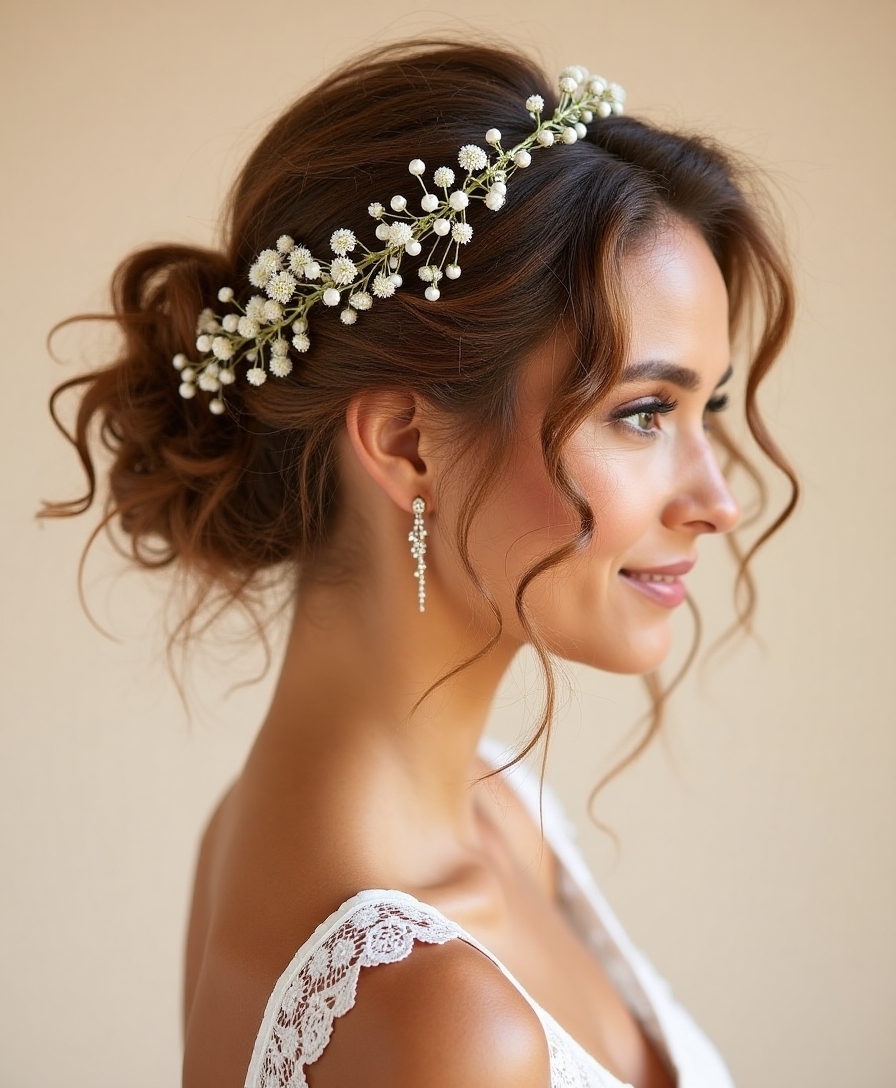
Not every bride wants a transformation, and for plenty of them the most beautiful wedding hair is simply their own, at its best: waves enhanced, curls defined, texture left fully visible.
For brides with curly, coily, or loc’d hair, this is where natural texture leads the whole look: a defined wash-and-go, a twist-out, or an updo built from the hair’s own pattern all hold up through a full day with the right prep and a handful of well-placed pins.
Common Mistakes to Avoid
The single most avoidable mistake is skipping the trial entirely. A trial run typically costs about half of what the full wedding-day service runs, often somewhere around $75, and it’s where a bride discovers a style doesn’t suit her hair or her veil while there’s still time to change course.
The other frequent misstep is washing hair the same morning: freshly clean, slippery strands hold a style far worse than hair with a day’s worth of natural oil already in it. Trying a brand-new product or a dramatic color change in the final week belongs on this list too, for the same reason a trial exists in the first place.
Wedding Hair Questions, Answered
?How far in advance should a bridal hair trial happen?
Somewhere around one to two months out works best, once the veil and any accessories are settled. That leaves enough runway to adjust the style, try a second option if the first one doesn’t land, or book a cut or color change without the pressure of the final week bearing down.
?How long does bridal hair actually take on the wedding morning?
Budget somewhere between forty-five minutes and an hour and a half, depending on the style and hair length; a structured look like Hollywood waves or victory rolls runs on the longer end. Building in extra buffer time, and sequencing hair after makeup, gives the smoothest, least rushed finish.
?Will a wedding hairstyle actually survive crying, hugging, and dancing?
The ones built around a secure foundation underneath, well beyond just finishing spray on top, hold up through all three. A trial run confirms this specifically for a given head of hair, since a photo alone can’t predict it.
Hair That Holds Up to the Whole Story
The best wedding hair does two things simultaneously: it looks unmistakably like the bride wearing it, and it’s built to last from the first look through the final dance. Matching the style to the venue and the aesthetic, then trusting the foundation and the trial to do their job, is what actually frees a bride to be present for the day.
Save two or three of these that actually feel like the day being planned, then bring them to a trial alongside the veil and any accessories already chosen, so the stylist can build toward the one that actually fits.
You Might Also Like